Most people assume a hotel lobby between 2 and 5 a.m. is just a quiet waiting room – a few couches, a dozing security guard, a muted TV nobody’s watching. They’re wrong.
In those three hours, more happens in that marble-floored space than in most workplaces during an entire business day. The night shift doesn’t slow things down – it just makes everything stranger, more secretive, and occasionally more dangerous.
Here’s what insiders actually know, and it starts with a job most guests never even notice exists.
#10 – The Night Audit Runs the Whole Hotel Alone
This is the most underestimated role in hospitality, and almost no guest ever thinks about it.
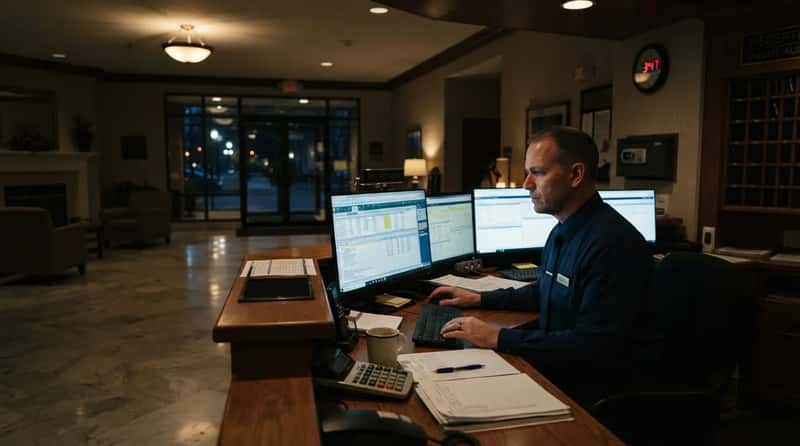
The night auditor is part accountant, part front desk agent, part everything else. Between 2 and 5 a.m., they’re often the only senior staff member awake in the entire building.
They reconcile room revenue, food and beverage sales, credit card transactions, and every check-in and check-out adjustment from the day. While guests sleep, one person is quietly accounting for every dollar the hotel earned.
The truly staggering part: in many properties, the night audit formally closes one business day and opens the next – before anyone else has had their morning coffee.
And if something goes wrong? This same person checks guests in and out, handles reservations, watches the fire safety system, and becomes the only line of communication between guests and hotel operations.
Fast Facts
- Night audit typically runs an 8-hour shift, roughly 11 p.m. to 7 a.m.
- Overnight staff often earn a modest shift differential – usually $1 to $3 more per hour than daytime front desk agents.
- This one person closes the current business day and opens the next before sunrise.
- Until the morning team arrives, they’re frequently the only staff member on property.
But that’s nothing compared to what we found about #9…
#9 – The Lobby Is Legally Open to Anyone Who Walks In
Here’s something most guests never register: that welcoming lobby has almost no barrier between it and the street.
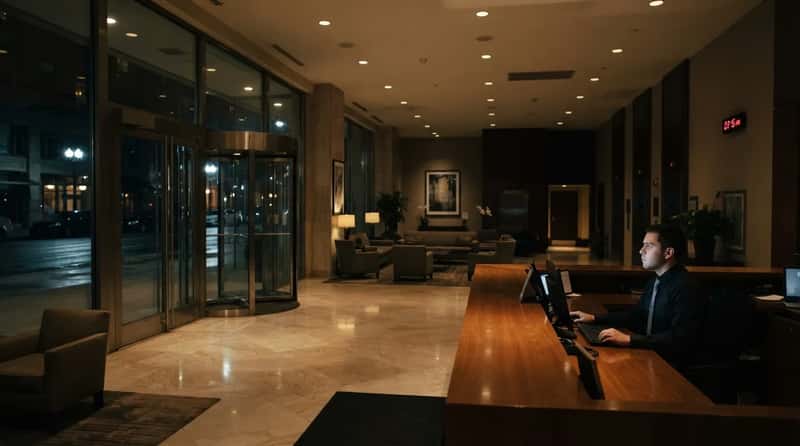
A hotel lobby is one of the only commercial spaces designed to let strangers walk in freely, no appointment needed. At 2 a.m., when foot traffic thins and staff presence shrinks, that openness becomes a real problem.
Guests need to feel welcomed the instant they walk through the door. But staff also need a way to keep out people who have no real reason to be on the property – a tension every hotel manages quietly, every single night.
What most guests don’t realize: disputes, unauthorized visitors, after-hours activity, and parking or crowd issues can all land at the front desk unannounced at 3 a.m. The night auditor handles every single one, alone.
But that’s nothing compared to what we found about #8…
#8 – Incidents Peak Precisely When Staffing Is Thinnest
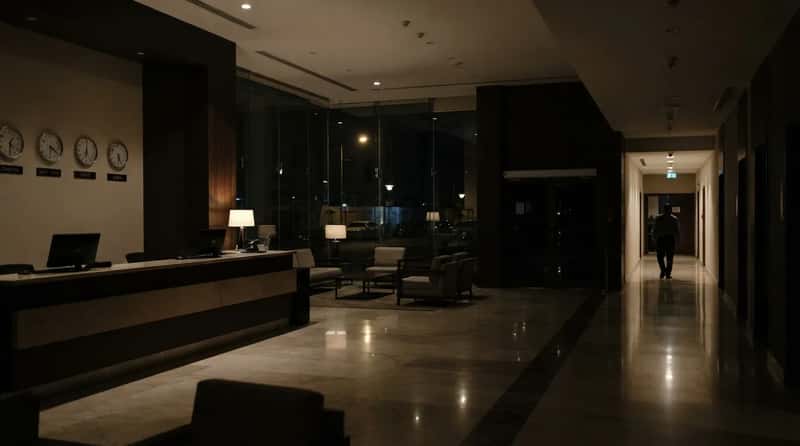
There’s an inconvenient truth about hotel crime data that the industry doesn’t advertise.
Incidents don’t spread evenly across the 24-hour cycle. They cluster at shift changes and in the overnight window, when a property is occupied but thinly covered.
Larceny accounts for roughly 75% of all crimes reported on hotel premises, according to research published by the Office of Justice Programs. Most of it isn’t guest-on-guest crime in a room – it’s property crime in outdoor spaces where coverage is spotty: vehicles broken into, belongings stolen from pool areas, equipment lifted from service corridors.
The window insiders fear most: these incidents overwhelmingly favor the hours after midnight, when the property is quietest and security is thinnest. The lobby looks calm. The risk isn’t.
But that’s nothing compared to what we found about #7…
#7 – The Lobby Quietly Resets Itself for Morning
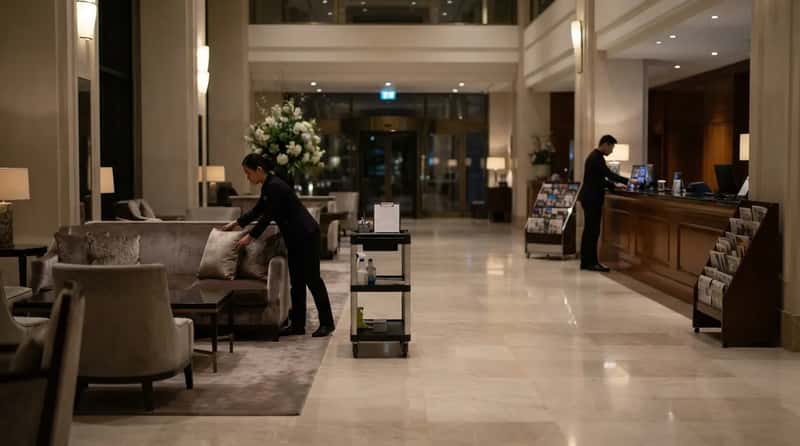
Walk through a hotel lobby at 4:30 a.m. and you’ll see something almost theatrical: it’s being rebuilt in real time.
Every newspaper rack, every cushion, every chair angle gets reset with precision before the day team arrives. Cleaning and organizing the lobby, the coffee station, and the front desk is a formal part of the overnight checklist.
This isn’t just tidying. It’s theater – hotels live or die by the first impression a guest gets at 7 a.m.
And that impression is entirely manufactured between 2 and 5 a.m., by people guests will never see or thank. Printed check-in lists get stocked, room readiness gets confirmed, and every overnight incident or maintenance issue gets logged for the morning team.
The lobby you admire at breakfast was quietly engineered hours before you woke up.
But that’s nothing compared to what we found about #6…
#6 – The Information Black Hole Is Real and Dangerous
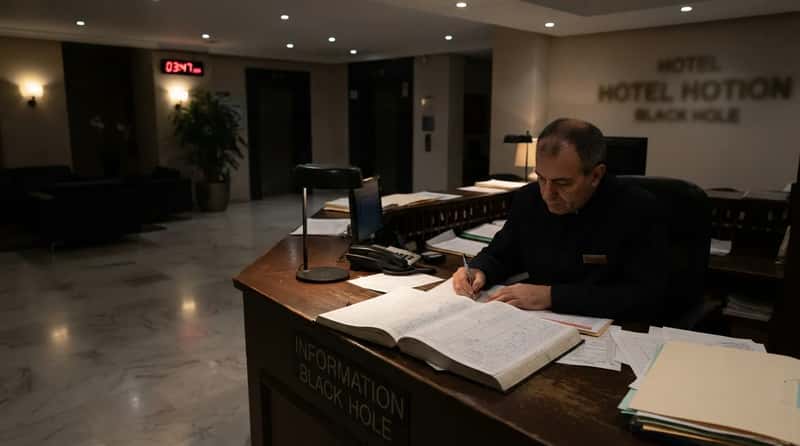
Most guests assume that if something happened overnight, management would know about it. That’s a bigger assumption than it sounds.
Hotels that still lean on verbal handovers and paper logbooks routinely lose track of what happened between shifts, and morning managers are often the last to find out. Some of those incidents unfolded just hours earlier, while guests slept two floors up.
Night audit, security, and on-call engineers each work their own lane with no shared record. A guest reports a leak at midnight, it gets patched, but no work order is ever filed – and by 7 a.m. housekeeping walks into a flooded room.
The darker implication: complaints, safety issues, even liability events can vanish into the gap between shifts. From 11 p.m. on, every complaint, security incident, and plumbing fault rests on one or two people covering hundreds of rooms.
The lobby may look serene. The records often tell a very different story.
But that’s nothing compared to what we found about #5…
#5 – Late Arrivals Bring the Most Unpredictable Energy
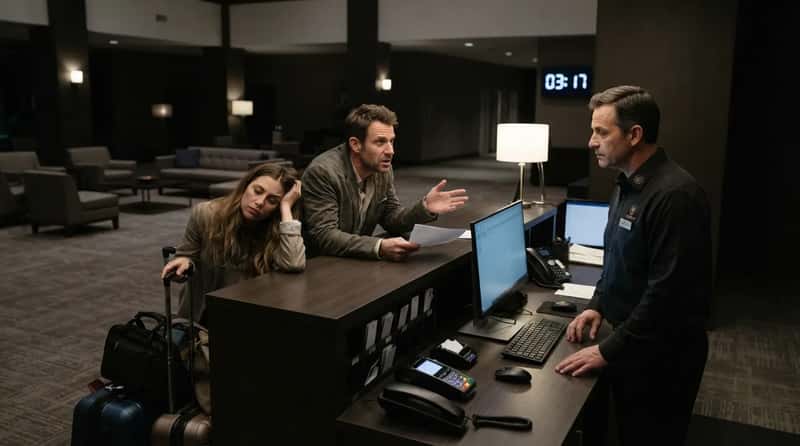
The front desk at 3 a.m. is not the front desk at 3 p.m. The guests who show up in that window are an entirely different category.
Night audit staff typically work an 11 p.m. to 7 a.m. shift, checking in late arrivals and handling wake-up calls or airport transport requests. But arrivals after 2 a.m. tend to carry more baggage – missed connections, reservation disputes, intoxication, or plain exhaustion-fueled frustration.
The night auditor absorbs it all: check-ins, check-outs, room changes, emergencies, complaints – plus concierge duties, just with far fewer smiles exchanged.
What rarely gets said aloud: the night lobby is where the day’s final human dramas play out – billing arguments, tearful arrivals, the occasional guest who simply can’t be helped. While everyone else winds down, one person becomes the last resort for whoever walks through that door.
But that’s nothing compared to what we found about #4…
#4 – Security Walks Happen on a Clock – and Everyone Knows It
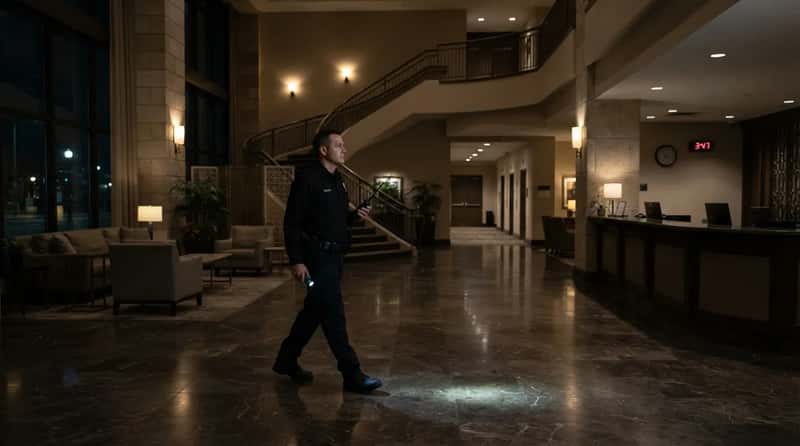
Here’s what the industry quietly acknowledges but rarely says out loud: overnight security patrols follow a predictable pattern. And predictable patterns get exploited.
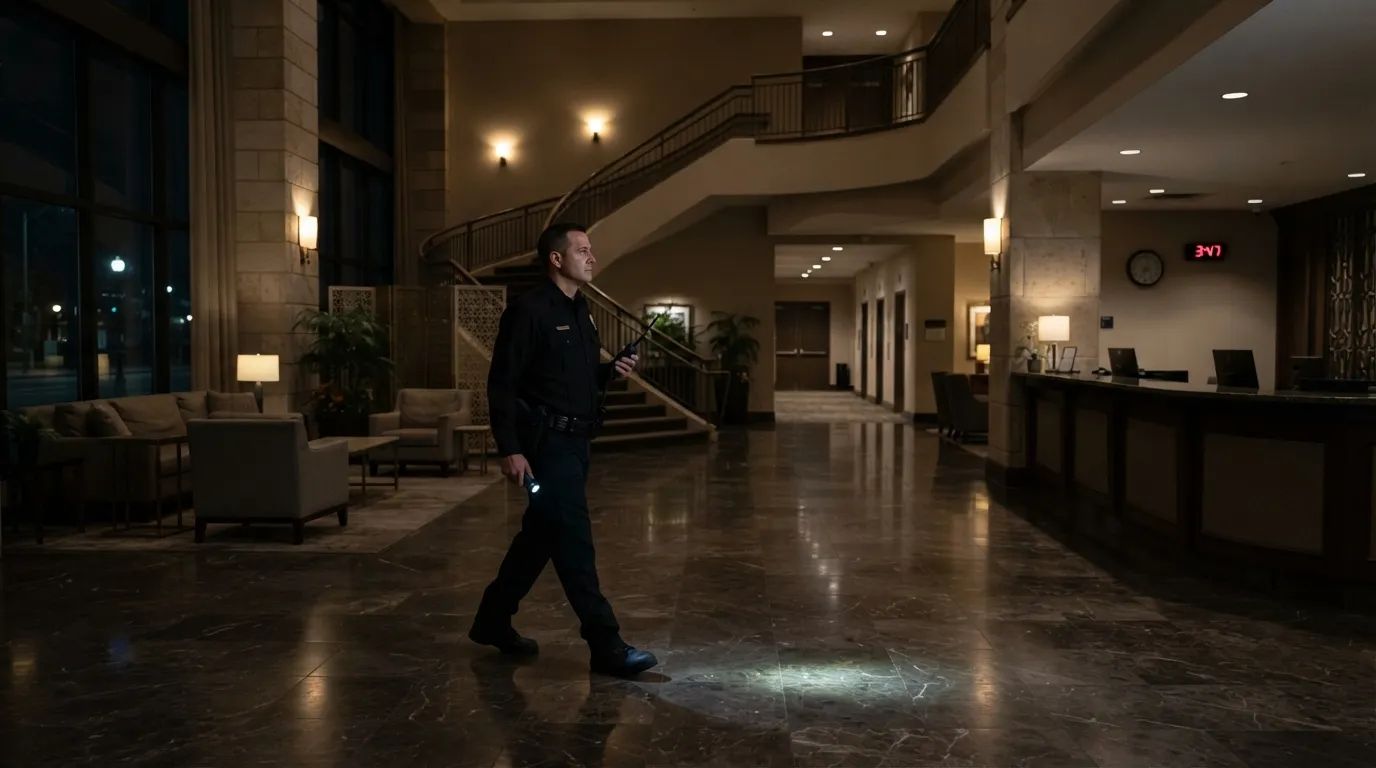
Staff conduct regular floor walks and checks, logging anything unusual at set, repeated intervals through the night. The lobby anchors every circuit.
Hotels lean on security guards during busy bar hours, events, or after repeated incidents. But at the quietest hour – around 3 to 4 a.m. – there may be exactly one officer covering the entire building and grounds.
The hard reality most guests don’t picture: the parking lot, the back pathway between the pool and the remote guest wing, the perimeter fence line – those spaces thin out at night while the property stays occupied. The lobby’s warm light is not a guarantee of coverage beyond it.
Quick Compare
- Day shift: multiple front desk agents, dedicated security, bell staff, and management on-site.
- Night shift (11 p.m.-7 a.m.): often just one night auditor covering the desk, phones, and emergencies alone.
- Busy hours: security gets added coverage during bar hours or events.
- 3-4 a.m.: coverage can shrink to a single officer for the whole property.
But that’s nothing compared to what we found about #3…
#3 – The Lobby Becomes a Refuge for People Who Have Nowhere Else to Go
This is the part hotel PR departments would rather you skip.
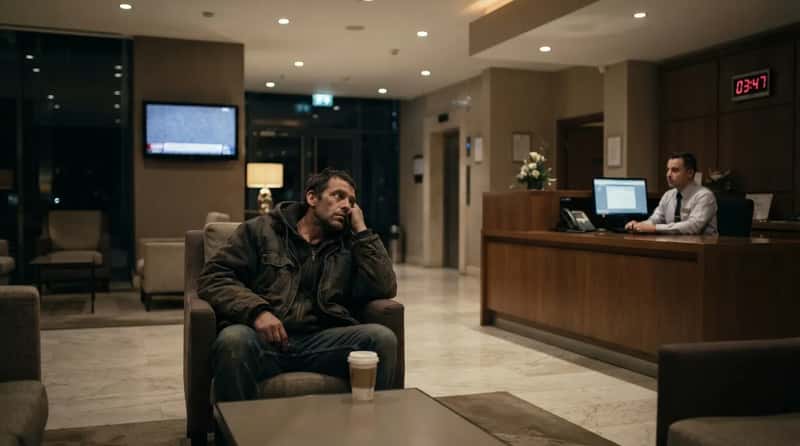
Between 2 and 5 a.m., especially in urban areas, hotel lobbies attract people who aren’t guests and have no intention of becoming one. That open-door design doesn’t switch off at midnight.
Night staff develop an instinct for the difference between a genuine late arrival and someone who’s simply found a warm, well-lit place to sit. Someone with no bags gets a coffee, settles in front of the lobby TV – and after about an hour, a staff member quietly walks over to ask if they need help.
What most people don’t realize: the night auditor has no formal authority to remove someone who’s quiet and causing no trouble. The best lobby security doesn’t feel heavy-handed – it just keeps things moving. In those dark hours, the lobby is genuinely contested space.
But that’s nothing compared to what we found about #2…
#2 – The Financial Day Actually Dies and Restarts in the Lobby at 3 a.m.
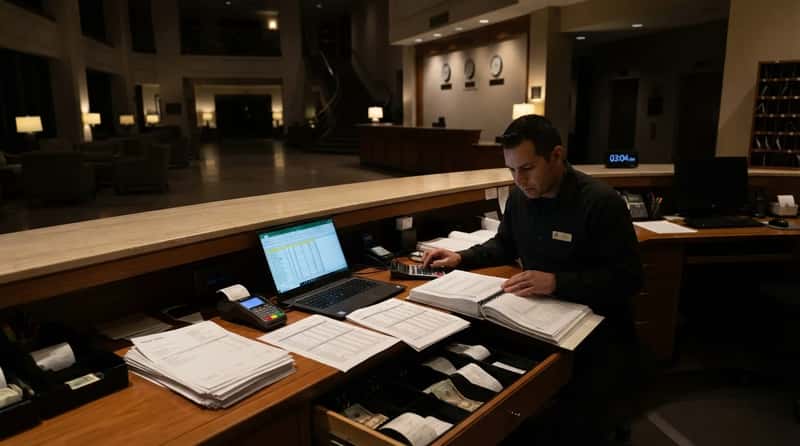
Almost no guest knows this: the hotel’s entire financial clock resets in the dead of night, right there at the front desk.
The night audit formally closes one business day and opens the next. Each night, the audit team reconciles every financial detail so the morning desk can process checkouts without a hitch.
Night audit balances reports, reconciles cash drawers, and prepares invoices for the next day. Every charge you’ve ever disputed at checkout – a minibar item, a late fee, a rate adjustment – was locked in during these silent hours.
The thing that should concern every traveler: that report isn’t filed and forgotten. Management uses it to verify guest accounts and measure whether the hotel is hitting its cost and profit targets.
At a Glance
- Cash drawers get balanced and every card posting gets reconciled before sunrise.
- Room rates, minibar charges, and late fees are all locked in overnight.
- The finished report goes straight to management for cost and profit tracking.
- None of it happens with a single guest watching.
The numbers on your morning bill were finalized while you slept. Most guests never think to question them.
But none of this compares to what we found about #1…
#1 – Between 3 and 4 a.m., the Lobby Belongs to the Staff Completely
This is the moment most travelers never witness and hotel management never quite advertises. It’s also the most quietly extraordinary thing that happens in any hotel, every single night.
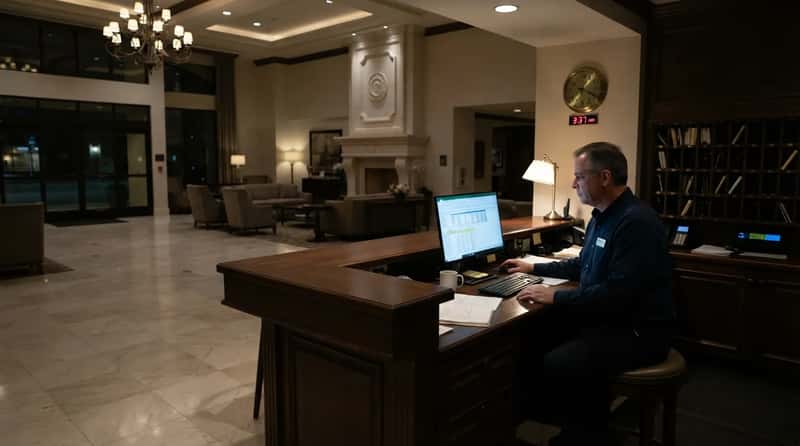
Somewhere between 3 and 4 a.m., a brief stillness falls. No guests at the desk, no arrivals, no calls – and the lobby, an elaborate stage set built entirely for other people, belongs for a few minutes to the one person working it alone.
The night auditor keeps the front office running while everyone else sleeps, making sure occupancy and financial records line up for the day ahead. But in that quiet window, they’re also the building’s sole witness – to the hum of the HVAC, the elevator that moves with no one calling it, whatever the cameras catch in the corridors above.
What no training manual captures: the night lobby holds the institutional memory of every shift before it. When something happens, the log has to be exact – “guest appeared intoxicated and shouted at staff” tells a story that “guest was crazy” never could.
Those notes, written in silence at 3:47 a.m., are what actually run a hotel. Not the chandeliers. Not the concierge desk. Just one person, a logbook, and a lobby full of secrets.
The Bottom Line
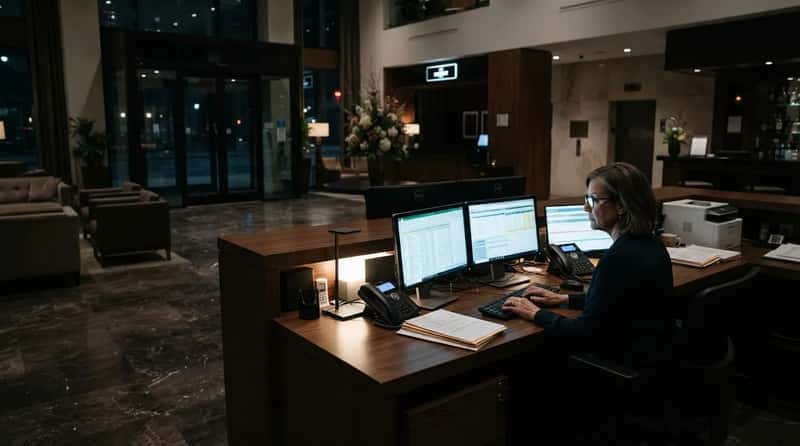
Between 2 and 5 a.m., a hotel lobby isn’t dormant – it’s a command center, a financial institution, a security post, and sometimes a refuge, run by one or two people most guests will never meet.
The night audit resets the hotel’s entire financial day. Security rounds thin out exactly when risk builds. And in those three hours, the building quietly rebuilds itself for an audience that won’t arrive for hours.
Next time you glance at your bill at checkout, remember: every number on it was decided while you were asleep. What have you witnessed in a hotel lobby at 3 a.m.? Tell us in the comments.