Millions of Americans climb onto a coach tour every year, chasing castles and scenic overlooks. Almost none of them ever talk about what actually happens between the stops.
Charter and tour services carried 68% of all U.S. motorcoach passengers in 2022, so this secret belongs to more people than you’d think. Guides and veteran travelers are finally willing to talk.
#10 – The Seat War Nobody Admits Is Happening
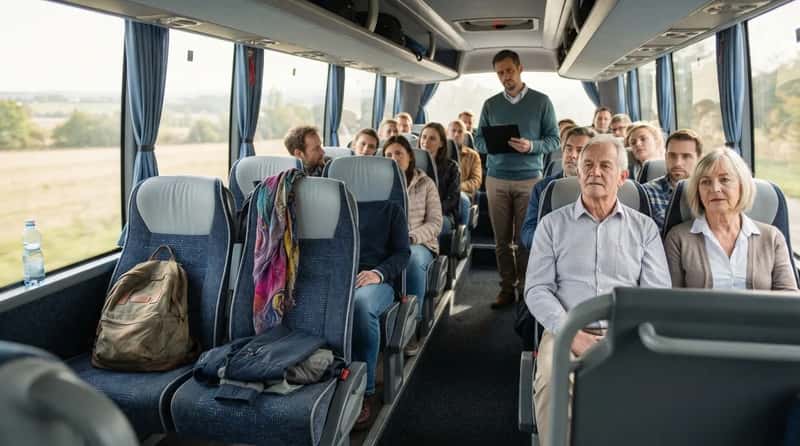
It starts within hours, and never with a word. Bags land in seats like tiny flags claiming territory.
Seat territory turns surprisingly tribal within the first 48 hours of any coach tour. Guides notice the tension building long before anyone says anything out loud.
The front seat becomes a throne. The back row becomes social exile.
Smart tour companies fix this with a seat rotation, switching spots daily. Skip that policy, and cliques form by day three – cliques that end up defining the entire trip’s mood.
The most shocking part? Guides say the complaints they hear most aren’t about the museums or the hotels. They’re about who got the good seats – again.
- First-timers grab a spot and treat it as permanent.
- Veterans know to rotate – and quietly judge those who don’t.
Fast Facts
- Seat “ownership” typically sets in within the first 24 to 48 hours.
- Front-row seats get claimed fastest; back rows are chosen last, if at all.
- Daily seat rotation policies cut down on group friction significantly.
- Without rotation, cliques can harden as early as day three.
Nobody says this to your face. But everyone on the bus already knows exactly what’s happening.
But that’s nothing compared to what we found about #9…
#9 – The Tour Guide Knows Everything About You Before Lunch
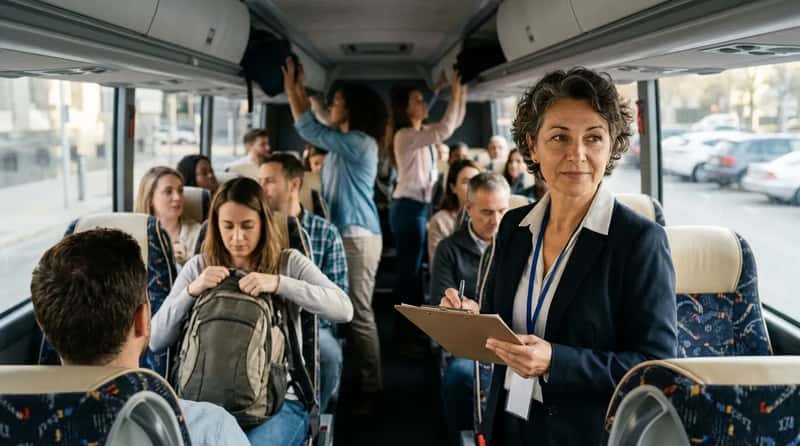
You think you’re just another stranger on the bus. Your guide already disagrees.
Veteran tour directors say they can spot first-timers within minutes, sometimes before introductions even start. The tells aren’t dramatic – they’re in how you handle your bags and whether you make eye contact.
Coach touring runs on unspoken rules, and breaking even one gives you away instantly. Guides have watched every personality type cycle through so many times they can predict trouble before the first stop.
What guides actually clock first: whether you show up anxious, how you talk to the driver, and whether you wander off at the first rest stop. By the end of day one, someone always ends up swapping life stories with the driver – a bond drivers rarely talk about publicly.
- The talker gets identified immediately.
- The loner gets watched carefully.
- The complainer gets managed from hour one.
You are never just a face in the crowd on a coach. The guide already knows your character.
But that’s nothing compared to what we found about #8…
#8 – Free Time Isn’t Really Free
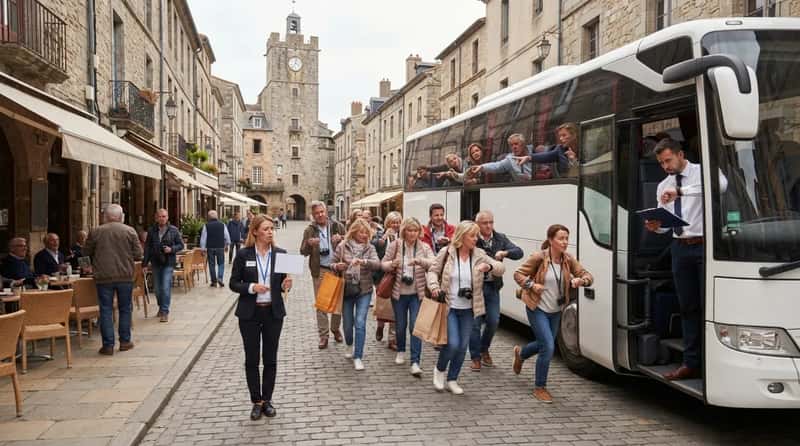
Every itinerary promises it. Almost nobody uses it the way they expect.
When a guide gives a return time, that number is rarely padded – buffers are already built in. “Two hours of free time” sounds generous until twenty minutes vanish to orientation and twenty more to finding a bathroom.
Here’s what the brochure won’t tell you: showing up a few minutes late to the meeting point is the number one cause of delayed departures on group tours. One extra souvenir run punishes forty other people.
You want a snack or a bathroom break, but you don’t want to be “that person” holding up the bus. That quiet negotiation runs in the background of the entire trip.
- “Free time” is real, but it’s shorter than it looks.
- The group’s schedule is always more powerful than your personal one.
Most people figure this out on day two. By then, the tour has already moved on without them.
But that’s nothing compared to what we found about #7…
#7 – Someone Always Goes Missing (And It’s Rarely Who You Expect)
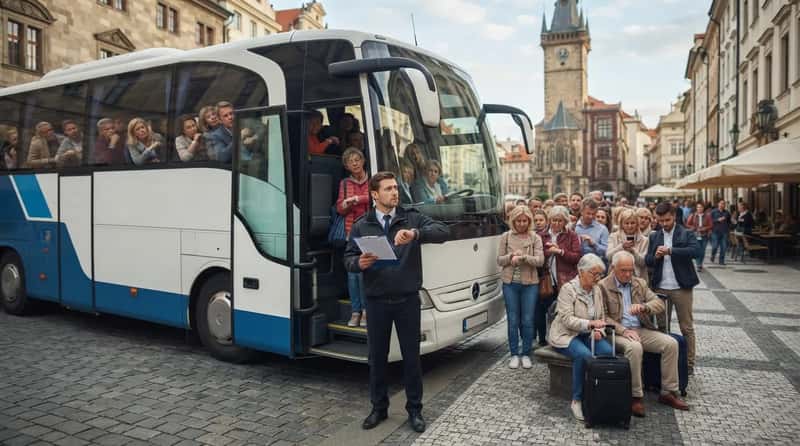
Every guide has a headcount story. Every single one.
The nightmare is always the same: someone wanders toward a different attraction or loses track of time, and the whole coach stalls while the guide scrambles. It’s rarely the teenagers.
Guides describe the sinking feeling of a headcount that doesn’t add up at departure time. The missing passenger is almost always someone confident, independent, and totally convinced they had the timing right.
The real cost nobody calculates: forty people’s afternoon gets rewritten because of one person’s detour. Museums get missed, reservations get lost, and the guide absorbs the blame.
Guides have learned to fear one exact phrase: “I’ll catch up.” The person who says it is almost always the one the whole bus ends up waiting for.
- Professional guides build “buffer time” precisely for this.
- The missing passenger rarely apologizes with the weight the moment deserves.
Coach tours run on collective trust. Break it once, and the whole bus feels the shift for the rest of the trip.
But that’s nothing compared to what we found about #6…
#6 – The Complainer Runs the Mood of the Entire Bus
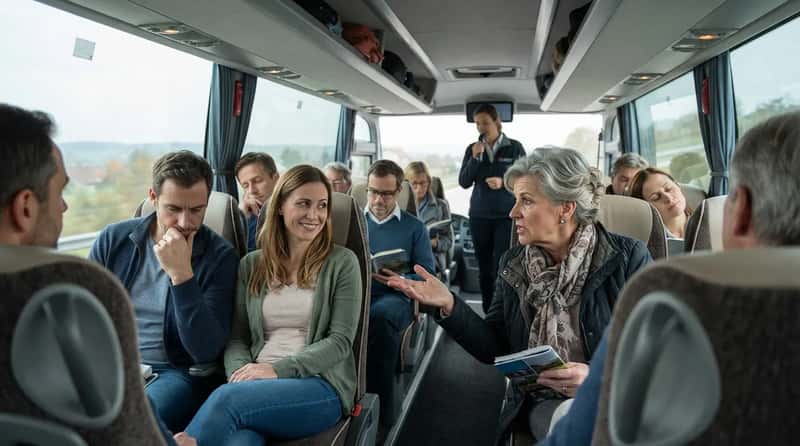
Every group has one. Few realize how much power they actually hold.
The complainer rarely targets the guide directly. Instead, they work the crowd – at dinner, in the hotel lobby, at every single stop.
What the data actually shows: travelers who roll with changes report the best overall experience afterward. The ones who resist every variation poison their own trip – and quietly, everyone else’s too.
Guides notice this fast, because it shapes the group’s entire mood for the rest of the trip. One chronic complainer can turn a dream itinerary into a grind by day four.
- Veteran travelers learn to physically distance from the complainer.
- Guides are trained to redirect, not confront – so the complainer rarely gets honest feedback.
Quick Compare
- Flexible travelers: report smoother trips and closer group bonds.
- Resistant travelers: clash with changes and drag down group morale.
- Guides: quietly redirect friction instead of confronting it head-on.
Most tours have one. If you still can’t spot them, there’s a chance it might be you.
But that’s nothing compared to what we found about #5…
#5 – Strangers Become Closer Than Old Friends, Then Vanish
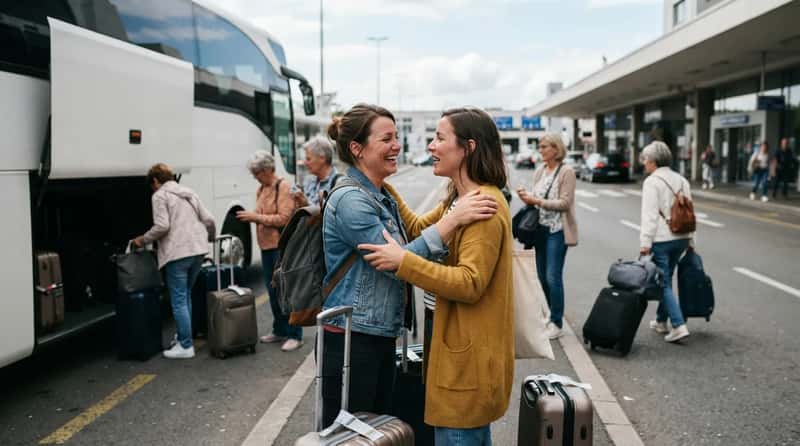
This one catches people completely off guard.
Hours of shared boredom, meals, and minor disasters compress years of normal friendship into a few days. By the final stop, a busload of strangers can feel like old friends.
It’s surprisingly easy to open up to someone you’ll likely never see again. The temporary nature of the connection is exactly what makes it feel safe.
Then the tour ends. Travel friendships are tied to a shared environment of new places and temporary freedom – and once that environment disappears, the friendship has to find a place in ordinary life.
- Most coach tour friendships don’t survive the return flight.
- The ones that do are genuinely life-changing.
Some of these friendships turn into future trips booked together. Group energy on a coach often shapes how the whole journey gets remembered – not just the destination.
But that’s nothing compared to what we found about #4…
#4 – The “Optional” Extras Are a Carefully Designed Revenue System
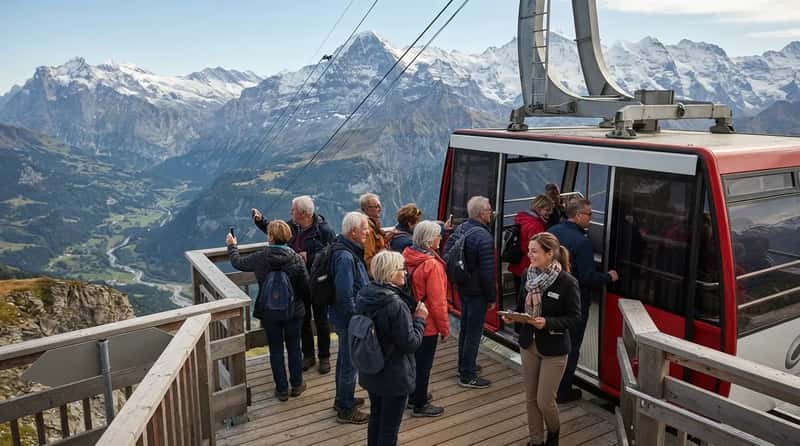
That scenic gondola ride. That “exclusive” dinner only your group supposedly gets.
Premium tour companies sometimes bundle these in for free, but many charge per experience. It feels personal, but it’s really a second revenue stream running parallel to your itinerary.
The uncomfortable truth: the more stunning the setting, the higher the optional price tends to be. Arrive at a breathtaking viewpoint after five hours on a coach, and passengers say yes far more easily – that’s not an accident.
Your tour director handles tickets, timing, and check-ins in the background. What they rarely announce is which of those “optional” activities pay them a commission – and most do.
- High-end operators often bundle everything upfront to avoid this friction.
- Budget operators use optional extras to close the margin gap.
Many passengers end up spending more on optionals than they budgeted for the entire trip. The itinerary you signed up for and the one you actually experience are rarely the same.
But that’s nothing compared to what we found about #3…
#3 – The Coach Is Statistically One of the Safest Vehicles on the Road
Most people assume flying is the safest way to travel. They’re wrong about coaches too.
U.S. motorcoaches had 45% lower crash rates than automobiles per passenger mile in 2022. You are statistically safer on a coach tour than driving your own car to the airport.
Part of the reason is perception. A coach accident involves many people and makes headlines; a car crash – which happens far more often per mile – barely makes local news.
In 2019 alone, coach tours generated 23 million visits to UK attractions, contributing £14 billion to the economy. That volume, run by professional drivers under strict rest rules, builds a safety record most passengers never hear about.
- Coach drivers operate under legally enforced rest break rules.
- Modern coaches carry multiple redundant safety systems as standard.
At a Glance
- 45% lower crash rate for U.S. motorcoaches versus automobiles per passenger mile (2022).
- 23 million UK attraction visits by coach in 2019 alone.
- £14 billion contributed to the UK economy that same year.
- Professional drivers work under mandated rest-break schedules.
The format many people call “risky” or “old-fashioned” is actually one of the most protected ways to travel. Nobody puts that on the brochure either.
But that’s nothing compared to what we found about #2…
#2 – The Group’s Worst Habit Gets Left Behind Without a Word
Here’s something tour operators never say out loud. Some passengers quietly ruin the trip for everyone around them – and the group handles it without ever saying a word.
There’s always one passenger who treats the coach as one long conversation opportunity. Polite responses get mistaken for genuine interest, so fellow travelers turn to headphones, fake naps, and sudden window-gazing.
The silent adaptation is fascinating to watch. Seat choices shift, dinner tables rearrange, walking pace changes – the group reorganizes itself around the difficult passenger, who almost never notices.
Guides remember these moments for years. Not because they’re bitter, but because the job was never really about cathedrals or canyons – it’s about forty strangers on one bus.
- Guides document these behaviors privately but rarely intervene unless it escalates.
- The self-regulating nature of coach groups is one of the industry’s strangest and least-discussed dynamics.
It isn’t malicious. It’s just people – and it shapes every tour in ways no itinerary accounts for.
But that’s nothing compared to what we found about #1…
#1 – You Will Leave a Different Person, and You Won’t Know Why Until Weeks Later
Nobody talks about this. The brochure certainly never mentions it.
By the second or third coach tour, first-time anxiety turns into ease. But even on a first trip, something shifts that’s hard to name on the ride home.
Turns out the research explains why. Travel friendships form inside a shared bubble of new places and temporary freedom – and once that bubble disappears, the person you were before the trip doesn’t quite fit the same way.
Modern coach travelers are curious and social – people who’d rather see things than sit in airport security lines. What no operator tells you is that the destination is often the least transformative part of the trip.
The real memory is usually the five-hour drive through nowhere, seated beside a stranger who says something that quietly changes your perspective. That’s what people still remember twenty years later.
Adults aged 60 and older are the fastest-growing group in coach tourism, drawn by its comfort, affordability, and social format. They aren’t just looking for a seat on a bus – they’re chasing something group travel delivers better than almost anything else.
Why It Stands Out
- Adults 60 and older are the fastest-growing segment of coach tourism.
- The appeal is comfort, affordability, and built-in socializing.
- The friendships formed on board often outlast the itinerary itself.
The seat wars, the missing passenger, the guide who already knows your personality – none of it matters as much as that quiet moment when the coach is dark and moving, and the person beside you says something real.
That’s what nobody talks about. And it’s the whole point.
The Bottom Line
Coach tours hide more than any brochure is willing to admit. Seat territory turns tribal within 48 hours, and one chronic complainer can quietly reshape the mood of forty strangers.
“Free time” evaporates faster than anyone expects, and someone always goes missing when you least expect it. But underneath all of that, something genuine is happening – the strange, fast intimacy of strangers who end up feeling like old friends by the final stop.
Coaches are statistically 45% safer per passenger mile than cars, yet carry a reputation for being mundane. The truth is more interesting, and more human, than the industry ever lets on.
Taken a coach tour and spotted something this list missed? Drop it in the comments – we know you’ve got a story.