Everyone assumes a coach tour is the safest, most boring version of a vacation money can buy. A bus seat, a laminated itinerary, forty strangers staring out the same window. That’s the myth, and it’s almost entirely wrong.
There are seat feuds, secret hierarchies, hidden fees nobody mentions in the brochure, and moments of real chaos that veterans never bring up in polite conversation. Here’s what actually happens once the doors close and the wheels start turning.
#10 – The Seat You Choose on Day One Is Basically a Life Decision
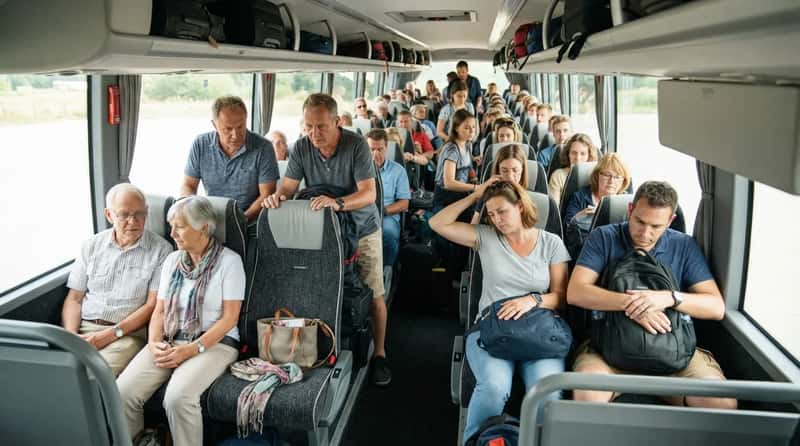
The real chaos on a coach tour has nothing to do with the itinerary. It starts before the engine even turns over, with the seats.
Getting on and off a 40-seat bus multiple times a day takes longer than anyone expects. Within hours, passengers form territorial claims on their row like it’s real estate.
The front rows go to early risers and the assertive; the back rows collect night owls and social smokers. Elderly passengers often gravitate toward the front for easier boarding, which quietly gets negotiated out every single morning before the driver says a word.
Miss the unwritten rules and you could spend a week wedged next to someone who reclines into your lap without apology. Some operators even rotate seating during rest stops specifically to break up cliques before they calcify.
Most passengers never see this coming. The regulars use it like a chess move.
But that’s nothing compared to what we found about #9…
#9 – There Are Hidden Costs Nobody Puts in the Brochure
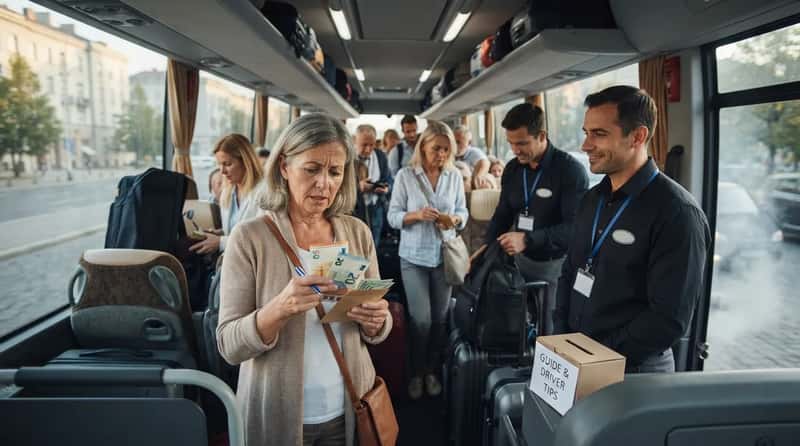
The advertised price is almost never the real price. Tours pad their income with “optional” extras, a folklore dinner here, a factory shopping stop there, and the base price stays artificially low because those add-ons are expected to sell.
Most guided tours cover accommodation, transport, some meals, and entry fees. But even the all-inclusive ones have a gap between what’s “included” and what’s “expected,” and that gap is where wallets get surprised.
Then there’s tipping, which blindsides almost everyone. Nobody sets aside cash ahead of time, so the final morning turns into a scramble to break a hundred-dollar bill while the bus idles outside.
The informal norm hovers around eight dollars per person per day for the tour director, plus another three for the driver. Nobody puts that number in the headline price, you just find out when everyone else is already holding an envelope.
Fast Facts
- Guide tip norm: roughly $8 per person, per day
- Driver tip norm: roughly $3 per person, per day
- Optional dinners and excursions rarely appear in the base tour price
- Even “all-inclusive” tours typically exclude alcohol, souvenirs, and select entry fees
But that’s nothing compared to what we found about #8…
#8 – The Tour Guide Knows Exactly Who the Difficult Passengers Are Within Two Hours
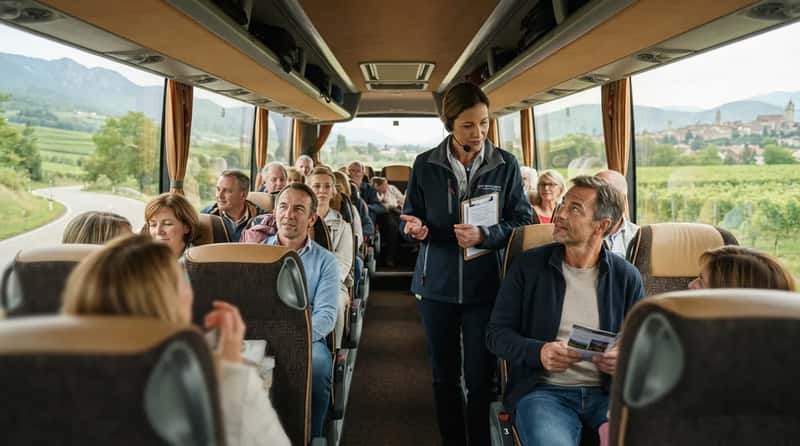
The single biggest factor in group harmony isn’t the itinerary. It’s whether the guide is quietly, expertly managing the room.
Every tour collects the same character types: the know-it-all, the self-appointed assistant guide, the chronically late one, the nightly party animal, the comedian, the loner, the loud one. Good guides clock all of them by lunchtime on day one.
What passengers rarely realize is that guides have private systems for handling each type. A member who keeps correcting the guide mid-speech gets a quiet word in private, smoothed over so gently the rest of the coach never notices.
Guides aren’t just reciting history and architecture. They’re running live group psychology, all day, every day, without ever saying so out loud.
But that’s nothing compared to what we found about #7…
#7 – The Scheduled Bathroom Stop Is More Engineered Than You Think
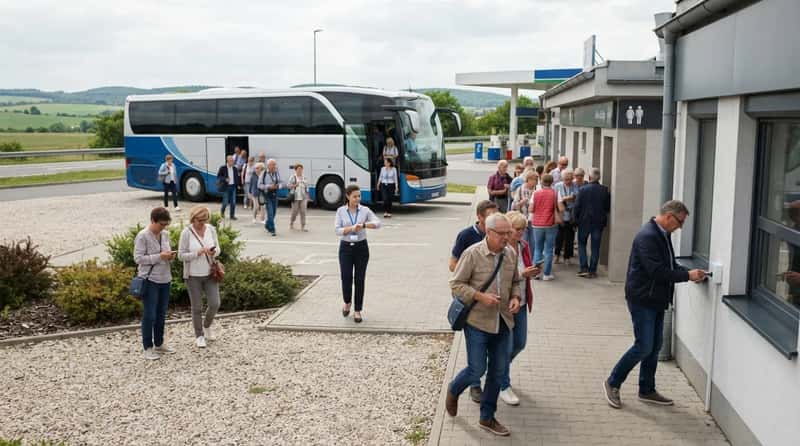
This sounds minor. It is not.
Guides plan every break with more precision than you’d guess, factoring in group size, road conditions, and how many people will likely need a second stop within twenty minutes. It’s logistics dressed up as a coffee break.
Miss the window or linger too long, and the whole day’s timing tips over. Most stops on an itinerary only get 30 to 60 minutes of sightseeing, so a ten-minute delay at a gas station comes straight out of a castle visit.
The passenger who ignores the stop and then asks for another one twenty minutes later becomes quietly infamous. Veterans charge their phones at every stop, even a five-minute one, because outlets are scarce and shared.
The prepared passengers, without meaning to, quietly drain the unprepared ones.
But that’s nothing compared to what we found about #6…
#6 – The “Optional Excursion” Is Actually a Revenue Mechanic – and It Can Sour the Whole Trip

A good tour treats “optional” as genuinely optional. Nobody gets a lecture or a cold shoulder for skipping the upsell.
Plenty of tours don’t work that way. Decline the paid add-on, and the afternoon itinerary sometimes quietly reshapes itself around the paying group, leaving you stranded with dead time in a hotel lobby.
This is one of the most divisive dynamics on any multi-day tour, and almost nobody puts it in a review. Budget operators sometimes cut corners elsewhere, buses, hotels, guide experience, and claw the margin back through these “optional” upsells.
Vague brochure language is usually a warning sign. If the excursion description is fuzzy, the company probably hasn’t scouted it themselves.
Worth Knowing
- A vague, one-line excursion description is a common red flag
- Reputable operators let you skip the add-on without reshaping your day
- Budget-priced tours often recover margin through upsells rather than the base fare
- Asking the guide on day one what happens if you opt out usually tells you everything
But that’s nothing compared to what we found about #5…
#5 – A Surprising Number of Lasting Friendships – and Romances – Start on These Tours

Nobody advertises this one. The brochures sell landscapes, not connection.
But coach tours are one of the most effective social accelerators most adults will ever stumble into. Smaller groups especially create real communities fast, not just polite small talk.
Shared discomfort works like social glue. A delayed coach, rain at the wrong castle, a dinner where the wine runs out, these moments compress months of normal acquaintance into a single week.
Some travelers meet on one tour and deliberately book another together the following year. Returning for a second, third, even fifth trip with people you met on your first one is genuinely common, and first-timers are always stunned by how fast it happens.
But that’s nothing compared to what we found about #4…
#4 – The Coach Is Statistically One of the Safest Vehicles on the Road – and Almost Nobody Knows It
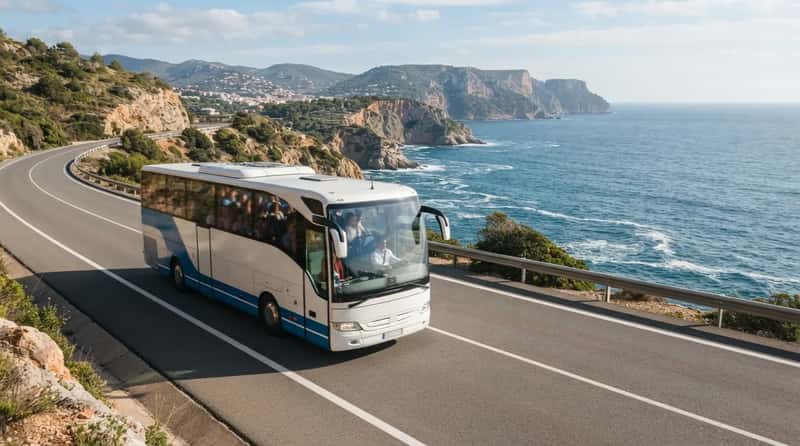
Ask people to rank transport safety and the coach usually lands near the bottom. The data says the opposite.
Coach travel is one of the statistically safest ways to move on roads. Professional drivers train regularly, pass health checks by law, and know the routes, weather, and traffic patterns better than any GPS.
The carbon story is just as surprising. the average coach journey creates 0.04 tonnes per 1000 miles. In comparison, an average car would create 0.29 tonnes per 1000 miles. national rail services produce 0.07 per 1000 miles per passenger.
Quick Compare
| Mode | CO2 per 1,000 miles |
|---|---|
| Coach | 0.04 tonnes |
| National rail | 0.07 tonnes |
| Car | 0.29 tonnes |
Most people book a coach tour despite the transport, not because of it. Turns out the transport itself might be the strongest argument for booking one at all.
But that’s nothing compared to what we found about #3…
#3 – The “Quiet” Unwritten Rules Run the Entire Coach – and Breaking Them Has Consequences
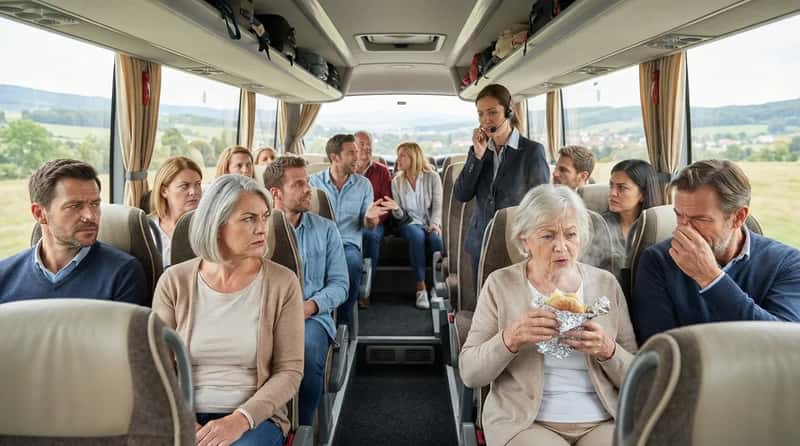
Every coach tour runs on two rulebooks. One is printed in the welcome pack; the other is real, unspoken, and enforced by everyone on board.
The passengers who adapt fastest to the unwritten one tend to enjoy the trip the most, even the ones who broke every rule on day one.
The biggest rule is smell and noise. Every tour has one passenger who unwraps a snack the entire coach can smell within seconds, and regulars learn fast to stick to quiet, low-odor food.
Volume is the other one. Passengers who hold loud personal conversations while the guide is speaking get noticed, by the group, by the driver, by the guide, and the social cost is real even if nobody says a word to their face.
But that’s nothing compared to what we found about #2…
#2 – The Tour Director Is the Most Underestimated Person on the Trip

Passengers think of the tour director as a friendly narrator. Veterans know they’re the fulcrum the entire trip balances on.
Some multi-day tours swap guides at every city border, handing you to a local expert who knows the destination but nothing about your group’s rhythm or inside jokes. That handoff is exactly where trips quietly fall apart.
The best directors read passenger energy constantly. They adjust the pace, slip in unscheduled stops, and defuse tension before it becomes a group problem, all without anyone noticing.
A rough coach with a great guide is survivable. A smooth coach with a mediocre guide is the trip people quietly regret for years.
But that’s nothing compared to what we found at #1…
#1 – The Coach Tour Is One of the Only Travel Formats That Regularly Reaches Places Nobody Else Gets To
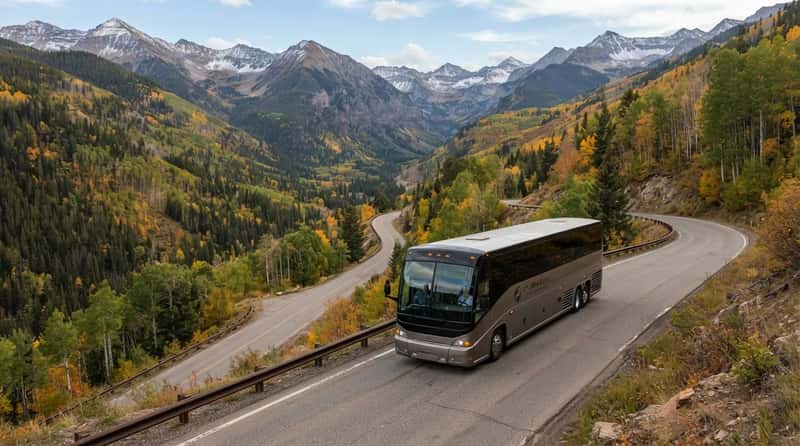
Here’s the twist that surprises everyone who dismisses coach travel as the lazy option. Airlines don’t go to these places, and train lines don’t run there either.
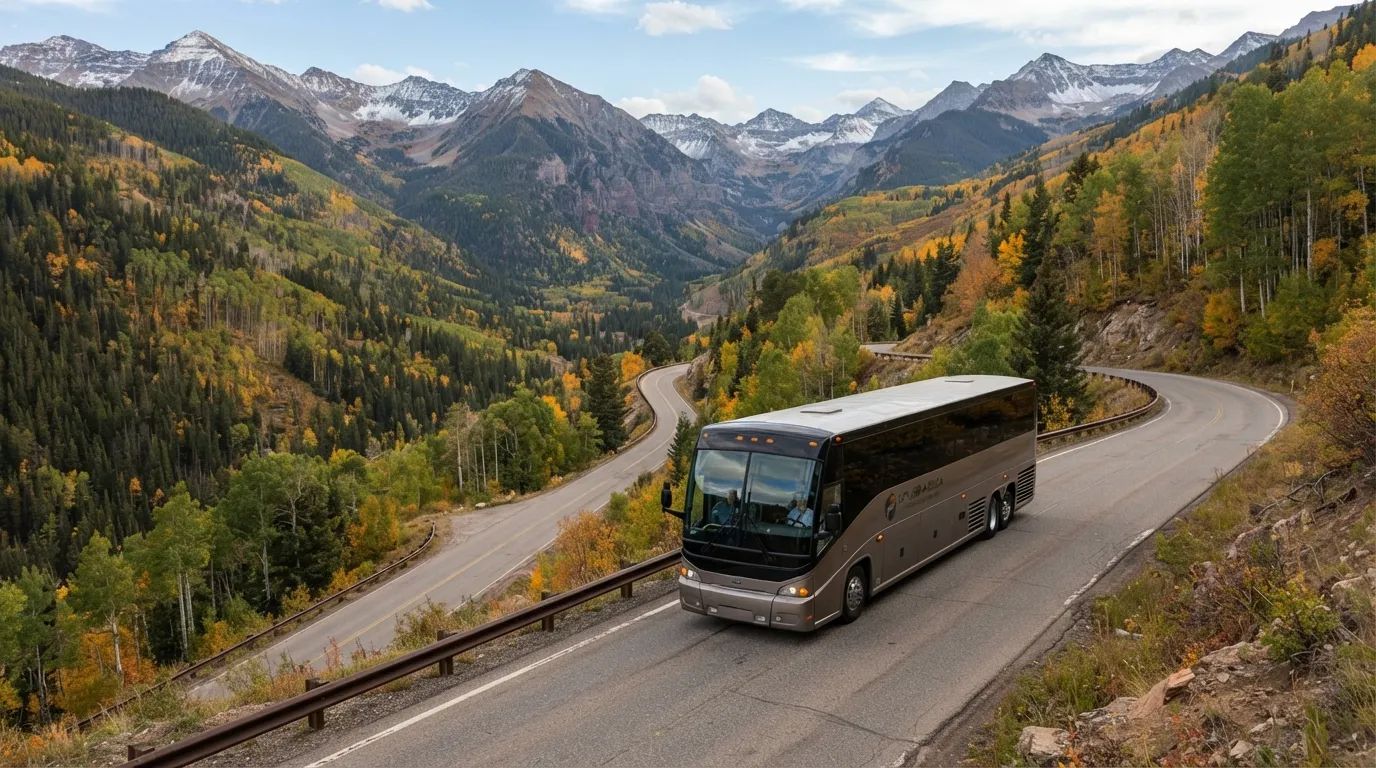
Coaches reach small towns, rural regions, and emerging destinations no other transport mode bothers with. A rental car gets you close, just not with a local expert narrating from the front seat.
The scale is bigger than most people realize. North America alone accounts for roughly 19.6% of global coach tourism revenue, and the U.S. motorcoach industry alone carries over 600 million passenger-trips a year, much of it through underserved rural corridors.
At a Glance
- Total passenger trips remained strong at 604 million as compared to 762 million (international and domestic) enplanements on domestic air carriers and 30.9 million passengers for Amtrak
- Charter trips comprised 66.2% of all motorcoach trips, with most being single-day journeys
- Industry motorcoaches collectively traveled over 1.7 billion miles last year
- The motorcoach industry delivered 40 billion passenger miles in 2024
Industry data also flags coaches as comparably eco-friendly to long-distance rail per passenger, and usually cheaper than most other holiday formats. The post-pandemic travel rebound has only accelerated demand, and a new generation is quietly discovering what veterans already knew.
For plenty of destinations, the coach tour doesn’t just connect the dots. It IS the only dot.
The Bottom Line
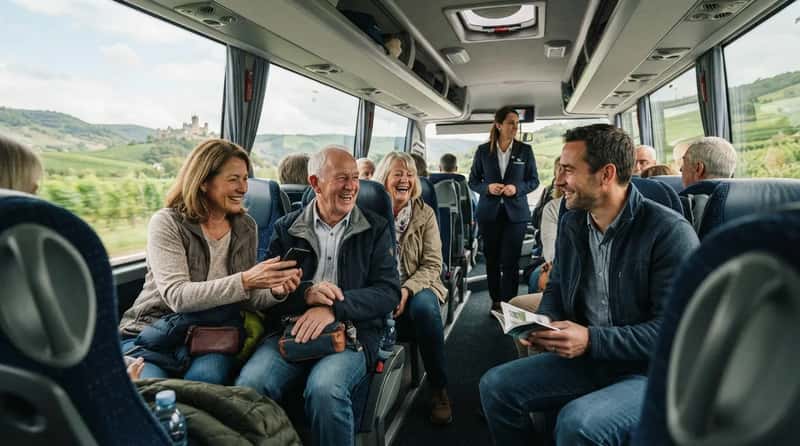
Coach tours are one of the most misread travel formats on the market. They’re statistically safer than cars and often greener than trains.
They run on unwritten social rules that quietly separate great trips from forgettable ones. The tour director, not the itinerary, is the variable that decides which kind you get.
Hidden costs are real, seat politics start on day one, and the optional excursion is sometimes a revenue trap dressed up as a bonus. But underneath all of it, something genuinely unexpected happens on these trips: strangers become the reason people go back.
Did we miss a coach tour reality that caught you off-guard? Drop it in the comments.