You hit “Book Now,” get a confirmation number, and assume you’re set. Real data says otherwise – a surprising number of “confirmed” bookings still get canceled, walked, or quietly erased before you ever check in.
Hotels, airlines, and booking platforms don’t treat an unconfirmed reservation the same way, and the fine print rarely favors the guest. Here’s exactly what happens when nobody locks that booking down – starting with the clock you didn’t even know was running.
#8 – The Moment You Hit “Book,” a Clock Starts

The booking process feels final, but the countdown begins immediately.
An unconfirmed booking occurs when a traveler completes a purchase, but the booking does not successfully confirm in the provider’s reservation system. That gap – between payment and confirmation – is where things unravel.
The traveler has paid but has not received a ticket, and unconfirmed bookings can lead to travelers being denied entry to the activity entirely. You have technically bought something that doesn’t yet exist.
Unconfirmed bookings are time-sensitive and require immediate attention – acting within 24 hours significantly reduces cancellation risk. Most travelers have no idea this window is so tight.
But that’s nothing compared to what we found about #7…
#7 – “Confirmed” Doesn’t Always Mean What You Think
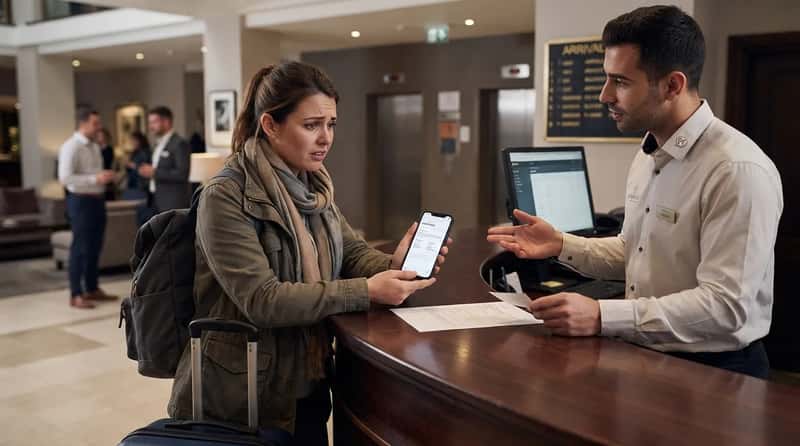
Here’s the part that shocks most people: a confirmed booking is not the same as a guaranteed booking.
A confirmed reservation is the standard state most bookings reach – but it doesn’t automatically mean guaranteed. A confirmed, non-guaranteed booking still releases at cut-off if the guest doesn’t show.
A confirmed reservation is really just a service provider’s written acknowledgment to honor a booking request. Whether that acknowledgment becomes a legally binding contract depends on things like offer, acceptance, consideration, and intent to contract.
The single most surprising fact: you can have a written confirmation email and still lose your room. The word “confirmed” in your inbox is not a legal shield without a payment or card on file to back it up.
Worth Knowing
- Four legal ingredients must line up: offer, acceptance, consideration, and intent to contract.
- A confirmation email alone usually satisfies only one or two of those.
- Adding a payment or a card guarantee is often what tips a booking toward enforceable.
- Cancellation terms are written almost entirely to protect the property, not the guest.
The terms you agree to when booking a hotel are generally pretty one-sided – they spell out the penalties that apply to guests who cancel, but say almost nothing about the obligations of the hotel.
But that’s nothing compared to what we found about #6…
#6 – The 6 PM Trap That Catches Late Arrivals
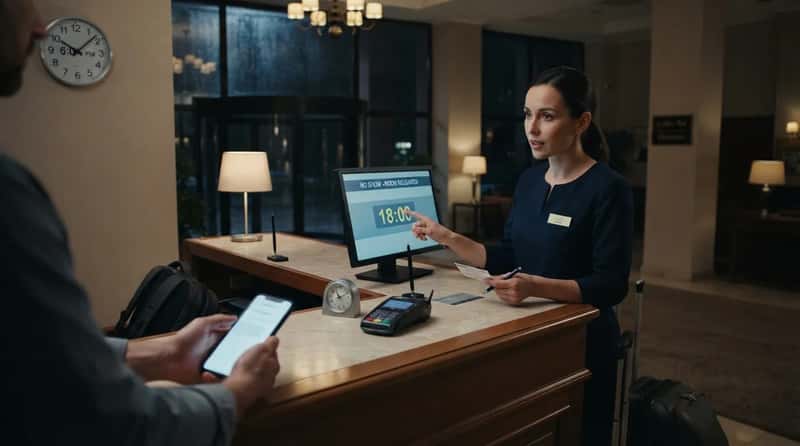
If you’re planning to arrive late, this one could save you a night’s sleep – literally.
An unguaranteed reservation can be released if you do not appear by a certain time, typically 6 PM or midnight, depending on the property. Most guests never read the fine print that specifies this.
Never assume a flight delay automatically excuses a no-show. Without notification, the hotel may release the room and still charge you for the night.
That double hit – no room AND a charge – is the scenario nobody plans for.
If your flight is delayed or you expect to arrive very late, one phone call to the hotel is all it takes to protect your booking. Most properties will hold a room until 2 AM to 4 AM once they’re notified.
One call. That’s the entire solution – and most people skip it.
But that’s nothing compared to what we found about #5…
#5 – Airlines Play by a Completely Different Rule
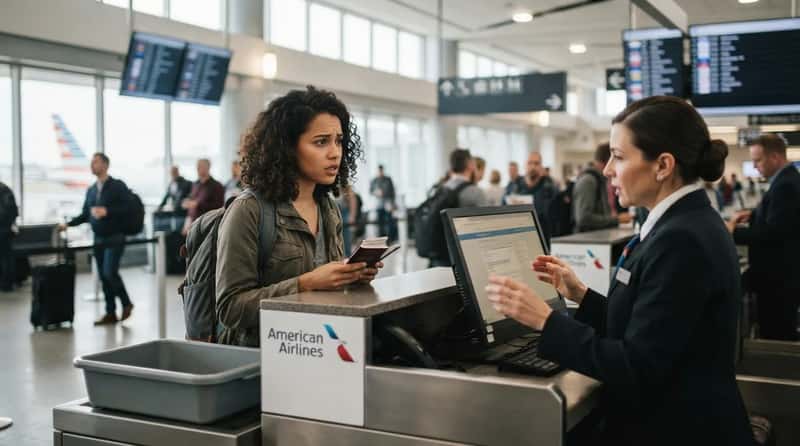
Hotels and airlines handle unconfirmed bookings very differently, and most travelers confuse the two systems.
The US Department of Transportation requires airlines to “hold a reservation at the quoted fare for 24 hours without payment or allow a reservation to be canceled within 24 hours without penalty.” That rule only applies under specific conditions, though.
If it’s within 24 hours of booking, and you’re more than seven days out from departure on a flight to or from the US booked directly with the airline, you can cancel with no penalty.
The trap most travelers fall into: booking through a third-party platform voids this protection entirely. The rule doesn’t apply to flights booked through online travel agencies, within seven days of departure, or flights outside the US.
Quick Compare
- Direct + 7 days out: Full 24-hour cancellation protection under DOT rules.
- Third-party (OTA): The federal rule doesn’t apply – protection depends on the platform’s own policy.
- Within 7 days of travel: No 24-hour protection either way, regardless of where you booked.
- International itinerary not touching the US: Coverage becomes inconsistent.
The 24-hour rule sounds universal. It’s not.
Before the 24-hour hold is up, you’ll need to pay for your ticket or it will be canceled. Unconfirmed flight bookings simply evaporate – quietly and without warning.
But that’s nothing compared to what we found about #4…
#4 – The No-Show Timestamp You’ve Never Heard Of

There’s a specific moment in the night when a hotel officially declares you a no-show. Most guests have never been told what time that is.
A no-show is when the guest simply doesn’t arrive. It’s usually determined somewhere between midnight and 2 AM for all rooms that haven’t received check-ins – those guests get flagged and their bookings are cancelled.
Because a guaranteed room stays held either way, a guaranteed reservation protects the hotel’s revenue – even if the guest never shows. The property can charge the card or keep the deposit instead of losing the booking outright.
The most surprising fact: a no-show on a guaranteed reservation can result in a full night’s charge to your card while you’re sleeping elsewhere. You lose the room and pay for it.
Late cancellations and no-shows drastically lower occupancy. The easiest way hotels recover that lost revenue is to charge – usually the first nightly rate – as a penalty, since they couldn’t resell the room in time.
But that’s nothing compared to what we found about #3…
#3 – Overbooking Is Not an Accident – It’s a Strategy
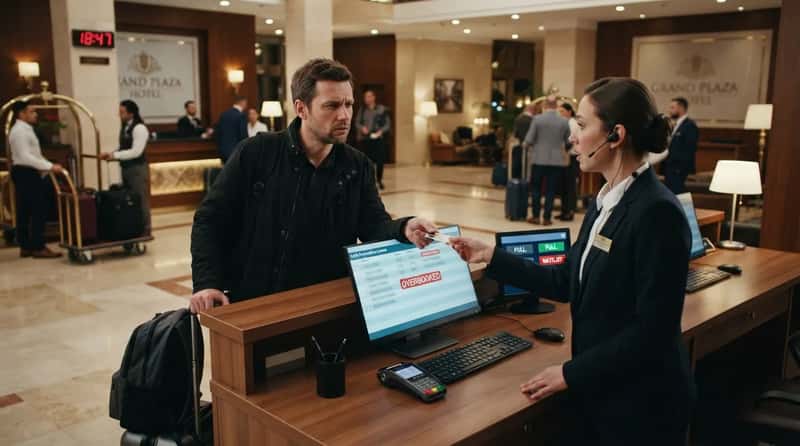
Here’s the part the industry doesn’t advertise: hotels routinely sell more rooms than they have. On purpose.
Overbooking means increasing the total capacity of the hotel by selling more rooms than actually exist. It’s implemented at properties with a lot of no-shows or cancellations, specifically to optimize occupancy and maximize revenue.
Much like airlines, hotels have a natural business incentive to overbook in case some customers don’t show up. They can effectively double their revenue on a single room this way, and the number of overbooked rooms is usually based on the property’s historical no-show rate.
Fast Facts
- Hotels typically see a no-show rate between 5% and 15% on any given night.
- To offset that, properties may overbook rooms by up to 15%.
- A 200-room hotel confirming 220 reservations on a busy night is normal, calculated math.
- If more guests show up than the math predicted, the overflow gets walked.
The deliberate nature of overbooking is the industry’s worst-kept secret. It rarely happens by accident at a well-run property – it happens through calculated decisions made at exactly the moments reservation types create.
Hotels sell a product that expires every night. Once that night passes, an empty room can never be sold again for that date – which is exactly why properties overbook, reassign, or release rooms the moment they suspect a guest isn’t coming.
But that’s nothing compared to what we found about #2…
#2 – Being “Walked” Is a Real Policy, and You’re the Last to Know
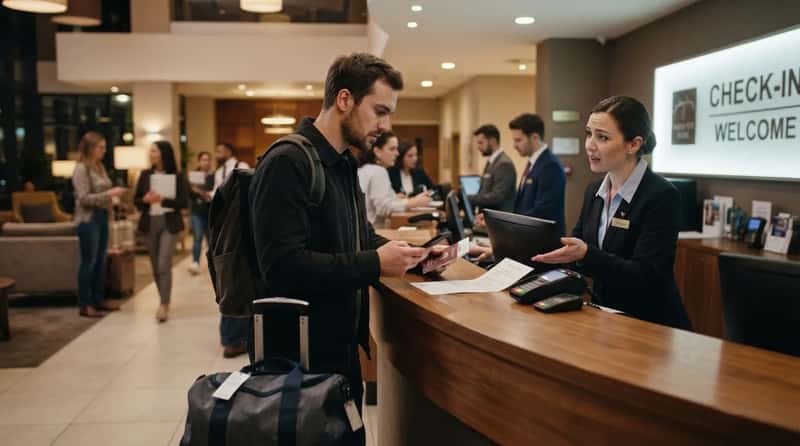
When a hotel runs out of rooms, someone gets sent away. The industry has a word for it – and a system to decide who that someone is.
Major hotel chains have official policies about “walking” guests when more people show up to check in than there are rooms available. You can minimize your chances of being walked by having status with the chain and by booking directly, since third-party bookings and status-free guests get walked first.
If the hotel can’t provide your booked room category, they’re required to relocate you to an equal or better room, sometimes at a different property, at no additional cost. This is known as being “walked.”
If you are walked to another property, get everything confirmed in writing before you leave the front desk – the hotel is obligated to cover your transfer and provide accommodation of equal or better quality.
The uncomfortable truth: booking through Booking.com, Expedia, or any OTA puts you near the top of the walk list. Direct bookers and loyalty members are protected last; third-party guests get moved first.
Most travelers choose the OTA to save fifteen dollars and end up paying the price.
But that’s nothing compared to what we found at #1…
#1 – The Legal Reality of an Unconfirmed Booking Is Almost Entirely on You
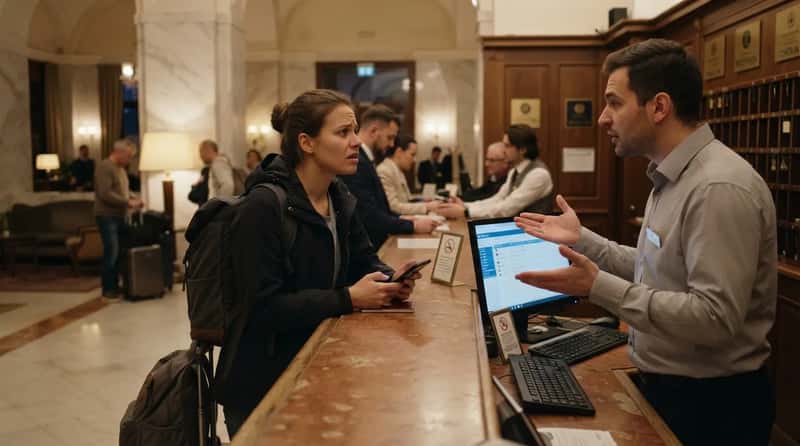
This is the finding that catches everyone off guard – and the one that matters most.
Whether a “reservation confirmed” message creates a legally binding contract depends on meeting elements like offer, acceptance, consideration, and intent to contract. Deposits, credit card guarantees, and cancellation policies are the real factors that determine enforceability.
When a hotel cancels your reservation, you’ll often find that no immediate solution is offered in the cancellation notice itself. That can leave travelers feeling powerless – and hotels are frequently vague in their policies to avoid fully compensating them.
The single most important fact in this entire article: without a credit card guarantee or prepayment, a booking that nobody confirms has almost no legal protection behind it. Most hotels and vacation rentals will offer compensation if they cancel on you, especially last-minute, but you might have to ask for it explicitly.
Quick Compare
- Airline bump: Federal rule mandates cash compensation up to $2,150 for delays over two hours.
- Hotel walk: No federal law requires anything beyond your money back.
- Exception: Florida law fines hotels up to $500 per guest turned away for overbooking.
- Everywhere else: What you actually receive depends on brand policy, not statute.
To avoid being bumped, try to steer clear of third-party booking sites – they’re usually the first to be sacrificed if a hotel is oversold – and book direct instead. That one habit shift changes almost everything about where you stand when something goes wrong.
The Bottom Line

A booking nobody confirms is not a reservation – it’s a placeholder that expires on someone else’s schedule.
Hotels can release unguaranteed bookings as early as 6 PM. Airlines can void unpaid holds within 24 hours.
And when overbooking hits, third-party bookers are walked first. The word “confirmed” in your inbox means very little without a credit card guarantee or prepayment behind it.
Book direct, secure the booking with a card, and – if you’re arriving late – make one phone call. The system was never built to protect the traveler who assumes.