Most people assume is just a bathroom break – a quick pull-off before getting back on the highway. Long-haul drivers who live on the road for weeks at a time see something else entirely.
To them, is an office, a bedroom, a dining room, and a security checkpoint, all rolled into one gravel lot. Here’s what they notice that the rest of us walk straight past – and why some of it should make you look twice.
#10 – The Parking Lot Tells You Everything Before You Even Step Out
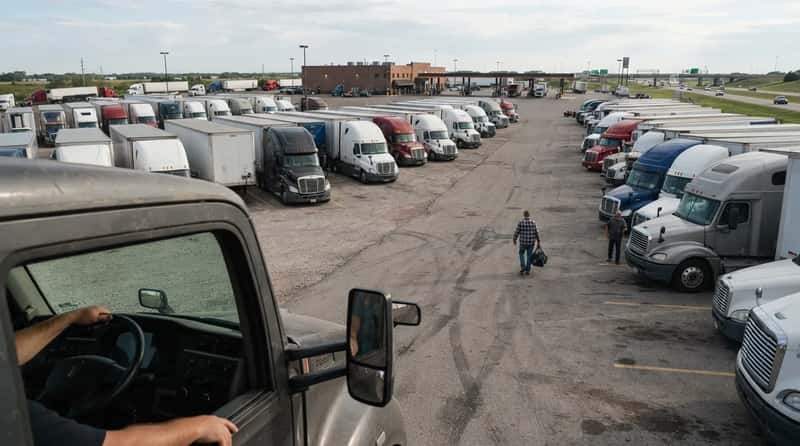
Before a veteran driver even opens the truck door, they’ve already scanned the whole lot. If something feels wrong, they don’t investigate – they leave.
Noticing who’s parked nearby and who’s walking around isn’t paranoia. It’s a reflex built over years, and it kicks in the second the rig starts slowing down.
The fill rate of the lot is the first tell. Roll in late at night and the good spots are already gone, so experienced drivers try to arrive by mid-afternoon instead.
A lot that looks empty or isolated isn’t a lucky find – it’s a red flag. Veterans would rather squeeze into a crowded stop full of other truckers than have a quiet lot all to themselves.
Even the parking spot itself is a calculated choice. Drivers look for a pull-through space, because a fast, clean exit can matter more than convenience.
But what they notice about the lot is only the opening move. Wait until you hear what they think about the lighting.
#9 – Lighting Is a Safety Report Card
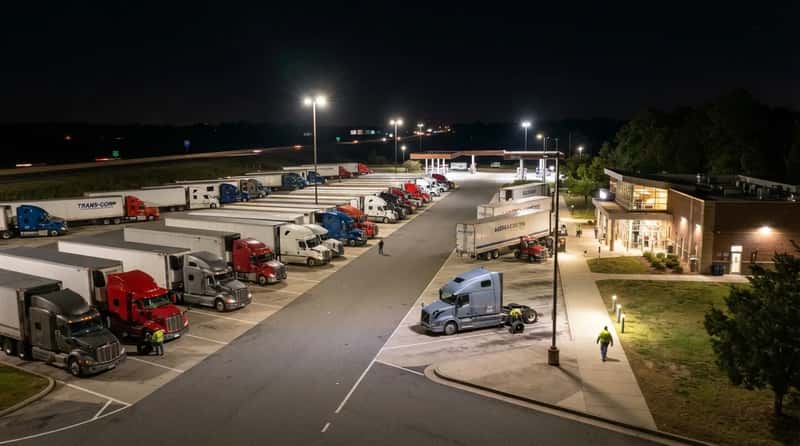
Veteran drivers read a rest stop’s lighting the way a home inspector reads a foundation crack. A few dead bulbs aren’t just annoying – they’re a warning sign.
Before they even pull in, many drivers check reviews from other truckers, hunting for stops with working cameras and bright lots. Good lighting tells them someone is actually managing the place.
Most rest areas and truck stops are poorly lit, and that darkness is directly linked to higher rates of accidents and crime. That’s not a rumor drivers repeat to each other – it’s a pattern mapped across thousands of stops on hundreds of routes.
Fast Facts
- Most rest areas and truck stops are poorly lit
- Poor lighting is directly linked to higher rates of crime and accidents
- Veterans check trucker reviews for lighting and camera coverage before arrival
- No security, no light, no people using the lot: three strikes and they move on
The professional habit is simple: stay in the light. Car travelers rarely glance at the fixtures overhead, but for drivers, it’s practically a survival instinct.
If a lot doesn’t have visible security, bright lighting, and other people actually using it, veterans treat that as three strikes. They move on to the next stop.
The story gets more complicated once you step inside the buildings themselves.
#8 – The Bathrooms Are a Dealbreaker, Not an Afterthought
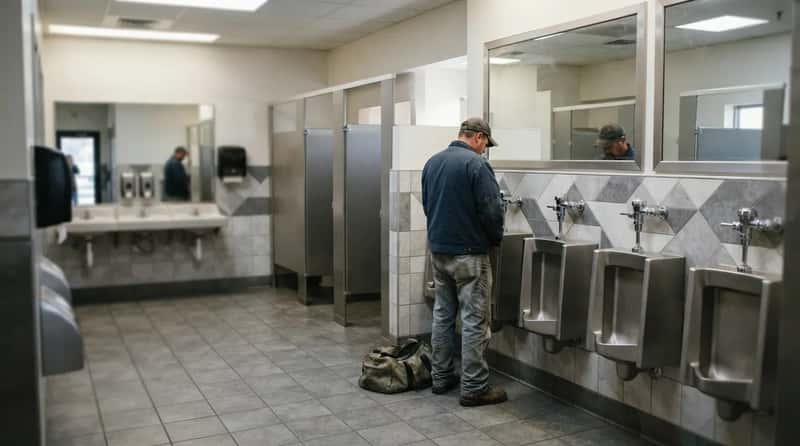
Ask any long-haul driver what ruins a rest stop, and bathrooms come up almost every time. This isn’t pickiness – it’s a quality-of-life issue backed by real numbers.
In one study of long-haul truck drivers, more than 28% rated bathroom services as “bad” or “terrible.” That number sounds small until you remember these drivers are comparing hundreds of stops they’ve used for years.
Bathroom quality is so predictable that veterans know which chains deliver and which ones don’t, without even walking inside. They can tell you which pumps flow fastest and which coffee is actually fresh, too.
Most drivers expect restrooms, showers, and parking to come free with fuel. The moment a stop starts charging for showers or locking restrooms, it loses points instantly – and rarely earns them back.
Full-service stops are supposed to offer restrooms, showers, laundry, food, and parking together. The gap between what drivers need and what they actually get is bigger than most travelers ever realize.
And what drivers notice about the food at these stops? That’s where it gets genuinely alarming.
#7 – The Food Options Are a Slow-Moving Health Crisis
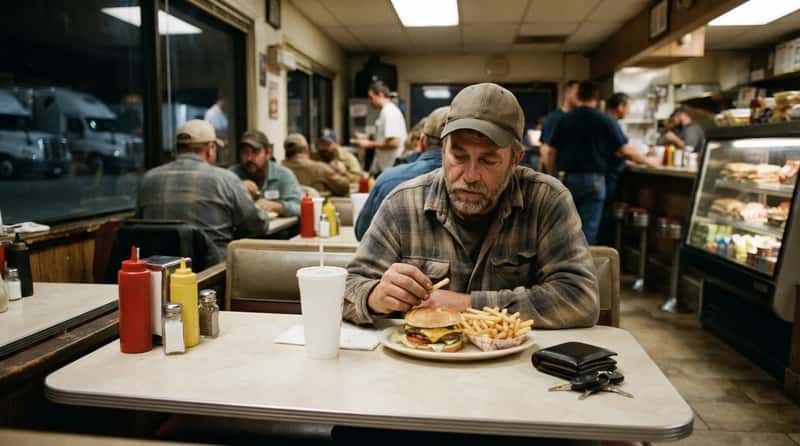
Most travelers see a rest stop burger as a guilty pleasure. Long-haul drivers see it as their only real option for the next 200 miles – and that’s a serious problem.
Trucking has the highest rate of obesity and diabetes of any occupation in the country, according to the Centers for Disease Control and Prevention. The food environment at rest stops is a major reason why.
Drivers point to the same barriers again and again: limited affordable healthy food, nowhere to store groceries, and no real time to cook. They don’t choose junk food because they want it – they choose it because it’s often the only thing there.
There’s also a noticeable lack of variety – different cuisines, healthier choices, options for food allergies. It’s just not built into most truck stop menus.
Even truck parking plays a role here, since drivers often end up choosing where to eat based on whether there’s room for their trailer, not what’s on the menu. It’s a chain reaction most people never see.
Speaking of parking – the situation is even worse than most outsiders realize.
#6 – Finding a Parking Spot Is a Strategic Problem, Not a Minor Annoyance
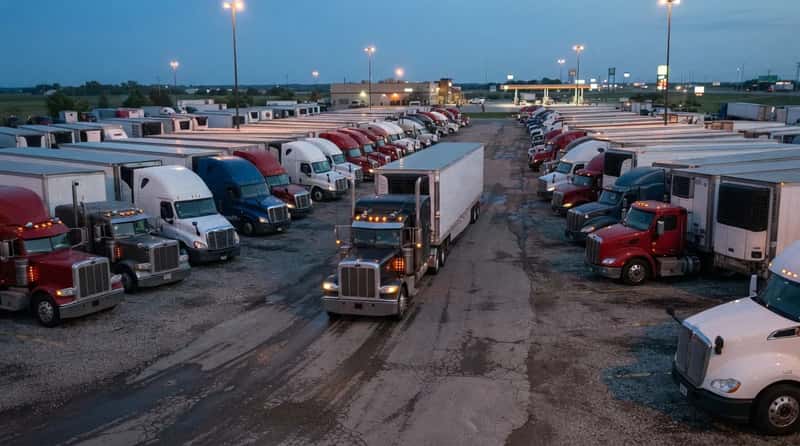
Regular drivers pull in and grab the first open space. Long-haul drivers approach it like a chess move, because the board keeps getting more crowded.
Parking is one of the most important amenities to long-haul drivers, yet safe, affordable, accessible parking is genuinely scarce. Many stops simply don’t have enough room for the trucks trying to use them.
When there’s nowhere safe to park, drivers face an ugly choice: keep driving while fatigued, or pull into somewhere unsafe. That’s not a small tradeoff – that’s a choice between a ticket and a crash.
One study of 1,788 truck drivers found 81% struggled to find parking in urban areas, often forcing them past their legal hours of service. More than 88% said there simply weren’t enough rest areas or safe pull-outs to begin with.
At a Glance
- 81% of surveyed drivers struggled to find parking in urban areas
- 88%+ said there aren’t enough rest areas or safe pull-outs
- Parking stress and fatigue contribute to over $733 million a year in turnover costs
The fallout from all this stress and fatigue contributes to more than $733 million a year in turnover costs across the industry. Parking uncertainty doesn’t just cost time – it wrecks sleep schedules and pushes drivers into worse and worse stop conditions.
But there’s a subtler thing drivers notice – something regular travelers would never clock in a million trips.
#5 – Security Threats Are Predictable Patterns, Not Random Events
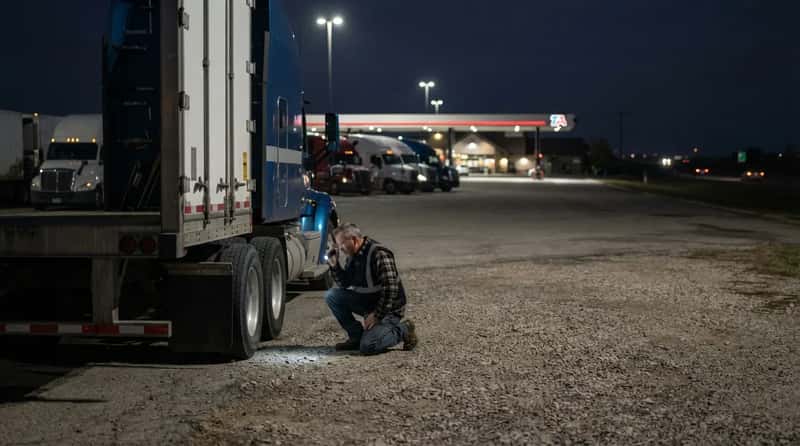
Truck stops are magnets for criminals – minimal security, quick highway access, and drivers who are exhausted and distracted. Veterans know this, so they’ve built an entire mental threat model around it.
Before pulling out and after every stop, drivers walk the truck looking for signs someone’s been tampering with it. That one habit alone has stopped serious problems before they started.
Cargo theft, fuel theft, and scams tend to follow the same geographic patterns, and seasoned drivers can spot them coming. There are more too-good-to-be-true schemes running near rest stops than most people would guess.
Even in a well-lit, “premium” lot, an inattentive driver can still get scammed. Fatigue and frustration make tempers flare, and that’s exactly when accidents and crime spike.
The drivers who navigate this best aren’t paranoid – they’re pattern-recognition machines. And the patterns they track go well beyond crime, into something far more personal.
#4 – The Unwritten Social Code Between Drivers
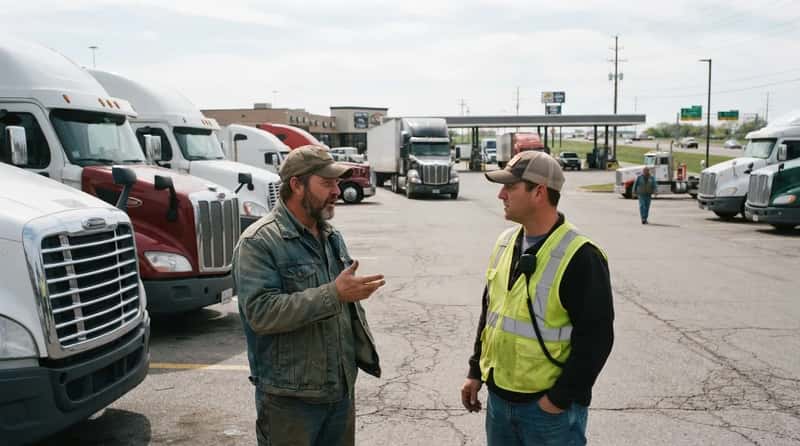
There’s an entire culture running at every rest stop that civilians never notice. Long-haul drivers have built a real etiquette system, and breaking it has consequences.
Drivers talk to each other over CB radio or in person to figure out which rules apply at each specific stop. Local knowledge travels fast in this world.
They enter slowly, follow the posted signs, and stay alert, because people are always parking, walking, or standing somewhere nearby. It’s less about politeness and more about not causing an accident.
Worth Knowing
- Fuel first, move the truck, then head inside – blocking the pump is the top offense
- CB radio chatter spreads local rules from driver to driver in real time
- Slow entry and constant awareness of walking drivers keep the lot accident-free
- Regulars build relationships with staff at favorite stops, almost like a second office
The rule that irritates veterans most? Blocking a fuel lane after fueling up. You fuel, you move, then you go inside – anything else is a rookie mistake.
The most experienced drivers treat a good rest stop like a familiar office. They know which pumps flow best, where the coffee’s freshest, and which staff will nod back at them in recognition.
There’s one more observation, though, that separates veterans from everyone else – and it’s about time.
#3 – Time Management at a Rest Stop Is a Professional Skill
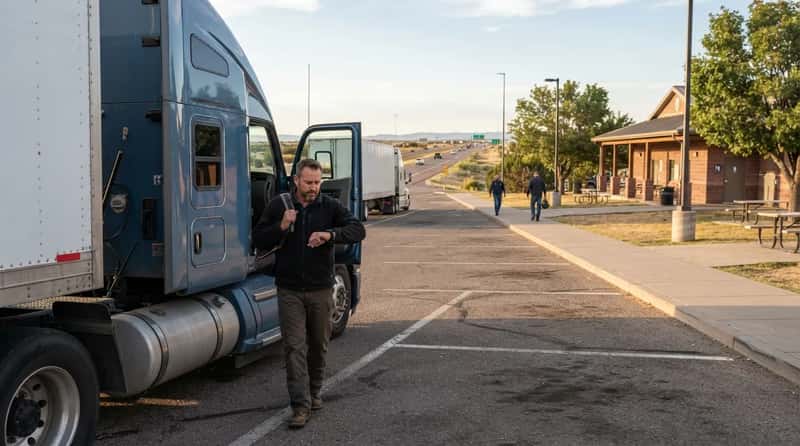
For a professional driver, a rest stop isn’t just a place to rest. It’s a tactical decision that affects both safety and comfort, and every parked minute is a minute not spent rolling toward a deadline.
Before a trip even starts, experienced drivers map out rest areas, fuel stops, and safe parking along the entire route. They schedule stops every two to three hours instead of improvising like a rookie.
A 15 to 20 minute nap isn’t a luxury – it’s a performance tool. That short a nap can genuinely sharpen focus for the miles still ahead.
Veterans also try to hit the showers, laundry, and food before the sun goes down, because doing any of it at 2 a.m. is a completely different, messier experience. The clock governs everything at a rest stop – especially the next thing on this list.
#2 – Fatigue Is Not Just Tiredness – It’s a Physical Countdown
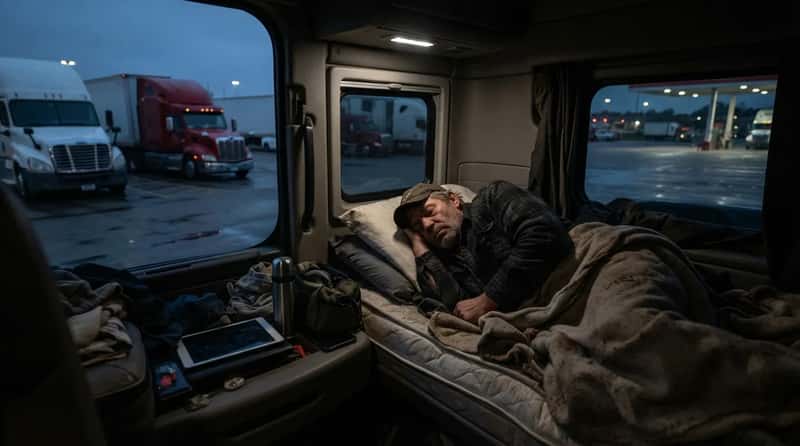
Truck stops and rest areas are where drivers meet their most basic human needs – sleep, food, hygiene. Yet these facilities don’t always offer what’s actually needed for real physical recovery.
According to the National Highway Traffic Safety Administration, drowsy driving causes thousands of crashes every year, many involving heavy trucks. Drivers don’t need a statistic to know this – they feel it behind their own eyes.
Long, uninterrupted hours on the road wear down mental sharpness, slowing reaction times and making mistakes more likely. Veterans describe it as a slow dimming – awareness fading one mile at a time.
One study found drivers who spent time in nature at least once a week reported 16% less chronic fatigue overall, and 23% less during high-stress stretches. That’s why veterans don’t just sleep at rest stops – they walk, breathe outside air, and deliberately decompress.
Quick Compare
- Regular time outdoors: 16% less chronic fatigue reported
- Time outdoors during high-stress stretches: 23% less fatigue reported
- No outdoor decompression: fatigue compounds shift after shift
Acute fatigue from long hours and poor sleep can turn chronic with enough exposure, and that means slower thinking and a higher crash risk long-term. What drivers notice about their own fatigue might be the most important observation on this whole list – and it leads straight into the last one.
#1 – A Rest Stop Is the Last Line of Defense Between a Driver and a Catastrophe
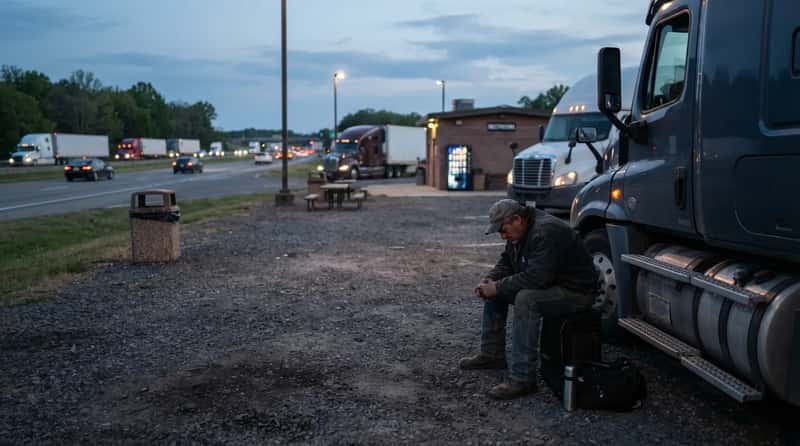
This is the one most civilians genuinely don’t grasp. To the average person, a rest stop is a convenience. To a long-haul driver, it’s the physical boundary between safety and disaster.
Reaction times slow, focus drifts, and the consequences can be devastating. A short break, a walk, or a quick nap is sometimes the only thing standing between a driver and a wreck.
When parking and basic amenities fall short, drivers get pushed into unsafe behavior – driving past their legal hours, risking falling asleep at the wheel. That’s not a driver failing. That’s a system failing the driver.
The toll is enormous – stress and fatigue tied to bad parking conditions contribute to over $733 million in annual turnover costs and more than 18 million lost workdays industry-wide. Multiply that across an entire profession and you start to see the real size of the problem.
Every time you pull over to stretch your legs and grab a coffee, there’s a good chance a professional driver nearby is doing something very different. They’re running a threat assessment, timing a nap, reading the lot, and quietly calculating whether they can make the next stop before their own body forces the decision for them.
The Bottom Line
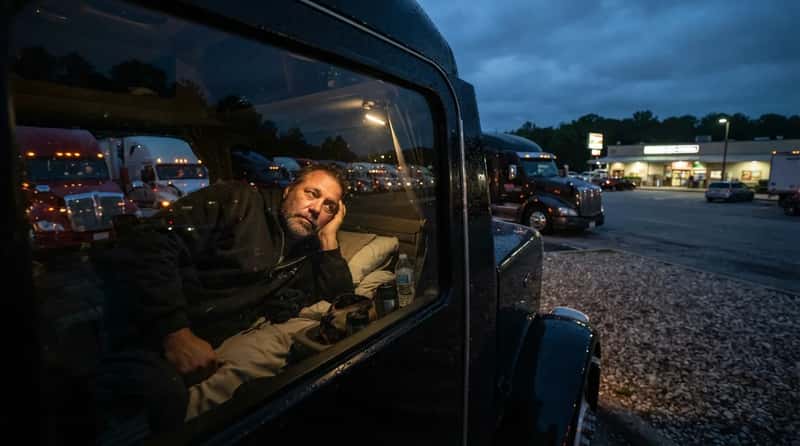
Long-haul drivers don’t see rest stops the way the rest of us do. They read the lighting, scan the lot, know exactly which bathrooms are worth using, and track their own fatigue like a fuel gauge.
Trucking already carries the highest rate of obesity and diabetes of any U.S. occupation, and the conditions at rest stops are a direct part of why. The shortage of safe, affordable parking isn’t a minor inconvenience – it forces dangerous decisions every single night, all across the country.
Next time you pull off the highway for a coffee and a stretch, look around. Somewhere in that same lot, a driver in a cab is running a silent, high-stakes operation you’ll probably never notice – and that’s exactly the point.