For decades, a weekend drive across the border was as routine for many Canadians as a trip to the cottage. Outlet malls in Buffalo, beach weeks in Florida, ski trips to Montana, they were baked into the rhythm of Canadian life. That rhythm has broken, and the data tracking it now fills entire government reports.
Statistics Canada has spent much of the past year and a half documenting a travel pattern it says has no peacetime precedent. The numbers are specific, they are sustained, and they point to something more structural than a passing dip in enthusiasm.
The scale of the 2025 pullback

Canadians did not quietly ease off American travel last year, they pulled back sharply and kept pulling back. There is still significant travel between the two economies, with 29.1 million Canadian residents returning from the U.S. in 2025, but that was down 25.4% from 2024.[1] That is not a rounding error or a seasonal quirk. It represents millions of trips that simply did not happen.
The spending side tells the same story. Visits by Canadians to the U.S. in 2025 fell roughly 25%, and Canadians spent $13.3 billion in the U.S. last year, down from nearly $15 billion in 2024.[2] Measured in Canadian dollars through Statistics Canada’s own accounting, the drop was similarly steep. Whichever currency you use, the direction is the same, and it is downward.
An eleven month streak with almost no precedent
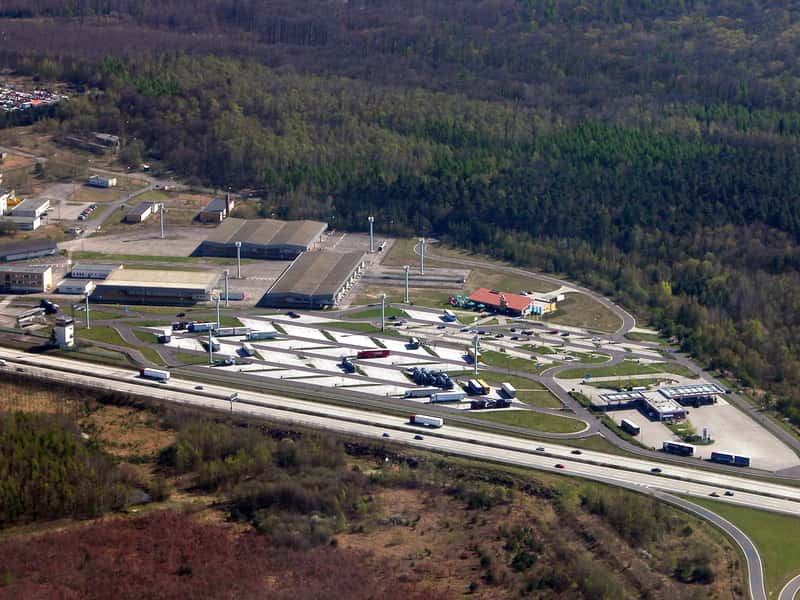
What makes this stretch unusual is not just its depth but its persistence. The magnitude of the pullback grew as the year progressed, bottoming out in July, with border crossing volumes nearly one third below those reported twelve months earlier, before return crossings stabilized in late 2025 to about one quarter below 2024 levels.[3] A single bad month can happen for almost any reason. Eleven in a row suggests something has changed at a deeper level.
Statistics Canada put that duration in historical context, and the comparison is stark. Excluding the COVID-19 pandemic period, the resulting eleven month streak of year over year declines was the deepest and most sustained on record for border crossings from the United States, with declines of more than 30% recorded only once before since digital recordkeeping began in 1972, in September 2001, following the terrorist attacks on the World Trade Center.[3] That is the company this travel slump now keeps in the historical record. It is a sobering benchmark for what began as a political and trade dispute.
Billions in cross border spending simply disappear

The financial toll shows up plainly in the national accounts. Canadians spent C$3.3 billion, or roughly $2.3 billion, less on trips to the U.S. in 2025, with lower leisure travel accounting for most of the decline, as travel spending on visits to the U.S. fell to C$18.8 billion, down from C$22.1 billion in 2024.[4] Leisure travelers tend to spend more freely than people visiting relatives, which helps explain why the loss landed so heavily on hotels, restaurants, and retailers rather than on family reunions.
Put another way, the trip count tells a similarly blunt story. Canadians spent $3.3 billion less in the U.S. in 2025 compared with the previous year, and Canada registered 7.1 million fewer trips to the U.S. compared with 2024.[5] Small businesses near the border, the ones that depend on steady day trippers rather than big convention crowds, absorbed much of that loss directly.
Road trips took the biggest hit, not flights

Not every kind of travel fell at the same rate. The weakness has been broad based across different types of travel, though land crossings drove the majority of the decline, accounting for 20.3% of the total contraction against air travel’s modest 3.5% share, an outsized drop in vehicle crossings suggesting shorter, discretionary cross border trips have been particularly affected.[1] That distinction matters because it points to casual, impulse style visits rather than long planned vacations.
Those quick car trips were never a small slice of the overall picture either. Same day vehicle trips typically account for almost half of total travel by Canadians to the U.S.[1] When people stop making the easy, spontaneous run across the border for cheaper gas or a shopping trip, the numbers move fast, and that is exactly what happened through most of 2025.
What set off the shift

The timing lines up closely with a specific set of political and economic events. Strained relations between Canada and the U.S. began in early 2025 when President Donald Trump returned to office and started threatening tariffs on Canada, and things got worse after he suggested Canada could become the 51st state.[6] For a country that generally sees itself as Washington’s closest ally, that combination landed differently than an ordinary trade dispute.
Government researchers themselves connected the dots explicitly. Following the change in the U.S. administration in early 2025 and the implementation of America First policies, Canadian travel sentiment shifted abruptly.[4] Tariffs on steel, aluminum, and other goods added an economic sting, but the rhetoric around sovereignty appears to have cut just as deep for many travelers deciding where to spend their vacation dollars.
Survey data behind the border numbers

The border statistics reflect a mood that shows up clearly in public opinion research too. In a November 2025 Angus Reid survey ahead of the winter travel season, 70% of Canadians said they would be uncomfortable traveling to the U.S.[7] That figure came right before the peak snowbird season, when hundreds of thousands of Canadian retirees would normally be booking flights south.
Industry voices have described the shift as unusual by historical standards, noting that this kind of sustained travel avoidance is not something the sector typically sees fade quickly through pricing or marketing. Until then, the message from Canadian travelers is clear, they still want to travel, they are just choosing not to spend their money in the United States.[7] That distinction, wanting to travel but redirecting the destination, explains why Canadian passport use has stayed high even as American arrivals fell.
Florida absorbs an outsized share of the pain

Florida has long been the single biggest American destination for Canadian snowbirds and vacationers, so the state has felt this shift acutely. Florida tourism fell 0.7% in the second quarter and 1.4% during the first half of 2026, with Canadian visitation dropping nearly 14% during the first six months of the year.[8] Overall visitor numbers to the state remain enormous, but the Canadian slice of that pie has shrunk noticeably.
The specific figures show how far the Canadian market still sits below where it once was. About 721,000 Canadians visited Florida during the second quarter, a 4.2% decrease from the same period last year, and during the first six months of 2026 about 1.68 million Canadians traveled to Florida, down 13.9% from the first half of 2025.[8] Compared with the years before the pandemic, the gap is even wider, and it has not closed despite Florida’s overall tourism boom.
Las Vegas, New York and dozens of other cities feel the squeeze

Florida is not alone in feeling this. In Las Vegas, Canadian visits fell more than 17% in 2025, while New York state saw a 26% drop.[9] Both destinations depend heavily on out of state and international visitor spending to fill hotel rooms and casino floors on weeknights, and a missing Canadian traveler is not easily replaced by a domestic one spending less per trip.
Mobile location research paints an even broader picture across the country. City level research identified Myrtle Beach, Orlando, Miami, San Francisco, New York, Las Vegas and dozens of other metropolitan areas among those experiencing the sharpest Canadian visit declines, with a median drop of approximately 42% in Canadian visits across 267 U.S. metropolitan areas, and fifty metros seeing declines of at least half, while only Portland, Oregon, Gainesville, Florida, and Cleveland, Ohio recorded increases.[10] That kind of geographic spread suggests the shift is not confined to any single region, climate, or type of vacation.
Airlines rewrite their route maps
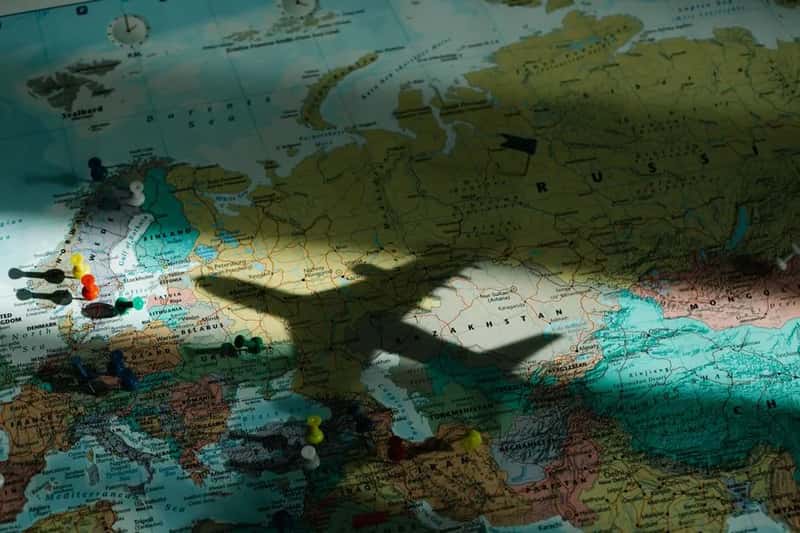
Carriers on both sides of the border have adjusted quickly to falling demand rather than waiting it out. In February, WestJet announced it would suspend sixteen Canada-U.S. routes due to decreased demand, including Winnipeg’s direct connections to Atlanta and Nashville, while the airline announced direct flights from Winnipeg to Keflavik, Iceland and Liberia, Costa Rica in 2025.[11] That kind of route swap, trading warm American cities for Iceland and Costa Rica, tells you where airline planners think Canadian travelers actually want to go now.
Air Canada made a similar bet on redirecting its traditional snowbird traffic. Air Canada even responded by launching new snowbird routes away from America, flying Canadians who would usually head to the southern states for the winter to Latin America.[6] Travel agencies reported the same pattern on the booking side, with Flight Centre in Canada noting sharp year over year drops in leisure reservations to American destinations during the early months of the shift.
Early signs of stabilization, but not a return to normal

By mid 2026, the trend line had at least stopped getting steeper. Statistics Canada data from April through June suggested the decline in Canadian travel to the U.S. may be easing after the sharp drop in 2025, an increase driven mainly by automobile travel, while travel by air continued to lag.[4] That is a meaningful distinction, since it points to short local trips resuming faster than the longer, pricier vacations that had once filled flights to Orlando or Las Vegas.
Even so, the broader boycott mentality has proven sticky heading into 2026. The boycott continued into 2026, with double digit declines in both January and February, and cumulative two year drops of more than 30% each month.[12] Reporting from Las Vegas echoed that same mixed picture, describing visits that remained below pre 2025 levels even as a handful of monthly figures showed a slight easing rather than an outright reversal.
Where this leaves the numbers

What began as a political flashpoint over tariffs and sovereignty has settled into something closer to a lasting shift in how Canadians plan their vacations. The scale involved, tens of millions of missing trips and billions in redirected spending, is large enough that it shows up clearly in national statistics rather than just anecdotes from travel agents. Airlines have already rerouted planes to Iceland and Costa Rica instead of Florida and Nevada, which is not the kind of decision carriers reverse on a whim.
Whether the numbers keep easing through the back half of 2026 or slide again depends heavily on the state of the broader relationship between Ottawa and Washington. For now, the border data offers a clear, measurable record of a travel pattern that changed abruptly in 2025 and has yet to fully snap back.