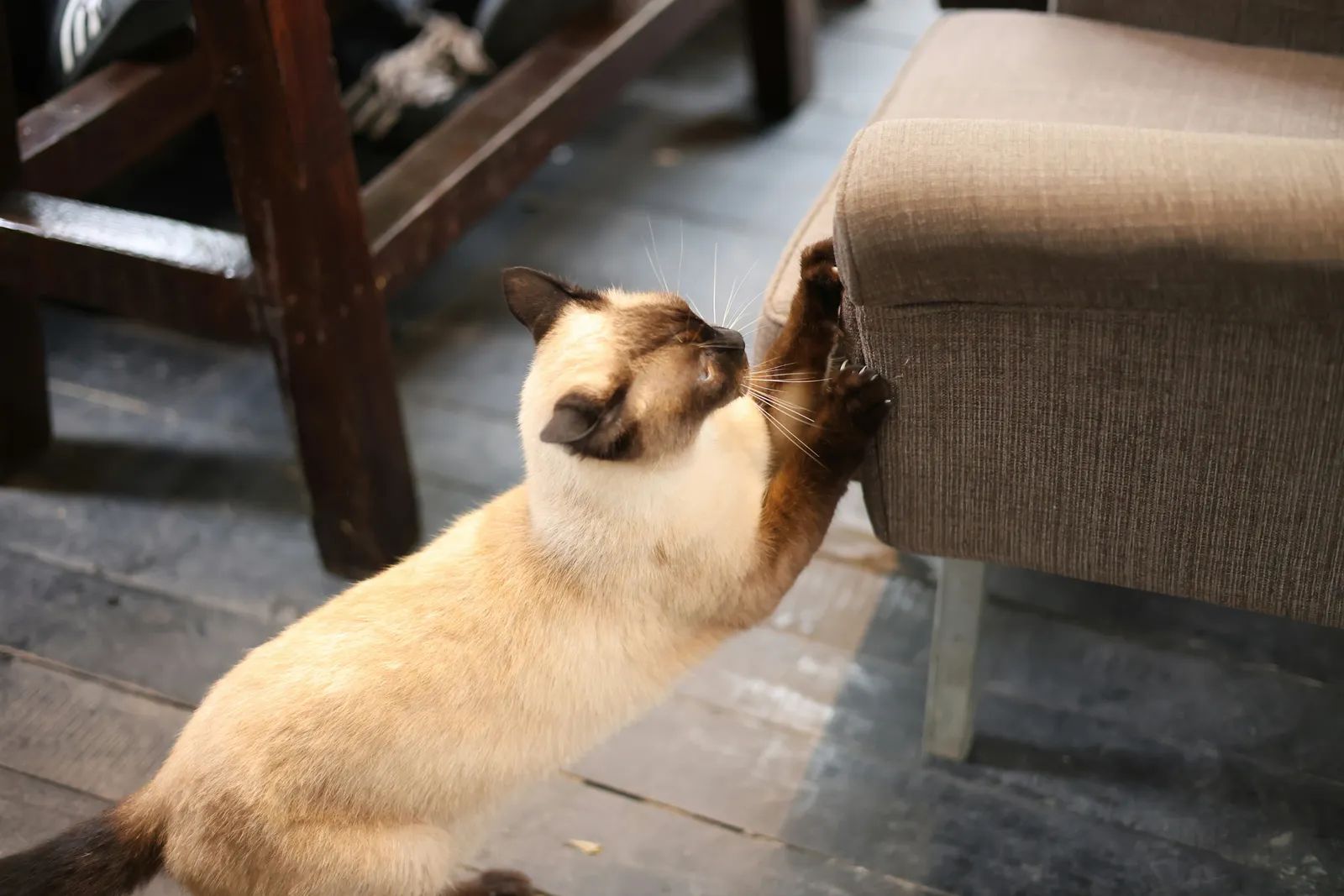
Most cat owners have seen the routine: a long stretch, a steady gaze, then claws sinking into the arm of the sofa. The behavior is frustrating, but it serves real purposes for cats, and it can be managed without giving up comfortable furniture. The practical answer has two parts. Give the urge a better outlet, and choose fabrics that can absorb the occasional mistake ([1]).
Why the Sofa Becomes the Target
Scratching is about more than sharpening claws. Cats scratch for several overlapping reasons, and understanding them makes the behavior easier to redirect:
- Claw maintenance, since scratching sheds the worn outer layers of each nail
- Stretching, which works the back, shoulders and legs
- Scent marking, because scent glands in the paws leave a message for other cats
- Attention, as some cats learn that a scratch on the sofa gets a person to move
That last motive explains why a sofa often wins out over a scratching post. The cat has discovered that the furniture produces a reaction, and that reaction is the real reward. Addressing the cause, rather than simply trying to stop the act, tends to produce better results.
Fabrics That Hold Up Under Claws
No sofa is fully indestructible, but some materials cope with daily claws far better than others. Microfiber and microsuede have a very tight weave that leaves little for claws to catch on, and loose hair tends to brush off easily. Performance fabrics designed for busy households often resist both snags and stains, though it is worth asking how the cover should be cleaned before buying.
Short, dense velvet is another option that many owners find surprisingly resistant to snagging, even though it does show hair. Loose loops such as bouclé, tweed and chunky knits practically invite claws, and leather, while easy to wipe, keeps scratches and punctures visible for good. Delicate silk and loosely woven linen rarely survive a determined cat.
Look for: tight weaves, short dense pile, and removable washable covers.
Avoid: bouclé, tweed, chunky knits, leather, silk and loose linen.
Shape matters too. Tight backs and arms without loose cushions give cats fewer places to dig in, while legs are generally better than skirts, since a skirt offers both a hiding spot and a loose edge to pull at. Ordering fabric swatches and testing them with a light scratch at home can reveal how a material behaves before the sofa is delivered.
Give the Cat a Better Target
The most effective fix is also the simplest. Place a scratching post right beside the furniture the cat already favors. The post should be taller than the cat when it stretches fully and heavy enough that it does not wobble during use. Texture counts as well. A cat that targets a sofa arm may respond to a post wrapped in sisal rope, while one that prefers the carpet may take to a flat cardboard scratcher. Placement usually matters more than price, and once the habit shifts, the post can be moved gradually.
Rewarding the right choice helps the new habit stick, whether with a treat or some praise. While the transition is underway, a few inexpensive protections can shield the upholstery. Clear adhesive guards or fitted covers on the arms make the surface less appealing, and double-sided tape is unpleasant for many cats on their paws. An easily washed throw over a favorite spot protects the fabric. Some owners also use a light citrus spray near the furniture, though it should be safe for pets and tested first so it does not mark the fabric.
Keeping Claws Trimmed and the Home Cleaner
Trimming nails every couple of weeks blunts the tips and reduces damage. Owners who feel unsure can ask a vet or groomer to demonstrate the technique. Soft nail caps are another option, but they are worth discussing with a vet before use. Physical activity also plays a role. Ten or fifteen minutes with a wand toy before bed can burn off energy that might otherwise go into the sofa, and a cat tree or a shelf by a window offers height, a view and a place to stretch. Rotating toys every few days keeps them interesting.
Hair and odor are the other side of the problem. Vacuuming upholstery once or twice a week with an upholstery tool keeps buildup manageable, and a lint roller or rubber glove handles quick cleanups before guests arrive. Accidents should be treated right away with an enzyme cleaner made for pet stains. Scratching is part of how a cat stays healthy, so the goal is redirection rather than punishment. A sturdy post, a tightly woven sofa and regular nail trims give both the cat and the furniture a fair chance to stay in good shape.