Most people pick their cruise cabin by price or view. That’s exactly why they end up staring at the ceiling at 3 a.m., stomach lurching, listening to deck chairs scrape directly above their heads.
Experienced cruisers know something first-timers never think to ask: the deck you choose shapes your entire trip. Sleep, seasickness, noise, even how far you walk every day all trace back to one decision – and here’s what the data, and the veterans, actually say.
The “Book High for the Views” Myth That Keeps Costing People Sleep
First-timers hear “book high” and take it as gospel. Turns out, it’s one of the most damaging pieces of cruise advice in circulation.
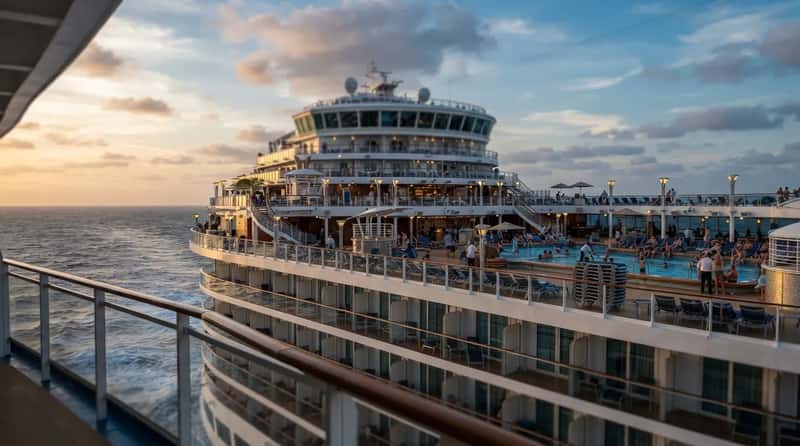
Upper decks sway more in rough seas because the ship’s center of gravity sits below the waterline. Think of a tall building in an earthquake – the top floors always shake harder than the bottom ones.
You paid more for that penthouse deck. You just didn’t realize you also paid for a rocking motion that keeps you awake past midnight.
High decks also sit closer to pools, buffets, and outdoor venues. That means more chair scraping, more music, and more early-morning setup noise right outside your door.
Experienced cruisers know the view costs nothing extra – they walk upstairs to enjoy it, then sleep on a steadier deck below. The suite at the top looks incredible on Instagram and miserable on a transatlantic crossing.
But the views debate is just the beginning. Where your cabin sits along the ship’s length matters just as much – and that’s where most people get it completely wrong.
Why Forward Cabins Are the Cheapest Cabins for a Reason
That bargain forward cabin looks like a steal on the booking page. Seasoned cruisers know exactly why it’s priced that way.
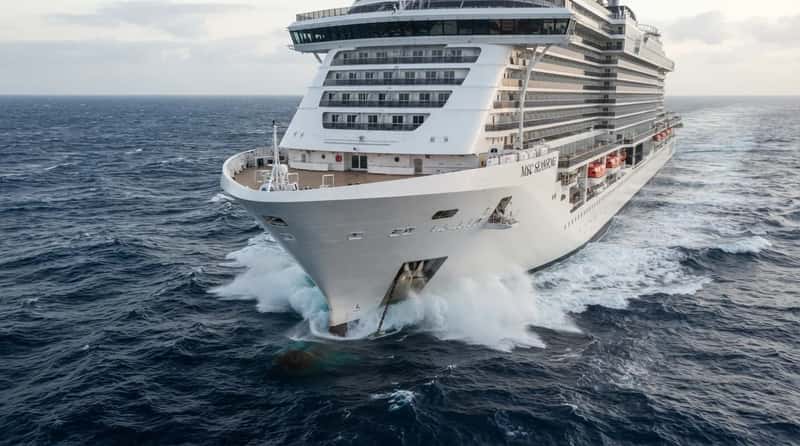
Forward cabins feel the strongest pitching motion, especially overnight. When the ship hits even moderate swells, the bow rises and drops with the most dramatic movement on the entire vessel.
Because of that motion, cruise lines usually price forward cabins as the cheapest option in any category. If you want a balcony on a strict budget, it’s your best bet – but know what you’re trading.
There’s another problem nobody warns you about. Anchors sit on lower decks near the bow, so when the ship drops anchor at 6 a.m., you feel every link of that chain through your mattress.
Fast Facts
- Forward cabins feel the sharpest pitching motion on the entire ship, especially in swells.
- Cruise lines typically price them as the lowest-cost balcony category available.
- Anchor chains run near the bow, so early-morning anchoring can rattle the room.
- Best suited for budget-focused, deep sleepers on calmer itineraries.
The forward location isn’t evil – it’s a calculated trade. Budget-focused cruisers who sleep deeply can make it work, but veterans on long sailings avoid it without hesitation.
So where do the veterans actually end up? Keep reading.
The Aft Cabin: The One Location Repeat Cruisers Actually Fight Over
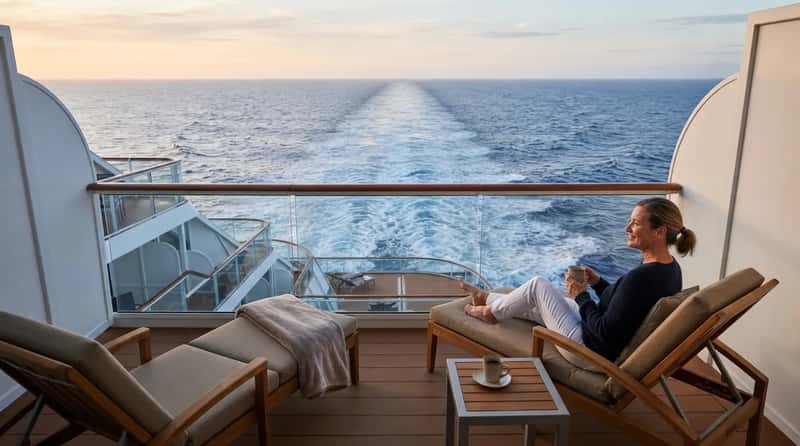
Aft cabins, at the very back of the ship, are arguably the most polarizing choice in cruising. Veterans either swear by them or steer clear completely.
There’s nothing quite like sitting on your aft balcony with morning coffee, watching the ship’s wake trail to the horizon. You also get a panoramic, 180-degree view as you sail away from port.
Because of the architectural slope at the back of most ships, aft balconies are frequently larger and deeper than standard side balconies – often at no extra cost. That’s a quiet perk most people never notice on the booking page.
Because the ship moves forward, aft balconies are shielded from harsh sea winds, making them warmer on chilly itineraries like Alaska or the Norwegian Fjords. That’s a genuine, underrated advantage most people never consider.
The catch? The ship’s massive engines and propellers sit at the back of the vessel.
In an aft cabin, you’ll feel a constant low-level vibration and hear the thrusters at work. For light sleepers, that hum is a deal-breaker – for everyone else, it’s barely noticeable after night one.
But there’s a more universally reliable option, and it’s the one veterans always come back to.
The Noise Trap That Ruins Thousands of Cruises Every Year
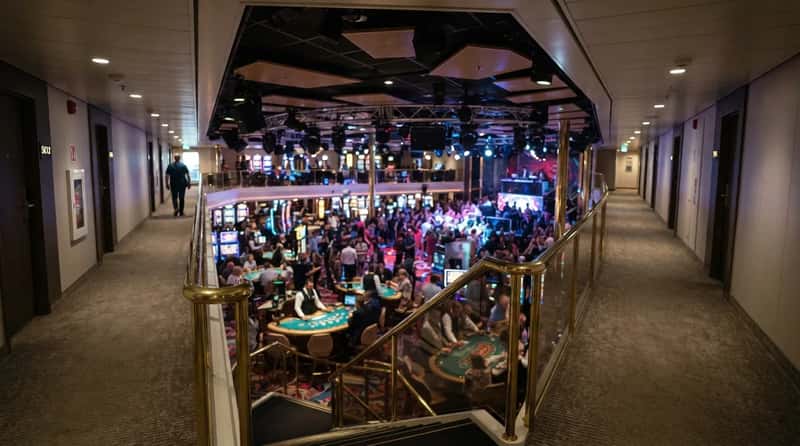
Here’s the variable first-timers never check and experienced cruisers obsess over: what’s directly above and below your cabin.
One brings chair-scraping and cleaning noise, the other brings mechanical rumble. There’s no perfect floor, only a smarter one.
Worth Knowing
- Avoid the top passenger deck under a pool or buffet – often Deck 14 and up.
- Skip the bottom passenger deck above engine or crew areas.
- Never book directly above or below a casino, theater, club, or active pool deck.
- Always check the deck plan one floor above and one floor below before booking.
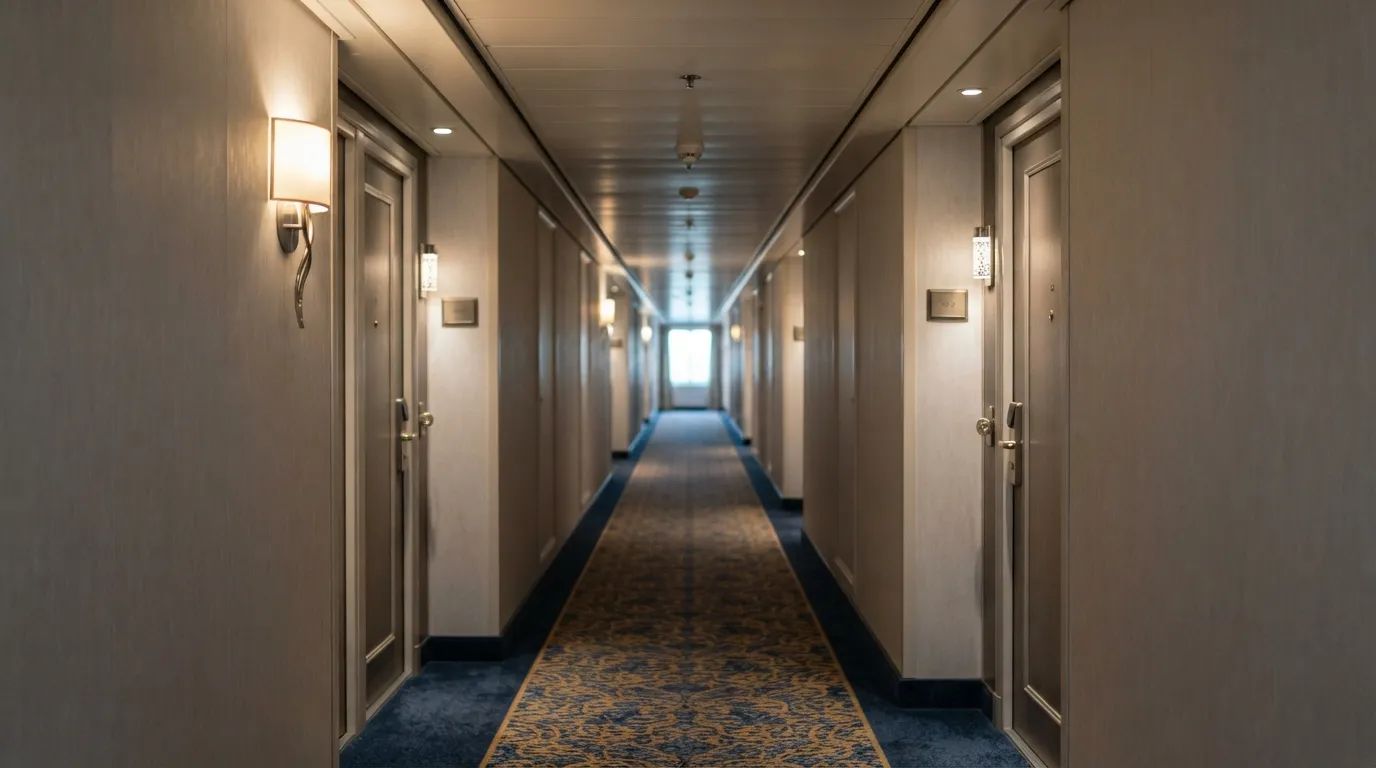
The single most effective move an experienced cruiser makes is pulling up the ship’s deck plan and checking two decks: the one above and the one below their cabin. If either is a public venue, they move.
The best cabin deck on most ships is a lower-to-middle passenger deck, sandwiched between other cabin decks. The right neighbors matter more than the right deck number.
Why Midship on a Lower Deck Is the Deck Experts Return to Every Single Time
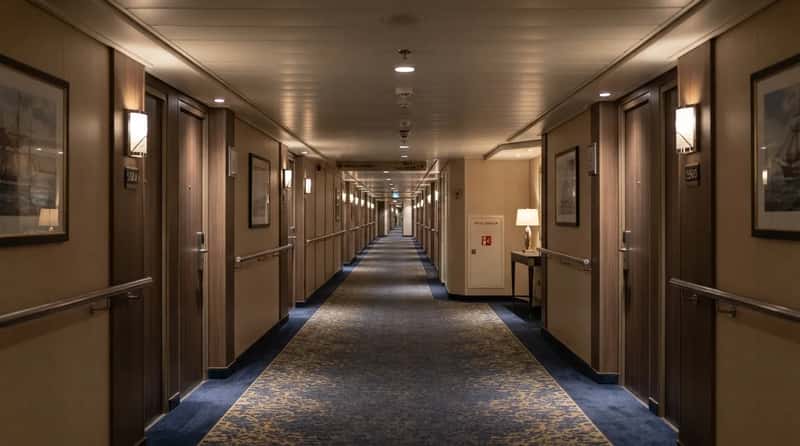
Strip away every preference, and this is where the data consistently points: midship, lower deck, sandwiched between cabin floors.
If you’re prone to seasickness, your stateroom location matters more than almost anything else. The ship moves least in the middle and on lower decks, closer to its natural center of gravity.
The middle of the ship acts like a balance point, so it doesn’t swing as dramatically as the front or back. Lower decks sit closer to the waterline, where the motion is slower – physics, not preference.
Most experts recommend staying midship on Deck 5 or 6 if motion sickness is a concern.
Quick Compare
| Location | Motion | Typical Noise | Price |
|---|---|---|---|
| Forward | Strongest pitch | Anchor chain | Cheapest |
| Aft | Moderate sway | Engine vibration | Mid-range |
| Midship, lower deck | Least motion | Quietest | Often lower |
The midship lower-deck cabin is also frequently cheaper than the same category higher up, because cruise lines price for views, not stability. You can often pay less for a quieter, steadier cabin a few decks down.
Experienced cruisers figured this out a long time ago: the sweet-spot cabin costs less, moves less, and sleeps quieter. But there’s one more layer that separates the truly seasoned passenger from everyone else – and it comes down to timing.
The Booking Timing Secret That Locks In the Best Deck Before Anyone Else Gets It
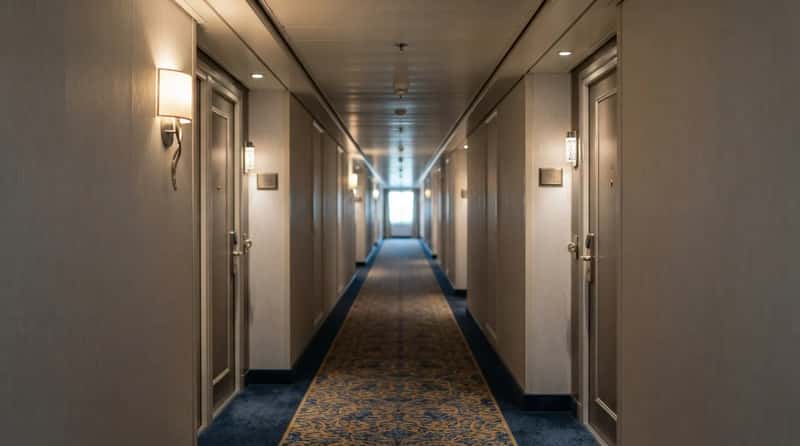
Knowing which deck to book is only half the battle. If you wait, the best spots are already gone.
The best midship, sandwiched cabins sell first. Book early, or work with an advisor, and you get first pick of the quiet, steady spots before they fill.
This is why experienced cruisers book the moment a sailing opens – sometimes 12 to 18 months out – even before every itinerary detail is confirmed.
There’s another trap to watch: the “guarantee cabin” rate. These are the rooms left over after everyone else has picked, so you’re unlikely to land midship when you book one.
That cheap guarantee price might land you directly under the midnight buffet cleanup crew.
Experienced cruisers treat the deck plan like a real estate map. They check the neighbors above and below, measure the walk to elevators, and confirm the cabin is surrounded by other cabins, not venues.
Solving a motion problem while accidentally creating a noise problem is amateur hour.
The One Deck Combination That Veteran Cruisers Book on Every Ship, Every Time
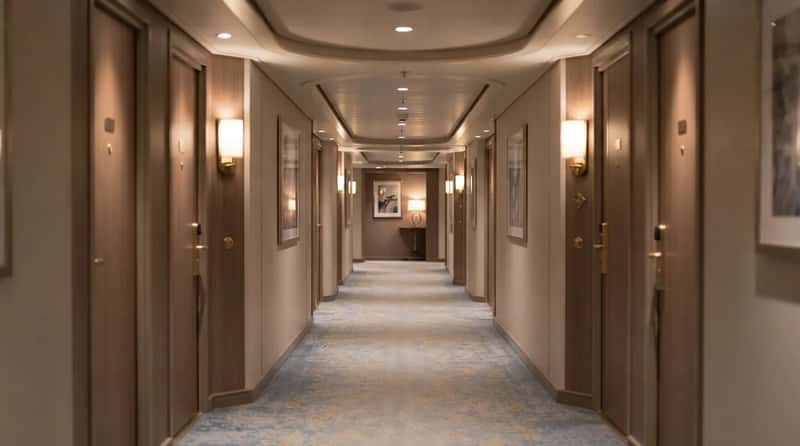
After dozens of cruises, the pattern becomes undeniable. It’s not about one specific deck number – every ship is different – it’s about a formula.
The best cabin deck on most ships is a lower-to-middle passenger deck, sandwiched between other cabin decks. That spot gives you the steadiest ride, the least noise, and short walks to elevators.
Book too high, too low, or right under a busy public space, and you trade comfort for either motion or midnight thumping.
At a Glance
- Deck range: typically Deck 7 to 10 on most mainstream ships.
- Position: midship, sandwiched between other passenger cabins.
- Neighbors: no venues, pools, theaters, or engine rooms above or below.
- Payoff: steadier ride, quieter nights, shorter walks to elevators.
Every variable – motion, noise, even your view – is controllable before you book, but only if you know what to look for. First-timers pick by price or view; experienced cruisers pick by the deck plan, the neighbors, and the physics of the ship.
That’s the real reason they book the same deck every time.
The Bottom Line
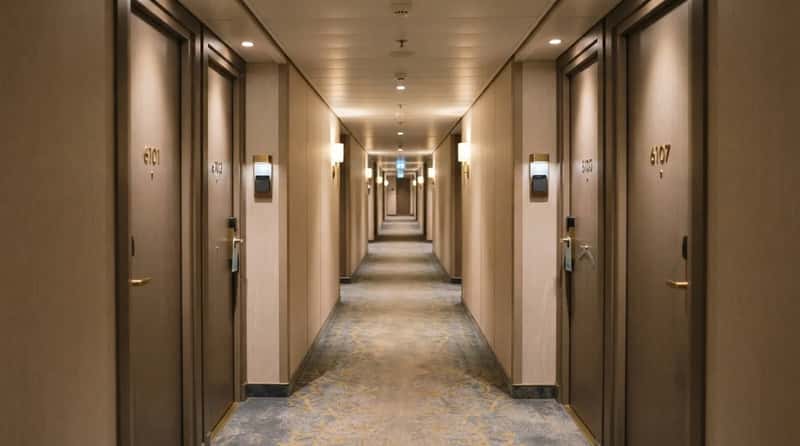
The deck you choose is the single most impactful booking decision you’ll make – more than the itinerary, more than the dining package, more than the excursions.
Experienced cruisers know that midship on a lower-to-middle passenger deck, sandwiched between other cabin floors, delivers the steadiest ride, the quietest nights, and the shortest walk to everything on the ship. They avoid the top decks under the pool, the bottom decks above machinery, and any cabin neighboring a public venue.
They book early, pull up the deck plan, and check two decks in every direction. The formula works on every ship, every cruise line, every ocean.
Have you found your own go-to deck? Drop it in the comments – we want to know which cabin combination your repeat sailings have proven right.
Bonus: The Deck-Plan Trick the Cruise Line’s Website Won’t Show You

The official booking page only shows you cabin category and price – it hides what’s actually next door, above, or below. Veteran cruisers get around this with one extra step before they ever hit “confirm.”
- Search your exact ship name plus “deck plan” to find a full third-party schematic that labels every venue, not just cabins.
- Trace your candidate cabin number straight up and straight down to see what’s really on the deck above and below.
- Skip any cabin within about three doors of an elevator bank or stairwell – foot traffic and door noise carry more than people expect.
- Call your travel agent or the cruise line directly and ask them to confirm there’s no crew stairwell, laundry chute, or storage area backing onto that cabin.
This one check takes less than five minutes, but it’s the difference between a cabin that just looks good on paper and one that actually delivers a quiet, steady sleep for the entire sailing.