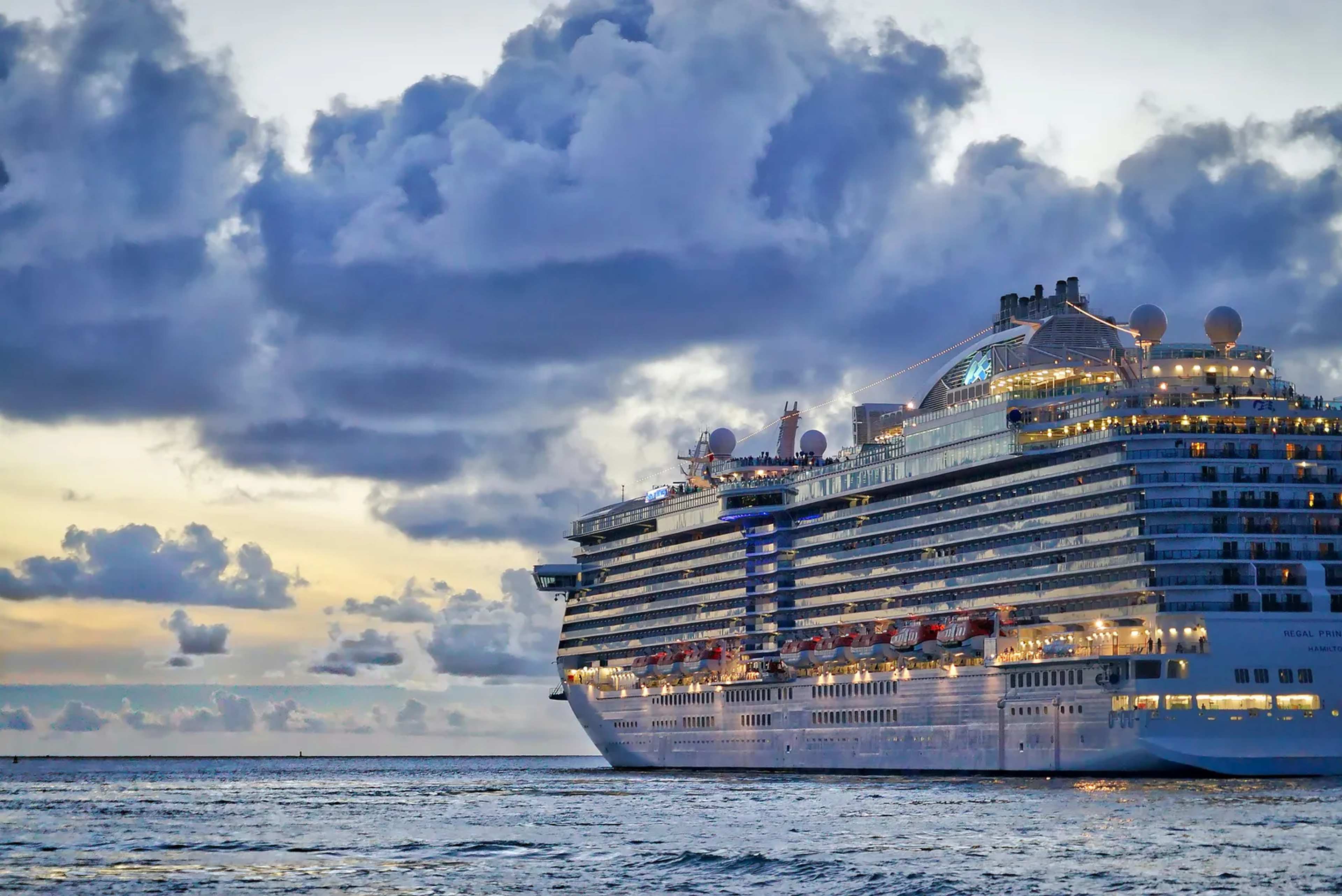

My first encounter with Istanbul was a simple transfer at the old Ataturk Airport. As for almost all frequent travellers, Istanbul is very convenient stepping stone to pretty much anywhere in the world, thanks to Turkish Airlines’ incredible route network. In fact, last year, they took the Guinness World Record for the most countries flown to by a single airlines.

But that first trip through Istanbul didn’t leave me longing to return to explore the city. Actually, it had quite the opposite effect. Looking down on the sprawling city below, I decided Istanbul wasn’t for me. How wrong I was.
It was a good few years later that I finally decided to add a couple of nights to a stopover in Istanbul and explore the city. And even then, it was only because I wanted to stay in a particular hotel. That trip proved me as wrong as I’ve ever been, and became the first of many to what is now my favourite city in the world.

The Crossroads of the World
The amount of destinations served from Istanbul Airport isn’t entirely coincidental, or even down to Istanbul’s convenient location on the periphery of Europe and Asia. It has its roots in Turkish history.
At one point the Ottoman Empire controlled vast swathes of Europe, Asia and North Africa. Indeed, it was as recently as 1922 that the Empire fell, to be replaced with a new Turkish Republic headed up by Kemal Ataturk.

Back then, Istanbul, and even earlier, Constantinople, ruled the world. Now content being the meeting point of said world, Istanbul is geographically significant for more than just air travel. There are few places in the world where you can hop on in a taxi, on a train or into a boat and find yourself on another continent in a matter of minutes.
There’s something quite special about crossing the Bosporus. One small body of water at once separates and connects two worlds. These two worlds are too connected and divided by history, culture and religion.

I had long been under the misapprehension that the European side of Istanbul was the more modern, Christian side, and the Anatolian side more rooted in Islamic tradition. In fact, the opposite is true. The Anatolian side is surprisingly more cosmopolitan, though Istanbul’s charm, to me, is the feeling of being stuck some centuries in the past on the European side.
One of Istanbul’s main attractions, the Grand Bazaar, is the epiphany of a melting pot. Here, inside a labyrinth of traders, the souks of Arabia mix with the ways of the Orient which in turn meet western consumerism. Allow a full day to visit if possible, the Grand Bazaar is one of the largest indoor markets in the world. If you’re planning to buy, do shop around. It helps to have a bit of Turkish to negotiate on prices
Captivating Museums
It’s probably no surprise that a city of such historical importance has the landmarks to match. Istanbul icons like the Hagia Sophia and Dolmabahçe Palace deserve their spots on your bucket list, but they don’t even scratch the surface.
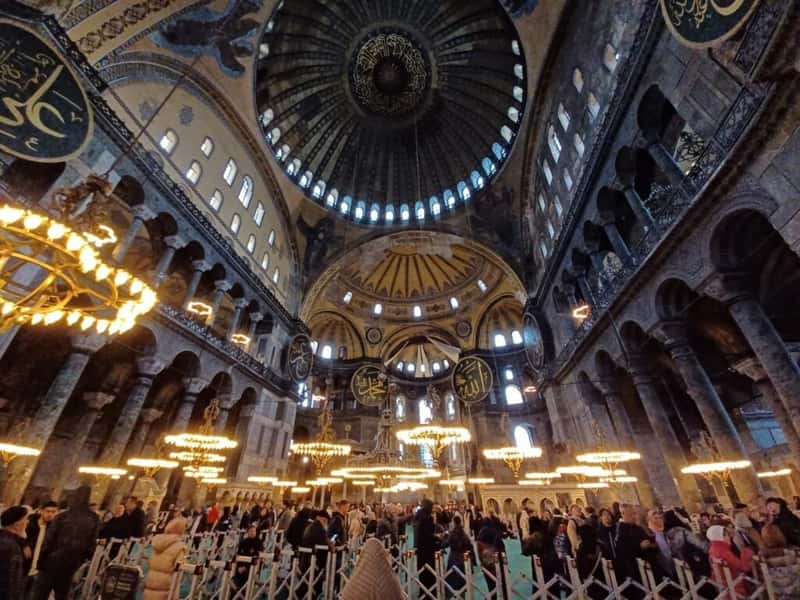
Talking of surfaces, by far Istanbul’s best museum is deep beneath it. The Basilica Cistern, just opposite the Hagia Sofia, is Istanbul’s largest subterranean water cistern. Constructed during the 6th century, it took 7,000 slaves to build.

Along the European banks of the Bosporus, Istanbul’s two grandest palaces still hold their place. Dolmabahçe is the grandest, built in 1843 to replace medieval Topkapi which was beginning to show its age. It was at Dolmabahçe that the last Ottoman caliph, Abdulmecid II escaped the new Turkish Republic to spend his final years in exile.
Dolmabahçe’s grandeur aside, if you only have time to visit one palace, make it Topkapi. Larger and more imposing, it was from here that the glory years of the Ottoman Empire played out. And, not unimportantly, the view across the Bosporus is second to none.

Some of Istanbul’s lesser known museums, however, are my absolute favourites. The Rahmi M Koc Museum is one of the best transport museums in the world, with a collection inspired by Koc’s visit to the Henry Ford Museum in Michigan.
Just down the road, Miniaturk is a wonderful model village depicting Türkiye in miniature. It covers everything from the grand buildings of Istanbul to the cave dwellings of Cappadocia and Türkiye’s modern capital, Ankara.
A Gorgeous Cityscape
History, museums and fantastic food are something Istanbul has in throngs. They’re also things so many other cities can offer. But not every city can offer views like Istanbul; they are what makes this a truly special city.

There are few places in Istanbul your eyes will be given a rest. Even in the bustling streets of Galata, look through the smallest gap and you’ll be astonished by what’s playing out in front of you. But for the best view of all, you’ll want to get high above the city.
Take a funicular train up Pierre Loti Hill for one of my favourite views of the city. There’s a great alfresco restaurant at the top which serves up Turkish classics; it was the place I first tried cigarette rolls (sigara boregi). Instead of catching the train back, wander down the hillside and you’ll emerge by imposing Eyup Sultan Mosque.
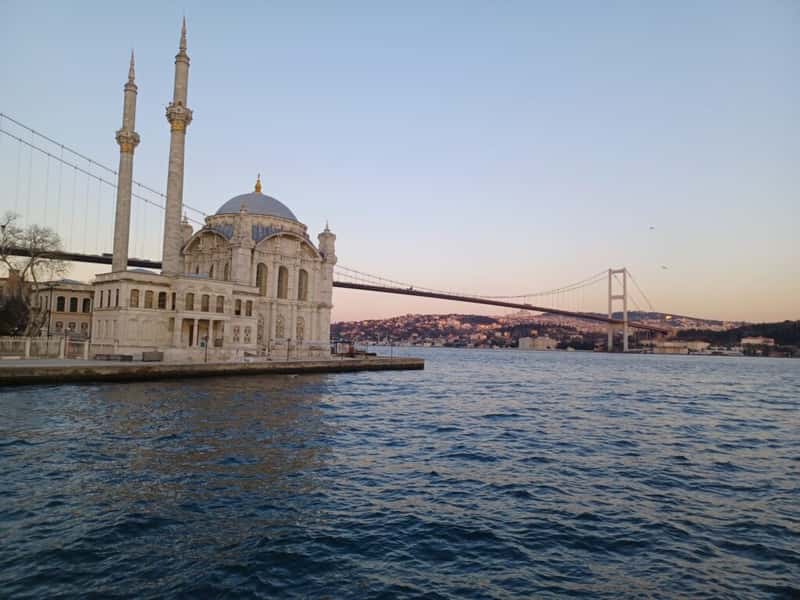
Naturally, any riverside city has the river to thank for its success, and more importantly, for its best views. No trip to Istanbul is complete without taking a ferry across the Bosporus.
Once you’ve visited the Anatolian side, take another ferry which hugs the European bank. You’ll get a far better view of Dolmabahçe Palace from the water as you will on land. Just past the palace, you’ll reach Ortakoy, one of the most atmospheric spots in the whole city. Take a walk around the bazaar before settling down by Buyuk Mecidiye Mosque to take in your surroundings.
Why is Istanbul so Special
There can be no question that Istanbul is fascinating. Steeped in history, once one of the world’s powerhouses, it’s not a city which requires any more enticement to visit. But that can be said of Athens, Rome, even London.
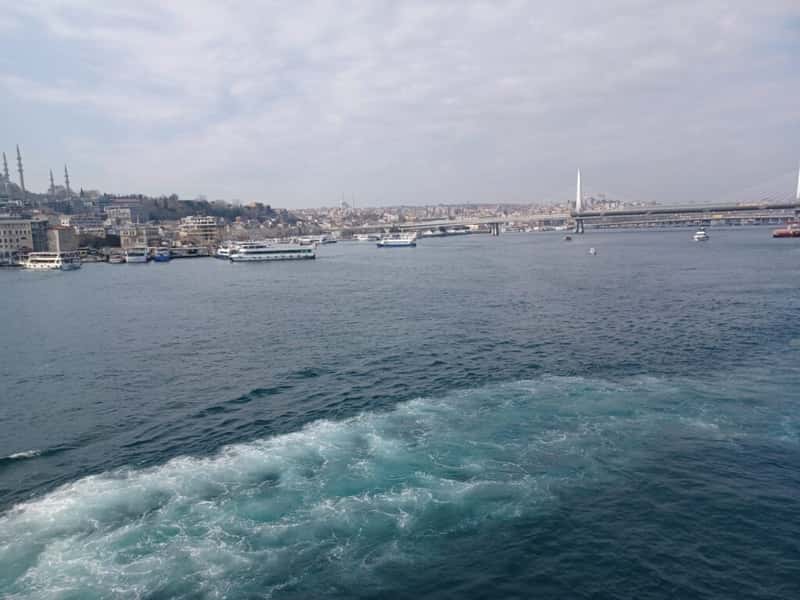
There are a couple of reasons Istanbul is something more than that to me. The first, I think, because it is shrouded in mystery. It is (mostly) in Europe geographically, but culturally it is different to anywhere else on the continent. It’s the gateway to a world that, for centuries, Europeans have struggled to understand. It’s the melting pot o two cultures which intertwine, but can never truly merge. Kurban Said’s 1938 novel The Girl from the Golden Horn sums this sentiment up nicely.
Above all, my love of Istanbul is more personal. It was, as I said, a particular hotel which finally drove me to leave the confines of the airport, or my usual night stop of the Park Inn in rural Odayeri, a few miles from the new airport which replaced Ataturk a few years ago.

The hotel in question, was the Pera Palace. Once a regular haunt of Ataturk himself, Ernest Hemingway and, my driver to visit, British crime writer Agatha Christie. It’s believed that she wrote much of Murder on the Orient Express in room 411.
It was also a chance meeting at the Pera Palace which led to me falling in love. In the long-distance relationship which followed, I got to see every nook and cranny of this enchanting city, and I got to see the bits tourists don’t see. With every visit, Istanbul captivated me even further, and now, I look for any excuse for an extended layover in the meeting place of the world.

When Agatha Christie’s marriage broke down, she disappeared for 11 days. No one truly knows where she went, but the most commonly accepted theory is that she jumped aboard the Orient Express and checked in to the Pera Palace. If ever I decide to disappear, that’s exactly where you’ll find me.