Picture this: a train pulls into the station at 9:47 AM, not 9:46 or 9:48, but exactly on the dot. Passengers board with calm efficiency, no one rushes or shoves, and within minutes the train glides away toward its next destination. This isn’t some fantasy scenario from a transportation planner’s dream. It’s just another Tuesday morning in Japan, where the railway system operates with a precision that makes the rest of the world look like it’s still figuring out how clocks work. While commuters in London, New York, or Paris brace themselves for delays and cancellations, Japanese passengers set their watches by train arrivals that measure lateness in seconds rather than minutes.
What makes this possible isn’t just one thing. It’s a complex web of cutting-edge technology, obsessive attention to detail, cultural values that prioritize collective harmony, and decades of continuous improvement. The numbers tell a story that seems almost unbelievable until you experience it firsthand. We’re talking about average delays measured in fractions of a minute, safety records that span years without a single fatality, and cleaning crews that transform entire trains in seven minutes flat. From the famous Shinkansen bullet trains to the packed commuter lines of Tokyo, Japan has turned rail transport into an art form that combines speed, safety, and reliability in ways other countries are still trying to understand. So let’s dive into what makes this system tick and why it stands alone at the top of global railway excellence.
Unmatched Punctuality That Sets Global Standards
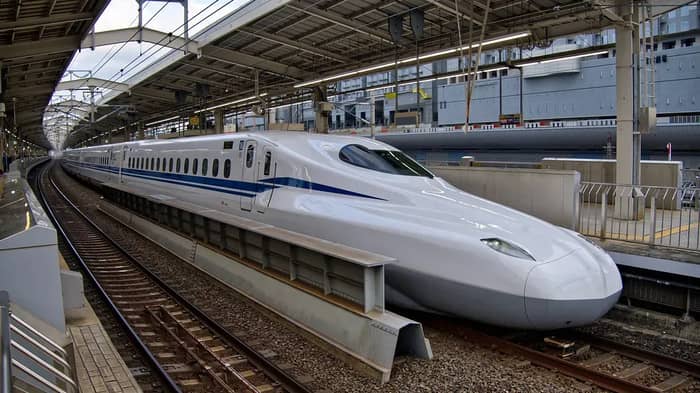
In 2024, the Japanese Tokaido Shinkansen, which runs from Tokyo to Osaka, had an average delay time of just 1.6 minutes per train in service, and this dedication to punctuality is typical across Japan’s rail network. Think about that for a moment. Most of us are relieved when a train arrives within fifteen minutes of its scheduled time. In Japan, a minute-long delay is almost scandalous. Statista has even designated the Japanese train system as the world frontrunner for reliability with a score of 6.8 out of 7. The contrast with other countries is striking.
Germany’s high-speed Intercity Express (ICE) train was only on time 64.6% of the time on February 10, 2025. Meanwhile, roughly two-thirds of UK Network Rail trains meet punctuality standards. With an on-time running rate exceeding 90% for Japan’s JR Group and an average annual delay time of just 24 seconds on the Tokaido Shinkansen, it’s considered one of the most punctual railway networks globally. When delays do happen, it’s not uncommon for railway companies to issue formal apologies, even for interruptions as minor as a few seconds.
A Safety Record Like No Other
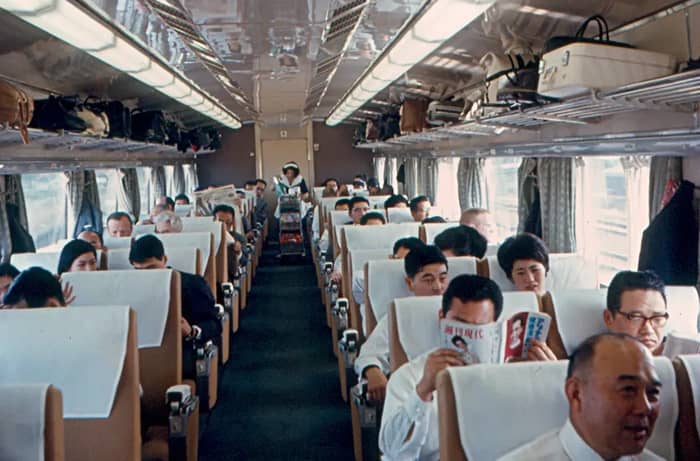
Here’s something that should make you stop and reconsider everything you know about high-speed rail. From the very first run of the Tōkaidō Shinkansen on October 1, 1964, until the present day, there has never been a single derailment or collision on the entire full-standard Shinkansen rail network resulting in a passenger fatality. Let’s be real, that’s an extraordinary achievement spanning six decades of operation.
After the Shinkansen was conceptualized in the late 1950s, designers prioritized safety as well as speed, designing the system around the “Crash Avoidance Principle,” and the possibility of a crash can be “completely” eliminated by utilizing two systems: ATC (automated train control) signalling, and dedicated track without level crossings or sharing with lower-speed trains. The entire network operates on the philosophy that accidents shouldn’t just be mitigated – they should be prevented entirely. Not a single passenger has been killed or injured in a Shinkansen accident – not even during the monstrously destructive March 11, 2011, Great East Japan Earthquake.
The Seven-Minute Miracle and Operational Excellence
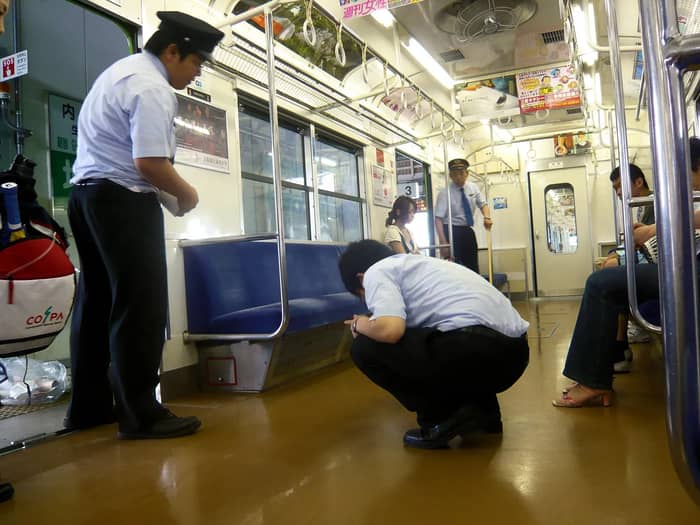
The famed “Seven-Minute Miracle” refers to the rapid cleaning process performed on the Shinkansen trains, where cleaning crews manage to thoroughly clean and prepare each train for its next journey in just 7 minutes. That’s faster than most of us can clean our kitchen counters after dinner. During this impossibly brief window, staff remove trash, wipe down surfaces, arrange seats, and prepare the train for hundreds of new passengers.
JR East runs a total of 12,773 trains on its 69 lines with 17.1 million passengers using its services every day, and during the morning rush hour, Chuo Line trains run through the center of Tokyo at two-minute intervals. The precision required to orchestrate this ballet of steel is mind-boggling. One notable practice integral to their training is the shisa kanko (pointing-and-calling) system, where workers physically point at and verbally call out the status of operational checks as they conduct them, which helps in reducing errors by engaging multiple senses.
Technology and Infrastructure Built for Speed and Reliability
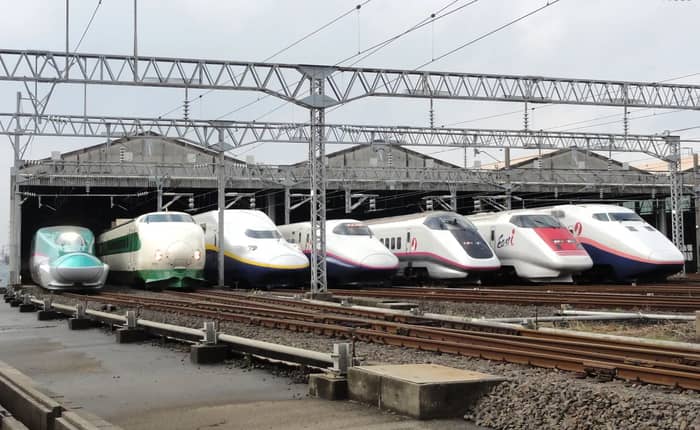
Japan pioneered the high-speed shinkansen or “bullet train,” which now links Japan’s largest cities at speeds of up to 320 km/h (200 mph). The technology behind these trains goes far beyond raw speed. ATC signalling is an advanced, computer-based control system that automatically adjusts the speed of active trains based on their precise location relative to stations, signals, and other trains, increasing safety and efficiency by providing continuous monitoring of train position and speeds.
The infrastructure itself deserves recognition. The dedicated tracks, or grade separation, isolate Shinkansen trains from other services and road traffic, calling for entirely new infrastructure independent from the mainline network. This separation means no crossings, no conflicts with slower trains, and no compromises on speed or safety. Japanese rail systems are well-equipped to handle various weather conditions, including typhoons and heavy snowfalls, with Shinkansen having specialized equipment like snowplows and track heating systems in colder regions.
Cultural Commitment and Human Factors
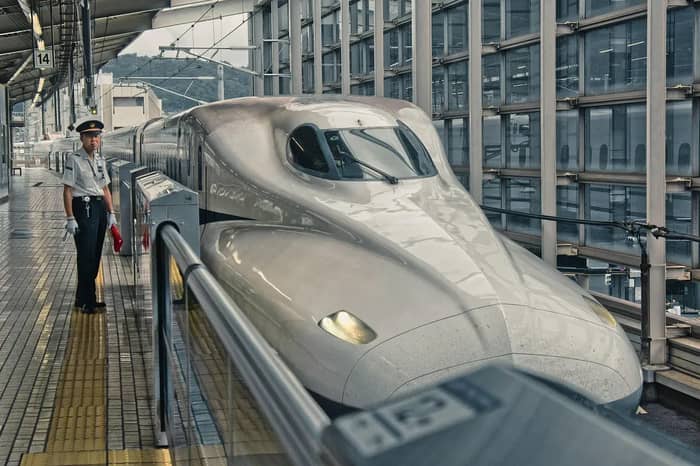
Technology and infrastructure alone don’t explain Japan’s railway excellence. One of the most prominent factors in Japan’s railway efficiency is the country’s deep-rooted culture of punctuality, where being on time is not just a matter of convenience but a reflection of respect for others, and this cultural expectation permeates various aspects of life, with Japanese train operators considering even a delay of a few seconds as unacceptable.
Staff undergo extensive training to operate under precise and demanding conditions, covering everything from daily operations to emergency responses, ensuring that any potential disruptions are handled swiftly and efficiently. The workforce takes immense pride in their roles. Railway employees don’t just view their work as a job – they see it as a responsibility to millions of passengers who depend on precision timing for their daily lives. Honestly, this level of dedication is difficult to replicate in cultures where punctuality is more loosely defined.
Massive Scale and Economic Impact

In the past fiscal year, trains in Japan transported around 22.61 billion people, and in the fiscal year 2023, the number of passengers carried via railway transportation in Japan amounted to approximately 22.61 billion. Those numbers are almost incomprehensible. Japan Railways’ Tokaido Shinkansen high-speed railway line carried around 160.71 million passengers in fiscal year 2023, making it the most-travelled Shinkansen in Japan.
The original Tokaido Shinkansen, connecting Tokyo, Nagoya, and Osaka – three of Japan’s largest cities – is one of the world’s busiest high-speed rail lines, carrying 159 million passengers in the one year preceding March 2017, and since its opening more than six decades ago, it has transported more than 6.4 billion total passengers. In 2022, more than 295 million people rode on Shinkansen trains around Japan. The economic contribution is enormous, transforming regional economies and enabling daily commutes that would be impossible in most other countries.