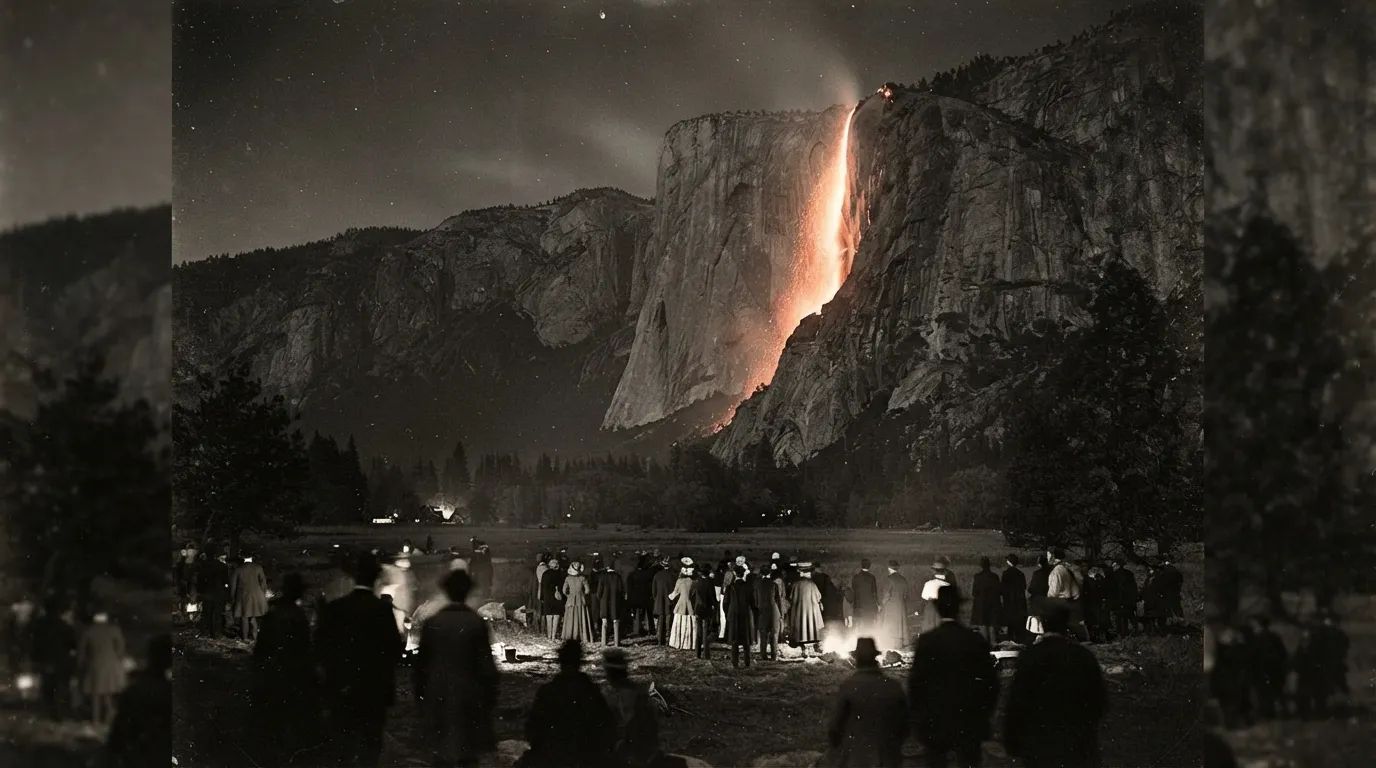
Picture a crowd on wooden benches, watching bears eat at a spot called the “Lunch Counter.” Picture burning embers pouring off a cliff like a waterfall of fire. Picture park caretakers selling pieces of the scenery. All of it was real, and all of it was once part of the national park experience.
Most of us assume today’s park rules are just bureaucratic nagging. But nearly every “no” on a park sign has a backstory, and some of those stories are ugly. One of these bans was handled so quietly that the last show came with no public warning at all. And one well-meant fix ended up hurting the very animals it was meant to help.
#1 – The “Lunch Counter for Bears” That Once Drew Crowds Like a Theater
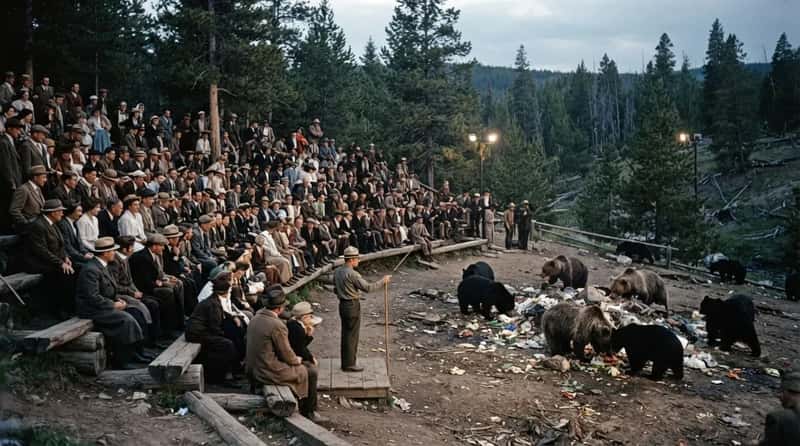
Yellowstone once built what amounted to a dining room for bears, and the audience got seats. The National Park Service says that in the park’s early decades, hundreds of people gathered nightly to watch bears feed on garbage. Some visitors even fed bears along the roads and took risks to get a photo.
The most famous spot carried a sign reading “Lunch Counter – For Bears Only,” near Old Faithful. Accounts describe benches set in half-circles around the feeding ground, and rangers gave talks to the crowds. The park’s own message about not feeding bears got lost in the sideshow.
- Bears began gathering behind park hotels in the late 1880s, according to NPS.
- Staff and concessionaires helped turn it into a show.
But the strangest “attraction” ever shut down involved actual fire, and it happened in California…
#2 – Yosemite’s Nightly Waterfall of Fire Was Ended on Purpose, and in Secret
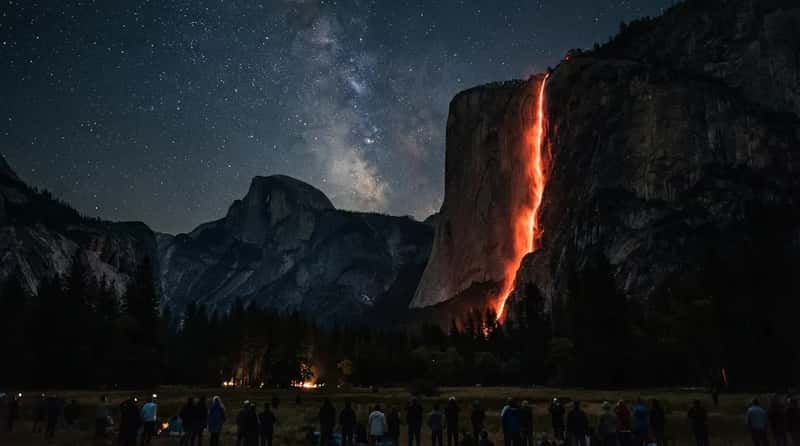
For nearly a century, Yosemite pushed glowing embers off a cliff for entertainment. The Firefall dropped burning coals from Glacier Point some 3,200 feet toward the valley floor. Visitors gathered below, and the call of “Let the fire fall!” echoed across the valley.
Then Park Service director George Hartzog shut it down in January 1968. His reasons were that crowds were trampling the meadows and that the spectacle was not a natural event. He reportedly compared it to putting horns on a rabbit. The last one went ahead with no public notice, to avoid a flood of nostalgic visitors.
Then came an ironic footnote. Unused fir bark gathered for the show reportedly helped fuel the blaze that burned down the Glacier Point Hotel in 1969.
- Some fans still call it the park’s biggest loss.
- Many conservation-minded critics say a staged fire show never belonged in a wilderness park.
Next up is a rule that started with someone getting paid to hand out rocks…
#3 – Park Caretakers Were Once Allowed to Sell Pieces of the Park
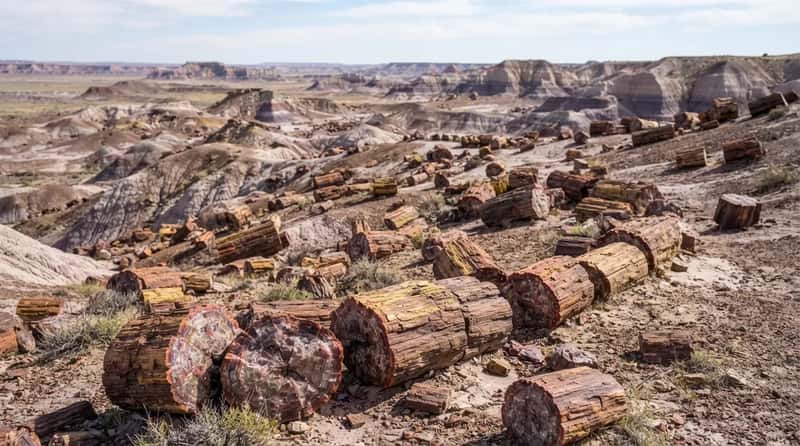
Petrified Forest once let its own staff sell the scenery. A geology teaching document from Arizona State University notes that the earliest caretakers were allowed to sell pieces of the colorful petrified wood to supplement their $1-per-year “salaries.” The site had been proclaimed a national monument in December 1906.
That attitude is long gone. The same document says the park now has a “zero tolerance” policy on illegal collection of petrified wood. News reports have cited a potential $325 fine, along with strongly worded signs and ranger patrols. The rules changed once people understood that the rocks were the park.
Fast Facts
- Monument status came in December 1906.
- Early caretakers earned a symbolic $1 a year and could sell petrified wood on the side.
- Today’s policy is “zero tolerance” for illegal collecting.
- Reported fine for taking wood: $325.
But the modern rule that surprises travelers most is about the sky above the parks…
#4 – Drones Went From Novelty to Banned in a Single Memo
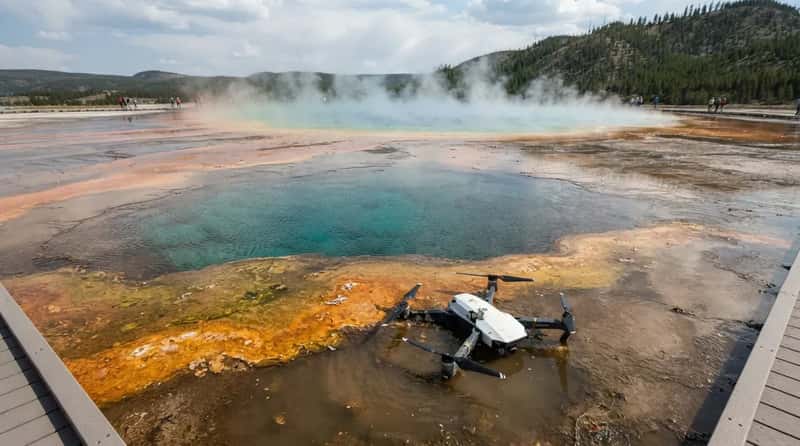
You can’t launch a drone in a national park, and the rule arrived fast. In June 2014, Director Jonathan Jarvis signed a memo directing superintendents nationwide to prohibit launching, landing or operating unmanned aircraft. He cited serious concerns about the negative impact on parks. Several parks had already banned them one by one.
The headline incident came that August. A tourist crashed a drone into Yellowstone’s Grand Prismatic Spring, one of the park’s most famous sights. One legal guide says a judge ordered him to pay $3,200, made up of $1,000 in fines and $2,200 in restitution. Penalties for flying can reach $5,000 and up to six months in jail.
- Some photographers call the blanket ban overkill.
- Rangers point to noise, safety and harassed wildlife.
Then there’s a canyon where the biggest change was about parking…
#5 – Zion Quietly Took the Cars Out of Its Most Famous Canyon
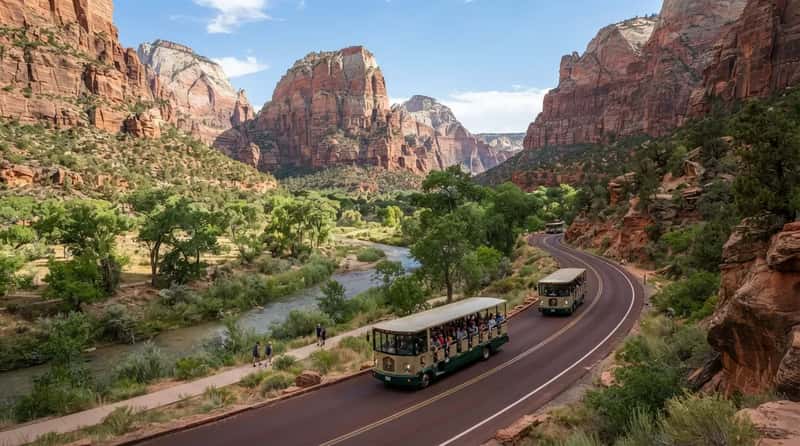
Zion’s most photographed road no longer works like a road trip. The park launched a shuttle system in 2000. During the busy season, most visitors now ride the shuttle up Zion Canyon Scenic Drive instead of driving themselves.
The reasoning is simple math. A narrow canyon can only hold so many cars, and Zion draws more than four million visitors a year. Before the shuttle, drivers circled full lots while noise and exhaust bounced off the canyon walls. Some fans still miss stopping wherever they pleased. Many regulars say the canyon feels calmer without the traffic. Seasonal rules do change, so check the park’s current page before you go.
Quick Compare
- Before 2000: Drivers hunted for spots in packed lots along the canyon road.
- After the shuttle: Riders hop on and off at stops along the roughly 6-mile scenic drive.
- The trade-off: Less freedom to pull over, but far less noise and exhaust.
Another famous spot didn’t get a shuttle. It got a lottery…
#6 – Half Dome Stopped Being a Show-Up-and-Climb Hike
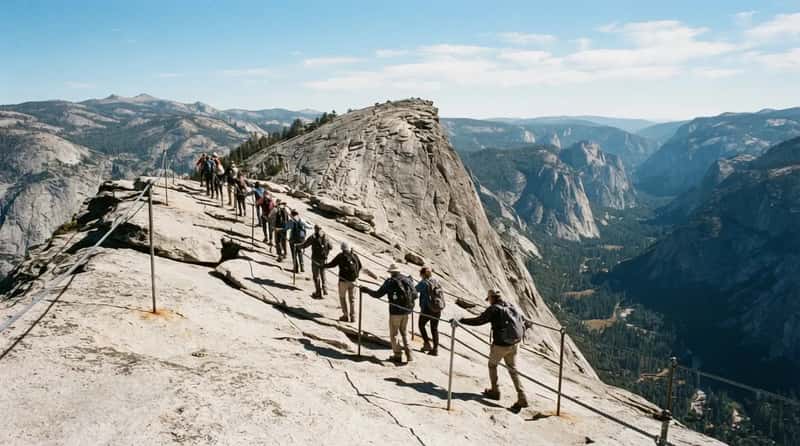
Half Dome’s famous cables, in place since 1919, used to be open to anyone with boots and nerve. That ended when crowding on the cables became a safety problem. Yosemite began requiring permits in 2010, capping how many people can climb each day at roughly 300.
The cable section runs about 400 feet up a steep slope, and it’s narrow enough that one slip can affect everyone behind you. Ask hikers and you’ll hear a split. Some say the lottery took the spontaneity out of a bucket-list climb. Others say the old pileups looked frightening. Either way, “just go for it” is no longer the plan.
But the rule with the darkest backstory is about a few steps off a boardwalk…
#7 – Yellowstone Ended the “Do Whatever You Want” Era at Its Hot Springs
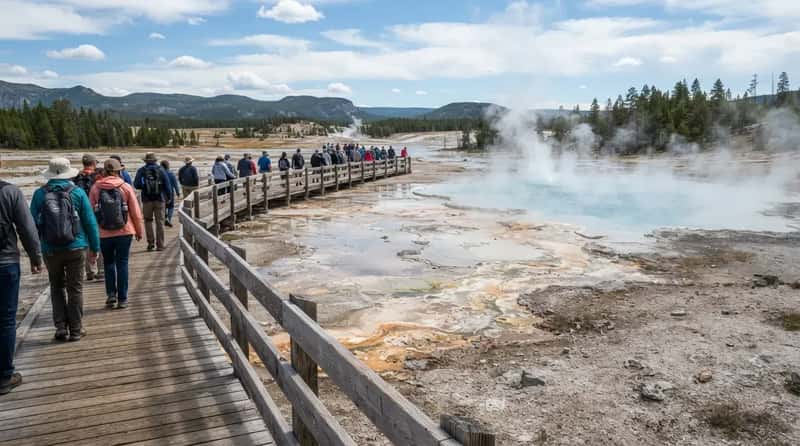
Early Yellowstone visitors treated geysers like tourist toys. Historical accounts describe people tossing laundry and soap into thermal features to trigger a show. Today, the Park Service directs visitors to stay on boardwalks and designated trails in thermal areas, and soaking in hot springs is not allowed.
The reason is painfully practical. Yellowstone has more than 10,000 thermal features, and the ground near them can be a thin crust over scalding water. In 2016, a man who left the boardwalk at Norris Geyser Basin died after falling into a hot spring, according to widely reported accounts. It’s one of the clearest examples of a rule written after real tragedy.
Now for the story where good intentions caused a big problem for the animals…
#8 – Closing the Bear Dumps Actually Backfired for a While
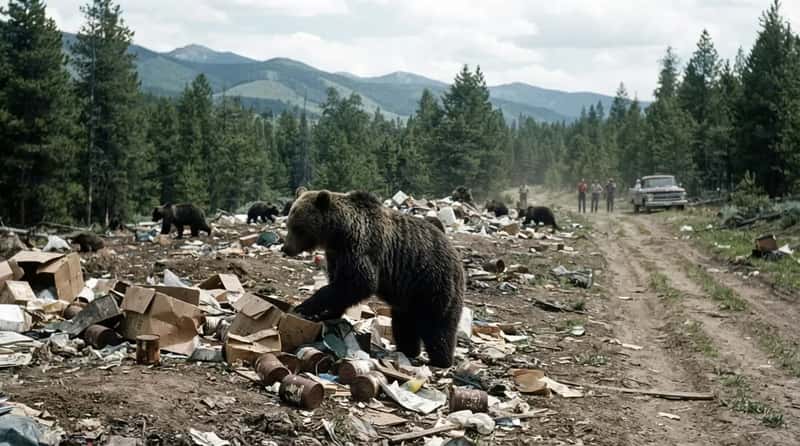
Ending the bear shows was not a clean happy ending. Managers had good reasons to act. NPS says that from 1931, park managers recorded an average of 48 bear-inflicted human injuries and more than 100 incidents of property damage each year. The last dump, Trout Creek, closed in 1970, ending eight decades of fed bears.
But the closures were controversial. The USGS says park staff chose to close the dumps abruptly, to keep reliance on human food from passing to another generation of bears. Conflicts with humans increased substantially as the dumps closed. Famed biologists John and Frank Craighead had warned that closure could threaten the grizzlies. Because of the controversy, the government formed the Interagency Grizzly Bear Study Team in 1973.
The final two stories are about rocks, and one of them involves an oddly powerful guilt…
#9 – The Famous “Ton a Month” Rock Theft Number Isn’t What It Seems
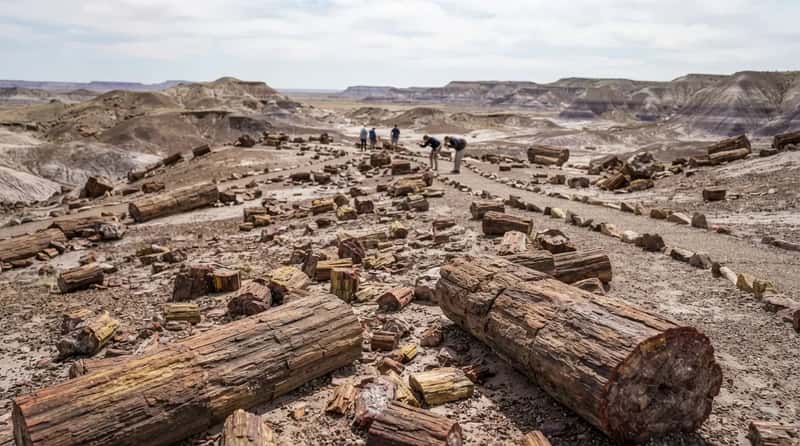
Petrified Forest is famous for one theft statistic, and it’s shakier than you’d think. A teaching document from ASU calls the 12-tons-a-year estimate from a 1986 management plan anecdotal, with its empirical validity yet to be proven. The theft is real. The exact number is the mystery.
Behavior research helps explain the problem. One study observed 125 people stealing petrified wood within 122 hours at two popular sites. Interviews suggested that most thieves did not see taking a little chip as stealing. A pocketful of “nothing” adds up fast across roughly 600,000 visitors a year.
At a Glance
- The big claim: 12 tons stolen per year, from a 1986 management plan.
- The catch: ASU’s teaching document calls that figure anecdotal.
- The observation: 125 people caught taking wood in 122 hours of watching.
- The mindset: Many thieves didn’t think a small chip counted.
And the strangest part of this park isn’t the theft. It’s what comes back in the mail…
#10 – The “Conscience Pile” Rangers Can’t Put Back
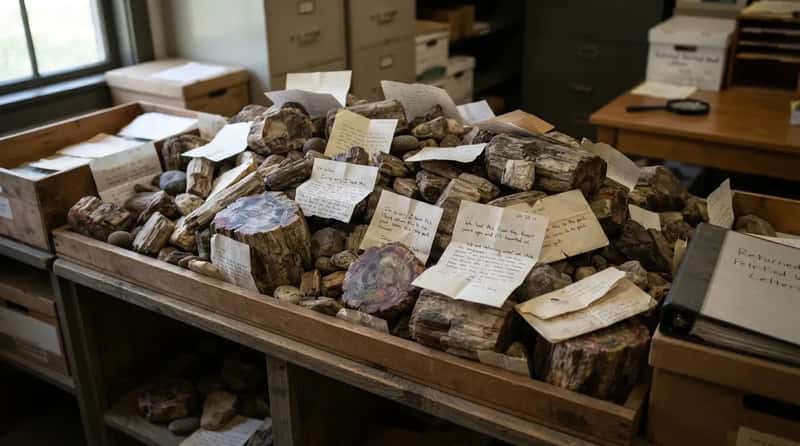
Park staff have built an entire archive around regret. For decades, a legend has said a curse would strike anyone who steals a piece of the fossilized wood. Then the packages started arriving. Over the years, hundreds of people who took chunks, and eventually regretted it, sent them back with letters of apology. Staff named the stack the “conscience pile.”
One writer said the rocks “weigh like a ton of bricks on my conscience.” But mailing them back doesn’t fix the damage, because the pieces can’t be returned to their original spots. Once a piece leaves its place, science loses the location that made it meaningful.
That’s the pattern behind every rule above.
The Pattern Behind Every Quiet “No”
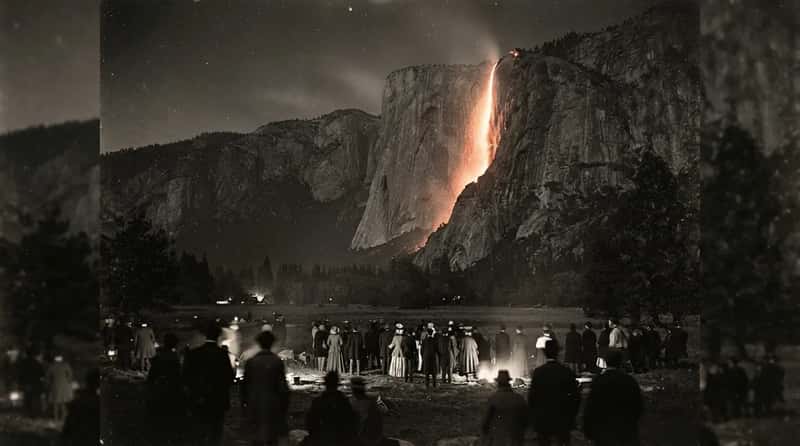
Bears once had a ranger-guarded dinner theater. Yosemite lit its cliffs on fire for tourists. A park’s first caretakers sold off the scenery. Every one of those things ended for a reason: crowds, injuries, safety, or damage that couldn’t be undone.
Some bans were controversial, and the bear-dump closures brought real costs. Others were plain common sense that took decades to catch up. Which vanished park tradition do you wish would return, and which one deserved to disappear?