Spending just one day in Val d’Orcia feels both like a privilege and a small frustration, considering how much there is to see and do in this beautiful corner of paradise. This area in southern Tuscany is one of those places where the landscape feels intentionally composed, as if someone had carefully arranged hills, fields, light, and villages to create a living painting. In reality, it’s the result of centuries of agricultural work layered onto a naturally generous terrain. Even a short visit makes one thing clear: rushing through Val d’Orcia means missing its essence, because this is a place designed for slow looking.
That said, if you only have a day, it can still be an extraordinary one. My suggestion is simple and very Tuscan in spirit: choose one visual hotspot, then give your body time to rest and reset in thermal waters (the most amazing ones, if possible), and finally end the day wandering through one of the historic villages nearby. It’s a compact plan, but deeply satisfying. Rent yourself a car, that’s all you need. Food and accommodation is abundant on the way.
Bagni San Filippo and the Magic of the White Whale
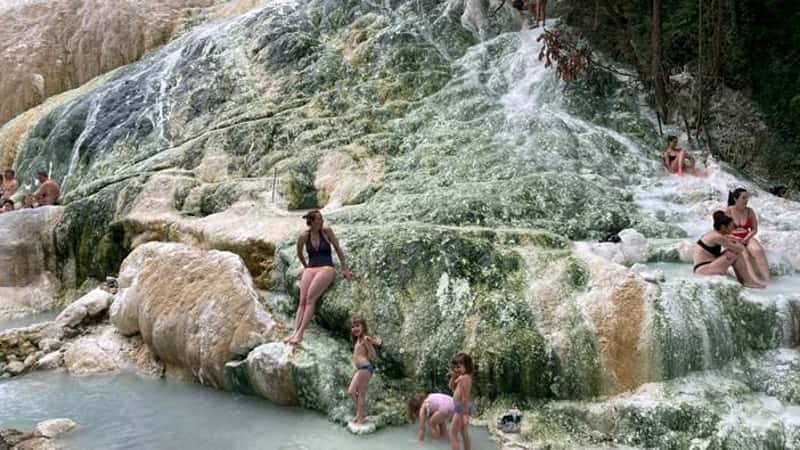
Among the many thermal areas scattered across Tuscany, Bagni San Filippo is easily one of the most striking—and one of the most authentic. Hidden in a forest at the foot of Monte Amiata, this natural spa is nothing like a resort. There are no ticket offices, no pools lined with tiles, no changing rooms or cafés. You park, walk into the woods, and suddenly find yourself surrounded by steam, limestone formations, and water flowing through dozens of natural basins.
The most famous feature here is the Balena Bianca (the White Whale), a massive chalky limestone formation shaped by mineral-rich hot water over centuries. Its white and pale beige tones contrast sharply with the deep green of the surrounding forest, creating a surreal, almost prehistoric atmosphere. Warm water cascades over and around it, feeding a network of natural pools at different temperatures. Some are pleasantly warm, others surprisingly hot, so caution is essential—this is nature, not a regulated spa. The experience is raw and elemental. You’re barefoot on stone and mud, surrounded by steam, birdsong, and the sound of running water. Colors shift constantly: milky whites, rusty oranges, soft greens. There are no services, no bars, no lockers, just the forest and the thermal springs. It’s precisely this lack of infrastructure that makes Bagni San Filippo so special. You feel immersed, not hosted.
A Land of Thermal Waters
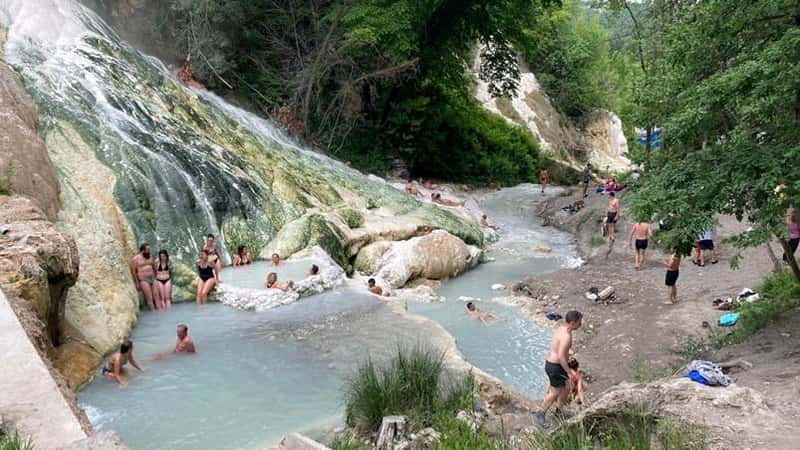
Bagni San Filippo is just one expression of a much broader phenomenon: Tuscany is extraordinarily rich in thermal waters. From Saturnia to Bagno Vignoni, from Rapolano to Petriolo, geothermal activity has shaped both the landscape and local culture. For centuries, these waters have been used for healing, rest, and social life. What makes Val d’Orcia unique is how naturally these thermal areas blend into the landscape.
They don’t feel like add-ons or attractions built to impress visitors. Instead, they seem like natural pauses in the terrain—places where the land itself invites you to stop. In a region so visually refined, the contrast between cultivated fields and wild thermal zones adds another layer of depth.
Hill Towns: Pienza, San Quirico, and Montalcino
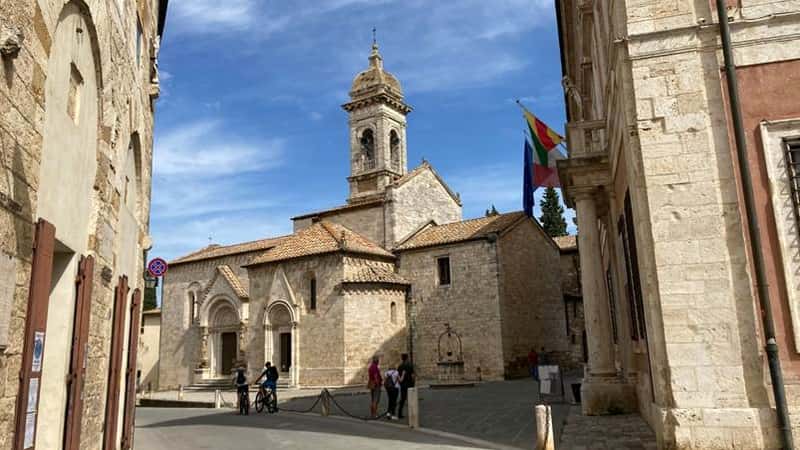
After the forest and the steam, moving into one of Val d’Orcia’s historic towns feels like entering another chapter of the same story. In a relatively small area, you’ll find several exceptional villages, each with a distinct character.
Pienza is perhaps the most famous, and my personal favorite. Designed in the 15th century as an ideal Renaissance city, it’s compact, elegant, and perfectly positioned above the valley. Its harmonious proportions, light-colored stone buildings, and panoramic viewpoints make it feel almost unreal. Walking its streets at sunset, when the light softens and the valley below turns gold, is unforgettable.
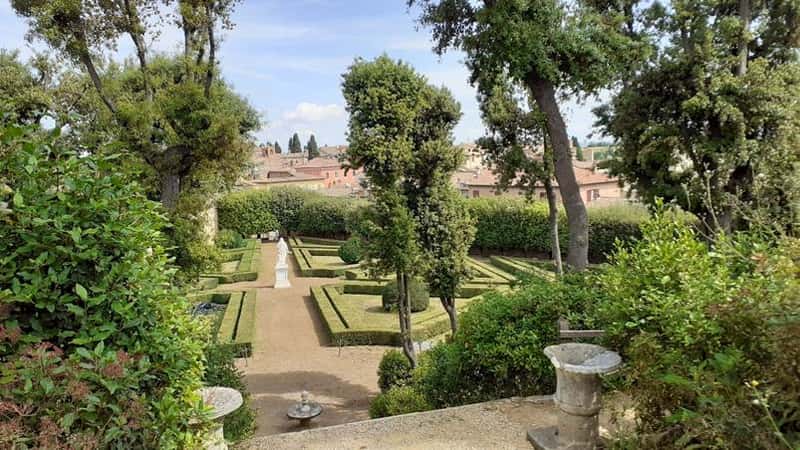
San Quirico d’Orcia offers a quieter, more lived-in atmosphere. Its Romanesque churches, small squares, and the beautiful Horti Leonini gardens make it ideal for an evening stroll. It feels less curated and more local, which can be especially refreshing after a day of sightseeing.
Radicofani brings a more dramatic tone. Dominated by its medieval fortress, the village rises sharply from the hills and has long been linked to pilgrims along the Via Francigena. Windy, austere, and visually powerful, it offers sweeping views over the valley and a strong sense of place shaped by geography and history.
The Iconic Hotspot: Cypress Roads and Perfect Geometry
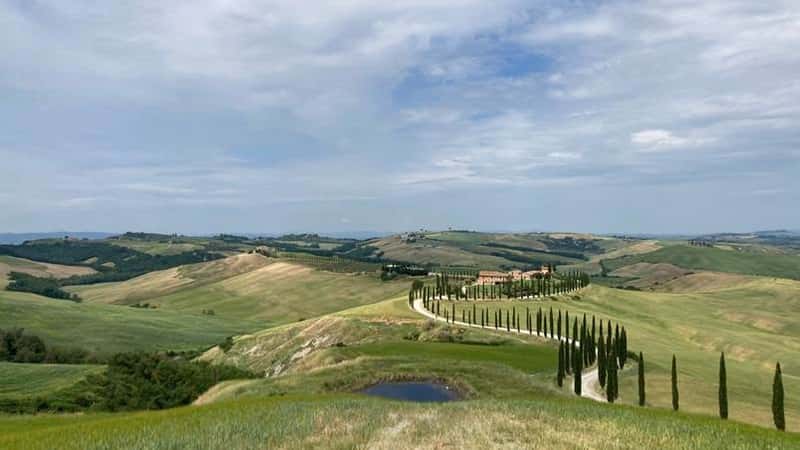
No visit to Val d’Orcia is complete without stopping at one of its most photographed landscapes. You know the one: rolling hills, a farmhouse on a ridge, and a perfectly curved road lined with cypress trees. This kind of view has become an Instagram symbol, but seeing it in person still works its magic.
Places like this one or this one, or the area near the Cappella della Madonna di Vitaleta or along the winding cypress roads south of San Quirico are undeniably popular, but for good reason. The balance of geometry and softness, the way lines guide the eye across the hills, and the constant change in light throughout the day create scenes that feel both precise and emotional. My advice is to treat these spots as brief pauses rather than destinations: stop, look, breathe, then move on.
A Final Thought
One day in Val d’Orcia is enough to fall in love, but not enough to feel it fully. The landscape, the villages, the nature: they need time to sink and they constantly suggests depth—another hill beyond the next, another path leading into the fields, another village waiting to be explored.
If forced to choose, I’d still recommend this sequence: landscape hotspot, thermal immersion, evening walk in a hill town, and dinner. But know that Val d’Orcia rewards those who linger. It’s not just beautiful—it’s patiently, profoundly beautiful, like a painting that keeps changing every time you look at it.