Every December, a fresh crop of “best places to retire abroad” lists lands online, and names like Portugal, Costa Rica, and lately Greece tend to dominate the headlines. Yet year after year, a steady stream of American and Canadian retirees quietly packs up for a small Andean country that rarely gets the same magazine covers. The reasons turn out to be less about hype and more about arithmetic, paperwork, and daily life adding up in ways that are hard to replicate elsewhere.
Ecuador has spent close to two decades building a reputation among people who actually move abroad rather than just dream about it. Some of that reputation has shifted in the past year, and it’s worth looking honestly at both the draw and the friction points before deciding whether the country still deserves its old title.
The dollar makes budgeting simple

Ecuador adopted the US dollar as its official currency back in 2000, and that single decision still shapes how retirees think about the country today. The fact that Ecuador uses the US dollar as its official currency eliminates exchange rate anxiety entirely, making budgeting as simple as it is back home. For anyone who has watched a pension lose value overnight because of a currency swing in another country, that stability is not a small thing.
There’s no need to track exchange rates, no conversion math at the grocery store, and no surprise losses when transferring a Social Security deposit. A retiree’s monthly check buys roughly the same number of dollars in Cuenca as it would buy in Cleveland, just with lower prices attached. That predictability removes one of the biggest sources of stress that usually comes with living on a fixed income overseas.
The pensioner visa is refreshingly straightforward
Ecuador’s Jubilado, or pensioner visa, is often cited as one of the easier retirement visas to obtain anywhere in the world. The Ministry of Labor set the 2026 SBU at $482 a month, and any foreign citizen who receives a monthly pension or retirement income of at least $1,446, three times Ecuador’s minimum wage, can qualify for the visa. There’s no age minimum and no requirement to already speak Spanish or hold a job offer.
Couples get extra flexibility built into the rules. Couples can combine income to reach the threshold, and if only one spouse has a qualifying pension, the second spouse attaches as a dependent for an additional $250 a month above the base, bringing the total to $1,696. On top of that, government fees are modest, with a $50 visa application plus a $270 visa grant adding up to $320 total. Compared with the income thresholds and legal fees attached to residency programs in many other countries, that’s a low bar to clear.
Cuenca offers a colonial city built for slower living
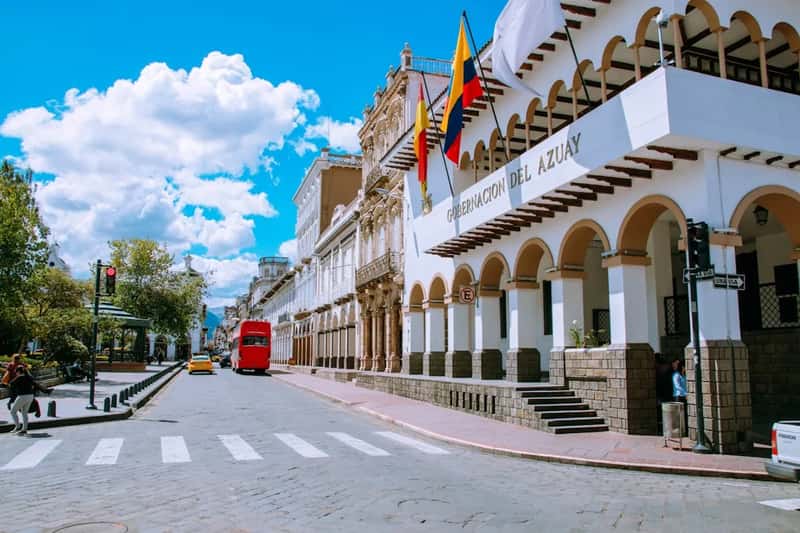
Most retirement conversations about Ecuador eventually circle back to Cuenca, a city of roughly 600,000 people tucked into the southern Andes. Perched at 8,000 feet in the Andes, Cuenca has earned its reputation as one of the world’s best retirement destinations by offering a UNESCO World Heritage colonial center, eternal spring weather, first-rate private healthcare, and a cost of living so low that couples routinely live well on $1,500 to $2,500 a month. Cobblestone streets, river walks, and a historic center that has barely changed in a century give the city a character that’s hard to manufacture.
The climate helps explain the appeal too. Sitting at elevation means Cuenca avoids both the heat of the coast and the extremes of higher mountain towns, settling into a mild, spring-like temperature that barely shifts across the calendar year. For retirees tired of shoveling snow or sweating through humid summers, that kind of climate consistency is its own quiet luxury.
Housing costs remain genuinely low

Rent is where Ecuador’s value proposition becomes concrete rather than theoretical. In Cuenca, the country’s most popular retirement city, a modern two-bedroom apartment with a terrace and mountain views runs around $750 per month in one of the nicest parts of the city, often including internet, building maintenance fees, and all utilities. Quito, the capital, isn’t far behind. A three-bedroom furnished apartment in the heart of Quito, close to restaurants and cafés, can be found for around $800 a month.
Smaller Andean towns push those numbers down even further. In Cotacachi and Otavalo, two Andean towns north of Quito with growing expat communities, rent runs $400 to $500 a month, or a small apartment can be purchased for as little as $45,000. Overall, rents across Ecuador are estimated to be 70 to 80 percent cheaper than in most major American cities. For retirees stretching a fixed pension, that gap changes what retirement actually looks like day to day.
Healthcare quality surprises most newcomers

Healthcare tends to be the deciding factor for people on the fence, and Ecuador holds up well under scrutiny. Ecuador’s public IESS system lists a 2026 minimum voluntary contribution of $84.83 a month, based on 17.6 percent of the $482 basic wage. That single monthly payment opens access to a national healthcare network, including hospital care and, in many cases, dental coverage.
Private care is priced just as reasonably for anyone who wants faster appointments or more English-speaking staff. A specialist visit in Cuenca costs $40 to $80, a dental cleaning runs $30 to $50, and an MRI that would cost $1,500 or more in the US runs $200 to $400 here. Beyond price, there’s a less quantifiable benefit too: Ecuadorian doctors spend 30 to 45 minutes with each patient, with no rushing onto the next appointment, meaning patients can be confident their consultation is thorough.
Foreign pension income mostly stays untaxed

Tax treatment is another quiet reason Ecuador keeps winning out over flashier destinations. Ecuador does not tax foreign-source income that has already been taxed abroad, which means US Social Security and pension income are not taxed in Ecuador. That’s a meaningful distinction for anyone comparing countries where foreign pension income gets folded into local tax brackets.
There are caveats worth knowing. There is no US-Ecuador tax treaty, and Ecuador taxes only Ecuador-sourced income at progressive rates up to 37 percent. Moving abroad also doesn’t erase obligations back home. American retirees still owe US taxes on worldwide income regardless of where they live, so the tax picture is favorable locally but not a free pass on paperwork overall.
Geographic variety few countries can match

Part of what keeps Ecuador competitive is sheer geographic range packed into a small footprint. Ecuador’s landscape ranges from permanent snowfields, to cool mountain retreats, to tropical rainforest, to arid coastal plains reminiscent of southern California. A retiree can choose Andean spring weather in Cuenca, beach living on the Pacific coast, or something closer to jungle life near the Amazon basin, all without leaving the same country.
That range extends to iconic destinations too. From snow-capped volcanoes to dense Amazon jungle, sun-drenched Pacific beaches to the famous Galápagos Islands, Ecuador offers something for everyone. Few countries marketed toward retirees can offer that much climate and terrain diversity within a single, dollarized, easy-to-navigate nation.
An established expat community softens the transition

Moving to a new country is easier when you’re not the only foreigner figuring things out. Cuenca has one of the largest English-speaking expat communities in Latin America, with thousands of American and Canadian retirees calling it home, which means English-speaking doctors, real estate agents, and social groups are readily available. That infrastructure didn’t happen by accident. It built up gradually over roughly two decades as word of mouth, blogs, and retirement forums pointed newcomers toward the same handful of cities.
Having that support network in place lowers the practical barriers that scare many people away from retiring abroad in the first place. Finding a doctor, navigating a lease, or just getting recommendations for a reliable mechanic becomes far less intimidating when longtime expats are willing to share what they’ve already learned. It’s the kind of social infrastructure that takes years to build and that newer, trendier destinations often haven’t caught up to yet.
The safety picture is more nuanced than headlines suggest

Ecuador’s reputation took a hit recently, and it’s worth being straightforward about why. International Living’s 2026 Global Retirement Index put Greece at number one and Panama at number two, with Ecuador, once a perennial top-three finisher, slipping out of the top tier. The drop is largely tied to coastal violence, since Ecuador does have a serious security problem, but it is concentrated in specific coastal provinces tied to drug trafficking routes.
The city where most retirees actually settle tells a different story from the national headlines. In July 2025, the Numbeo Safety Index rated Cuenca as the safest city with a population over 500,000 in all of South America, and that same index ranked Cuenca first in South America for overall quality of life, the first time an Ecuadorian city has topped that ranking. National rankings that average an entire country into a single score can obscure just how different daily life feels in the Andean interior compared with the volatile ports on the coast.
How it stacks up against the countries getting more attention
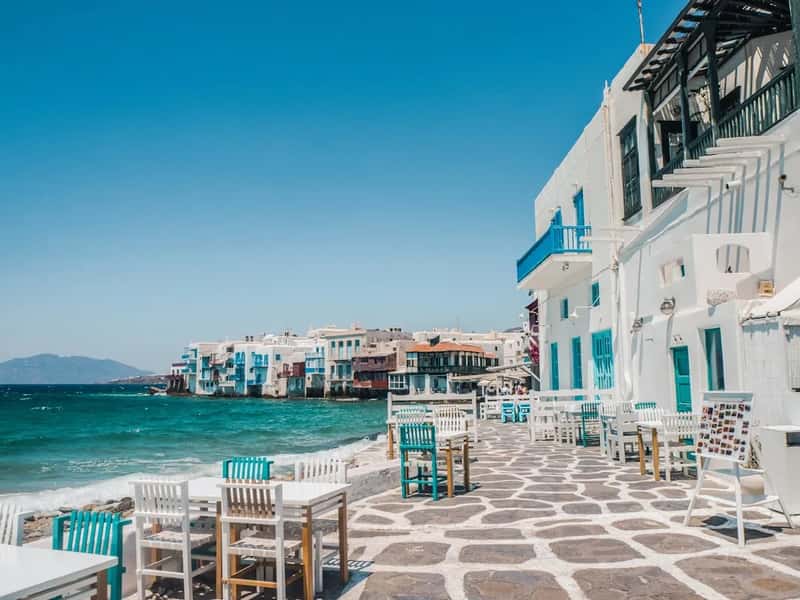
Greece’s rise to the top of the 2026 rankings and Panama’s number two spot reflect real strengths in both places. Greece came in first place due to its affordability, superb private healthcare, the Mediterranean climate, and a range of accessible visas. Meanwhile Mexico, Panama, and Costa Rica continue to benefit American retirees through their closer proximity to the US.
Ecuador simply competes on a different combination of factors: a lower cost floor than most of Europe, a currency that removes financial guesswork entirely, and a citizenship timeline that beats nearly every country on those newer lists. For retirees prioritizing stretching a modest pension as far as it will go while still getting quality healthcare and a fast path to permanent status, that combination is difficult for flashier, better-marketed destinations to fully replicate.
The bottom line for anyone weighing the decision
Ecuador isn’t winning every retirement ranking anymore, and it would be misleading to pretend otherwise. What it still offers is a specific, well-tested formula: dollarized stability, an accessible visa, healthcare that costs a fraction of US prices, and a genuine four-season climate range packed into one country.
For the retirees who’ve already made the move, particularly the ones settled in Cuenca’s Andean calm rather than the coast’s more turbulent provinces, the appeal was never about topping a magazine list in the first place. It was about finding a place where a fixed income goes further and daily life feels manageable, which is the kind of quiet advantage that tends to outlast any single year’s rankings.