

London is magnificent. Nobody is seriously arguing otherwise. But there’s a quieter city to the north – one of Europe’s most dramatic urban landscapes – that a growing number of well-traveled visitors are now choosing as their primary British destination. Edinburgh, the capital of Scotland, has been drawing record numbers of international visitors in recent years, and the reasons go well beyond its famous castle or its festival. It’s a city that rewards curiosity at every turn, from medieval closes to Georgian crescents, whisky bars tucked below street level, and a food scene that recently earned national recognition.
Edinburgh is the largest tourist destination in Scotland and the second largest in the United Kingdom after London. That ranking alone says something. But what the numbers don’t fully capture is the texture of the place – the way its history isn’t cordoned off behind glass but lived in, walked through, and still actively forming. Here’s why more travelers are giving London a miss and pointing their bags toward Waverley Station instead.
A City Growing Faster Than Its Reputation Can Keep Up With
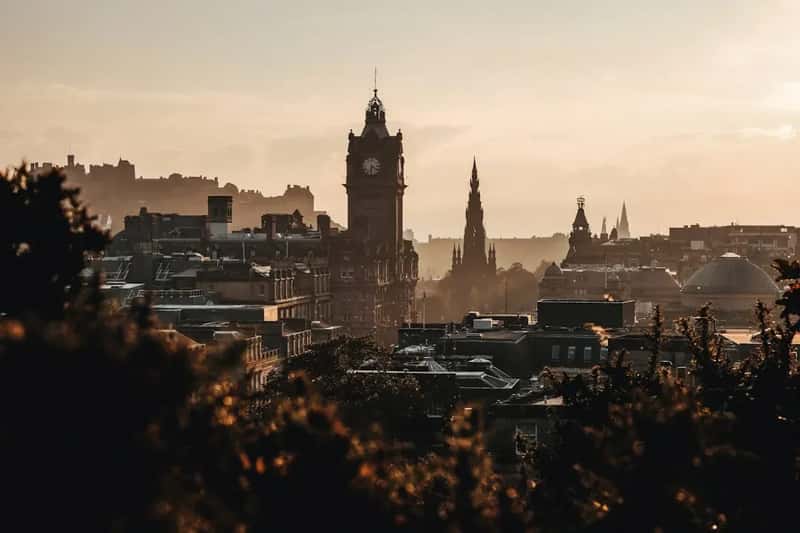
Edinburgh welcomed 2.56 million international visitors in 2024, an 11% increase on 2023 and 16% above 2019 levels. That’s not a post-pandemic bounce – that’s sustained, structural growth. Over the past decade, visitation to Edinburgh and the Lothians increased by more than 25%, and while Edinburgh has historically attracted a balanced mix of domestic and international travelers, trends show a stronger rise in international tourism, with international visitation growing at a compound annual rate of 4.3% compared to 1.5% for domestic visitors.
Tourism brought Edinburgh approximately £2.565 billion in visitor spending in 2024. The United States, Germany, and France consistently rank as the primary sources of international visitors to Scotland, where Edinburgh is the primary destination. American travelers in particular have embraced the city. The USA contributed an estimated 750,000 visits in 2024, a figure 13% higher than the previous year. When visitors keep coming back and bringing friends, something is clearly working.
A UNESCO World Heritage Site That’s Actually Liveable
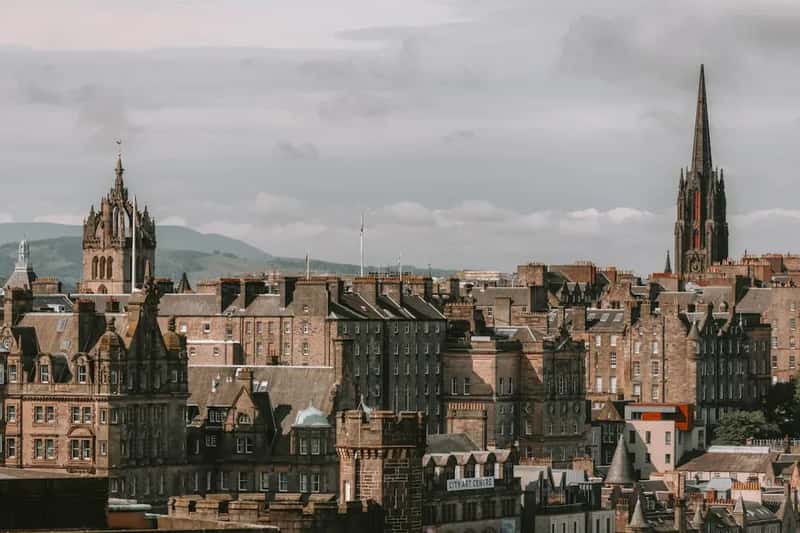
UNESCO inscribed the Old and New Towns of Edinburgh as a World Heritage Site in 1995. The designation covers one of Europe’s most striking urban landscapes, but it’s the reason for the designation that makes Edinburgh unusual. The city has two distinct areas: the Old Town, dominated by a medieval fortress, and the neoclassical New Town, whose development from the 18th century onwards had a far-reaching influence on European urban planning. The level of authenticity in Edinburgh is high.
The UNESCO site covers an area of approximately 4.5 square kilometers and contains nearly 4,500 individual buildings as well as ancient monuments, designed landscapes, and conservation areas. More than 75% of all buildings within the World Heritage Site are listed for their architectural or historic importance. What makes this remarkable is that people actually live and work here. It’s not a museum district – it’s a functioning, breathing city that happens to be one of the most beautiful on earth.
The Old Town: Medieval History You Can Walk Through
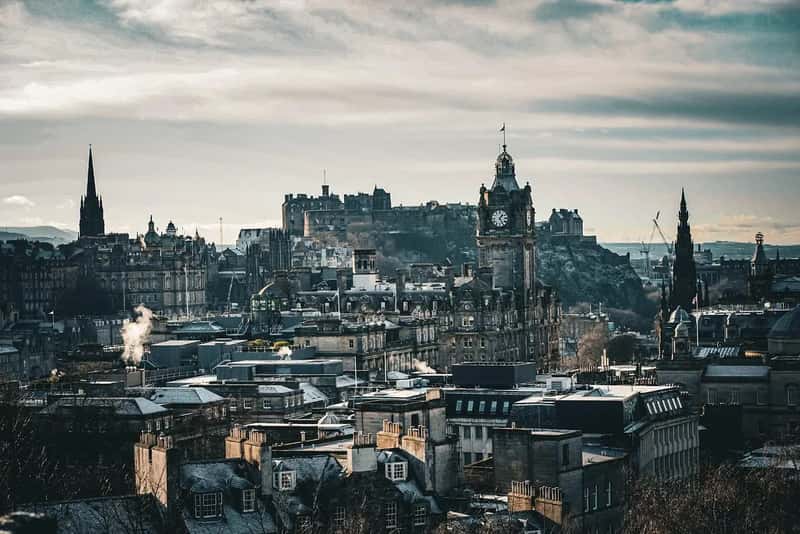
The Old Town forms the historic core of Edinburgh and stretches from Edinburgh Castle to the Palace of Holyroodhouse. The cobbled street linking Edinburgh Castle with the Palace of Holyroodhouse is known as the Royal Mile, and the only sensible and satisfying way to make the one-mile trip is by walking. Along the way, the layers of centuries pile up naturally – Gothic spires, merchant houses, tucked-away courtyards, and underground vaults that predate the Enlightenment.
The Old Town was a crucible of Enlightenment thought, with figures like David Hume and Adam Smith frequenting the city’s taverns and salons. The first edition of the Encyclopædia Britannica, a cornerstone of Enlightenment scholarship, was published here in 1768. The windswept battlements and great open courtyard of Edinburgh Castle accentuate the height and expanse of the naturally fortified citadel, which for over 1,100 years has sat atop a volcanic crag rising 443 feet above sea level. Few cities in the world have a centrepiece quite like it.
The New Town: Georgian Grandeur on an Extraordinary Scale
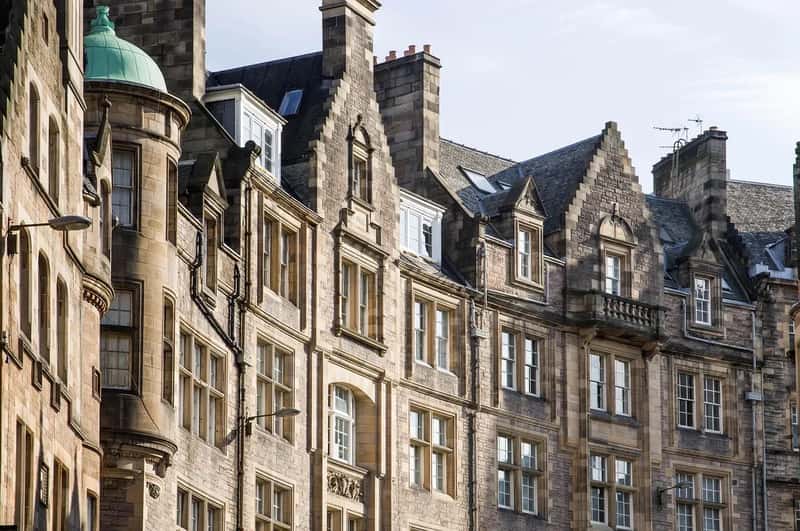
The New Town, designed in 1767, is the largest and best-preserved example of Georgian town planning in the UK. Cross Princes Street from the Old Town and the mood shifts entirely – from organic medieval complexity to rational, spacious, deeply elegant order. The New Town represents the ideals of the Enlightenment made stone: ordered streets, harmonious proportions, and a belief that architecture could express reason, progress, and social improvement.
The New Town showcases neoclassical architecture and modern city planning principles, with spacious gardens and elegant buildings designed by renowned architects such as John and Robert Adam. Many of the buildings here are top-notch examples of neoclassical architecture, like the grand Moray Place and the structures along dollhouse-like Ann Street. Visitors wandering the cobbled streets might expect to see horse-drawn carriages rather than modern cars. That sense of timelessness is the New Town’s most immediate impression, and it’s entirely genuine.
The Festival Scene: Nothing Else in the World Compares
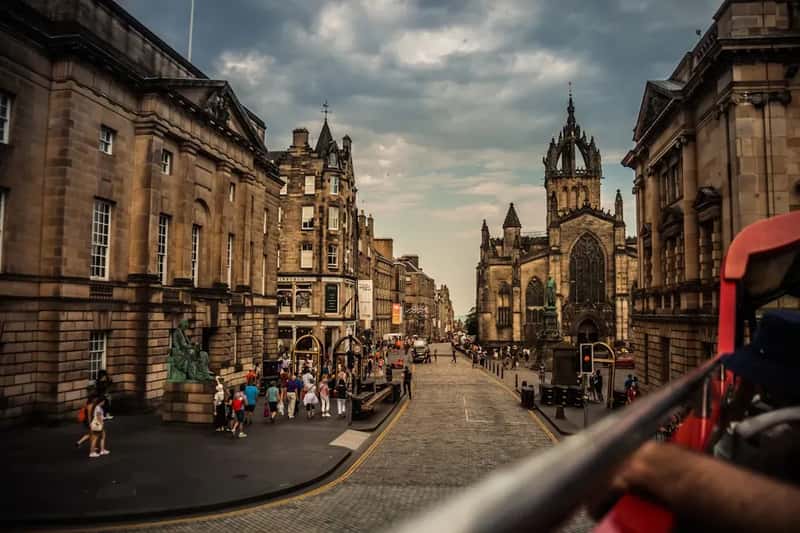
The Edinburgh Festival Fringe is the world’s largest performing arts festival. In 2025, it ran for 25 days, selling more than 2.6 million tickets and featuring 53,942 performances of 3,893 shows across 301 venues, with participants from 68 countries. These are not numbers you read twice and believe, but they’re accurate. The combination of Edinburgh Festival Fringe and Edinburgh International Festival has become a world-leading celebration of arts and culture, surpassed only by the Olympics and the World Cup in terms of global ticketed events.
During August, the city’s population effectively doubles. Yet the Fringe is only one thread in Edinburgh’s year-round cultural fabric. Edinburgh is busiest in summer, especially August, while winters are quieter but magical with Christmas markets. For travelers who want something more manageable, May, June, or September offer a city that is still fully alive but far less congested. The history, architecture, and restaurants are there in any season.
Food, Whisky, and a Scene London Doesn’t Have

Edinburgh offers an amazing selection of places to eat, from Michelin-star meals to incredible independent eateries. It’s no wonder it was named the Most Exciting Food Destination in The Good Food Guide Awards 2025. That recognition reflects a genuine shift in Edinburgh’s culinary identity over the past decade – away from haggis-and-chips caricature and toward something far more considered and creative.
Then there’s the whisky. Edinburgh is not distillery country in the same way as Speyside or Islay, but the city serves as the gateway to all of it, with specialist bars and whisky experiences woven into the fabric of daily life. For whisky connoisseurs, there is the Johnnie Walker Princes Street attraction, an eight-floor celebration of the 200-year-old whisky brand. During festival season, the Whisky Fringe, held in the stunning Mansfield Traquair, is a weekend event hosting over 40 exhibitors from across the industry, including classic drams from well-known brands as well as new releases and independent bottlings. There really is nothing like it anywhere else.
Considerably Easier on the Wallet Than London
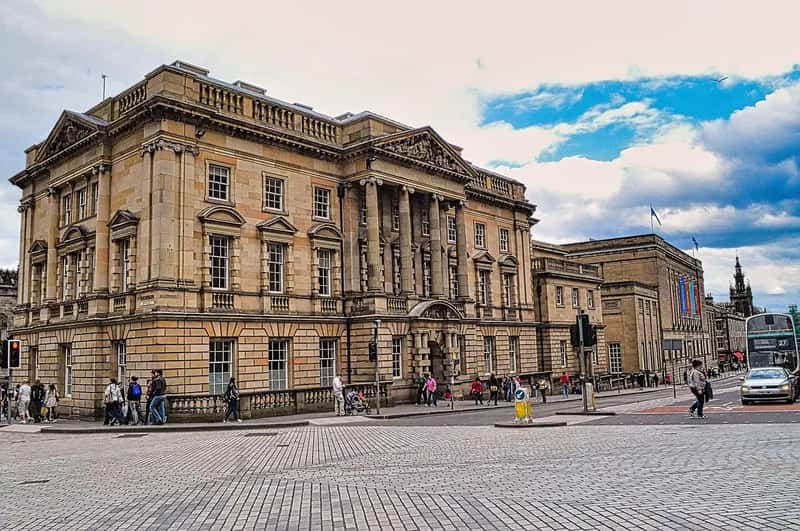
Budget is, for most travelers, a real consideration. Here, Edinburgh makes a compelling case. Edinburgh is considerably more affordable than London. Travelers can expect to pay 25 to 40% less in Edinburgh for similar quality accommodation, dining, and activities compared to London. That gap is significant. It means a longer stay, more meals out, more shows attended, more whiskies sampled – for the same overall spend.
While accommodation and dining can be pricey, especially during festival season, many attractions are free, and public transportation is reasonably priced. Edinburgh is easily explored on foot, with most key attractions within walking distance of each other. That walkability is something London simply cannot offer. In Edinburgh, you can cover a day’s worth of remarkable sights without ever hailing a taxi or descending into a tube station.
Getting There Has Never Been Easier
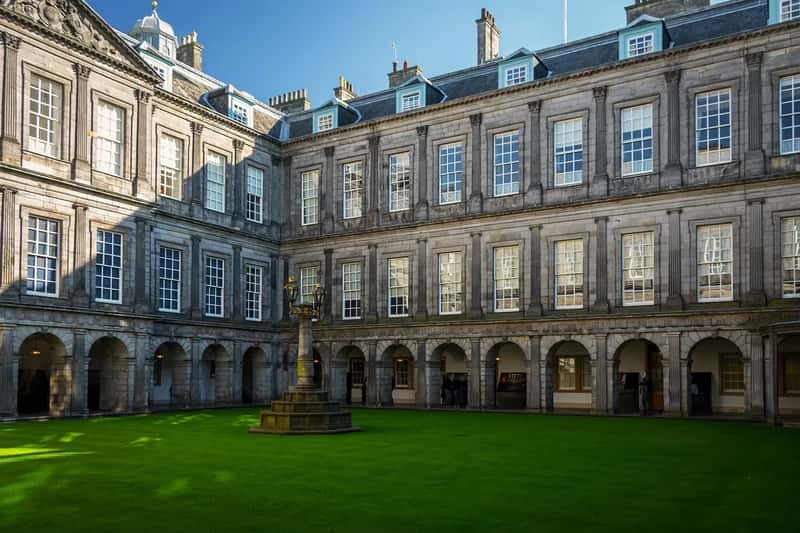
The rise in visitation has been accompanied by significant developments at Edinburgh Airport, which has steadily expanded its network of European routes and added transatlantic connections. Between 2014 and 2024, total passenger numbers grew from 10.2 million to 15.8 million, an increase of roughly 55%. More direct routes mean fewer reasons to route through London in the first place. Edinburgh Airport handled approximately 15 million passengers in 2024, hitting a record for Scottish airports.
Edinburgh Airport is situated only 5 miles from the city centre, and you can travel from the airport to the city centre in around 30 minutes by bus, tram, taxi, or car. Once you’re in, the city keeps things straightforward. Edinburgh is easily explored on foot with most key attractions within walking distance of each other, and attractions beyond the city centre can be reached cost-effectively by public transport. After arriving in London, the equivalent journey from Heathrow alone takes longer – and costs considerably more.
A City That Keeps Visitors Coming Back
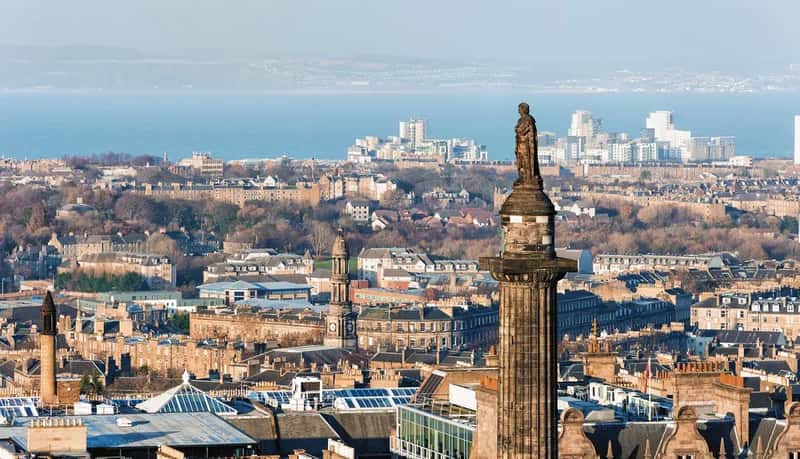
Visitors tend to return: roughly 52% of Edinburgh’s overnight visitors are repeat visitors, and around 47% are classified as “older independents” – travelers who are older and travel alone or independently. That repeat rate is telling. It suggests people aren’t just ticking the castle off a bucket list. They’re discovering something in Edinburgh that they want to return to, explore more slowly, and understand more deeply.
Edinburgh is the historical, cultural, and political capital of Scotland. For nearly a thousand years, Scotland’s kings, parliaments, writers, thinkers, and bankers have called Edinburgh home. Today, it remains Scotland’s most sophisticated and entertaining city – a place of stunning vistas, nestled among craggy bluffs and studded with a prickly skyline of spires, towers, domes, and steeples. London will always pull visitors. But Edinburgh earns them. That’s the difference – and increasingly, discerning travelers know exactly which side of that line they’d rather be on.