
Crocodiles are responsible for hundreds of deaths across Africa every year. They are among the most efficient ambush predators on the planet. So when you hear that there are villages in West Africa where over a hundred full-grown crocodiles roam freely among children, share ponds with women fetching water, and have not harmed a single local in living memory – your instinct says that’s either a myth or a dangerous exaggeration. It isn’t. These places are real. The coexistence isn’t random luck. It’s the product of species biology, centuries of ritual, and one of the most quietly fascinating human-animal agreements on earth.
Most Americans picture a crocodile and immediately think: danger, death, stay back. This is a relationship that has been carefully maintained across centuries, rooted in founding myths, spiritual contracts, and a mutual trust that outsiders struggle to believe even when they’re standing right in the middle of it. But the story goes deeper than folklore – and the science actually backs part of it up. Here’s what the evidence actually says.
These Are Not the Crocodiles You Think They Are
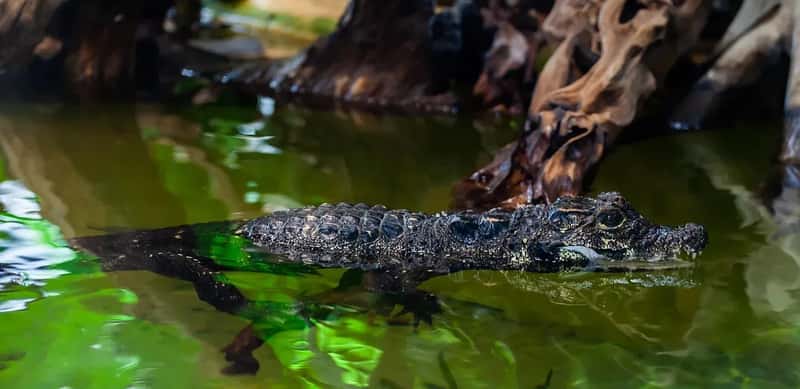
The first thing most outsiders get completely wrong is the species. The crocodiles living peacefully in these West African villages are not the massive, man-eating Nile crocodile that dominates nature documentaries. The West African crocodile, desert crocodile, or sacred crocodile – scientifically known as Crocodylus suchus – is a species related to, and often confused with, the larger Nile crocodile. That confusion has masked a critical difference for a long time. The smaller size and non-aggressive behaviour toward humans appear to be the key phenotypic features distinguishing this species from the larger and more aggressive Crocodylus niloticus, which grows on average to more than 5 meters long.
The West African crocodile is a medium-sized crocodilian endemic to West and Central Africa, distinguished by its adaptation to diverse aquatic and semi-arid environments. Adults typically attain lengths of 2.0–3.3 meters and weights of 70–100 kg, making it smaller and generally less aggressive than its Nile cousin. It was known to be more docile than the Nile crocodile and was even chosen by the ancient Egyptians for spiritual rites, including mummification. Villages across West Africa weren’t being reckless by living alongside these animals – they were reading the animal correctly, long before any biologist confirmed it.
Science Didn’t Recognize This Species Until 2011 – But Communities Knew All Along
Here’s an uncomfortable truth: the scientific world was late to the table. The West African crocodile was named by French naturalist Étienne Geoffroy Saint-Hilaire in 1807, who discovered differences between the skulls of a mummified crocodile and those of the Nile crocodile – but this new species was long afterwards regarded as a synonym of the Nile crocodile. It took DNA analysis to finally validate Saint-Hilaire’s findings, with a 2003 study proposing the resurrection of C. suchus, and several studies between 2011 and 2015 confirming it as a valid species. West African communities had been treating this animal as categorically different for centuries before scientists caught up.
Researcher Hekkala and colleagues in 2011 analyzed ancient mummy DNA alongside modern samples, confirming a deep evolutionary split approximately 5–8 million years ago – highlighting C. suchus as a separate species with biogeographic isolation predating the Sahara’s formation. The locals of Burkina Faso, Ghana, and The Gambia had functionally understood this distinction for generations through lived experience, not lab equipment. That’s not a small thing. That’s centuries of accurate ecological knowledge passed down through ritual and story.
Bazoulé, Burkina Faso: Where Over 100 Crocodiles Share One Village Pond
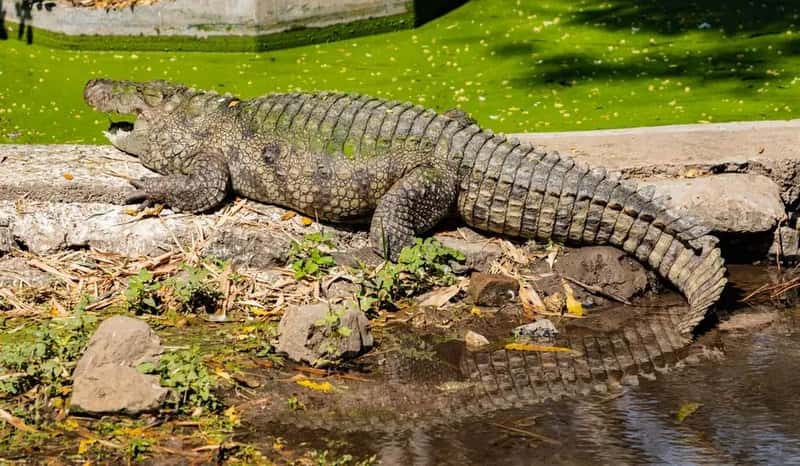
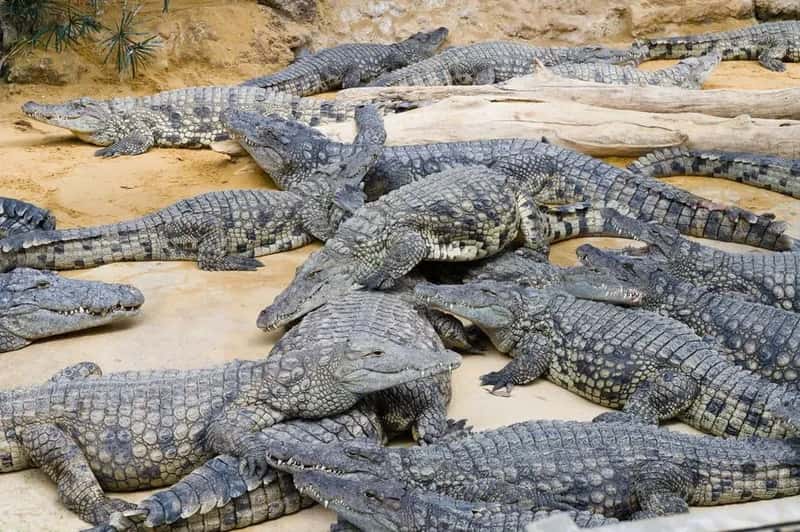
In Bazoulé, Burkina Faso – a sprawling lakeside village around 30 kilometers from the capital Ouagadougou – residents have been living in harmony with more than a hundred crocodiles that share the same village pond where children swim and bathe and women fetch water. This isn’t a zoo or a managed wildlife park. It’s an active, working village where the pond is central to daily life. Children play at its edge. Elders sit feet away from animals that can weigh hundreds of pounds. The people of Bazoulé believe that the crocodiles came from the sky along with the rains, and that if the crocodiles disappear, the water will disappear too.
The belief isn’t decorative – it shapes actual behavior. The villagers believe the crocodiles are sacred and feed them chicken, a key factor in maintaining the animals’ temperament around people. Regular feeding by the community keeps the crocodiles conditioned to associate humans with food provision, not prey. Generation after generation, this creates something remarkable: a community where both humans and crocodiles have been behaviorally conditioned, across centuries, to coexist. It’s less a miracle and more a long-running, multigenerational social contract. That framing matters. This isn’t magic. It’s behavioral ecology, maintained through culture.
The Founding Legends That Sealed These Covenants
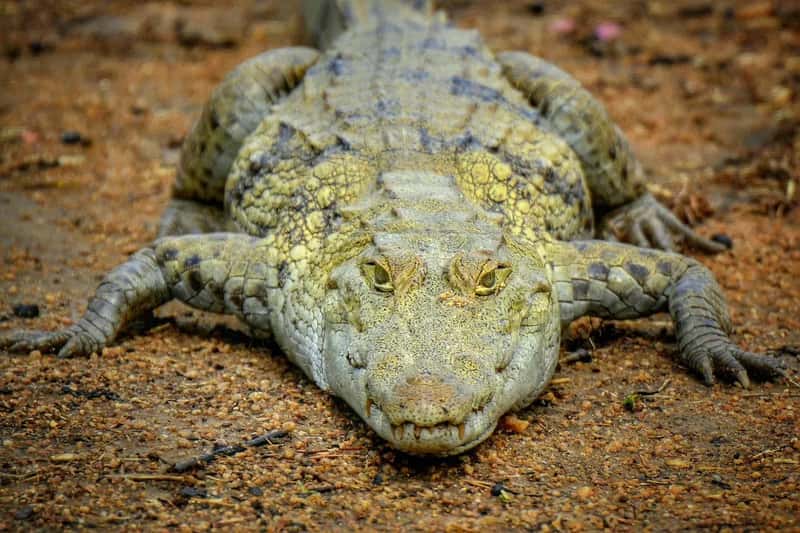
Every sacred pool has its own specific founding story – and they aren’t interchangeable. The locally told origin of Paga’s sacred pond in Ghana is that a crocodile brought a dying man to the pond to drink, and after surviving, he declared the pond sacred and that no harm should come to the crocodiles. This legend is claimed to date back about 600 years. In Sabou, Burkina Faso, local legend claims that a thirsty warrior – ancestor of the local inhabitants – was once saved by a crocodile who gave him water from a pond to drink. These stories function as founding covenants: the crocodile saved us, so we protect them in return.
The Sacred Crocodile Pool of Kachikally in The Gambia has been an essential location for its people for centuries. Its history is deeply interwoven with the traditions of the Mandinka people. Legends tell of the pool’s discovery by a woman suffering from infertility who was advised by a local herbalist to visit the site. After a ritual involving the crocodiles, she became pregnant, leading to the belief that the sacred reptiles possess healing powers. This story fashioned the pool into a powerful symbol of fertility, health, and prosperity. Each origin story carries the same core logic: the crocodile helped us first, and the protection we give is repayment of a debt. That’s not superstition – that’s a social contract with teeth.
The Gambia’s Three Sacred Pools – and the Albino Crocodile People Pray To
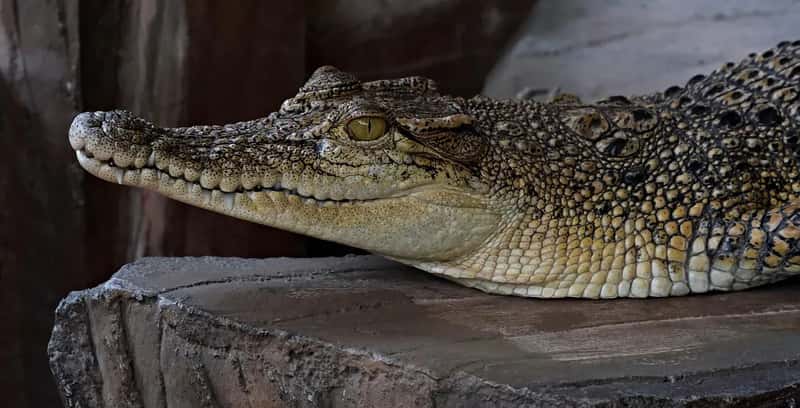
The sacred pool tradition runs through Burkina Faso, Ghana, The Gambia, Senegal, Mali, Benin, and Togo – it is a genuinely regional phenomenon, not a single village curiosity. The Gambia alone has three sacred crocodile pools: one near the capital Banjul, one at the southernmost tip near the Senegalese border, and one on the remote North Bank. The Kachikally pool is located in Bakau, about 10 miles from Banjul, and is one of three sacred pools used as sites for fertility rituals. The others are Folonko in Kombo South and Berending on the North Bank. Each pool has its own custodian family and its own terms of sacred maintenance.
At Kachikally, there is one crocodile that holds special status above all the rest. Charlie is an albino crocodile at Kachikally – white, rare, unmistakable against the dark water. Local belief holds that seeing Charlie is a guarantee: your prayer will be answered. Before The Gambia’s 2016 presidential election, politicians made the journey to Kachikally to pray. All Gambian wrestlers, it is said, must visit Folonko before they can achieve victory in competition. This is not a relic practice left over from an ancient era – it’s a living tradition actively woven into politics, sports, and personal ambition today.
The Dagara People and the Crocodile as Messenger Between the Living and the Dead
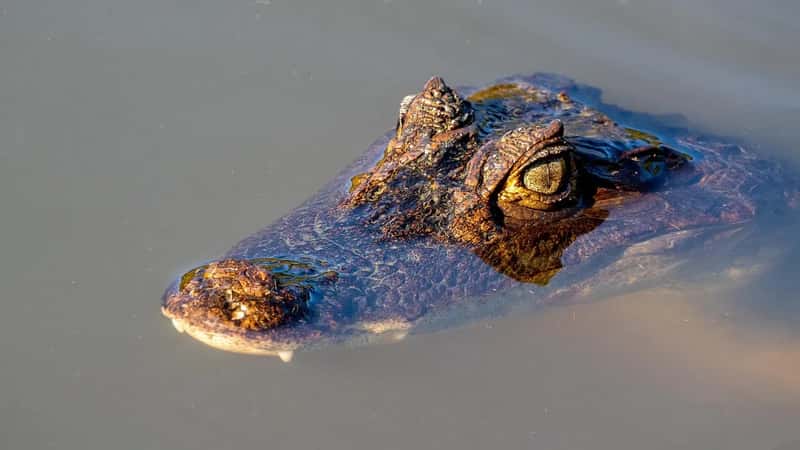
The most well-known example of crocodile worship in West Africa is the crocodile cult of the Dagara people, who live in the Upper West Region of Ghana and the Burkina Faso region. Among the Dagara, the crocodile is a sacred animal with connections to the spiritual realm. They believe that crocodiles are the messengers of the spirits, particularly those of their ancestors. The Dagara people hold ceremonial rituals near crocodile-inhabited rivers or lakes, where the creatures act as intermediaries between the physical world and the spiritual world – honored through offerings, prayers, and dances. This is spiritual infrastructure, not just folklore.
The Dagara also believe that humans and crocodiles have deep connections through their shared existence in the realm of the dead, and that the crocodile has the ability to bridge the gap between life and death. In Mauritanian traditional communities who live in close proximity to West African crocodiles, the belief is that just as water is essential to crocodiles, so crocodiles are essential to the water – which would permanently disappear if they were not there to inhabit it. In both cases, the crocodile isn’t just protected – it’s understood as ecologically and spiritually necessary. Remove it, and you don’t just lose an animal. You lose something cosmic.
What Happens When Someone Drowns – and the Crocodiles Don’t Touch the Body
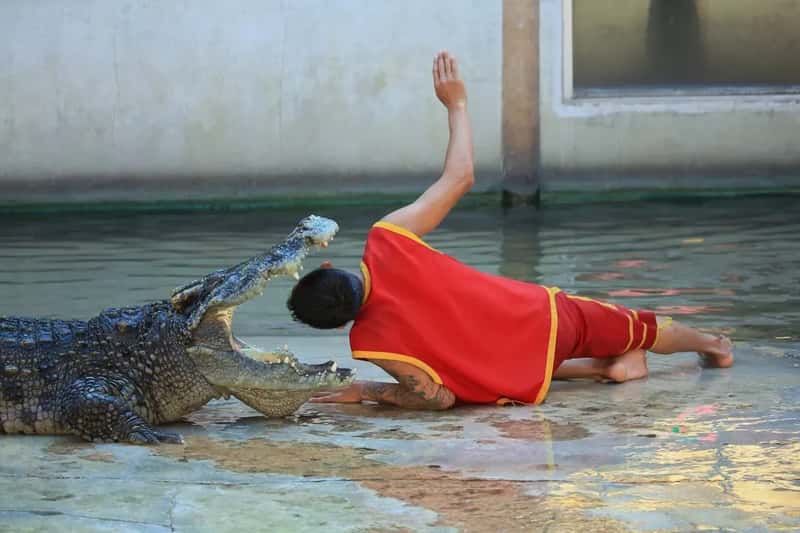
The most quietly stunning detail from Bazoulé isn’t just that the crocodiles don’t attack the living. The most striking claim is what they reportedly do when a villager accidentally drowns. It is believed that in an instance where a villager drowns, the crocodile does not eat the remains but brings them out for proper burial. Whether you interpret that literally or symbolically, what it reveals is significant: these communities have completely reframed the animal at a cognitive level. The crocodile is not a predator in their mental map of the world. It is a neighbor with obligations.
Many communities also believe that crocodiles have healing properties. The animal’s connection to water – a source of life and cleansing – makes it a central figure in rituals designed to promote spiritual and physical healing. People come to sacred crocodiles in times of illness or distress, seeking protection or intervention. Women struggling to conceive traditionally visit the pool to bathe in the water – and if a pregnancy results, it is traditional to give the child “Kachikally” as part of their name. The crocodile is embedded in the naming of children, in healing ceremonies, and in political ritual. That’s a level of cultural integration that makes the peace between species structurally self-reinforcing.
The Ancient Egyptians Chose This Same Species – and Here’s Why That Matters
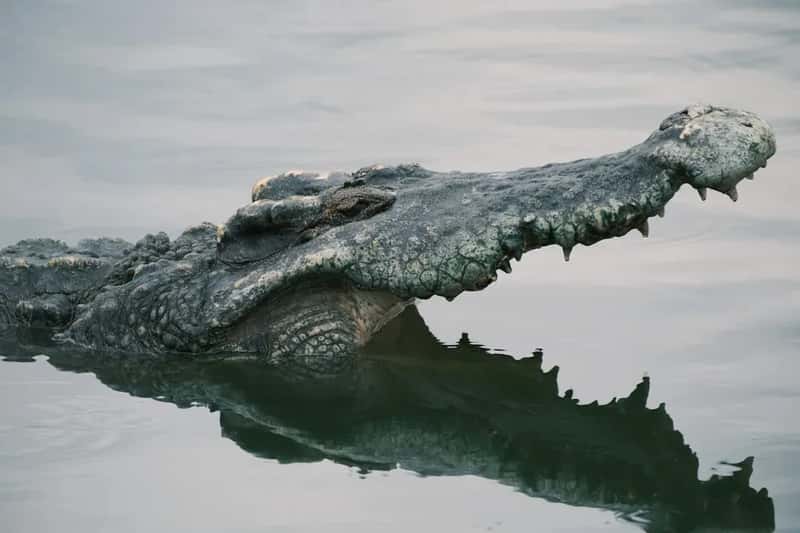
The connection between this specific crocodile species and human reverence didn’t start in West Africa. Crocodiles, including Crocodylus suchus, earned sacred status in ancient Egypt thanks to a god called Sobek, manifested as a crocodile. It was known to be more docile than the Nile crocodile and was chosen by the ancient Egyptians for spiritual rites, including mummification. DNA testing found that all sampled mummified crocodiles from the grotto of Thebes, grotto of Samoun, and Upper Egypt belonged to this species. The Egyptians weren’t selecting randomly – they were choosing the animal they could actually live with.
Ancient Egyptian priests specifically selected Crocodylus suchus for their temple rituals, where the animals were kept as pampered pets and worshipped as manifestations of the god Sobek. The Egyptians recognized something in this particular animal that made it suited for sacred life alongside humans. What’s remarkable is that communities separated by thousands of miles and thousands of years independently arrived at the same conclusion about the same species. That convergence – Egypt, Burkina Faso, Ghana, The Gambia, Senegal, Mali – isn’t coincidence. It’s a cross-continental record of humans correctly reading a specific animal’s temperament and building civilization around that knowledge.
Why This Coexistence Has Actually Held – and What Could Break It
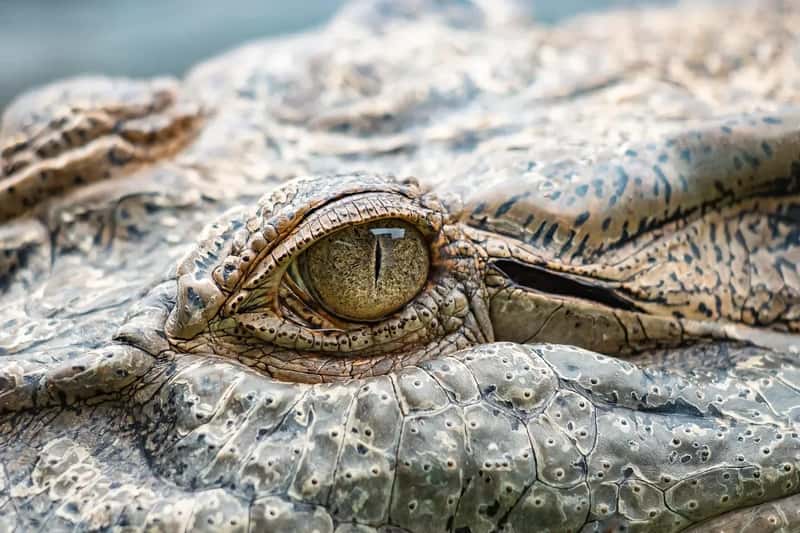
At both Bazoulé and Paga, guides lure the crocodiles out of water with live chicken as bait, so that tourists can pat them and take pictures with them. The sacred pool tradition has, in many sites, evolved to include ecotourism – which introduces new money but also new pressures. The Sacred Crocodile Pool of Kachikally presents significant opportunities for tourism and economic development. As The Gambia positions itself as a cultural and ecotourism destination, Kachikally has become a prominent attraction, with tourists contributing to the local economy. That’s a delicate balance: commercialization can erode the sacred protocols that make the coexistence safe in the first place.
The main threats to West African crocodiles today include habitat loss and human pressure. These reptiles are hunted for the meat trade and for their skin. They are also often considered pests for attempting to remove caught fish from fishing nets, which leads to conflict between the crocodiles and fishermen. Outside the sacred pools, the story is very different – the same species faces real danger in regions where the cultural contract doesn’t exist. The sacred pool tradition turns out to be one of the most effective conservation mechanisms in all of West Africa, and it predates formal conservation science by centuries. What keeps the crocodiles safe is the same thing that keeps the people safe: a deeply held mutual obligation, passed down through every generation that chooses to honor it.