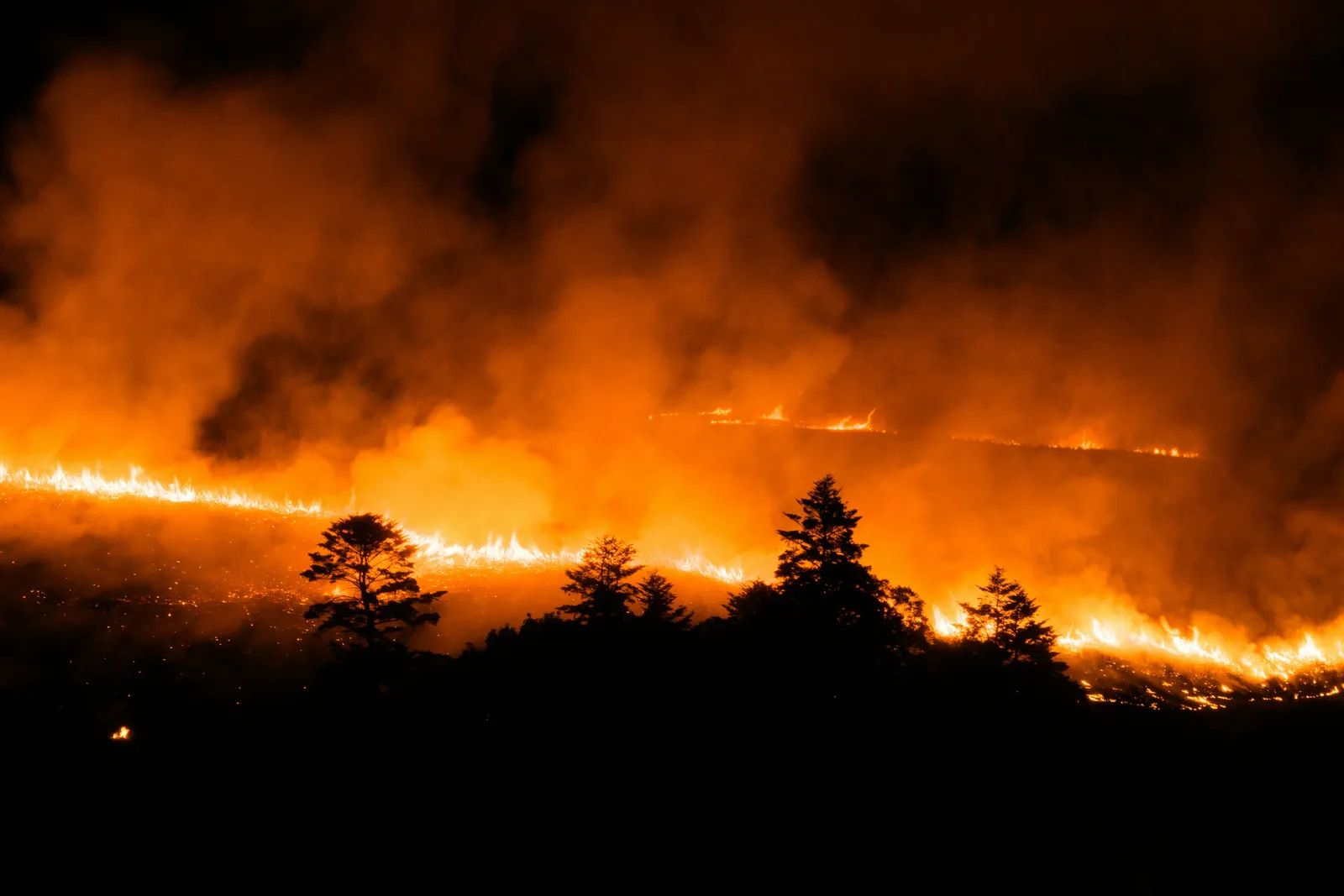
After four years and an $11 million purse, the XPRIZE Wildfire competition has named its awardees. The results were announced September 23, 2026, at the New York City Fire Museum, closing a contest that asked teams to find and suppress fires faster than people usually can. The outcome was clear on one point and unresolved on another. Detection has improved sharply, but no team proved it could reliably put out a fire on its own. ([1])
Finding the fire was the easier part
The final round took place in June in Alaska, where three teams of engineers put their machines to a simple test on a range outside Nenana. Every team found the fire within the window. The machines had to act without human control, and two sent drones to attack it. No team extinguished it.
That gap shaped the entire competition. Organizers had already signaled that the harder challenge lay beyond sensing. XPRIZE Wildfire executive program director Andrea Santy said the experience left her with a team that completed every step within 10 minutes and hit the fire accurately, which she described as a meaningful result even without a grand prize winner.
Who took home awards
Judges did not award either grand prize. Instead, they distributed smaller awards across the two tracks. The most notable recipients included:
- SIRIUS Wildfire Alliance, which received the $500,000 first place system integration award in the space-based track, for integrating radar and optical data to support fire characterization and spread modeling.
- Anduril Industries, which received the $1.2 million first place award in the autonomous response track for its modular software platform that linked cameras, sensors and drones.
- Dryad Networks, which took second place in the autonomous track with a sensor network and drone system that demonstrated end-to-end autonomy.
The awards carry more weight as a signal of direction than as a verdict on any single product. Prize figures reported across sources differ slightly, so readers who need exact totals should check the official XPRIZE announcement.
What the testing revealed about limits
The competition’s own findings were sober about what current tools can do. XPRIZE’s testing notes state that a drone can extinguish an incipient fire but cannot extinguish an established one. That distinction matters because the window for action is narrow. The entire autonomous challenge was built around responding within 10 minutes of ignition.
Santy has framed the stakes in broader terms. In an earlier statement, she said that destructive wildfires are becoming more extreme, costly and difficult to manage, making faster, more effective approaches increasingly urgent. In her interview with Mongabay, she made a related point, saying the fire season is no longer just a season and has become year-round.
What comes next and what it means for travelers
The work now moves away from the competition floor. The competition will move into a 12- to 15-month Impact Phase focused on helping translate promising technologies from both tracks into durable, deployable solutions for real-world wildfire management. PG&E, one of the sponsors, has described its role as supporting innovators in the critical early moments when every second counts.
For travelers heading to fire-prone western parks and forests, the near-term change will likely happen out of sight. The tools tested in this competition are still moving from prototype to deployment, so visitors should not expect them to be in use across public lands soon. Still, the results offer a useful sign of where fire management is heading. Faster detection is achievable, and the next test is whether it can be turned into dependable action when fires are small enough to stop.