
Anyone who has filled out a work visa application knows the feeling of staring at a form that seems designed to trip you up. Some countries have quietly rebuilt their systems so that a clean application sails through in weeks. Others still run on quotas, lotteries, and salary thresholds that reject far more people than they accept, no matter how qualified the applicant is. The gap between the two groups has only widened over the past two years, and knowing which category a country falls into can save months of frustration.
Estonia: the Baltic country that says yes more than it says no
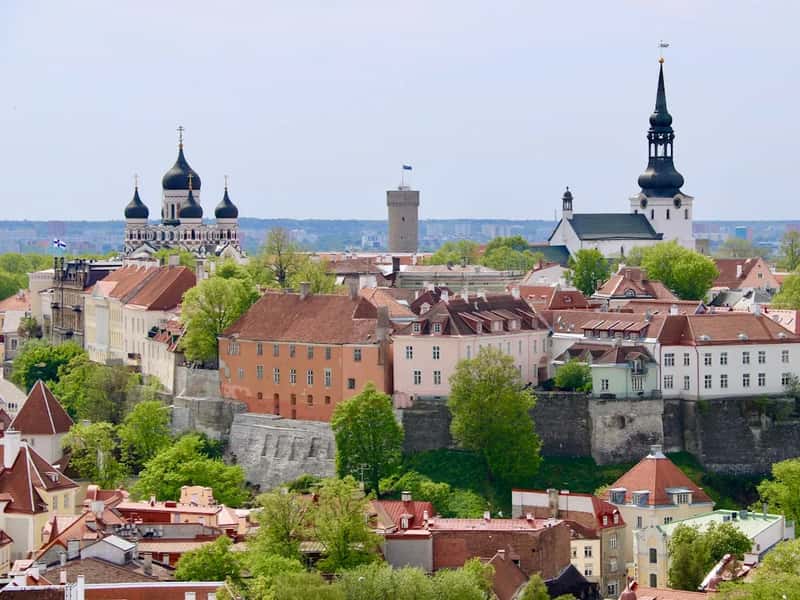
Estonia has built a reputation as the easiest country in Europe to get a work permit, and the numbers back it up. Estonia stands out as one of the easiest European countries to obtain a work visa in 2024, thanks to its high application acceptance rate of 87%. That figure has held steady into 2025 and 2026, partly because the country simply does not receive the volume of applications that larger economies do.
Its digital-first approach to government has fundamentally reduced the bureaucratic drag that makes other countries’ immigration systems so painful, and Estonia has continued to prioritize its goal of becoming a digital nation, actively encouraging tech talent to help grow its startup ecosystem. Applicants generally just need a registered Estonian employer, a signed work contract, and a clean health record, then they can start with a short-term D visa before moving toward a residence permit.
Ireland: record numbers of permits going out the door

Ireland has quietly become one of the most permit-friendly countries in Europe. In 2024, Ireland issued a record number of employment permits, just over 38,000, to non-EEA citizens, a figure that reflects a country actively recruiting foreign workers rather than merely tolerating them. The approval rate for employment visas sits around the mid-nineties percent range, which is unusually high by international standards.
There are nine different types of employment permit for different uses, including the Critical Skills Employment Permit for high-skilled applicants and the General Employment Permit for wider use, meaning there is a realistic route in for professionals across many fields, not just a narrow elite category. The country’s English-language environment, common law legal system, and deep integration into the EU single market make it an especially attractive landing spot for English-speaking professionals.
Germany: rewriting the rules to attract skilled labor

Germany has spent the past two years actively dismantling old barriers rather than adding new ones. Effective June 1, 2024, Germany’s Opportunity Card program came into effect, under which foreign nationals with vocational experience or university education who achieve at least six points on a mixed criteria system can apply for a one-year renewable residence permit to search for a job, removing what had historically been the biggest barrier: needing a job offer before even arriving. That single change opened the door to thousands of applicants who previously had no legal pathway to enter the country and job hunt locally.
The country’s commitment to skilled migration also shows up in the EU Blue Card statistics. In 2024, the majority of EU Blue Cards in the EU, roughly 72%, were issued in Germany, totaling 56,252 cards. Vocational training and hands-on trade experience are treated with the same weight as a university degree, which broadens the pool of eligible applicants considerably compared to most Western economies.
Latvia: fast processing and low salary hurdles

Latvia rarely gets the attention that Estonia or Germany receive, but its work permit machinery runs remarkably fast. Latvia offers a rapidly growing economy that attracts both skilled professionals and international businesses, with immigration processing times averaging just 10 days. That turnaround is nearly unheard of among European Union member states.
Latvia offers several work permit types, including Type A for employment with a Latvian employer, C and E for intra-company transfers, D for business visits, and a Seasonal Work Visa for temporary roles, and it is part of the EU’s Blue Card scheme. EU citizens face an even lighter process, needing only a residence registration once they pass the ninety-day mark, while non-EU nationals typically combine a residence permit, a Type D visa, and a work permit into one coordinated application.
United States: a lottery that rejects the majority by design

The H-1B program remains the main route for skilled foreign professionals into the United States, and it works nothing like a normal application process. USCIS received eligible registrations for 336,153 unique beneficiaries in the FY 2026 H-1B cap season and selected only about 35.3% of these beneficiaries. That means roughly two out of every three qualified candidates never even get the chance to file a full petition, regardless of how strong their résumé looks.
The system has grown more complicated still. A brand-new wage-weighted lottery replaced the random draw, a $100,000 supplemental fee was imposed on consular-processing petitions, and registration volume already collapsing after the 2024 fraud crackdown is expected to fall further. The $100,000 fee was not passed by Congress; it was imposed by Presidential Proclamation 10973, signed September 19, 2025, under the same legal authority used to restrict entry during national emergencies. Even candidates who clear the lottery now face a cost structure that can eliminate them before an employer ever files paperwork.
United Kingdom: the salary bar keeps climbing

Britain’s Skilled Worker visa used to be one of the more accessible routes into a major economy, but that has changed sharply. For most new Skilled Worker applications made from 22 July 2025 onwards, the general minimum salary threshold is £41,700 per year, replacing the previous £38,700 level. On top of the flat minimum, sponsors must also match whichever is higher between that figure and the specific “going rate” for the applicant’s occupation code.
The skill bar rose at the same time as the salary bar. From 22nd July 2025, only roles that are rated RQF Level 6 or above are now eligible for a Skilled Worker visa. The Skilled Worker visa is undergoing several significant changes to its eligibility, including the basic skill level required and minimum salary thresholds being raised, potentially excluding more foreign applicants from applying altogether. Many mid-skill roles that once qualified now simply do not, and the temporary shortage list covering some of them is explicitly time-limited rather than a permanent fix.
Switzerland: a hard numerical ceiling that never bends

Switzerland does not reject applications one by one so much as it runs out of room. A maximum of 8,500 qualified workers and specialists from third countries may be recruited in 2026, split into 4,500 residence permits and 4,000 short-stay permits. Once a canton’s slice of that quota is used up for the year, additional applicants are turned away regardless of their qualifications.
Employers also carry a heavy burden of proof before they can even tap into the quota. Companies in Switzerland have the option of filling vacancies with employees from non-EU/EFTA countries, provided they can prove that their efforts to recruit domestic or EU/EFTA skilled workers have been unsuccessful. Only highly qualified specialists in shortage occupations, managers, and key intra-group transferees will secure scarce quota slots, reinforcing how selective the system remains even when the ceiling itself stays flat year over year.
Saudi Arabia: sponsorship rules that shape every outcome

Saudi Arabia’s work permit system runs on a sponsorship model, commonly known as the Kafala system, where a resident permit is directly tied to a specific employer rather than the worker independently. Under this framework, an application can be refused not because of the candidate’s qualifications but because the sponsoring company has not met government quotas for hiring Saudi nationals in that sector, a policy known as Nitaqat or Saudization.
Because approval hinges so heavily on the employer’s own compliance status and sector-specific hiring targets, a well-qualified applicant can be turned down simply because their prospective employer’s category falls short of the required national workforce ratio. This structure makes the system fundamentally different from a merit-based points system, since the decisive factor often sits with the company rather than the individual filing the paperwork.
South Korea: quotas and language testing narrow the door

South Korea manages the bulk of its foreign labor intake through the Employment Permit System, a government-run scheme that sets numerical caps on how many workers can enter from designated partner countries each year. These caps are announced annually by category and industry, meaning that even a fully qualified applicant can be shut out simply because the year’s allocation for their sector and nationality has already been filled.
Language testing adds another layer of difficulty, since many entry routes require applicants to pass a Korean-language proficiency exam before they are even eligible to be matched with an employer. Combined with the fixed quotas, the result is a system where timing and test performance often matter as much as professional skill, and rejection is frequently tied to bureaucratic ceilings rather than the strength of an individual case.
What the pattern actually shows

Looking at these nine countries side by side, the split is less about wealth or economic need and more about design philosophy. Estonia, Ireland, Germany, and Latvia built systems around transparent criteria and a genuine labor shortage they are trying to fill, which naturally pushes approval rates upward. The five stricter countries, by contrast, rely on lotteries, hard quotas, sponsorship dependency, or salary floors that reject people by structure rather than by individual merit.
None of this means the harder countries are impossible, and none of it guarantees smooth sailing in the easier ones either. Rules shift constantly, and a threshold that feels generous today can tighten within a single budget cycle. The most useful habit for any applicant is simply checking the current year’s specific figures before assuming last year’s advice still holds.