
Somewhere between a windmill in California and a covered wooden bridge in Michigan, the map of the United States gets a little confusing. Several American towns have spent decades building themselves in the image of a European village, with steep gabled roofs, painted facades and bakeries that smell like somewhere else.
Some of these places grew out of real immigrant settlements. Others were rebuilt on purpose to save a struggling local economy. Here are six of them, along with what actually makes each one worth the drive.
Solvang, California: A Danish Village in Wine Country
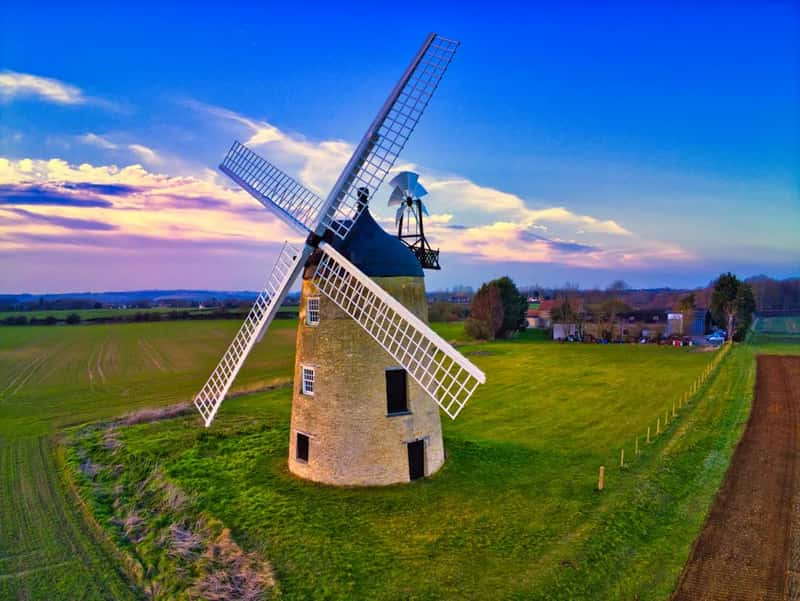
Solvang sits in the Santa Ynez Valley, about 35 miles north of Santa Barbara.[1] On January 12, 1911, a group of Danish American educators bought 9,000 acres of valley land for roughly $75,000 and founded a colony called Solvang, Danish for sunny field.[2] For its first few decades, the place looked much like other small California towns.[2]
That changed in January 1947, when the Saturday Evening Post ran a feature on the Danish enclave.[2] New buildings went up in Danish provincial style, wooden windmills appeared around the village, and streets took on Danish names.[2] Within four blocks today, you can find four wooden windmills and six Danish bakeries.[3]
Leavenworth, Washington: A Bavarian Town in the Cascades
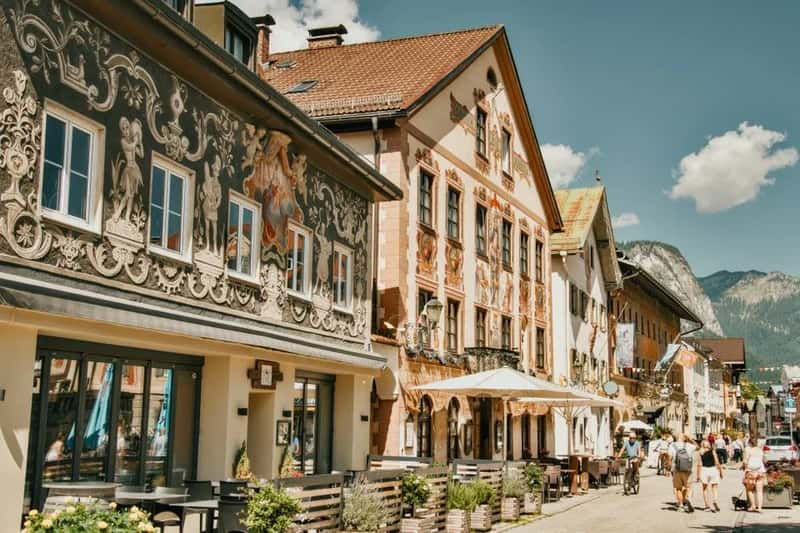
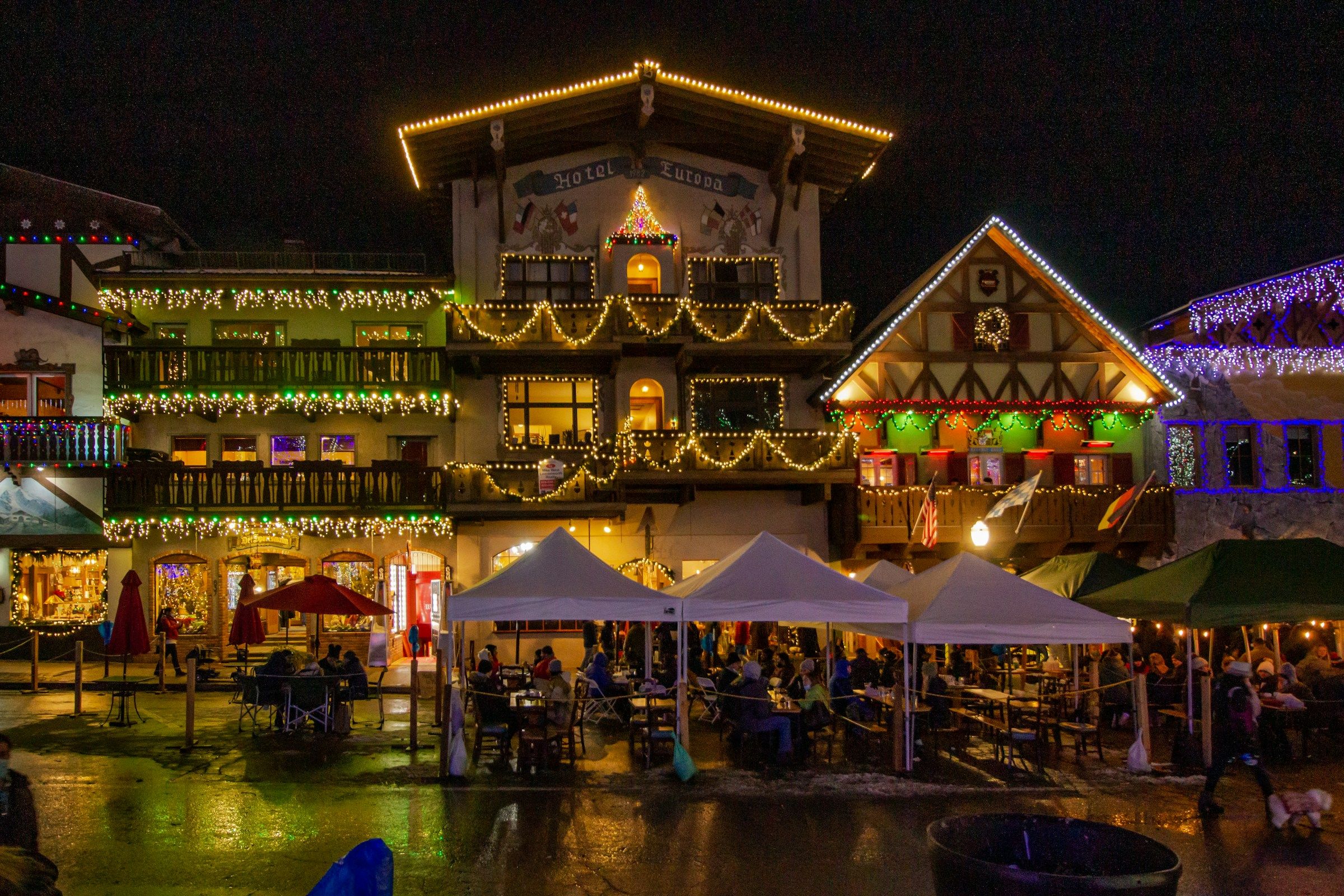
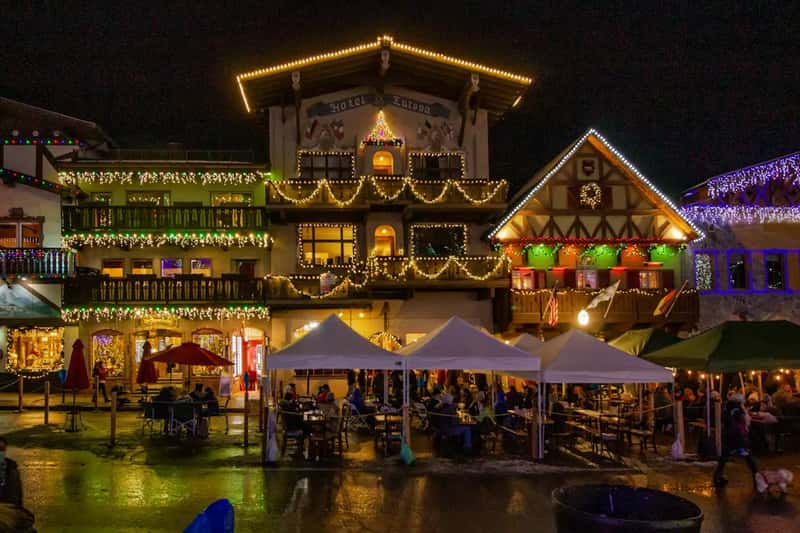
Leavenworth is about two hours from Seattle, at the eastern base of the Cascade Mountains.[4] The town reinvented itself as a Bavarian village in the 1960s and has kept the theme ever since.[5] Its Alpine style buildings, themed shops and restaurants serving German dishes carry the idea through the whole downtown.[4]
Oktoberfest takes over town over three weekends in October, and the 2026 dates were October 2 to 3, 9 to 10 and 16 to 17.[6] Winter brings the bigger show. During Village of Lights: Christmastown, the town glows with more than half a million lights every night.[4] The 2026 run goes from November 27 to December 24, it’s free, and the lights stay up through February.[7] One caveat if you’re planning around the holidays: the Leavenworth Christkindlmarkt is not running in 2026.[7]
Helen, Georgia: An Alpine Makeover in the Blue Ridge
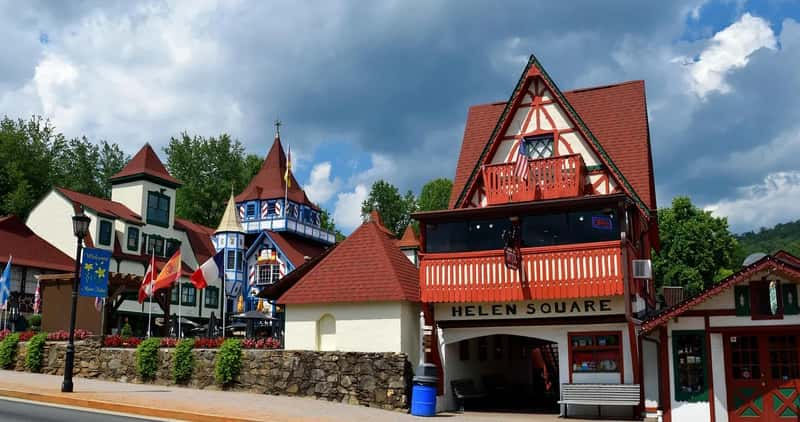
In the 1960s, Helen was a fading logging town of concrete block storefronts, holding on with nine businesses.[8] According to the New Georgia Encyclopedia, local merchants led by Pete Hodkinson consulted Clarkesville artist John Kollock in 1968, and the Alpine remake that began around 1969 was visible within a few years.[9] The town sits in the North Georgia mountains, about an hour and a half from Atlanta.[10]
The Helen Chamber of Commerce calls 2026 the 56th annual Helen Oktoberfest and bills it as the longest running Oktoberfest in the United States.[11] This year’s run went from September 10 through November 1.[11] The holiday season picks up right behind it. The Lighting of the Village is set for November 27, followed by the Christmas Market on November 28 to 29 and December 5 to 6.[9]
New Glarus, Wisconsin: America’s Little Switzerland
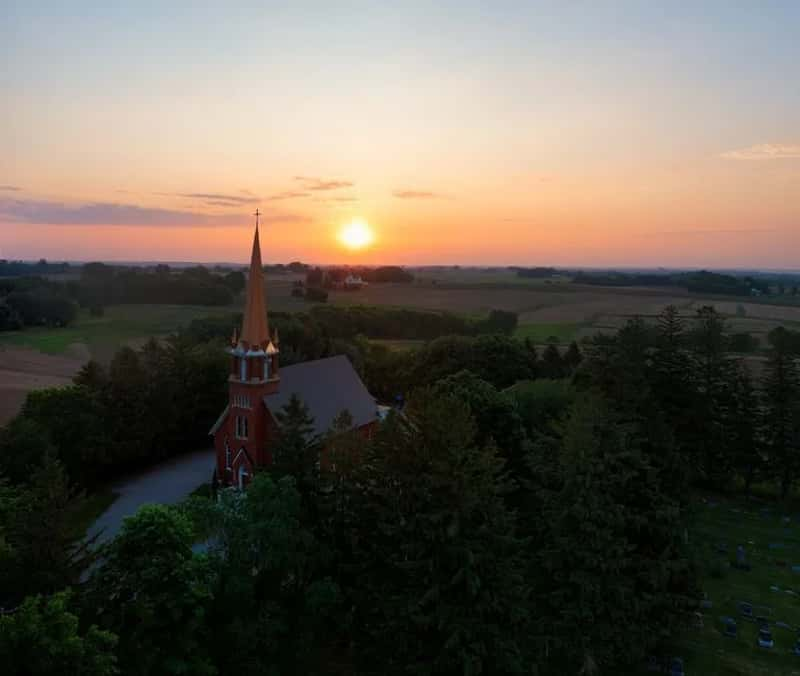
New Glarus was founded in 1845 by some 100 immigrants from the canton of Glarus in Switzerland, who were fleeing an economic crisis at home.[12] It lies about 25 miles southwest of Madison.[12] Britannica notes that the village is still largely populated by people of Swiss heritage.[12]
Unlike some of the other towns here, the Swiss identity is rooted in the community itself. The Wilhelm Tell Festival has been a local tradition since 1938.[13] It stages Friedrich Schiller’s story of Swiss independence, with more than 200 local volunteers.[14] Two museums add depth: the Swiss Historical Village, established in 1938, and the Chalet of the Golden Fleece, a replica chalet built in 1937.[12]
Frankenmuth, Michigan: Little Bavaria in the Saginaw Valley
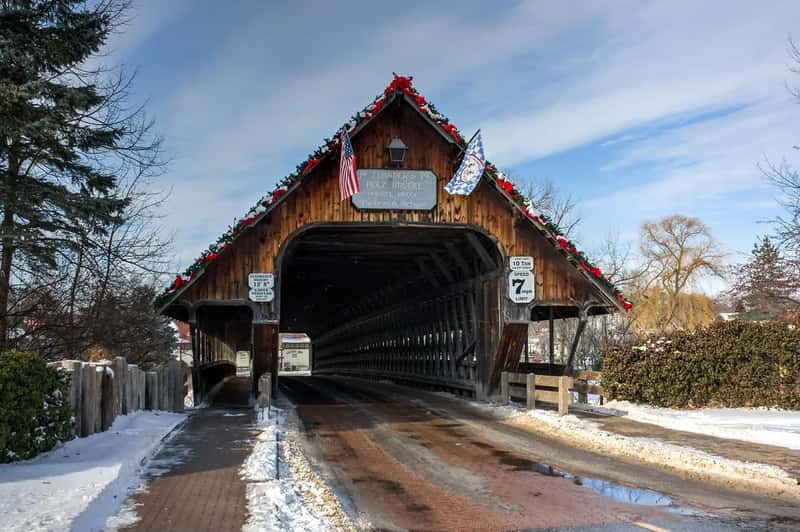
Frankenmuth was settled in 1845 by German Lutherans from Franconia, a region of Bavaria. That history gives the town more substance than a purely themed attraction. The Bavarian look came later, but the German roots go back to the founding.
The Holz Brücke, a covered wooden bridge across the Cass River, is the postcard view. Family style chicken dinners at the long running restaurants are the other big draw. Bronner’s CHRISTmas Wonderland, which bills itself as the world’s largest Christmas store, keeps the holiday mood going well beyond December.
Fredericksburg, Texas: German Heritage in the Hill Country
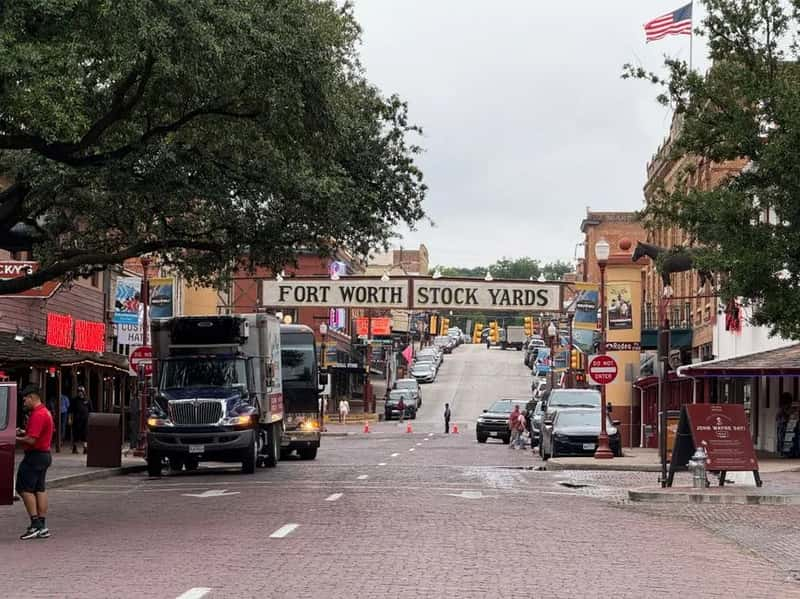
Fredericksburg was founded in 1846 by German immigrants and named for Prince Frederick of Prussia. It sits in the Texas Hill Country, west of Austin. Its wide Main Street is the best place to see how the German settlers shaped the town.
Look for the small Sunday houses, which farm families once used when they came to town for church and shopping. The Vereins Kirche replica on the Marktplatz is another reminder of the town’s origins. Today the settlers’ descendants share the streets with wineries, tasting rooms and an early October Oktoberfest.
Before You Go
Distances are easy in most cases. Leavenworth is about two hours from Seattle, Helen is roughly an hour and a half from Atlanta, Solvang is about 35 miles north of Santa Barbara, and New Glarus is about 25 miles southwest of Madison. Frankenmuth and Fredericksburg each fit neatly into a weekend from Detroit and Austin.
Timing depends on the festival you want. New Glarus kicks off its Wilhelm Tell Festival in late August.[15] Solvang’s Danish Days is celebrated each September.[16] Oktoberfest fills October in Leavenworth, and the holiday lights switch on in Leavenworth and Helen at the end of November.