
You’ve stared at the bottom of a hotel bill and assumed every line was carved in stone. It isn’t, and front desks quietly remove charges every day for guests who ask calmly and at the right moment.
Here’s the twist: the real edge for older travelers isn’t a birthday. It’s a mix of senior-rate eligibility, a habit of checking the folio and the patience to raise a charge without a fight.
One item on this list really does have an age cutoff written into policy. The last one is the fee regulators have singled out most.
#13 – The Early Check-In Fee
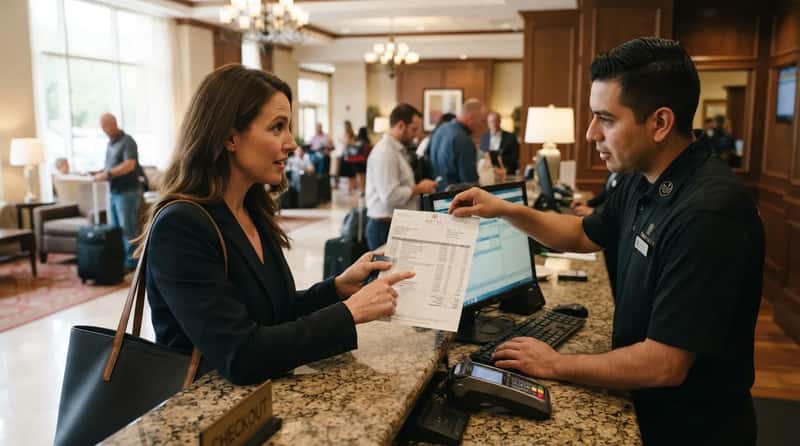
You arrive at noon, the room is clean and empty, and the desk still wants money to let you in. Hotels often charge $25 to $75 for early or late access, even when the room is ready.
Here’s what most people miss: this charge is optional, not mandatory. Early check-in and late checkout fees only appear at checkout if you used the service, and a polite request to waive them can work, especially with loyalty status or open availability.
Here’s the catch that trips up careful travelers: a verbal “of course, no problem” at the desk doesn’t always reach the billing system. The fee can still appear, so review the folio before you leave, while staff can fix an error on the spot.
But the flip side of this fee hides a stranger twist, and it’s waiting at #12…
#12 – The Late Checkout Fee

Staying an hour or two past checkout can turn a favor into a line item. Late checkout fees are common, and the amount can vary greatly by location.
The bigger problem is the courtesy that never gets recorded. The fee may show up even when staff said yes.
This is one place where membership can matter. One roundup says AARP members get 10% off plus late checkout at all Motel 6 and Studio 6 locations.
Perks like this change by brand and over time, so confirm the current terms before you count on them. Then ask before the stay, not after.
A request made at booking or check-in gives the hotel time to record the arrangement. That record is what you’ll point to at checkout.
Worth Knowing
- Ask at booking or check-in, when the hotel has time to log your request.
- Get the agent’s name and ask for a note on the reservation.
- Read the folio before you leave, while a fix is still easy.
- Membership perks vary by brand, so confirm the current terms first.
But that’s nothing compared to the sensor hiding in the room at #11…
#11 – The Minibar You Never Touched

You can be billed for a snack you never opened. Some minibars have sensors, so if you move something but don’t consume it, you may be charged.
The technology can be too sensitive. Sensor shelves can log a charge the instant an item is lifted, and one consumer roundup notes that even moving a bottle to make room for your own water can trigger it.
The charge may not show up right away. The bill can land on your card days after you’ve gone home, possibly with a restocking fee.
If it happens, call the hotel immediately to dispute unexpected post-checkout charges. A minibar charge should connect to minibar activity, so ask what the record shows.
But the items sitting in plain sight on the desk are even trickier, and they’re up next at #10…
#10 – The Water Bottle on the Desk

Not every item in your room is a free welcome gift. A bottle of water on the desk can carry a surprisingly high price, and the same goes for snacks, coffee pods and drinks placed around the room.
Hotel minibar items are almost always overpriced, and many can be bought at the nearest convenience store. A short walk can beat the room’s price list.
Some rooms really do include free items, since some hotels have complimentary minibars. Confirm that before taking anything, because one question at check-in removes the guesswork.
If a charge appears for something nobody told you was priced, don’t assume it was legitimate. Ask for it to be removed and explain the circumstances.
But that’s small change next to what’s waiting in the garage at #9…
#9 – The Parking Charge

You may be paying for a parking space you never used. Parking fees can show up on your bill automatically if your reservation included a spot, whether you parked there or not.
Rates can also move, since some hotels use dynamic pricing that changes with demand. The number on your receipt may not match the number you were quoted.
Be careful before you dispute it, though. Parking and Wi-Fi are among the mandatory charges that apply to every guest and appear during booking.
If the fee was disclosed, your best argument is a documented mismatch, not the fact that you didn’t drive.
But the next charge multiplies quietly, one gadget at a time, at #8…
#8 – The Wi-Fi Fee Per Device

Wi-Fi is one of the places where a single charge can turn into several. Charges may apply per device rather than per room, so your phone and laptop can each generate a separate line item.
Many guests skip this fee without knowing why: basic Wi-Fi is generally free for loyalty club members, while premium Wi-Fi may cost extra. Free loyalty membership can be worth more than a discount code.
Then there’s the resort fee overlap. Resort fees are said to cover amenities like Wi-Fi, gym access and local calls whether you use them or not.
If you see both a resort fee and a Wi-Fi charge, ask whether you’re being billed twice for the same thing. Before booking, review the hotel’s terms to see what the Wi-Fi includes and whether it’s billed per room or per device.
But the next fee is billed for something you may have declined entirely, at #7…
#7 – The Housekeeping “Gratuity” Fee

Some hotels add a daily charge for cleaning you might never request. It’s often described as a gratuity or sustainability initiative, especially in resort areas, but when it’s not optional it can feel like a hidden tax.
Whether it’s fair is a live argument among travelers. Some accept it as the cost of service, while others say a fee for cleaning you declined is simply a rate increase in disguise.
Regulators care about what counts as optional. The FTC’s fee guidance says that if a hotel requires guests to pay for towels, the towel fee must be included in the total price.
But the next problem shows up only after you’ve already left, at #6…
#6 – The Charge That Appears After Checkout

Your bill isn’t always final when you walk out the door. A hotel may charge your card after checkout for a final balance, taxes, parking, resort fees, minibar items, restaurant charges, room service, smoking fees, damage or missing items.
A late charge isn’t automatically wrong. But a delayed charge should be explainable, and the hotel should be the one explaining it.
Start with the paperwork. If the amount doesn’t match your receipt or appears twice, ask for an updated itemized folio before disputing it.
The explanation should be more specific than “miscellaneous,” “adjustment,” or “incidentals.” Keep the tone factual, and many billing errors can be corrected without a formal dispute.
At a Glance
- What was added to the bill?
- When was it added?
- Which part of the stay does it cover?
- Can you send an updated itemized folio?
But the charges at #5 come with a much higher price tag, and a very different kind of evidence…
#5 – The Damage or Smoking Charge
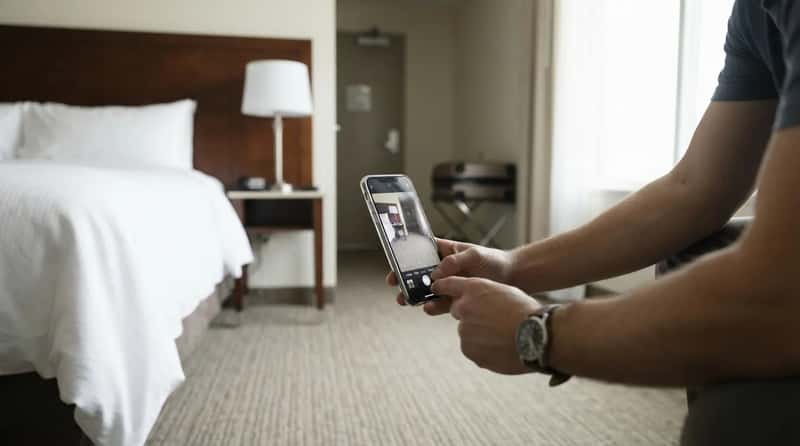
Post-checkout charges for damage, smoking or extra cleaning are the ones that hurt most. They can arrive as a bill for damage you never caused.
Photos or video of the room at check-in and checkout are the single most effective evidence you can have. Most guests never take them.
Documentation cuts both ways. Serious charges like these should come with documentation, not just a vague label.
If the hotel can’t show what was damaged, that’s a gap worth pointing out.
Keep your own log too, with names, dates and times of every conversation with hotel staff. It matters if you ever need to escalate.
But the next item isn’t technically a charge at all, and it still catches people out at #4…
#4 – The Credit Card Hold

That number on your card after check-in may not be what you owe. A temporary credit card hold is common at hotels and may cover room charges, damage, minibar purchases or other incidentals.
The surprising part is the size, since the amount held can be much higher than the cost of the room itself. Your available credit can shrink well before you pay a cent.
The mistake is treating a hold like a posted charge. Work out whether an amount is a pending hold, a posted charge, a late fee or a disputed claim, because they’re handled differently.
Quick Compare
- Pending hold: temporary, set aside for possible extras, and meant to be released.
- Posted charge: money actually taken, and it should appear on your folio.
- Late fee: added after checkout, so ask for the itemized detail.
- Disputed claim: a charge you’ve formally challenged with the hotel or your card issuer.
So ask at check-in what the hold covers and when it will be released. A clear answer up front prevents a panicked call at the end of the trip.
But the next scenario is where a formal dispute finally becomes an option, at #3…
#3 – The Fee Nobody Disclosed
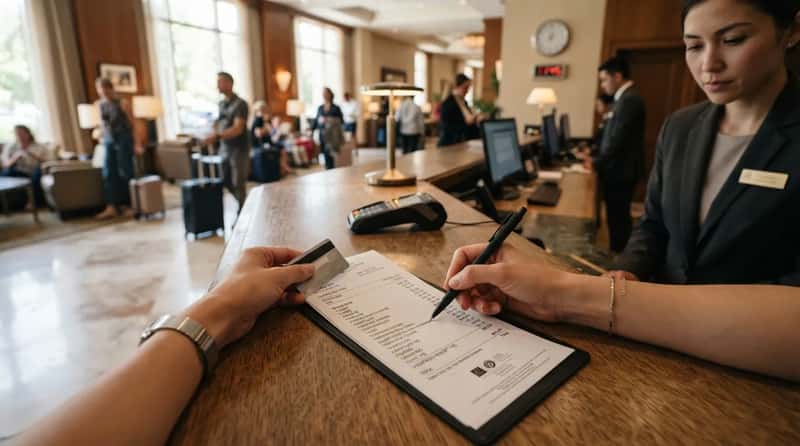
A fee you were never told about is different from one you simply dislike. If a hotel doesn’t disclose a fee in advance and then charges it, one consumer expert says you can dispute it on your credit card.
He also has a theory about why these fees exist. He argues that room rates are taxed at a high occupancy rate by local municipalities, while resort or late check-in fees are taxed as sales tax, so the hotel keeps more of that revenue.
That’s one expert’s view, but it would explain why fees keep multiplying.
There’s a real trade-off, though: one travel site says hotels keep records of customers who file chargebacks, and some chains may even ban guests with a history of disputes. Start with the desk, and keep the chargeback in reserve.
But the next one covers the only place where age genuinely changes the price, and it’s #2…
#2 – The Senior Rate That Never Got Applied
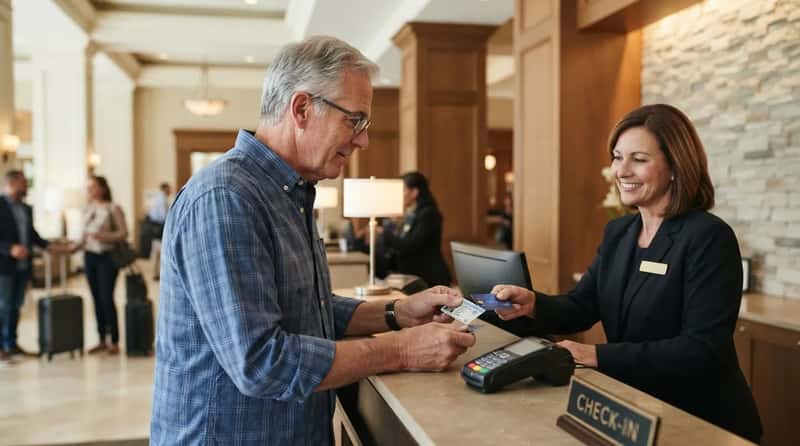
Here’s the only item on this list where age is written into the policy. Wyndham offers guests 60 and older savings on its Standard Rate at participating locations, and you should be ready to show valid ID at check-in.
The age line varies by brand, and the range is wider than most travelers expect.
Fast Facts
- Age 55: Best Western, Extended Stay America and Omni
- Age 59: Red Roof
- Age 60: Choice Hotels and Wyndham
- Age 62: Marriott and IHG
- Age 65: Hilton
Marriott’s program requires proof of age at check-in and limits the rate to two rooms per night. Choice Hotels says guests 60 and older, or AARP members, can save up to 10% with advance reservations.
The senior rate can start ten years before Hilton’s cutoff. Details differ between sources, so call the property before you book.
The discount amount varies, and most hotels won’t apply it unless you ask.
But the strongest example of a fee that disappears when questioned is the last one, and it’s #1…
#1 – The Resort Fee Removed Only If You Notice

This is the fee regulators have singled out most. The FTC’s own example describes a hotel that automatically charges a resort fee at check-in but waives it if a guest notices and challenges it.
The agency’s view is blunt: a business cannot treat as optional an automatic fee that it removes only if a person notices and challenges it. A fee that disappears on request was never truly optional.
The numbers are real. Hotels charge $25 to $55 a night as a resort or destination fee, and even a stay of less than 24 hours can carry a full day’s resort fee.
Now the fine print. The FTC rule doesn’t cap what a business charges or bar itemized fees, provided they’re clearly disclosed up front.
Resort fees are generally legal if disclosed, though you may have grounds for a refund if the amenities were unavailable or not properly disclosed.
That’s the whole list, and the pattern is hard to miss.
The Bottom Line

The headline promises fees that vanish for guests over 60, but the evidence points to something more useful. No source we found shows age alone removes a charge, and none of these waivers are guaranteed because front desk agents decide case by case.
What repeatedly helps is asking early, reading the folio before you leave and keeping records. Guests over 60 also have a real advantage in senior rates that start at 60 for some chains.
The fees were never the fixed part of the bill. The person who reads the folio is the one who gets to question them.
Which of these 13 charges has landed on your bill, and did asking make it disappear?