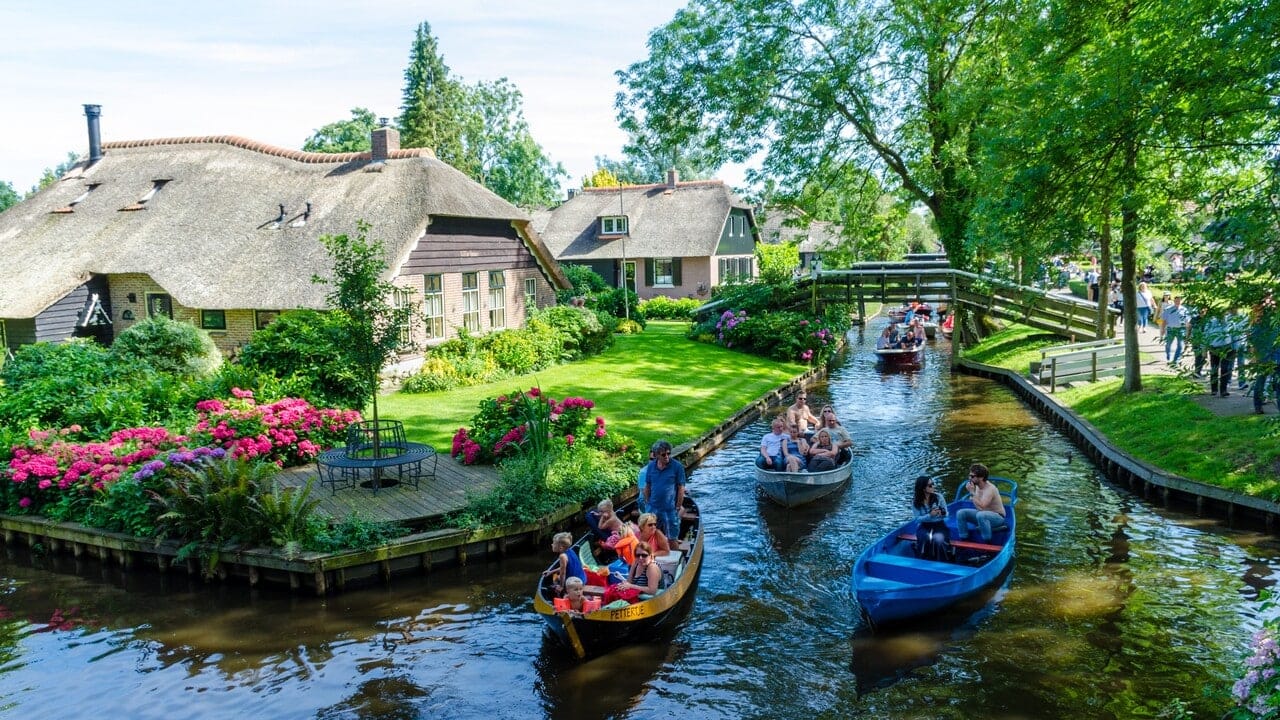
English has quietly become the world’s default language for business, travel, science, and casual scrolling through social media, and the interesting part is that fluency has almost nothing to do with passports. Some of the sharpest, most articulate English speakers on the planet have never set foot in the United States and never intend to. From Amsterdam boardrooms to Lagos marketplaces, English gets bent, polished, and reshaped into something confident and entirely its own.
What follows is a tour through ten countries where English thrives outside the American mold, some through decades of colonial history, others through deliberate education policy, and a few simply because their populations decided fluency was worth the effort. The stories behind each one are different, but the result is the same: proof that fluent English belongs to everyone who chooses to use it.
1. The Netherlands
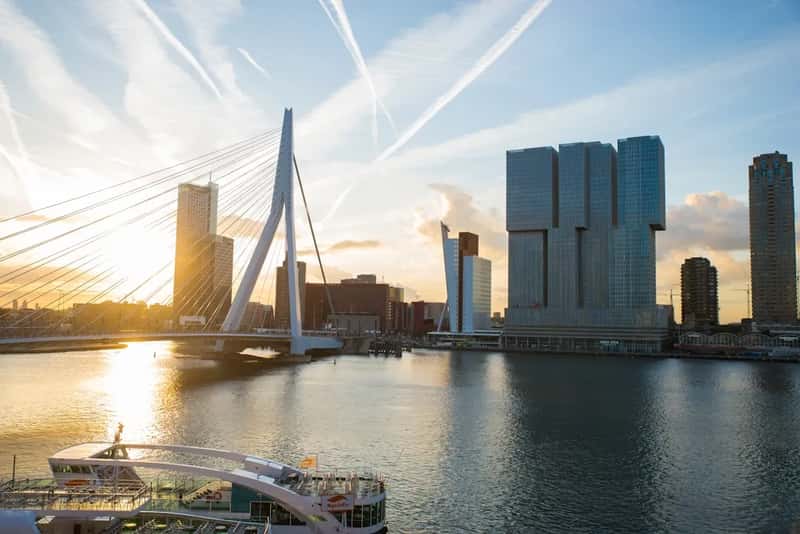
The Dutch have made a habit of topping global English rankings, and the most recent data confirms it again. In the 2025 EF English Proficiency Index, the Netherlands ranked first out of 123 countries and regions with a score of 624, earning a “very high” proficiency classification. That score puts the country comfortably ahead of every other non-native English-speaking nation on earth, a position it has held for years.
Part of the reason is cultural exposure rather than classroom drilling. The country sits comfortably in the “Very High” proficiency band, a status it has maintained through years of near constant exposure to English media, films, and university coursework taught in English. Walk into a café in Rotterdam or a shop in Utrecht and you’re more likely to get a flawless English reply than a puzzled look, regardless of your own Dutch skills.
2. Singapore

Singapore’s relationship with English is different from most other entries on this list, and that difference is now baked into how it gets measured. Singapore, which had long ranked highly and was frequently the top performer in Asia in earlier editions, was excluded from the index since 2025 after being re-classified as a native English-speaking country. In other words, the city-state graduated out of the “learning it as a second language” category entirely.
English sits alongside other official tongues in daily Singaporean life rather than existing as a foreign skill to master. Singapore stands out as the most English-fluent country in Southeast Asia, where English serves as one of four official languages and is used extensively in government, education, and daily business operations. That blend of colonial legacy and modern policy has produced a population that moves between English and other languages without missing a beat.
3. Nigeria

Nigeria might be the most underrated English powerhouse in the world simply because of scale. Estimates vary depending on methodology, but population estimates for Nigerian English speakers vary considerably, with some counts putting the country’s total speakers at around 125 million, where English functions as an official language amid linguistic diversity. That number reflects a country where dozens of indigenous languages coexist, and English serves as the practical bridge between them.
The sheer size of the population guarantees Nigeria’s importance on any global list of English speakers. Whichever figure proves most accurate, Nigeria’s sheer population size, now well over 200 million people, guarantees it a place among the countries with the largest second-language English communities anywhere on earth. Nigerian English also has its own rhythm and vocabulary, shaped by Pidgin and local expressions, making it distinct rather than a copy of British or American speech.
4. The Philippines

Few countries have turned English fluency into as visible an economic engine as the Philippines. Few countries have turned English proficiency into as visible an economic asset as the Philippines, where English is co-official alongside Filipino, and the Philippines rounds out the top five countries by total English speakers with around 70 million speakers. That co-official status means English shows up everywhere, from government documents to grade school lessons.
The country’s outsourcing industry has leaned heavily on this strength for decades. Call centers, business process outsourcing firms, and remote work platforms continue to rely on this deep pool of English-speaking talent, making the Philippines one of the most commercially significant ESL nations in the world. On the EF EPI’s regional breakdown, the Philippines placed second in Asia with a score of 569 in the 2025 edition, trailing only Malaysia after Singapore’s reclassification shifted the regional standings.
5. India
India’s English story is really a story about numbers. According to Ethnologue, as of 2025, the United States and India have the most total English speakers, with 319 million and 276 million respectively, followed by Pakistan, the United Kingdom, and Nigeria. That places India second globally, trailing only the United States, despite English not being anyone’s dominant home language for the vast majority of its population.
What makes India’s case remarkable is how deeply English is woven into public institutions rather than just casual conversation. Courts, higher education, national media, and much of the tech sector run substantially in English, layered on top of dozens of regional languages. It’s a second language for the overwhelming majority of speakers, yet it functions with the confidence of a first one in professional settings.
6. Sweden
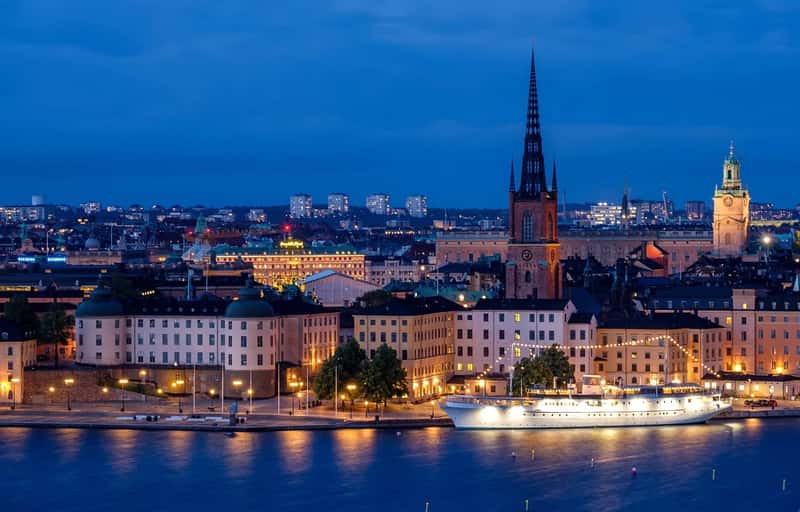
Sweden has long been part of the small cluster of European countries where English feels almost indistinguishable from a native language in daily use. The Netherlands remains number one, followed by very high proficiency countries like Norway, Sweden, Croatia, Portugal, and Denmark in recent EF EPI editions. Swedish schools introduce English early, and Swedish television rarely dubs foreign content, which keeps residents constantly exposed to spoken English rather than subtitled workarounds.
That combination of early instruction and everyday exposure through media has kept Sweden consistently near the top of global rankings for years. The result is a population that can shift into English conversation almost instinctively, whether they’re negotiating a business deal or just chatting with a tourist asking for directions in Stockholm.
7. Denmark
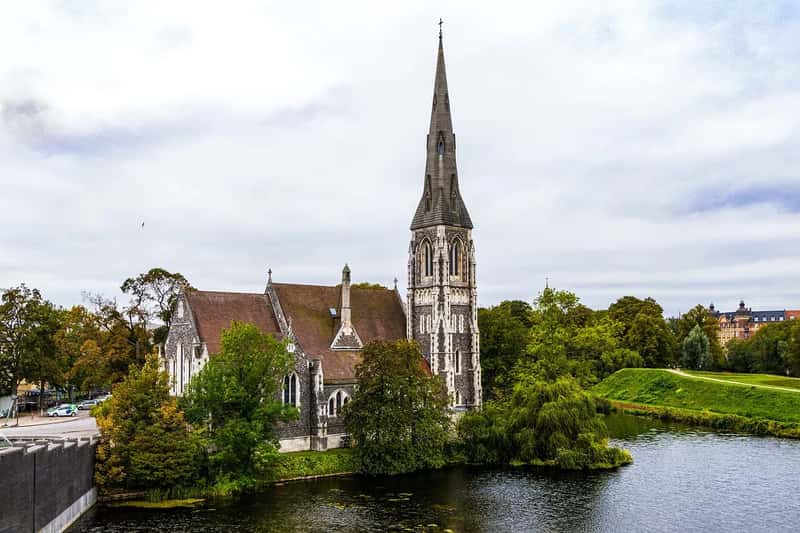
Denmark’s English fluency has become something of a running joke among visitors who arrive expecting to struggle and instead find nearly everyone switches effortlessly. Denmark ranked seventh globally in the 2025 EF English Proficiency Index with a score of 611, placing it firmly in the “very high” proficiency band. That score keeps Denmark ahead of most of the world despite a national population of under six million people.
Denmark also edges out its closest Nordic neighbors by a narrow margin. Denmark leads the Nordic region, edging out Sweden and Norway by a fraction of a point in the 2025 index, with differences between Nordic countries small, but Denmark’s consistent edge placing it at the top this year. Danish television, much like Swedish broadcasting, tends to keep English-language content in its original form, reinforcing listening skills from a young age.
8. Norway

Norway rounds out the Nordic trio of exceptional English speakers, and it has held a spot near the very top of global rankings for years. Norway ranked fifth globally in the 2025 EF EPI with a score of 613, another “very high” proficiency result. Given Norway’s relatively small population and its distance from any English-speaking country, that ranking says a lot about how the education system prioritizes the language.
Norwegian schools begin English instruction early, and much like its neighbors, Norway doesn’t dub foreign films or television shows, leaving audiences to absorb natural spoken English rather than a translated substitute. Combined with a highly international economy built around shipping, energy, and technology, fluent English has become less of an academic milestone and more of an everyday expectation.
9. South Africa

South Africa occupies a unique spot on this list because English functions as both a native and a second language depending on the community. In the 2025 EF English Proficiency Index, South Africa and Zimbabwe tied for first in Africa, both ranking thirteenth globally with a score of 602 in the Very High proficiency band, placing South Africa among the strongest performers anywhere in the world, non-native or native. That ranking is especially notable given how many other official languages compete for space in the country.
English is one of eleven official languages in South Africa, yet it dominates business, higher education, and national media far beyond its share of native speakers. That prominence, paired with the country’s strong showing in international rankings, makes South Africa a genuine standout on the African continent and a reminder that fluency doesn’t require English to be anyone’s sole mother tongue.
10. Germany

Germany’s rise in recent English proficiency rankings has been one of the more notable stories in Europe. In the 2025 index, Germany climbed to fourth place with one of the biggest gains in Europe, following the Netherlands, Croatia, and Austria at the top of the rankings. A score that high, especially for a country of over 80 million people, reflects a sustained national push toward English fluency rather than a niche skill limited to major cities.
Germany’s scale also makes it Europe’s single largest contributor to the global pool of second-language English speakers. Germany represents Europe’s biggest contribution to the global second-language English count, simply by virtue of its large population combined with strong educational outcomes, with surveys finding that over half of adults in Greece, Belgium, Luxembourg, Slovenia, and Germany claimed to be able to converse in English as a foreign language. That translates into tens of millions of Germans holding real conversations in English despite growing up speaking German at home.
Taken together, these ten countries tell a story that has little to do with geography or nationality and everything to do with exposure, education, and necessity. Some, like the Netherlands, Sweden, Denmark, Norway, and Germany, built fluency through school systems that treat English as a practical tool rather than a foreign subject, reinforced by media that refuses to dub anything. Others, like Nigeria, the Philippines, India, and South Africa, inherited English through colonial history and then transformed it into something distinctly their own, blending it with local languages, accents, and rhythms until it became a genuine second voice for hundreds of millions of people. Singapore sits somewhere in between, having moved so far along that path that it’s now simply counted among the native English-speaking world.
None of this diminishes what American English brings to the global conversation, but it does put things in perspective. Fluency isn’t a matter of birthplace. It’s a matter of exposure, effort, and the willingness of entire nations to treat English as a shared tool rather than someone else’s language.