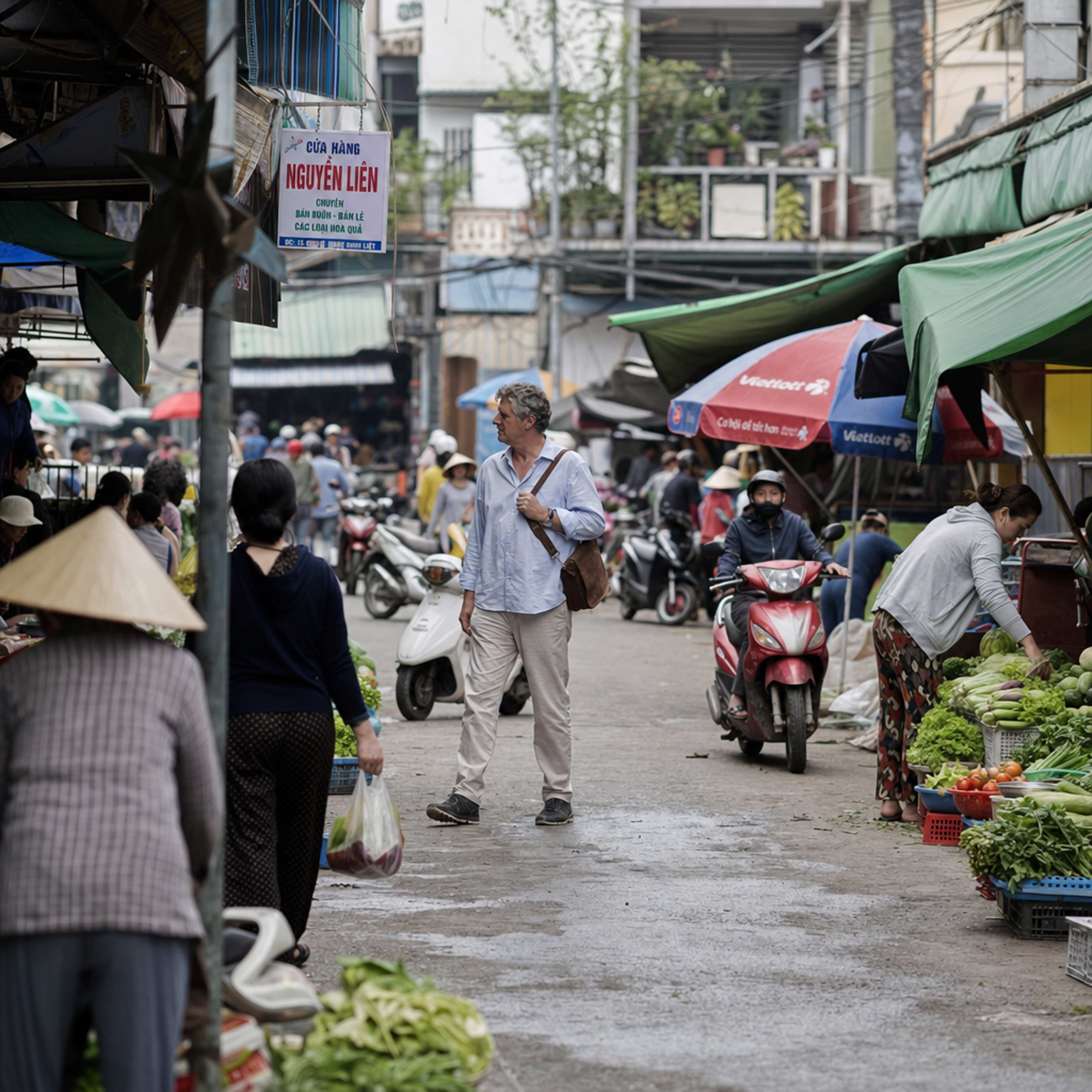

What do people actually eat on the streets of Vietnam once the tour buses pull away and the cameras are packed up?
After living in Vietnam for several years, street foods become part of my daily routine. Unlike back home, sitting on my couch, in Vietnam, dinner is usually eaten on a low plastic stool in a quiet alley with the locals.
In this guide, I’ll walk you through some of the most iconic Vietnamese street foods every tourist should try, including phở, bánh mì, bún chả, cơm tấm, and bún bò Huế.
1. Phở
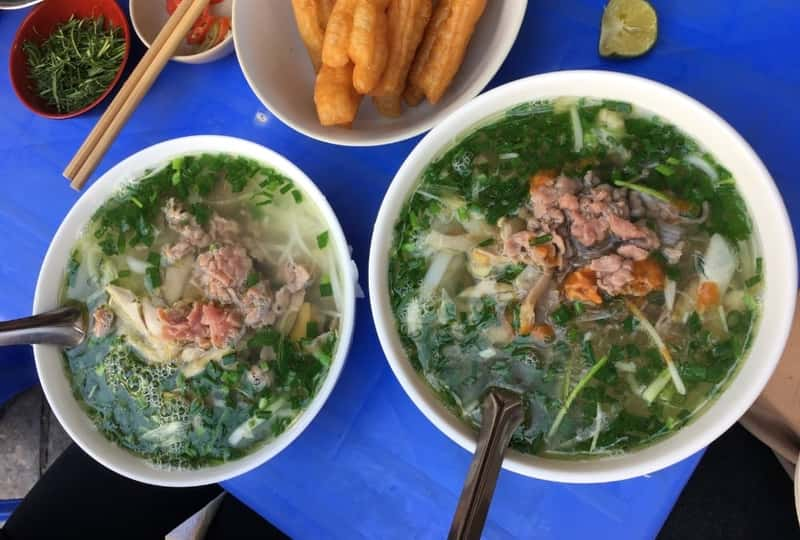
One of the most common dishes in Vietnam, Phở has its origins in Northern Vietnam, where it was infused with Chinese noodle traditions and the French introduction of Beef into the country.
Phở broth is typically simmered for 8 to 24 hours using beef marrow bones, with five core spices of star anise, cinnamon, cloves, black cardamom, and coriander seeds giving it its signature aroma.
Phở is also different between regions, so be sure to try it everywhere you go to experience the different tastes and aromas as you travel across the country.
2. Bánh Mì
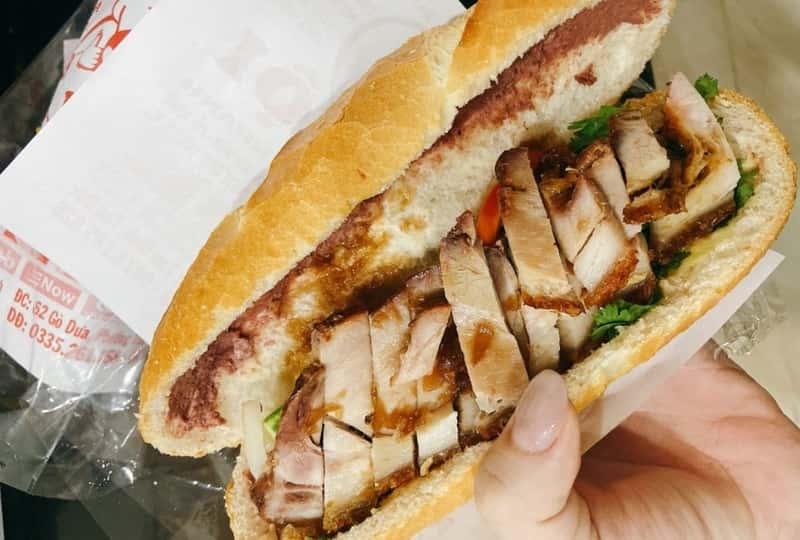
A quick and easy on-the-go food, the Bánh Mì (literally meaning bread) is made with a mix of wheat and sometimes rice flour, giving it a light, airy texture and a thick, crispy crust that shatters in your mouth as you eat it.
There are all kinds of Bánh Mì throughout Vietnam, from pork, chicken, and beef to vegetarian.
With special Bánh Mì, such as the Bánh Mì Đặc Biệt featuring a thick layer of rich pork liver pate, pork sausage, cold cuts, cucumber, pickled daikon and carrots, maggi seasoning, and fresh coriander. And for the brave, why not try a little bird’s eye chilli for a little added spice?
3. Bún Đậu Mắm Tôm
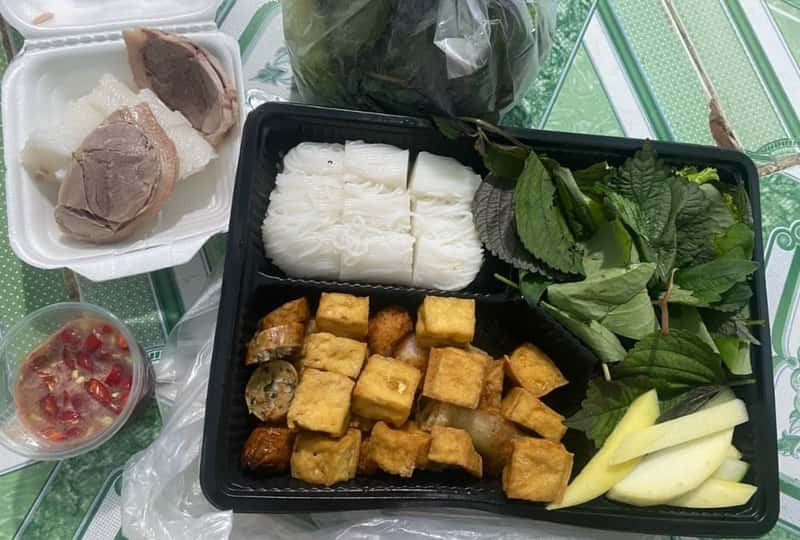
There are very few foods in Vietnam that hit you as hard, and as fast, as bún đậu mắm tô. I still remember the first time it was placed on the table in front of me. Before I even looked down, the smell hit. Not a gentle aroma. Not a slow introduction. It was instant and aggressive. I genuinely thought I was going to puke.
There are no polite words for mắm tôm. It smells bad. Not “strong,” not “funky,” but eye-watering, stomach-turning bad if you’re not used to it.
Fermented shrimp paste is something your nose needs time to emotionally prepare for, and mine absolutely wasn’t. I remember pushing the plate slightly away from me and thinking, there is no way people actually eat this.
Of course, people do. All the time. And eventually, so did I.
Bún đậu mắm tôm is simple on paper: soft rice vermicelli noodles, crispy fried tofu, slices of boiled pork belly, herbs, sometimes pork sausage or fried spring rolls, all arranged on a shared platter.
The entire thing revolves around the dipping sauce. You’re supposed to mix the mắm tôm with lime, sugar, and chilli, whipping it into a frothy, purple-grey paste that somehow smells even stronger before it tastes better.
The first time I tried it, I dipped the tiniest corner of tofu imaginable. It wasn’t love at first bite. But it also wasn’t the disaster I’d built up in my head. A few months later, I tried it again.
Then again. Somewhere along the way, without any clear turning point, I realised I actually craved it.
This is a pattern I’ve seen play out with countless foreigners in Vietnam, not just me. Almost everyone has the same reaction: shock, disgust, disbelief that locals eat this willingly.
And then, slowly, something changes. Your nose adapts. Your brain recalibrates. And one day, you’re the one explaining to a newcomer that “yes, it smells awful, but just trust me.”
4. Gỏi Cuốn
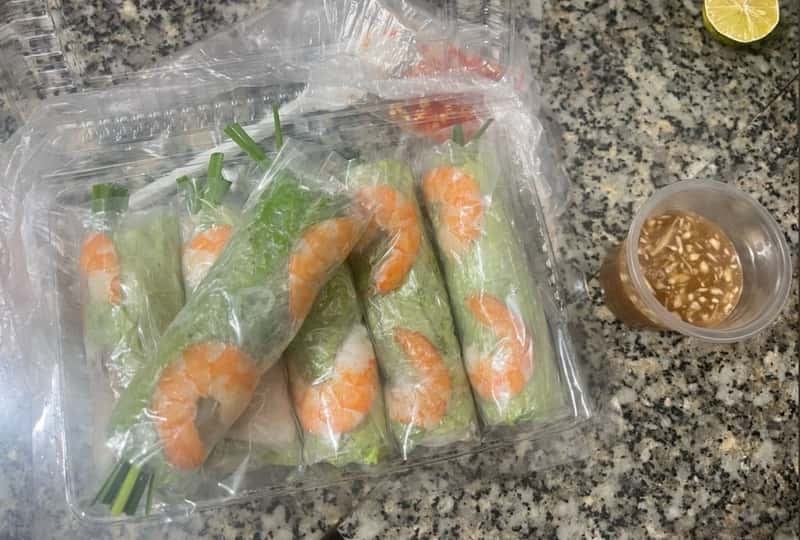
Gỏi Cuốn, or fresh spring rolls, are the non-fried counterpart to the Vietnamese crispy egg roll. These spring rolls are wrapped in a wafer-thin, translucent rice paper, which is briefly dipped in water to soften and stretch.
A traditional fresh spring roll will contain slices of poached pork belly and boiled shrimp, a bundle of soft rice vermicelli noodles, combined with crunchy lettuce, cucumber strips and bean sprouts.
Typically, your spring rolls will also be accompanied by a choice of sauces, usually peanut sauce (hoisin sauce with peanut butter, topped with crushed roasted peanuts and chilli), or fish sauce (fish sauce, lime juice, garlic, sugar, and chilli).
5. Bún Chả Hà Nội
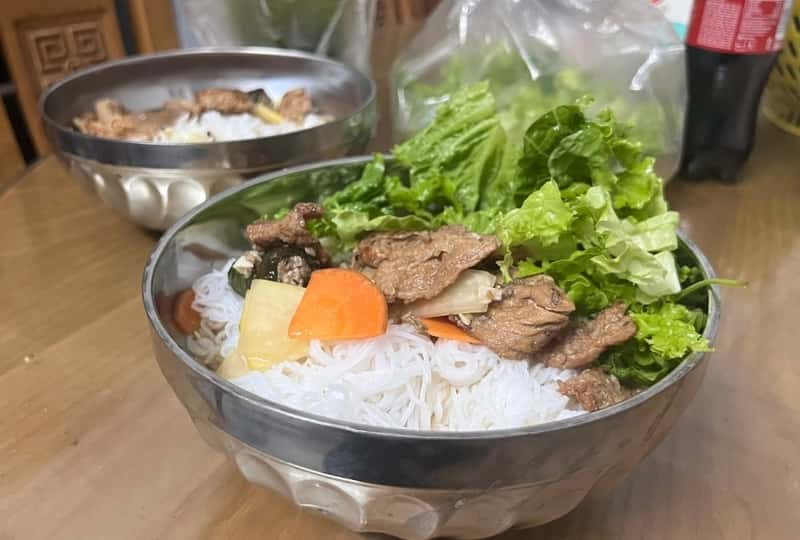
A dish that became famous in 2016 when Anthony Bourdain and Barack Obama shared a bowl in Hanoi, Bún Chả is a smokey charred flavored meat grilled over charcoal.
When you order Bún Chả, you get two types of pork – Chả Viên (minced pork pattie) and Chả Miếng (Sliced pork belly). Marinated in fish sauce, sugar and shallots, they are grilled until they have crispy caramelised edges.
Accompanied by nước mắm, this diluted fish sauce is a mixture of sugar, vinegar and lime. You will also get a separate plate of tangles cold rice vermicelli noodles, and a mountain of fresh lettuce, perilla, mint and Vietnamese coriander.
6. Bún bò Huế
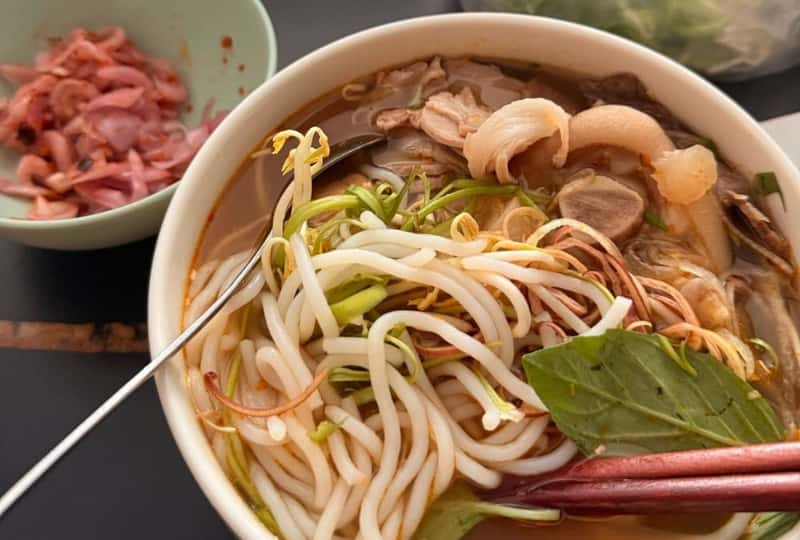
Often mistaken for Phở, Bún Bò Huế is another beef noodle soup; however, unlike Phở, this dish balances spicy, sour, salty and sweet all in one bowl.
Bún Bò Huế is dark, rich and fiery thanks to mắm ruốc (fermented fish paste) and a massive amount of lemongrass. Unlikes Phở’s flat noodles, Bún Bò Huế uses thick cylindrical rice noodles that are slippery and chewy.
The dish includes tender sliced beef shank, a whole pork hock, spicy Vietnamese ham, and cubes of congealed pig’s blood. You’ll also be served a plate of vegetables such as shredded banana blossom, Vietnamese coriander and a Lima and Chilli Satay.
7. Cao Lầu
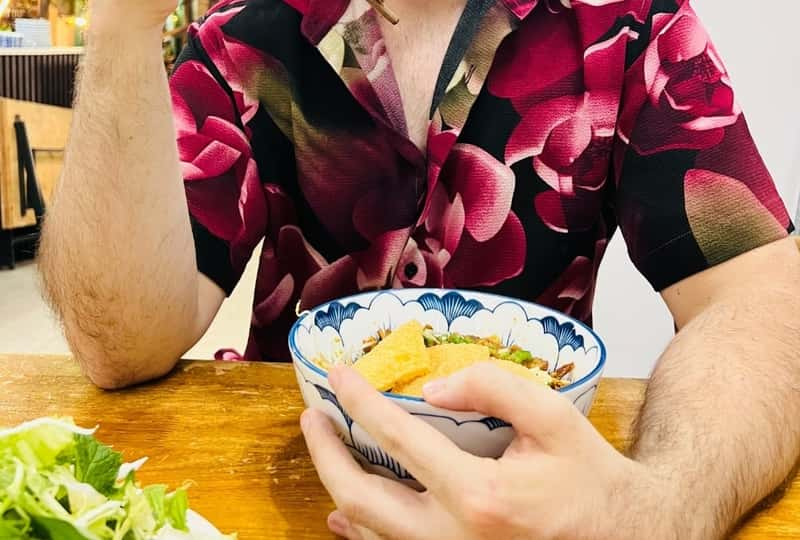
Without doubt, the greatest single food Vietnam has to offer (at least in my opinion), Cao Lầu, in theory, is only supposed to come from Hoi An’s ancient town.
This is because of a belief that authentic Cao Lầu noodles can only be made using the water from Ba Le well in Hoi An, as the water is slightly alkaline, giving the noodle its texture, and then soaked in the lye water from the ashes of specific trees found on the nearby Cham Islands.
While that’s what they say, you absolutely can find Cao Lầu in other cities, such as Saigon, and its flavour is almost the same.
Even when eating in Hoi An, different restaurants offer different flavours of Cao Lầu, with my personal favourite being a restaurant with middling reviews because of the grumpy owner (an almost sure sign in Vietnam that the food will be great, in my experience).
Cao Lầu features Chinese-Style barbequed pork, marinated in five-spice powder and soy sauce, deep-fried squares (the best part) of the same noodle dough, a small amount of savoury pork gravy, and a handful of bitter herbs, lettuce, and bean sprouts.
If you’re ever in Vietnam, this dish is my no.1 recommendation each and every time.
8. Cơm Tấm
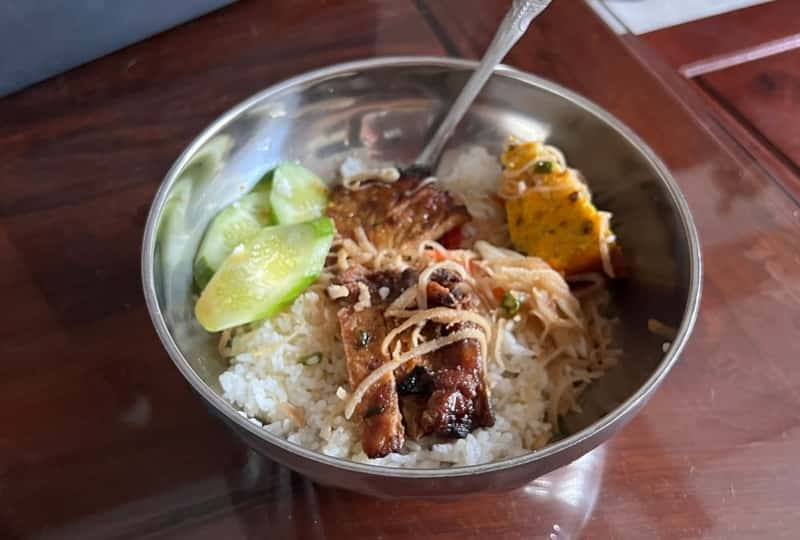
Cơm tấm is a dish I completely overlooked when I first arrived in Vietnam, and took me far too long to realise how wrong I was.
Due to not looking flashy, it’s not usually pushed on tourists, and that’s exactly why it’s such a big part of everyday life in southern Vietnam, especially in Saigon. What started as a working-class meal made from broken rice grains has become something people eat at all hours of the day.
When you order cơm tấm, it usually comes with a grilled pork chop (sườn nướng), a fried egg, shredded pork skin mixed with toasted rice powder (bì), and a slice of steamed egg meatloaf (chả trứng). It’s served with pickles, cucumber, scallion oil, and a generous splash of fish sauce, which you’re expected to adjust yourself.
9. Bột Chiên
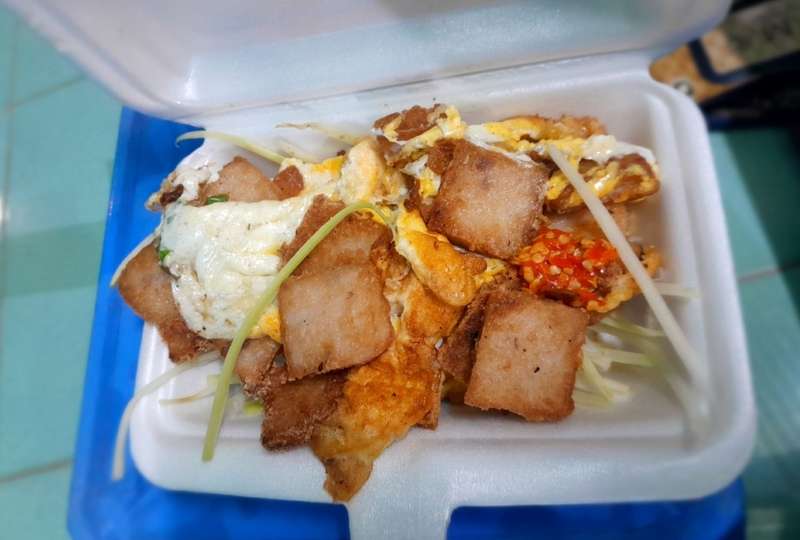
Bột chiên is a street food I never would have ordered has my wife not insisted. While unremarkable looking, it’s a proper Saigon street food, usually cooked right in front of you on a large flat pan, often in the evening when the city starts to slow down.
Bột chiên is made from cubes of rice flour dough that are fried until the outside turns golden and crispy while the inside stays soft and chewy.
An egg is cracked straight onto the pan and chopped through the cubes, binding everything together. It’s then topped with spring onions and served with a light soy-based dipping sauce, usually mixed with shredded green papaya for a bit of freshness.
10. Xôi
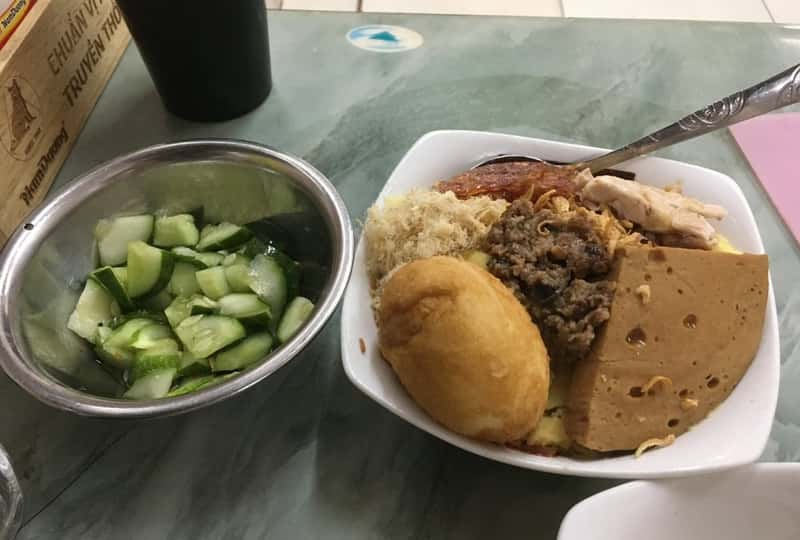
Xôi is one of those foods you don’t plan to eat, but somehow end up eating all the time. It’s sticky rice, usually eaten for breakfast or as a quick meal when you’re in a rush, and it’s absolutely everywhere in the mornings.
You’ll see vendors with baskets or carts piled high with banana leaves, quietly serving office workers, students, and delivery drivers before the day really starts.
There are countless versions of xôi, but the most common ones I eat are xôi mặn and xôi ngọt.
Xôi mặn usually comes topped with shredded chicken or pork, Chinese sausage, fried shallots, scallion oil, and sometimes a quail egg. It’s filling, cheap, and surprisingly satisfying for something that looks so simple.
Xôi ngọt leans more towards dessert, made with coconut milk, mung beans, black beans, or corn, and often finished with toasted sesame seeds or shredded coconut. It’s warm, comforting, and one of those foods that quietly reminds you you’re not in a rush anymore.
11. Bánh Canh Mực
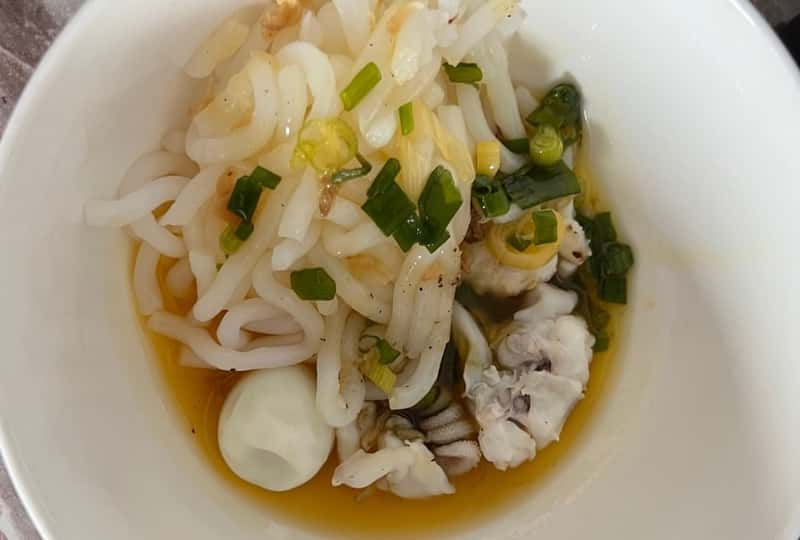
Bánh canh mực isn’t as famous as phở or bún bò Huế, but once you’ve had it, it tends to stick with you. This dish is especially popular in coastal cities, and you’ll often find it in small, no-frills shops that specialise in just one thing and do it very well.
The noodles are thick, short, and chewy, made from tapioca or rice flour, giving the soup a much heartier texture than most Vietnamese noodle dishes. The broth is rich and slightly sweet, usually made from simmered seafood and pork bones, and generously filled with fresh squid.
What I love most about bánh canh mực is how comforting it feels. It’s not flashy, and it doesn’t try to impress, but it’s deeply satisfying, especially on a rainy day or when you’re tired and hungry and just want something warm that makes sense.
12. Chè
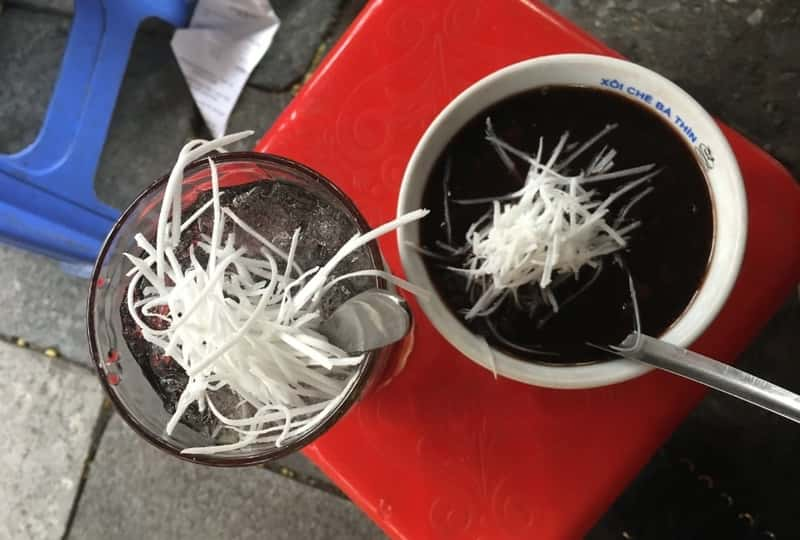
Chè was one of those things I kept walking past for months without really understanding what it was supposed to be.
I’d see small carts or tiny shops with metal pots, plastic stools, and long menus filled with words I couldn’t pronounce, all promising different combinations of beans, jellies, coconut milk, and ice. It didn’t look like dessert in the way I was used to, and honestly, it looked a little chaotic.
The first time I tried chè, I didn’t know what to expect. It arrived as a bowl filled with layers that didn’t seem like they should belong together: soft beans, chewy jelly cubes, crushed ice, and a generous pour of coconut milk. I
t wasn’t hot or cold in a familiar way, and it wasn’t overly sweet either. I remember thinking I wasn’t sure if I liked it, and then, a few spoonfuls later, realising the bowl was almost empty.
Chè isn’t one dish, it’s a whole category. Some versions are warm and comforting, eaten in the evening like a sweet soup. Others are served over ice and feel more like a reward after walking around in the heat all day.
You’ll find chè made with mung beans, black beans, lotus seeds, sticky rice, taro, corn, fruit, pandan jelly, or anything else that happens to work. Every stall does it slightly differently, and that’s part of the charm.
What I like most about chè is how unpretentious it is. There’s no presentation, no attempt to make it look elegant or Instagram-friendly.
It’s scooped quickly, handed across a counter, and eaten sitting on a low stool, usually while people-watch or chat with whoever you’re with. It’s a dessert that feels practical rather than indulgent.
Street Snacks You’ll Eat Without Planning To
Some of the best things I’ve eaten in Vietnam weren’t planned at all. They happened because I was walking home, smelled something cooking, or saw a small crowd gathered around a pavement stall and decided to stop.
Vietnam does casual street snacking better than almost anywhere else, and once you start noticing it, it’s hard not to join in.
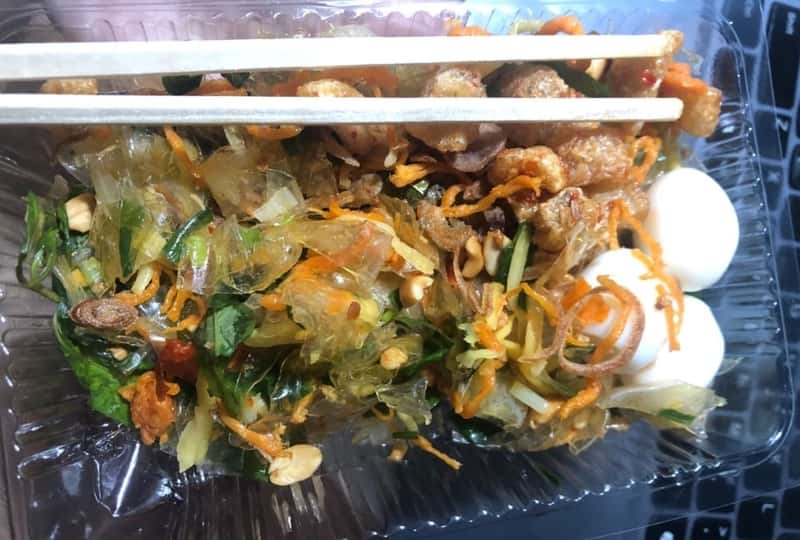
Bánh tráng trộn is a good example. It’s messy, addictive, and usually eaten standing up. Rice paper is cut into strips and mixed with quail eggs, dried beef, herbs, peanuts, tamarind, chilli, and a generous amount of sauce. Every vendor does it slightly differently, and no two bowls ever taste the same.
Then there’s bánh mì nướng muối ớt, which is essentially grilled bread taken to its logical extreme.
The bread is flattened, toasted until crisp, and brushed with chilli salt, butter, spring onions, sausage, egg, and whatever else the vendor specialises in. It’s fast, indulgent, and far more filling than it looks.
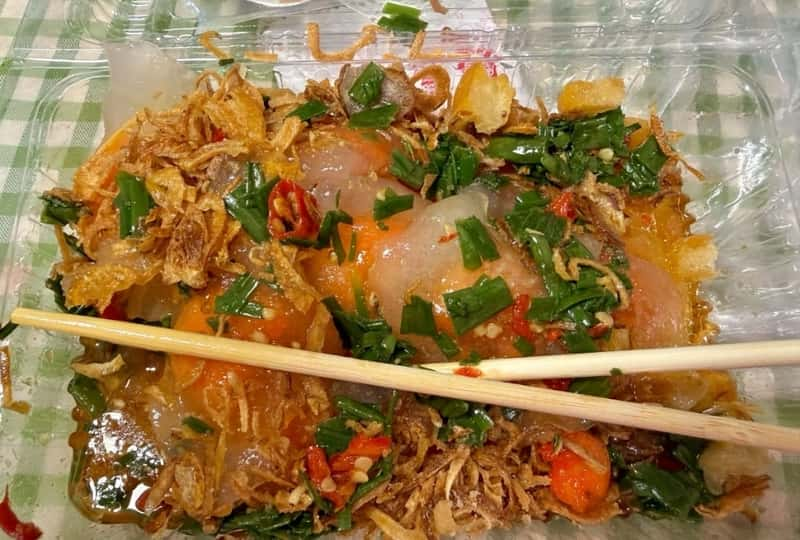
Bột lọc is at the opposite end of the spectrum. These small, translucent tapioca dumplings are soft, slightly chewy, and usually filled with shrimp and pork.
They’re served with fried shallots and fish sauce, and I tend to eat far more of them than I ever intend to.
Bánh tráng nướng is often described as “Vietnamese pizza,” though that comparison doesn’t really do it justice. It’s grilled rice paper topped with egg, minced meat, spring onions, and chilli sauce, then folded and eaten hot off the grill.
If you’re brave, you’ll also notice ốc vỉa hè, pavement seafood stalls serving snails, clams, and shellfish cooked in every sauce imaginable.
Add to that xiên que vỉa hè, skewers of meat, seafood, and vegetables grilled over open flames, and you’ll quickly realise how easy it is to eat your way across the city without ever sitting down.
These are the foods you don’t research or plan for. You just stumble into them, and that’s usually when Vietnam tastes its best.
How To Eat Vietnamese Street Food Without Getting Sick
The first time I got food poisoning in Vietnam, it came from cơm tấm, which is slightly ironic, given it’s now one of my favourite everyday meals.
At the time, my stomach simply wasn’t used to the food here, and I remember lying on the bathroom floor questioning my life choices more than once. It wasn’t the dish itself that was the problem, but the adjustment period that almost everyone goes through when they first arrive.
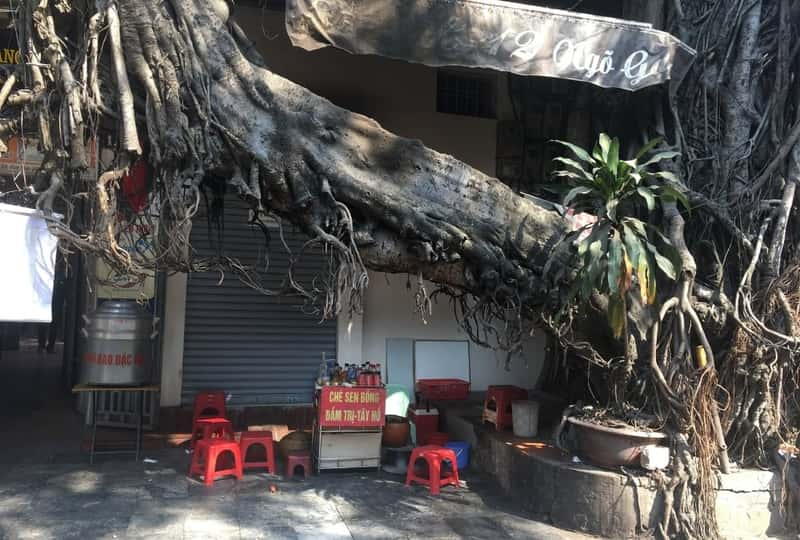
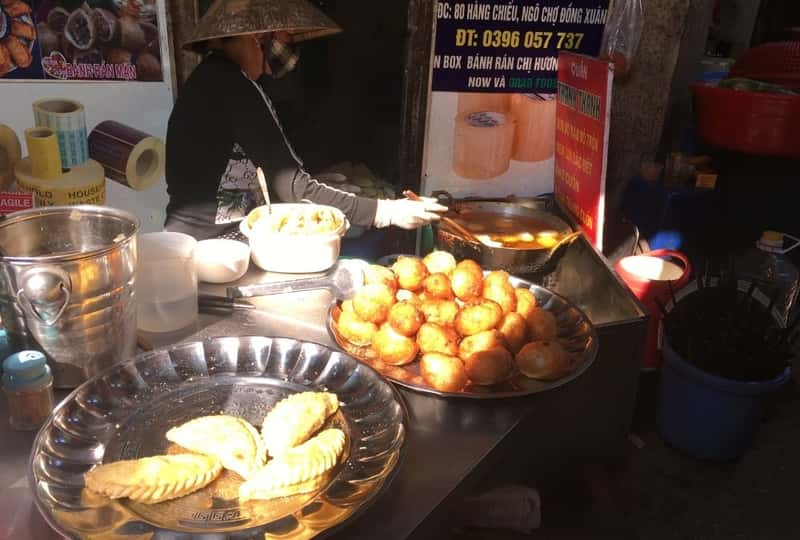
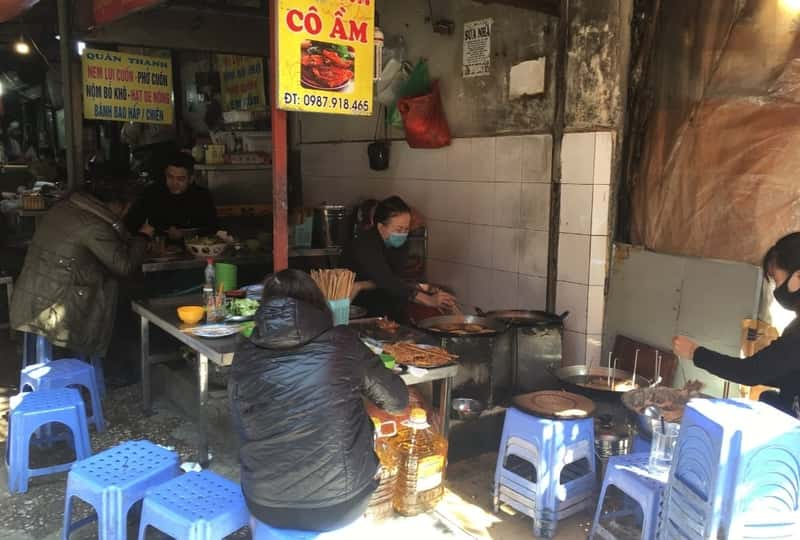
Street food in Vietnam doesn’t mean the same thing it does in the West. Here, it often involves food being cooked, served, and sold directly on the sidewalk or from tiny open-front shops.
That’s part of the appeal, but it also means your body might need time to adapt. Even perfectly normal, well-cooked food can cause a reaction if your stomach isn’t used to the local bacteria.
The best advice I can give is to pay attention before you sit down. Look for places where the cooking area is clean, ingredients are handled confidently, and there’s a steady flow of locals eating.
High turnover usually means the food is fresh. When trying something new, start with small portions and see how your body reacts before diving in fully.
Getting sick once or twice doesn’t mean street food is unsafe, it’s often just part of the learning curve. Take it slow, trust your instincts, and your stomach will usually catch up faster than you expect.
FAQs
What is the most famous street food in Vietnam?
If I had to name one dish most people associate with Vietnamese street food, it would probably be phở. It’s the dish travellers recognise before they arrive, and it’s widely available across the country, especially in the early mornings.
That said, fame doesn’t always equal everyday eating. While phở is iconic, dishes like bánh mì, cơm tấm, and bún chả are just as important to daily life, depending on where you are in Vietnam.
Is Vietnamese street food safe for tourists?
In general, yes, but with common sense. Most food poisoning stories, including my own, come down to unfamiliar stomachs rather than bad food.
Vietnam’s street food culture relies on fast turnover and fresh cooking, which works in your favour. Choosing busy stalls, paying attention to cleanliness, and easing yourself in slowly will dramatically reduce your chances of getting sick.
What Vietnamese street food should first-time visitors try?
For first-time visitors, I usually recommend starting with phở, bánh mì, and cơm tấm. These dishes are filling, balanced, and widely available, making them easy entry points into Vietnamese street food.
Once you’re comfortable, branching out into things like bún chả, gỏi cuốn, or grilled street snacks is where the real fun begins.
Is street food different in Hanoi vs Saigon?
Absolutely. Hanoi street food tends to be simpler and more restrained, often focusing on a small number of flavours done very well. Saigon, on the other hand, is louder in every sense, sweeter, richer, and more experimental.
The same dish can taste completely different depending on the city, which is why I always encourage trying local specialties wherever you go.
Can you eat Vietnamese street food every day?
You can, and many people do. Once your stomach adjusts, street food becomes an easy, affordable, and reliable way to eat daily in Vietnam.
I’ve gone through long stretches where most of my meals came from street stalls, and I’ve never felt like I was missing out. If anything, it’s one of the easiest ways to feel connected to everyday life here.
Conclusion
Vietnamese street food isn’t something you tick off a list, it’s something you slowly grow into. The longer you spend here, the more you realise that these dishes aren’t “must-tries” because they’re famous, but because they’re woven into everyday life. They’re what people eat before work, after school, late at night, or whenever hunger strikes.
If there’s one piece of advice I’d give, it’s to stop chasing recommendations and start paying attention. Watch where locals sit, notice which stalls stay busy, and don’t be afraid to try something simply because it smells good. Some of your favourite meals in Vietnam will be the ones you never planned to eat.
Street food is where Vietnam feels most honest to me. Eat slowly, stay curious, and let your stomach, and your instincts, guide the rest of the journey.