A hard-boiled egg looks harmless in a zipped lunch bag, right up until the cabin door closes. Then the air goes still, the smell drifts down the row, and the one person who isn’t bothered is the one who packed it. Flight attendants stay on board for the entire flight, so what comes out of your carry-on tells them plenty before you’ve even found your seat.
Some of what follows is exactly what you’d guess. The item at #1 is not. It looks like the most sensible thing in your bag, and it comes with more rules than everything else on this list.
#11 – A Mid-Flight Manicure With the Bottle on the Tray Table
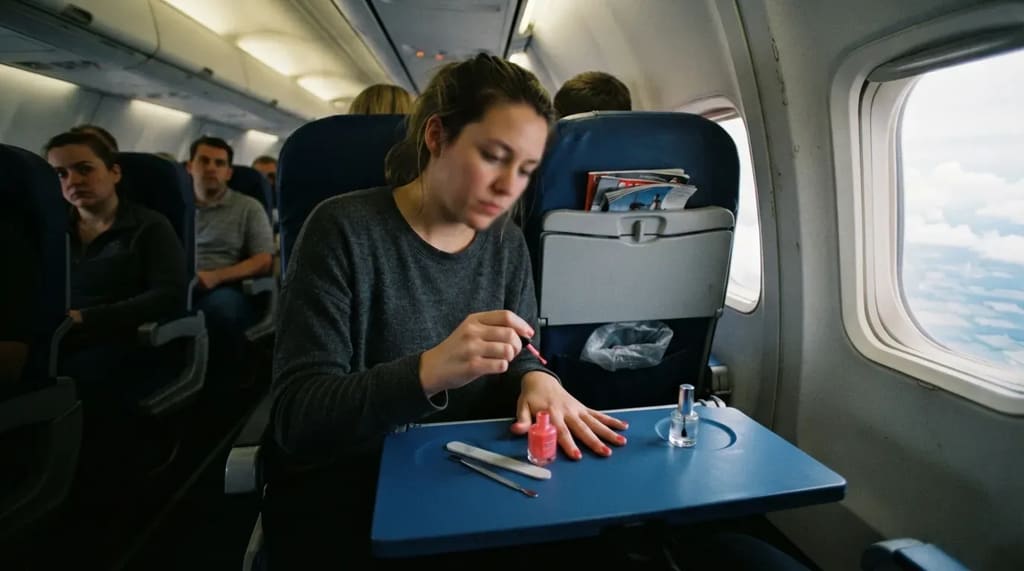
Picture a passenger calmly painting her nails on a tray table somewhere over the Midwest. The bottle is small, but polish and remover both give off a sharp chemical smell, and a closed cabin has no window to open. One travel writer lists painting nails on a flight as a rude habit, right alongside taking off your shoes.
The tray table also shifts with every bump of turbulence, which makes an open bottle a spill waiting to happen. Once it starts, crews have few options beyond politely asking passengers to put smelly items away, and the smell hangs around while they do. If your nails need work before a trip, do them the night before and let them dry completely. Polish fumes stay close to one seat, but the next item on this list travels much further.
#10 – The Travel-Size Perfume That Reaches Several Rows
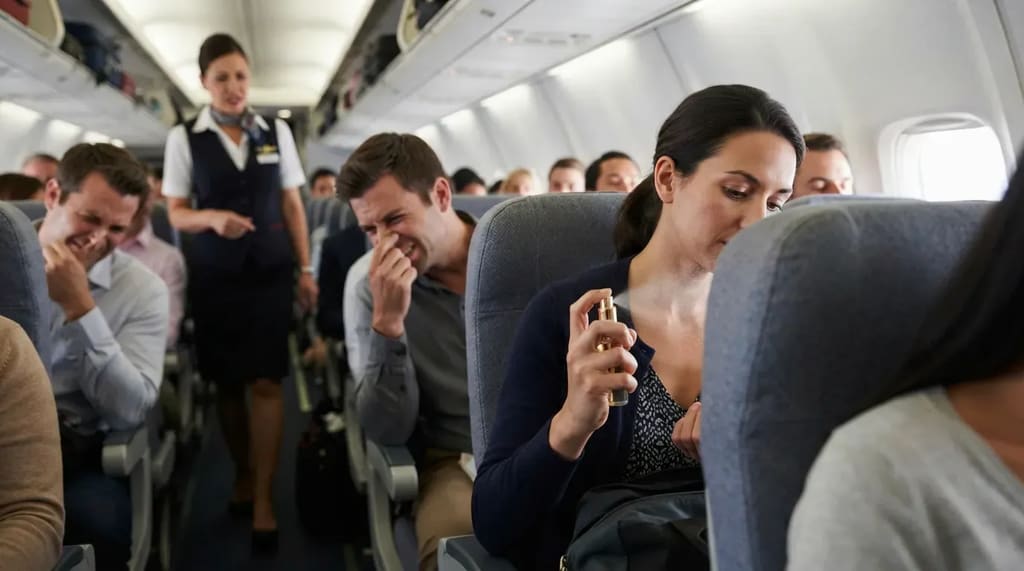
Flight attendants have asked passengers to skip heavy fragrance and especially strong food. The reasoning is physical: in a tight space with recirculated air, one strong smell can reach several rows. The seatmate beside you, the passenger behind you and the row across the aisle all get a share of whatever you spray. And nobody on board can step outside for fresh air.
The bottle itself isn’t the problem. TSA lets you bring liquids in containers of 3.4 ounces or less in a carry-on, so a travel-size bottle rides along in your quart bag without trouble.1 What crews dread is the extra spritz at the gate or in the seat. One light application at home is plenty, and the bottle can stay zipped until you land.
Fast Facts
#9 – Hard-Boiled Eggs and Tuna Salad in a Zipped Lunch Bag
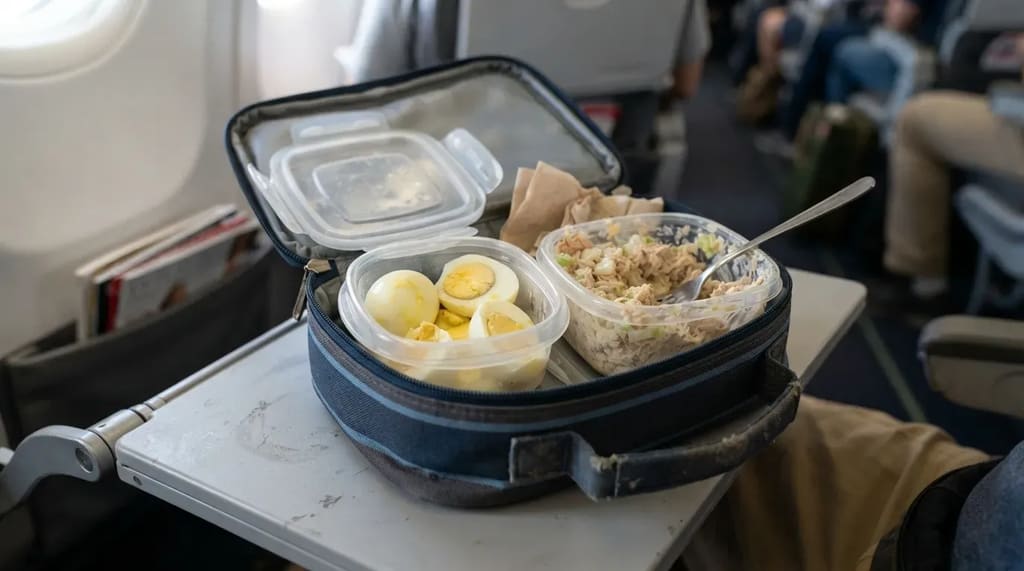
Tuna, eggs and onions are the foods one travel writer says really permeate the air around you. Travel etiquette advice tends to land in the same place: food on a plane should be odor-neutral, neat and quiet. By that standard, fish, stinky cheese, crunchy snacks and egg salad stay home. Crunchy snacks make the list because noise carries in a cabin just as smell does.
None of this means giving up your own food. Solid food can typically go through security and onto a plane, so a plain turkey sandwich, an apple or a bag of grapes is a safe choice. The tuna sandwich is the one that costs you, because the whole row shares that air for hours. The lunch is over once you swallow, but the foil, napkins and cups are still sitting on your tray table.
#8 – Takeout Bags and Empty Cups Stuffed in the Seat Pocket
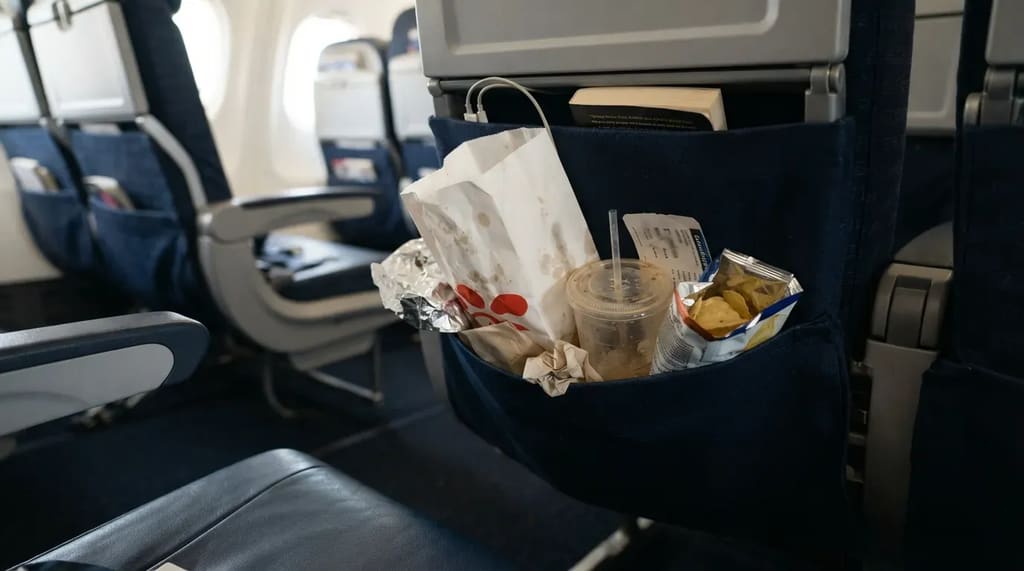
When the crew comes down the aisle with a trash bag, they expect you to hand your garbage over. The seat pocket is not a wastebasket. A leftover wrapper or half-eaten sandwich stuffed in there stays put until someone cleans the cabin, and the next passenger may be the one who finds it.
That matters most when the leftovers came from something like that egg salad lunch. The smell lingers in the seat after you leave, and a stranger sits down in it. Handing trash to a flight attendant takes about five seconds, and checking the seatback pocket before you get off takes five more.
#7 – Bare Feet Propped Up Without a Pair of Socks in the Bag
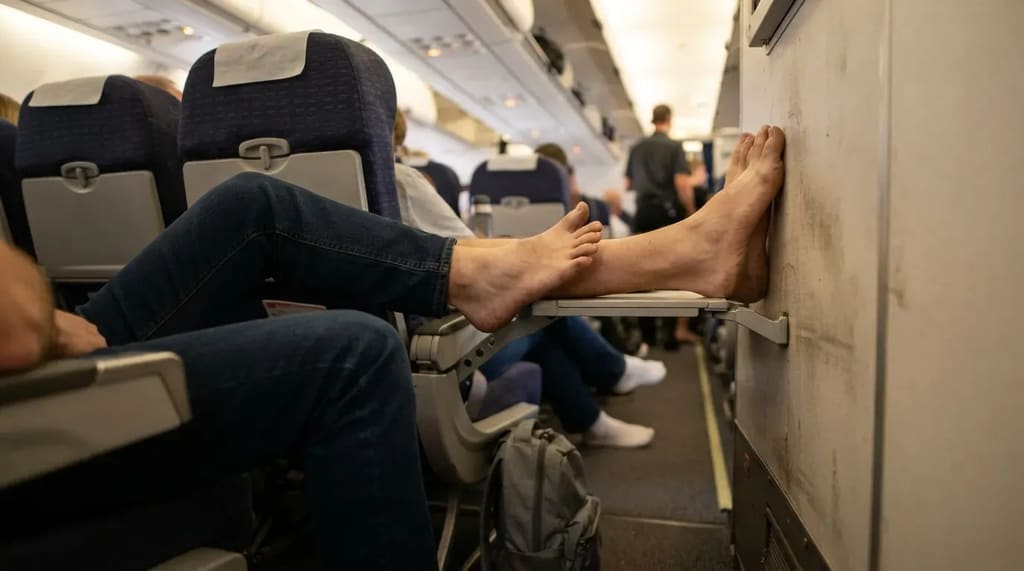
Taking off your shoes on a long flight is a reasonable wish, and one travel publication says it’s fine only if you’re wearing socks or slippers. Go barefoot and you’re putting skin on a cabin floor that is far from clean. You’re also sending foot odor into a confined space, where it only gets worse. Crews repeatedly mention foot odor, feet against cabin walls and passengers walking into the lavatory without shoes.
There’s a safety side too. Bare feet are a problem in an emergency, when you may need to move fast across the cabin. A flight attendant quoted by HuffPost UK also says never to put your feet on the seat or armrest in front of you. A clean pair of socks may be the best carry-on item on this whole list: it weighs almost nothing and takes care of every complaint above.
Quick Compare
- Barefoot: skin on a dirty floor, odor in shared air, harder to move fast in an emergency.
- Socks: a clean barrier, far less smell, and almost no weight in your bag.
- Slippers: the other option travel advice approves, as long as you can still get out quickly.
#6 – A Tablet Playing Out Loud With the Earbuds Left at Home
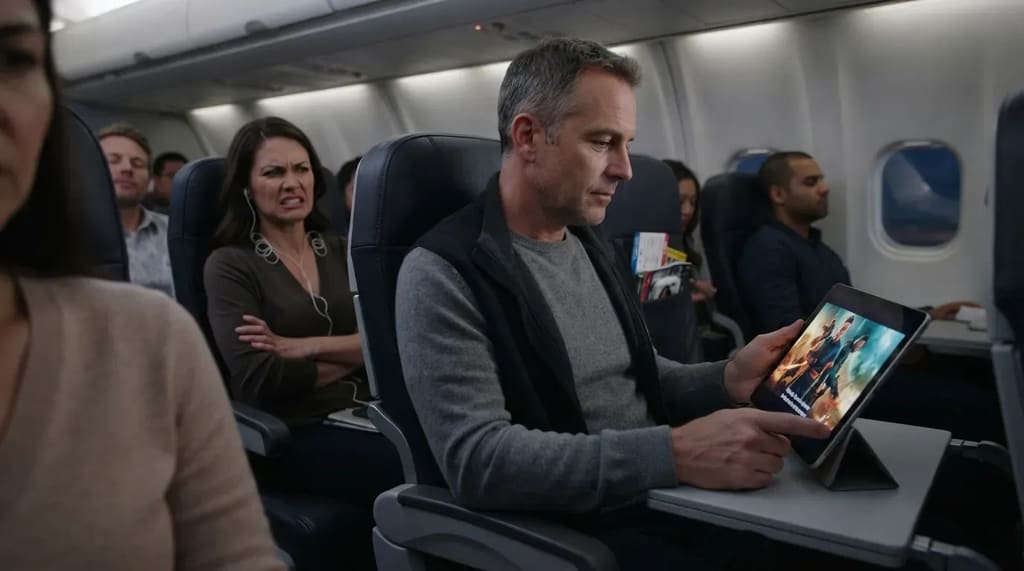
One travel site’s list of the most annoying airport and flight habits includes the person not wearing headphones. A tablet speaker that sounds quiet at home carries a long way in a cabin where your neighbors sit within arm’s reach. They can’t move away, and the crew can’t do much beyond asking you to turn it down. A movie or a phone call played aloud affects far more people than the one who chose it.
The fix costs very little. A basic wired pair, or the earbuds you already own, can live in your personal item permanently so they never get left on the kitchen counter. If you tend to forget them, keep them in the same pocket as your boarding pass. Earbuds are small enough to ride in a coat pocket, so there’s no real excuse for leaving them behind.
#5 – Shopping Bags and a Puffy Coat Fighting for Bin Space
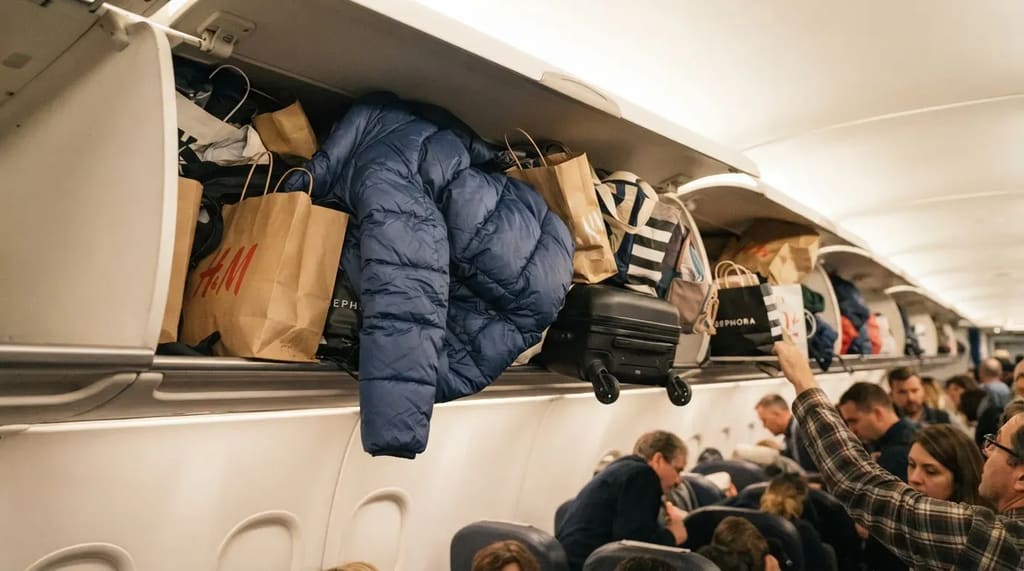
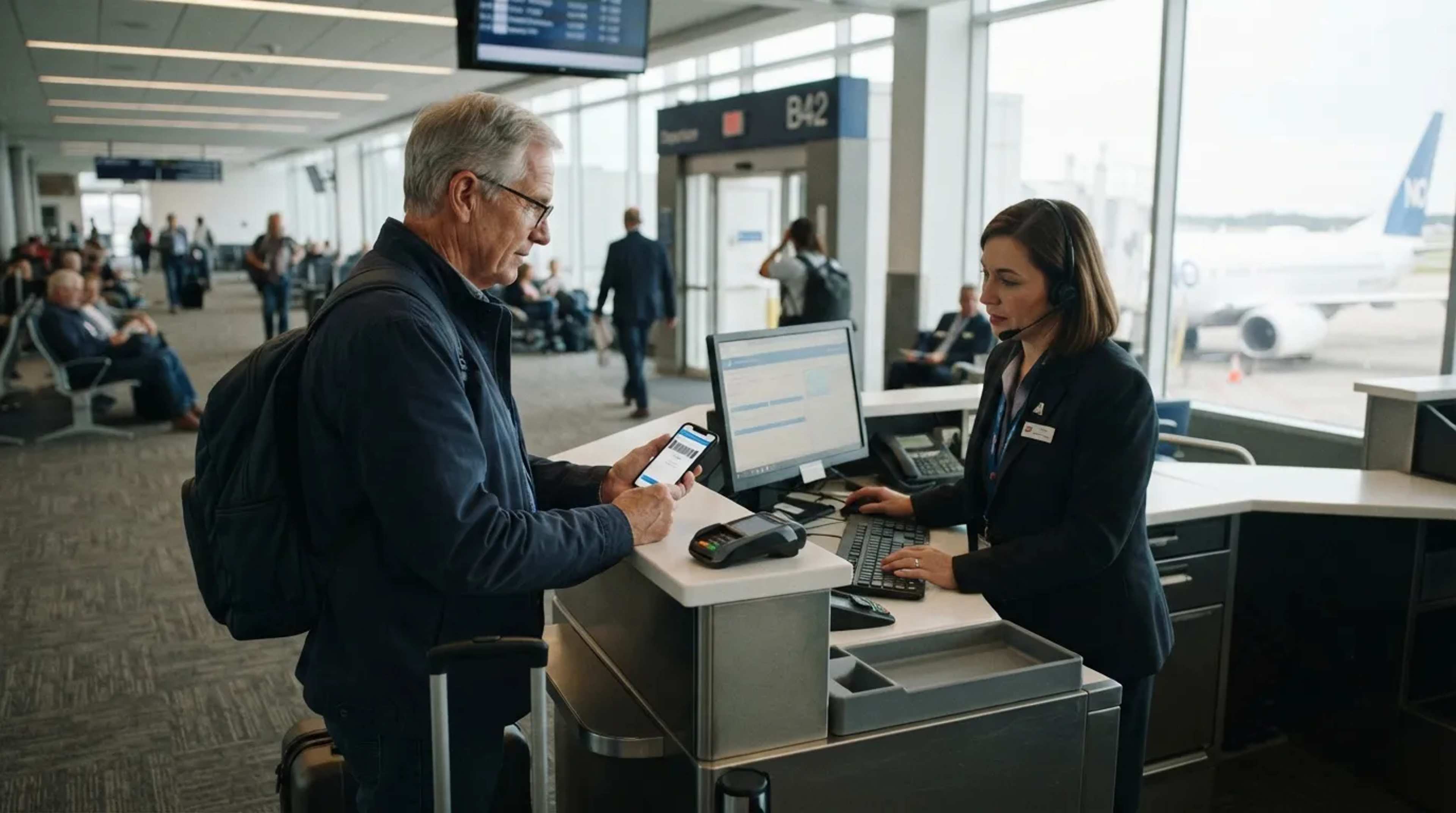
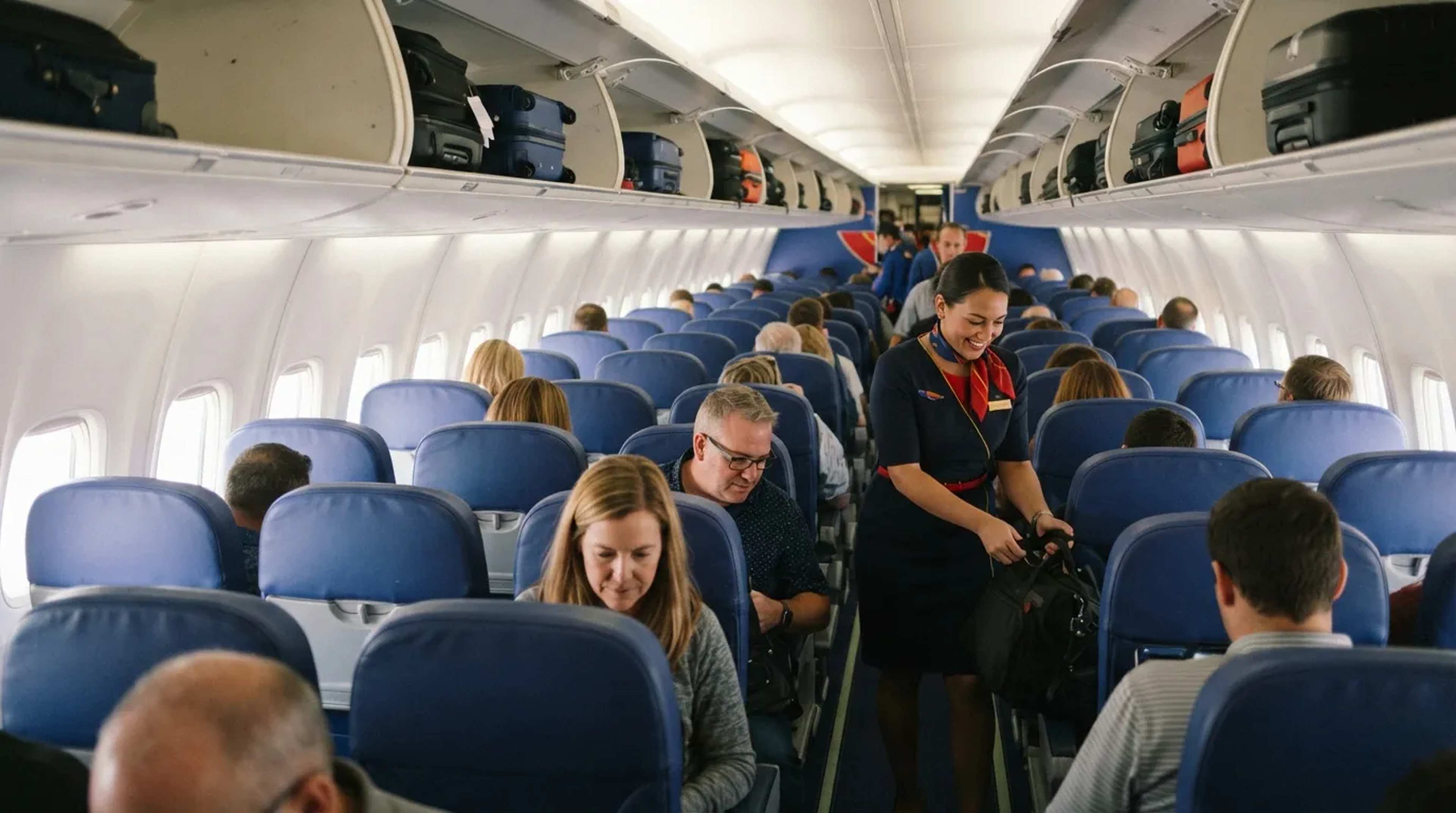
Flight attendants have given clear directions that only larger carry-ons go in the overhead compartments. Purses and shopping bags belong under the seat. When the bins fill with shopping bags, coats and book bags, there’s no room left, and other passengers end up scrambling. That scramble is what slows down the whole boarding line.
A bag that doesn’t fit can also mean a fee on some airlines. When the bins fill, a bag you meant to keep with you gets tagged at the gate and goes into the hold, along with whatever you left inside it. Hold onto that detail. It sets up the most serious item on this list.
#4 – Digging for Headphones While the Aisle Fills Up Behind You
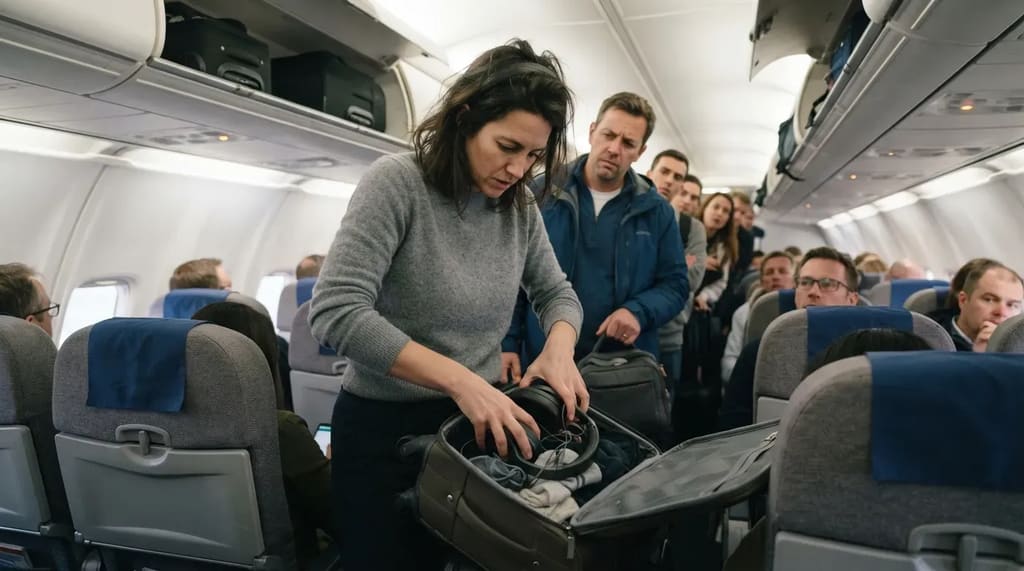
One search for a pair of headphones can freeze dozens of people behind you. The aisle is narrow, and the line behind you has nowhere to go. Digging through a bag while standing there looks like carelessness to everyone waiting, even when it takes only a few seconds.
The remedy is easy and takes about a minute. Before you reach the aircraft door, move your headphones, charger and phone into a jacket pocket or personal item. Your carry-on can then stay zipped while everyone else walks past. A flight attendant quoted by HuffPost UK gives similar advice for security lines: know where your electronics are and clear your pockets in advance. Of everything on this list, this is the cheapest fix.
#3 – A Power Bank Whose Rating You Cannot Read
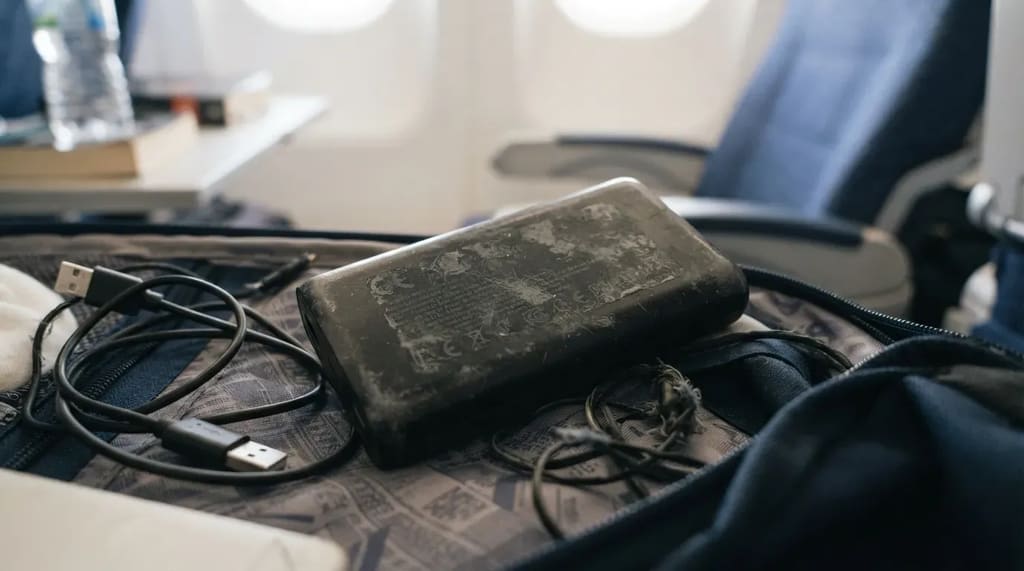
Federal rules start with the size of the battery. According to the FAA, power banks up to 100 watt-hours can go in a carry-on without anyone’s permission, but they’re banned from checked luggage.2 3 Batteries of 101 to 160 Wh need airline approval, with up to two spares per person, and anything over 160 Wh is not allowed.4 Individual airlines can add their own limits on top.
Many banks print only milliamp-hours on the case, which means you have to do the math. If the rating can’t be read or verified, the airline can refuse the battery, so a label rubbed smooth or a no-name unit with no markings is a real risk at the gate. A 50,000 mAh bank works out to about 185 Wh, which is not allowed on passenger flights. And even a bank that passes at the gate has to sit somewhere once the plane is in the air, which is where more rules apply.
Worth Knowing
- The math is milliamp-hours times volts, divided by 1,000, which gives you watt-hours.5
- A typical 10,000 mAh bank at 3.7 volts is about 37 Wh, and a 20,000 mAh bank is about 74 Wh.
- Both of those sit well under the 100 Wh line, so they need no special approval.
- Power banks ride in the cabin only, never in checked luggage.4
#2 – A Power Bank Charging Inside a Backpack in the Bin
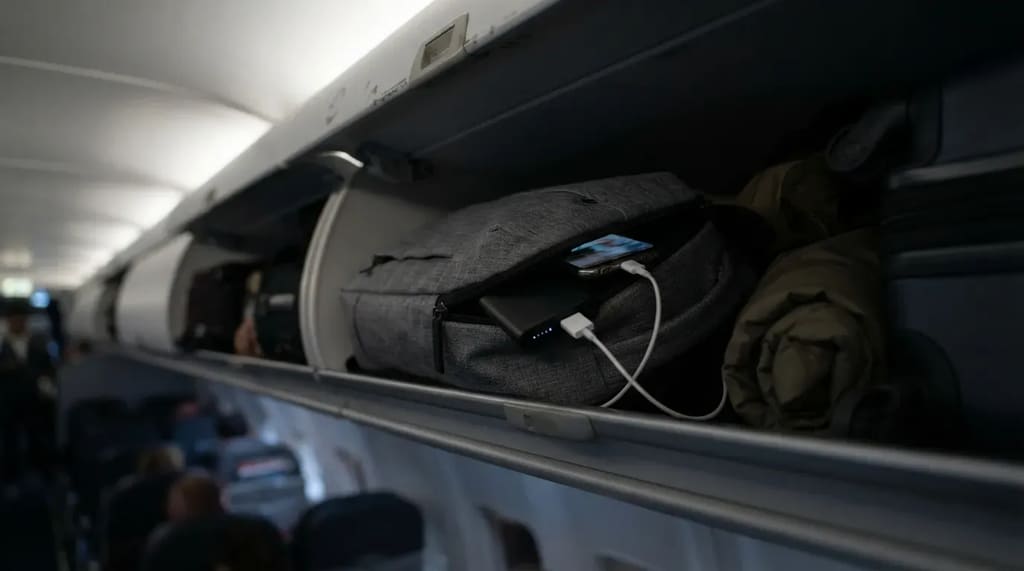
This is where airline rules differ from federal ones. Southwest now requires that a power bank actively charging a device stay in plain sight, not inside a backpack or an overhead bin.6 If you fly more than one airline, check each policy before you pack.
Related Stories From Travelbinger
If you fly overseas, the rules get stricter. Emirates, Singapore Airlines and Cathay Pacific ban using a power bank at all during the flight. Lufthansa Group has banned in-flight use and charging since January 15, 2026.7 A bank tucked into a closed bag can’t be seen by anyone, crew included, which may be why airlines want it visible. But the rule that matters most kicks in before you board, when a bag is taken from your hands at the gate.
#1 – A Power Bank Left in a Bag That Gets Gate-Checked
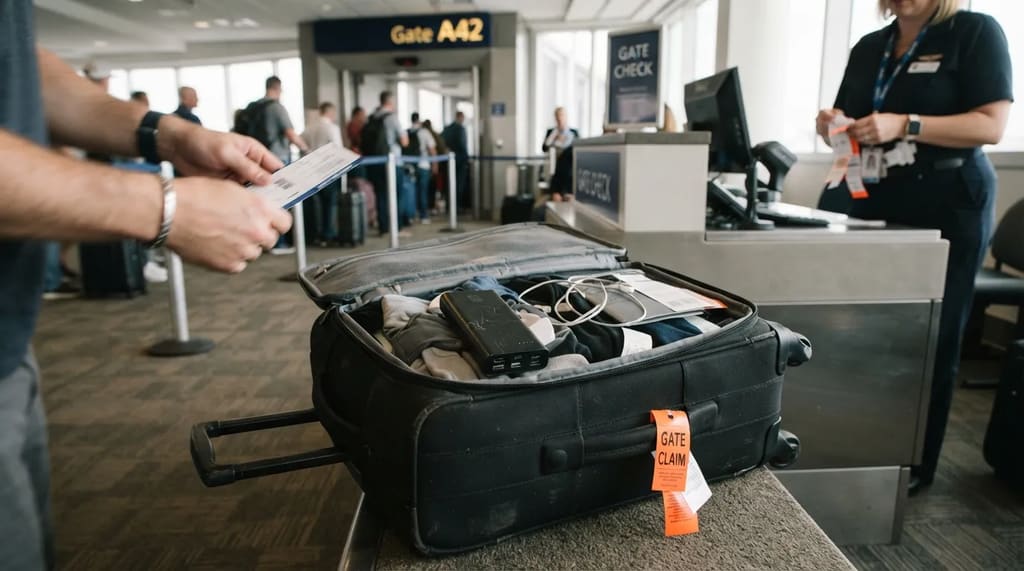
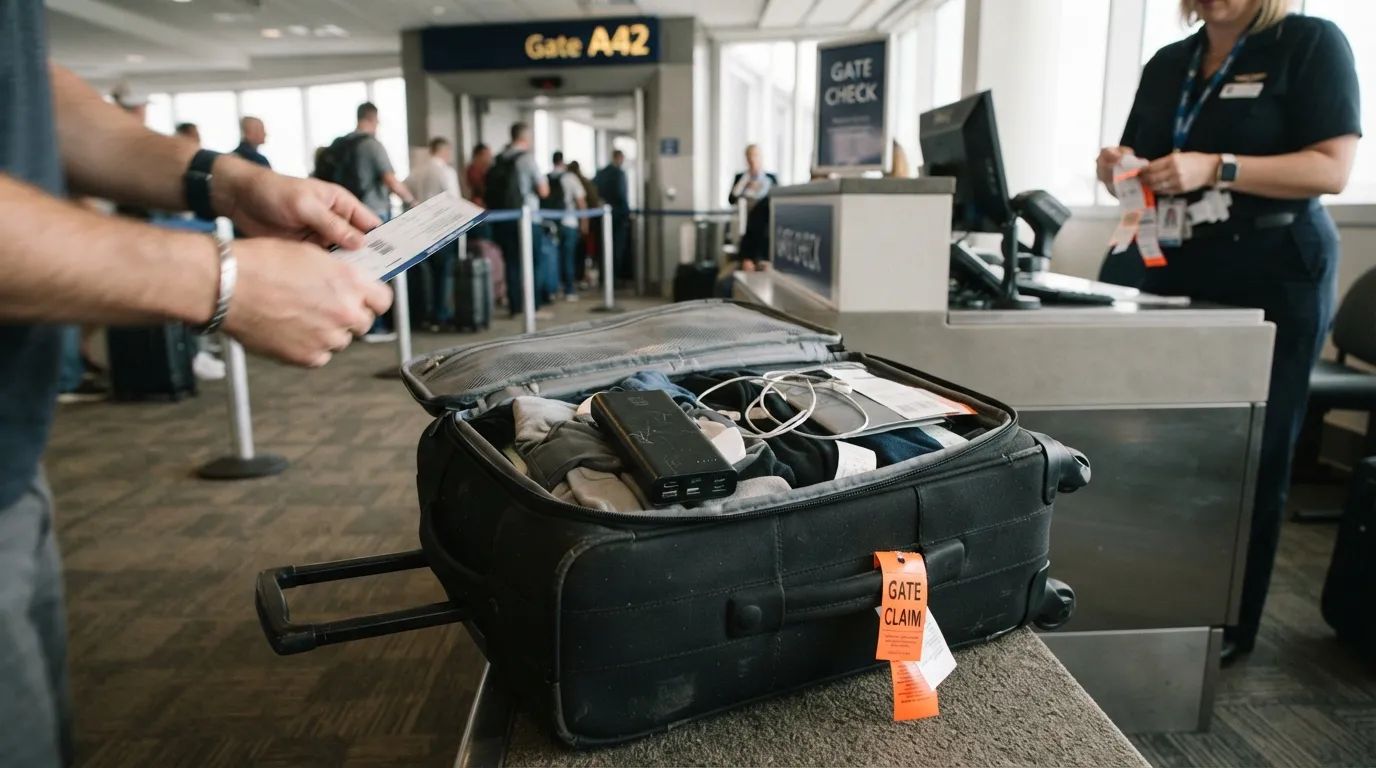
This is the item that ties the whole list together. When the bins fill and your carry-on is tagged for the hold, the guidance is simple: remove the power bank before handing over the bag.2 Spare lithium batteries must travel with the passenger in the cabin.2 A battery fire in the cargo hold is far harder to reach and put out than one in the cabin, where the crew can respond right away.
It’s the same overstuffed bag and the same full bins from earlier that lead to a gate tag in the first place. A power bank looks like the most sensible thing in your bag, but it’s the one that can turn a routine gate check into a safety problem. Damaged, swollen or cracked power banks shouldn’t come on board at all. Federal rules also say battery terminals must be protected from short circuits, which matters for loose spares.2
Before you board, move the power bank out of the carry-on and into the small bag that stays at your feet. Then, if your wheeled bag is taken at the gate, nothing important goes with it. It costs nothing, and it keeps you off the list of things crews have to ask people to fix.
Most of the items above come down to one idea: a sealed cabin turns small personal choices into shared ones. The nail polish, the egg salad, the loud tablet and the tight bag take a second or two to avoid at home and hours to sit through in the air. The power bank is the one where the stakes are real.
What is the strongest smell you ever sat next to on a flight, and how long did it last?
- TSA 3-1-1 Rule Explained: https://www.afar.com/magazine/the-tsas-3-1-1-rule-for-liquids-in-carry-on-luggage
- FAA PackSafe Lithium Batteries: https://www.faa.gov/hazmat/packsafe/lithium-batteries
- Power Bank Rules 2026: https://applescoop.org/story/power-bank-on-plane-rules-2026-faa-tsa-airline-wh-limits
- FAA Airline Passengers and Batteries: https://www.faa.gov/hazmat/packsafe/airline-passengers-and-batteries
- FAA PackSafe Watt-Hour Calculation: https://www.faa.gov/hazmat/packsafe/power-tools
- NPR Southwest Charger Policy: https://www.npr.org/2025/05/21/nx-s1-5406294/southwest-airlines-will-require-passengers-to-keep-chargers-visible-due-to-fire-risk
- Lufthansa Group Power Bank Rules: https://business.lufthansagroup.com/eg/en/program/experts/news/power-banks-on-board–updated-regulations-from-january-2026