The driver looks like the least involved person on the bus. Hands on the wheel, eyes on the road, coffee in the cup holder. But the big mirror above the windshield shows the whole aisle, and tour bus drivers say that by the time the coach clears the parking lot, they’ve already got a rough portrait of the group.
It isn’t the polite, brochure version either. The real read comes from tiny things, like who boards early, who flinches at the air conditioning, who sits alone and who quietly checks on them. A few of these signals are funny. One or two are oddly moving, and the one at #1 happens before most people have even found a seat.
#11 – The Boarding Line Quietly Predicts the Whole Day

The first thing a driver sees isn’t a face. It’s a clock. Before anyone sits down, they’re noting who shows up early, who strolls in at the last second, and who is still hunting for a phone charger at departure time.
Drivers often say a group’s punctuality in the first ten minutes predicts every schedule slip that follows. That’s a read from the job, not a formal study, but it’s a common one among veterans.
Tour days run on tight windows, with timed attraction entries, reserved lunches and limited parking. A few minutes lost at the first stop can snowball into a rushed meal and a skipped photo op by afternoon. Drivers also spot the one person who counts heads without being asked, and that quiet organizer usually ends up saving the day more than once.
But that’s nothing compared to what the seating chart gives away in #10…
#10 – The Seat Grab Happens Faster Than Anyone Admits
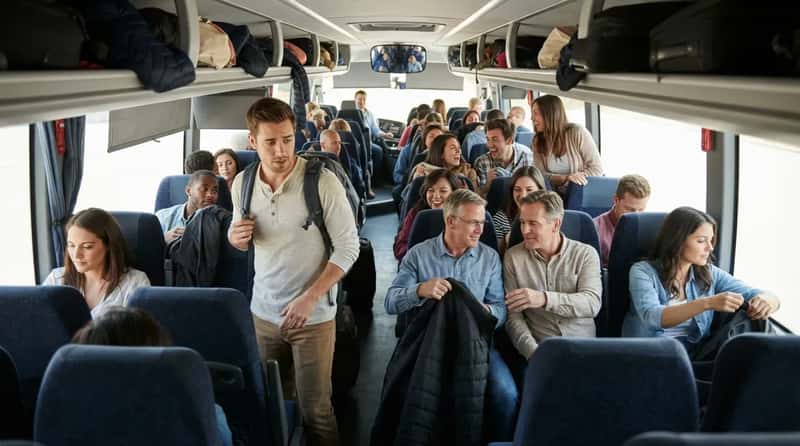
Nobody announces a seating plan, yet one forms in about two minutes. Couples slide into the same row. Friends claim the back. Solo travelers scan for a window and quietly hope nobody sits beside them.
Drivers say they can sketch the group’s social map from the mirror before the bus leaves the lot. Who saves a seat with a jacket, who hesitates in the aisle, who ends up next to a stranger: it’s all on display.
Here’s the part that sparks arguments. Many drivers and guides say the back rows are the loudest zone, while quieter, more observant travelers often end up in the front half, closer to the guide’s microphone. Others say the seats over the wheels ride bumpier, which is why savvy regulars skip them.
Quick Compare
- Back rows: the social zone, and usually the loudest.
- Front half: closer to the guide’s microphone, and often home to the quieter, more observant travelers.
- Over the wheels: a bumpier ride, which regulars tend to avoid.
Whichever camp is right, early seat choices tend to stick all day, even when a trip promises rotation. People find their spot, and they defend it.
Wait until you hear what the cargo bay says about #9…
#9 – Luggage Tells the Truth About Who Read the Itinerary
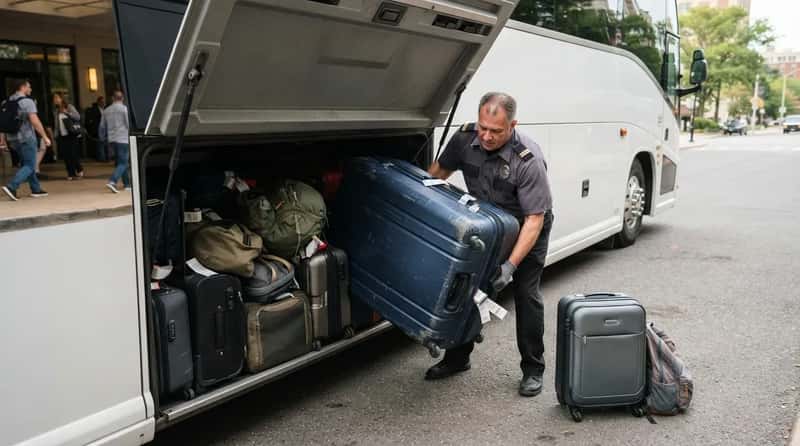
A driver loading bags can tell fast who studied the trip details. One person arrives with a compact carry-on and a small daypack. Another rolls up with a suitcase the size of a refrigerator for a three-day trip.
Drivers often say overpacking is the first sign of a traveler who will be stressed by Day 2. They’ve watched the same scene play out at every hotel stop, with one suitcase wedged in last and pulled out first.
Space is a real constraint. Coaches carry bags in underfloor compartments and overhead racks that don’t fit everything, and a full bus gets tight quickly. Every hotel stop adds unloading and reloading, so a bulky case isn’t just one person’s problem.
Drivers also watch for soft red flags, like loose straps, unlabeled bags and fragile items stuffed in the bottom bay. They’ve seen how those stories end.
And the next thing drivers hear is surprisingly predictable, as #8 shows…
#8 – The First Complaint Is Almost Always About Temperature

Ask a driver what they hear in the first hour, and the thermostat comes up fast. Someone is freezing. Someone else is sweating. A third person wants to know if the air vent can point somewhere else.
Many drivers say the first request they get has nothing to do with the destination. It’s about comfort, and it arrives before the bus has even merged onto the highway.
Here’s the controversial part. Some drivers argue that the loudest complainer usually isn’t the coldest or hottest person on the bus, just the first one willing to say something. They’ll often settle on a middle setting and let everyone adjust with layers.
Seasoned travelers tend to board with a light jacket in July for exactly this reason. A packed coach also warms up differently as the day goes on, so the first setting rarely stays right.
But the real test of a group comes right after the doors close, in #7…
#7 – The Safety Briefing Shows Who Is Actually Paying Attention
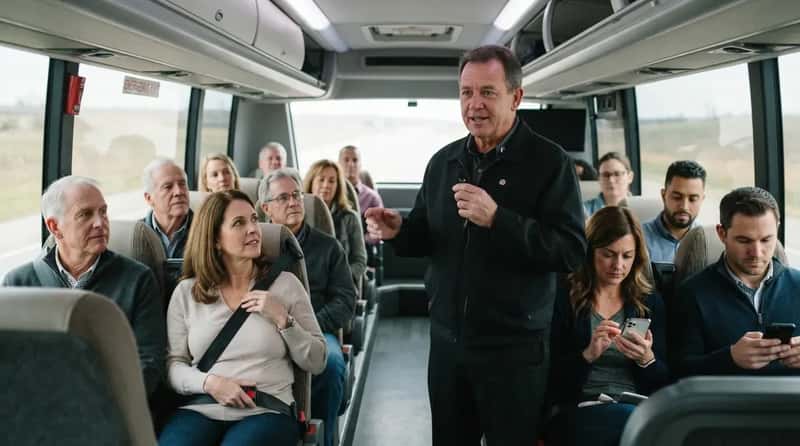
When the driver or guide starts the safety talk, a quiet sorting happens. Some people look up and listen. Others keep scrolling.
Drivers often say the people who ignore the briefing are the same ones who ask the answered questions an hour later. It’s a small thing, but they notice it every time.
The talk matters more than people think. A federal rule required lap and shoulder belts on new coaches built after November 2016, and drivers often remind passengers to use them. They also point out emergency exits, restroom etiquette and where to meet at stops.
Fast Facts
- Federal rules require lap and shoulder belts on new motorcoaches built on or after November 28, 2016.
- The rule applies to new vehicles, so some older coaches still on the road may not have the same belts.
- A typical briefing covers belts, emergency exits, restroom etiquette and meeting points.
- The whole talk usually takes just a few minutes, which is why drivers notice who tunes out.
The most telling moment is when the whole group clicks in at once. It’s a small sign, but drivers say it often means the group will cooperate.
Still, there’s one person on every trip who matters more than the briefing, and #6 reveals who…
#6 – The Real Leader Is Rarely the One Holding the Clipboard

Every group has an official organizer. Every group also has an unofficial one. Drivers say the true decision-maker is often the person others glance at before they answer a question.
Watch the eyes, and you’ll know who is really in charge. A sideways look before a “sure, that works” says more than any title on a sign-up sheet.
That matters because drivers get requests all day. Can we stop for coffee? Can we skip the last stop? Can we leave 20 minutes later? A driver who has already spotted the real leader knows whose answer will actually stick.
They also notice when the official leader and the unofficial one disagree. Veteran drivers say that’s usually the first crack in group harmony, and it often shows up before the first rest stop.
That tension is nothing compared to the noise level in #5…
#5 – The First Hour’s Volume Sets the Mood for the Day
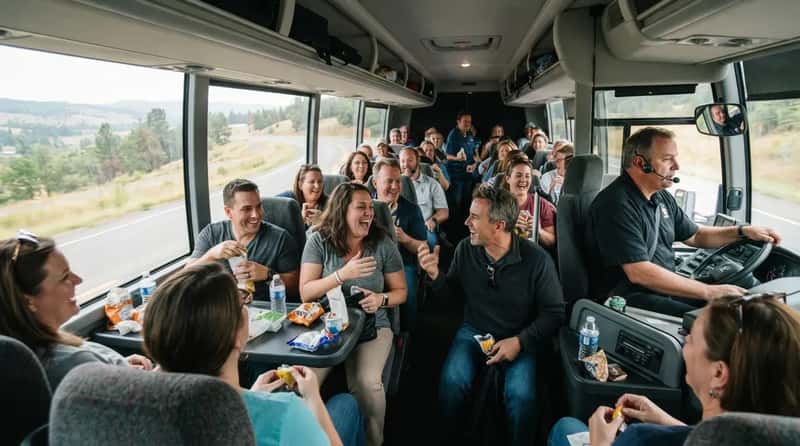
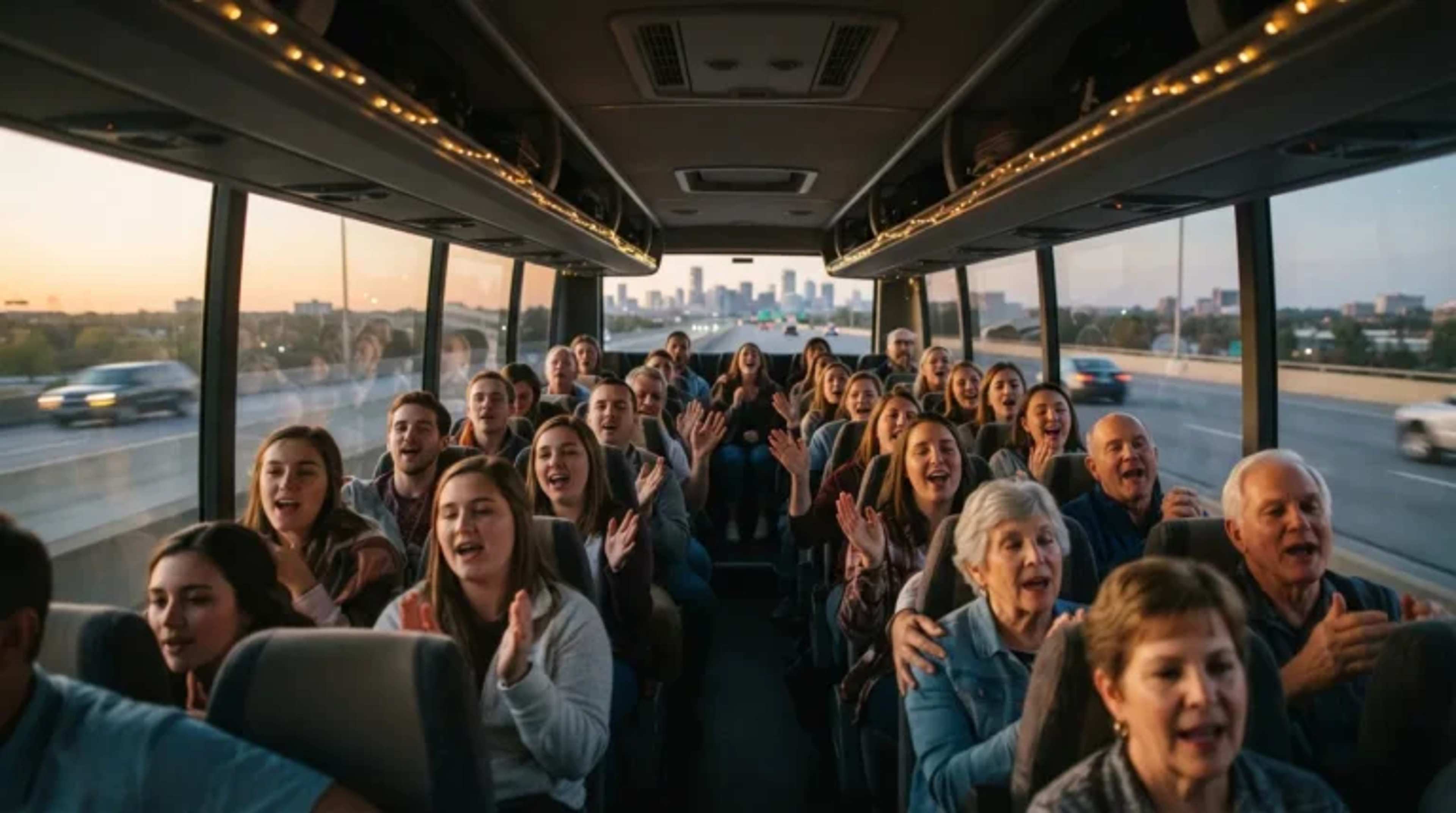
Quiet buses and loud buses start differently. On a lively trip, the chatter begins within minutes, and snacks and jokes soon follow. On a stiff one, people sit with headphones on until the first stop.
Drivers often say the first hour’s noise level is a surprisingly good forecast of the group’s mood by evening. A bus that starts warm tends to stay warm.
There’s a debate here, too. Some drivers prefer loud groups because the day goes by faster. Others say silent ones are easier to drive for, because nobody is shouting across the aisle.
Either way, the driver is listening for shifts. A sudden hush can mean motion sickness, an argument or a missed turn. A sudden burst of laughter can mean the group has finally bonded.
Next, drivers see something that happens in nearly every group, and it’s in #4…
#4 – Cliques Form Before the Second Mile Marker
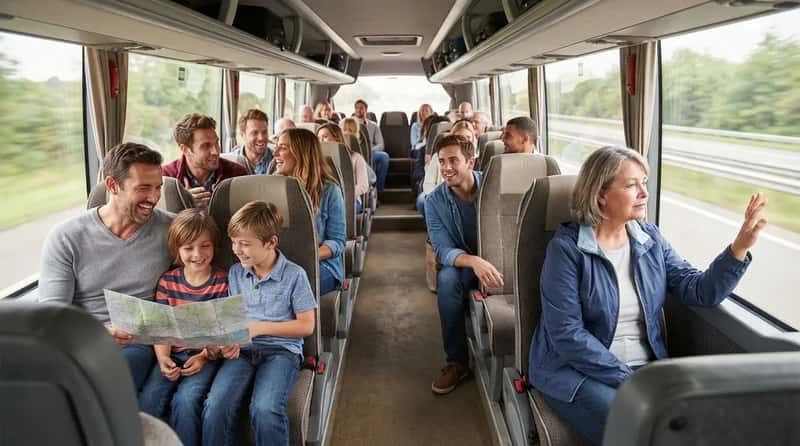
Tour groups mix strangers with friend circles, and the line between them shows early. Families stay in clusters. Solo travelers hover. Drivers say they can see who is lonely by the end of the first hour.
It shows in who sits alone, who leans into the aisle hoping to join a conversation, and who stares out the window a little too long.
Worth Knowing
- A snack passed across the aisle is one of the easiest ice-breakers on a bus.
- A comment about a landmark outside the window gives strangers something to share.
- Offering to snap a group photo at the first stop pulls in people who were hovering.
- Asking whether it’s someone’s first time on the route invites a story.
The good news is that buses are social engines. A shared joke, a question about where someone is from, or a snack passed across the aisle can change a whole trip.
Drivers often notice the person who quietly pulls a solo traveler into the circle. Those moments, they say, are the ones groups end up remembering.
But the rest stop is where a group’s patience really shows in #3…
#3 – The First Rest Stop Exposes Everyone’s Relationship With Time
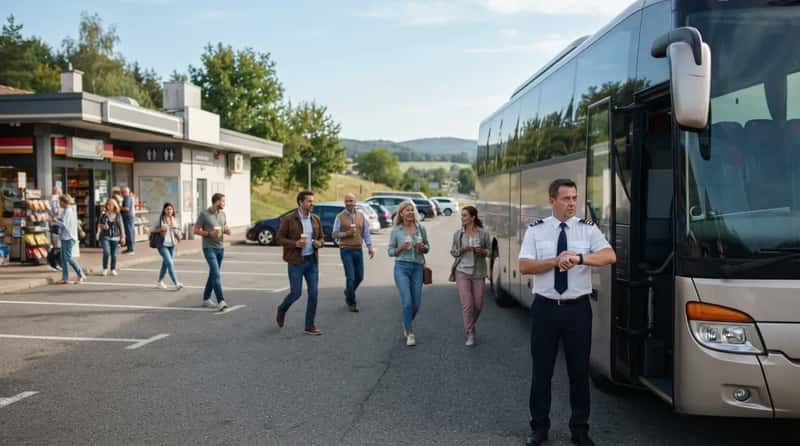
The first break is a pop quiz. The driver announces the timing, and some people hustle straight to the restroom while others wander toward a souvenir stand.
Drivers say the first “be back in 15 minutes” is when they learn who treats a schedule as a suggestion. They watch the door and the clock.
There is more at stake than one late traveler. Drivers face strict limits on how long they can work, and a delay at a stop can ripple into the rest of the day. Many keep a mental list of who typically returns last, and those travelers get a polite nudge at the next stop.
Some drivers argue that a firm but friendly start prevents resentment later. Others say nothing and let peer pressure do the work. Both camps agree on one thing: nobody enjoys being the last person back on a bus full of watching faces.
And there’s one thing the driver sees that most travelers never think about, in #2…
#2 – Courtesy at the Door Says More Than a Tip Ever Could
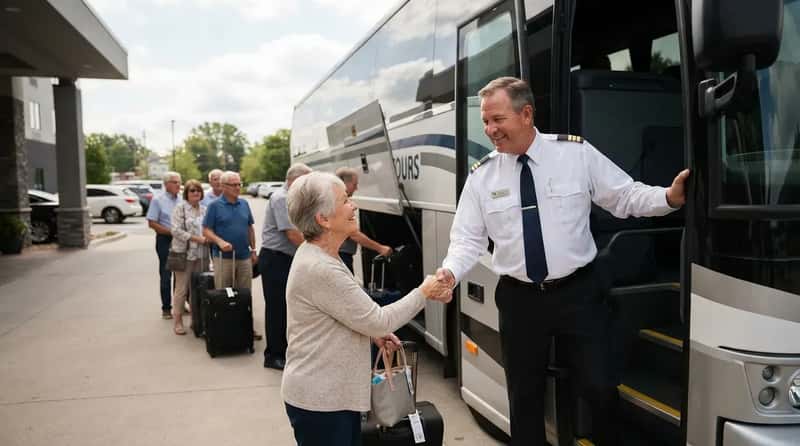
Here’s a truth that surprises people. Drivers often say the way a group treats them in the first hour tells them more than any tip at the end. A simple hello at the steps, a thank-you for loading the bags and a “need any help?” all register.
Many drivers remember the group that said good morning, and the group that walked past as if the bus drove itself. Both stories get told later, usually over lunch with other drivers.
Tipping is where opinions split. In the U.S., tipping the driver and guide is a widely expected custom on many tours, yet plenty of travelers skip it or aren’t sure what is appropriate. Some drivers see a tip as a thank-you, while others say it’s part of what keeps the job viable.
Either way, it’s worth checking your tour company’s guidance, because policies differ. The first-hour attitude usually shows what is coming at the end of the day.
But the most important thing a driver notices happens at the steps, in #1…
#1 – Drivers Spot Who Needs Help Before the Person Asks
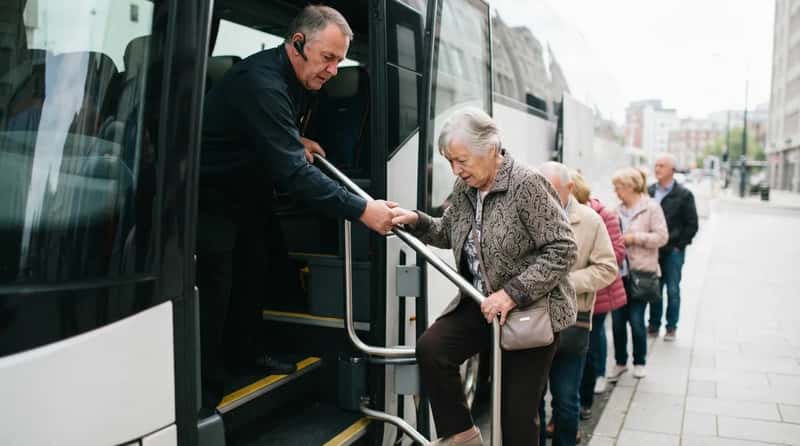
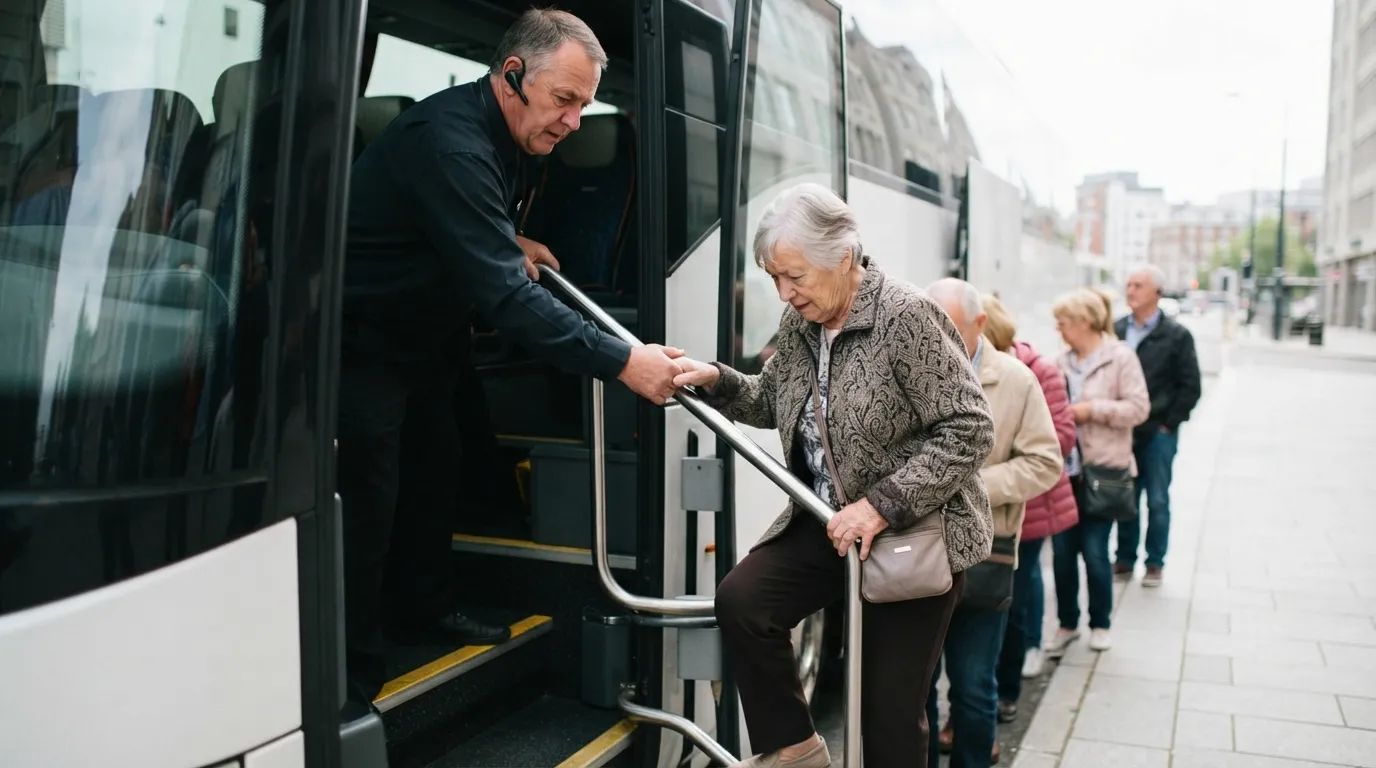
As people climb aboard, the driver watches their feet. Coach steps are steep, and the handrail matters. Experienced drivers say they can often tell within seconds who is nervous about mobility, motion sickness or a long day ahead.
They notice the traveler gripping the rail, the one who pauses at the top step, and the one who goes quiet and pale before the engine even turns over.
That awareness shapes the day. A driver might offer a hand, suggest a front seat, or mention where the next restroom stop is without making a scene. Nobody else on the bus may ever know it happened.
Why It Stands Out
- It happens in seconds, usually before the bus has even left the curb.
- It’s invisible to most passengers, because the best help is quiet help.
- It can change the whole trip for someone who was dreading the day.
- It sets a tone the rest of the group often follows.
Then they watch how the group responds. When someone offers a seat or carries a bag, drivers say that kindness tends to spread through the whole bus. It’s often the moment a crowd of strangers starts acting like a team.
Within one hour, a driver has seen who’s punctual, who’s anxious, who leads, who’s lonely and who bothered to say good morning. None of it is scientific, but it’s remarkably consistent, and it comes from people who spend their days studying groups in a mirror.
The funny part is how little of it takes a big gesture. Arriving on time, packing light and greeting the person at the wheel shape a trip more than any itinerary does.
So the next time you climb those steep steps, remember that someone up front is already reading the room. The only question is what your first hour says.