Picture the station wagon: vinyl seats hot enough to sting, a cooler sliding around the back, and a paper map nobody could ever refold. In the 1960s, these 11 stops were where those road trips led. They were the places that ended up in the photo albums, on the pennants and in the family stories. Some are still packed. A few have changed beyond recognition, and one is gone.
The twist isn’t just which ones faded. It’s which ones you’d have sworn would last forever and didn’t, and which one is now hiding inside a theme park built from plastic bricks. We’ll start with a skyline icon and end with a resort that now lives mostly in memory.
#11 – Seattle’s Space Needle: The 1962 Fair Icon That Got a Glass Floor
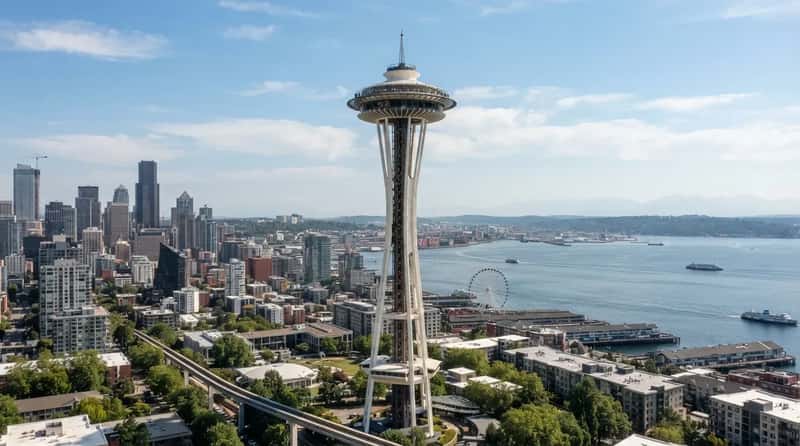
The Space Needle went up for the 1962 World’s Fair in Seattle, and it still stands 605 feet tall. Crews built it in roughly 400 days, which is wild for something that looked like a flying saucer on a stick. Families in the ’60s rode up for the view and a meal in a revolving restaurant, and it felt like stepping into the year 2000. Elvis even filmed scenes for It Happened at the World’s Fair there that year.
Fast Facts
- The observation deck sits 520 feet up, and the elevator gets you there in about 41 seconds.
- Those elevators climb at roughly 10 mph, and they slow down on windy days.
- The tower weighs about 9,550 tons and is built to withstand winds of up to 200 mph.
- The glass-floored Loupe sits at about 500 feet.
The future, it turns out, needed an update. A renovation finished in 2018 cost about $100 million and added a rotating glass floor called The Loupe, plus glass walls on the observation level. Stand on it and you’re staring straight down at the ground your grandparents once squinted at from behind a railing. The fair’s Monorail survived too, and it still carries riders between Seattle Center and downtown. But the next stop has barely changed its sales pitch in almost 90 years.
#10 – Wall Drug, South Dakota: The Free Ice Water Stop That Still Pulls In 2 Million a Year
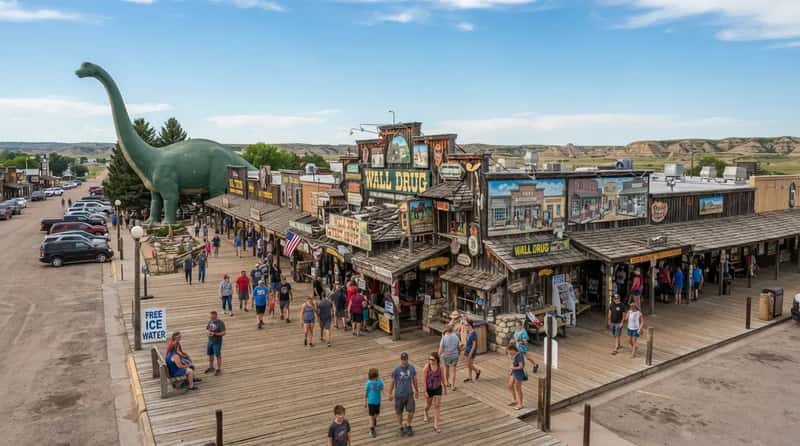
Ted Hustead bought the drugstore in tiny Wall, South Dakota, in 1931. For five years he and his wife Dorothy barely scraped by through the Depression. Then Dorothy noticed the traffic rolling past on the highway, hot and thirsty, and suggested they put up signs offering free ice water. The family has long told it that customers were showing up before Ted even got back to the store.
Today it’s a sprawling maze of cowboy-themed shops, restaurants and an art gallery, with an 80-foot dinosaur out back. The water is still free and the coffee is still five cents. Here’s the part that stops people cold: it draws more than 2 million visitors a year to a town of fewer than 700 residents. Plenty of travelers call it a pure tourist trap. Others argue it’s the last honest roadside stop left, and underneath all the souvenirs it’s still a working drugstore.
The next stop opened in 1946 and has a claim to being the original theme park.
#9 – Santa Claus Land, Indiana: The 1946 Christmas Park That Became Holiday World
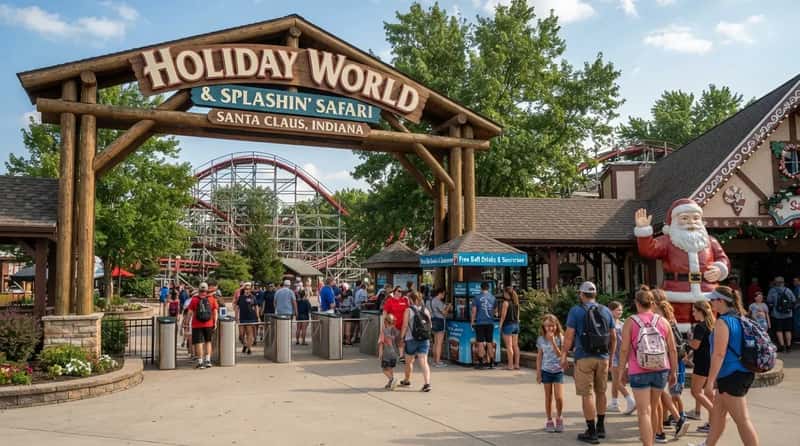
Santa Claus Land opened in 1946 in the tiny town of Santa Claus, Indiana, nearly a decade before Disneyland. Founder Louis Koch built it so kids could meet Santa, and it’s often billed as the world’s first themed amusement park. In the ’60s, children climbed onto Santa’s lap in the middle of summer, sweating in their shorts. It was a strange idea then, and it’s still a little strange now.
The park was renamed Holiday World in 1984, after it added Halloween and Fourth of July sections, and a water park followed later. Here’s what surprises first-timers: soft drinks and sunscreen are free for guests. Its wooden roller coasters regularly show up on enthusiasts’ best-of lists. The founding family’s descendants have long run the place, which is rare in an industry full of corporate owners. Next up is a mountaintop stop that covered barn roofs across the South with three words.
#8 – Rock City, Georgia: The Mountaintop Stop That Painted Barns Across the South
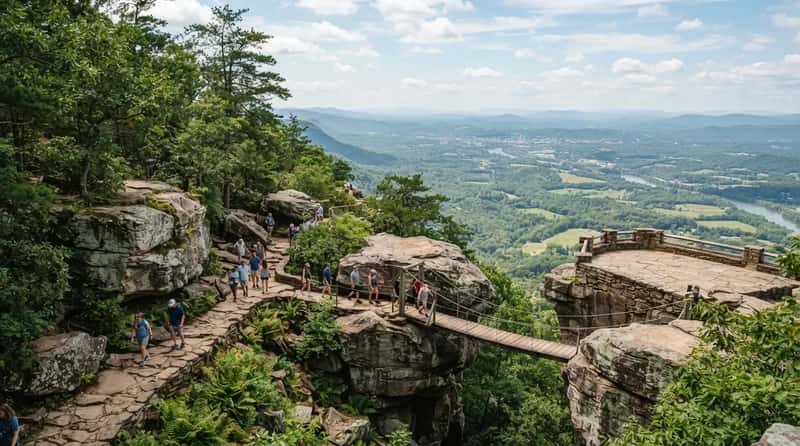
Rock City opened in 1932 on Lookout Mountain, Georgia, as a garden trail winding through giant rock formations. Its advertising plan was simple and secretly brilliant. Painters covered barn roofs and walls across the region with the words “See Rock City.” Kids in the back seat turned counting them into a game, and parents who’d never planned to stop suddenly had a lot of pleading to answer.
The attraction is still open and still sells the same rock-hopping adventure. Visitors squeeze through a narrow passage called Fat Man’s Squeeze and cross a swinging bridge. At Lover’s Leap, the park still bills the view as a glimpse of seven states, a claim visitors have argued about for decades. These days it also runs a holiday light show in winter, so the mountain stays busy long after the summer rush.
But the next stop was shaped like a tepee, and you could sleep inside it.
#7 – The Wigwam Motel, Arizona: The Route 66 Sleepover in a Concrete Tepee
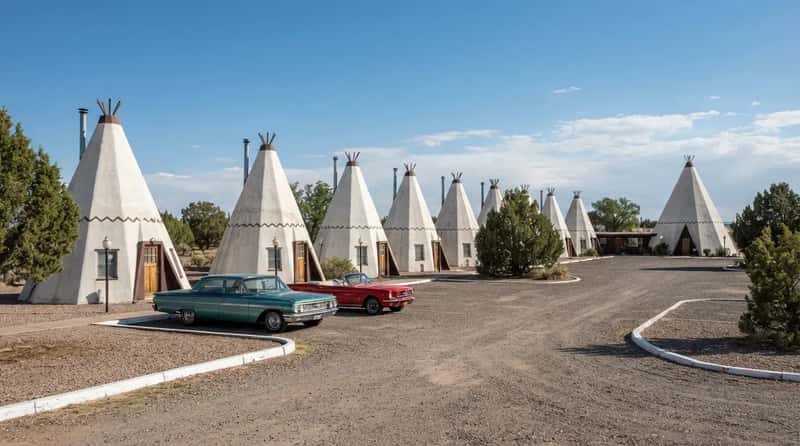
In Holbrook, Arizona, you can still spend the night in a concrete tepee. The Wigwam Motel opened in 1950 and became a Route 66 favorite for road-tripping families through the ’60s. Each room is a cone with the bed in the middle and a bathroom tucked in back. For a kid at the end of a long day in the car, it was basically a fort with a key.
Worth Knowing
- Each concrete tepee is about 28 feet high and 21 feet wide at the base.
- There are 15 of them, but no Room 13. The last unit is numbered 16.
- Only three Wigwam Villages survive: Cave City, Kentucky; Holbrook, Arizona; and Rialto, California.
- The tepee-shaped design was patented by Frank Redford in 1936.
Route 66 was officially decommissioned in 1985, after interstates took over its traffic. Holbrook was bypassed and the motel went dark for a while, but the Lewis family restored it and reopened it in 1988. It was part of a short-lived chain of “Wigwam Village” motels, and only a handful survive. Vintage cars parked out front have become part of the photo, and the property is on the National Register of Historic Places. Mostly, it looks exactly like the postcards, which is rarer than you’d think. The next stop, though, once got turned off like a faucet.
#6 – Niagara Falls: The Honeymoon Capital That Was Once Drained to Bare Rock
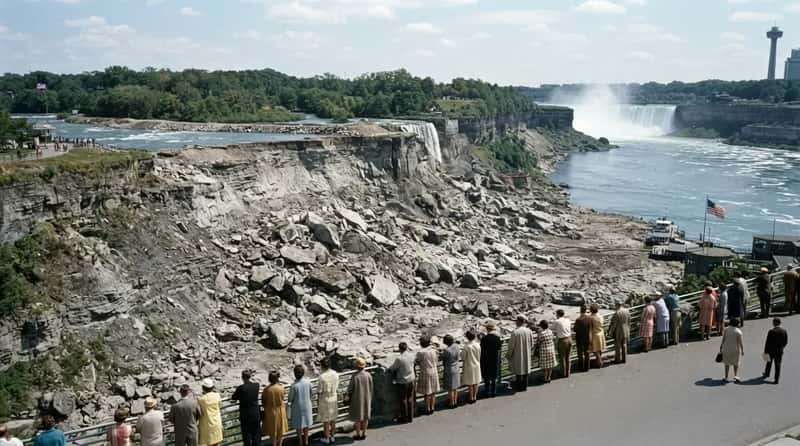
Niagara Falls was the classic honeymoon destination, and in the ’60s it was a family staple too. Here’s what most people don’t realize: in 1969, engineers actually shut off the American Falls. The U.S. Army Corps of Engineers diverted the river for several months to study the rock and the boulder pile at its base. Visitors stood at the railing staring at a cliff face where the water used to be.
The water’s back, and the experience has changed. Maid of the Mist introduced battery-electric boats in 2020. Cave of the Winds still puts guests on wooden decks beside Bridal Veil Falls, in the country’s oldest state park, which dates to 1885. Across the border, the Skylon Tower, opened in 1965, now looms over a neon strip. Plenty of travelers argue Clifton Hill is more tourist trap than attraction. Others say that’s exactly the fun.
But the next stop shows what happens when a resort bets everything on one idea.
#5 – Atlantic City: The Boardwalk Playground That Bet Everything on Casinos
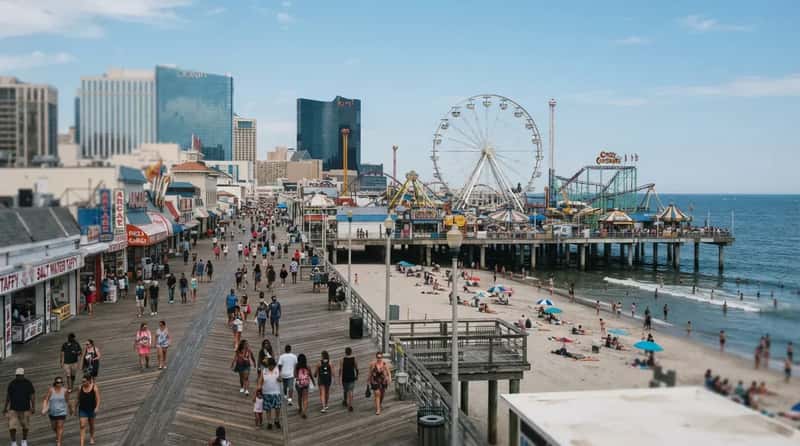
Atlantic City was the Jersey Shore’s glamour ticket. In 1964 it even hosted the Democratic National Convention. Families strolled the Boardwalk, bought salt water taffy and watched the famous diving horses plunge from a platform at Steel Pier into a tank of water. It was loud, sticky, salty and thrilling, exactly what a summer vacation was supposed to be.
Then the glamour faded as families found other places to go. New Jersey voters approved casino gambling in 1976, and the first casino, Resorts, opened in 1978. The bet worked for a while, then came the crash: four casinos closed in 2014 alone, including Revel, which had opened only two years earlier. Today the Boardwalk is still there, Steel Pier still runs rides, and the old Taj Mahal and Revel buildings have reopened as Hard Rock and Ocean casinos. Plenty of regulars argue the Boardwalk is the only real reason to go, and the casinos are just the neighbors.
The next park added its most famous ride only after its founder died.
#4 – Disneyland: The Park Where Walt’s Last Big Ride Opened After He Was Gone
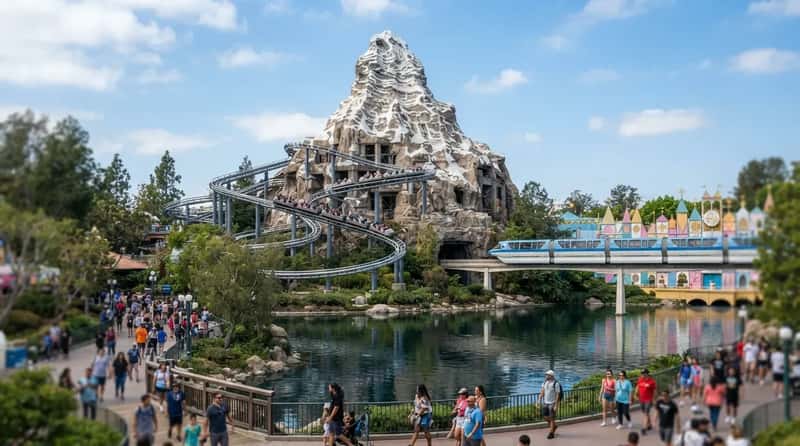
Disneyland opened in Anaheim in 1955, but the ’60s are when it became a family pilgrimage. The Matterhorn Bobsleds and the Monorail arrived in 1959. “it’s a small world” moved in from the 1964 New York World’s Fair in 1966. Then came Pirates of the Caribbean in March 1967, followed by the Haunted Mansion in 1969.
Why It Stands Out
- The Matterhorn, which opened June 14, 1959, is widely credited as the first tubular-steel roller coaster.
- The Enchanted Tiki Room, in 1963, was the first attraction to make extensive use of Audio-Animatronics.
- “it’s a small world” brought roughly 500 Audio-Animatronic dolls from the fair to Anaheim.
- The PeopleMover, which opened July 2, 1967, gave the world a term now used for automated transit. It closed in 1995.
The twist is that Walt Disney died in December 1966, about three months before Pirates opened. He never got to ride the finished version. Most of the classics from that era are still there, including the Matterhorn, small world, Pirates and the Haunted Mansion. The big difference is scale: the original park is now one of two, with California Adventure next door since 2001. The next stop was built to look like the future, and then the future moved on without it.
#3 – The 1964 World’s Fair, Queens: The Future That Mostly Got Torn Down
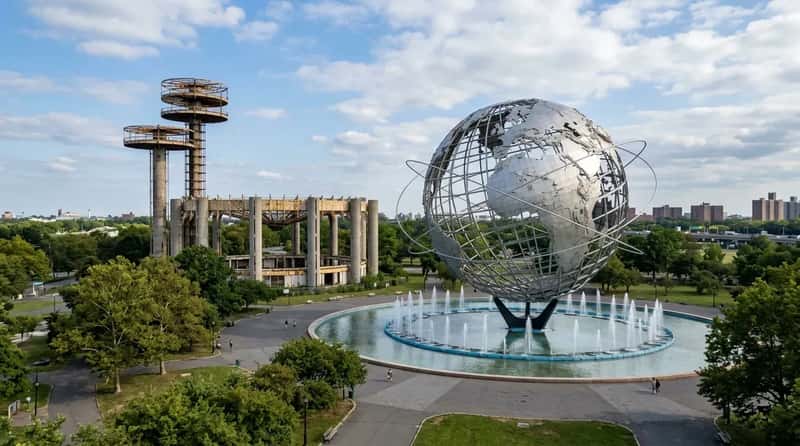
The 1964 New York World’s Fair covered hundreds of acres in Queens and packed in pavilions from dozens of nations, states and corporations. Families lined up for a peek at tomorrow. Yet the crowds fell well short of the 70 million visitors organizers had predicted, and the fair ended up recording about 51.6 million visits across two seasons.
Almost all of it is gone. The survivor is the Unisphere, a stainless steel globe 12 stories tall, which still stands in Flushing Meadows–Corona Park. It’s even a New York City designated landmark. The New York State Pavilion, once the fair’s showpiece, now stands weathered and mostly unused, though its towers have been spotted in movies like Men in Black. Near the globe, the Queens Museum still displays the Panorama of the City of New York, built for the 1964 fair.
But the next stop’s gardens survived in a place you’d never expect.
#2 – Cypress Gardens, Florida: The Water-Ski Capital That Now Lives Inside Legoland
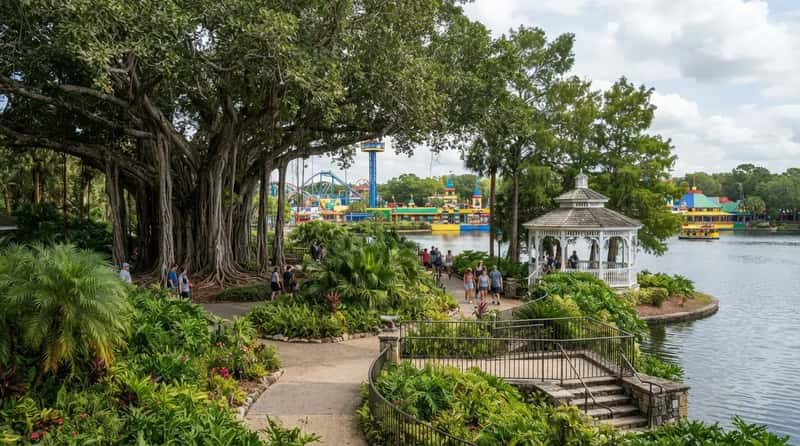
Cypress Gardens opened in Winter Haven on January 2, 1936, as a botanical garden planted by Dick Pope Sr. and his wife Julie. The press laughed at the idea of a tropical showcase in a marsh and nicknamed him the “Maharaja of Muck.” By the ’60s, it was one of the biggest attractions in Florida, known for its water ski shows, gardens and costumed Southern Belles. It was called the “Water Ski Capital of the World.”
The park closed in 2009 and was later bought by Merlin Entertainment. Legoland Florida opened on the site on October 15, 2011. A banyan tree planted as a seedling in a five-gallon bucket in 1939 is still standing. A gazebo that appeared in old postcards also remains, and water ski shows continue, now with a LEGO pirate theme. Somewhere between the brick-built animals and the roller coasters, the old Florida is still hiding in plain sight.
The last stop on this list is the one you can’t visit at all.
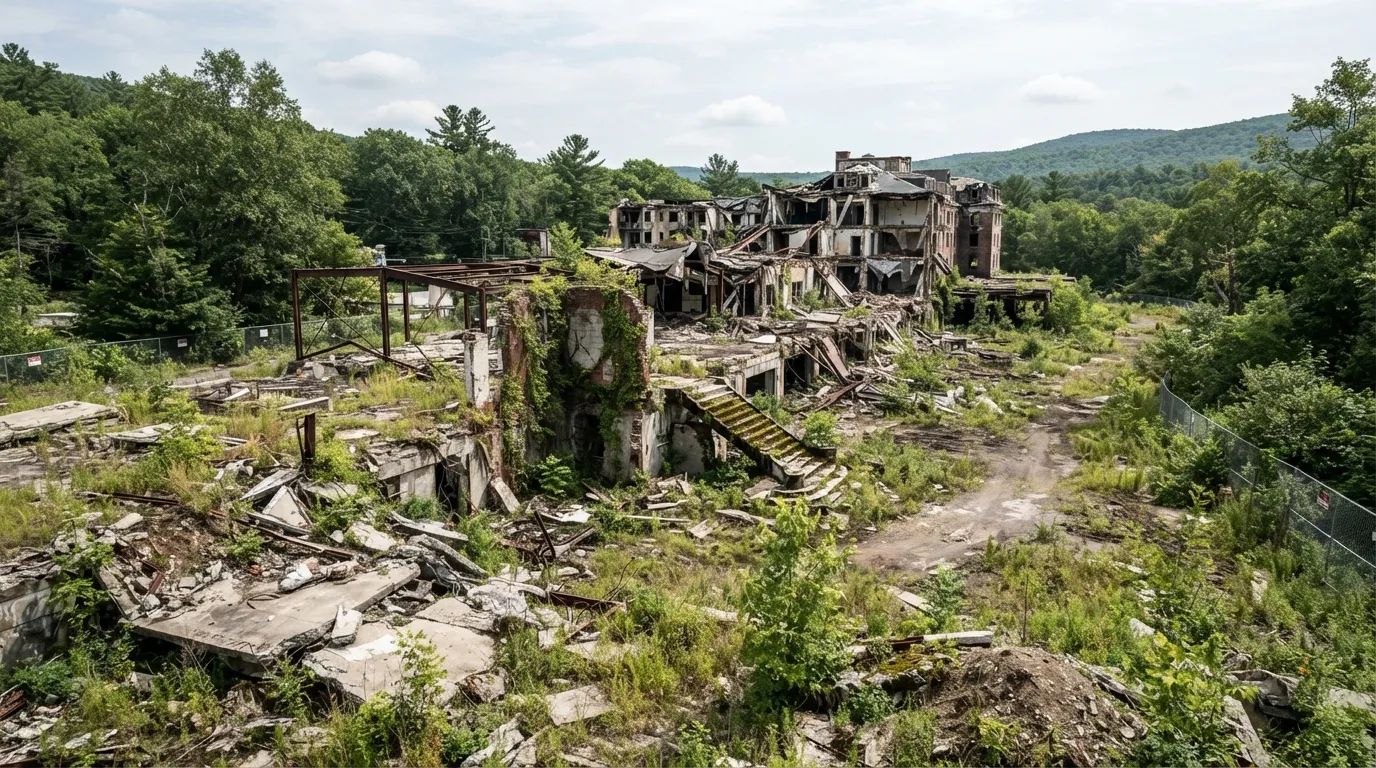
#1 – Grossinger’s, Catskills: The Borscht Belt Giant That Was Bulldozed in 2018
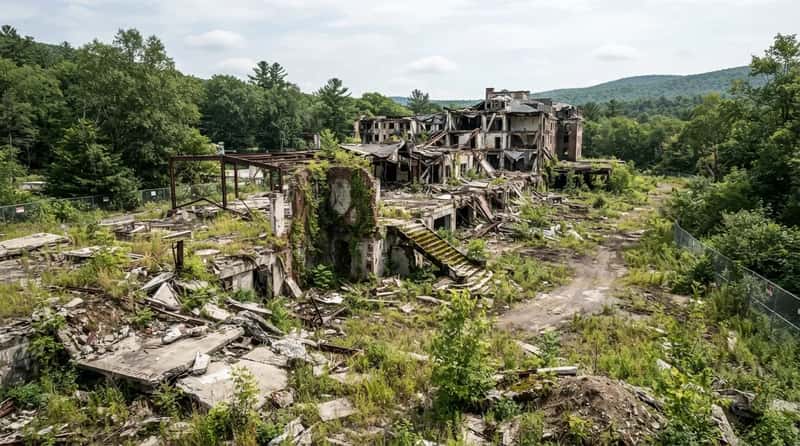
Grossinger’s was a kosher resort in Liberty, New York, and once the premier and one of the largest of the Borscht Belt resorts. It grew to over 35 buildings on about 1,000 acres, with its own airstrip and post office. Well over 100,000 people visited each year, and it’s been linked to the inspiration for Dirty Dancing. For many families, summer meant the Catskills, and the Catskills meant Grossinger’s.
Then air travel got cheap, and families could suddenly reach Florida, the Caribbean and Europe. Jennie Grossinger died in 1972, and the resort closed in 1986. After sitting abandoned for decades, demolition began in 2018. Today most of what once stood there is gone, and the site isn’t open to visitors. A resort that once felt as permanent as the mountains it sat in now exists mostly in old photos and family stories.
Put these 11 side by side and a pattern shows up. The places that survived gave families a ritual they could repeat, like free ice water, a boardwalk stroll or a banyan tree to stand under. The ones that vanished lost that ritual to cheaper flights and changing habits.
Somewhere in a shoebox, there’s probably a faded photo from at least one of them. Which one was yours?