Grand Theft Auto VI went on sale today, November 19, 2026, and the Vice City on your screen is stitched together from real Miami towers, hotels and bridges. You can stand in front of many of them for little or no money, which turns a video game into a surprisingly good travel plan.
Here is the twist: the game sells neon and midnight, but the buildings it copied were made to be seen in sunlight. Even Wynwood Walls sells tickets and is generally open only until about 6:30 in the evening.1
The place the game uses for its postcard image costs nothing to walk, which is why it comes last. The countdown begins with a curved condo tower well north of the beach strip.
#12 – The Wave-Shaped Tower in Sunny Isles Beach
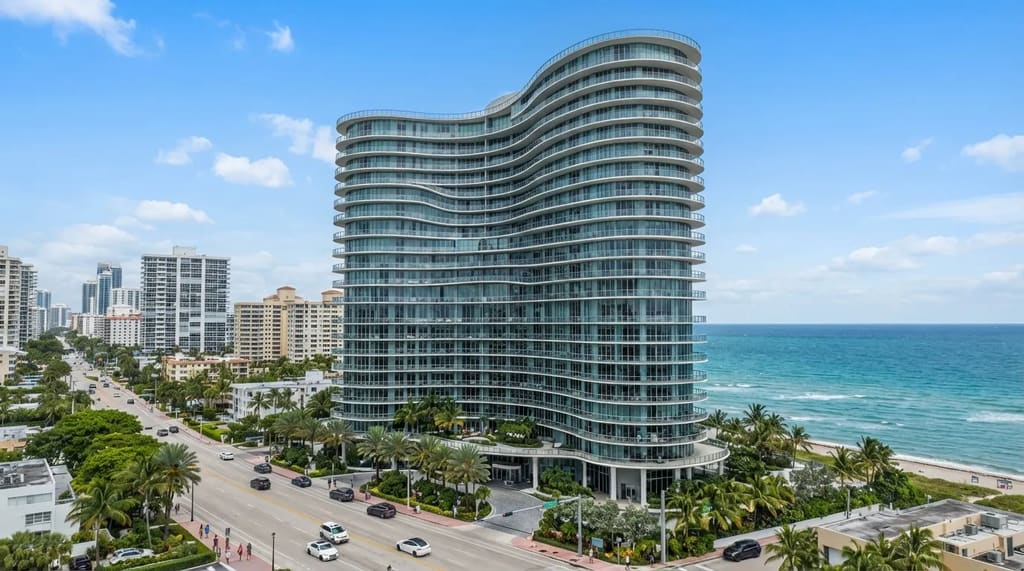
The wave-shaped Jade Ocean condominium at 17121 Collins Avenue in Sunny Isles Beach gets a faithful recreation in Vice City’s skyline, according to a Miami visitor guide that matches the game’s buildings to street addresses. It is the northernmost match on this list, sitting beyond the stretch of Miami Beach that visitors usually cover on foot.
Sunny Isles Beach is a separate small city on the barrier island north of Miami Beach, so you will need a car or a rideshare to reach it. Jade Ocean is a private residential building, which means the exterior is all a visitor gets.
Daylight is the sensible hour because the curved outline is the whole attraction, and it reads best against open sky. Ten minutes from the sidewalk or the public beach is plenty, and you may spend longer in the car than looking.
Fast Facts
- Address: 17121 Collins Avenue, Sunny Isles Beach
- Access: Exterior views only, since it is a private residence
- Getting there: Car or rideshare from Miami Beach
- Best light: Daytime, against open sky
- Time needed: About ten minutes
Honestly, this is not worth a trip on its own. But if you are already cruising up Collins Avenue, the same road runs south past a pair of towers that reporters matched to the trailer by street number.
#11 – The Collins Avenue Towers at 4775 and 4779
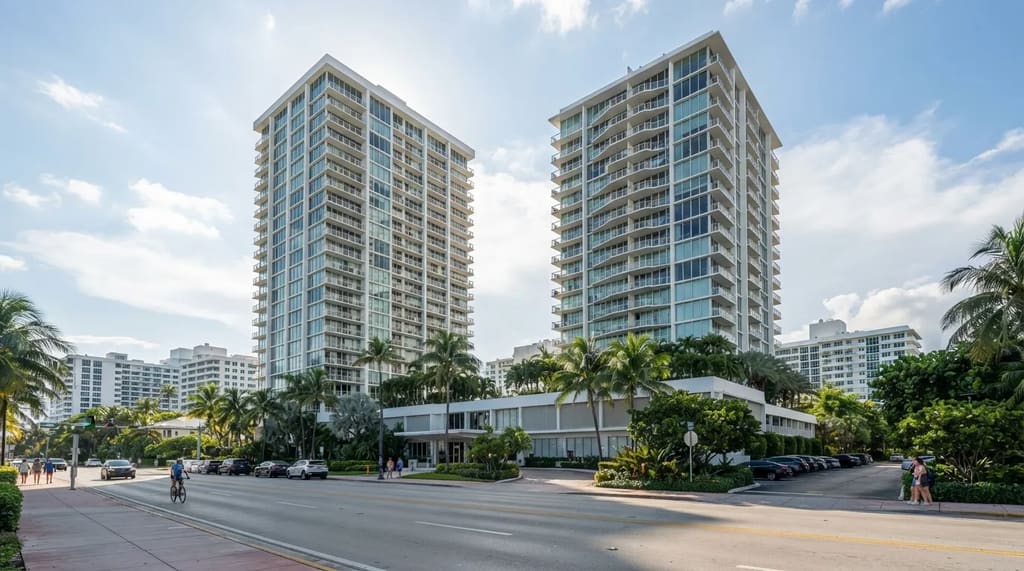
Miami New Times matched two towers at 4775 and 4779 Collins Avenue in Miami Beach to a clone that now appears in GTA 6.2 Collins is the barrier island’s main north-south road, lined with hotels and condominiums, so these are buildings you take in from the car or the sidewalk.
That shapes the plan, because there is no ticket booth or lobby tour behind this match. The pleasure is spotting a silhouette you saw on screen, and that takes about as long as a red light.
Late morning is the practical hour for the drive, since the facades are fully lit and the road is calmer than it will be at the evening rush. If you walk any part of Collins in Florida’s heat, carry water and plan a shaded break, because a few blocks feel longer than they look on a map.
A short hop west across a causeway reaches an island where the match is a name more than a building.
#10 – Star Island, Reached Only by Water
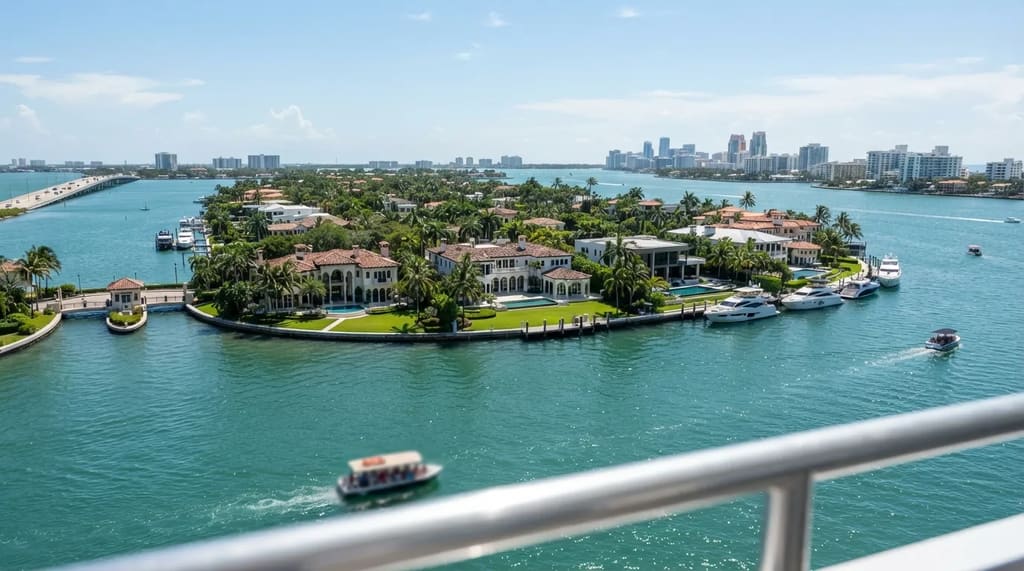
The island called Starfish Island in the Vice City games is based on Star Island, one of the most expensive residential areas in the country. Coverage of the second trailer suggested that the whole island may be present in GTA 6, and fan maps list it among Vice City’s places.
Star Island is a guard-gated residential island, so you cannot stroll it the way you stroll Ocean Drive. The realistic vantage point is a boat on Biscayne Bay in daylight, when you can make out the houses and the water around them.
In my view, this is the stop to skip unless a bay cruise is already on your schedule. Paying extra to stare at gates and hedges is a poor trade next to a free drive along Collins Avenue.
The Venetian Causeway, a public road across a chain of smaller islands, offers an easier look at the same water.
#9 – The Venetian Causeway and 1000 Venetian Way
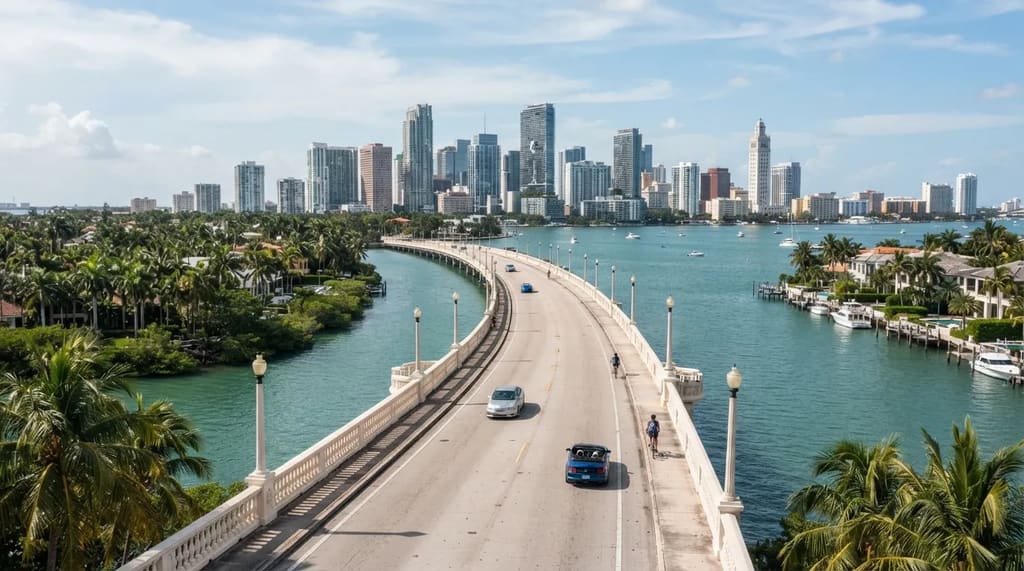
Miami New Times describes 1000 Venetian Way and the Venetian Causeway as flawlessly re-created in Vice City.2 The causeway is one of the multi-island bridges linking downtown Miami’s skyline to Miami Beach across Biscayne Bay, along with the MacArthur Causeway.3
Unlike Star Island, this one you can actually use, because the road is public and crosses small islands with water on both sides. The reason to choose it over the faster MacArthur Causeway is the view back toward the downtown skyline, and that view needs daylight.
The islands themselves are residential, so treat the crossing as scenery rather than a place to stop. Stopping on a causeway road is rarely allowed or safe, so pick a destination at either end instead.
At the southern tip of the beach, the match changes from water to a hotel facade.
#8 – South of Fifth and the Flamingo Point Corner
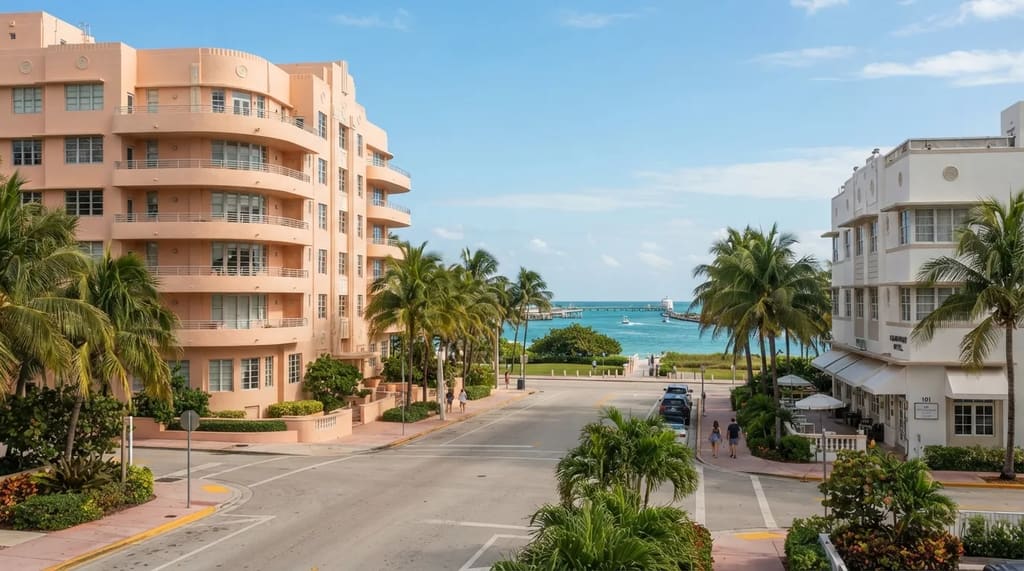
South of Fifth is the quiet southern tip of Miami Beach, and Miami New Times places the facade of a four-diamond hotel at 101 Ocean Drive, in the South of Fifth neighborhood, in the trailer. The same corner holds Flamingo Point, whose distinctive architecture shows up in both Vice City and Miami Beach.2
Because it sits at the bottom of Ocean Drive, South of Fifth is a natural place to begin a walking day. South Pointe Park, at the very end of the beach, gives you a calm waterside walk with a view of the ship channel.
The neighborhood is calmer than the blocks to the north, which helps if crowds tire you quickly. Start early, because Miami sun is strongest around midday and the open streets here offer little shade.
Worth Knowing
- The match: A hotel facade at 101 Ocean Drive, plus the Flamingo Point corner
- The setting: The quiet southern tip of Miami Beach
- The bonus: South Pointe Park and its ship channel view
- The catch: Little shade, so go early
Think of this stop as the quiet opening scene of a beach day, not the main event. The big towers the game borrows most heavily are waiting across the bay.
#7 – Downtown Miami’s Bayfront and the Kaseya Center
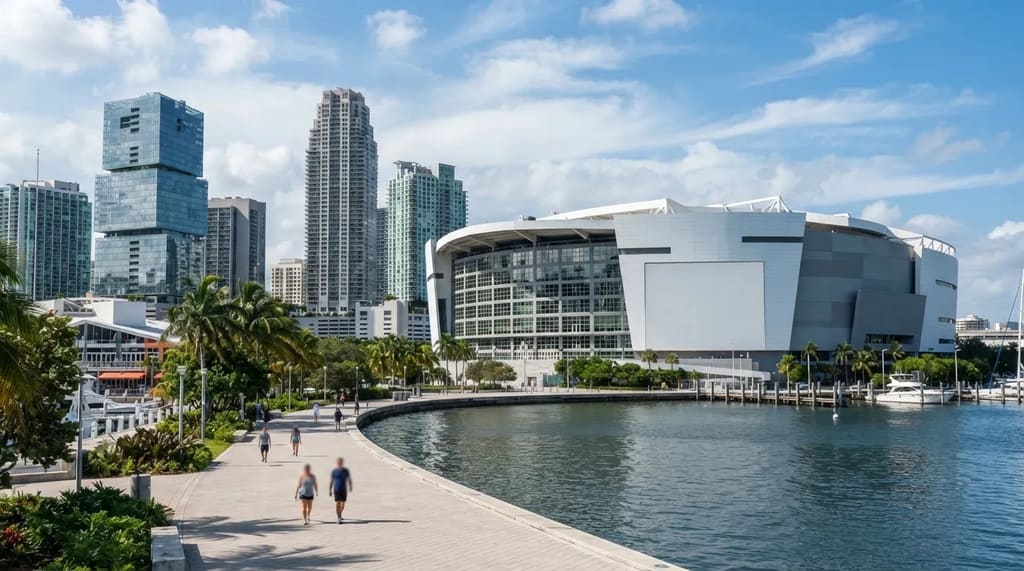
Downtown Miami lends Vice City a big share of its skyline. Ten Museum Park and the Grayson Hotel bring the downtown skyline into the game, and One Biscayne Tower becomes a tower called Megamundo.2
The Kaseya Center, home of the Miami Heat, stands in as Sahara Arena.4 Because it is an arena, what you can do inside depends on the event calendar, while the waterfront outside is open for walking in daylight.
Rockstar has put real money into the Miami tie-in. A themed Heat game called A Night in Vice City was scheduled for November 18 on ESPN, so expect game branding around the arena for a while.
South across the Miami River, the buildings the game copied are offices and apartments, and one pair has a circular opening through its middle.
#6 – The Twin Towers at 500 Brickell
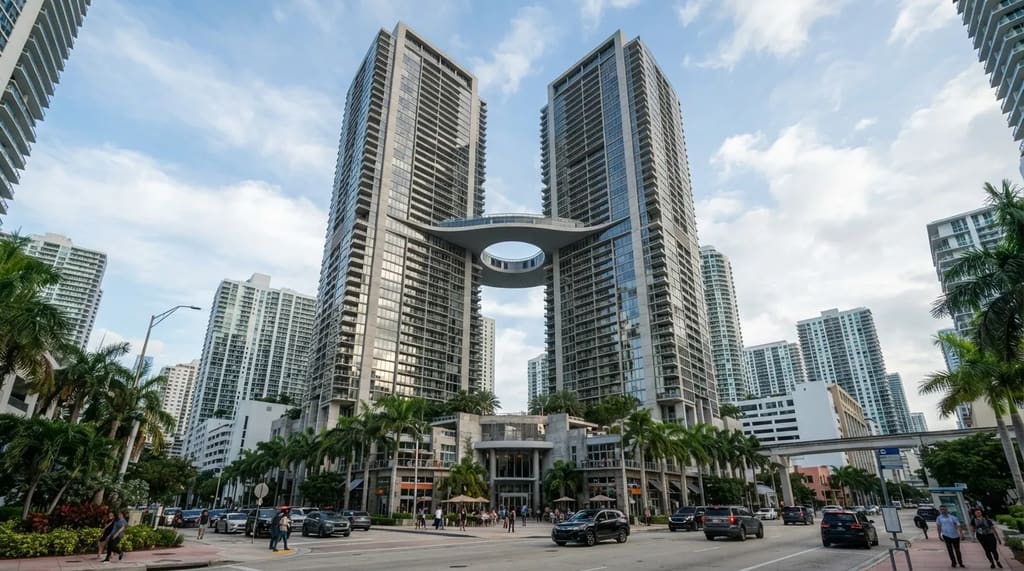
Brickell is Miami’s financial district, and one guide maps it to Downtown Vice City in the game. The twin towers at 500 Brickell Avenue have a circular cutout between them that is hard to miss in the game and in real life.
Brickell on the River is a second match, since its design is replicated in GTA 6.5 Two matches in one district make this a better use of time than the single-address stops earlier in the list.
Offices are busiest on weekdays, so a weekday morning shows you the district at work, with sidewalks full and cafés open. Weekends are quieter, and a quiet morning is better if you want to stand still and look up.
At a Glance
- Look for: The circular cutout between the twin towers at 500 Brickell Avenue
- Second match: Brickell on the River
- Weekdays: Busy sidewalks and open cafés
- Weekends: Quieter, better for a long look up
- Cost and time: Free, about twenty minutes
It pairs naturally with the Bayfront, which is a short ride away, so you can cover both in one outing without a long walk. The whole stop costs nothing and takes about twenty minutes, which leaves room for something with more street life next.
#5 – The Miami Design District’s Shopping Streets
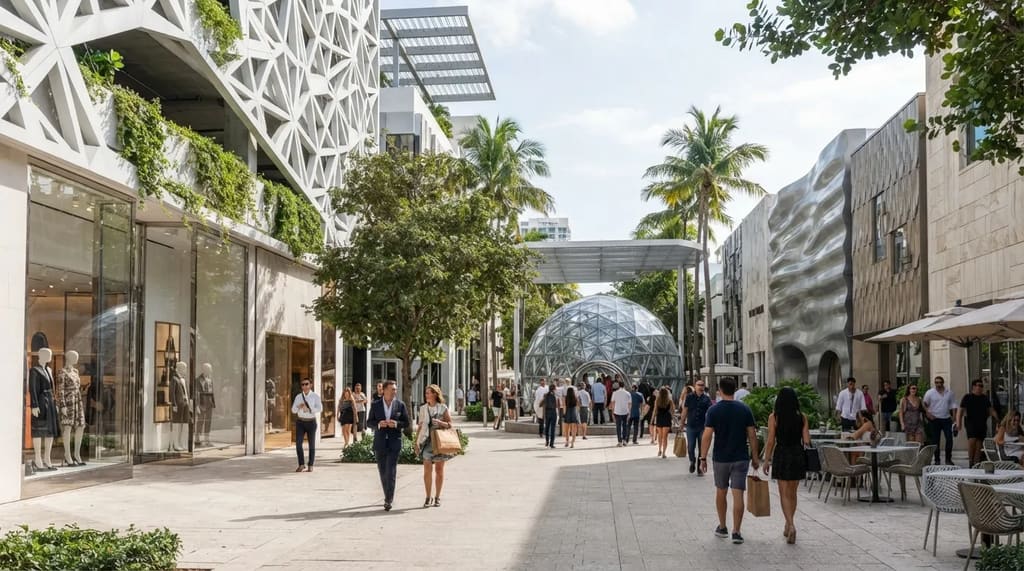
A screenshot from the game’s Ultimate Edition materials shows a version of the Miami Design District, which a Miami guide reads as a sign that Vice City’s arts corridor draws on this neighborhood as well as Wynwood. It is a lighter connection than most on this list.
The district is mostly luxury shops, design showrooms and public art, arranged along streets built for walking. The art and architecture are the draw, and both are visible in daylight without a ticket.
It sits just north of Wynwood and beside Little Haiti, so it works best as a short add-on rather than a destination. If you have only one arts stop in you, Wynwood offers more variety at street level.
Continuing north, a neighborhood that fan reference sites list in the game gets far less attention than these polished shopping streets.
#4 – Little Haiti Along Northeast Second Avenue
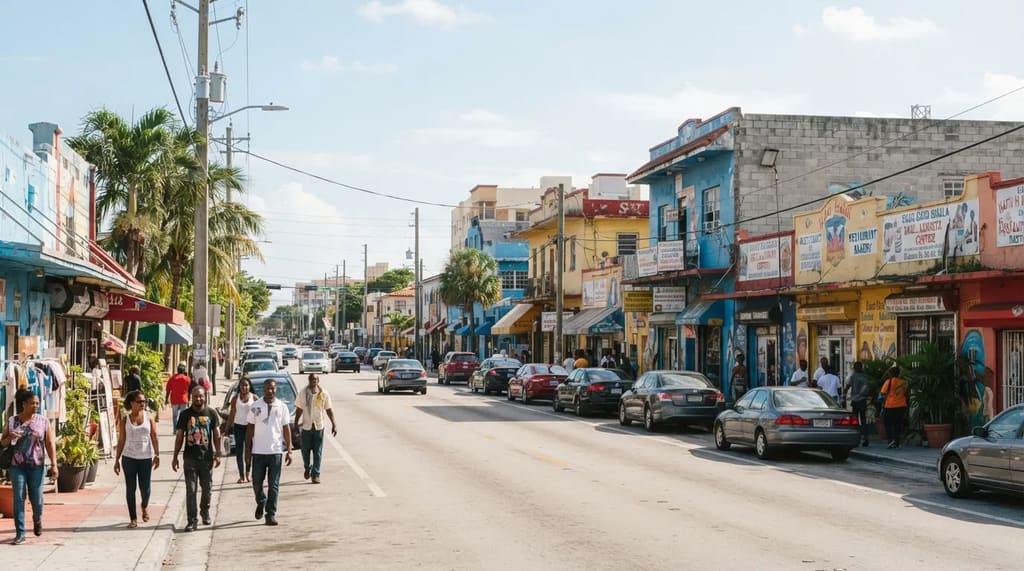
Fan reference sites list Little Haiti among Vice City’s districts, and one map guide says Little Haiti is represented directly. In the real city, it is the center of Miami’s Haitian community, with shops, restaurants and cultural spaces strung along Northeast Second Avenue.
Of the matches that rest on trailer frames and fan lists, this is the one I would send you to for its own sake. Its character comes from the people and businesses, not from a building the game copied.
Small shops and cultural venues keep their own schedules, so check hours before you go and plan for daytime, when more of them are open. Allow time to walk and eat as well as look, because a quick photo stop misses the point of the place.
Why It Stands Out
- It is the heart of Miami’s Haitian community
- Shops, restaurants and cultural spaces line Northeast Second Avenue
- The appeal is people and businesses, not a copied building
- Daytime visits catch more venues open
A few minutes south, the walls get louder and the color gets much bigger.
#3 – Wynwood, Where the Game Copies the Murals
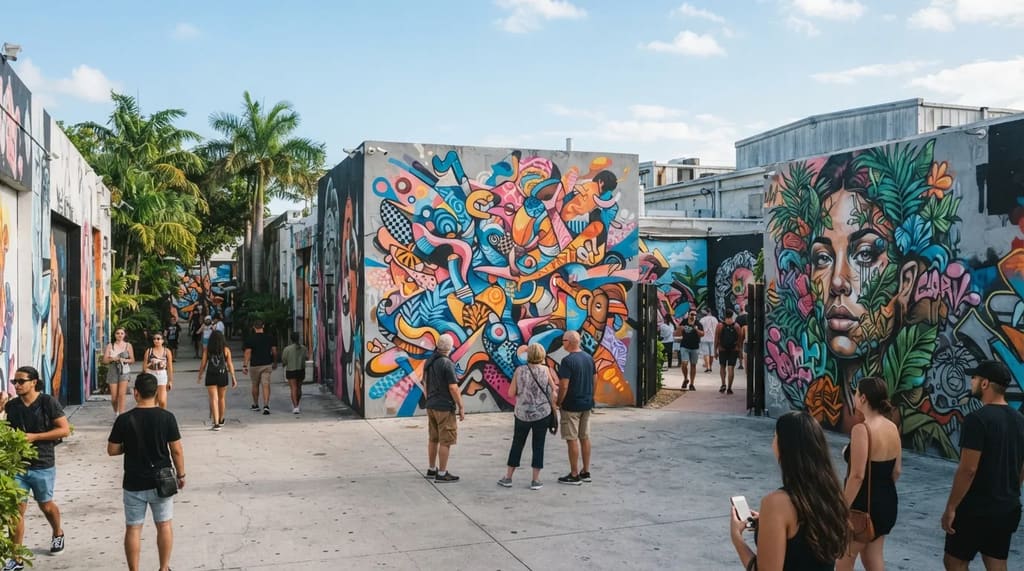
The game’s Stockyard district corresponds to Wynwood, where the trailer features murals resembling real tags by artists from Miami’s street art scene. The ticketed Wynwood Walls, at 2516 NW Second Avenue, form the center of the neighborhood.2
Admission is $12 for adults and $10 for seniors 65 and older, and listings6 generally give hours of about 10:30 a.m. to 6:30 p.m., though they shift with season and events. The neighborhood’s restaurants and bars stay open well into the evening, particularly on Friday and Saturday nights, which is why daylight suits the Walls and the murals on nearby streets.
The Walls are worth the $12 if you want to see the artists’ work up close, but the murals on the surrounding streets are free to look at. Compared with the free views from Collins Avenue and Brickell, this is the first stop where the main attraction asks you to pay at the gate.
Related Stories From Travelbinger

South and west of Wynwood, the game’s description reaches for coffee and pastries, and that points to a different kind of stop.
#2 – Calle Ocho in Little Havana
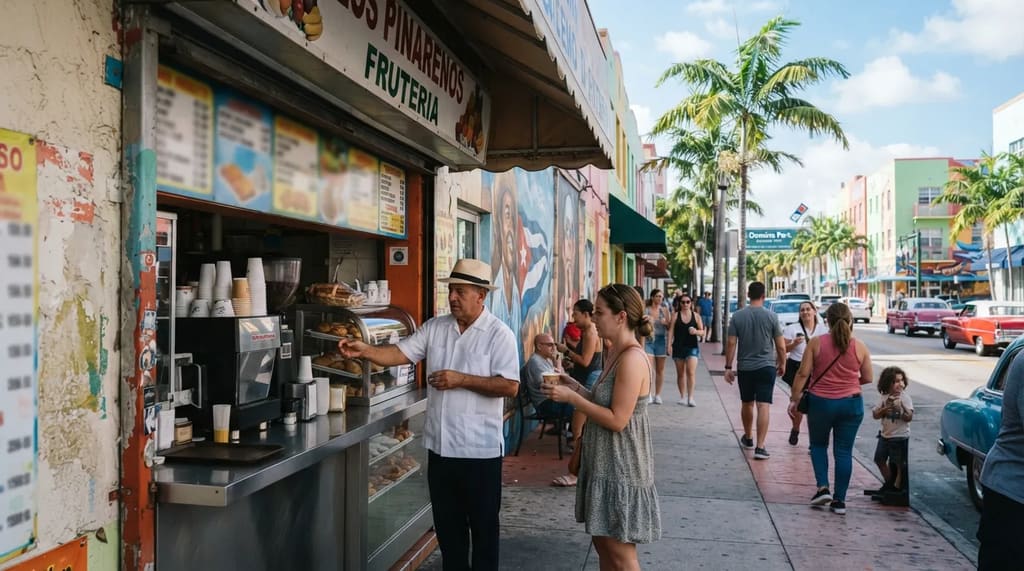
Rockstar’s site names Little Cuba, and Little Cuba stands in for Little Havana. Rockstar’s own description mentions the panaderías of Little Cuba, so the neighborhood’s bakeries are part of the game’s official picture.7
Little Havana’s main street is Calle Ocho, which is Southwest Eighth Street, and walk-up coffee windows called ventanitas are the neighborhood’s signature. Cuban bakeries and coffee counters do much of their business in the morning, so an early start gets you the full experience.
Compared with Wynwood’s $12 ticket, this stop costs only what you spend on coffee and pastries. In my view, it delivers more of what the game’s description promises than any other stop in the middle of this list.
The other official name on that short list belongs to the strip whose pastel hotels open the trailer.
#1 – Ocean Drive and Lummus Park in South Beach
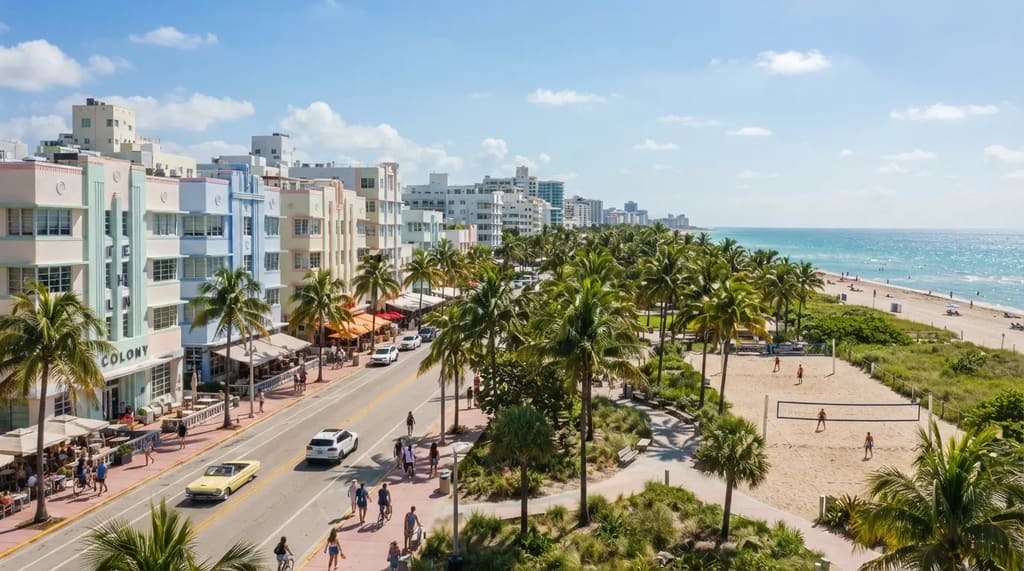
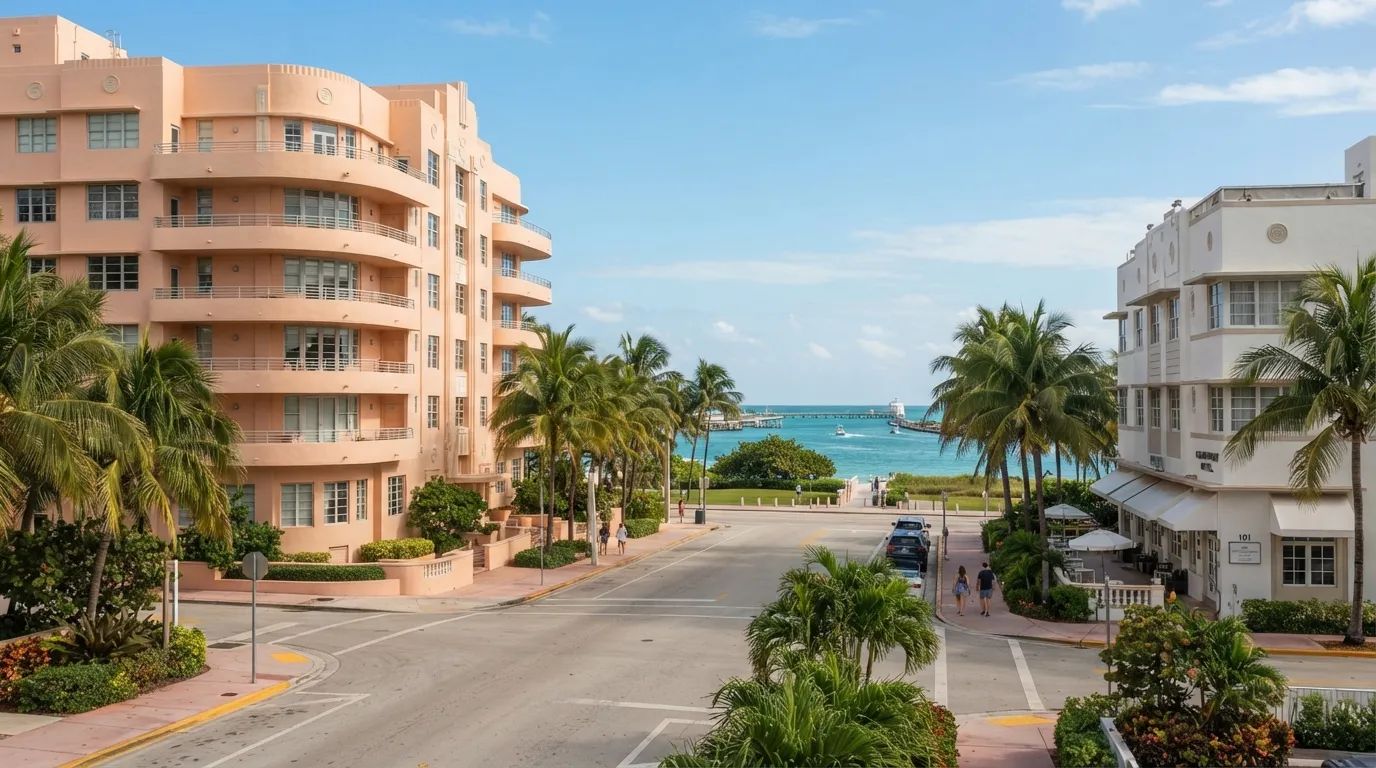
Rockstar’s official Vice City page names Ocean Beach, and Ocean Beach mirrors South Beach and Ocean Drive.4 The trailer’s opening shots show a row of 1930s Art Deco hotels, neon signs and palm-lined beach paths along Ocean Drive and Lummus Park.3
This is the stop the game sells at night, yet the strip’s real color comes from pastel paint, and paint looks best in daylight. Lummus Park and the sidewalk cost nothing, so you can see the match the game cares about most without spending a dollar.
Fan reference sites connect the game’s neon Ocean View Hotel to Ocean Drive’s art deco hotels, so you can look for the same rooflines and signs on the real buildings. Each hotel along the strip has a different color and shape, so a slow walk from south to north takes in all of them.
Compare that with the other stops. Sunny Isles needs a car, Wynwood needs a ticket and Star Island needs a boat, while this one needs only comfortable shoes.
Let the Daylight Pick Your Route
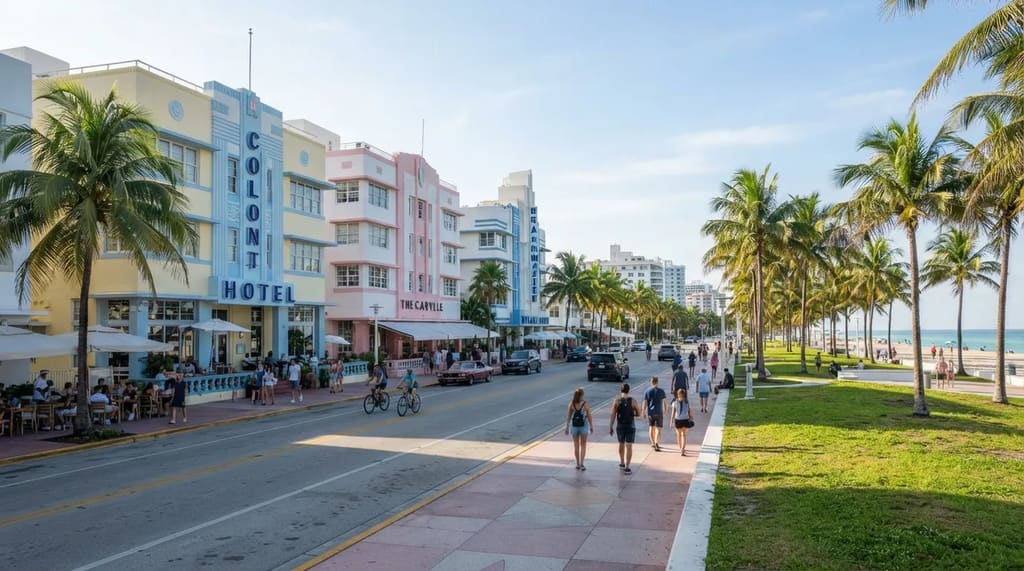
The game sells a city after dark, but the places it copied were built to be looked at in sunlight, from the sidewalk, for little or no money. A morning on Ocean Drive, a coffee on Calle Ocho and an hour among the murals costs little more than a $12 ticket.
Treat the list as a set of reasons to walk Miami at a sensible hour, then save the neon for the screen. If you have walked Ocean Drive or Calle Ocho before, what time of day did you go, and what stood out in the light?
- Wynwood Walls Guide 2026: https://www.luxuryrentalsmiamibeach.com/a-guide-to-wynwood-walls-and-where-to-stay-nearby
- Miami New Times Landmarks Map: https://www.miaminewtimes.com/arts-culture/interactive-map-20-miami-landmarks-in-gta-6-and-where-to-find-them-22206001/
- TheTravel GTA VI Locations: https://www.thetravel.com/gta-vi-locations-you-can-visit-in-real-life/
- Forbes Vice City Real Miami: https://www.forbes.com/sites/brianmazique/2026/10/27/gta-6s-vice-city-is-packed-with-real-miami—heres-every-spot-so-far/
- The Miami Guide GTA 6: https://themiamiguide.com/gta-6-miami/
- Explore Wynwood Walls: https://www.miamiandbeaches.com/things-to-do/art-and-culture/explore-the-wynwood-walls-in-miami
- Vice City Named Areas: https://www.gta6map.net/wiki/gta-6/locations/vice-city