Most people picture M-22 as a summer-weekend road, packed with beach towels, bumper stickers, and crowded dune parking lots. Yet along its roughly 116 miles between Manistee and Traverse City, there is a slower version of the drive that road trippers over 65 keep stumbling into.
These 12 towns are the proof, and a few of them barely register on a map. One has a lighthouse that has watched the water since 1858, one has beach stones made from iron-furnace leftovers, and the final stop may be the one you remember longest.
1. Arcadia: The Bluff-Top Village That Makes M-22 Feel Like a Secret
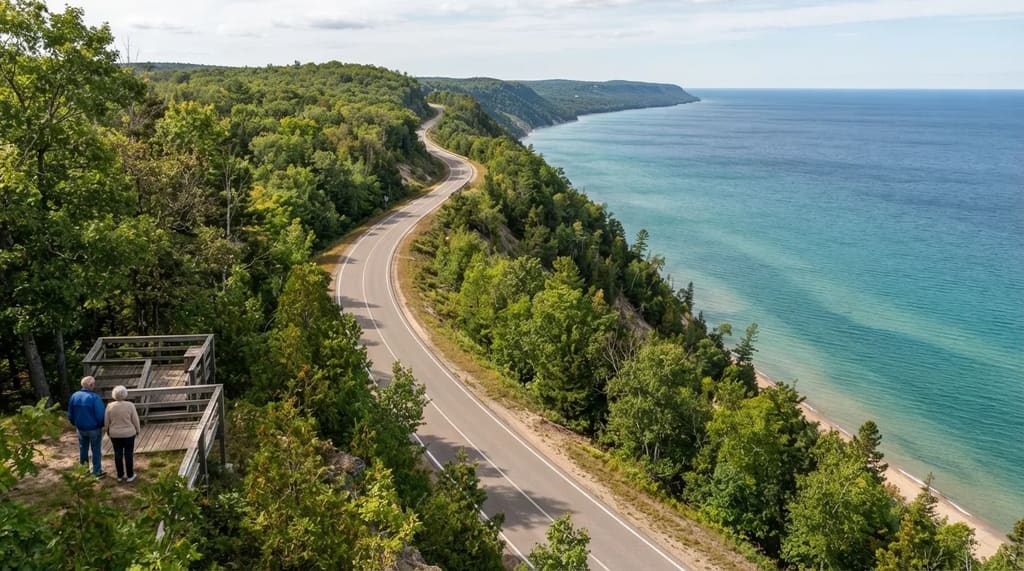
Arcadia is small enough to miss, which is exactly why it opens this list. The village sits on the southern stretch of M-22, where the road begins climbing above Lake Michigan as if it has something to show you.
North of town, wooded bluffs drop away to open water, and the lake looks bigger than any photo prepared you for. Arcadia Bluffs Golf Club, which opened in 1999, built its reputation on these very views, and you don’t need a tee time to enjoy the setting.
On a clear afternoon, the water shifts from deep navy to a turquoise that surprises first-timers. The curves are gentle enough to enjoy without white-knuckling the wheel.
Nearby, the Arcadia Dunes: C.S. Mott Nature Preserve, protected by the Grand Traverse Regional Land Conservancy, offers trails through dune and forest country. Pick a short loop, bring a thermos, and let the lake do the talking.
Late September is a lovely time for this stretch, when summer traffic thins and the maples start to blush. Even in July, the road here feels calmer than the busier towns farther north.
Treat Arcadia as the warm-up. The next stop has a lighthouse that has become the face of the whole drive.
2. Frankfort: The Pier, the Sunsets, and the Lighthouse Everyone Photographs
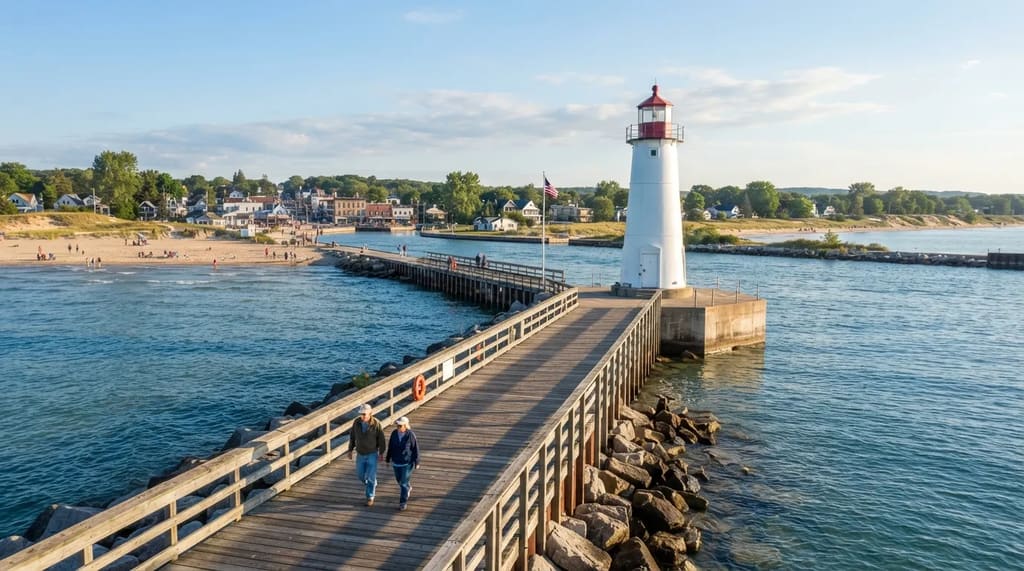
Frankfort delivers the postcard moment early. A lighthouse stands at the end of a long pier, with beach sand in front of it and a friendly small-town main street just behind.
Walk out along the pier on a calm morning and you’ll see why photographers love this place. On rougher days, waves slam the breakwater and send spray over the rocks, a show worth watching from a bench.
A short drive north on M-22, Point Betsie Lighthouse has stood on the shore since 1858.1 The white tower and attached keeper’s house sit right on the dunes, so close to the water that winter storms coat the shoreline in ice.
At a Glance
- Best for: a pier stroll, lighthouse photos, and an easy lunch
- Point Betsie Lighthouse: standing on the shore since 1858
- Downtown: compact, so you can see the center without rushing
- Pack: a jacket, since the pier is exposed to the wind
Back in town, downtown is compact and easy to stroll, with spots for ice cream, coffee, and a long lunch. You can see the whole center without feeling rushed.
If the wind is up, bring a jacket even in summer, because the pier is exposed. The reward is lake air that clears your head better than any spa.
Frankfort alone could justify the drive, yet the road keeps giving. Next is a town with two kinds of water in one stop.
3. Onekama: The Quiet Resort Town Sitting Between Two Lakes
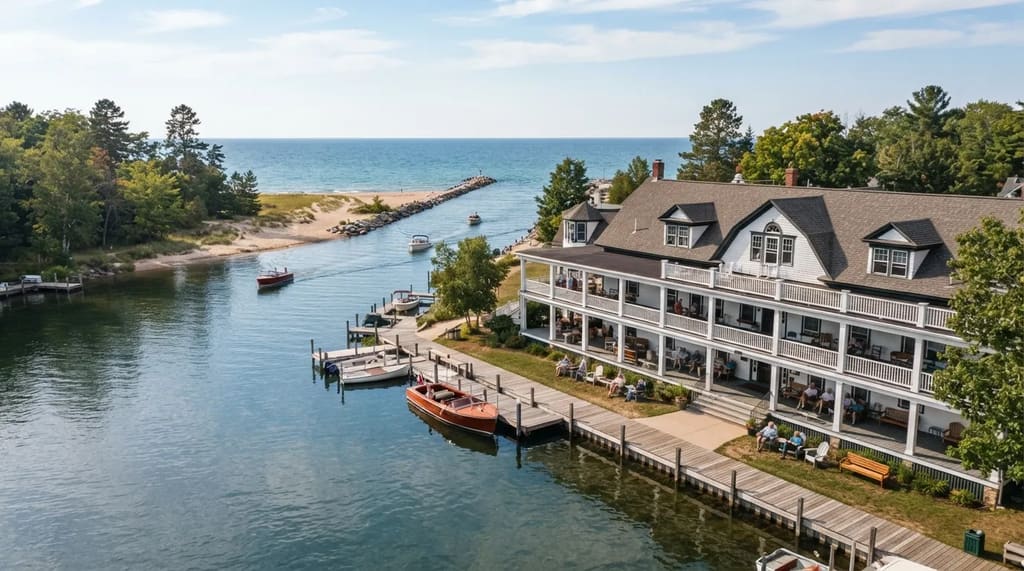
Onekama sits on a narrow strip of land between Portage Lake and Lake Michigan, so you get two kinds of water for the price of one stop. It feels like a resort town from a slower decade, and it earns that feeling honestly.
The Portage Point Inn, built in 1903, still welcomes guests beside the channel that links the two waters. Its long porches and old-fashioned lodge style make it a natural place to pause with a view.
Boats slip through the channel while gulls work the shoreline, and the pace of everything drops a notch. It’s the kind of place where an hour disappears into a bench and a good book.
Portage Lake is calm and sheltered, so the scene is gentler than the open-lake pounding you find farther north. Anyone who likes watching water more than wrestling it will feel at home.
Onekama proves the M-22 experience isn’t only about big drama. Next comes a town where lumber money left behind a showy, beautiful downtown.
4. Manistee: The Victorian Port Where M-22 Begins
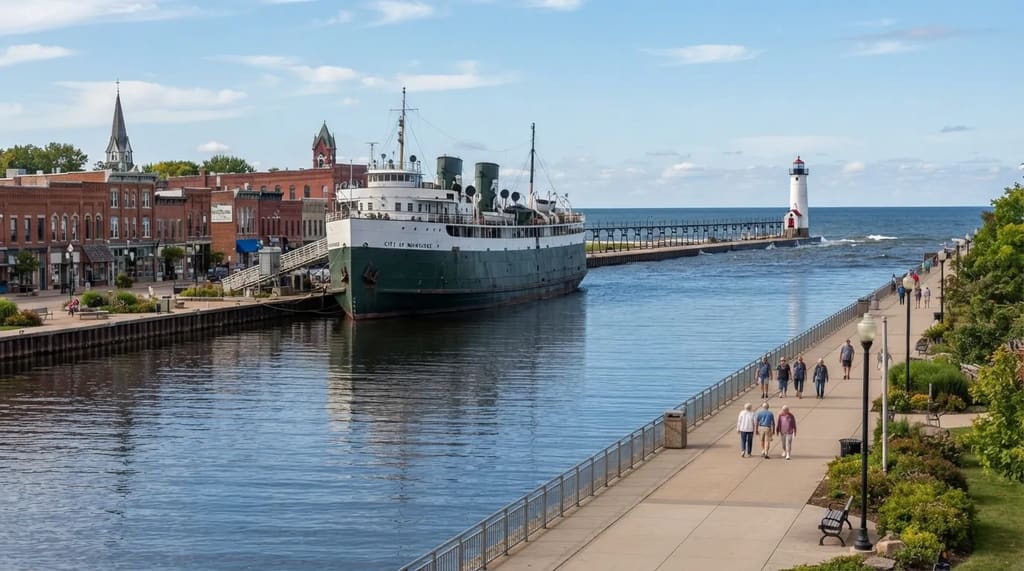
Manistee is where M-22 starts, and the town greets you with a surprise. Its brick downtown looks like a movie set for the lumber-boom 1800s.
Those Victorian storefronts and grand civic buildings date to the era when Manistee was a major lumber town. The Ramsdell Theatre, which opened in 1903, still anchors downtown as a working performance venue.
Down at the water, the Manistee Riverwalk follows the channel toward Lake Michigan and the pierhead lighthouse. The path is mostly flat, which makes it one of the easiest long strolls on the whole route.
Docked here is the SS City of Milwaukee, a 1931 railroad car ferry that is now a National Historic Landmark and museum.2 Seeing a ship that once hauled loaded train cars across Lake Michigan is a vivid reminder of how busy these waters used to be.
Plan a long lunch downtown and walk it off along the water. Manistee offers plenty of benches and flat pavement, so the day never turns into an endurance test.
Manistee proves that Lake Michigan towns have layers. The next one is tiny, but its harbor view is the real prize.
5. Elberta: The Underrated Harbor Town Across the Bay From Frankfort
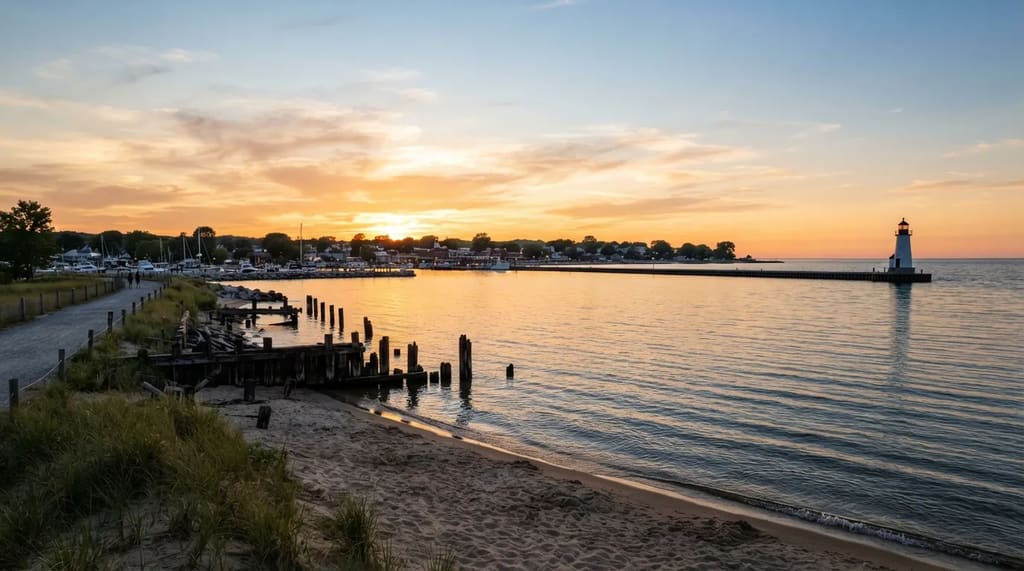
Elberta is Frankfort’s little sibling across the water, and it knows how to be underrated. Where Frankfort has the busy main street, Elberta has the quiet shoreline.
Betsie Bay opens here toward Lake Michigan, and the harbor view at sunset is hard to beat. Elberta Beach is a public stretch of sand that’s easy to reach, so you can settle in without a long hike.
The town was once a railroad ferry port, and that working-harbor past still gives the place a lived-in character. Ann Arbor Railroad car ferries once carried freight cars across the lake from this area.
The Betsie Valley Trail, a former rail line, passes through the area and offers gentle walking or cycling away from traffic. Even a short out-and-back stretch gives you a taste of Michigan woods and water.
Elberta has no big attraction demanding a checklist. It simply gives you room to breathe before the road swings toward wine country.
6. Suttons Bay: The Wine-Country Waterfront With a Walkable Downtown
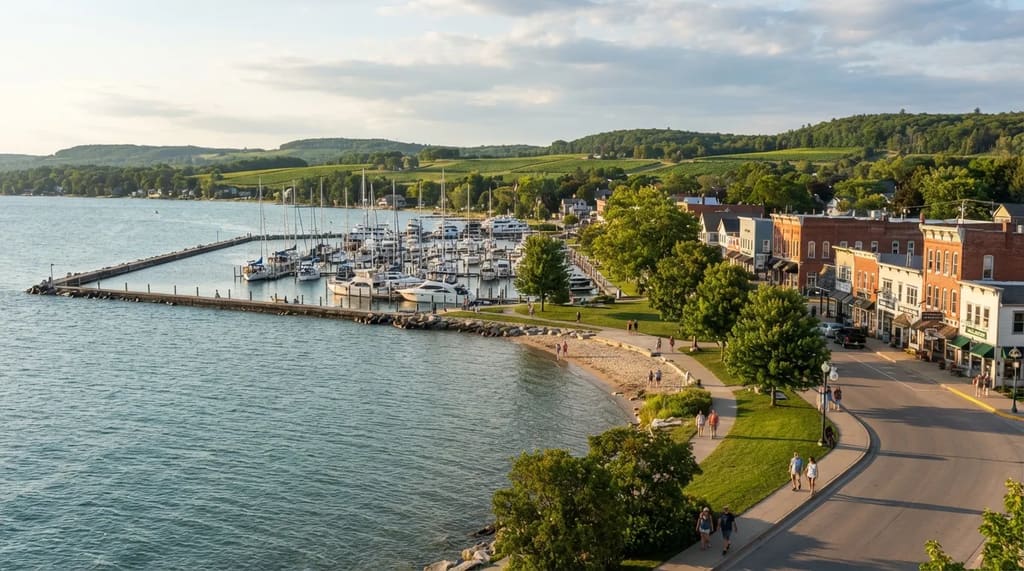
Suttons Bay is where M-22 starts to feel like a wine-country postcard. The small downtown faces the water of West Grand Traverse Bay, and the marina and park keep the lakefront open to everyone.
The Leelanau Peninsula became a federally recognized American Viticultural Area in 1982, and Suttons Bay sits in the middle of that story.3 Tasting rooms around the area give you reasons to linger, even if you only sip a little.
Worth Knowing
- Wine country status: the Leelanau Peninsula earned its federal AVA recognition in 1982
- Parking strategy: park once, then wander on foot
- Downtown mix: galleries, bakeries, and shops on flat ground
- Prime time: late afternoon, when the bay light turns gold
Downtown is flat and walkable, with galleries, bakeries, and shops arranged so you can park once and wander. That alone is a gift on a long driving day.
The best moment tends to come in late afternoon, when the light turns gold over the bay and the boats rock gently in the marina. A bench by the water becomes the best seat in town.
Suttons Bay is polished but not stuffy. The next stop is smaller, quieter, and carries a history that deserves your attention.
7. Peshawbestown: The Shoreline Community With the Deepest Roots
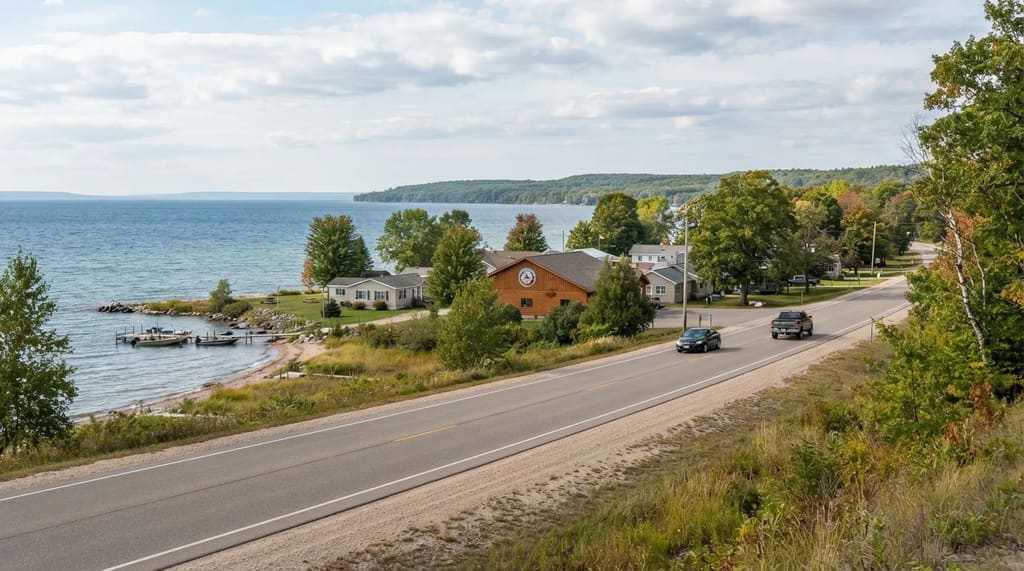
Peshawbestown is easy to pass in a few seconds, and that would be a missed chance. This community along the bay is home to the Grand Traverse Band of Ottawa and Chippewa Indians.
The Band received federal recognition in 1980 after years of effort.4 Knowing that story changes how the shoreline looks as you roll through.
The Odawa and Ojibwe peoples lived along these shores long before lighthouses and wineries arrived. This is a living community, not a museum, so keep your stops respectful and let the place set the tone.
Leelanau Sands Casino is here for travelers who want a break from the road, with indoor comfort when the weather turns. The bay views from the highway remain the real draw.
Peshawbestown shifts the trip from scenery to meaning. Next up is a hamlet founded by a missionary and still unusually peaceful.
8. Omena: The Tiny Bayside Hamlet That Time Seems to Have Skipped
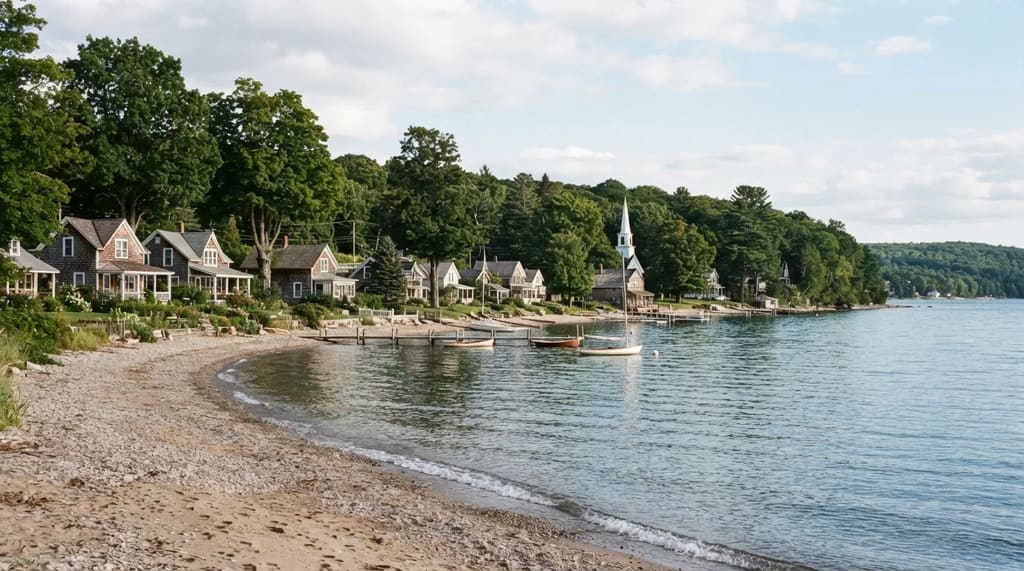
Omena is so small that its charm arrives before you’ve found a parking spot. The hamlet curves along Omena Bay, with old cottages, tall trees, and a shoreline that seems to belong to another century.
The Reverend Peter Dougherty, a Presbyterian missionary, moved his mission here from the Old Mission Peninsula in the early 1850s. That history is part of why the community has such a deliberate, tucked-away feel.
Park near the water and walk the shoreline, where pebbles click under your shoes and the bay stays gentle. Nothing here is built for speed, which is its whole appeal.
Omena also gives you a glimpse of the peninsula’s older summer-cottage culture. Families have been coming to this stretch of Grand Traverse Bay for generations.
If Omena feels like a whisper, the next stop is the road’s loudest, grandest statement.
9. Empire: The Gateway to the Dunes Voted America’s Most Beautiful Place
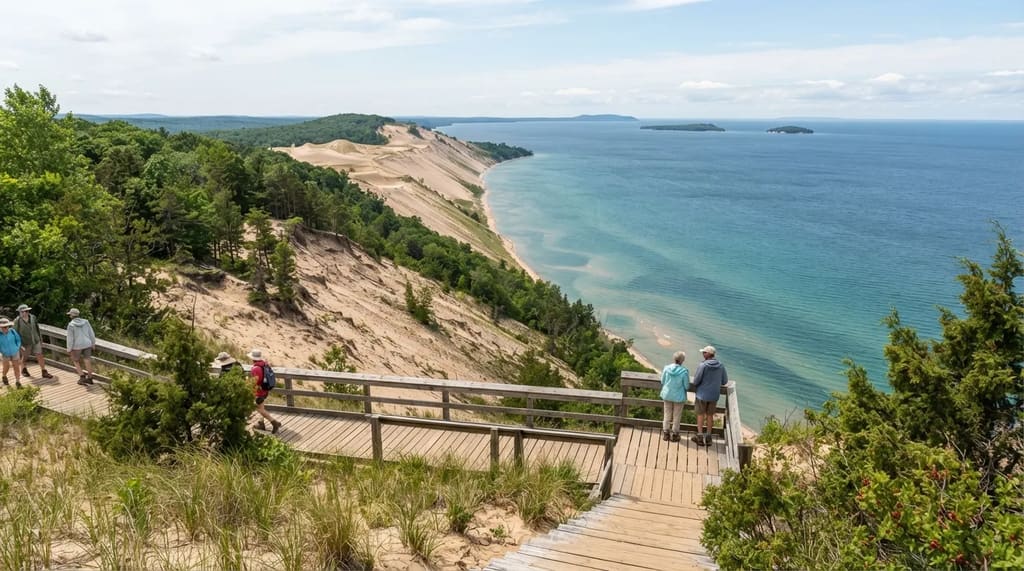
Empire looks like a modest village with a small downtown, until you realize it is the gateway to one of the most celebrated landscapes in the Midwest. Sleeping Bear Dunes National Lakeshore, established in 1970, wraps around this stretch of shore.
In 2011, viewers of Good Morning America voted Sleeping Bear Dunes the Most Beautiful Place in America.5 When you stand at the edge of the bluff, the title stops sounding like marketing.
Fast Facts
- Sleeping Bear Dunes National Lakeshore: established in 1970
- Big title: voted Most Beautiful Place in America in 2011
- Empire Bluff Trail: roughly 1.5 miles round trip
- First stop: the Philip A. Hart Visitor Center in Empire
The Philip A. Hart Visitor Center in Empire is a smart first stop, with maps, exhibits, and rangers who can match an outing to your energy level. Ask which overlooks are easiest if steep climbs aren’t on today’s plan.
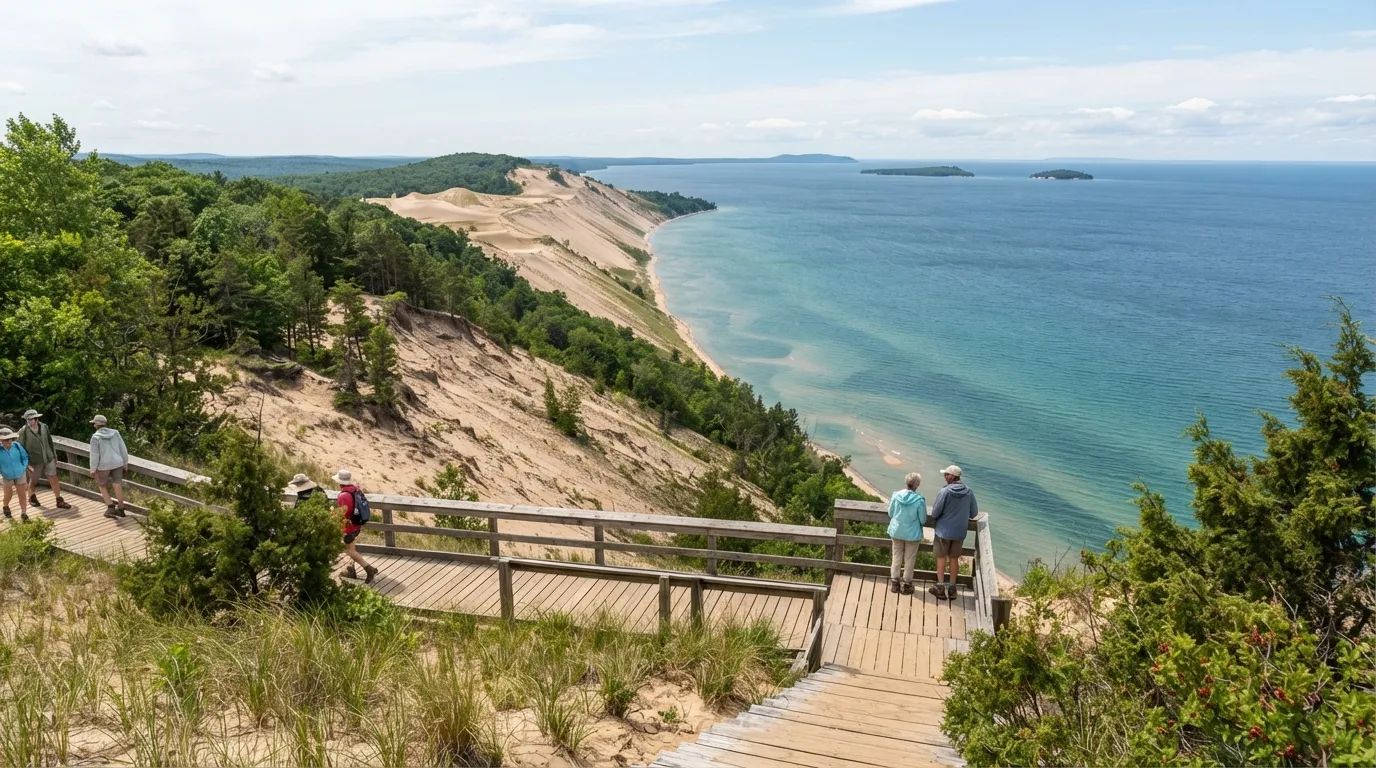
The Empire Bluff Trail is a short walk, roughly a mile and a half round trip, that ends at an overlook high above Lake Michigan. The view across dunes and water is the sort that makes people go quiet.
Spring and fall bring thinner crowds and soft light across the dunes. In winter, some park roads close, so check conditions before you go.
Empire delivers a big scenic moment, but not the biggest on this road. Keep going.
10. Northport: The Lighthouse Town at the Tip of the Peninsula
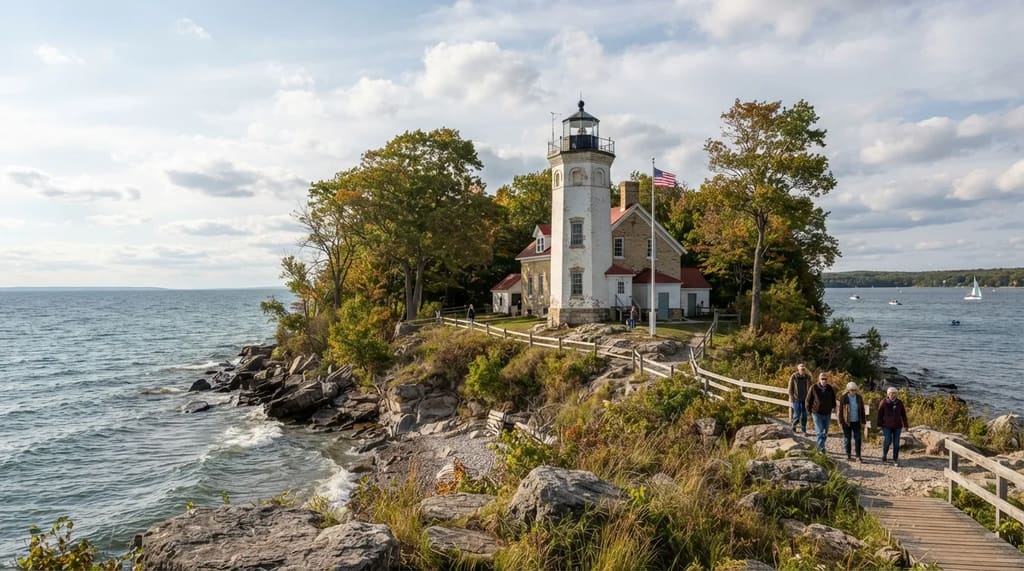
Northport sits near the top of the Leelanau Peninsula, where the road feels like it has reached the end of the world. Boats fill the harbor, and the town wraps around the water with a relaxed, lived-in rhythm.
Just north, Leelanau State Park holds the Grand Traverse Lighthouse, which has marked the way toward Grand Traverse Bay since the 1850s. You can tour the keeper’s quarters, and the setting at the peninsula’s tip is both windy and wonderful.
Back in town, the waterfront park and marina invite you to sit and watch. The pace is so unhurried that a coffee can stretch into an hour.
Related Stories From Travelbinger

This is also a good place to turn a long drive into a two-night stay. Being at the far end of the peninsula makes the road feel like it has led you somewhere.
Northport feels like the finish line, but there’s still a stretch of shoreline left. And it holds the most famous sand on the drive.
11. Glen Arbor: Where the Dunes Become Part of the Story
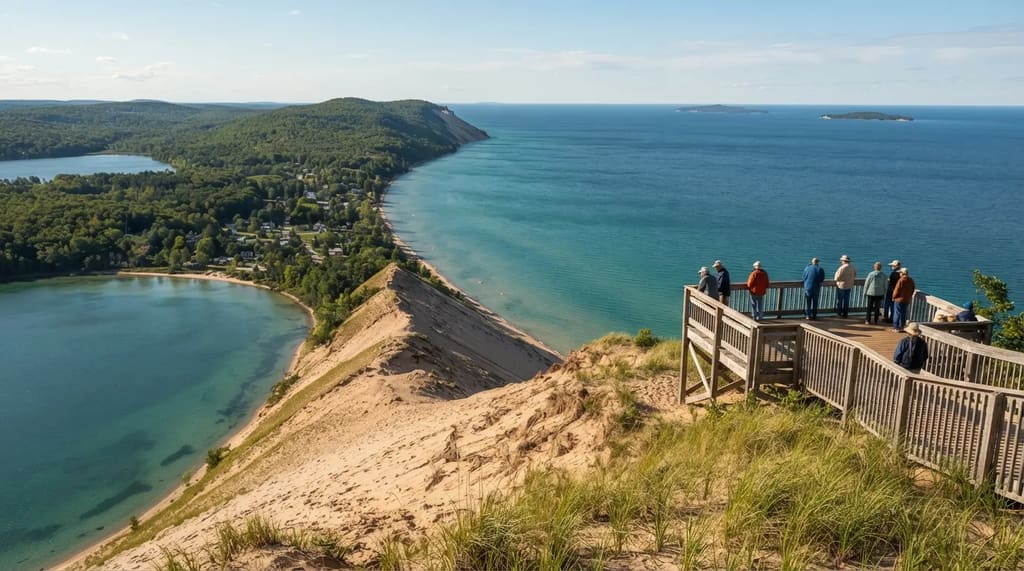
Glen Arbor is where the dunes stop being scenery and start being a character. The village sits beside Sleeping Bear Bay, with Glen Lake just inland, and the whole place feels built around the water.
Cherry Republic, the cherry-themed shop that has become a Glen Arbor landmark, makes a delicious detour. Whether you buy a jar or just nibble tasters, it’s a very Northern Michigan kind of stop.
Just outside the village, Pierce Stocking Scenic Drive loops through the national lakeshore for about seven miles.6 The Lake Michigan Overlook sits more than 400 feet above the water, so you get the drama of the dunes without climbing them.
The Dune Climb is the famous challenge, but it is optional. Watching climbers shrink to the size of ants on the slope can be entertainment enough.
Quick Compare
- Pierce Stocking Scenic Drive: about seven miles, done from your car seat
- Lake Michigan Overlook: more than 400 feet above the water, no climbing required
- Dune Climb: the famous challenge, strictly optional
Entrance fees apply in the national lakeshore, and travelers 62 and older can ask about the Interagency Senior Pass. A ranger can tell you whether it makes sense for your trip.
According to a Chippewa legend, the dunes are a mother bear still waiting for her cubs, the Manitou Islands, who never made it across the lake. It’s a story worth knowing before you look out at that horizon.
12. Leland: The Working Fishing Village That Steals the Whole Trip
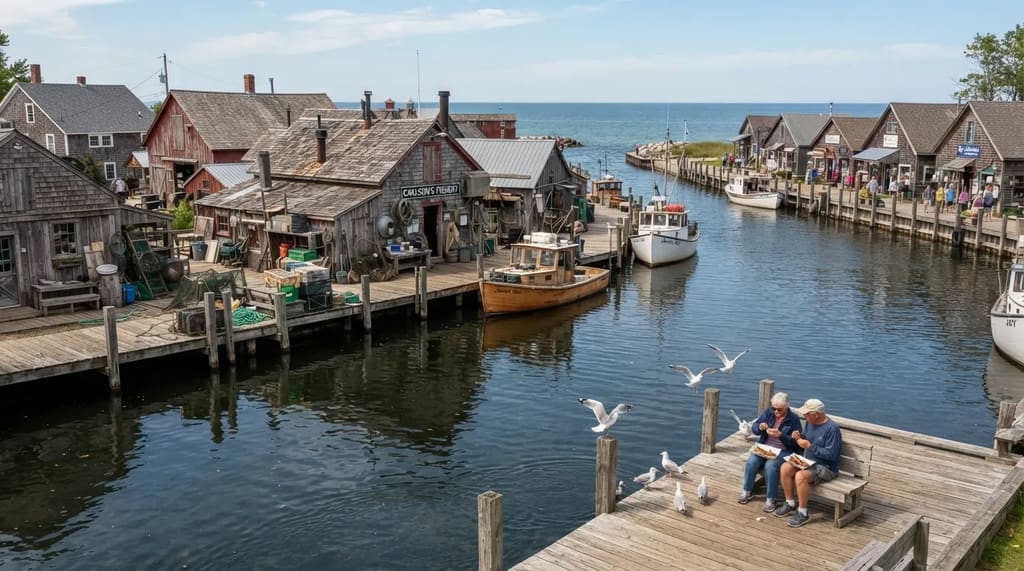
Leland saves the best for last with a fishing village that looks like it slipped through time. Fishtown, along the Leland River, is a cluster of weathered shanties, docks, and smokehouses that still hum with activity.
Fishtown is preserved by the Fishtown Preservation Society, and some shanties now house shops and galleries. A working fishery keeps the old purpose alive, so this isn’t just a stage set.
Stop at Carlson’s Fishery for smoked fish and eat it on the dock with gulls watching hopefully. It’s the sort of meal you remember because the setting is as much of the flavor as the food.
Look down at the beach for Leland Blue, the blue-gray stones that are actually slag left from an iron furnace that operated here in the 1870s.7 Finding one in your palm turns a beach walk into a treasure hunt.
Come early in the morning, when the shanties are quiet and the light on the river is soft. By summer afternoon the boardwalk fills with visitors, but it never loses its charm.
From Fishtown, ferries run to the Manitou Islands, a reminder that this lake still holds places few travelers ever see. As you drive away, it hits you that M-22 was never really about a single destination.
Twelve towns, one ribbon of road, and almost none of it requires heroic effort. That’s the real discovery for road trippers over 65: Lake Michigan’s best moments often arrive from a bench, a pier, or a plate of smoked fish.
So drive M-22 slowly, stay an extra night where it feels right, and leave the checklist at home. The lake will still be there tomorrow, and so will the next small harbor waiting to surprise you.
- USCG Point Betsie Lighthouse: https://www.history.uscg.mil/Browse-by-Topic/Assets/Land/All/Article/1975550/point-betsie-lighthouse/
- MIPlace SS City of Milwaukee: https://www.miplace.org/historic-preservation/programs-and-services/historic-landmarks/ss-city-of-milwaukee/
- Michigan Wine Country AVAs: https://www.michiganwinecountry.com/wines-grapes/avas/
- Grand Traverse Band History: https://www.gtbindians.org/history.asp
- Pierce Stocking Scenic Drive: https://en.wikipedia.org/wiki/Pierce_Stocking_Scenic_Drive
- NPS Pierce Stocking Scenic Drive: https://www.nps.gov/thingstodo/explore-pierce-stocking-scenic-drive.htm
- Fishtown Leland Blue History: https://www.fishtownmi.org/2024/04/leland-blue-and-the-iron-works-history/