You walk up to the ticket window, hear a price that makes you wince, and pay it anyway. The person behind you asks one short question and walks off with a lower number.
That quiet question is what this list is about: twelve American attractions with a senior rate sitting right on the rate card, and a lot of visitors who never ask. One of these deals is worth $8 a ticket at a museum you have probably seen on postcards, and the last one starts at an age you may not think of as senior.
#12 – The Metropolitan Museum of Art, New York City
The Met feels like the last place on earth where a price could be negotiable. There is the grand staircase, the hush, the guard by the door, and a ticket window that seems to say pay up.
But the number on the sign is not the only number.
Visitors 65 and older pay $22 instead of the standard $30 adult ticket, a savings of $8 apiece. For a couple, that is $16 back in your pocket before you have looked at a single painting.
Quick Compare
- Standard adult ticket: $30
- Senior ticket (65+): $22
- Savings for a couple: $16
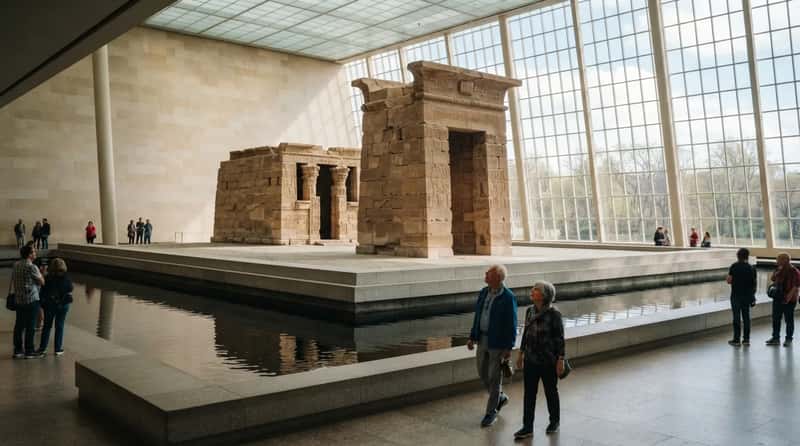
The collection covers more than 5,000 years of art, including the Temple of Dendur, a real Egyptian temple rebuilt inside the museum. New York State residents can pay what they wish, so out-of-state visitors are the ones who gain the most from the senior rate.
The cashier will not necessarily volunteer the discount, so you have to ask. That is only the start, and the next stop holds a painting you have almost certainly seen on a coffee mug.
#11 – The Museum of Modern Art (MoMA), New York City

MoMA is home to Van Gogh’s The Starry Night, and it charges like a museum that knows it. Most visitors shuffle up to the counter and pay whatever number appears.
The senior rate is real, published, and rarely mentioned at the door.
Visitors 65 and older with a valid ID pay $22 for admission to all galleries and special exhibitions. That price is available online as well as at the desk.
The collection runs from Picasso to Warhol to the newest work by living artists. Frequent visitors can also look at membership, which adds free admission, members-only hours, and exhibition previews.
High-profile New York museums get all the attention. The next stop is a Midwest icon where the discount is just as easy to miss.
#10 – The Art Institute of Chicago
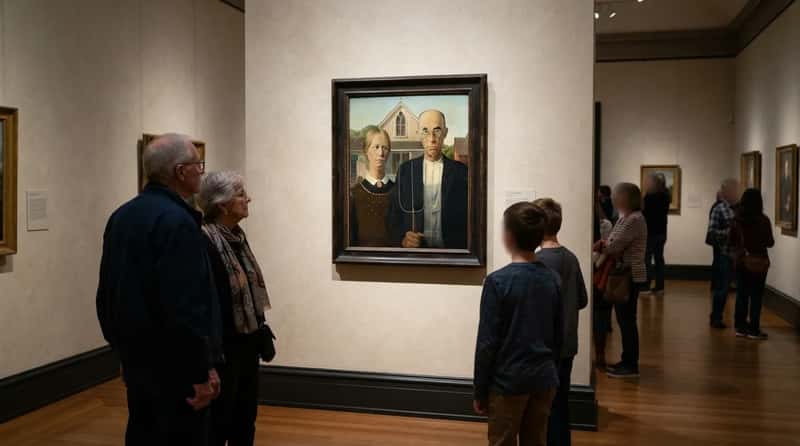
Grant Wood’s American Gothic hangs in Chicago, and so does Hopper’s Nighthawks. Plenty of the people who line up to see them pay full price without a second thought.
Adults 65 and older are eligible for a discounted rate, confirmed on the museum’s own ticketing page.
The Art Institute draws well over a million visitors a year, and its permanent collection holds nearly 300,000 works of art. Beyond those two icons you will find Seurat’s A Sunday on La Grande Jatte, Monet’s water lilies, and Picasso’s The Old Guitarist.
That is a staggering amount of world-class art at a reduced rate. All it takes is one sentence at the counter.
Museums are a natural starting point, but senior pricing goes well beyond art galleries. The next stop is a science museum where the senior age starts a few years earlier.
#9 – The Museum of Science, Boston

Somewhere on the banks of the Charles River, a giant Van de Graaff generator is throwing indoor lightning at a crowd that came to be amazed. That is the Theater of Electricity, and it is one reason Boston’s Museum of Science is such a favorite.
It also has a senior price that plenty of visitors over 60 never claim.
Seniors 60 and older pay less than the standard adult price for Exhibit Hall admission. That cutoff is lower than at many big museums, which means more visitors qualify without realizing it.
Worth Knowing
- The senior age here starts at 60, not 65.
- The senior rate applies to Exhibit Hall admission.
- The IMAX dome theater and planetarium shows usually cost extra.
- Ask whether the senior rate carries over to combination tickets.
Beyond the exhibit halls, the museum has an IMAX dome theater and a planetarium. Add-on shows usually cost extra, so ask whether the senior rate applies to combination tickets before you buy.
Boston is a great city for frugal cultural travel. But the next stop is far to the south, and it began with a boat.
#8 – The National WWII Museum, New Orleans
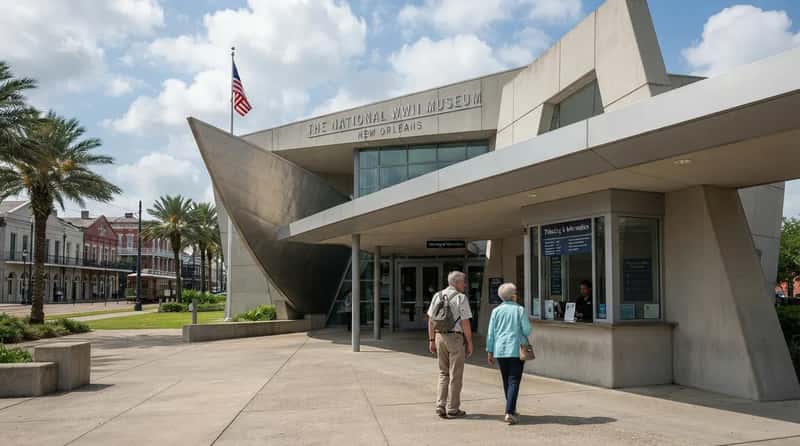
The National WWII Museum began as a D-Day museum, inspired by the Higgins boats built in New Orleans that carried troops onto the beaches. Today it is routinely ranked among the best museums in the country.
It also has a senior discount that hardly anyone mentions.
Visitors 65 and older get a few dollars off general admission. It is not a fortune, but for two people it adds up, and the sign is rarely at eye level.
Inside, oral histories, artifacts, and immersive galleries make it a deeply emotional visit. The campus also includes the 4D film Beyond All Boundaries, narrated by Tom Hanks.
Plenty of people walk in and pay whatever number the window says. A five-second question can change that.
New Orleans alone is worth the trip. But we are moving on to a very different kind of attraction, one most seniors assume is not meant for them.
#7 – SeaWorld Orlando

SeaWorld is usually pitched as a kids’ park, so many older travelers assume nothing at the gate is meant for them.
That assumption can cost real money.
Discount guides have listed $3 off one-day tickets for adults 50 and older at SeaWorld Orlando. That age is lower than most people expect, so plenty of visitors who never picture themselves as seniors may qualify.
SeaWorld does not heavily promote senior pricing on its main ticketing page, and policies vary by park and change over time. SeaWorld San Diego has historically offered senior pricing at the gate for adults 65 and older.
With coasters like Mako and Kraken alongside animal habitats and shows, it is a long day out. A small discount on every ticket adds up quickly for a group.
Because policies shift, call ahead to confirm before you go. The next stop is a place seniors tend to love, with a ticket menu more layered than it looks.
#6 – Colonial Williamsburg, Virginia
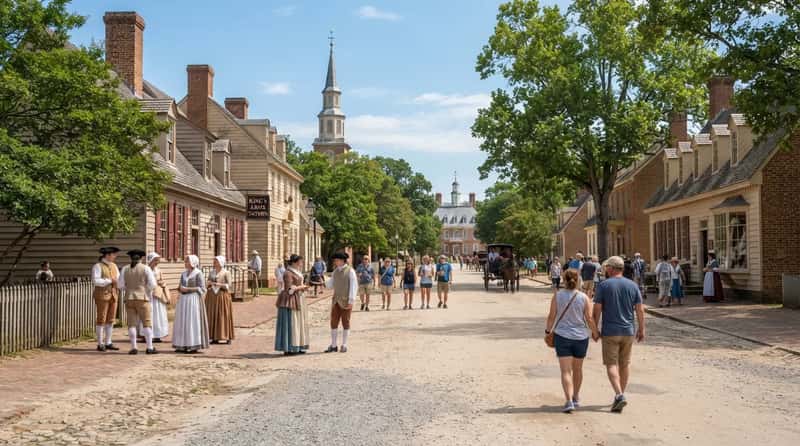
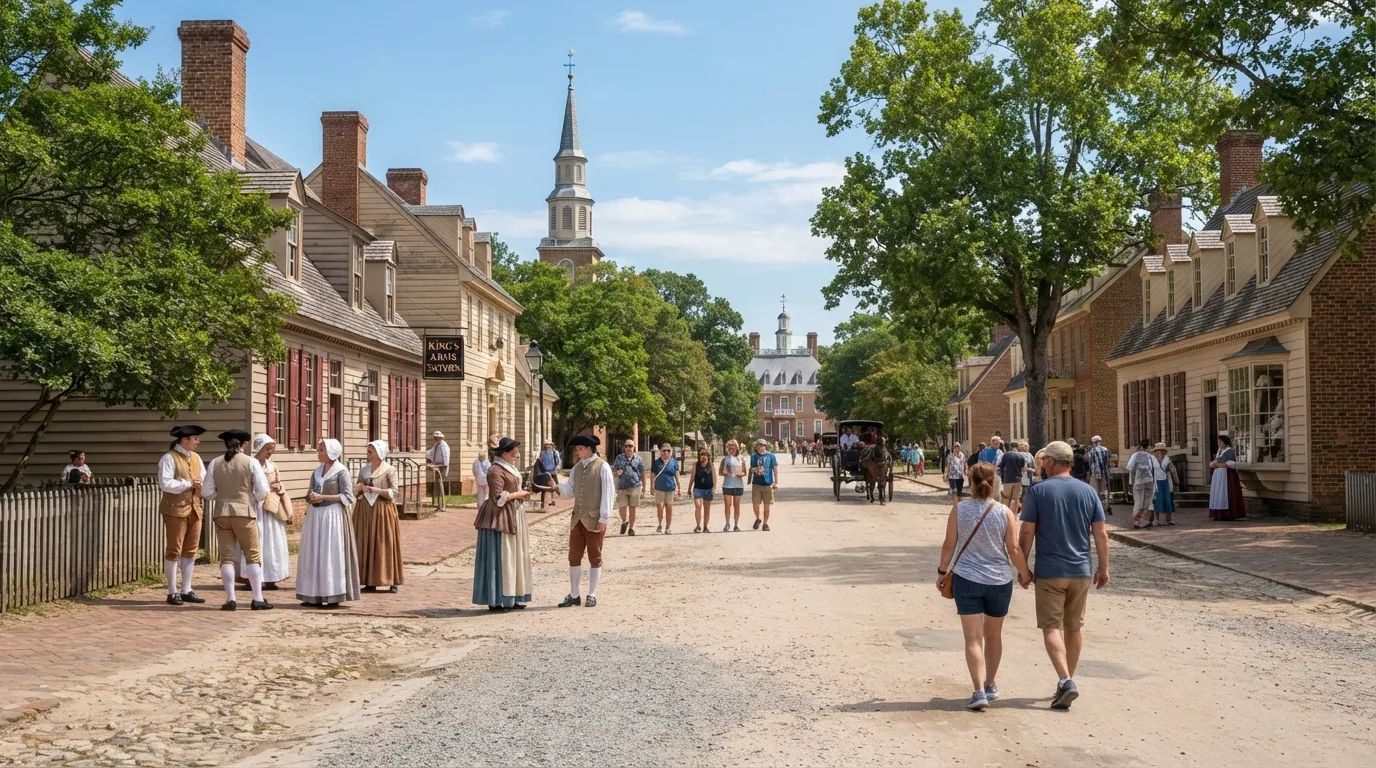
Walk down Duke of Gloucester Street and costumed interpreters, working shops, and the Governor’s Palace put you squarely in the 1700s.
Colonial Williamsburg is one of the largest living-history museums in the country, and its ticket menu is more layered than most visitors realize.
It is not known for a headline senior price, so the smart move is to ask what age, military, or other rates are running the day you visit.
The site has offered veterans and up to three dependents complimentary admission once a year, on Memorial Day weekend or Veterans Day weekend. It has also offered 25 percent off single-day admission and annual passes for military guests all year long.
For a senior who is also a veteran, that can be a serious saving. Call ahead and ask exactly what applies to you.
Virginia’s history corridor is packed with value for senior travelers. But the next deal is on another level entirely, and it belongs to the most famous scenery in the country.
#5 – America’s National Parks (The Senior Pass)

Most Americans know national parks charge an entrance fee. Far fewer know how lopsided the senior deal is.
Anyone 62 or older who is a US citizen or permanent resident can buy a lifetime pass for $80, or an annual pass for $20.
Here is the twist: $80 is also what a regular one-year pass costs. A senior pays it once and never pays again.
The pass covers more than 2,000 federal recreation sites run by six agencies, including all 63 national parks. At sites that charge per vehicle it covers everyone in the car, and at per-person sites it covers the passholder plus three adults.
Fast Facts
- Who qualifies: US citizens and permanent residents age 62 and up, with proof of age and residency.
- Two options: $20 for one year, or $80 for life.
- Trade-up trick: Four annual senior passes can be exchanged for a lifetime pass.
- Where to buy: In person at a federal site with no processing fee, or online with an added $10 fee.
- Not transferable: The passholder must be present with photo ID.
It can also cut camping and some other amenity fees by up to 50 percent at participating sites. That is where the real long-term savings quietly pile up.
Fees and rules are set by the federal government and can change, so confirm current prices before you buy. Next comes a theme park where the senior deal is much easier to miss.
#4 – Dollywood, Pigeon Forge, Tennessee

Dolly Parton’s Smoky Mountain theme park blends big coasters like Lightning Rod with bluegrass music, craft demonstrations, and cinnamon bread that people plan their day around.
It is consistently rated among the best regional parks in the country, and it has a senior discount that hardly anyone talks about.
Dollywood does not give many details about senior pricing on its website, but it does confirm that senior pricing exists. That alone should send visitors of qualifying age to the window with one question before they pull out a credit card.
Prices at big parks shift by date and by how you buy. Asking at the gate or calling ahead is the only way to see the real number.
Dollywood is a Tennessee institution. The next stop is back in New York, where a 94-foot whale hangs over the crowd.
#3 – The American Museum of Natural History, New York City
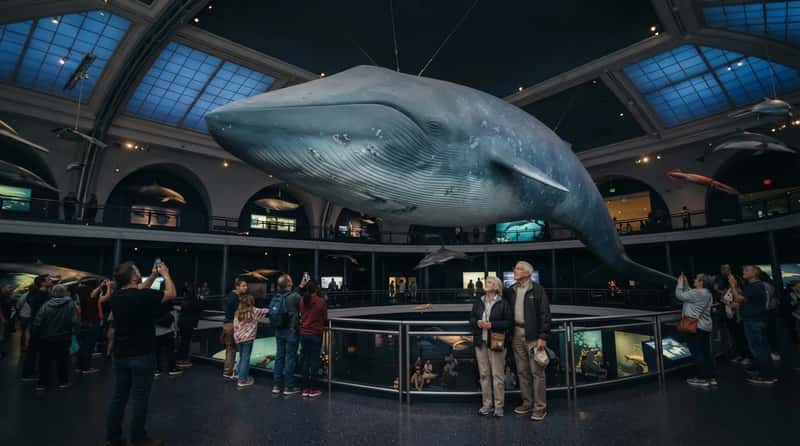
Under the blue whale model in the museum’s Hall of Ocean Life, visitors stand with their necks craned and their wallets already lighter.
The ticket price looks fixed, but it is not.
Visitors 60 and older pay $24 for general admission instead of the standard $30, a $6 difference per person. That is one of the lowest senior ages on this list.
New York City residents have a separate pay-what-you-wish option regardless of age, so the senior rate matters most for out-of-town visitors. Many of them never realize that turning 60 is enough to qualify.
Beyond the whale, the museum stretches from dinosaur fossils to the Rose Center for Earth and Space. For a group of four, a discount like this quietly pays for lunch.
Two entries left, and the next belongs to a museum with a set of steps that movie fans climb on purpose.
#2 – The Philadelphia Museum of Art

Every day, visitors race up the Philadelphia Museum of Art’s front steps to throw their fists in the air like Rocky Balboa. Far fewer stop to ask what the ticket costs for someone their age.
Visitors 65 and older get a reduced admission rate, a published benefit.
Some venues ask for ID, so bring a photo ID and simply say you are here for the senior rate. If the cashier asks, show your ID and you are done.
The museum has also run free and pay-what-you-wish times on certain days, so check its calendar to see whether a special day beats the senior price. Hours and rules change, and the online calendar is the best place to confirm.
The bigger issue is how it feels to stand in a grand hall. Asking about price can seem out of place, and that hesitation is exactly what leaves money on the table.
Philadelphia is a heavyweight. But the last entry is the sneakiest, and it is not in a museum at all.
#1 – Ripley’s Believe It or Not! Attractions (Nationwide)

Here is the last one, and it plays by different rules: a chain of attractions in tourist towns from Times Square to Fisherman’s Wharf to Gatlinburg, Tennessee.
Ripley’s Believe It or Not! does not have the prestige of a world-class art museum, but its admission prices add up fast for a traveling couple.
Discount guides list $2 off a one-day ticket for visitors 55 and older. That is among the lowest ages on this list, and plenty of people cross it without ever thinking of themselves as seniors.
Individual locations set their own policies, and Ripley’s marketing rarely leads with the senior rate. That is why a quick phone call or a question at the window is the only reliable way to find out.
It is the smallest discount on the list and the easiest one to overlook. That is exactly the point, because small savings at every stop add up over a road trip.
The Bottom Line

Every attraction on this list follows the same pattern: the discount exists, it is published, and it rarely gets volunteered.
From the $80 national parks pass that lasts a lifetime to the quiet senior rates at MoMA, the Art Institute, and Ripley’s, the savings are waiting on one sentence.
Qualifying ages run from 50 to 65 depending on the place, so carry a photo ID and check the age cutoff before you travel.
At a Glance
- 50+: SeaWorld Orlando
- 55+: Ripley’s Believe It or Not!
- 60+: Museum of Science (Boston) and the American Museum of Natural History
- 62+: National Parks Senior Pass
- 65+: The Met, MoMA, the Art Institute, the Philadelphia Museum of Art, and the National WWII Museum
Prices and policies change, so treat the numbers here as a snapshot and confirm on the official ticketing page or by phone. Then, at the window, ask: “Do you have a senior rate?”
Cashiers may not bring it up, but most will honor it the moment you do. The most expensive ticket at any attraction is the one bought out of politeness.
#13 – The Bonus Tip Nobody Shares: Ask for the Lowest Total Price
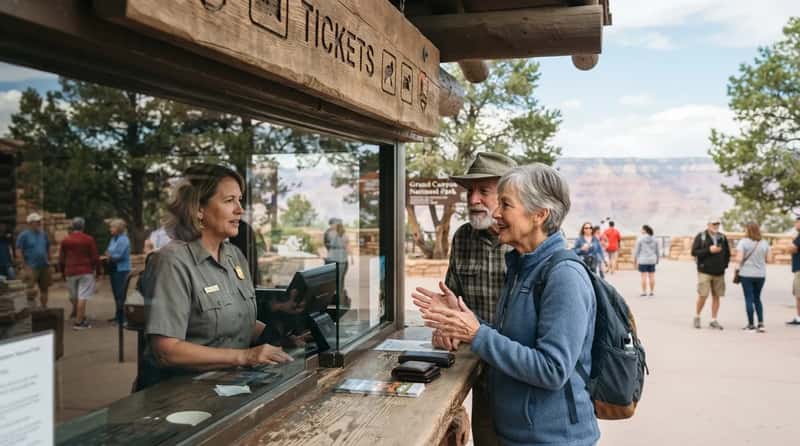
The senior rate is only one price on the menu, and it is rarely the lowest one available. The move that saves the most is asking the cashier to find your best total, not just your age discount.
Try this exact script at the window or on the phone: “What is the lowest total price for two people, including taxes and fees, and can any discounts be combined?”
- Step 1: Before you go, search the attraction’s official ticket page and box office phone number, and note whether senior, AAA, AARP, military, or local-resident rates are listed.
- Step 2: Ask which single option gives the lowest total. Some places let you stack offers, and others make you choose one, so make them tell you which is best.
- Step 3: Before you buy, compare the total for the number of visits you will really make against the price of a membership. If you plan to return within a year, membership can beat even the senior rate.
- Step 4: Ask the cashier to confirm the total out loud before you hand over your card, and keep your receipt in case a fee shows up later.
Asking for the total, not a discount, moves the cashier from checking a box to solving your problem. That is why it works at places that never advertise a senior rate at all.