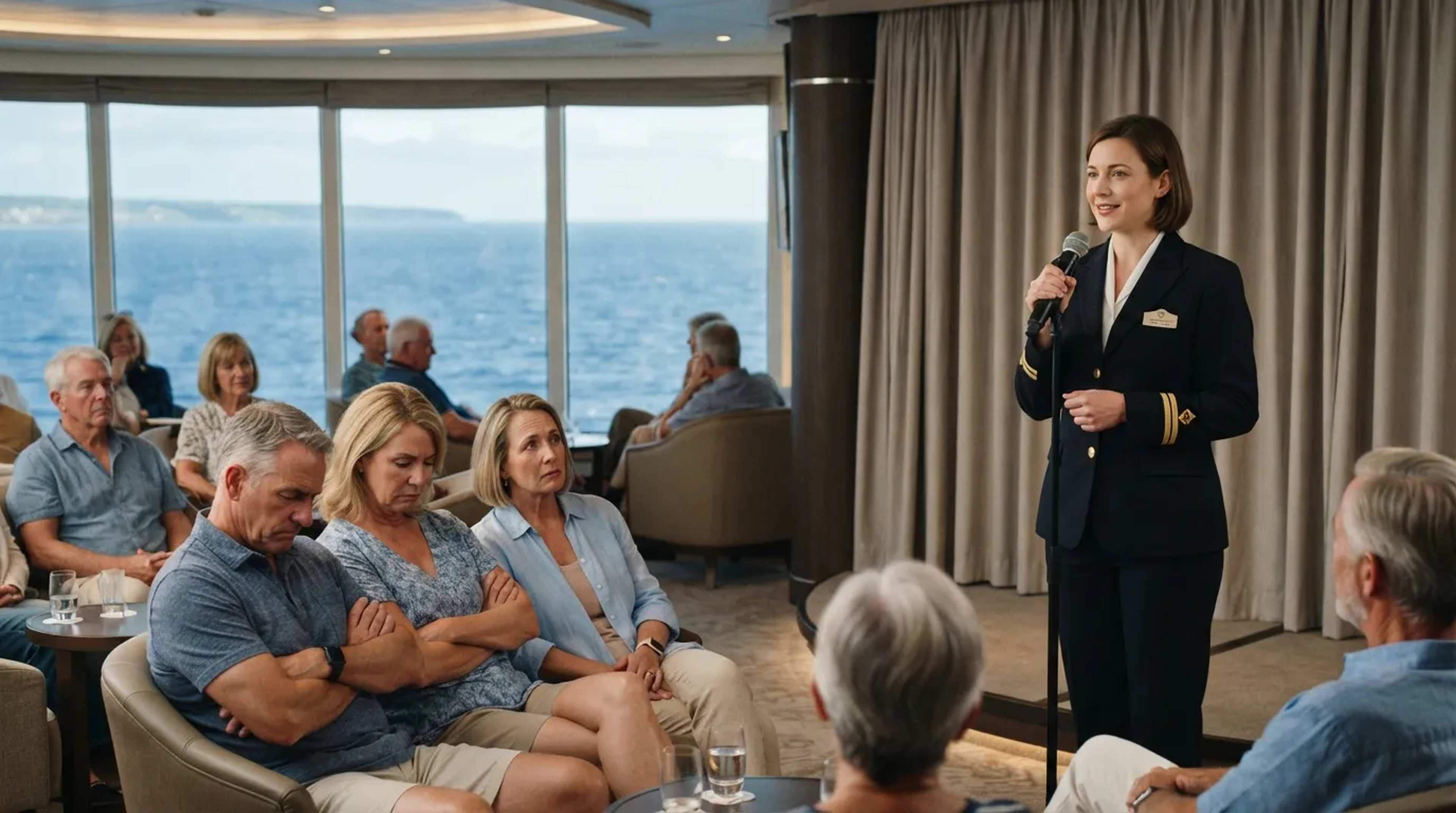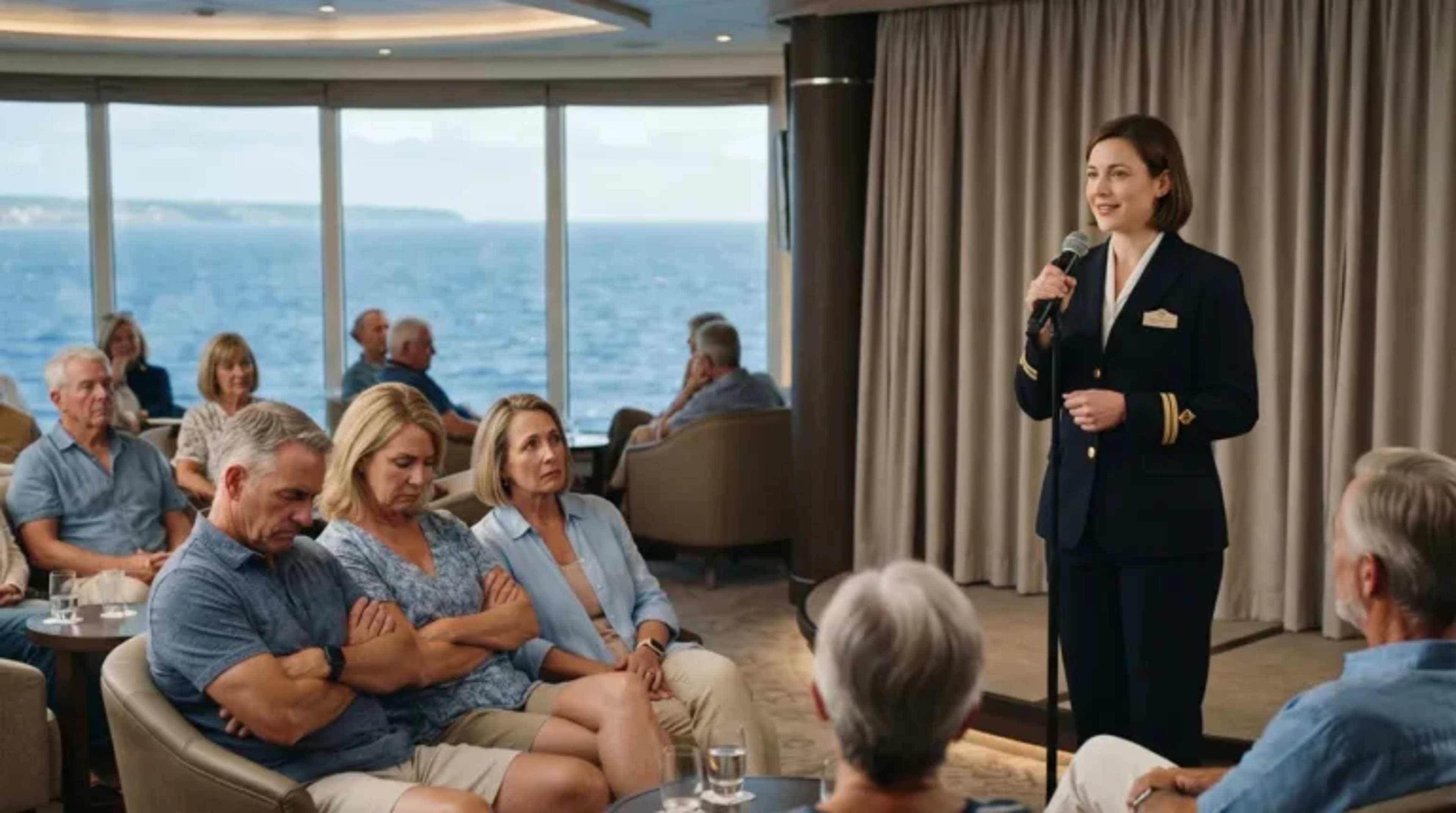
Picture a retiree hunched over a laptop, hunting for the cheapest cruise fare on the internet. That’s the story most people tell, and it’s only half true. For many travelers in their 70s, the details that actually decide a trip never show up in the price column.
CLIA’s 2025 industry report shows that 15% of cruise passengers are 70 or older, so these priorities shape a lot of bookings. To be upfront, no single survey ranks these 12 items. They’re pulled from senior cruise data and expert guidance. The first one is something no brochure puts on its cover, and the last one explains all the rest.
#12 – The Ship’s Medical Center Quietly Tops the Checklist

Before the buffet or the balcony, many older cruisers want to know who’s on call at 3 a.m. In a Squaremouth survey of senior cruisers, 40.9% of travelers in their 70s named onboard medical facilities as their most important accessibility feature. That put it ahead of elevators, in-room aids and wheelchair cabins. Nobody puts “urgent care” on a brochure cover, yet it’s often the first thing people check.
Ships do carry doctors and nurses, but experts are blunt about the limits. If more advanced care is needed, travelers may be moved to a land-based hospital, because a ship can’t handle every medical situation. So the real question isn’t whether there’s a clinic. It’s what happens next, and a lower fare doesn’t answer that.
Next comes a number with six figures, and most travelers never see it coming.
#11 – A Possible $250,000 Flight Is Why Insurance Limits Matter

The priciest part of a cruise can be the part you never booked. The CDC says medical evacuations can cost upward of $250,000. Yet Squaremouth found that 35% of travelers are underinsured for it, buying less than $250,000 in coverage. Squaremouth also reports that over a quarter of senior cruisers buy policies with inadequate medical limits.
Here’s the part that surprises people. Royal Caribbean’s standard policy, as described on its own blog, includes $25,000 in emergency medical coverage and $50,000 for evacuation. That’s well under what Squaremouth recommends. Many insurance specialists argue that cruise-line plans are the weakest link, so comparing limits matters more than clicking the add-on button at checkout.
A strong policy can still fail if you buy it at the wrong moment, and that’s #10.
#10 – Buying Insurance Too Late Can Quietly Gut the Protection

The policy is only half the decision. The date you buy it can matter just as much. Squaremouth’s senior data shows nearly half of seniors buy their policies too late, missing benefits such as pre-existing condition coverage and Cancel For Any Reason. That leaves them exposed to exclusions if they ever have to file a claim.
These windows are set plan by plan, so the details vary. One senior plan Squaremouth lists offers a 21-day window to buy pre-existing condition coverage. Senior-travel guides say to think about cruise insurance early, especially for expensive prepaid trips and pre-existing condition questions. Miss the window and the fine print takes over.
At a Glance
- Nearly half of seniors buy their policies too late, per Squaremouth.
- Benefits at risk: pre-existing condition coverage and Cancel For Any Reason.
- One senior plan lists a 21-day window for pre-existing condition coverage.
- Windows differ by plan, so read the dates before you pay.
Now to #9, which comes down to a very short walk.
#9 – The Cabin Near the Elevator Beats the Cabin With the Discount
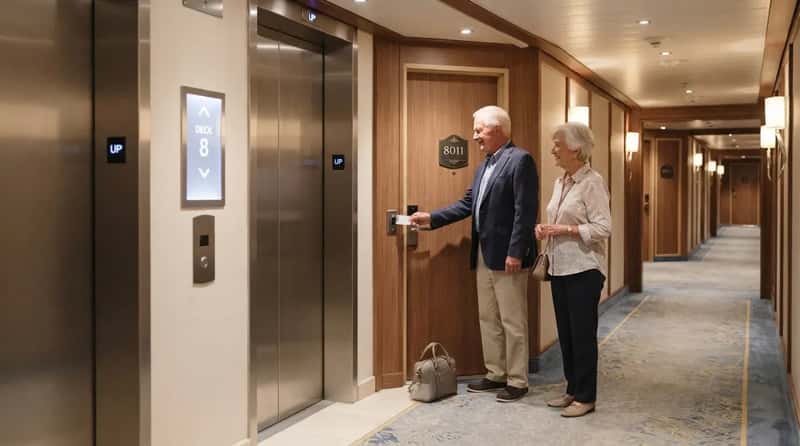
A shorter walk can matter more than a bigger markdown. In the Squaremouth survey, 33.0% of travelers in their 70s named accessible elevators and cabin proximity as most important, up from 21.8% in their 60s. Among travelers in their 80s, that number hits 48.2%. On a ship that long, a far-flung cabin can turn every meal into a hike.
Senior cruise guidance for travelers over 80 says to avoid cabins far from elevators, tight connections and long tender rides. Cabin categories can sit anywhere on the deck plan. Check the location before you lock in a rate, because a cheaper cabin that’s hard to reach isn’t really cheaper.
Location matters at sea too, and #8 shows that a pricey ship isn’t always a smooth one.
#8 – Midship Matters Because Seasickness Doesn’t Check Your Receipt
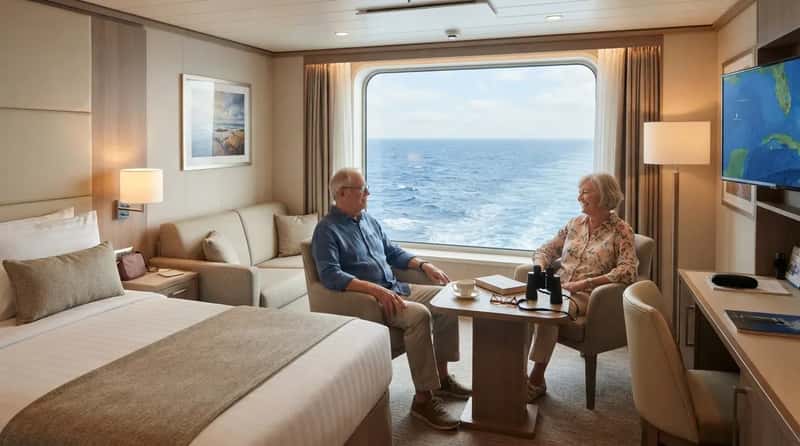
The cheapest cabin can feel like a bargain until the ship starts moving. Senior cruise guides say cabin position affects comfort, and midship locations minimize the feeling of motion. That makes location a comfort feature, not a luxury. Many travelers over 70 know their stomachs well enough to care.
Here’s the twist. One luxury-cruise guide notes that smaller ultra-luxury ships can move more in open water than a big resort ship, and suggests asking about stabilizer type and itinerary. Smaller and pricier doesn’t automatically mean smoother. Ask before you book rather than assume.
Next up, #7 flips the idea that more ports means more value.
#7 – Sea Days Are Secretly the Feature That Protects the Trip

A port every single day sounds like better value. Senior-focused cruise guides call it exhausting. One suggests looking for sailings with at least two sea days on a 7-night cruise, as rest days where you don’t need to be anywhere. Think of them as built-in recovery time.
Itineraries differ a lot here. Transatlantic and Pacific sailings have plenty of sea days, while Caribbean 7-night sailings often have only one or two. A packed port schedule looks like the best deal on paper, but some experts argue it’s the fastest route to burnout. A cheap, port-heavy itinerary may end up costing you energy instead.
Quick Compare
- Port-heavy week: a new stop almost every day, with little downtime.
- Sea-day-friendly week: at least two rest days on a 7-night sailing, per one senior-focused guide.
- Transatlantic and Pacific routes: plenty of sea days built in.
- Caribbean 7-nighters: often just one or two.
Then there’s #6, where a stop on the map may be one you can’t actually use.
#6 – Tender Ports Can Turn a Dream Stop Into a Hard Pass

Not every port has a dock. Some ships anchor offshore and ferry guests in by small boat, which is fine if you’re steady on your feet and much less fine with a bad hip or a wheelchair. The itinerary can list a stop that some travelers can’t realistically enjoy. That’s a hidden catch on a cheap fare.
Travelers with limited mobility may choose shore visits carefully, or enjoy the view from the ship and its amenities. Many oceangoing ships offer special equipment to help passengers board smaller boats for shore excursions. The catch is that you have to ask in advance.
The next detail never makes it into a single vacation photo.
#5 – The Bathroom Is the Detail Nobody Photographs

Cruise photos show sunsets, not shower stalls. Yet one guide points out that walk-in showers versus tub-showers, door widths and accessible-cabin location all matter. Many ships do offer cabins with wider doorways, roll-in showers and grab bars. That’s real safety, not decoration.
Here’s the catch. The number of fully accessible staterooms on each ship is usually limited. One guide says accessible cabins are meaningfully different from standard cabins and should be booked early. Waiting for a last-minute deal can mean the right cabin is already gone.
Now #4, the upgrade that splits cruisers right down the middle.
#4 – A Balcony May Be the Sneaky Mobility Upgrade

Balconies usually get filed under “splurge.” Senior-focused guidance sees it differently. One guide says a balcony cabin is worth the upgrade on sailings of five or more nights, because private outdoor space means you don’t have to head to the pool deck for fresh air.
On scenic itineraries such as Alaska, Norway and the Mediterranean, the same guide says the balcony is where the experience happens. Plenty of budget cruisers call it a waste of money. Experts advising older travelers argue the opposite: for someone who moves more slowly, it may be the easiest way to keep the view without the crowds.
Why It Stands Out
- Fresh air without a walk to the pool deck.
- Worth a look on sailings of five or more nights, per one senior-focused guide.
- Strongest on scenic routes like Alaska, Norway and the Mediterranean.
- A quieter spot to rest when the public decks get crowded.
#3 has nothing to do with the ship at all.
#3 – Family at the Next Table Can Matter More Than the Fare
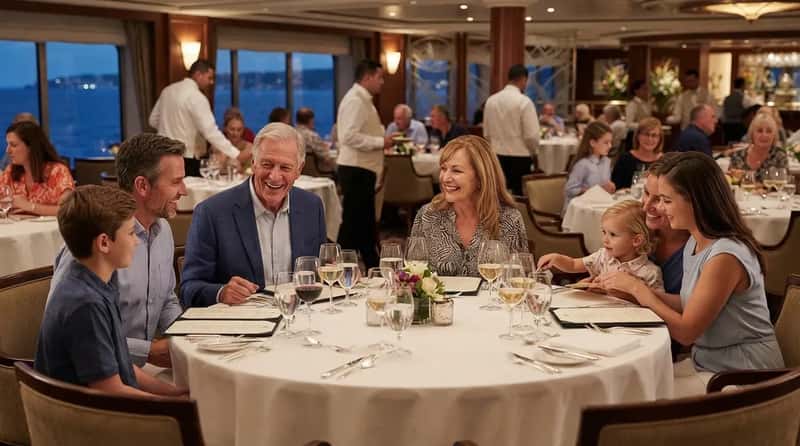
Some of the biggest decisions aren’t about the ship. CLIA’s 2025 report says nearly one third of Baby Boomer cruisers sail with friends and family representing three to five generations. Cruises are a top choice for multi-generational travel. For many older travelers, who comes along may drive the date and the ship.
No survey proves this means help is nearby, but the logic is simple. A relative down the hall knows the plan, the cabin number and the pace you prefer. CLIA also reports that 81% of Boomer cruisers are likely to cruise again. Group trips may be part of why.
Then comes #2, which happens before the ship even leaves the dock.
#2 – The Easy Start Can Beat the Cheaper Flight
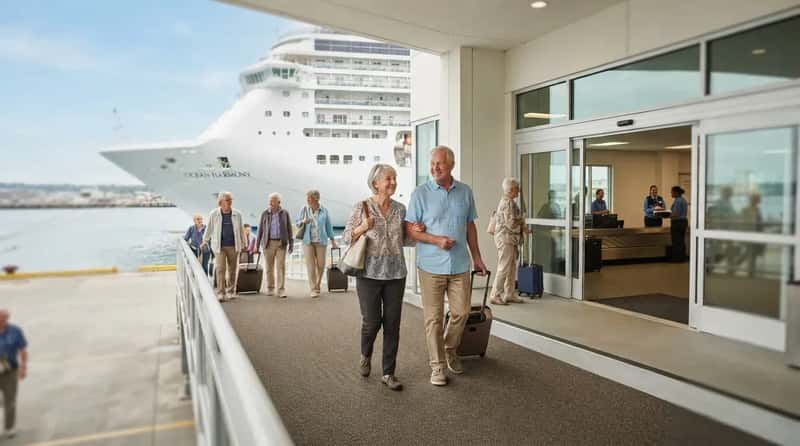
Some cruises get hard before anyone boards. Guidance for travelers over 80 points to simple departure ports and itineraries that avoid difficult tender ports or very long excursions. The same logic applies to many travelers in their 70s. A cheap airfare with a tight connection can cost you more in stress than you saved.
Planning matters too. Experts advise confirming accessibility, medical needs, scooter rules, passport requirements and medication planning before paying a non-refundable deposit. Many seniors over 70 do well with relaxing ocean cruises, Alaska or Bermuda sailings, or enrichment-focused cruises with comfortable pacing. A smooth start sets the tone for the whole week.
Worth Knowing
- Confirm accessibility and medical needs before the deposit goes down.
- Check scooter rules with the cruise line ahead of time.
- Verify passport requirements early.
- Plan your medications before you travel.
Which leaves #1, the one that ties every other item together.
#1 – The Trip Has to Feel Manageable Before It Feels Exciting

This is the one that explains the other eleven. One senior cruise guide puts it simply: a good senior cruise should feel manageable before it feels exciting. That’s the filter behind the medical center, the elevator and the sea days. The best senior cruise isn’t the cheapest. It’s the one that fits comfort, mobility, budget and pace together.
Budget still counts, and it’s on this list. But it’s one factor, not the only one. AAA says nearly two-thirds of cruisers (65%) are 55 or older. People who’ve sailed often know the details, and the details tend to decide the trip.
Price still matters, but it rarely tells you how the week will feel. Medical care, insurance limits, cabin location, calm itineraries and an easy start are what people remember. A bargain that skips them can turn out to be the expensive choice.
Since no single survey ranks these 12 items, check each one against your own health and pace. Which one would you look at first on your next booking?