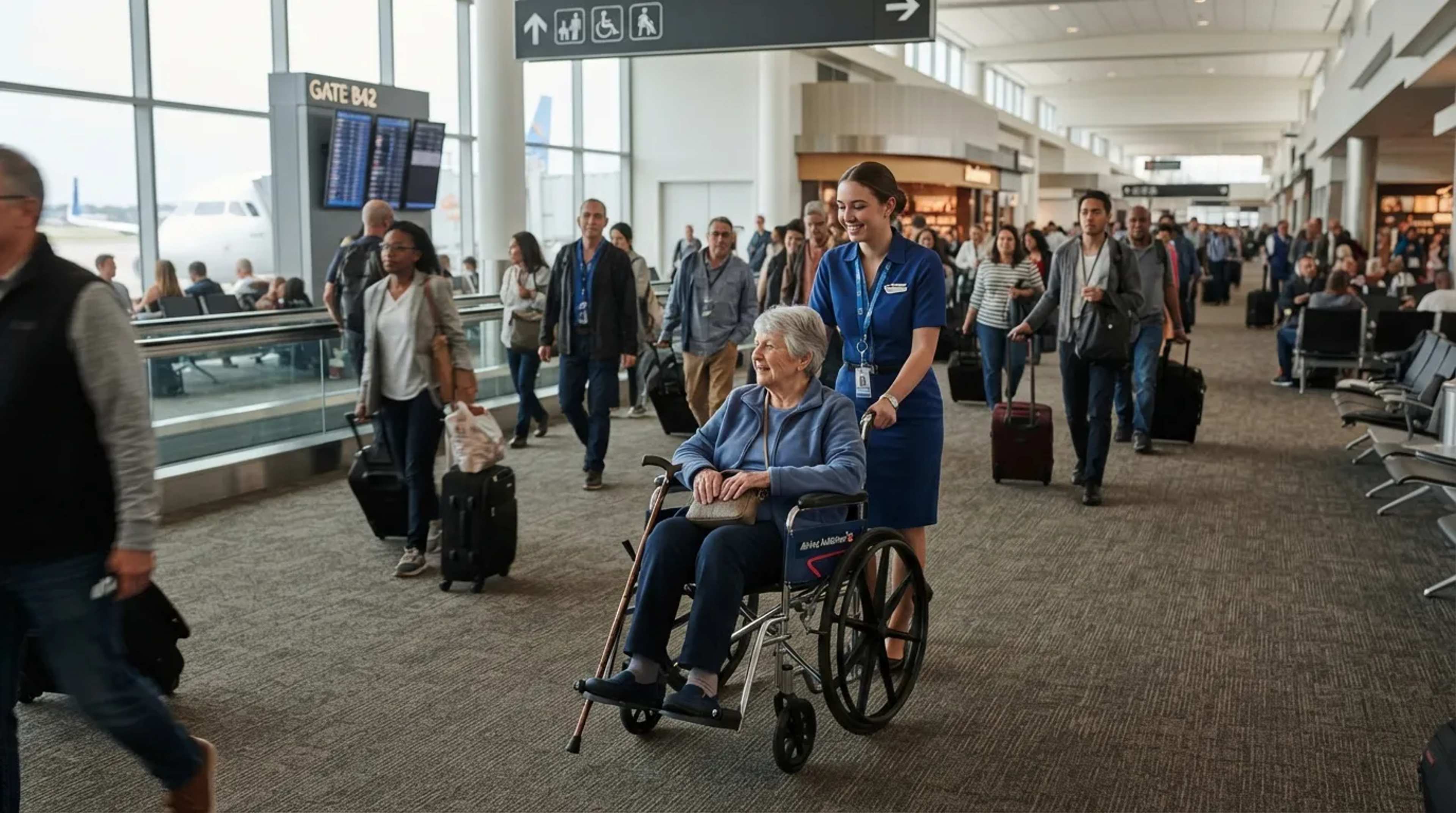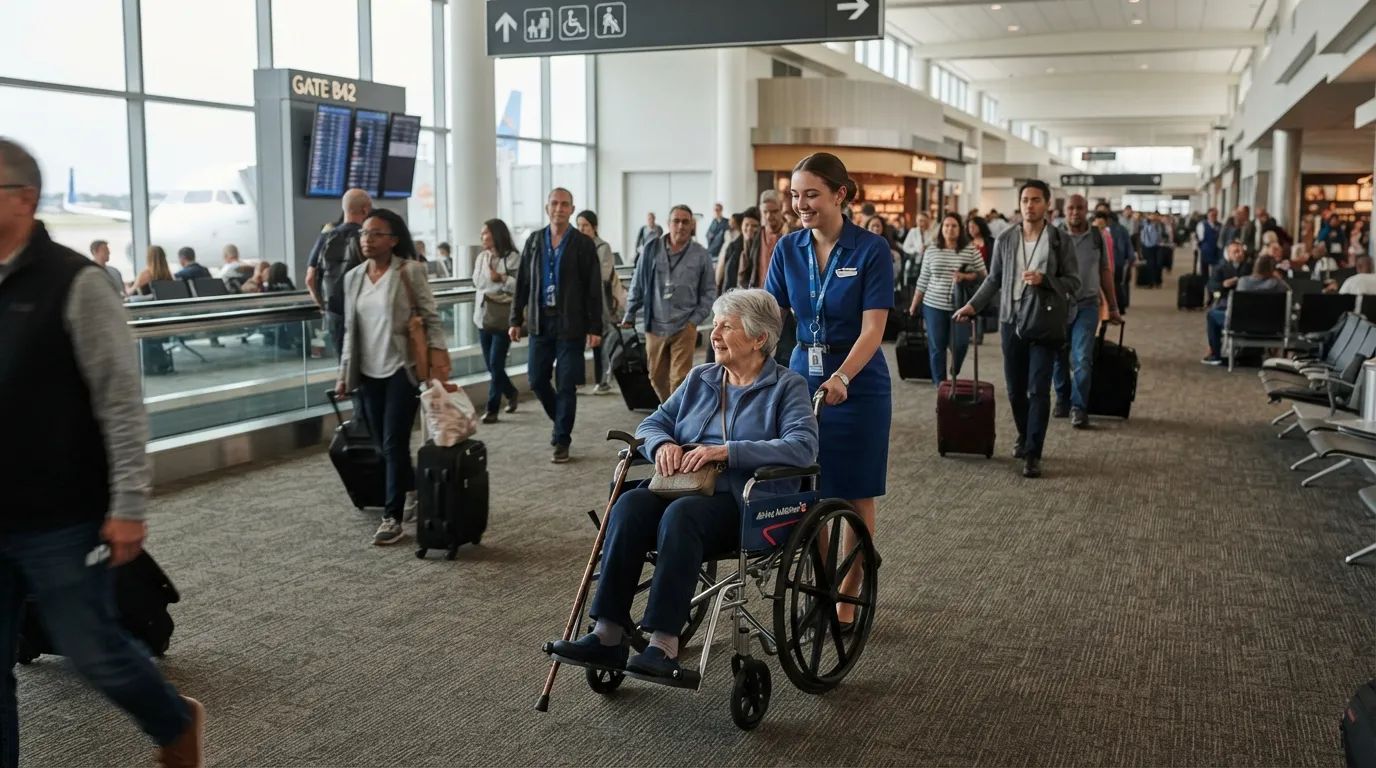
Picture a 68-year-old dragging a carry-on down a terminal that seems to stretch for a mile. An agent strides past, pushing an empty wheelchair that costs nothing to use. Most older travelers assume airport help is automatic, or that it’s only for people who are visibly struggling. Neither is quite true, and that gap is why so many people never ask.
Here’s the twist. These services really are free, but very few of them kick in on your 65th birthday. Most depend on need, and nearly all depend on you speaking up first. Even the best-known senior perk at security has changed, and the story starts there.
#13 – The “Senior” Shoe Perk That Quietly Went to Everybody
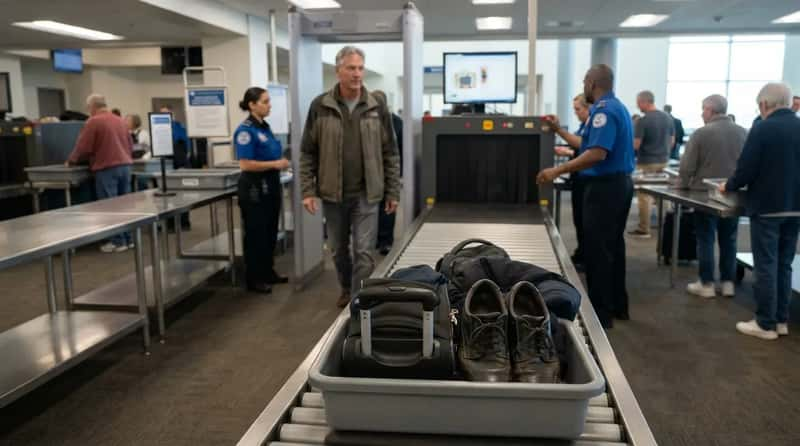
For years, the best-known senior break at security was simple. If you were 75 or older, your shoes could stay on. Children 12 and under got the same pass. Then TSA ended its shoe removal mandate on July 8, 2025, and the “senior” perk became everybody’s.
So the perk many people remember as a seniors-only benefit no longer sets older travelers apart. The age-based help that remains is smaller and more specific, and almost all of it has to be requested out loud. The next 12 items are where it gets genuinely useful.
#12 – The Seated Pat-Down Almost Nobody Asks For
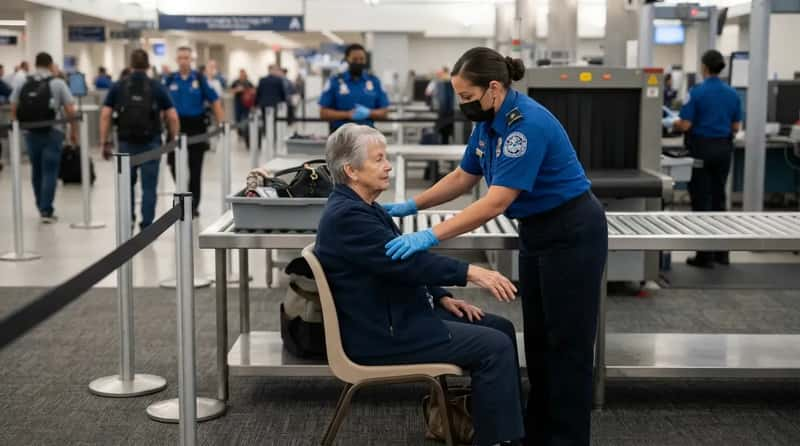
If the scanner alarms, a pat-down usually follows. Standing through that is miserable on tired knees or a bad hip. TSA’s guidance for passengers 75 and older says you can request to be seated during this part of the screening.
And if you can’t stand at all, passengers 75 and older who are unable to stand for screening will be screened through other security methods. Nobody is likely to offer you a chair unprompted, so say it plainly. You aren’t being difficult. You’re using a screening option TSA has published.
#11 – The Passenger Support Specialist Hiding in Plain Sight
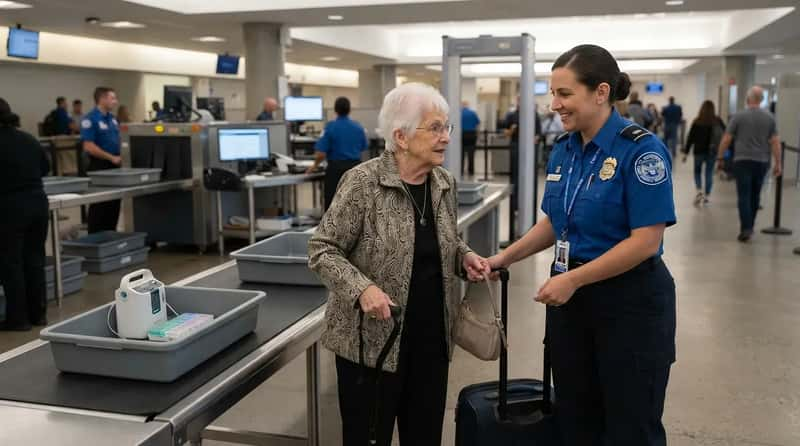
Many travelers don’t know TSA keeps specially trained staff for exactly this situation. They’re called Passenger Support Specialists, and you can ask any TSA officer at the checkpoint to call one. They help people with medical conditions, mobility limits, or plain confusion about the process.
There’s one catch. Requesting a specialist does not exempt you from screening. They guide you through it rather than skip it. That still beats feeling lost in the shuffle, especially if you’re carrying a medical device or a pill organizer. And there’s a way to line all this up before you ever leave home.
#10 – The Free Helpline That Can Set Up Your Checkpoint Help in Advance
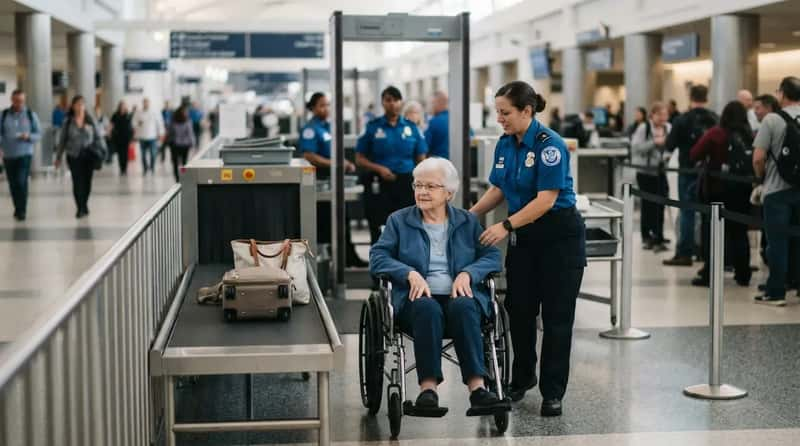
Most people only learn about TSA Cares after something has gone wrong. It’s a free helpline for travelers with disabilities, medical conditions, or other special needs. Call 855-787-2227 about 72 hours before your flight, or request help online instead.
The call can do two things. It can walk you through what screening will look like for your situation, and it can arrange help at the checkpoint. One airport-travel guide cautions that the level of service varies with each airport’s resources. It’s not a VIP lane, and it’s not tied to age. But for anyone dreading security, it’s a free dose of certainty.
Fast Facts
- Phone: 855-787-2227
- Best timing: about 72 hours before your flight
- Cost: free
- Online option: you can request help without calling
- Reality check: service levels vary by airport
#9 – The Printable Card That Speaks for You at Security
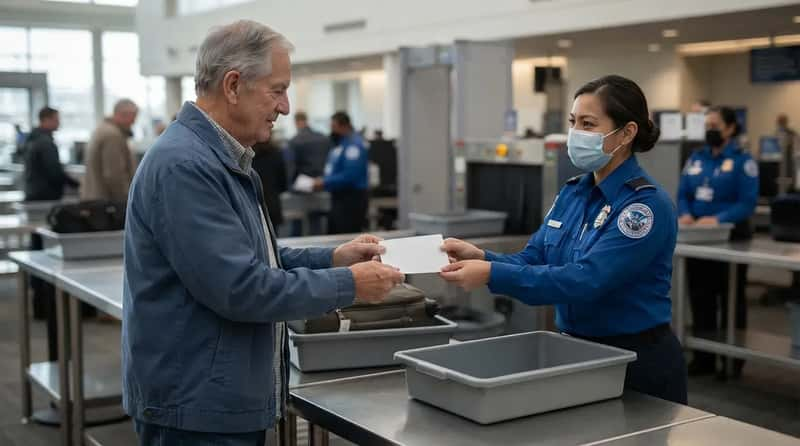
Some health conditions are awkward to explain in a crowded line. TSA offers a Notification Card for exactly that moment. You download it from the official tsa.gov website, fill it in, and print it. Then you hand it to the officer instead of announcing your condition to everyone nearby.
Be realistic about what it does. The card does not provide special screening privileges and does not exempt you from security screening. It’s a communication tool, nothing more, and it costs nothing. Next up is a free symbol you can wear instead, and it works well beyond the checkpoint.
#8 – The Sunflower Lanyard Airport Staff Are Trained to Spot
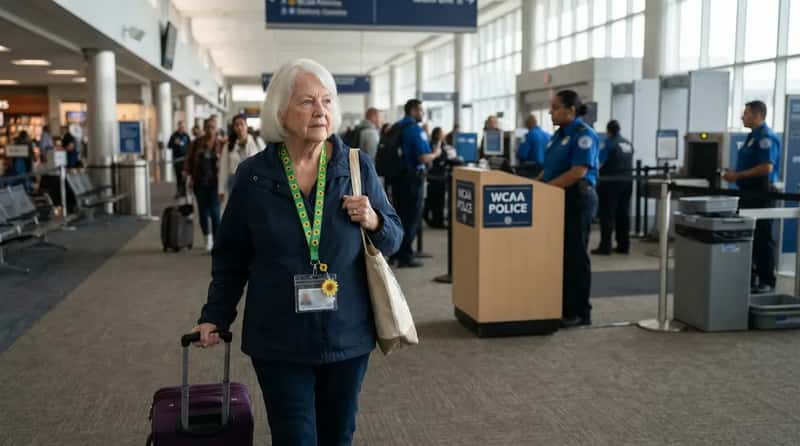
A green lanyard covered in sunflowers looks like a simple accessory. In practice, it quietly tells staff you may need more time or patience. The Hidden Disabilities Sunflower program is recognized in more than 160 airports worldwide, including over 50 in the United States. It’s meant for non-obvious conditions, from hearing loss to dementia to chronic pain.
It’s voluntary and works on the honor system. One guide describes it as free, with no proof or application required. At Detroit’s airport, for example, you can visit a WCAA Police podium at any of the TSA checkpoints to pick one up. Don’t expect shortcuts, though. It does not expedite customs and border patrol. What it buys you is a little more patience from the people around you.
Why It Stands Out
- It’s recognized at more than 160 airports worldwide, including over 50 in the U.S.
- It’s built for conditions people can’t see, like hearing loss, dementia, or chronic pain.
- No proof or application is required, according to one guide.
- It won’t speed up customs, but it can earn you more patience.
#7 – The Free Curb-to-Gate Ride Most Walkers Never Think to Request
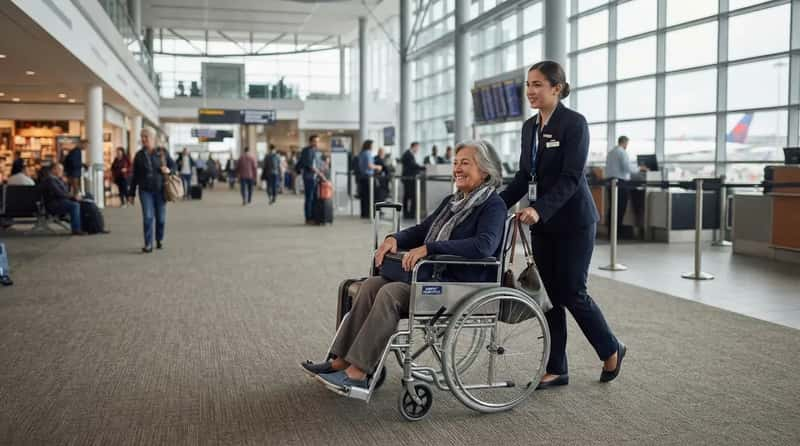
Airport wheelchair help isn’t just for people who can’t walk at all. If distance, stairs, or stamina are a problem, it’s available, and it’s free. Airlines must provide help from the terminal entrance through the airport to the gate.
There’s a real limit, and it’s the part that surprises people. Airlines don’t have to provide wheelchairs to passengers who simply want to get through security faster. The help is for a mobility limitation, not for skipping the line. You also get a say in what you receive, because airlines cannot require you to accept a specific form of assistance you didn’t request. If you only want an escort, you can say so.
#6 – Nobody Can Demand a Doctor’s Note for Basic Help
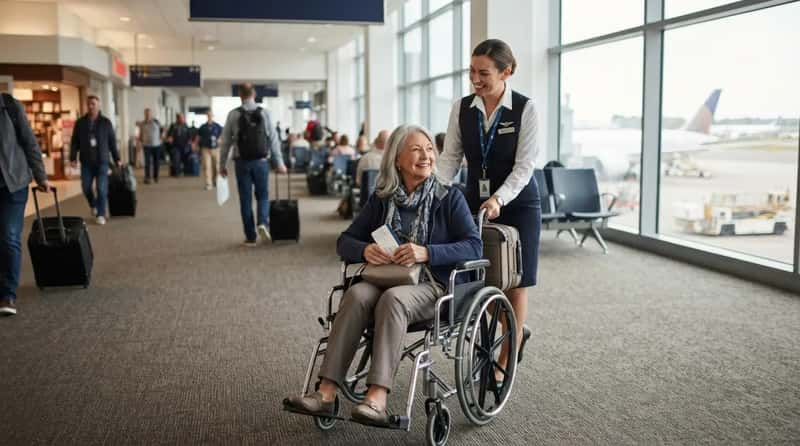
Plenty of older travelers hold back because they think they’ll have to prove something. That worry is mostly misplaced. One 2026 accessibility guide says airlines cannot require proof of disability for standard accommodations like wheelchair assistance or priority boarding.
That doesn’t make every request automatic. Some specialized services do need notice, such as hooking up a respirator or packaging a wheelchair battery, which can require up to 48 hours’ notice. But for the everyday basics, you can simply ask. If you’re turned down or treated badly, you can ask for the airline’s Complaints Resolution Official on the spot, and the DOT complaint process exists too.
Quick Compare
- Just ask: wheelchair assistance and priority boarding, with no proof required.
- Give notice: respirator hookups and wheelchair battery packaging, up to 48 hours ahead.
- If refused: ask for the Complaints Resolution Official, or file with DOT.
#5 – Pre-Boarding You Can Ask for at the Gate
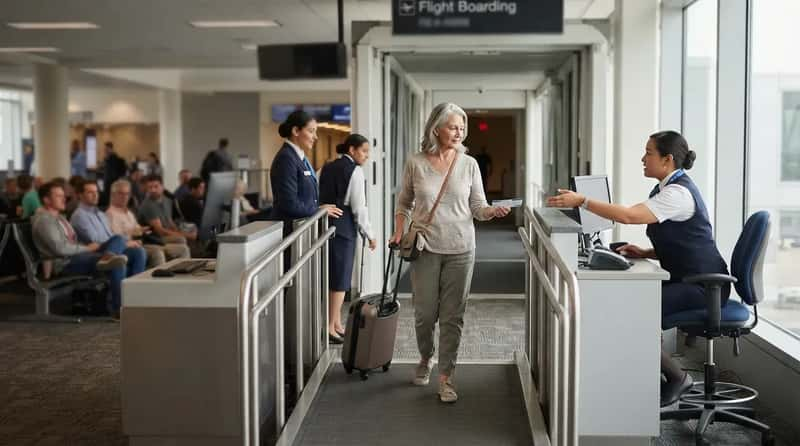
The scrum at the jet bridge is rough when your balance isn’t what it was. There’s a rule that helps. Airlines must give a passenger with a disability who self-identifies at the gate as needing additional time or assistance the opportunity to board before all other passengers.
Notice the wording, though. It’s tied to needing additional time or assistance, not to a birthday. If you move slowly or need help stowing a bag, you qualify. Say it quietly at the desk before boarding starts, so you’re not stuck at the back of a crowd.
#4 – Your Cane, Walker, or Scooter Rides Free (and Has Legal Backup)
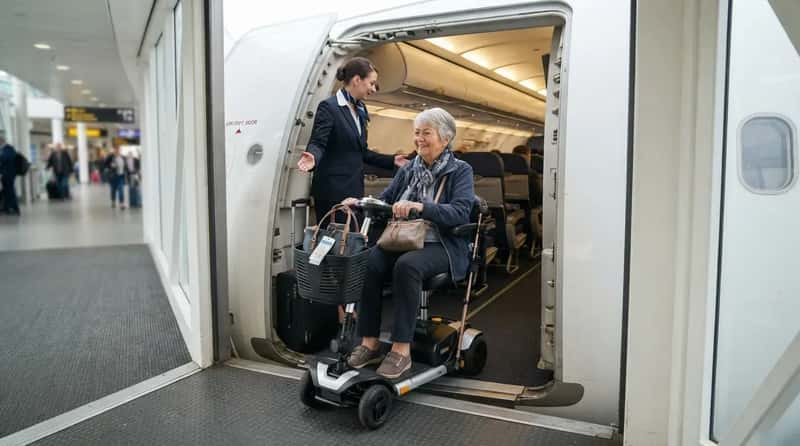
Mobility devices don’t count as luggage. Airlines are required to transport mobility aids like wheelchairs and scooters free of charge. You can also have your device checked at the gate so you can use it in the terminal. That means you keep your own chair until the aircraft door.
The rule also requires a loaner if your device is mishandled. However, DOT delayed enforcement of four specific provisions in September 2025, including the loaner rule, so check the current status before you rely on it. Older rules still say that if an airline loses or damages a device, it must compensate you up to the original purchase price.
#3 – The Seat Request That Puts You Closer to the Restroom
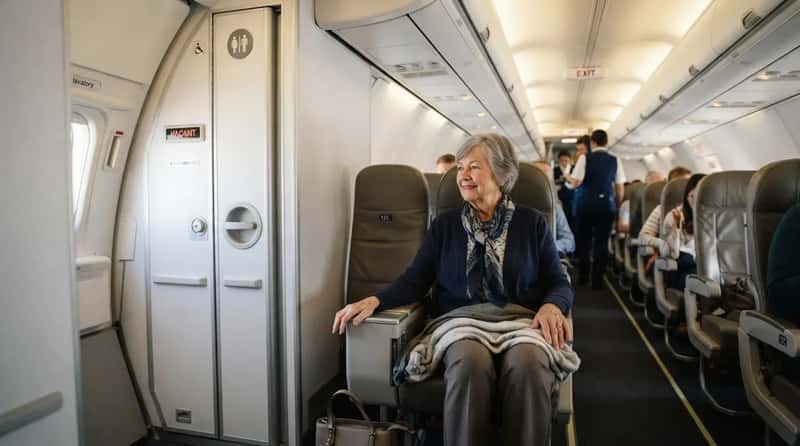
Where you sit matters more at 70 than at 30. Airlines are expected to let passengers who need it ask for specific seating. One summary of the rules notes that passengers can request seating that suits their needs, such as proximity to restrooms or extra space for mobility aids.
The smart move is to ask early, during booking or at check-in, not at the gate when the plane is full. Mention the specific need, such as aisle access or an easy path to the lavatory, instead of just asking for “a better seat.” Specific requests are easier for staff to act on. It’s a free accommodation that few passengers ever use.
Worth Knowing
- Ask at booking or check-in, when seats are still open.
- Name the need: aisle access, a short walk to the restroom, or room for a mobility aid.
- Skip the vague “better seat” request. Specific asks are easier to approve.
- There’s no charge for the accommodation itself.
#2 – In Europe, Being Older Counts Officially (and It’s All Free)
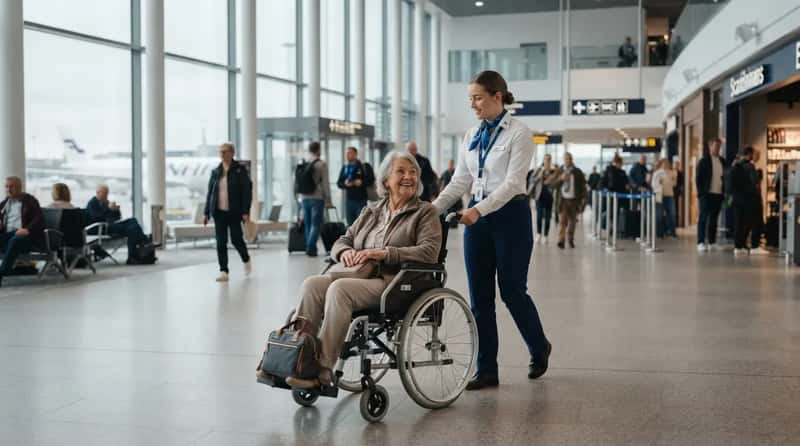
This is the one item where age is written right into the rule. EU Regulation 1107/2006 defines a person with reduced mobility as someone whose mobility is reduced due to disability “or age.” Finland’s aviation authority puts it plainly: if your mobility is reduced as a result of old age or disability, you’re entitled to special assistance free of charge.
Coverage is broad. Assistance is provided on all flights departing from the EU, and at all airports in the EU and in Norway, Iceland and Switzerland. Book it ahead, because the 48-hour rule is the same for every airline leaving an EU airport. Some budget carriers add extras. Ryanair, for example, seats you and one companion together for free.
#1 – Help at Your Connection, Not Just Your First Gate
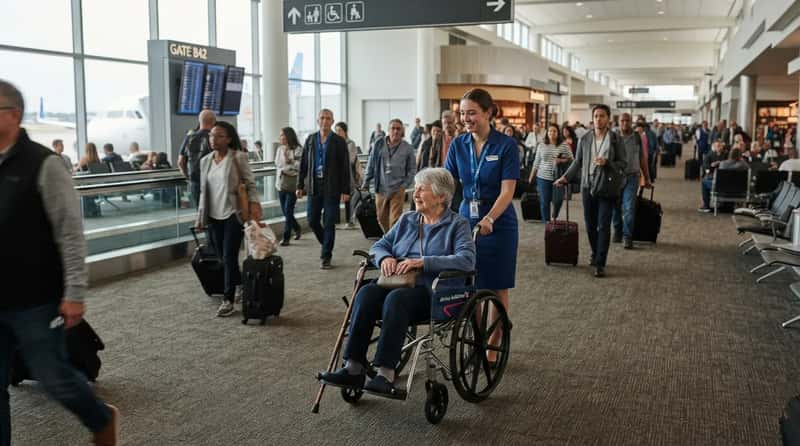
The scariest part of a long trip is the tight connection in an unfamiliar airport. Many older travelers don’t realize that assistance is supposed to follow them through it. Under U.S. rules, passengers with disabilities are entitled to timely assistance for boarding, deplaning, and connecting flights. DOT’s rule also requires “prompt” assistance, including help moving around the terminal.
Europe covers it too. EU rules entitle you to assistance in airports on departure, arrival and during transit. For a traveler who dreads sprinting between terminals, this is the free service worth requesting every single time.
The bottom line: The age line at TSA is 75, and even the shoes-on perk now belongs to everyone. The real protections turn on need and on asking, from TSA Cares and seated screening to free curb-to-gate help and EU assistance.
Staff rarely mention any of it, but you don’t need permission to ask. The help is real, and it’s just waiting for someone to say the words out loud. Which of these would have saved you the most hassle on your last trip?