Most people picture airport assistance as one friendly person with a wheelchair. That’s only the part you can see. Behind it sits a chain of flags, equipment, staff assignments and security coordination, and much of it is set in motion before the traveler reaches the curb.
Some of these steps are written into federal rules. Others hinge on one request most travelers don’t know is the trigger. And the last item on this list changes what “asking for help” even means. Here’s what the rules and the insiders actually say.
#13 – A Tiny Code Gets Stamped on the Booking and Sets Everything in Motion
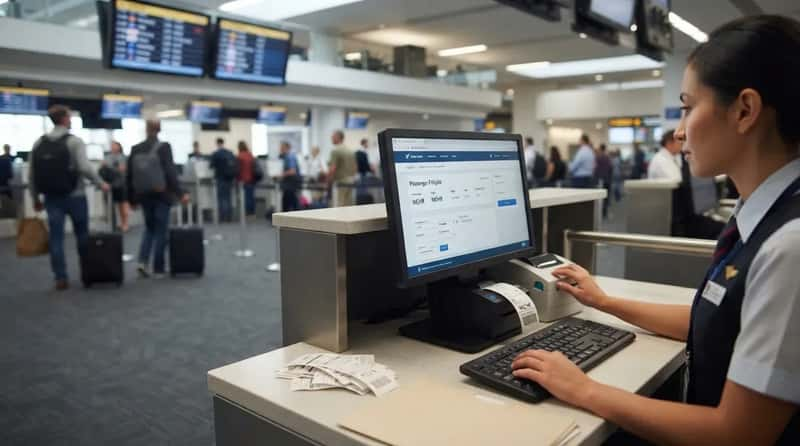
Before anyone meets you at the curb, a short code gets attached to your booking. It tells the airline and the airport assistance provider what level of help was requested. Most travelers never see it. The wheelchair codes come from the IATA Special Service Request catalogue, and the three you’ll hear about most are WCHR, WCHS and WCHC.
Roughly, WCHR is for people who can manage stairs but need help covering distance. WCHS is for people who can’t climb stairs, and WCHC is for people who need help all the way to their seat. These codes are used by member airlines worldwide, so the same shorthand follows you across borders.
Pick the wrong one and the wrong help can be arranged. But that’s nothing compared to where the code goes next.
#12 – Your Request Quietly Travels to a Contractor You’ve Never Heard Of
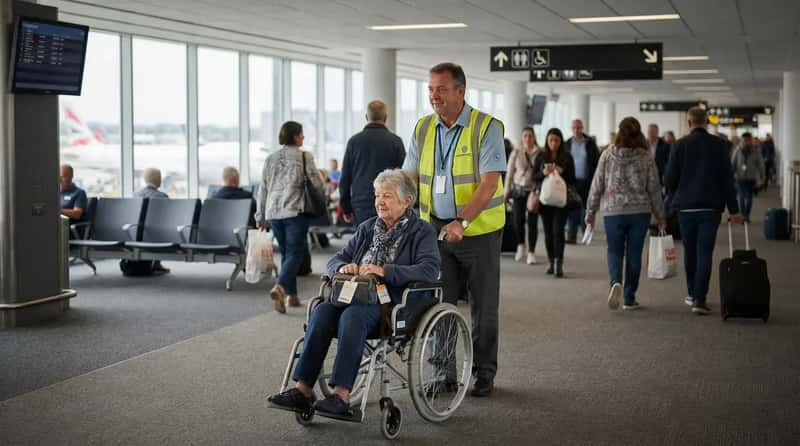
The person who meets you may not work for your airline at all. Wheelchair assistance is provided by airlines and by contracted airport service providers. Your request gets handed down the line before you’ve even left home, and nobody explains that at booking.
The DOT’s own rules assume contractors are doing much of the physical work. The 2024 rule covers both airline employees and contractors who physically assist passengers and their wheelchairs. The service itself is free, because airlines and airports offer wheelchair assistance at no charge.
#11 – The Right Equipment Gets Matched to Your Code Before You Arrive
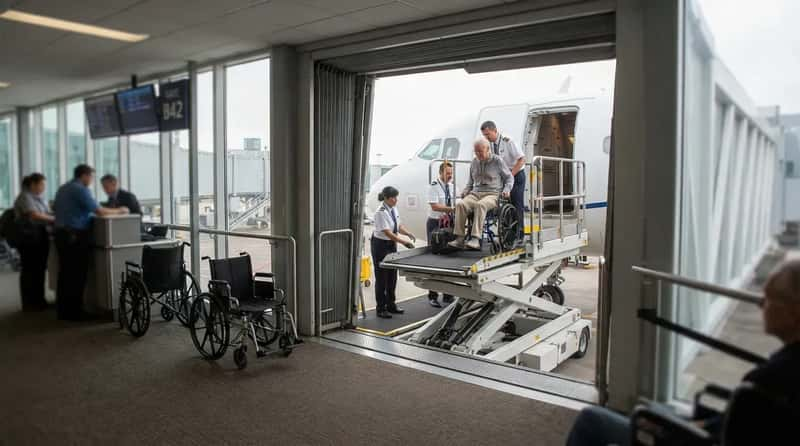
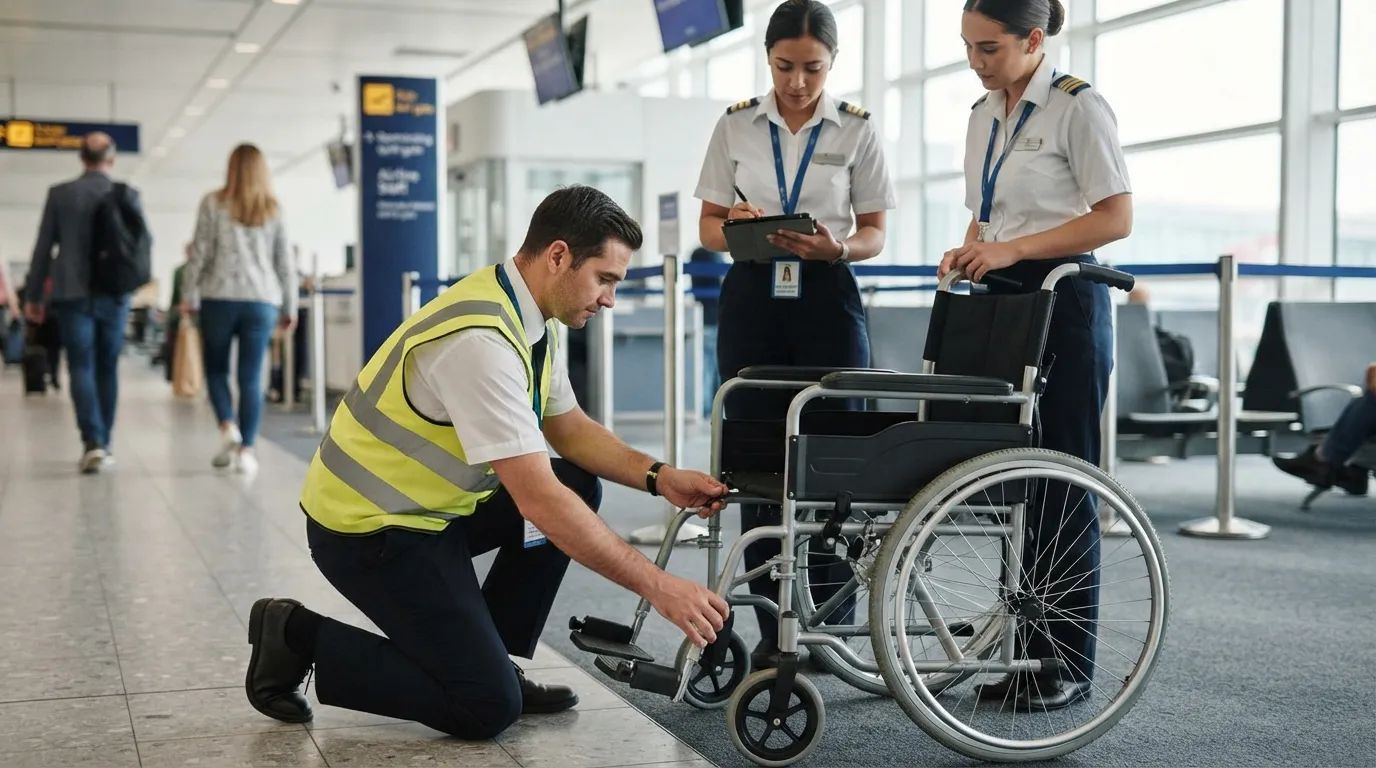
The code also decides which gear gets rolled out. A WCHS passenger may need a wheelchair or an ambulift to reach the cabin door. A WCHC passenger gets an onboard narrow aisle chair inside the cabin. Nobody at the gate should be improvising this.
Boarding isn’t supposed to be a free-for-all either. For most planes, boarding must be available by a level jet bridge, ramp or mechanical lift. Airline personnel must never hand-carry a passenger on or off an aircraft, except in an emergency.
#10 – Extra Hands Get Assigned for Your Bags, Not Just Your Chair
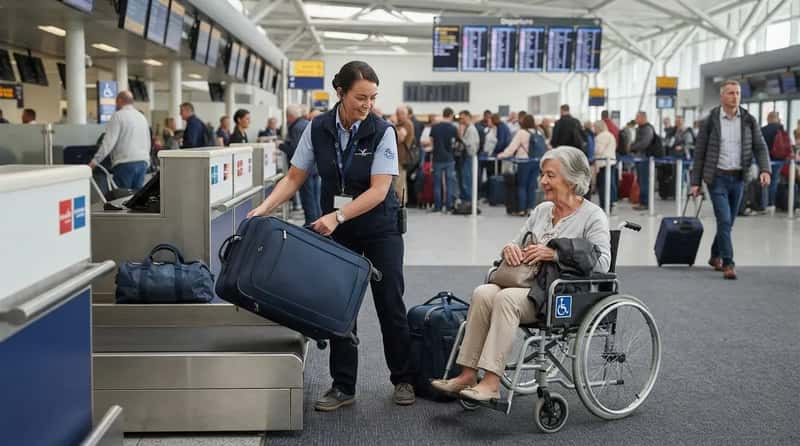
Many travelers assume assistance means one person pushing a chair. The rules say more. Carriers must provide equipment and personnel, including people who propel wheelchairs and aisle chairs and people who help carry and stow baggage.
Assistance runs from the curb to the departure gate, between gates for connections, and from arrival to pick-up at the curb. Some people assume it’s a perk that lets you skip the line. The rules describe something different, a required access service.
At a Glance
- Start: help from the curb to the departure gate
- Middle: help moving between gates for connections
- Finish: help from arrival to curb pick-up
- Extra hands: people to push chairs and to carry and stow baggage
#9 – A Special Security Route Opens Up Without a Word
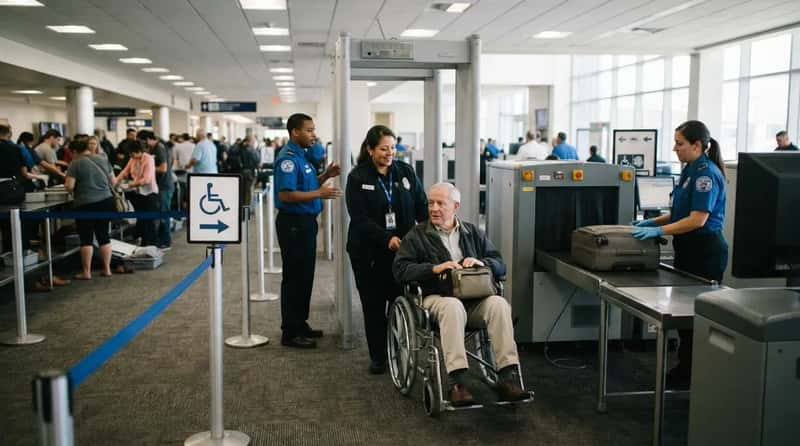
The attendant doesn’t just wheel you toward the checkpoint and wave goodbye. They guide you through an accessible security lane. Screening may be modified, such as a pat-down or a visual inspection of a mobility device.
TSA’s stated goal is to have a Passenger Support Specialist near every checkpoint to give proactive help. Those specialists are trained in how to communicate with people with disabilities.
Not everything at the checkpoint is truly hands-off, though. Some of the coordination starts with a phone call.
#8 – Security Gets a Heads-Up Before You Show Up
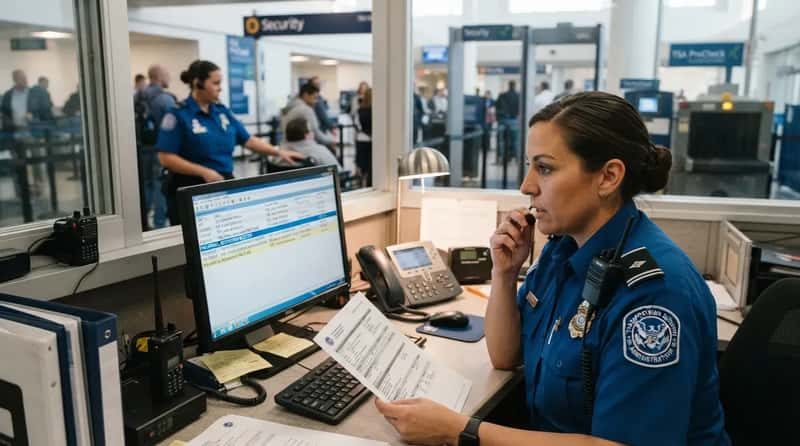
This one isn’t fully automatic, and it’s worth being straight about that. If you give a TSA Cares agent your itinerary, the agent notifies TSA officials at the airports so they can prepare. That lead time lets them coordinate with a customer service manager at your specific airport.
TSA Cares does not replace airline special assistance. It covers only the security checkpoint. So the airline’s part and TSA’s part run on separate tracks.
#7 – Your Wheelchair’s Battery Type Gets Its Own Flag
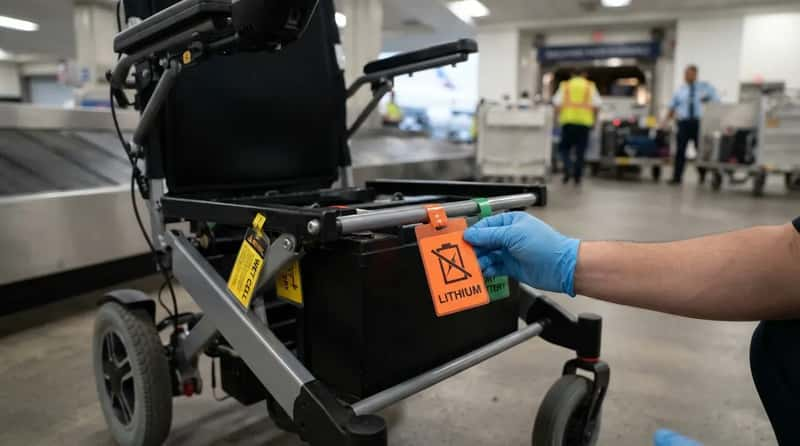
Powered chairs add a whole second layer. There’s a code for dry-battery chairs and another for wet-cell chairs, which must be handled to prevent battery leakage. There’s also a combination code for a lithium battery chair.
This is where the “no notice needed” promise picks up some fine print. Airlines may require up to 48 hours’ notice for hazardous-materials packaging of a wheelchair battery. The same applies to transporting a powered wheelchair on an aircraft with fewer than 60 seats.
Worth Knowing
- Dry-battery chairs have their own code
- Wet-cell chairs have a separate code because of leakage risk
- Lithium battery chairs use a combination code
- Up to 48 hours’ notice may be required for battery packaging
#6 – Codes Stack Like Puzzle Pieces and Can Even Change Your Seat
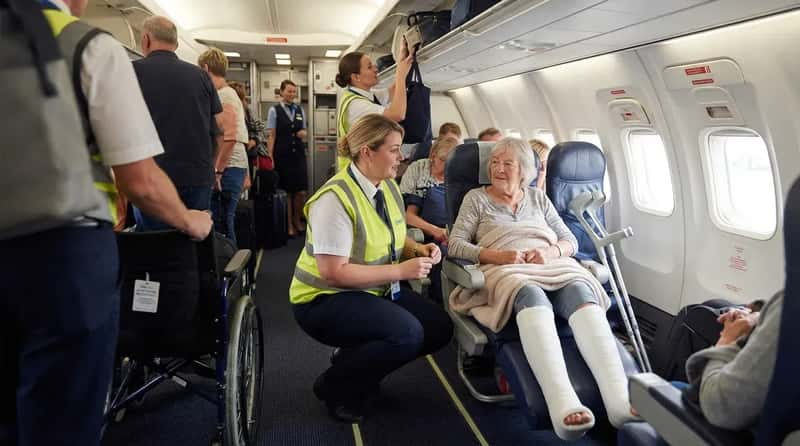
One flag is rarely the whole story. Examples include a full-assistance code plus a dry-cell battery code, or a code for a passenger with both legs in casts plus full wheelchair assistance. The system is built to describe a specific person, not a generic category.
One example pairs a no-stairs wheelchair code with a flag that bars the passenger from an exit row seat. Nobody announces that at check-in. The seat just ends up somewhere else.
#5 – Flight Attendants Are Trained to Help You Reach the Lavatory
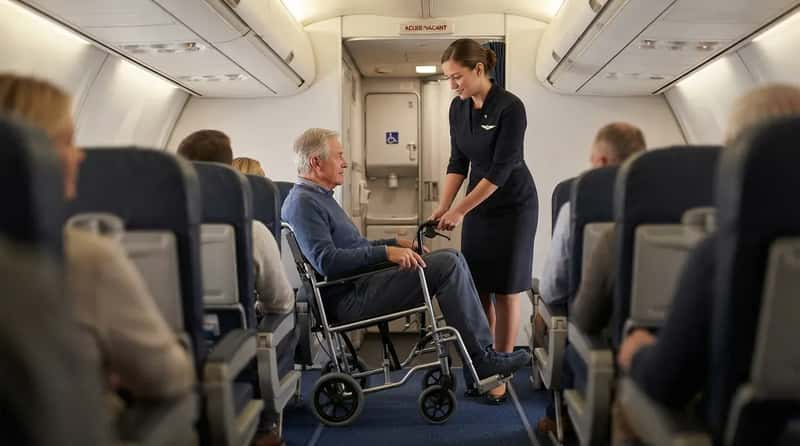
The arrangements don’t stop at the aircraft door. Airlines should help, as requested, with getting in and out of the seat, moving to and from the lavatory, and stowing or retrieving carry-on items. That’s a rule, not a courtesy.
Carriers must train flight attendants to proficiency every year to help transport qualified passengers to and from the lavatory. There’s an onboard code for this too, one that requests an onboard aisle wheelchair for use during the flight. Most people don’t realize any of it exists.
#4 – Connecting Flights Get Their Own Escort Plan
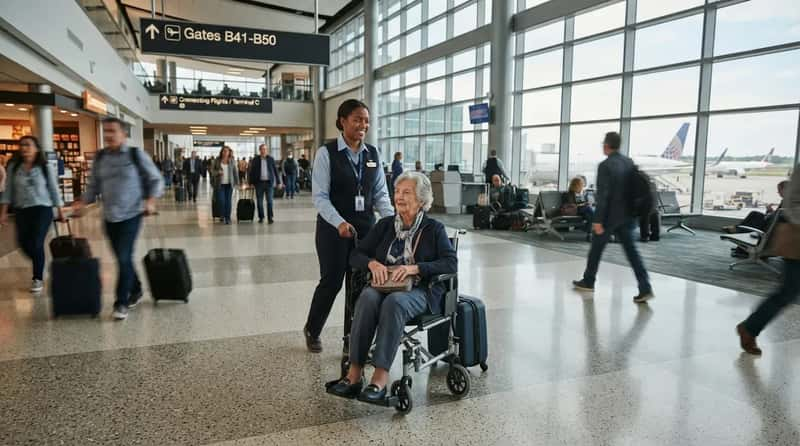
Switching planes is where many travelers feel stranded, and the rules cover it. Airlines must help passengers with disabilities in boarding, deplaning, making flight connections, and moving between gates.
The 2024 DOT rule specifically lists prompt boarding, deplaning and connecting assistance. The word “prompt” is the point. Many travelers say the waiting is the hardest part.
#3 – Boarding Gets a Head Start, and So Do Your Medical Devices
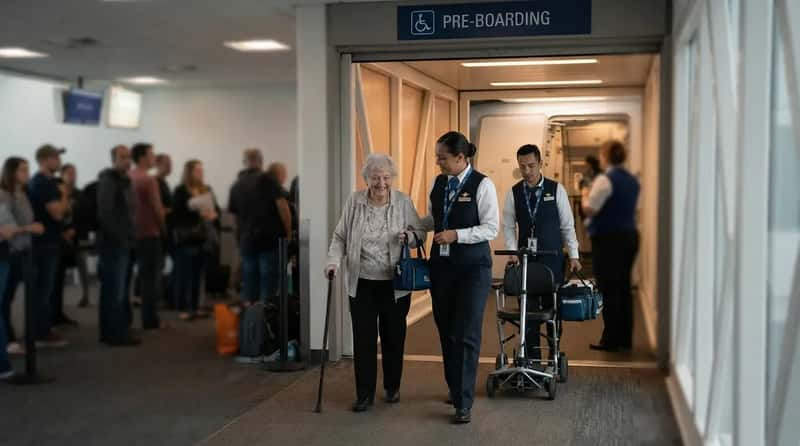
Preboarding is built into the process. Passengers who identify at the gate as needing extra time or help to board, be seated, or stow accessibility equipment must be given the chance to preboard. It isn’t a favor.
The carry-on rules work differently here too. Assistive devices must be allowed as carry-ons free of charge and don’t count against the carry-on limit. That includes medical devices and medications. Few people at the gate know that.
Fast Facts
- Preboarding must be offered to passengers who ask at the gate
- Assistive devices ride as carry-ons at no charge
- They don’t count against your carry-on limit
- Medical devices and medications are covered too
#2 – Staff Are Now Required to Prove They Know What They’re Doing
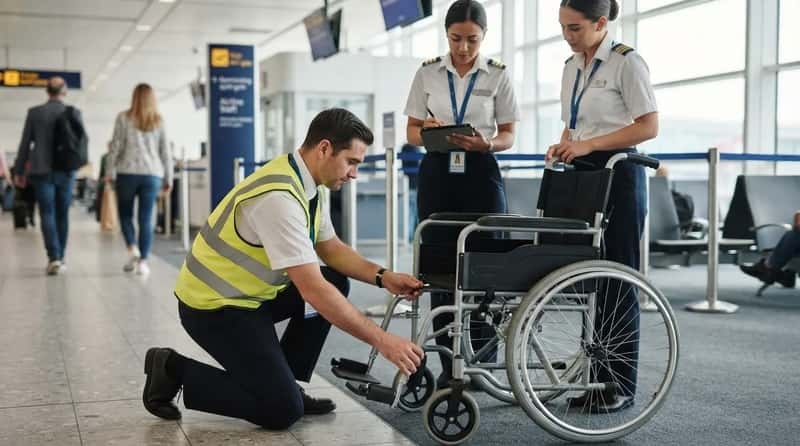
This is the newest layer. Airline employees and contractors who physically assist passengers and their wheelchairs or scooters must receive annual hands-on training. They must demonstrate that knowledge through competency assessments or certification exams.
DOT data showed at least one in every 100 wheelchairs or scooters on domestic flights was damaged, delayed or lost. That number is the reason the training requirement exists. The deadline for covered employees and contractors was June 17, 2026.
Delayed chairs on domestic flights must be returned within 24 hours of arrival.
#1 – The Biggest Safety Net Needs No Advance Notice at All
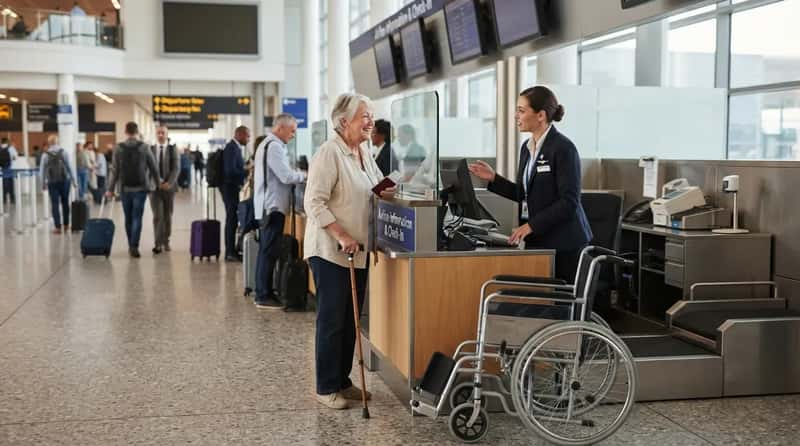
Here’s the truth most travelers miss. A carrier must not require a passenger with a disability to give advance notice that they are traveling on a flight. Walking up to the counter unannounced doesn’t forfeit your rights.
Even when a notice or check-in deadline has passed, the carrier must still provide the service if it can with reasonable efforts and without delaying the flight. Advance notice is only allowed for certain items, such as respirator hook-ups. The default is built around you showing up exactly as you are.
So behind one wheelchair ride sits a hidden system: a code on your booking, contractors, matched equipment, a security lane, stacked flags, trained crews and connection help. Some pieces are automatic. Others, like TSA coordination, start with a call or form. Recent U.S. rules also tightened training and wheelchair-return standards.
The strongest protection of all is the simplest one. Nobody can require you to announce yourself first. Which of these did you not know existed?