

You’d assume the messiest, most chaotic hotel rooms belong to spring breakers or road-tripping families with toddlers in tow. Ask any housekeeper who’s spent years pushing a cart down long hallways, and the answer gets more surprising. Guests over 65 tend to leave behind a completely different set of clues, and most of those clues have nothing to do with mess at all.
Some of these habits are quietly admired. Others quietly frustrate the very people trying to make a stay comfortable. Here’s what experienced hotel staff actually notice when they open the door to a room booked by an older guest.
13. The Paper Trail Nobody Else Carries Anymore
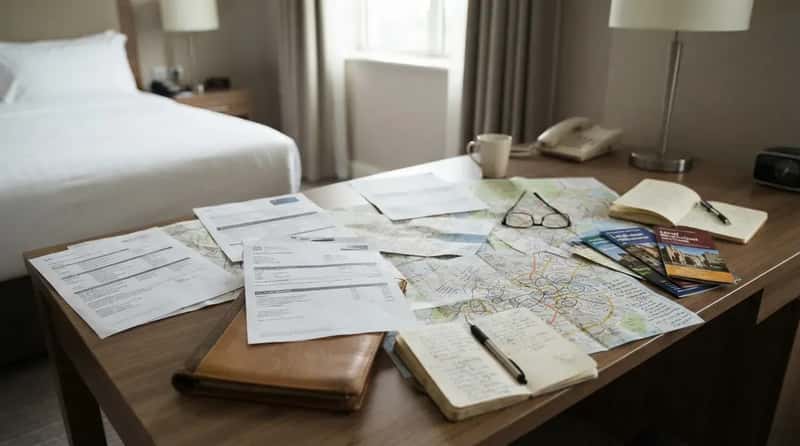
Older guests are far more likely to leave printed confirmations, mapped-out directions, and handwritten notes scattered on the desk. It’s a habit from a travel era before smartphones took over every reservation and boarding pass. Housekeepers say it’s one of the fastest ways to spot a guest’s generation before ever meeting them face to face.
It’s not laziness or confusion. It’s a preference for something tangible in a system that’s gone almost entirely digital. Housekeeping staff frequently mention this paper habit as oddly reassuring, since a folder of printed itineraries rarely comes with the chaos that loose receipts and takeout menus create.
12. Lights Off, Towels Reused, Thermostat Untouched
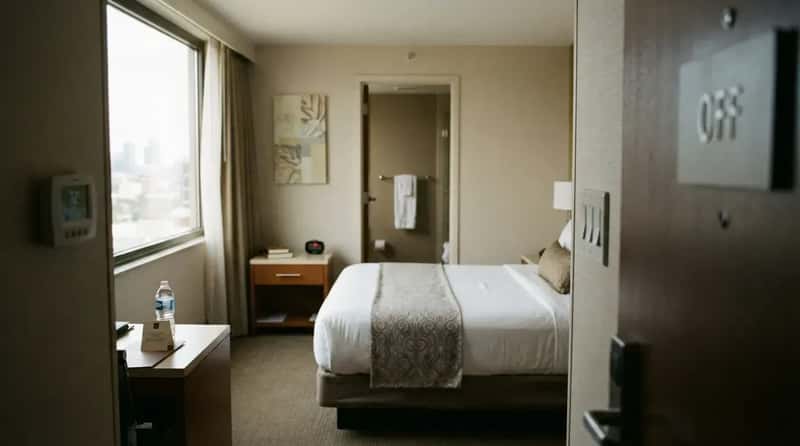
Older guests are noticeably more likely to conserve energy without being asked, and housekeepers notice it the second they walk in. Roughly three-quarters of travelers say they’re keen to reduce water usage by reusing towels or skipping daily room cleaning. Among guests over 65, that instinct often shows up without any hotel signage prompting it at all.
It’s a habit shaped by decades of not wasting what doesn’t need replacing. Hotels have leaned into this too, since housekeepers are trained to spot sustainability habits, from towel pileups to unopened water bottles. The rooms of older guests are consistently flagged as the lightest on waste, a detail housekeepers rarely say out loud to guests directly.
Fast Facts
- About three in four travelers say they actively try to cut water waste on trips.
- Unused towels, untouched thermostats, and skipped daily cleaning are the top signals housekeepers watch for.
- Rooms booked by guests over 65 are repeatedly described as the lightest on daily waste.
11. The Suitcase That Looks Like It Was Packed by a Professional
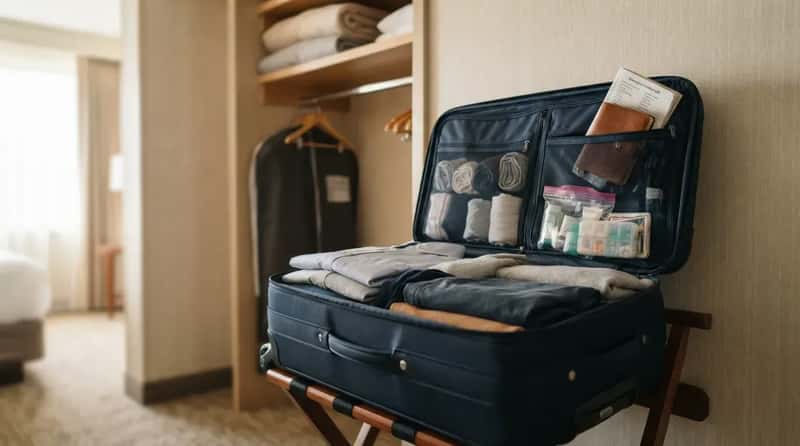
Open the closet in a room booked by someone over 65, and there’s a decent chance everything is folded, zipped, and organized by category. Housekeepers describe it as almost a different species of packing compared to the average guest. Nothing is thrown, nothing is inside out, and nothing spills onto the floor.
This isn’t about tidiness for its own sake. It’s a habit built from decades of packing for work trips, family vacations, and everything in between. Medication organizers, sewing kits, and printed emergency contact lists tucked into a side pocket are common enough that housekeepers barely blink at them anymore.
10. Booking Through the Same Familiar Travel Site Every Time

Loyalty to a trusted booking habit runs deep, and it quietly shapes the entire stay before a guest even reaches the front desk. Many guests over 60 book through familiar third-party sites out of habit, and that single choice quietly affects the room they’re assigned, the floor, the view, whether it was recently renovated. It’s rarely discussed openly, but staff know exactly what’s happening.
Here’s the part that stings a little: direct bookings earn loyalty points and upgrade eligibility, while third-party bookings typically generate commissions of 15 to 25 percent for the platform, which is part of why hotels deprioritize those guests for perks. Many industry insiders now call this the single most consequential habit older travelers don’t realize is costing them upgrades.
Quick Compare
- Direct booking: loyalty points, upgrade eligibility, first pick on room assignments.
- Third-party booking: often cheaper upfront, but hotels pay 15-25% commission on the room.
- The result: direct bookers tend to get flagged first when upgrades or late checkouts open up.
9. A Bed That Barely Looks Slept In
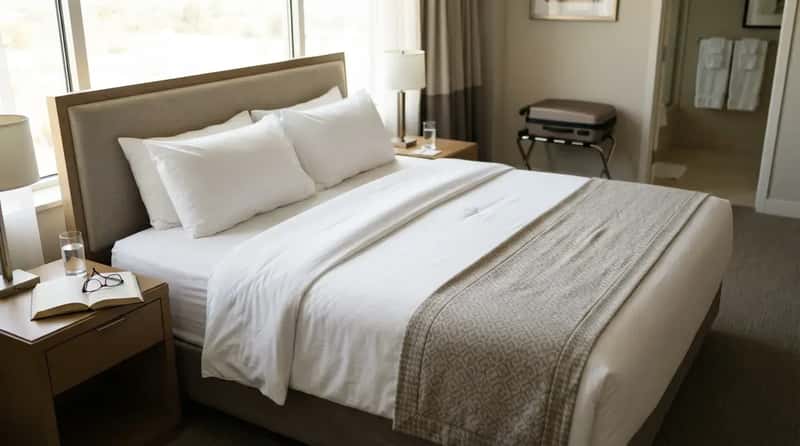
Housekeepers repeatedly bring up how strangely tidy older guests leave their beds, sometimes tucking corners back in or folding the top sheet before heading out for the day. It’s an old habit from a generation raised to make the bed every single morning, hotel room or not. Staff say it barely registers as unusual anymore because it happens so consistently.
It’s a small thing, but it changes the pace of a turnover. A room that’s already half-organized takes noticeably less time to reset. Housekeepers have said this single habit shaves real minutes off a job that normally runs on a tight, unforgiving clock.
8. A Personal Pillow or Blanket That Never Leaves Home Without Them

Older travelers are far more likely to bring their own pillow, a specific blanket, or a compression sock rolled neatly beside the nightstand. It’s not fussiness. It’s decades of learning exactly what helps them sleep and refusing to gamble on a hotel pillow menu, and housekeepers notice these items immediately because they have to work carefully around them.
These personal comfort items tend to be treated with real care, folded and placed in the same spot every morning before housekeeping arrives. It’s one of the clearest, quietest signals of a guest who has traveled enough to know exactly what they need.
7. Requests Made With Patience Instead of Demands

Early check-in is one of the most common flash points in any hotel, but older guests tend to approach it very differently than younger travelers. The hotel day starts at 3 p.m. for most properties, and the guests who get early check-in approved most often aren’t the ones who argue loudest, they’re the ones who ask nicely and leave their bags with the bellhop while they explore.
Housekeepers and front desk staff both notice the tone shift instantly. A politely made request tends to activate staff discretion in a guest’s favor, while a demand shuts that door fast. The outcome guests actually want is far more likely when they ask like it’s a favor, not a right.
Worth Knowing
- Most hotels set official check-in around 3 p.m. and checkout around 11 a.m.
- Early check-in and late checkout are almost always discretionary, not guaranteed.
- Front desk staff say a friendly tone opens more doors than a firm one ever does.
6. A Room That Somehow Still Feels Lived-In and Personal
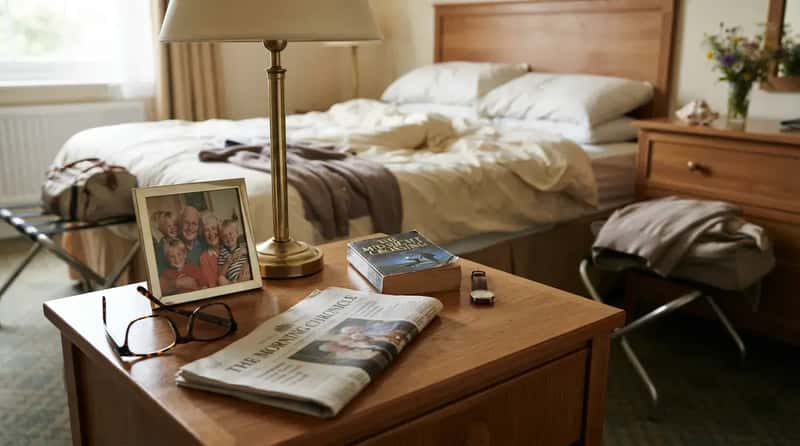
Even on a two-night stay, older guests are more likely to unpack fully rather than live out of a suitcase. Reading glasses, a folded newspaper, a family photo propped against the lamp, these small touches turn a generic room into something that briefly feels like home. Housekeepers say it’s one of the more pleasant surprises of the job.
It also tells a story before a single word is exchanged. Staff can often make an educated guess about a guest’s situation just from the souvenirs and belongings left in a room, and an older guest’s items usually point to something warmer: grandkids, anniversaries, long-planned trips. Housekeepers say these rooms are consistently the ones that feel the least transactional.
5. The Coffee Station Treated Like Precious Cargo
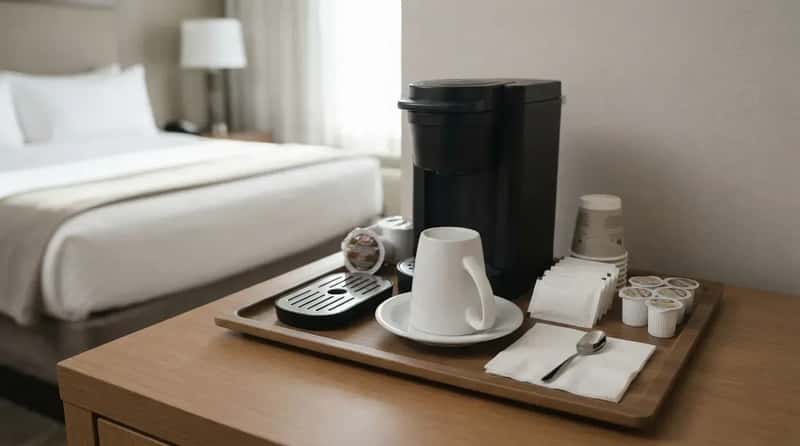
Housekeepers say the in-room coffee setup reveals a surprising amount about any guest, and older travelers tend to leave it noticeably tidier than most. A neat station versus one that looks like a caffeine explosion actually determines how long a routine cleaning task takes.
Sugar packets are stacked instead of scattered, the pot gets rinsed, and extra creamers are often left neatly for the next morning rather than torn open and abandoned. It’s a small habit, but it adds up across dozens of rooms a shift. Housekeepers openly say this is one of the most consistent generational patterns they notice, and it’s rarely ever the messy exception.
4. Treating Housekeeping Like a Person, Not Part of the Furniture
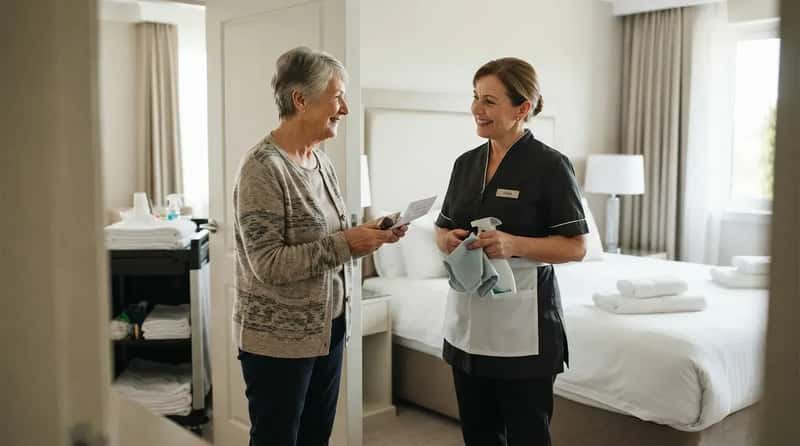
This is where the real contrast shows up. Housekeeping staff, who often work quietly in the background, notice instantly when they’re treated as part of the furniture rather than as a person, and the guests treated best at every hotel aren’t necessarily the wealthiest. They’re the ones who treat staff like humans with names.
Older guests are disproportionately likely to say good morning, ask how someone’s day is going, or apologize for a late checkout in person instead of ignoring the knock entirely. It sounds small. Housekeepers say it changes everything about how a room gets treated for the rest of the stay.
People will forget what you said, people will forget what you did, but people will never forget how you made them feel.
Maya Angelou
3. A Preference for the Front Desk Over the App, Even When It Slows Things Down

Mobile check-in and keyless entry have become the default expectation for most travelers, but plenty of older guests still walk straight to the front desk out of habit. Staff aren’t judging anyone for preferring a real conversation over an app, they only notice when that preference comes with visible irritation directed at them personally.
This is one of those slightly touchy habits housekeepers and front desk teams discuss among themselves. Preferring the human interaction isn’t the problem at all. The friction only appears when a guest blames the person at the desk for a digital system they had no hand in designing.
2. The Tip That’s Rare Almost Everywhere Else
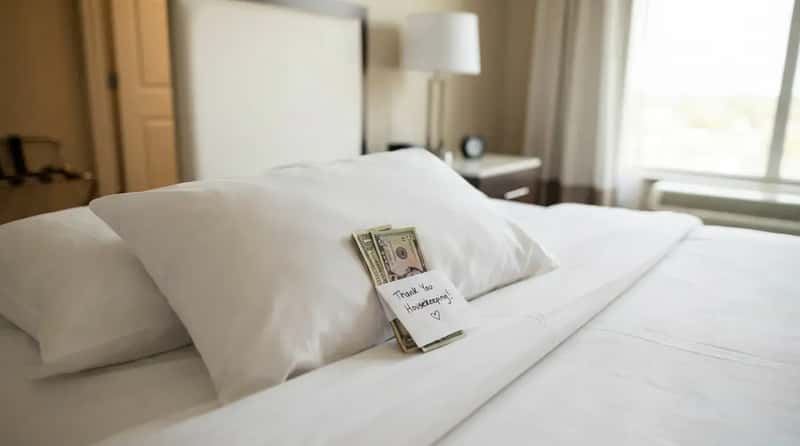
Tipping housekeeping has quietly become one of the most skipped gestures in American travel. The share of Americans who say they always tip hotel housekeepers has been steadily declining, and far more Americans still tip servers at sit-down restaurants without a second thought. Older guests break that pattern more than any other age group.
Housekeepers talk about this among themselves constantly. Boomers tip less often overall, but when they do tip, they tend to leave more than average. With hotel housekeepers earning around $14 to $15 an hour on average according to federal wage data, even a small daily bill left on the pillow is genuinely meaningful to the person who finds it.
At a Glance
- The share of Americans who always tip housekeeping has been shrinking for years.
- Boomers tip less often than younger travelers, but tend to leave more when they do.
- Average hourly pay for hotel housekeepers sits around $14-$15, making small tips genuinely impactful.
1. Genuine Warmth That Staff Remember Long After Checkout

Ask any longtime housekeeper which guests actually stick in their memory, and the answer is rarely the biggest spender or the highest floor. It’s the guest who learned their name, asked about their week, or left a short thank-you note folded on the pillow. Older guests do this far more consistently than any other age group housekeeping staff describe.
It isn’t about grand gestures. It’s a quiet, old-fashioned kind of courtesy that treats a hotel stay as a series of small human interactions rather than a transaction to get through. In an industry built on being invisible, that kind of recognition is the habit that seems to matter most.
None of these habits are really about age. They’re about a generation that learned to pack carefully, ask politely, and say thank you to the people who make a hotel stay actually work. Housekeepers notice all of it, even when guests assume nobody’s paying attention.
The biggest surprise isn’t that older guests behave differently. It’s how consistently these small, quiet habits show up, room after room, city after city. Which one sounds exactly like your own parents or grandparents on a trip? Drop it in the comments.