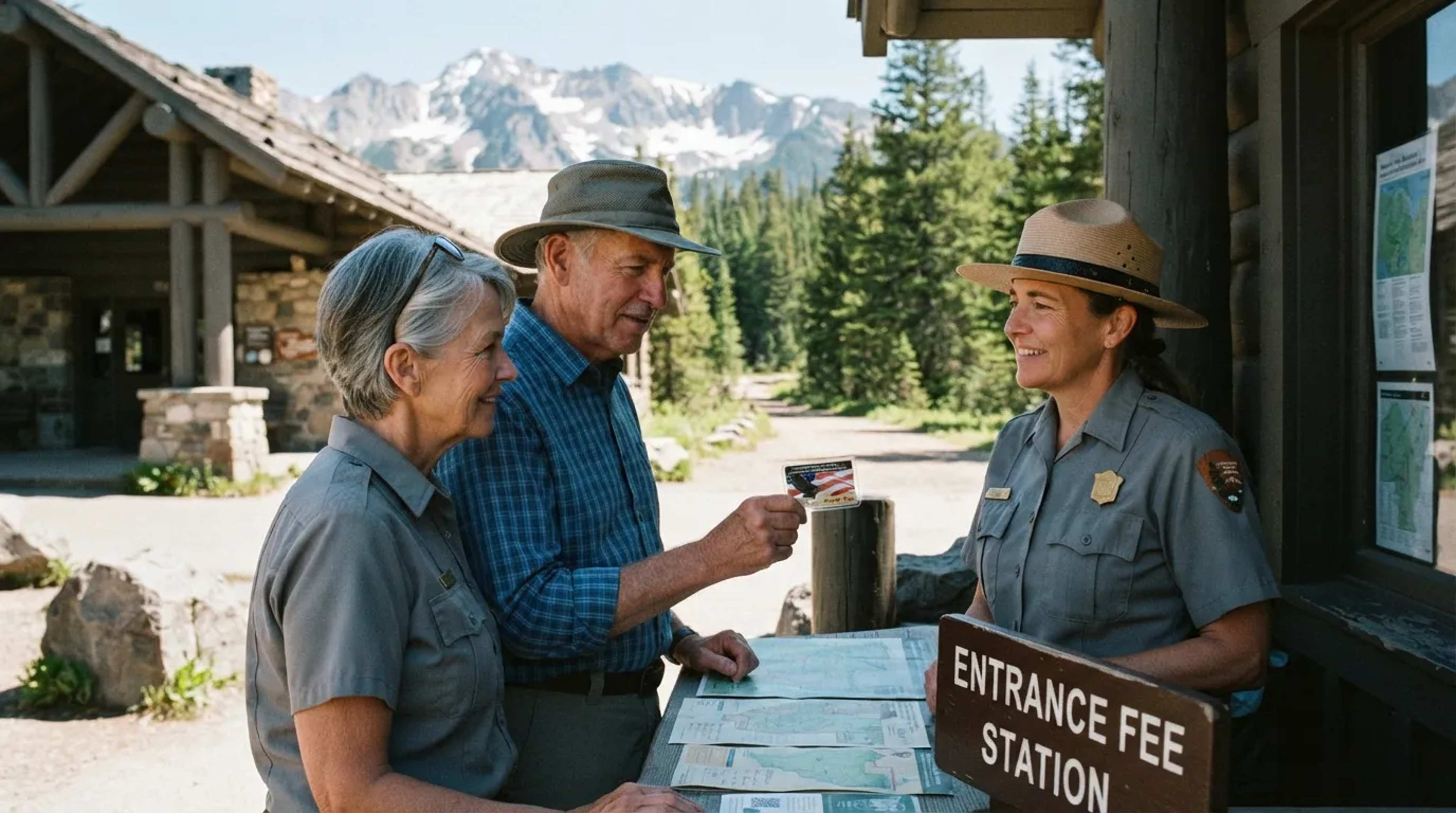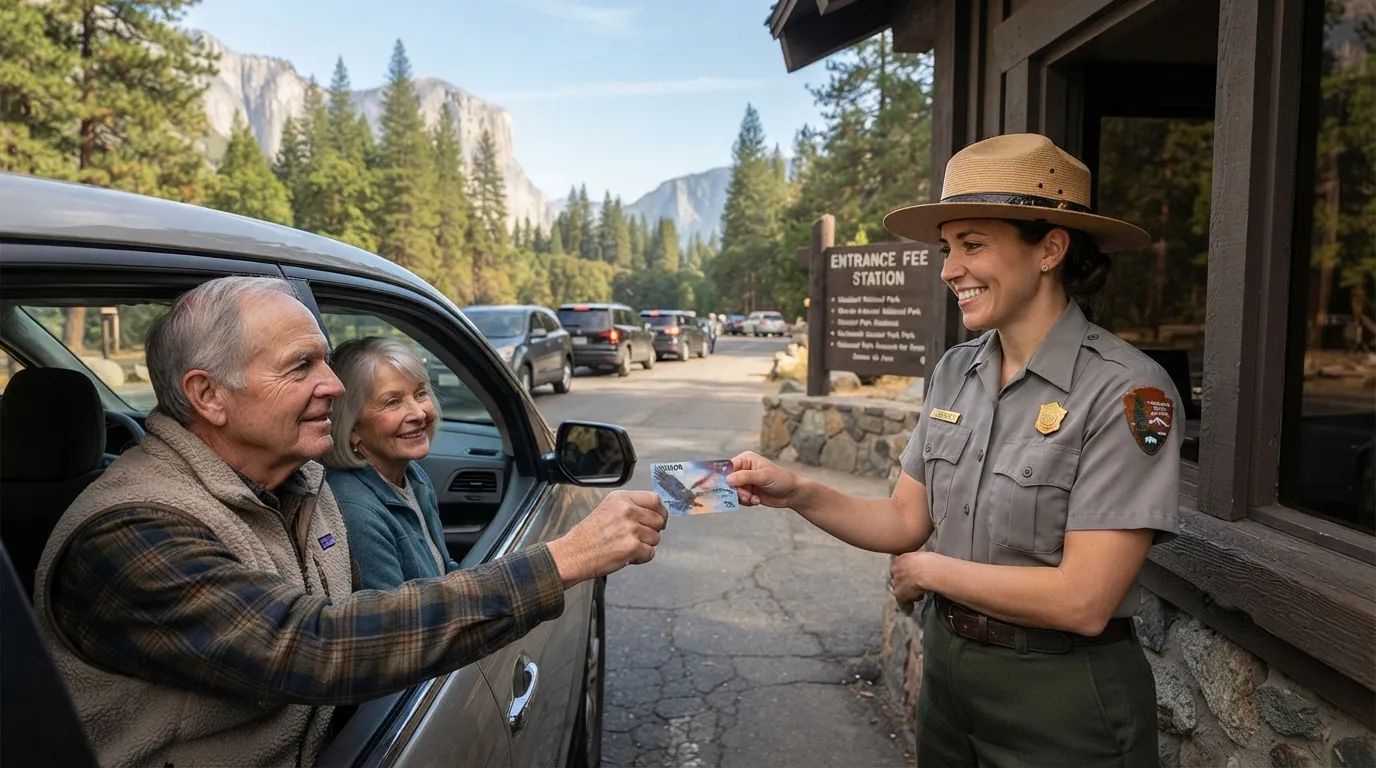
Picture the line at a national park entrance booth. A retired couple pulls out one small card, the ranger waves them through, and the car behind them is still digging for a credit card. The title is real: U.S. citizens and permanent residents aged 62 and older can buy a lifetime Senior Pass for $80, or an annual one for $20, and at most federal fee sites the entrance and day-use charges drop to zero.
But “entirely” comes with a few asterisks. Some charges vanish, some get cut in half, and a few look covered when they aren’t. Some of the sneakiest money drains on this list happen before you ever reach a gate. Here are all 27, counted down.
#27 – The Carload Fee That Drops to $0 at the Gate
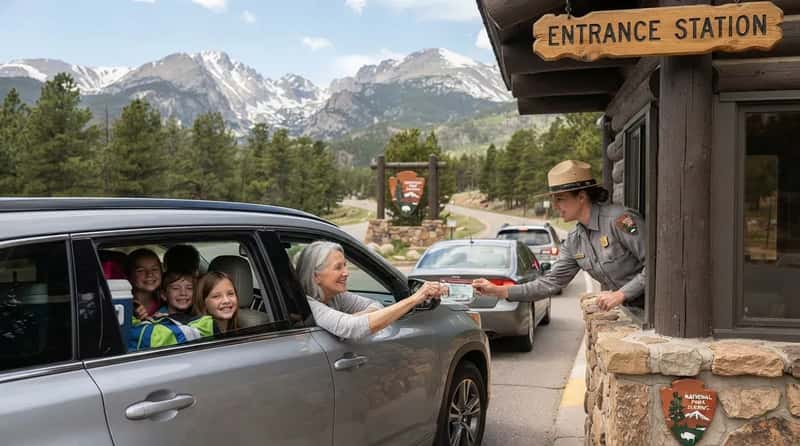
This is the big one, and it’s the one most people picture. At sites that charge per vehicle, the pass covers the holder and everyone riding in one private, non-commercial vehicle. A couple, or a whole back seat of grandkids, gets in on a single card.
It’s easy to assume every national park has a booth. Only around 100 of the 400-plus sites in the national park system charge an entrance fee. At those, the pass turns a slow stop at the booth into a quick ID check and a wave-through.
#26 – The Per-Person Fee That Covers a Party of Four Adults
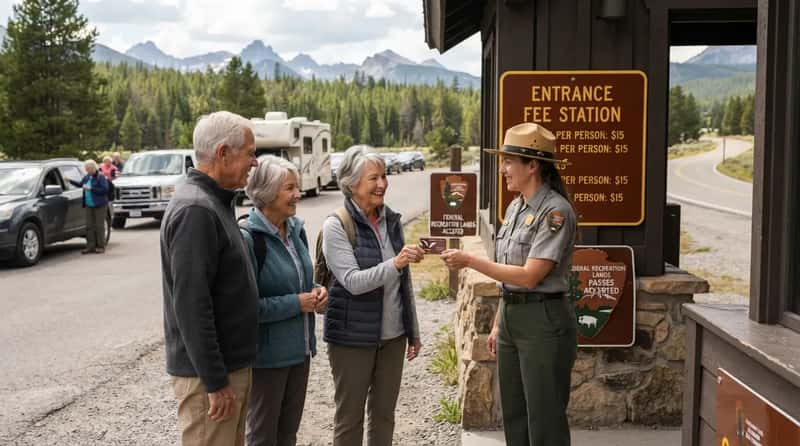
Some sites charge by the head instead of by the car, and the pass still works there. At per-person fee sites, it typically admits the holder plus up to three additional adults. That’s four adults on one card.
Those per-person charges add up fast for groups. At the parks that charge this way, residents typically pay $10 to $20 each. A foursome can skip a real chunk of change before anyone has even found the visitor center.
Fast Facts
- Who qualifies: U.S. citizens and permanent residents aged 62 and older.
- Price: $80 for a lifetime pass or $20 for an annual one.
- Reach: entrance and standard day-use fees at more than 2,000 federal recreation sites.
- Kids under 16 already get into national parks free, so they don’t need to ride on the card.
#25 – The Motorcycle Entry Fee Riders Pay Out of Habit
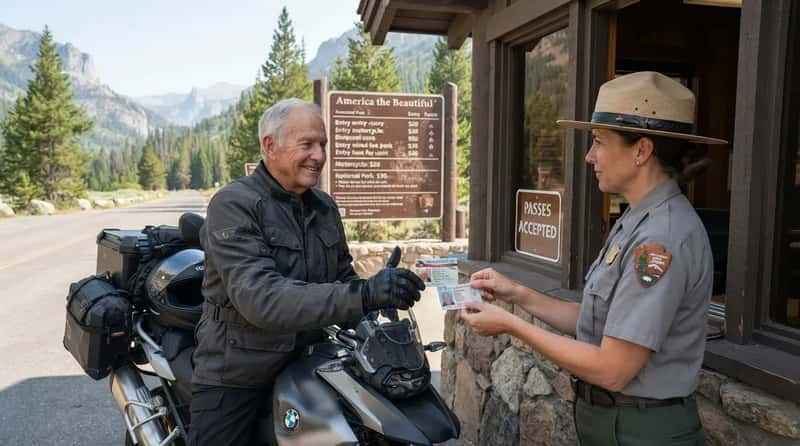
Two wheels count as a vehicle too. Motorcycle entry is its own line on the fee board at many per-vehicle sites, and plenty of older riders pay it without a second thought. The pass can stand in for that fee.
The catch is the same as everywhere else. The card gets checked against photo ID, and the holder has to be on the ride. A buddy roaming ahead on his own doesn’t ride free on your pass.
#24 – The Wildlife Refuge Fee Most Birders Pay Anyway
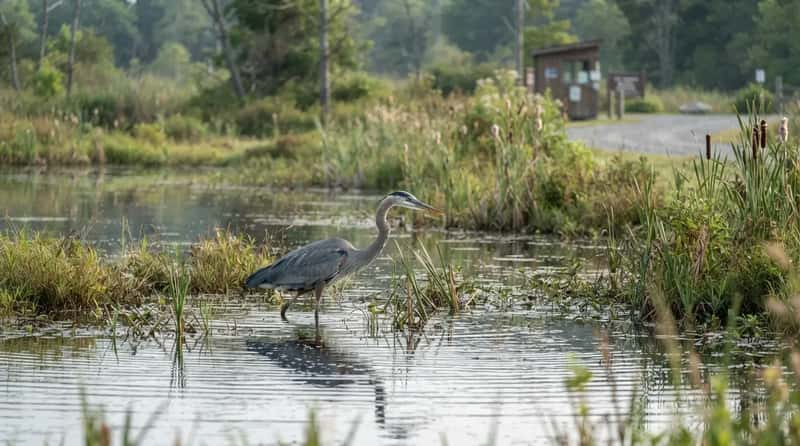
Refuges rarely get the glamour of Yellowstone, so their small fees go unnoticed. The America the Beautiful family of passes covers entry to national wildlife refuges, and the Senior Pass carries the same entry benefits.
That means a quiet morning with the herons costs nothing at the booth. It’s one of the least-talked-about perks. Many holders still think the pass is only for the famous parks.
#23 – The $5 and $10 Monument Tickets That Quietly Stack Up
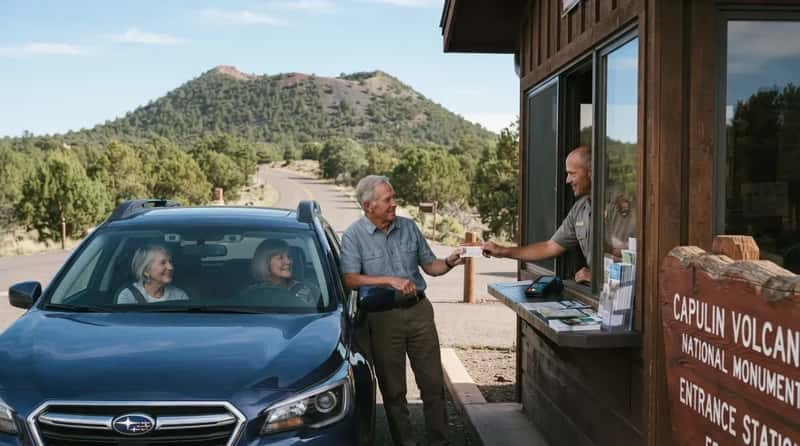
The pass applies to national parks, monuments, historic sites, recreation areas and wildlife refuges that usually charge entrance fees. That list is longer than most people think. Small roadside stops count too.
Those $5 and $10 charges look trivial one at a time. Across a two-week loop, they pile up like loose change in a cup holder. The card quietly erases every one that’s covered.
#22 – The Battlefield Fee at Antietam
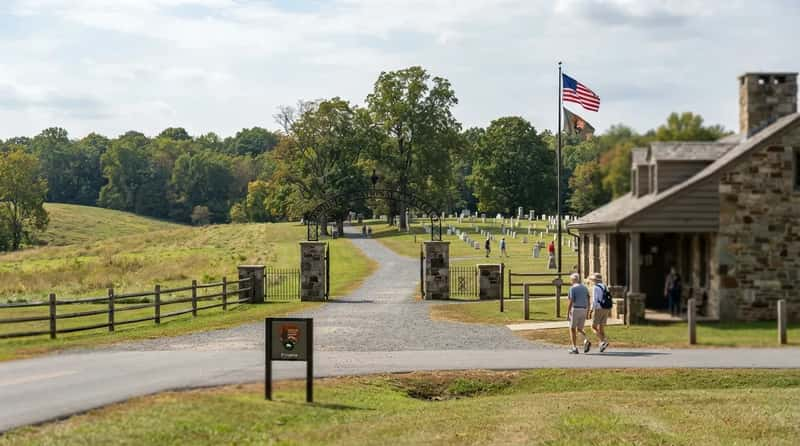
History buffs often pay at battlefields without checking. Antietam National Battlefield lists a $10 per-person fee for a 3-day pass. That’s an entrance charge, which is exactly what the Senior Pass is built to cover.
Fees at individual sites can change, so treat that figure as a listed example. The principle holds. If a National Park Service site charges admission, a Senior Pass holder generally doesn’t pay it.
#21 – The Cave Ticket at Carlsbad Caverns
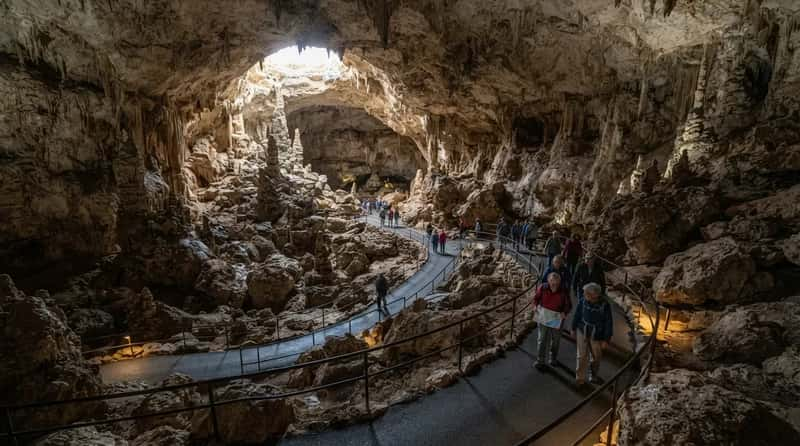
Going underground usually means opening a wallet. Carlsbad Caverns lists a $15 per-person fee for a 3-day pass. Under a Senior Pass, that entrance fee is the kind that gets covered.
Guided tours are a different category. Those fall under interpretive services, and discounts there depend on the site. Entry is the part you can usually count on.
#20 – The $7 Daily Fee to Set Foot on Isle Royale
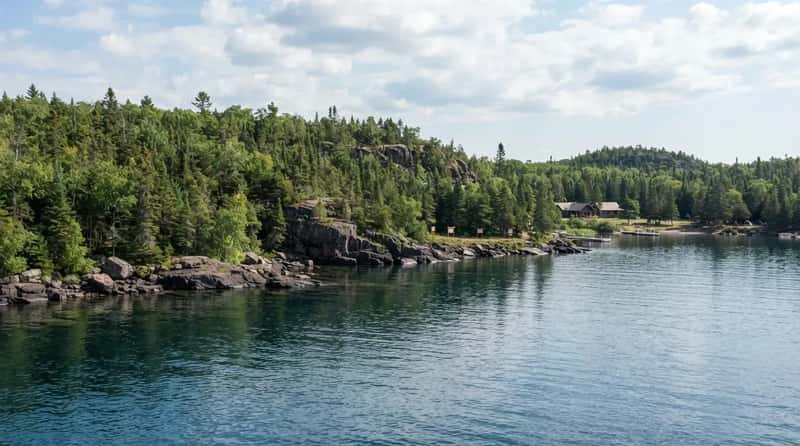
This remote Michigan island park isn’t on most bucket lists. Isle Royale lists a $7 per-person daily fee. It’s small, but it’s still a charge many visitors assume is unavoidable.
It isn’t. The pass treats a remote island park the same as a roadside one. Ferry and other transport costs are a different story, since those are typically run by private operators.
#19 – The Forest Picnic Spot With the Little Fee Envelope
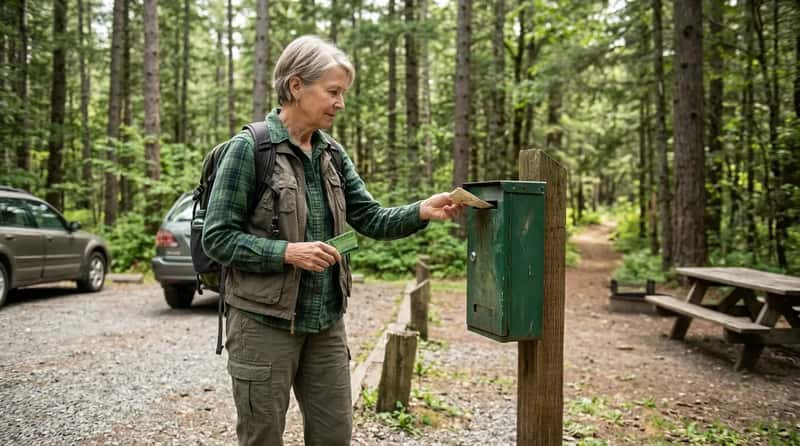
National forests don’t always charge at a gate, but many charge for day use. The pass covers entrance fees and standard amenity (day-use) fees at thousands of recreation locations. That includes the picnic area with the lonely metal pay tube by the parking lot.
It’s a quiet saver because nobody announces it. The pass also covers fees that don’t feel like entrance fees at all. If a site charges for day use, ask.
#18 – The Day-Use Fee on Wide-Open BLM Land
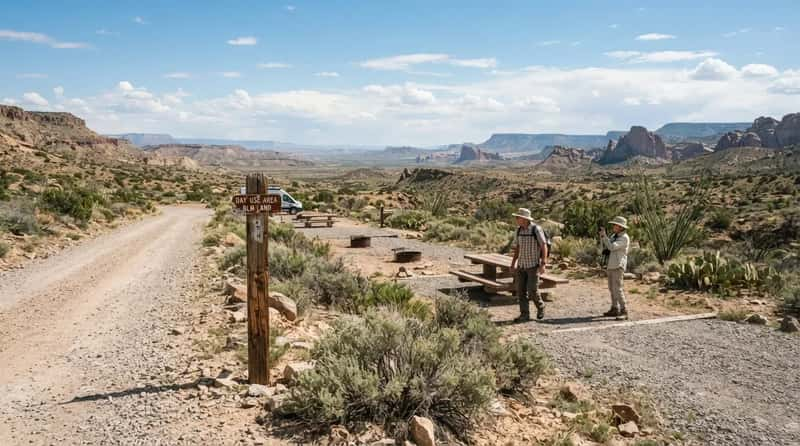
The Bureau of Land Management runs enormous stretches of open country that many seniors drive right past. Standard amenity fees on BLM-managed lands are covered by the pass. That includes certain day-use recreation sites.
Plenty of travelers assume only the famous parks count. The real map is much bigger than the postcard version. BLM sites are some of the least crowded places the card works.
#17 – The Lakeside Afternoon at a Reclamation Reservoir
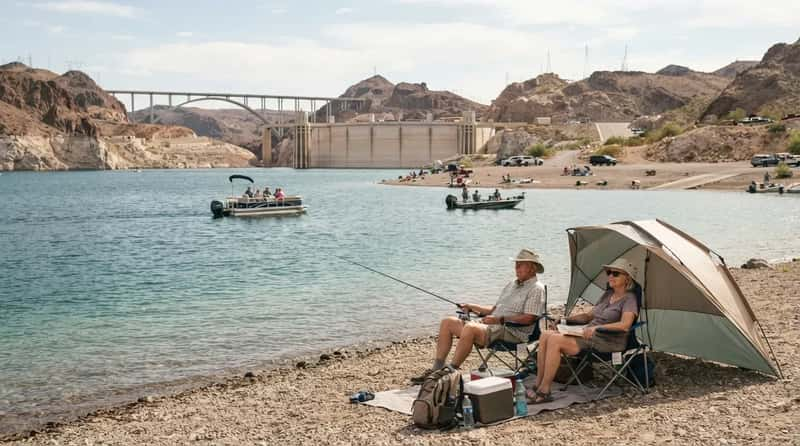
Reservoirs and dams draw boaters, anglers and picnickers. The Bureau of Reclamation’s standard amenity fees are included in the pass. A lazy afternoon by the water doesn’t need a separate payment at the entry gate.
It’s easy to overlook because these places don’t feel like “parks.” But they’re on the same card. That’s the whole point of the interagency design.
#16 – The Army Corps Beach and Day-Use Charge
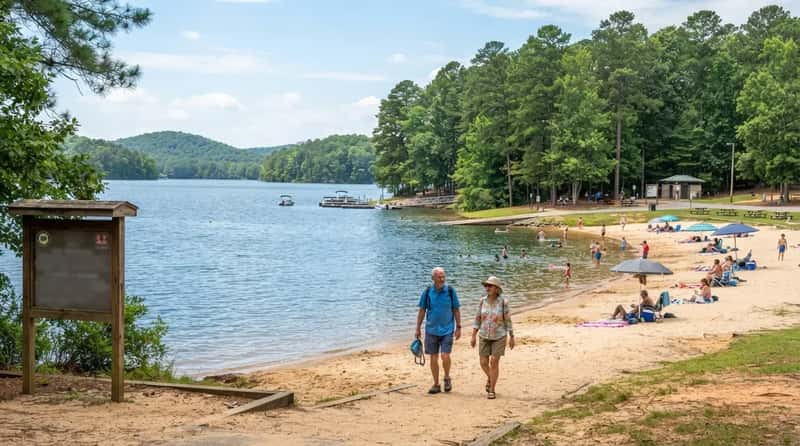
The Army Corps of Engineers runs recreation areas at hundreds of lakes. The pass covers standard amenity fees on lands managed by six federal agencies, and the Corps is one of them. That can mean beaches and day-use areas.
Not every Corps charge is treated the same way. Some are standard day-use fees, and some are expanded. Ask the park office which one is on the sign.
#15 – The $100 Surcharge Aimed at Nonresidents, Not You
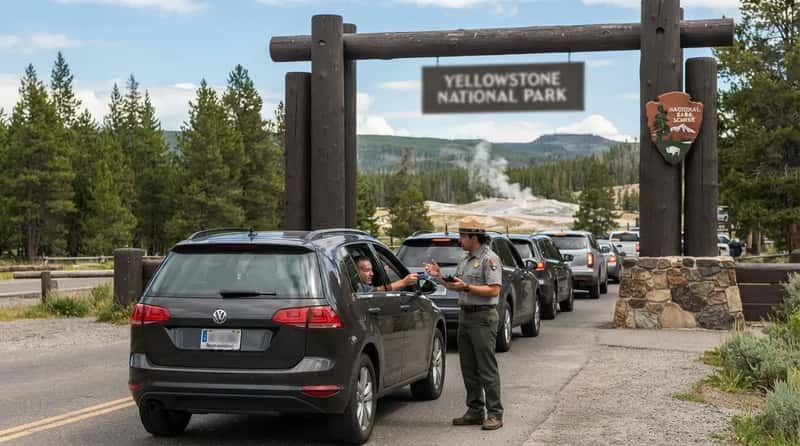
This is the one in the headlines. Nonresidents aged 16 and older must pay a $100 nonresident fee, on top of the regular entrance fee, at 11 national parks, including Yellowstone, Yosemite and Zion. U.S. citizen and resident seniors aren’t the target.
Here’s the twist. Nonresidents can’t buy the Senior Pass at all. So the benefits in this article are a resident-only privilege.
#14 – The Nightly Campsite Fee, Cut in Half
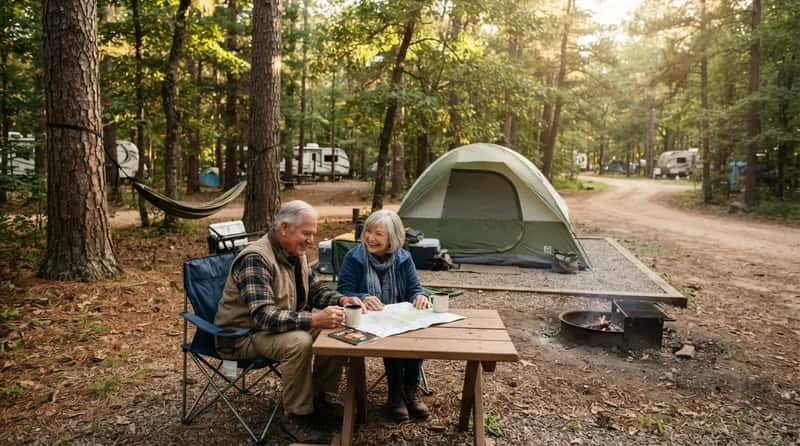
Here’s where the “entirely” in the headline needs a correction. The Senior Pass takes 50% off camping fees at most federal campgrounds. That’s a discount, not a waiver, but it’s the biggest money-saver on the list.
Nightly fees repeat, so the savings do too. A $30 site becomes $15, and a week of nights puts $105 back in your pocket. Check the base price first so you know what half actually means.
Quick Compare
- Usually free: entrance fees and standard day-use fees at covered federal sites.
- Usually half off: camping, and at many sites boat launches, swimming and interpretive services.
- Usually full price: concessioner fees and special recreation permits.
#13 – The National Forest Campground Fee
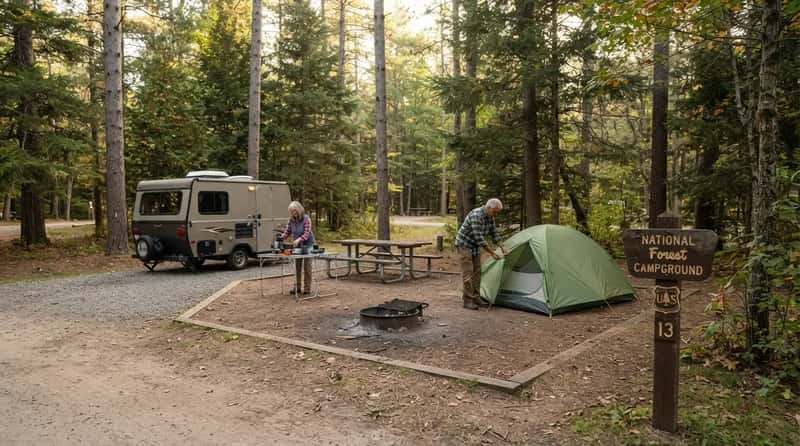
Forest campgrounds are the budget favorite of many road-trippers. The same 50% discount applies at many national forest campgrounds, though fees and rules vary by forest. That variety is why a quick call to the district office helps.
Remember it’s half off, not free. The discount generally applies to the campsite fee, not to every add-on. Campgrounds run by private concessioners can set their own rules.
#12 – The Lake Campsite Run by the Army Corps
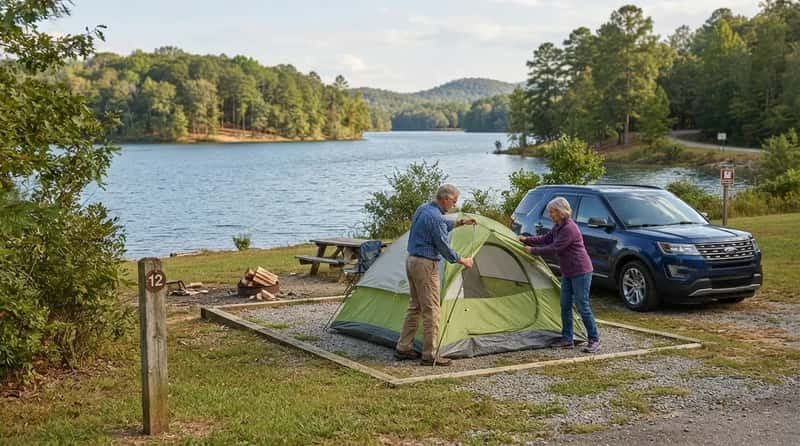
Most travelers don’t think of the Corps as a camping company. But the Corps honors the Senior and Access passes for 50% off camping fees. The discount applies to the campsite you occupy.
That detail matters. It’s not a blanket reduction on everything at the lake. The spot where your tent or RV sits is the part that gets the break.
#11 – The Cheap Remote Camp That Gets Even Cheaper
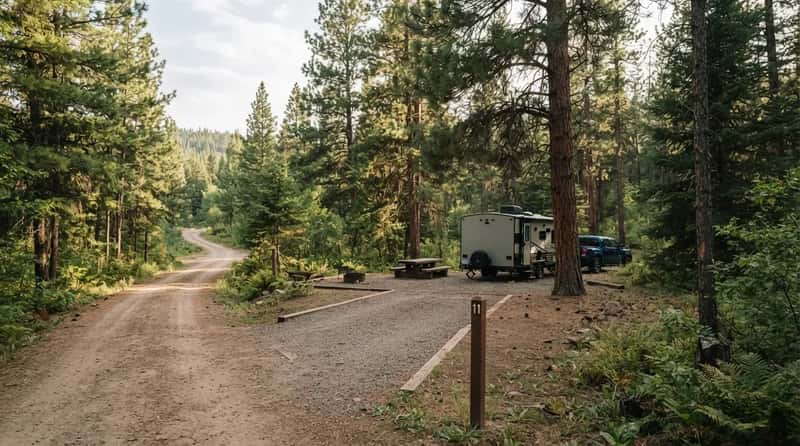
Remote public-land camps can be the least expensive nights on the road. At many Forest Service, BLM, Reclamation and National Park Service sites, the pass triggers 50% off standard camping fees. Some of these places cost very little to start with.
Because the baseline is low, halving it can feel almost silly. But small savings add up across a long trip. They can turn a month-long loop from a daydream into a real plan.
#10 – The Campground Inside a National Park
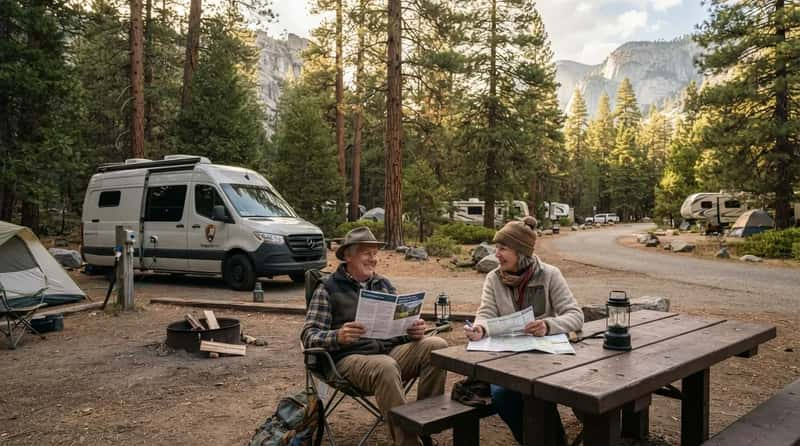
National park campgrounds are popular, and they’re usually booked on Recreation.gov. One guide says the discount applies to the site fee, excluding utility hookup surcharges. Treat that as a reason to read the fee breakdown before you click.
The rules aren’t identical everywhere. Each of the six agencies handles the discount a little differently. That’s why two campgrounds with the same card can end up charging different amounts.
#9 – The Extra Occupant and Extra Site Fees
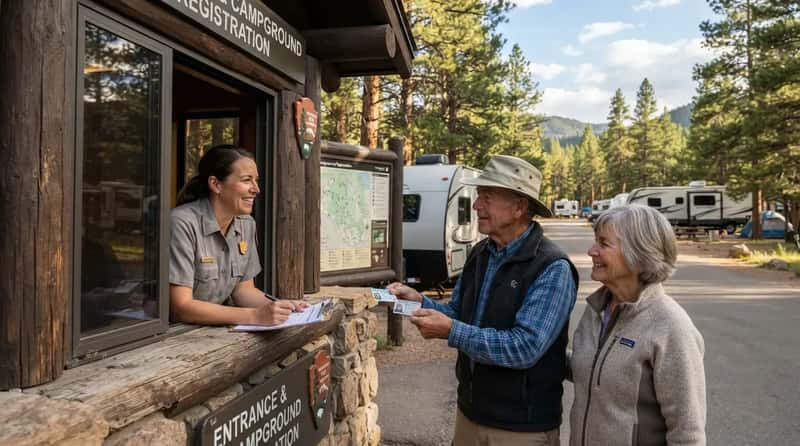
Campgrounds sometimes add charges for extra people or a second site. In many places the discount can reach those fees, depending on the location. It’s not guaranteed everywhere.
That “depending” is doing a lot of work. Don’t assume, and don’t skip asking. A friendly question at the desk can save a few dollars a night.
#8 – The Boat Launch Fee at the Ramp
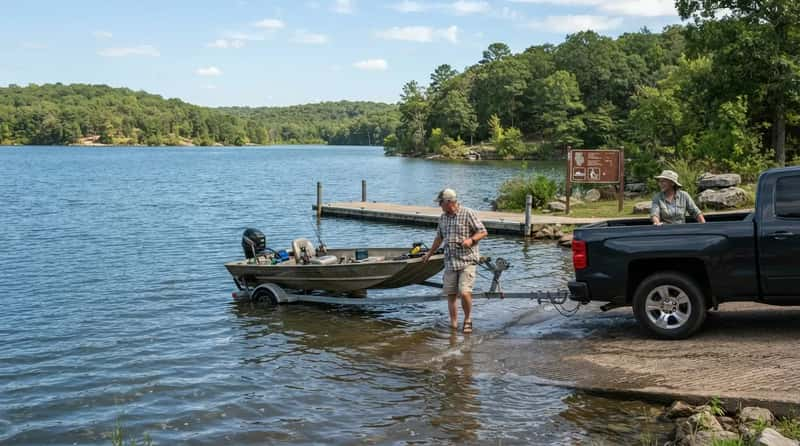
Towing a fishing boat? The Senior Pass may provide a 50 percent discount on amenity fees such as boat launches. The words “may” and “some” are real, so confirm before you back the trailer down.
One example gets cited a lot. At Chickasaw National Recreation Area in Oklahoma, senior pass holders get 50 percent off camping and boat launch permits. Other sites can differ.
Worth Knowing
- The boat launch discount is an amenity-fee break, not a free pass at every ramp.
- Sites decide for themselves whether to apply it, so ask before you launch.
- Private marinas and concessioners usually set their own prices.
- Have the card and photo ID ready, since the holder must be present.
#7 – The Swimming Area Charge Hiding on the Fee Sign
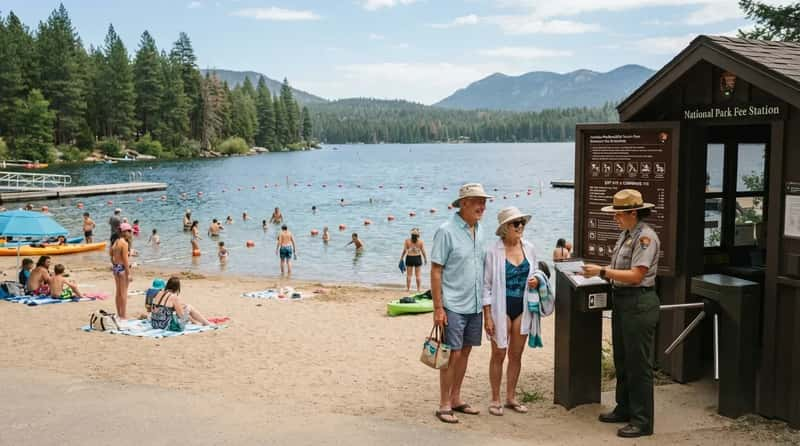
Beaches and swimming areas often carry their own fee. The Senior Pass may take 50 percent off amenity fees for facilities such as swimming. It’s a small line item that’s easy to miss.
The key word is “facilities.” If the site charges for a managed swim area, the discount may apply. Free public beaches have nothing to discount.
#6 – The Beach Parking Fee at Gateway
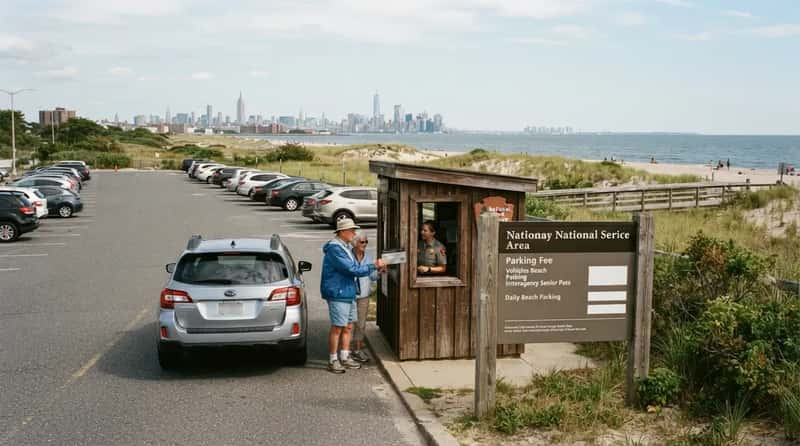
Some coastal parks don’t charge for entry at all. One guide reports that Gateway National Recreation Area has no entrance fees, but charges for beach parking, where Senior Pass holders get 50% off. It’s a perfect example of a fee hiding in plain sight.
Parking is the sneaky one, because it feels separate from “park fees.” But it can fall under the same discount. Always read the sign by the lot.
#5 – The Ranger Tour and Special Program Price
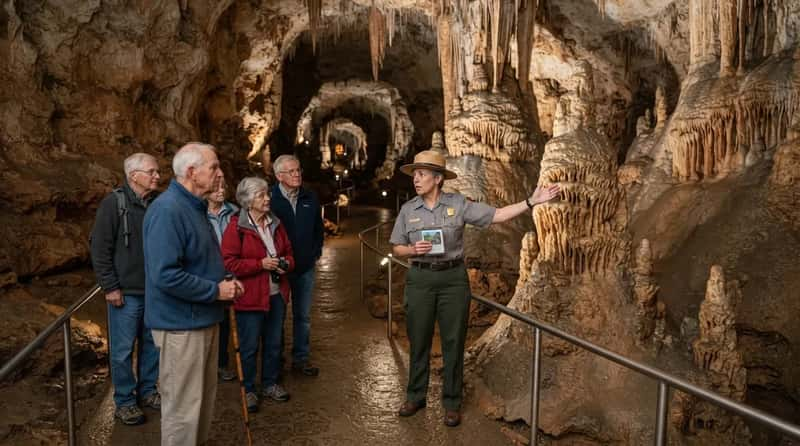
Ranger-led programs and special tours can cost real money. The pass may provide a 50 percent discount on specialized interpretive services. That can include tours at some historic sites and caves.
The fine print matters. Concessionaire fees, like a boat trip in Biscayne National Park, aren’t covered. If a private company runs the tour, expect to pay full price.
#4 – The $10 Online Processing Charge You Can Dodge
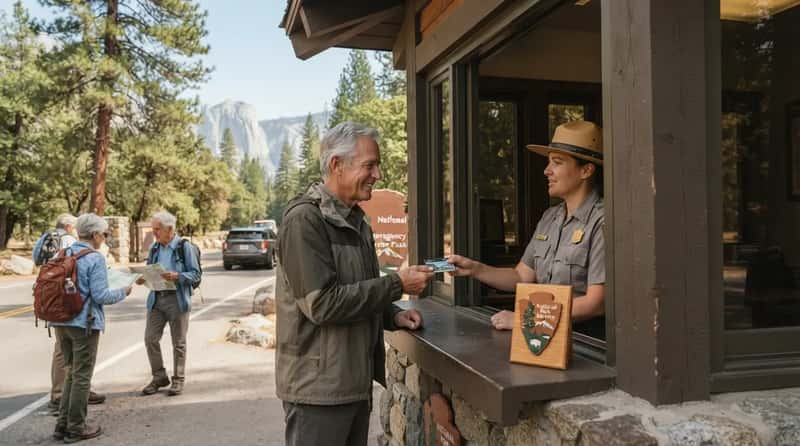
This one costs money before you’ve even entered a park. Buying online through the USGS store adds a $10 processing fee. Buying at a federal recreation site with proof of age and residency doesn’t.
Walk up to a site that sells passes and you pay face value and leave with the card the same day. The extra $10 only shows up if you click instead of walk in.
At a Glance
- In person at a federal recreation site: $80 or $20, no extra fee, card in hand the same day.
- Online or by mail through USGS: the same price plus $10 for processing.
- Digital on Recreation.gov: the same $80 or $20, downloaded to your phone.
- What to bring: proof of age and of citizenship or residency.
#3 – The $7.50 Shipping Fee on a Plastic Card
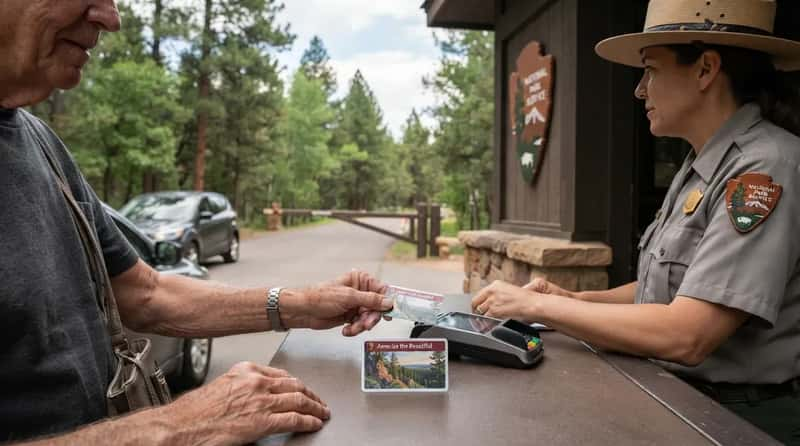
Digital passes are the newer option. The digital Senior Annual Pass costs $20, plus a $7.50 shipping fee only if you request a physical pass. Skip the plastic and the shipping charge goes away.
Many seniors still want a card in their wallet. That’s fine, but it’s a choice with a price. Buying in person avoids that cost as well.
#2 – The $80 Lifetime Price, Shaved Down to $0
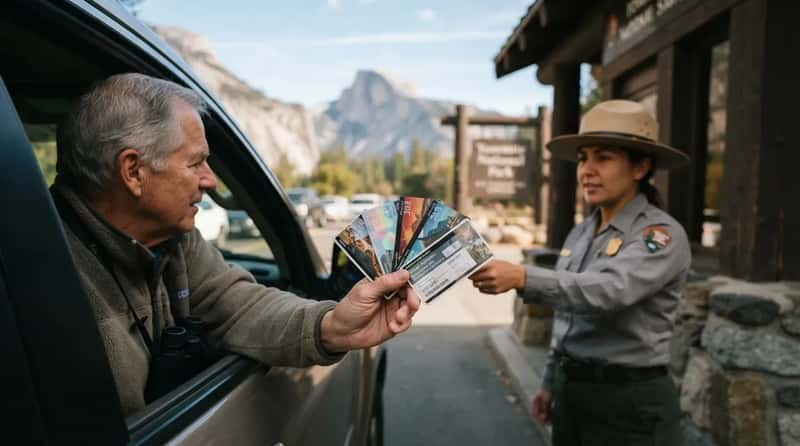
Here’s the trick most people never hear about. Each annual pass turned in knocks $20 off the lifetime price, and four annual passes get you the lifetime pass for free. Even an expired annual pass counts.
So the $80 lifetime pass can be spread across four years of $20 purchases. You get the entry benefits the whole way. At the end, you trade up and pay nothing extra.
#1 – The Renewal Fee That Never Comes Back
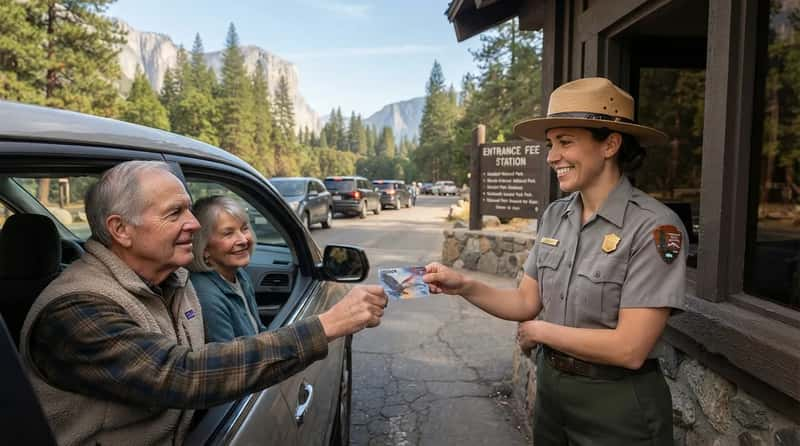
This is the one that stings for people who waited. The Senior Lifetime Pass costs $80 and never expires. There’s no renewal and no yearly bill.
It wasn’t always $80. In August 2017 the lifetime pass jumped from $10 to $80, its first price change since 1994. Anyone who bought one earlier still holds a pass that was a steal by comparison.
So the headline is only partly true. Gate and day-use charges can go to zero, campground and some activity fees get cut in half, and concessioner fees and special recreation permits are on their own. The pass starts at 62, so anyone over 65 qualifies, and has for a while.
The biggest savings aren’t at the gate, though. They’re in the questions most people never think to ask at the campground desk. Which of these 27 had you been paying without a second thought?