
In December 2025, customs officers at Hong Kong’s airport opened a shipment from Australia and found 13 live lizards packed inside winter boots. The parcel had been declared as snacks. Mongabay’s reporting on the case ([1]) places it within a wider pattern, one in which Hong Kong appears repeatedly as the destination for Australia’s native reptiles, and sometimes as a stopover on the way to other markets.
A sock, a boot and a false label
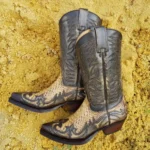
The lizards were not simply tucked in. One was wrapped in a sock and concealed inside a boot, according to the detailed account of the seizure published by Mongabay [2]. Hong Kong Customs described the air cargo as falsely declared, which put it in the category of concealment cases that rely on ordinary-looking goods to pass inspection.
The December shipment was the fourth seizure of live native Australian reptiles that Hong Kong authorities have made between 2025 and 2026. Across those four cases, officers confiscated at least 98 animals, among them 74 lizards and 24 snakes. Their combined value was more than HK$1.1 million, or about US$141,100.
Other cases suggest the methods are not limited to one port or one type of luggage. In September, a 21-year-old man was charged with allegedly trying to send 163 native reptiles from Sydney to Hong Kong as air cargo, according to a News Dive report [3].
Why Hong Kong sits at the center
Researchers at the Wildlife Crime Research Hub at Adelaide University have described Hong Kong as a place that serves both as a destination and as a possible transit point within wider trafficking networks. Their briefing papers, cited by Mongabay, frame the city as more than a final market.
Wildlife investigators have also drawn attention to the scale of the flow. An analysis by ADM Capital Foundation, a Hong Kong-based environmental nonprofit, reportedly found that 99% of more than 270 seizures of native Australian reptiles between 2018 and 2025 were headed for Hong Kong, based on Australian government records ([4]).
A legal market that hides illegal stock
The difference between the two sides of the trade is the core of the problem. Keeping native reptiles as pets is tightly controlled in Australia, where a license is required. Hong Kong and mainland China, by contrast, do not demand proof of legal origin or paperwork for possession. That gap allows smuggled animals to be mixed into legitimate sales, a process investigators describe as laundering.
| Rule | Australia | Hong Kong |
|---|---|---|
| Keeping native reptiles as pets | Strictly regulated and requires a license | No proof of legal origin or documentation required |
| Commercial export of live native species | Banned since 1982 | Not applicable to the same restriction |
Australia’s export ban has not stopped the trade. The Wildlife Crime Research Hub estimates that around 15% of the country’s endemic reptile species have entered the illicit international market.
Demand, prices and the species at risk
Dylan Chadwick of the research hub told Mongabay that skinks in the genus Tiliqua are in particularly high demand. He pointed to the shingleback, which is known in China as the “pine cone lizard.” Chadwick also linked the demand to the pandemic, when many buyers turned to reptiles as low-maintenance pets during lockdowns.
Related Stories From Travelbinger


The financial incentive is considerable. Dr. Sebastian Chekunov, also of the Wildlife Crime Research Hub, has said individual Australian reptiles can sell for anywhere from a few hundred dollars to more than $10,000, and that smuggled animals are often routed through Hong Kong before reaching pet markets in China, Europe, the United States and Canada ([3]).
What matters now: Hong Kong customs has made repeated seizures, yet the legal framework in the city still does not ask buyers to show where an animal came from. Until that changes, enforcement at the border will carry much of the load.
The lizards in those winter boots were a small, memorable part of a larger pattern. Their discovery shows how a few centimeters of concealment space can carry animals that are unique to one continent into a market that rarely asks where they came from. Whether the gap in Hong Kong’s rules is closed may determine how much of Australia’s native wildlife continues to move through the city.