
Ask someone with 20-plus sailings what’s in their suitcase, and the answer rarely matches the packing blogs. Their lists are shorter and stranger. Almost every item traces back to one hard lesson, like a gadget confiscated at the terminal, a bag that showed up after dinner, or a cabin with exactly two outlets.
Some of these rules sound too small to matter. Others decide whether day one feels like a vacation or a scramble. A surprising number come straight from cruise line policy, not personal taste, and one of them can cost you an item before you even reach your cabin. Here’s what the veterans actually do, and the real reasons behind it.
#13 – A Few Magnetic Hooks Turn a Tiny Cabin Into a Closet

Cabin walls and doors on most ships are steel, so magnets grip almost anywhere. Frequent cruisers tuck a handful of strong magnetic hooks into the suitcase before almost anything else. They hang hats, tote bags, lanyards, and damp swimsuits on the walls instead of cramming them into drawers.
A few dollars of hooks can free up more usable space than a fancy packing organizer. Not every surface cooperates, since wall materials vary by ship, so veterans test the door and walls on day one and keep using whatever works.
Many also stick a small magnet decoration on the outside of the door. Some travelers call that childish. Then they spend a few minutes at 11 p.m. wandering a hallway where every door looks identical, and they change their minds. And that’s tame compared to the outlet problem in #12…
#12 – The Power Strip Mistake That Gets Bags Flagged at the Terminal
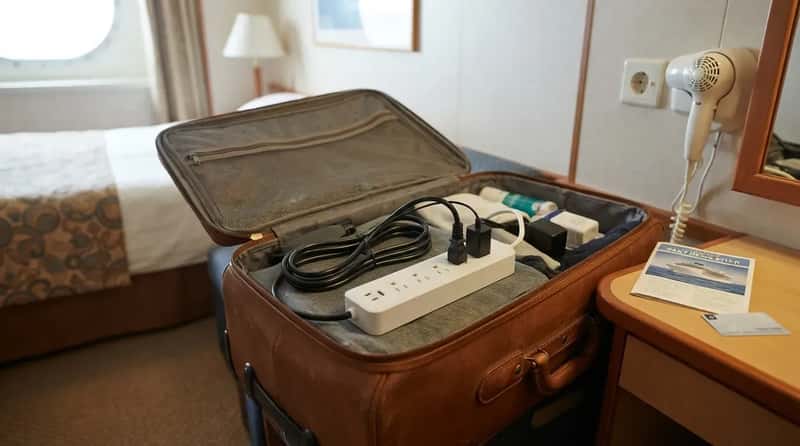
Cabins are famous for having very few outlets, often just one or two near the desk. So experienced cruisers bring a power strip, but they choose it carefully. Many major lines ban strips with built-in surge protection, and security can pull one out of your bag at the terminal.
A basic strip without surge protection, or a simple USB charging hub, is the usual workaround. Extension cords are often on the prohibited list too. The reason is fire safety, which cruise lines take very seriously at sea.
Rules differ by line and get updated, so veterans check the current prohibited-items list before every trip. One compliant hub means phones, watches, and camera batteries can all charge overnight without a fight over the single outlet. Wait until you see what else the safety rules take away in #11…
#11 – The Iron Stays Home and a Cheap Spray Goes In
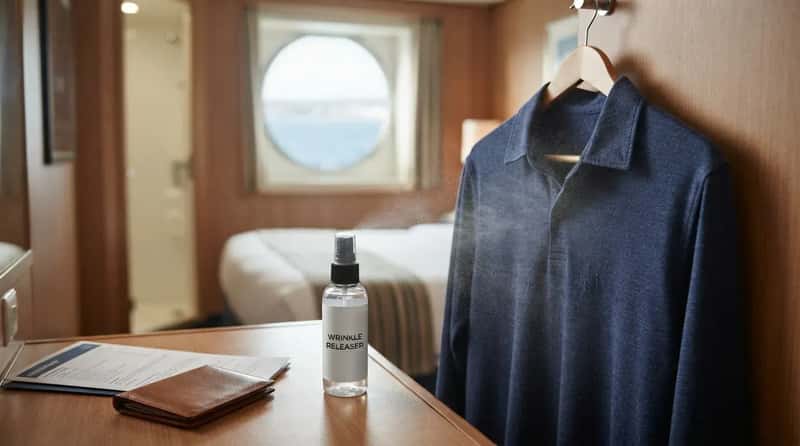
Clothing irons and garment steamers are banned in cabins on most major cruise lines. The reason is fire risk, and staff can take the item away at the terminal. Veterans know this, so they never pack one. A small bottle of wrinkle-release spray goes in instead.
Many ships offer pressing or laundry services, and some have self-service laundry rooms, though that varies a lot by line. Still, a spray and a little patience handle most wrinkles.
Seasoned cruisers also pick fabrics that bounce back, like knits and jersey. Linen looks gorgeous on shore and is a gamble in a suitcase. Their next trick is something you’ll see around nearly every neck on boarding day, in #10…
#10 – Why Veterans Wear Their Room Key Like a Badge

On a cruise, your cabin card is your key, your ID, and your payment method all at once. Lose it and you can be locked out, unable to buy a drink, and stuck in line at guest services. Some lines use wearable bands, but plenty still hand out plain cards.
Frequent cruisers clip that card to a lanyard before they ever leave the terminal. It also speeds things up, because your card is scanned every time you leave or return to the ship. Having it ready saves fumbling at the gangway.
Fast Facts
- One card does three jobs: cabin key, onboard ID, and payment method.
- It gets scanned on every exit and return, so it’s in your hand constantly.
- Losing it can mean a lockout, no onboard purchases, and a trip to guest services.
- A lanyard keeps it visible, reachable, and out of loose pockets.
A card sliding out of a swim cover-up pocket on the pool deck is an easy way to lose it. Yes, lanyards look a little dorky, and veterans simply don’t care. But the next rule is one many first-timers learn the sunburned way, in #9…
#9 – Reef-Safe Sunscreen Isn’t a Trend, It’s Becoming a Port Rule

Sunscreen in ship shops tends to cost more than at home, so veterans buy it ahead of time. They also read labels. Hawaii has banned the sale of sunscreens containing oxybenzone and octinoxate since 2021. Some eco-parks in Mexico, such as Xcaret and Xel-Há, require biodegradable sunscreen for swimming.
The worst burn often happens on the ship, not the beach. Wind on an open deck cools your skin and hides how hot you’re getting. Seasoned cruisers pack a wide-brim hat with a chin strap and reapply on a schedule.
The people who look overprepared at the rail are the ones who aren’t peeling by day three. Then comes a bag most people overlook, in #8…
#8 – The Day Bag That Survives a Tender Boat Ride

Some ports have no pier big enough for a cruise ship, so passengers ride small tender boats to shore. Spray, wet benches, and long waits are part of the deal. Frequent cruisers carry a small dry bag or waterproof pouch inside a light day pack. It holds the cabin card, ID, phone, and a little cash.
Worth Knowing
- Tenders are used when the ship can’t dock at a pier, so expect a boat ride in both directions.
- Spray and wet seats are normal, so anything that can’t get damp belongs in the pouch.
- Keeping the pouch zipped inside the day pack protects it from a stray splash.
- Waits can run long, so a small stash of cash and ID stays handy on shore.
Your phone can also betray you in port. A phone that catches a shore signal can switch time zones, so ship time and phone time can disagree. The “all aboard” time printed in the daily schedule is the one that counts.
That’s why veterans wear a basic watch set to ship time. It’s a cheap fix for an expensive way to miss a boat. What they put on their feet is even more telling, in #7…
#7 – Broken-In Shoes Beat the Fancy Pair, Every Time

Modern ships are enormous, and ports bring cobblestones, hills, and stairs. Veterans bring two pairs they trust: broken-in walking shoes and a grippy pair of sandals or water shoes. Buying brand-new shoes just for the trip is a classic mistake. Blisters on day two can cut short a port day you paid good money for.
Here’s a take that starts arguments: the third pair of dress shoes is the most wasted space in the suitcase. Wet pool decks are slick, so grip matters more than style, and many seasoned cruisers skip heels on deck entirely.
They’d rather look slightly less polished than spend a port day limping. But the next rule is about something that can ruin a whole evening, in #6…
#6 – Seasickness Gear Goes On Before the Ship Leaves the Dock
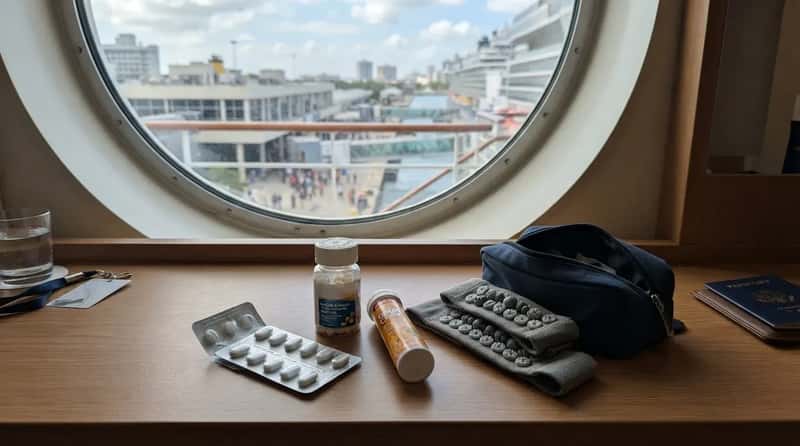
Even big ships with stabilizers can roll in open water, and nobody can promise calm seas. Experienced cruisers don’t wait to feel queasy. They pack over-the-counter remedies, ginger chews, or acupressure wristbands in advance. Many motion-sickness medications work best when taken before symptoms begin. A doctor or pharmacist can help with drowsiness and interactions.
Ship stores sell remedies, but usually at a markup. Some guest services desks keep a small supply, though that varies by ship and you shouldn’t count on it.
Veterans refuse to gamble on it. They’d rather carry a strip of tablets they never use than spend an evening wishing they had one. Next up is a rule that has quietly changed on many ships, in #5…
#5 – Formal Night Has Changed, and the Tuxedo Is Secretly a Mistake

Many mainstream lines have relaxed their dress codes in recent years. Strict formal nights have given way to softer “elegant” evenings, and Carnival’s “Cruise Elegant” is one example. Veterans pack one dressy outfit that can be remixed. On many mainstream ships, you’ll see everything from suits to nice jeans in the main dining room.
Here’s the opinion that splits cruisers: plenty of them say a full tuxedo or gown is the biggest wasted suitcase space on a mainstream ship. Premium lines like Cunard still keep formal evenings, so the rule isn’t universal.
The smart move is to read your line’s current dress code before you pack. One good blazer or dress beats three halfway outfits. But the next rule isn’t about style at all, in #4…
#4 – Veterans Pack Half as Much, Because Closets Are Tiny and Laundry Exists
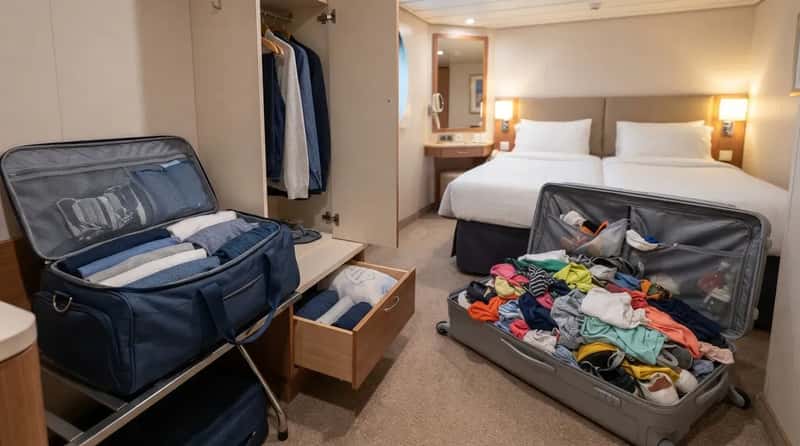
Cabin closets are small and drawers are shallow, especially in interior rooms. Veterans pick a color palette so every top works with every bottom. Then they pack for fewer days than the trip lasts. A week-long cruise can often be done with roughly half the clothes first-timers bring.
Many lines offer paid laundry service, and some ships have self-service laundry rooms, though it depends on the line and ship. Soft-sided bags that fold flat are popular because many cabins have little room for hard shells.
Quick Compare
- First-timer: packs one outfit per day, in every color, in a bulky hard shell.
- Veteran: packs fewer days of clothes in one color palette, in a soft-sided bag that folds flat.
- Day one: the first-timer digs through drawers, while the veteran has already hung everything on magnetic hooks.
- Last day: the first-timer fights the zipper, and the veteran has an empty corner waiting for souvenirs.
That empty corner is the souvenir space on the way home. The people who learn this the hard way spend a week climbing over an open suitcase. Now for a document rule that sounds optional, but isn’t, in #3…
#3 – Closed-Loop Cruises Don’t Require a Passport, but Veterans Bring One
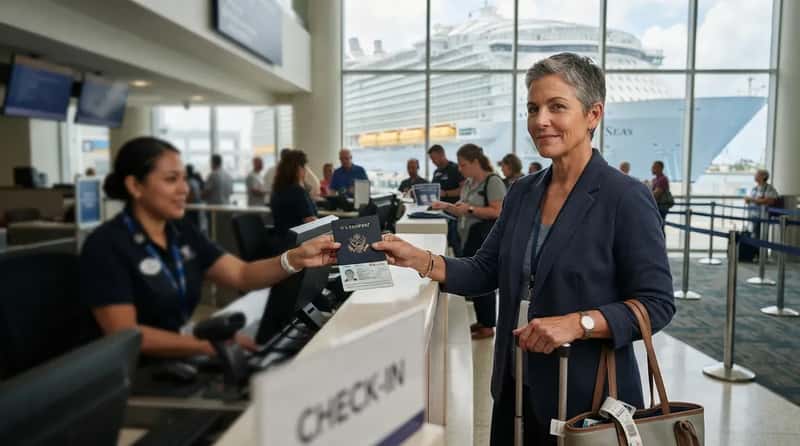
On many closed-loop sailings that start and end at the same U.S. port, U.S. citizens can often board with a birth certificate and government ID. Experienced cruisers bring a passport anyway. If you miss the ship or need to fly home from a foreign port, getting home without a passport gets complicated fast. A passport is the cleanest way out of a bad situation.
They also keep a photocopy and a digital copy stored where they can open it offline. Some countries require passport validity beyond your travel dates, so veterans check before booking.
Cruise lines can also set stricter document rules than the government minimum. Veterans read the fine print up front, so they never have to argue at the terminal. Their next habit involves your phone, in #2…
#2 – Download Everything Before You Lose Signal

Ship Wi-Fi is usually sold in paid packages, and speeds can slow when many people are online. Even newer satellite systems haven’t made it free on most lines. Veterans download boarding documents, port maps, excursion confirmations, shows, and music at home.
Offline maps are especially handy in ports where a data signal is patchy or expensive. The sneakier cost is roaming. A phone left on regular roaming can quietly rack up charges, since ship cell networks at sea can bill at international rates.
Frequent cruisers switch on airplane mode and turn Wi-Fi back on only when they choose. Plenty of them say the forced digital break is the best part of the trip. But the rule at #1 has saved more trips than any other…
#1 – The Carry-On Rule That Saves Cruises: Pack What You Can’t Replace

Checked luggage often reaches cabins hours after you board, sometimes not until late afternoon. Frequent cruisers carry on a swimsuit, sunscreen, chargers, and a change of clothes so day one starts right away. Medications go in the carry-on too, in their original containers. If a checked bag gets delayed or lost, these are the items you can’t easily replace at sea.
The bigger lesson is about timing. A ship sails on schedule whether or not you’re on it, unless you’re on a ship-sponsored excursion. That’s why many veterans fly in a day early instead of gambling on a same-day flight.
A carry-on with a day or two of essentials is cheap insurance, and it’s the one habit nearly every 20-time cruiser swears by.
At a Glance
- Wear-now gear: swimsuit and a change of clothes.
- Skin and tech: sunscreen and chargers.
- Non-negotiable: medications, kept in their original containers.
- Timing insurance: arrive a day early so a late flight can’t take the ship with it.
The funny part is how little of this is about stuff. Magnetic hooks, a compliant power strip, a spray instead of an iron, a lanyard, and a pair of broken-in shoes all solve small, repeat annoyances. The real rules protect you from the one bad day: the missed ship, the lost bag, the blistered feet in port. Veterans don’t pack to look prepared. They pack so the ship’s departure bell is the only thing they have to worry about.