Every guided bus tour promises to run “on schedule,” and almost none of them actually do. Ask any tour director off the record and you’ll hear the same confession: the itinerary in your welcome packet was never really a promise, it was a best-case guess. Most travelers blame the driver, the weather, or “bad luck” when the coach finally pulls in 45 minutes behind schedule.
But the real causes are far more specific, far more predictable, and far more avoidable than anyone in the industry likes to admit out loud. Here’s what actually happens behind the wheel, at the border crossings, and inside the guide’s silent headcount every single day.
#13 – Meeting Time and Departure Time Are Never the Same Thing
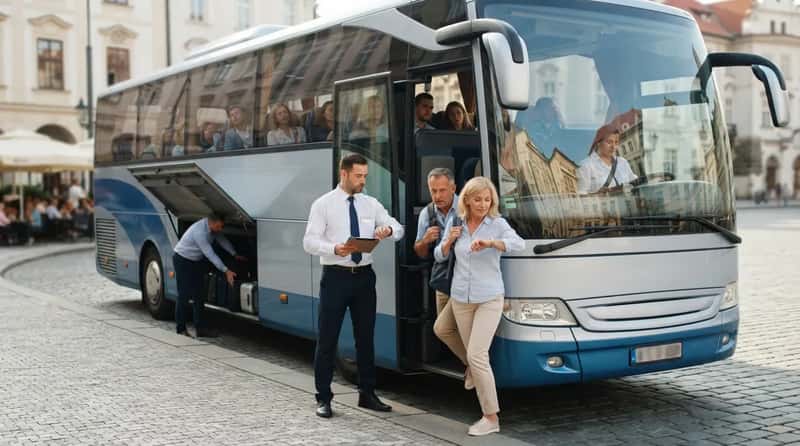
Almost every late departure starts with one simple misunderstanding that guides have stopped trying to explain politely. Passengers hear “meeting time” and assume that’s when the wheels start rolling, but it’s actually just when boarding begins. Nearly every tour operator has a story about a guest who shows up exactly at the posted meeting time, not realizing that time was meant for boarding, not arriving.
The math on this is brutal once you multiply it across a full coach. A five-minute gap in expectations, spread across 40 people, can eat 20 minutes off a schedule before the trip has even started. Some veteran guides now avoid the confusion entirely by writing blunter language on the itinerary, like “wheels roll at,” just so nobody mistakes a boarding call for a departure time.
Quick Compare
- Meeting Time: When boarding begins, not when the bus leaves
- Departure Time: When the wheels actually start rolling
- The Cost of Confusion: A 5-minute gap x 40 passengers can equal 20 minutes lost before the trip even starts
#12 – Guides Are Secretly Counting Heads Before Every Single Stop
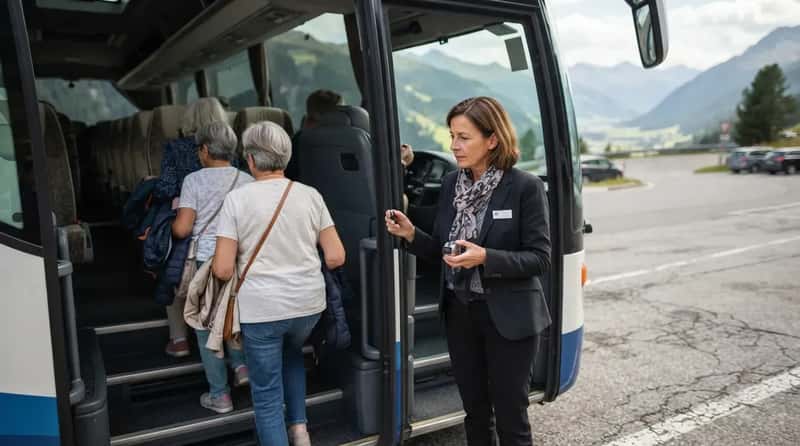
That casual glance your tour director takes before closing the coach doors isn’t casual at all. Guides count heads before every single departure, no exceptions, no matter how short the stop was. It’s a habit built from years of watching one missing passenger turn a five-minute break into a twenty-minute search through a gift shop or a parking lot.
When the count comes up short, the entire schedule pays for it later in the day. Repeated delays like this quietly chip away at scheduled meal time or sightseeing time down the road. So that polite little head-nod at the coach door is actually a constant, unspoken audit, one that nobody on the trip ever notices until it fails.
#11 – One Slow Family Really Can Delay 40 Strangers

Chronic latecomers are the single most repeated complaint in tour forums, and the stories are almost identical no matter the destination. One post described a family that showed up more than 15 minutes late nearly every single day, until the rest of the group joked they should just start walking, because the family always came sprinting down the sidewalk right as the doors began to close.
It gets worse than annoyance. On one Normandy tour, guests reported that stops were either cancelled or cut short because people kept returning late to the bus, day after day. The guide stayed professional, but the whole group lost real sightseeing time because a handful of people treated the schedule as optional.
#10 – Museum Lines Are Never as Short as the Website Claims
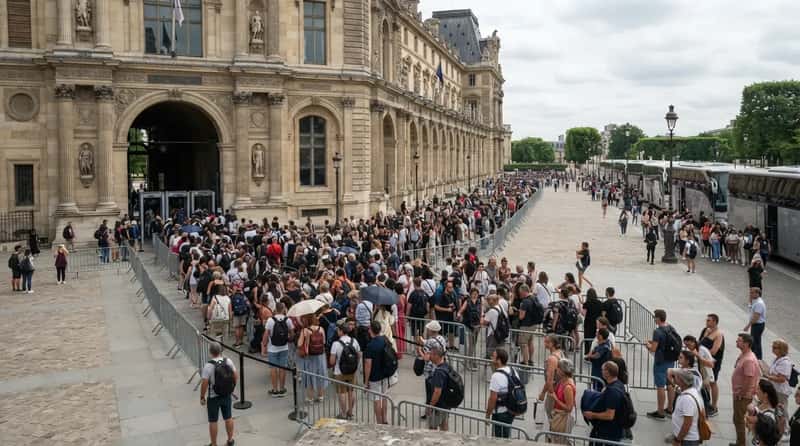
Tour directors build itineraries around posted wait times, and posted wait times are quietly optimistic. Popular sites often list an “average wait” that reflects a slow Tuesday morning, not the reality of a summer afternoon with six tour buses lined up outside. A schedule built on that number is already broken before the coach even parks.
The gap between plan and reality can swallow an entire visit slot. Groups plan a 30-minute stop and end up standing in line for that long before they even reach the entrance. That means the “30 minutes at the cathedral” printed on your itinerary was never really 30 minutes to begin with.
At a Glance
- Posted “average wait” times often reflect slow weekdays, not summer crowds
- A planned 30-minute museum stop can vanish entirely into the entrance line
- Multiple tour buses arriving at once compound the wait far beyond posted estimates
#9 – A “Quick” Bathroom Stop Isn’t Quick With 40 People Onboard
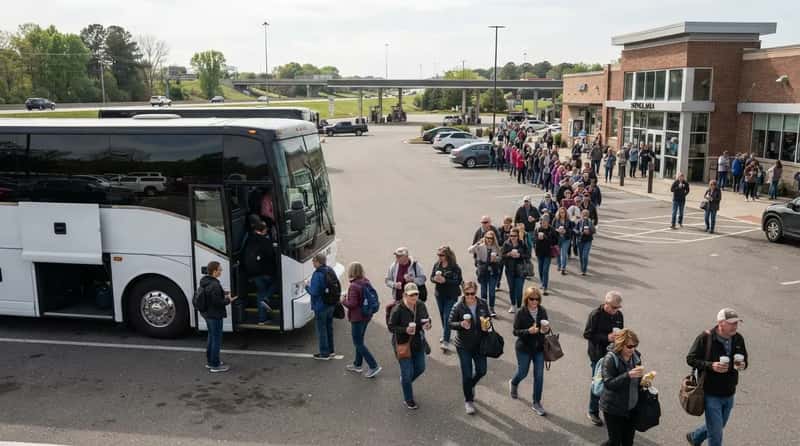
A rest stop that would take a solo driver five minutes turns into a 20-minute operation once you add a full coach of passengers. Multiply one restroom visit by 40 or 50 people, add a few coffee lines and snack purchases, and a “quick break” becomes a genuine time sink. Drivers know this, which is why many quietly build extra minutes into rest-stop windows that never show up on the printed itinerary.
The frustrating part is that nobody controls this variable well. Some groups shuffle back to the coach in ten minutes; others linger at a gift shop and stretch the same stop past 25. Tour directors rarely announce the real cause of the delay, because pointing at specific passengers creates friction nobody wants on a multi-day trip.
#8 – Border Crossings Are a Total Coin Flip
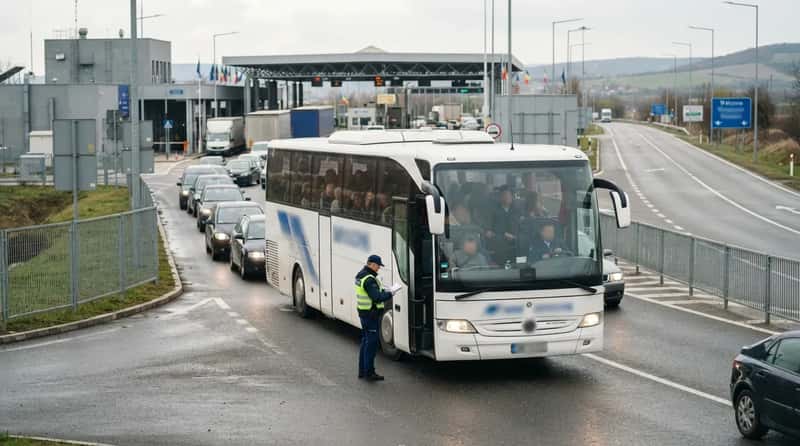
Nothing wrecks a carefully built schedule faster than an international border, and operators know it better than anyone. A crossing that took 20 minutes last month can suddenly take three hours with zero warning, and there’s no traffic app or advance notice that reliably predicts it. It’s the one part of the day nobody can plan around, no matter how experienced the driver is.
This unpredictability is exactly why smart operators plan against it rather than around it. Savvy operators build entire buffer days into border-heavy routes for this exact reason. When a route doesn’t cross a border, that safety net disappears, and a single bad crossing day can throw off the rest of the itinerary.
#7 – Federal Law Actually Forces the Bus to Stop, Whether You’re Ready or Not
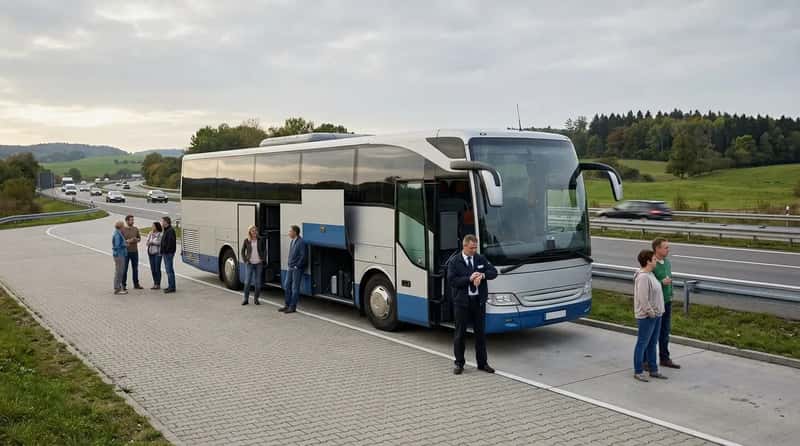
Most passengers assume delays are the driver’s fault, but often it’s the opposite: the driver is legally required to stop. Under federal hours-of-service rules, a driver can be behind the wheel for up to 10 hours in a day and on duty for as long as 15 hours total before the day has to end, regardless of how far behind the group is running.
What counts as “driving time” surprises most travelers, too. It includes time spent hunting for parking after the group is dropped off, and time spent sitting in traffic or waiting at a border crossing with the engine running. Once that clock runs out, the coach legally cannot move again until the driver rests, no matter how much itinerary is left unfinished.
Fast Facts
- Max driving time: up to 10 hours per day
- Max on-duty time: up to 15 hours per day
- “Driving time” includes parking searches, traffic, and border-crossing waits with the engine running
- Once the clock runs out, the coach legally cannot move again until the driver rests
#6 – Traffic Doesn’t Care That You Have a Reservation
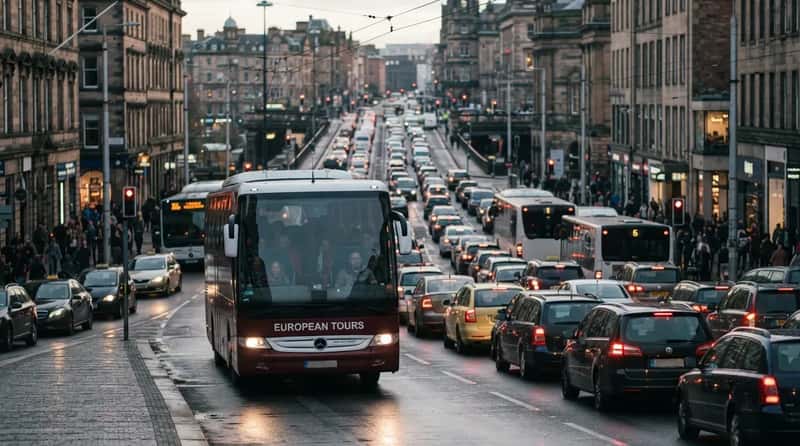
Coach tours run on fixed roads and fixed timetables, which means ordinary rush-hour congestion hits harder than it would for an independent traveler. A single accident, a lane closure, or a slow construction zone can add 30 minutes that never gets clawed back later in the day. Unlike a rental car, a 50-passenger coach can’t dodge onto side streets or cut through neighborhoods built for smaller vehicles.
City-center routes are usually the worst offenders. Coaches often face restricted entry points, designated drop-off zones, and parking rules that add extra minutes even when traffic itself isn’t the problem. Add a downtown festival, a parade, or a street closure, and a 15-minute city stop can quietly become 45.
#5 – Photo Stops Are Where Schedules Quietly Die
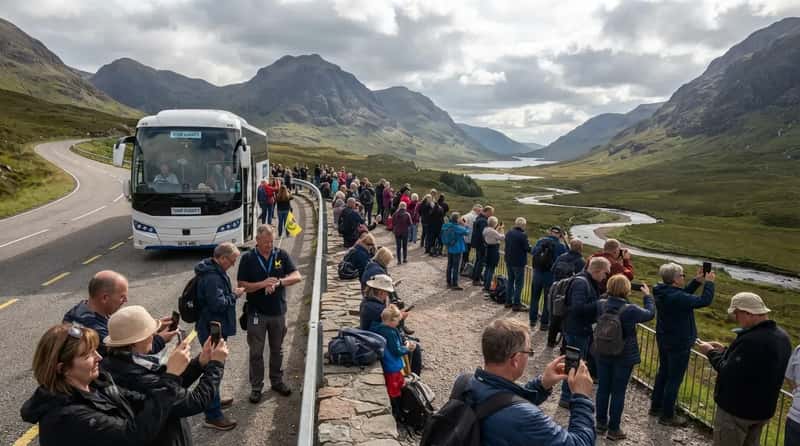
Scenic overlooks and “quick photo stops” sound harmless on paper, but they’re one of the sneakiest time drains on any coach tour. A five-minute stop for a viewpoint shot regularly stretches to fifteen once fifty people each want their own photo, their own group shot, and one more angle. Guides rarely cut these stops short, because they’re often the most memorable, camera-ready moments of the entire day.
The irony is that these delays are almost never announced as delays. A tour director will simply absorb the lost time by trimming a few minutes from a later stop, so passengers never connect the extended photo break to the shortened museum visit two hours later. It’s one of the most common, least acknowledged reasons a “perfectly scheduled” day slowly falls apart.
#4 – Local Step-On Guides Add a Layer Nobody Fully Controls
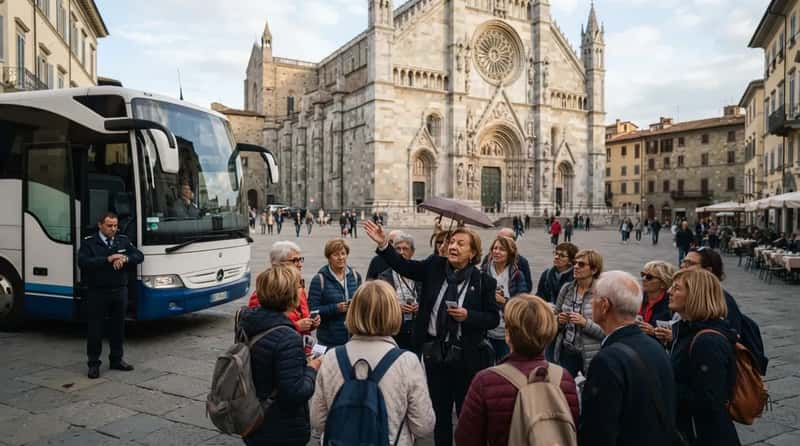
Many multi-day coach tours hand the microphone to a local specialist guide for city walks and regional history, and that handoff comes with its own timing risk. The step-on guide isn’t managing the coach’s overall schedule; they’re managing a single city tour, and their sense of “just five more minutes” doesn’t always match the driver’s legal clock or the next reservation down the road.
When a local guide runs long at a cathedral or a market, the tour director has to quietly absorb it somewhere else. This layered handoff, between the coach’s master schedule and the local guide’s independent pacing, is one of the least visible reasons a group leaves a city later than planned, even when everyone individually did their job well.
Worth Knowing
- Step-on guides manage a single city visit, not the coach’s full-day schedule
- Their pacing doesn’t always sync with the driver’s legal drive-time limits
- A few extra minutes at one stop often gets quietly absorbed somewhere else down the road
#3 – Weather Can Turn a Scenic Route Into a Detour
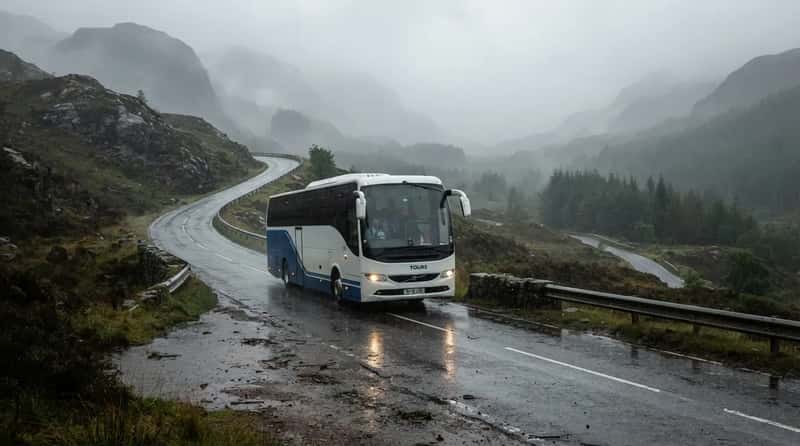
Rain, fog, snow, and high winds don’t just slow a coach down, they can force an entirely different route. Mountain passes get closed, coastal roads get restricted, and a scenic two-lane highway gets swapped for a longer interstate detour with zero notice. What was supposed to be a 90-minute drive between stops turns into two and a half hours.
Operators build seasonal buffers into itineraries for exactly this reason, but weather rarely cooperates with a printed schedule. A single afternoon storm can force a driver to slow well below the posted speed limit for safety, and that lost time simply cannot be made up once the roads clear.
#2 – Pre-Trip Safety Checks Aren’t Optional, Even When You’re Already Late
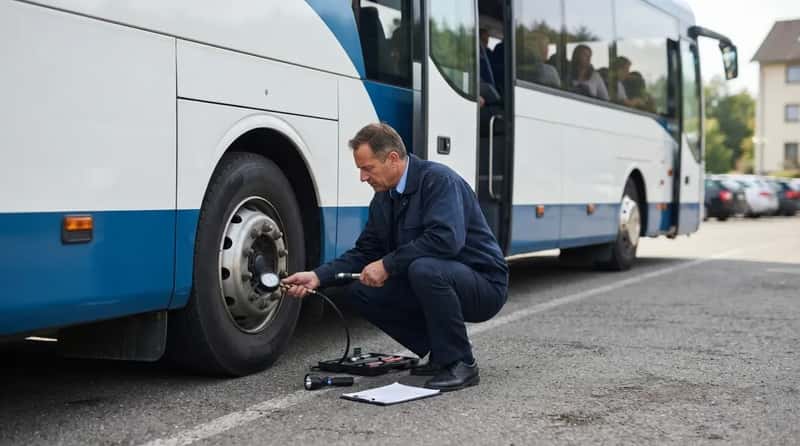
Every coach undergoes a driver inspection before it’s allowed to move, and that inspection doesn’t get skipped just because the group is running behind. Tire pressure, brakes, mirrors, and emergency equipment all get checked at the start of the day, and often again mid-route, regardless of how tight the schedule already is.
Most passengers never see this happen and assume the driver is simply “running late for no reason” when the coach doesn’t pull away on time. In reality, a driver who skips a safety check to save ten minutes is breaking the same regulations designed to keep the whole group safe, which is exactly why professional operators never let a tight schedule shortcut it.
#1 – The Buffer Time Was Never as Big as You Think, and It Vanishes by Mid-Morning

Here’s the part almost no tour company says out loud: every itinerary is quietly padded with a small cushion of extra minutes at the start of the day, built to absorb one or two minor hiccups, not all of them. That cushion gets stretched thinner every year, too, because adults 55 and older now favor guided group tours more than any other age group, and nearly half say they’ll book another one within twelve months, which means bigger, more experienced groups with an even wider range of paces and habits.
Getting people somewhere on time is easy. Getting fifty different people somewhere on time, together, is a different job entirely.
Common refrain among veteran tour directors
One slow boarding, one long photo stop, and one oversized restroom break can burn through that entire buffer before lunch. Once it’s gone, there’s no hidden reserve left, only a tour director quietly trimming five minutes here and ten minutes there for the rest of the day. By the time the coach reaches the final stop, that invisible morning cushion is the real reason everyone’s twenty minutes behind, and almost nobody on board ever realizes it happened.
None of these thirteen reasons involve a lazy driver or a disorganized tour company. They’re the ordinary, invisible math of moving forty or fifty people through unpredictable roads, borders, and attractions on a schedule that was optimistic from the very first mile.
The next time your coach rolls in late, it’s probably not one dramatic failure, it’s a handful of small, human, five-minute moments that quietly stacked up all day. Which one of these thirteen have you actually watched happen in real time? Drop it in the comments.