You did everything right. You bought the feeder, filled it with nyjer seed, hung it in the yard, and watched those brilliant little yellow birds show up like clockwork. Then one morning they were just gone. No warning, no explanation – just an empty feeder swinging in the breeze. Most backyard birders shrug and assume the goldfinches moved on. They almost never did. Every disappearance has a specific cause, and most of them are shockingly easy to fix.
Here’s what makes goldfinches different from every other feeder bird: they’re unforgiving judges. Food freshness, feeder cleanliness, yard safety, perching spots, water – let one of those slip, and the whole flock ghosts you. The maddening part? Most gardeners are laser-focused on the wrong variable while the real culprit sits quietly in plain sight. These 13 reasons count down from the sneakiest to the one that explains the majority of sudden goldfinch disappearances – and the fix most people never even think to try.
#13 – Your Yard Has No Perching Spots Near the Feeder
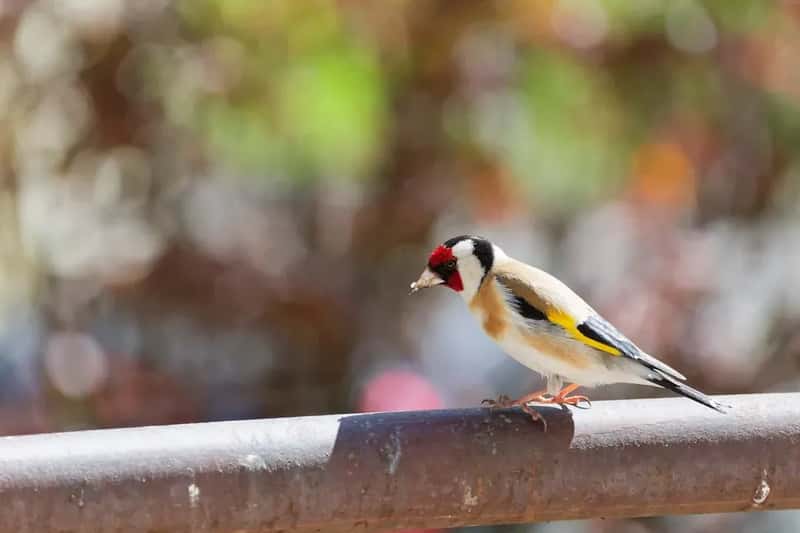
Goldfinches don’t dive straight into a feeder the way a house sparrow will. They’re cautious, deliberate birds that like to land nearby, survey the scene for predators, and only then commit to eating. Thin branches, tall plant stems, and garden structures give them exactly the staging area they need. Without a single nearby perch, they’ll spot your feeder from the air, decide it’s too exposed, and keep flying.
The fix costs nothing. Leave some tall flower stalks standing after they’ve gone to seed – sunflowers, hollyhocks, and verbena bonariensis all create natural perches that goldfinches use as a waiting room before the feeder. Even a simple garden stake or a nearby fence post will do. Think of it this way: they want a seat at the bar before they order. Take the seating away and they’ll eat somewhere else.
#12 – The Feeder Is Positioned in the Wrong Place
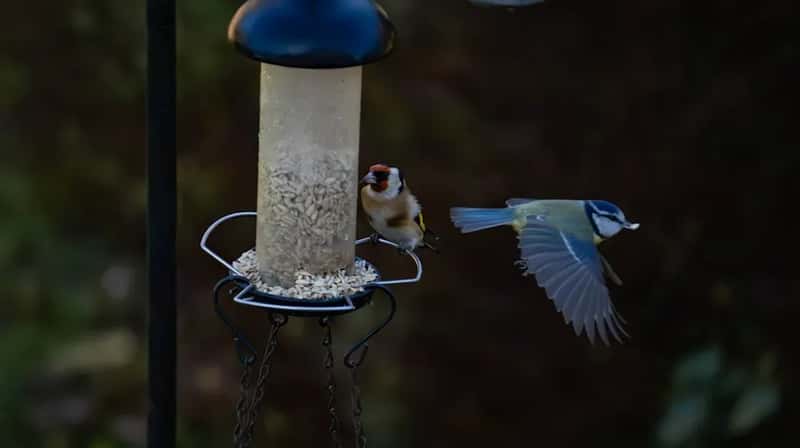
You can have the best feeder, the freshest seed, and the perfect perch nearby – and still get no goldfinches if the feeder is hanging in the middle of an open, barren lawn. Goldfinches feel dangerously exposed in wide-open spaces with no quick escape route. Location isn’t just a preference for them; it’s a survival calculation they make every single visit.
The sweet spot is specific: within 10–15 feet of protective cover like shrubs, trees, or a dense hedge, but with a clear line of sight so the birds can spot approaching predators. It should also sit in a quieter, lower-traffic part of the yard – away from busy patios, foot paths, or windows where sudden movement startles them. A feeder that’s too close to where you spend your evenings is a feeder goldfinches will quietly skip every single time.
#11 – There’s No Water Source in Your Yard
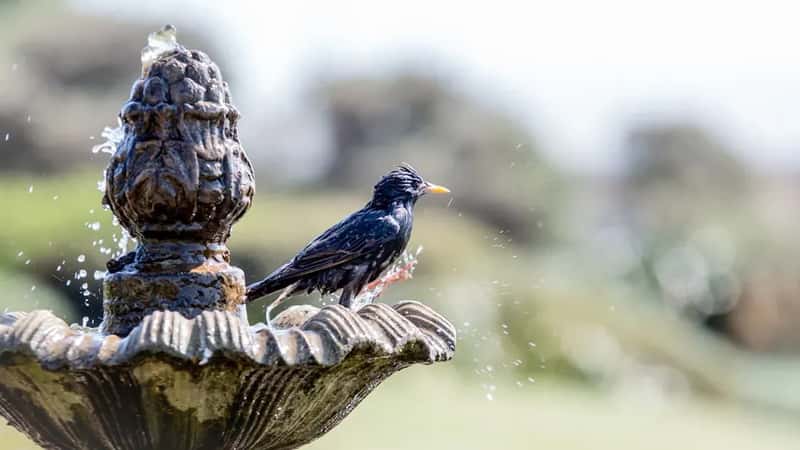
This is the fix most gardeners miss completely. They obsess over seed type and feeder style while ignoring water entirely. But goldfinches eat a seed-heavy diet, which makes them frequent and thirsty drinkers. A yard that offers food with no water is only doing half the job – and goldfinches know the difference between a complete habitat and an incomplete one.
They don’t need much. Goldfinches are small birds that prefer shallow water – no more than one to two inches deep – where they can safely drink and bathe without feeling vulnerable. What really gets their attention, though, is movement. Goldfinches are strongly attracted to the sound of moving water, so a simple dripper, fountain, or water wiggler added to a basic birdbath can transform a yard they ignored into one they visit daily. Moving water also stays fresher longer, which is a bonus you don’t have to think about.
#10 – You’re Using the Wrong Type of Feeder
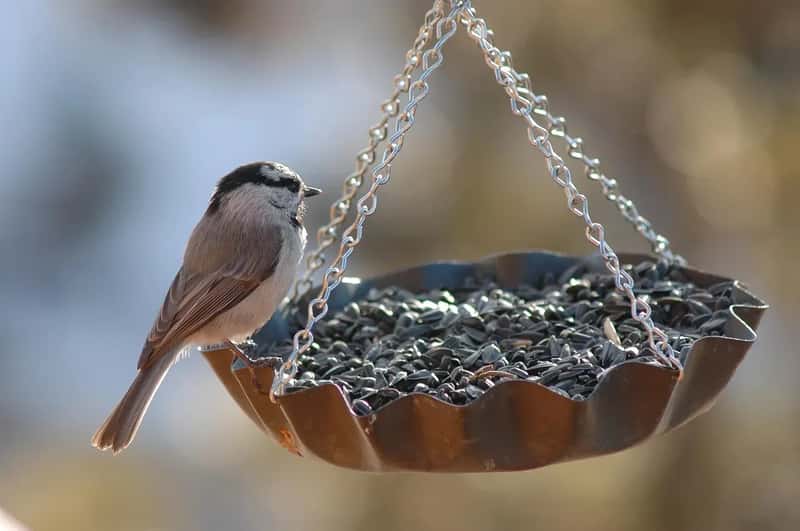
Not every bird feeder is a goldfinch feeder – and this distinction matters more than most people realize. Wide-mouthed platform feeders invite every bully bird in the neighborhood to eat first, and goldfinches, being smaller and less aggressive, get crowded out and stop visiting. Nyjer feeders, by contrast, are tube-shaped with very small feeding ports that physically restrict access by larger birds, making them a goldfinch’s comfort zone.
The single best hardware upgrade most gardeners overlook is switching to a tube feeder or mesh sock feeder specifically sized for small birds. Goldfinches and pine siskins are especially comfortable clinging to tube feeder perches to access nyjer or fine sunflower chips. If bigger, more aggressive species are monopolizing your setup right now, the goldfinches haven’t forgotten your yard – they’ve just been outmuscled out of it. Fix the feeder and they’ll come back.
#9 – Pesticides Are Quietly Wiping Out Their Food Chain

Here’s one that stings a little: that perfectly manicured, weed-free, pesticide-treated yard may be the exact reason goldfinches stopped showing up. Chemical pesticides can harm goldfinches directly or eliminate the insects they feed to their nestlings. During breeding season, even these famously seed-loving birds switch to an insect diet for their young. A pesticide-treated yard quietly starves the next generation of the birds you’re trying to attract.
The damage isn’t always dramatic or obvious. Systemic pesticides absorbed by plants can affect birds that eat treated seeds, and some can contaminate the water sitting in birdbaths. The effects accumulate over time, and a lawn that looks pristine and safe to you can read like a food desert to a goldfinch scouting for a place to raise a family. A yard that stops using pesticides often sees feeder traffic climb within a single season.
#8 – Your Yard Has No Native Plants Producing Seeds
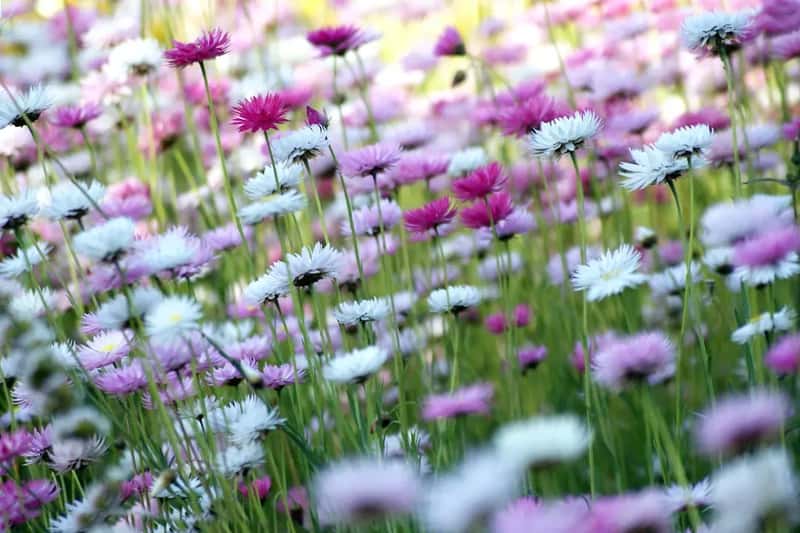
A feeder alone won’t make goldfinches loyal to your yard long-term. They need real plants – ones that produce seeds for eating and soft, downy material for nest-building, sometimes from the very same seedhead. Gardeners who focus entirely on feeders and skip native plantings are offering a fast-food window when goldfinches are looking for a full neighborhood to live in.
The plants that make the biggest difference are often the ones most gardeners pull out immediately: native thistles, milkweed, asters, coneflowers, and sunflowers. Leaving coneflower and sunflower seed heads standing through winter is one of the highest-value moves you can make for goldfinches – they and chickadees will pick them completely clean. Encouraging even a small patch of wildflowers in a corner of your yard creates natural forage that no feeder can fully replace.
#7 – A Predator Has Made Your Yard Feel Unsafe
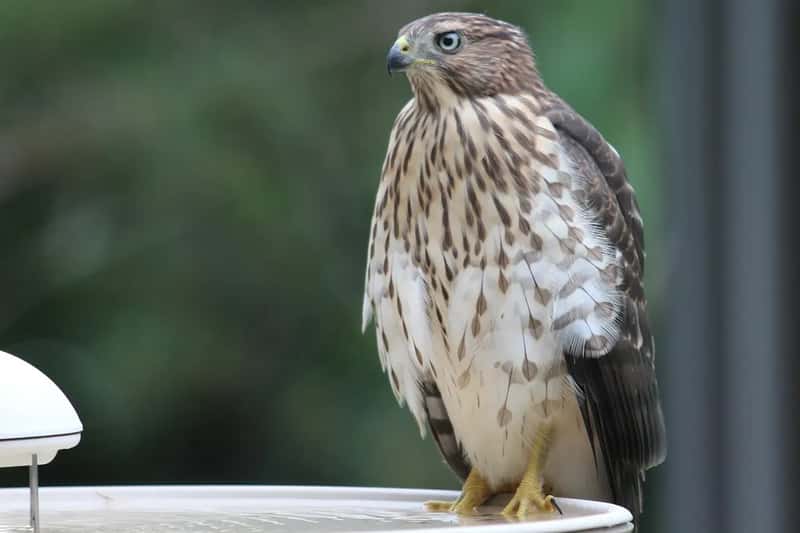
You may never have seen the hawk. Doesn’t matter – the goldfinches did. Cooper’s Hawks and Sharp-shinned Hawks are common in suburban neighborhoods, and a single frightening flyover can keep feeder birds away for days. The flock doesn’t file an incident report; they just stop coming. To you, the yard looks exactly the same. To them, it’s a place where something terrible almost happened.
Outdoor and feral cats are an equally powerful deterrent. A single neighborhood cat patrolling your yard on a regular schedule can shut down feeder visits entirely, even if the cat never catches anything. Birds are reading body language, scent trails, and sightlines that you’re not even aware of. You don’t have to own a cat for this to be your problem – neighbor cats, strays, and ferals all move through yards constantly. If goldfinches feel watched, they’ll choose a calmer yard two streets over every time.
#6 – The Feeder Runs Low and Stays That Way
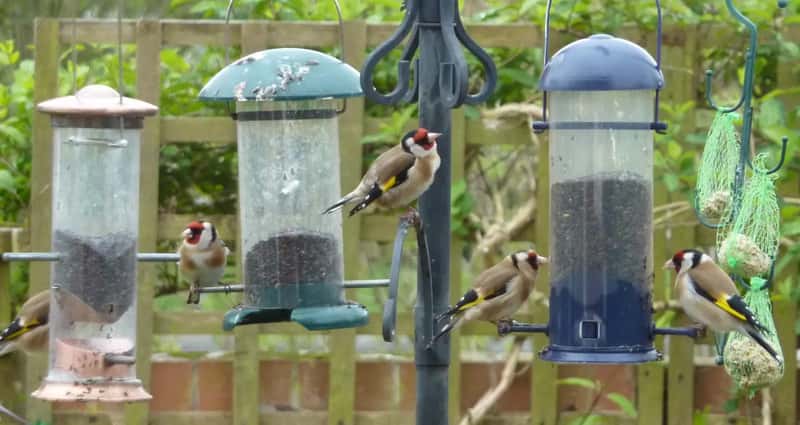
Most people assume goldfinches will hang around and wait for the feeder to be refilled. They won’t. Goldfinches are social birds that feed in flocks, and a feeder that’s half-empty signals “not enough here for everyone.” The whole group reads that signal the same way and moves on to a yard that can accommodate them. A dozen goldfinches need space for a dozen goldfinches – or they find somewhere that has it.
This is one of the most underestimated mistakes in backyard birding. Waiting for goldfinches to finish what’s already in the feeder sounds logical, but it backfires because a nearly empty feeder might accommodate two birds at most – and a flock won’t split up to wait their turn. Keeping feeders consistently topped off, especially during fall migration when flocks swell in size, is the difference between a yard goldfinches use as a pit stop and one they treat as a regular destination.
#5 – The Seed Is Rancid From Poor Storage
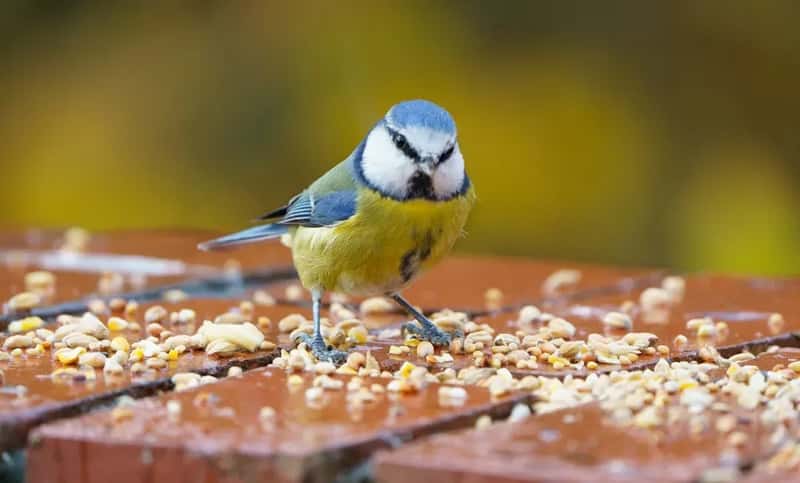
This one is sneaky because the seed can look completely normal and still be nutritionally worthless. Nyjer is an extremely high-oil seed – that fat and protein content is exactly what makes goldfinches crave it. But when stored in a hot garage or shed, the natural oils dissipate quickly, sometimes within two weeks, and can turn rancid. At that point, goldfinches have every reason to ignore your feeder even though it looks full.
The color of the seed actually tells you a lot. Fresh nyjer should be a rich, dark-chocolate brown. If the kernels look light tan or milk-chocolate colored, the seed has been overheated and the oils are already gone. Buying nyjer in smaller quantities, storing it at room temperature, and keeping extra bags in the freezer until needed are the habits that keep seed viable. Most gardeners are unknowingly filling their feeders with food that tastes like nothing – and wondering why the birds won’t touch it.
#4 – The Feeder Itself Is Dirty and the Seed Has Molded
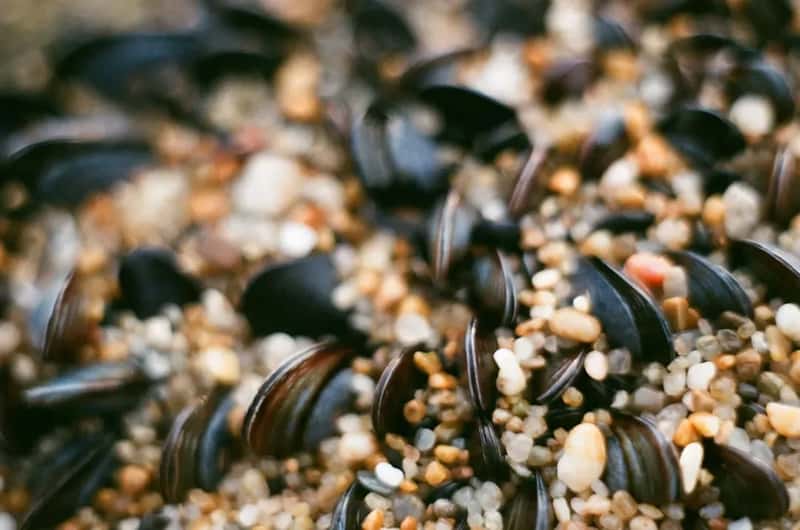
The most common physical reason goldfinches abandon a feeder is that nyjer at the bottom has gotten wet and started to clump and mold. Rain, humidity, and condensation all do this quickly – and during wet seasons it can happen within days of a fresh fill. You can buy the highest-quality seed in the world and still drive your goldfinches away if the feeder itself is a petri dish.
Moldy seed isn’t just unappetizing – it can cause fatal respiratory infections in birds, so this is more serious than it looks. Clean feeders every one to two weeks using a diluted bleach solution (one part bleach to nine parts water), rinse them thoroughly, and let them dry completely before refilling. A quick test: flip your partially full feeder upside down and watch how the seed falls. If it comes out in solid clumps instead of loose kernels, it’s already molded and needs to go. Don’t top it off – empty it, clean it, and start fresh.
#3 – It’s Nesting Season and They’re Simply Not Hungry for Feeder Food
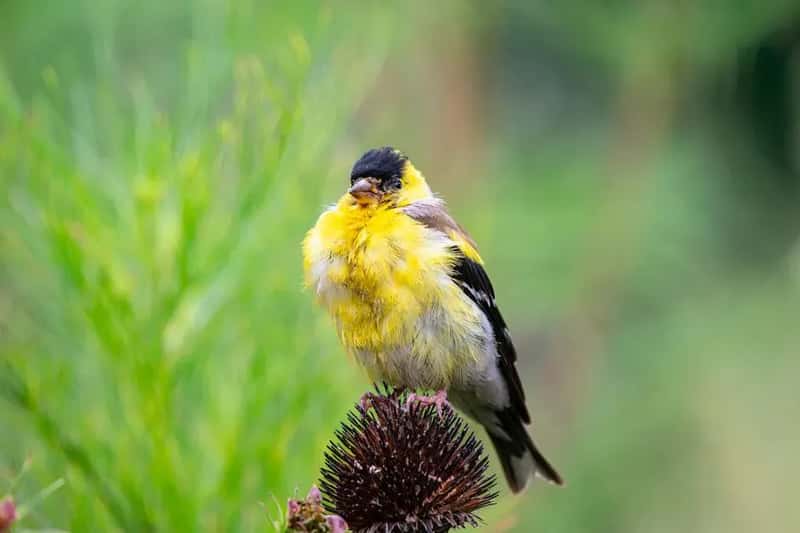
Every summer, thousands of backyard birders panic when their goldfinches vanish – and the birds are completely fine. Goldfinches are one of the latest-nesting songbirds in North America, timing their breeding to coincide with the natural weed-seed crop of late summer, typically July and August. During that stretch, they’re busy, territorial, and genuinely more interested in the natural seed supply in the surrounding landscape than anything hanging in your backyard.
When nesting pairs establish their territories, they don’t allow other goldfinches in, which means that big, energetic flock you enjoyed in spring has scattered across a wide area. You’re not seeing a disappearance – you’re seeing successful breeding behavior. Keep the feeder clean and partially filled, and wait. They come back in September, and when they do, they bring their fledglings with them. The fall return is often bigger and more dramatic than anything you saw in spring.
#2 – You Think the Goldfinches Are Gone, But They’ve Just Changed Color
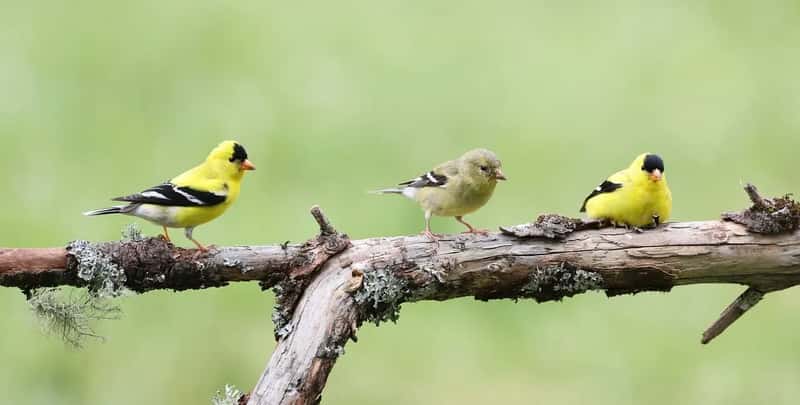
This is the mistake that quietly fools more gardeners than almost any other – and it’s the one people feel most sheepish about once they realize it. American Goldfinches are one of the very few songbirds that completely molt their body feathers twice a year. In spring they trade their drab olive-brown plumage for that electric canary yellow. Come late summer and fall, the process reverses – and suddenly the bird you’ve loved all season looks like a completely different species.
What makes it especially confusing is the timing: the adult molt happens right as the summer’s fledglings arrive at feeders, and those young birds are also brownish and mustard-colored. The number of bright yellow goldfinches can seem to drop almost overnight. There’s a very real chance your goldfinches never left at all – you just stopped recognizing them. Look more closely at the small brownish birds that are still visiting. The shape, the behavior, and those distinctive wing bars are all still there.
#1 – Your Nyjer Seed Has Gone Stale (And You Don’t Know It Yet)
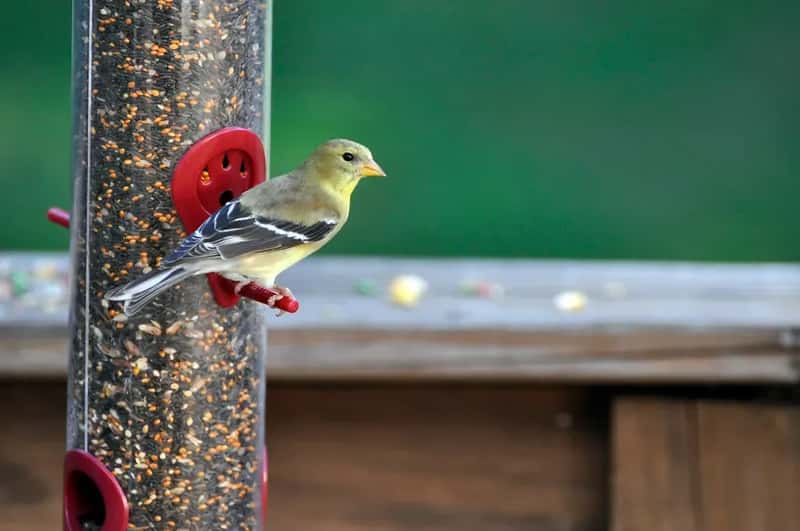
If there is one reason that explains the majority of sudden goldfinch disappearances, this is it. Nyjer seed that has been sitting in a feeder for more than a month – especially in summer heat or high humidity – has almost certainly gone stale. The oils that make it irresistible have dried out, and what’s left is a small black seed that looks identical to fresh nyjer but delivers nothing goldfinches actually want. They can tell. You can’t, just by looking at it.
The simple test: crush one seed between your fingers. Fresh nyjer feels slightly oily and releases a faint scent. Stale nyjer crumbles dry, like dust. The fix is just as simple: replace your nyjer every two to three weeks in mild weather, every one to two weeks in summer heat or during humid stretches. That single change – just replacing the seed more often than feels necessary – brings more goldfinches back than any other fix on this list. Most gardeners who try it are shocked at how fast it works. Sometimes the birds are back within 48 hours.
The encouraging part in all of this? Goldfinches are remarkably loyal once a yard earns their trust. Work through this list from the bottom up – stale seed, dirty feeder, nesting season timing, color change confusion – and most people find the real culprit within the first three reasons. These fixes cost almost nothing and take less than ten minutes. The goldfinches will tell you when you’ve finally got it right.