Florida sells itself as the easy life: sunshine, slow mornings and a rulebook that surely relaxes for part-timers. It doesn’t. The state draws some hard lines around driving, fishing, housing and taxes, and winter visitors often find them only after a citation, a denied exemption or a surprise bill.
Some of these rules sound too small to matter. Others start a clock before you’ve unpacked the car. Keep reading, because the rule at #1 may already be ticking for you.
#13 – The Headlight Rule Nobody Mentions

Florida expects your headlights on more often than you think.
Most drivers believe headlights are for nighttime. Florida law also calls for headlights in rain, smoke or fog, not just from sunset to sunrise.1
Fog and sudden downpours can arrive with little warning on coastal highways. Many snowbirds learn about this rule from a patrol car’s flashing lights, not from a sign.
- Rule of thumb: if your wipers are running, your headlights should be on.
- Daytime running lights alone may not light your taillights.
But that’s nothing compared to the lane habit that quietly frustrates Florida drivers in #12…
#12 – The Left Lane Is Not a Cruising Lane
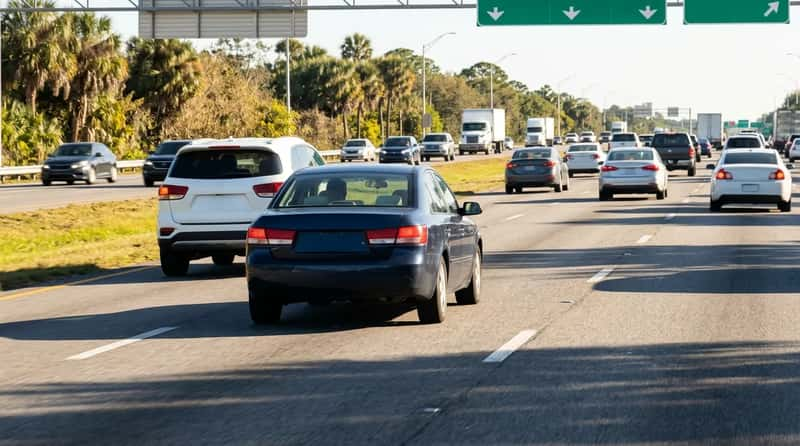
Sitting in the left lane can earn you a ticket.
Plenty of visitors treat the left lane as the “safe” lane for steady driving. Florida law restricts lingering in the left lane when faster traffic is closing in behind you.
The rule has exceptions for turning left, heavy congestion and obstacles. It is not a license to speed.
Drivers from states with looser habits are often surprised. The pattern shows up most on multilane roads packed with winter traffic.
- Move right when faster traffic approaches.
- Use the left lane to pass, then return.
Next up is a vehicle many retirees drive every day without checking the rules (#11)…
#11 – Your Golf Cart Is Not a Car
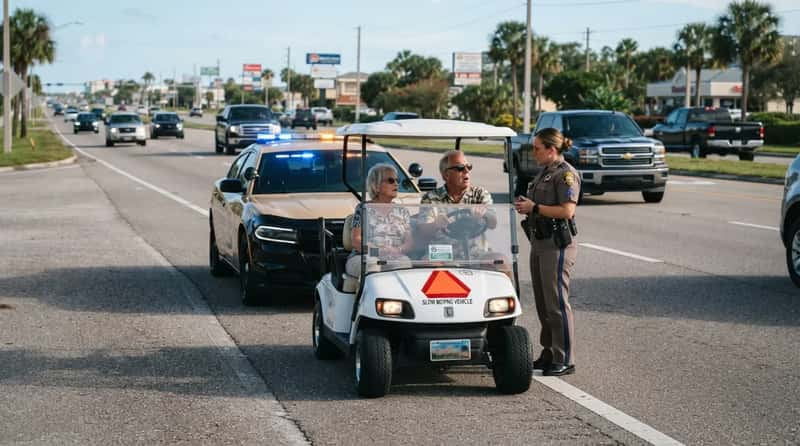
Your community’s golf cart habits may not travel outside the gates.
Many snowbirds treat a golf cart like a small, easy car. Florida generally keeps golf carts off state highways, except where limited crossings are allowed.
Local governments decide which of their own streets permit golf carts. Rules about equipment, hours and driver eligibility can differ from one town to the next.
A cart that is legal inside a gated neighborhood may be illegal one block outside it. Rentals add another wrinkle, because rental companies often explain local rules only briefly.
- Check city or county rules before leaving the community.
- Treat state highways as off-limits unless you are crossing.
Quick Compare
- Inside your gated community: usually governed by local and community rules.
- Nearby city or county streets: each local government decides.
- State highways: generally off-limits, apart from limited crossings.
Then there’s a habit that is now treated very differently than it once was (#10)…
#10 – The Phone Rule That Changed
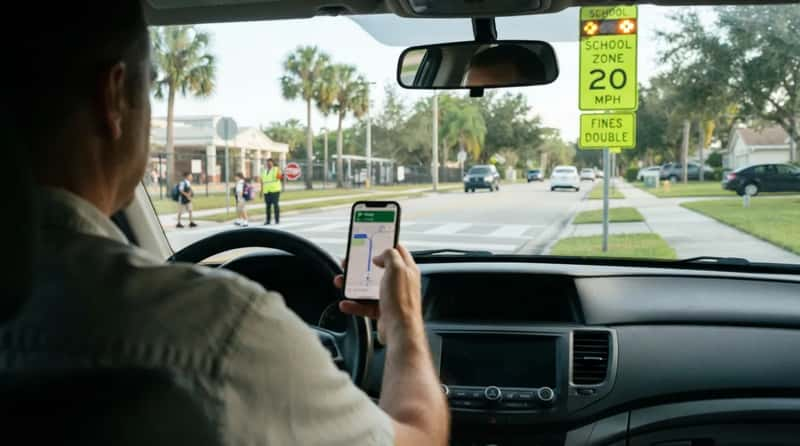
Texting behind the wheel is a primary offense in Florida.
That means an officer can pull you over for it without any other violation. Florida also bans handheld phone use in school zones and active work zones.
Hands-free use is generally still allowed. The handheld ban is narrower than many people think, but it applies exactly where traffic is most dense.
Snowbirds drive in unfamiliar areas, so they reach for navigation apps often. That is exactly when a phone ends up in a hand near a school crossing.
- Set your route before you leave the driveway.
- Mount the phone where you can see it without holding it.
But the next rule involves lights on the shoulder, and it catches drivers who think they’re being careful (#9)…
#9 – The Move Over Law Has Teeth
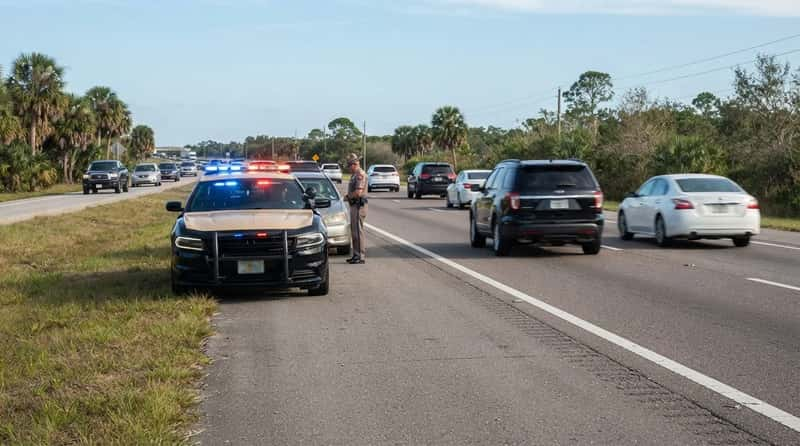
Stopped vehicles on the shoulder trigger a legal duty to change lanes.
Florida’s Move Over law applies when you approach emergency vehicles, tow trucks and certain utility vehicles stopped with lights flashing. The law requires you to move over a lane, or slow well below the limit if you can’t.
Many out-of-state drivers know the rule for police cars only. Florida’s version covers a wider group of roadside workers.
The reason is blunt: roadside work is dangerous. Drivers who hesitate or brake late create the very hazard the rule tries to prevent.
- Check your mirror early.
- Slow down if a lane change isn’t safe.
Now the rule that hits your wallet before you even arrive (#8)…
#8 – The Tax on a Winter Rental
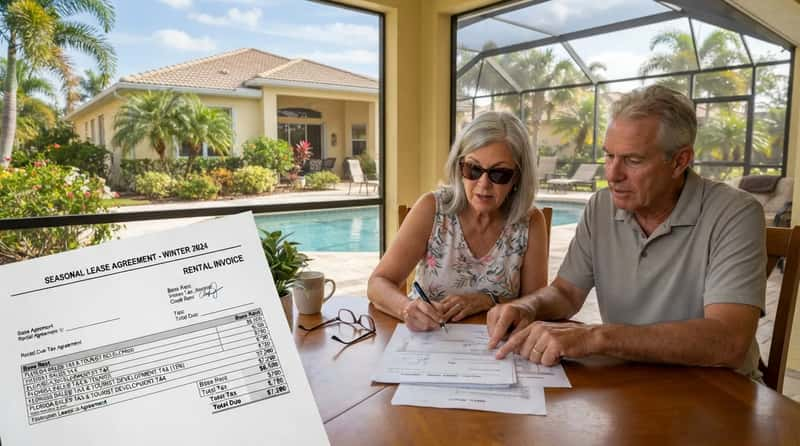
Your seasonal rental may carry sales tax.
Florida generally taxes rentals of living quarters for six months or less. A snowbird’s typical three-to-five-month lease can fall inside that taxable window.
Longer leases are treated differently, and counties may add their own local charges. The details depend on the rental type, so the exact bill can vary.
Many renters assume the rent quoted is the rent paid. Others find out on the invoice that taxes were added on top.
- Ask whether the quote includes state and local taxes.
- Compare monthly totals, not just the base rent.
But the next rule affects anyone whose grandkids visit and ask to drive the boat (#7)…
#7 – The Boating ID Card Most Visitors Skip
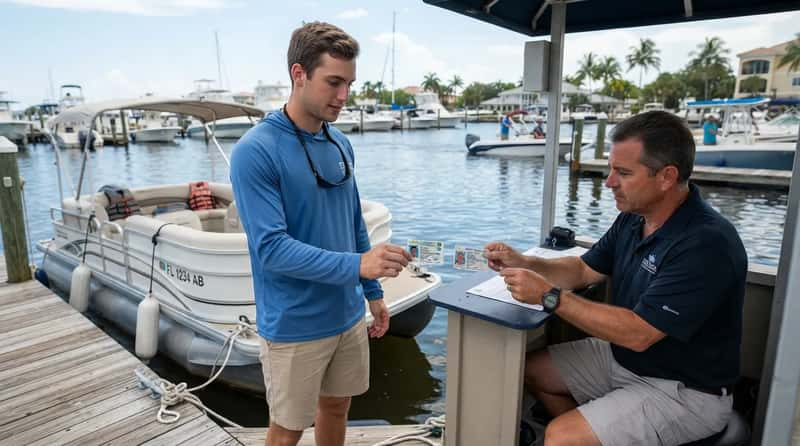
Florida has no boating license, yet you may still need a card.
Anyone born on or after Jan. 1, 1988, who operates a motorboat of 10 horsepower or more must complete an approved boating safety course. They must also carry a Boating Safety Education Identification Card.2
That catches younger family members, not most retirees, since boaters born before that date are exempt from the education requirement.
The rule reaches visitors too, and a rented vessel of 10 horsepower or more counts. A nonresident with proof of a NASBLA-approved course from another state and a valid photo ID may be exempt.
- Check each driver’s birth year before handing over the keys.
- Carry the card and a photo ID on board.
Fast Facts
- Born on or after Jan. 1, 1988: course and ID card required for motorboats of 10 horsepower or more.
- Born before that date: exempt from the education requirement.
- Rentals: a rented vessel of 10 horsepower or more counts.
- Nonresidents: proof of a NASBLA-approved course plus a valid photo ID may be enough.
Still, there’s a fishing rule that surprises older visitors even more (#6)…
#6 – Age Doesn’t Waive the Fishing License for Visitors
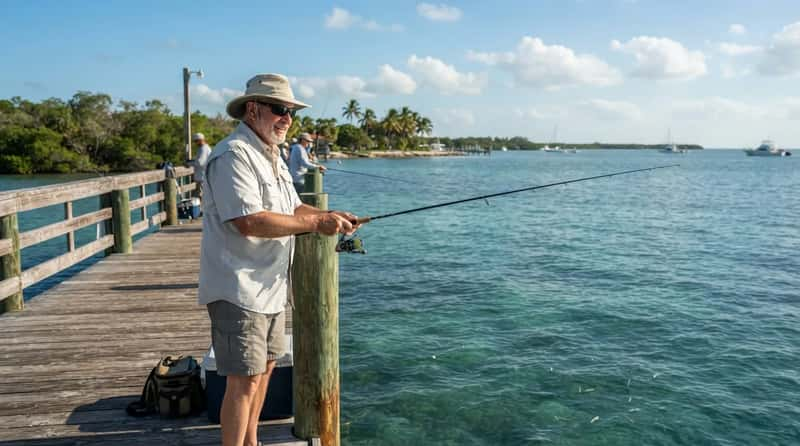
Many seniors expect a free pass on fishing licenses, and visitors don’t get one.
Florida residents who are 65 and older can fish without a license if they carry proof of age and residency. For nonresidents, a license is required regardless of age.
That exemption covers Florida residents only, so out-of-state snowbirds aren’t included. Out-of-state fishing and hunting licenses are not valid in Florida.
The price is the easy part: a nonresident saltwater license costs $17 for three days, $30 for seven days or $47 for one year. The paperwork is where people slip, because many snowbirds assume their home-state license or senior status covers them.
- Buy the license before you cast a line.
- Ask the agent which license matches your fishing.
But the license is only the first layer, and the next one trips up even careful anglers (#5)…
#5 – The Permit Trap and the Online Surprise
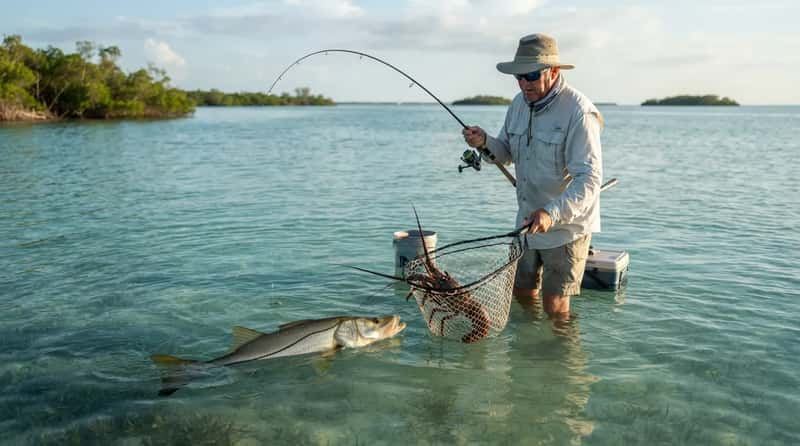
A fishing license alone doesn’t cover every catch.
If you take or attempt to take snook, FWC requires a snook permit in addition to a saltwater fishing license.3 4 FWC also lists a spiny lobster permit requirement on top of the license.
The license reaches beyond fish, too. A saltwater fishing license is required to attempt to take any native or nonnative marine organisms, such as crabs, lobsters and marine plants.
Buying it can be harder than expected, because current FWC guidance says nonresident 3-day and 7-day licenses are not available online.5 One licensing guide, citing Florida Statute 379.354, calls fishing without a license a second-degree misdemeanor.
- You may be covered on a licensed pier or a licensed charter.
- Don’t assume; check before you go.
Next comes the rule that can reshape your property tax bill (#4)…
#4 – The March 1 Deadline That Can Cost You the Exemption
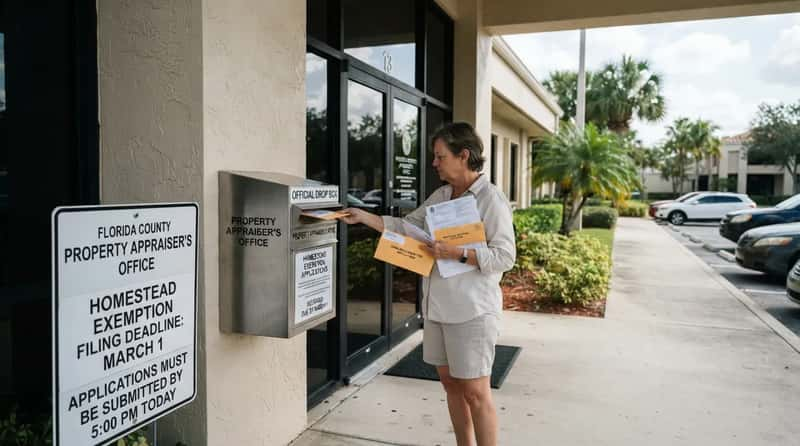
Miss one date and you can lose a full year of savings.
Homestead exemption applications must be eligible as of January 1 and submitted by March 1 of the year the benefit applies. Failure to apply on or before March 1 constitutes a waiver of the exemption privilege for that year.6
The prize is real: up to $50,000 off assessed value. The “Save Our Homes” cap also limits annual increases in homestead assessed value to 3%, or inflation if that is lower.
Here’s the catch snowbirds often miss. You can’t claim residency-based benefits elsewhere, and a person may have only one permanent residence at a time.
- Claiming a break in two states is a risk, not a loophole.
- Tell the appraiser if the home stops being your permanent residence.
But the real question is what “permanent resident” actually means, and the answer is next (#3)…
#3 – “Permanent Resident” Means More Than a Mailbox
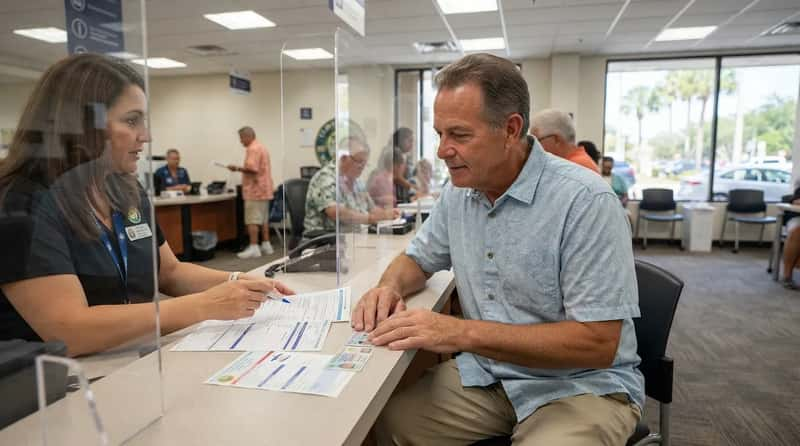
Owning a Florida home does not make it your homestead.
As of January 1, you must be a permanent resident of Florida, hold title to the property and make it your permanent residence. This is a residency test, not an ownership test.
Appraisers look for proof. Typical documents include a valid Florida driver’s license, vehicle registration and voter registration, with the voting address matching the homestead.
That means a snowbird who keeps a home-state license and voter registration is sending mixed signals. Many seasonal owners argue they should be able to claim both homes, but the rules are written to allow one permanent residence.
- Align your license, registration and voting address.
- Don’t file unless Florida is truly home.
At a Glance
- Test date: January 1 of the year you apply.
- Three requirements: permanent residency, title to the property and making it your permanent residence.
- Typical proof: Florida driver’s license, vehicle registration and voter registration.
- Red flag: a home-state license or voter registration that points somewhere else.
Now to the biggest financial trap on the road, which begins with a number most people can’t recall (#2)…
#2 – The Insurance Gap
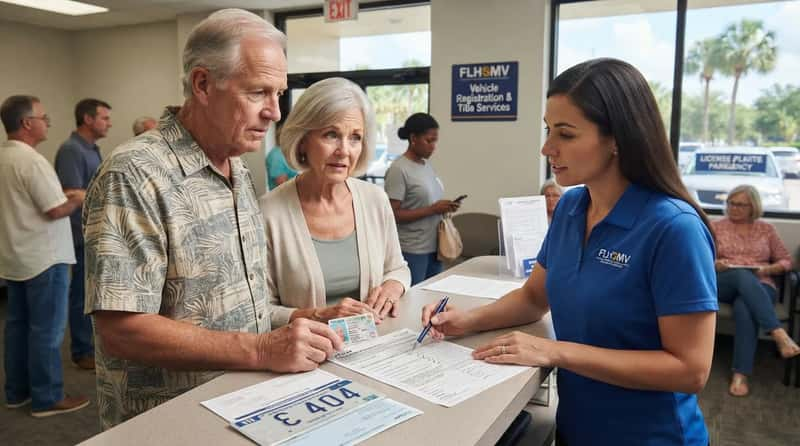
Your home-state policy might not match Florida’s rules.
Florida requires $10,000 in PIP and $10,000 in property damage liability coverage before you can register a vehicle. FLHSMV says you must obtain insurance from a Florida insurance agent licensed to sell insurance in Florida to register.7
The state checks. FLHSMV will not issue a registration if it cannot electronically verify valid insurance.
Florida’s no-fault law also contains a provision for out-of-state vehicles that stay in the state for more than 90 days during the preceding 365 days. Ask your insurer how that applies to your stays.
- Ask your agent about extended Florida stays.
- Don’t assume your policy follows you automatically.
But the clock that starts ticking first is even shorter, and it’s our #1 pick…
#1 – The Residency Clocks You Didn’t Know Were Running
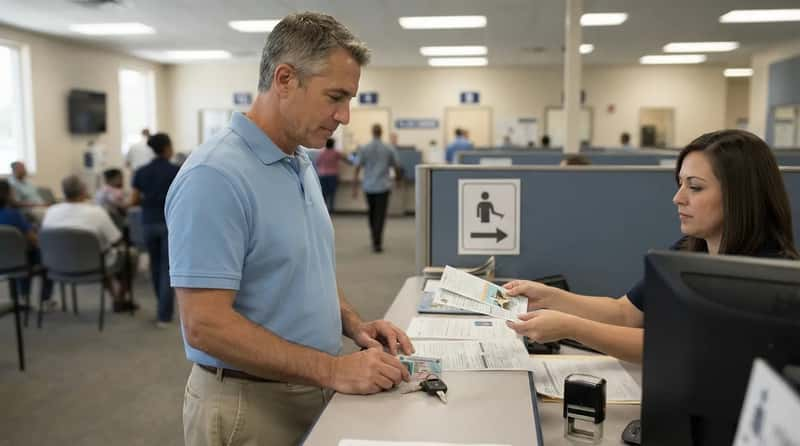
Two deadlines can start the day you decide Florida is home.
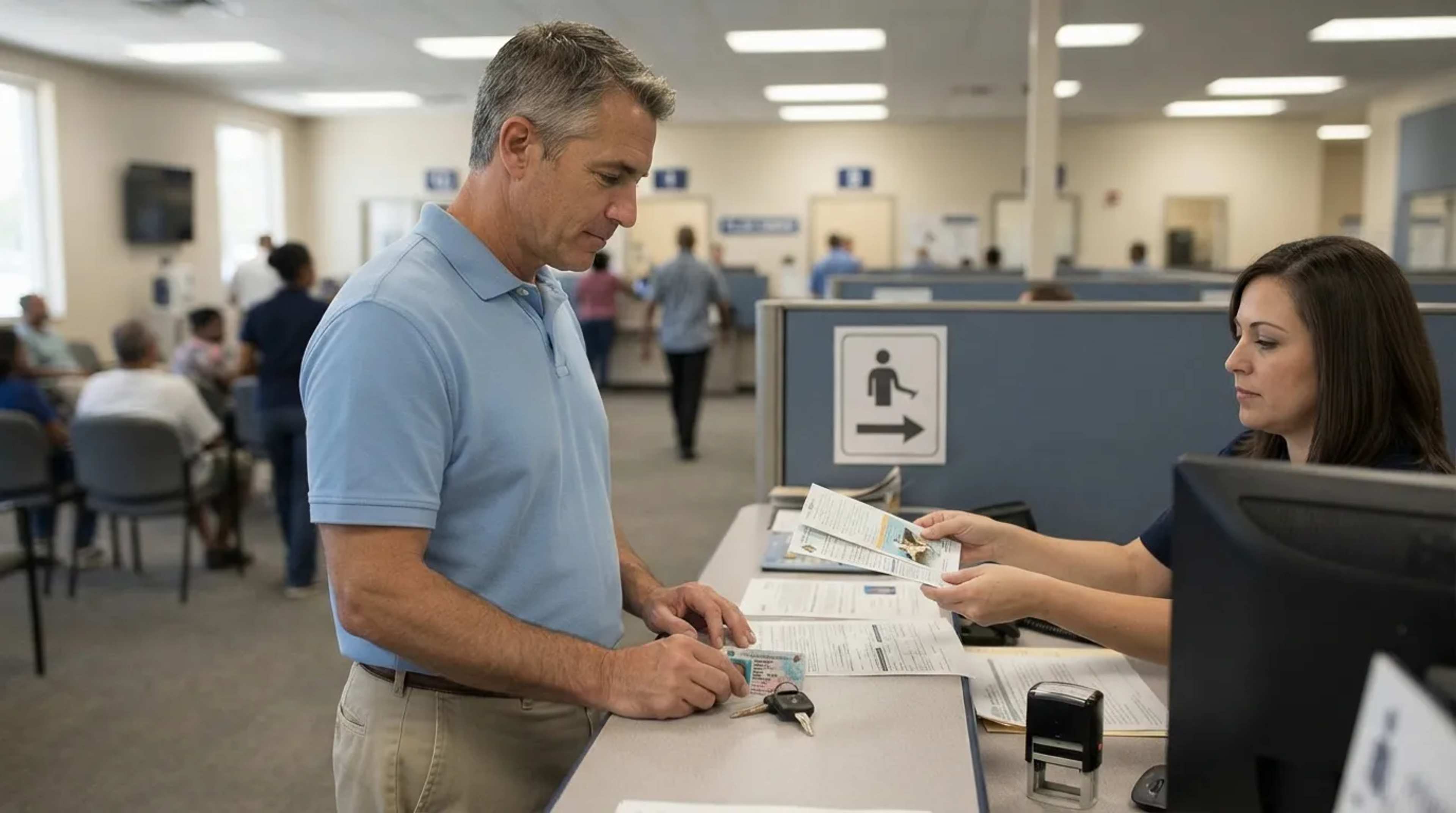
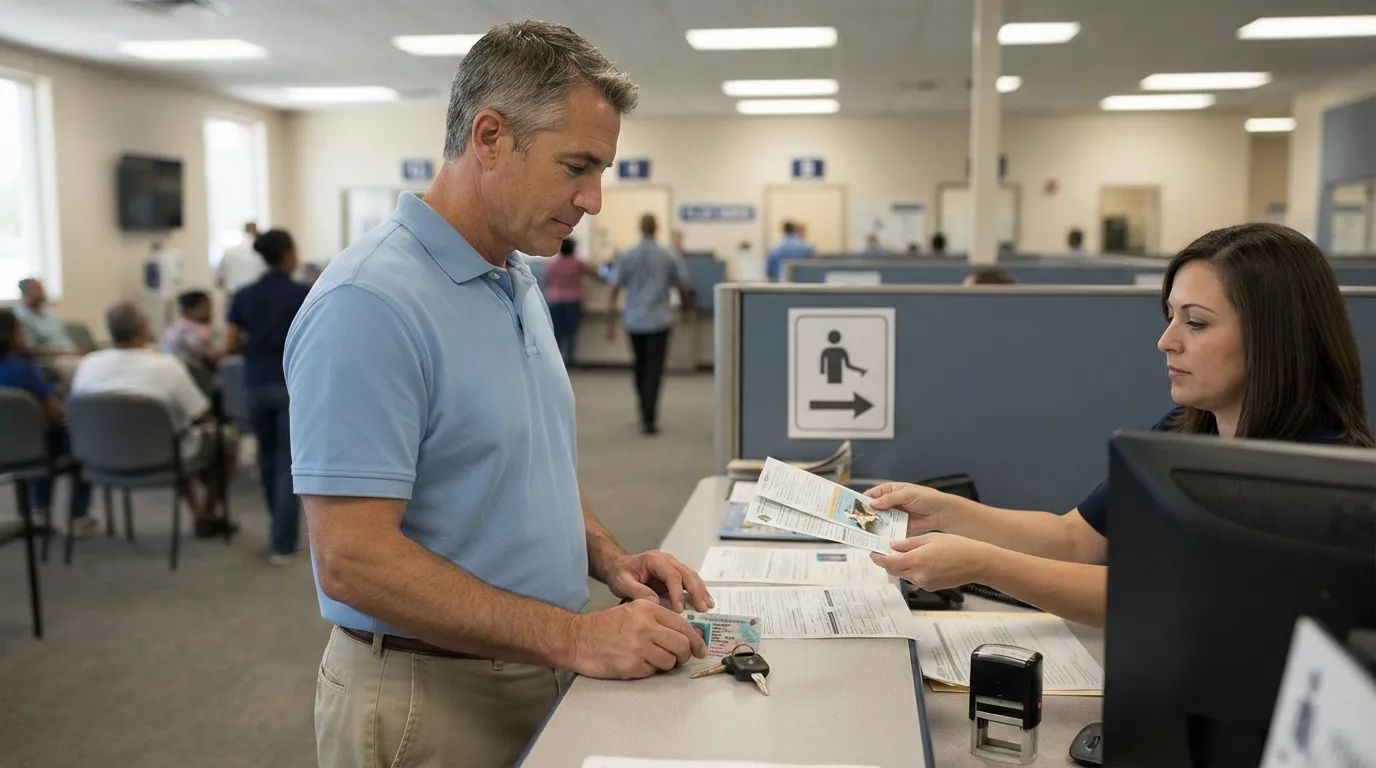
FLHSMV says a new resident must obtain a Florida driver license within 30 days of establishing residency. The same page says vehicles must be titled and registered within 10 days.7
Florida charges a one-time $225 initial registration fee when a person who has not previously held a Florida tag registers a vehicle. That’s the number that surprises people most.
The murky part is the moment a visitor becomes a resident. Guidance cites accepting employment, engaging in a trade or profession, or enrolling a child in a Florida public school as triggers.
Plenty of snowbirds call the 10-day clock a technicality nobody enforces. That is a risky bet.
- Decide your residency status before you arrive.
- Don’t drift into residency by accident.
The most costly Florida surprises aren’t exotic. They sit in ordinary paperwork: a 10-day registration window, a 30-day license deadline, a March 1 homestead cutoff and a fishing license that age doesn’t waive for visitors.
Others hide in plain sight, like the boating ID card, the permit trap for snook and lobster, and the six-month rental tax line. Then there’s the road: headlights in the rain, the left lane, the Move Over law and the phone ban.
Almost all of it can be fixed before you pack the car. The snowbirds who get burned usually aren’t careless. They just assumed Florida’s relaxed vibe came with a relaxed rulebook.
- Florida Statute 316.217: https://www.leg.state.fl.us/Statutes/index.cfm?App_mode=Display_Statute&URL=0300-0399%2F0316%2FSections%2F0316.217.html
- FWC Boating & Navigation: https://myfwc.com/license/boating-navigation/
- Florida Statute 379.354: https://www.leg.state.fl.us/statutes/index.cfm?App_mode=Display_Statute&URL=0300-0399%2F0379%2FSections%2F0379.354.html
- Nonresident Fishing License Guide: https://fishinglicenseinfo.org/fla-non-resident-fishing-license/
- FWC Nonresident License Changes: https://content.govdelivery.com/accounts/FLFFWCC/bulletins/3fc5758
- Palm Beach Homestead Exemption: https://pbcpao.gov/homestead-exemption.htm
- FLHSMV New Resident: https://www.flhsmv.gov/new-resident/