You’d expect flight attendants to be the most relaxed passengers on any plane. They know every sound, every bump and every announcement by heart. But when crew buy a ticket or ride standby, they often fly with a quiet, careful discipline that looks almost strict next to the average cabin.
So what do they skip when nobody is paying them to be on board? A few of these habits are probably ones you’ve done this year. One has nothing to do with etiquette and everything to do with the stranger in the next seat. Here’s what insiders actually say.
#13 – They Never Press the Call Button for a Refill
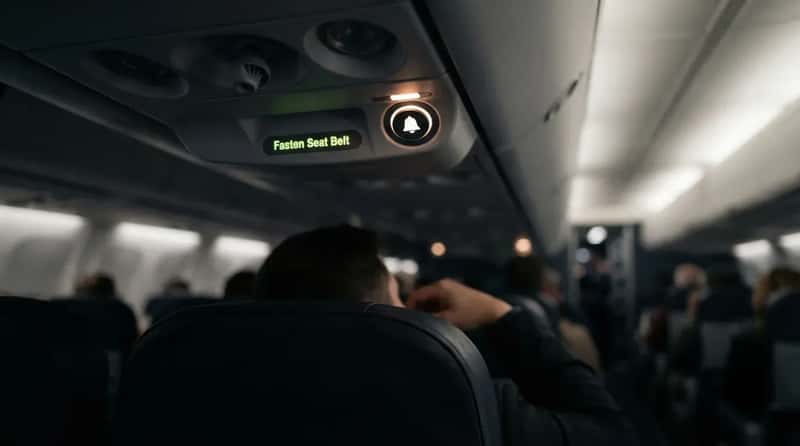
That little button above your seat isn’t a waiter’s bell, and crew know it. Christa Treat, a flight attendant with a major U.S. airline, says she’d never ring it as a passenger unless it’s an emergency. Her reasoning is simple. Flight attendants are often on their feet nonstop during a flight, so one more ding lands on top of an already packed workload.
Instead, they work the rhythm of the cabin. Crew come through regularly for safety checks and service, and that’s the moment to ask for another drink. If the seat belt light is off, you can also walk to the galley and ask there. It’s a tiny habit, but it says a lot about how they see the job from the other side.
The next habit is one crew avoid for a reason most passengers never think about…
#12 – They Won’t Go Barefoot Anywhere Near the Aisle
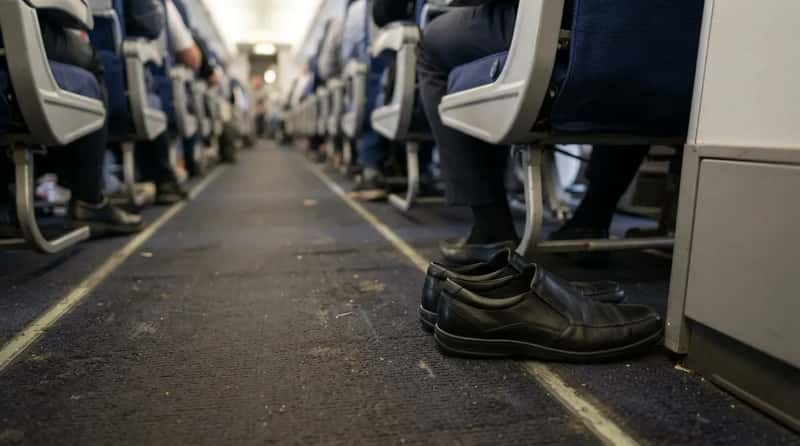
Socks off, feet up, shoes kicked under the seat. It’s the classic “I’m on vacation” move, and crew won’t touch it. Jay Robert, quoted in a HuffPost roundup, said you’ll never catch him taking off his shoes, walking barefoot, or putting his feet on the walls and seats. Crew see the cabin floor up close, and they don’t romanticize it.
Another flight attendant, quoted by Men’s Health, put it bluntly. Don’t walk around without shoes, because “every bodily fluid has been on the floor.” Think about the spills, the sick-bag mishaps and the thousands of shoes that carpet has seen. Ask crew about the lavatory floor in particular, and the answer is nearly always the same: shoes stay on.
Worth Knowing
- Slip-on shoes are easy to loosen at your seat and quick to put back on for a walk down the aisle.
- A clean pair of spare socks beats bare feet if you want to get comfortable.
- The lavatory is the one spot where crew say bare skin on the floor is a hard no.
- The aisle is a busy lane of carts, bags and passing feet, so it’s no place for stray toes.
Speaking of things crew avoid touching, the next one involves other people entirely…
#11 – They Never Tap, Grab or Touch a Crew Member Mid-Aisle
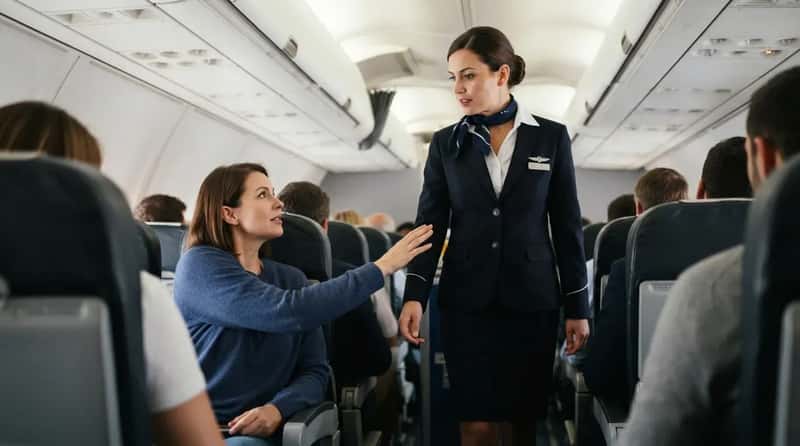
Here’s a mistake so common that crew talk about it constantly. Flight attendants often report being tapped on the shoulder, touched on the arm, or physically stopped as they move through the cabin. Off duty, they refuse to do it to someone else. A simple “excuse me” works better every time.
Most passengers mean nothing by it. Even so, unexpected contact from strangers can feel invasive to someone who is working and can’t step away. Those small touches can add up over a long shift, and crew flying as passengers don’t want to add to the pile.
Next up is a habit crew keep for their own health, and it’s the opposite of a “relaxing” flight…
#10 – They Refuse to Sit Frozen for the Whole Flight
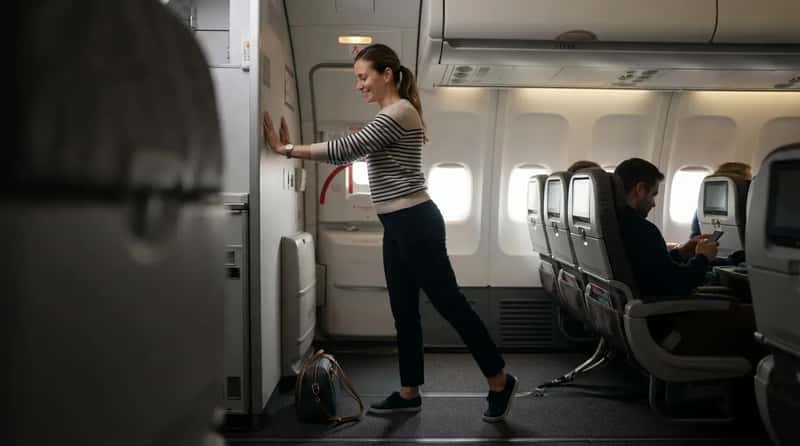
The movie is queued, the blanket is tucked, and most passengers won’t move for six hours. Crew flying on their days off usually don’t play along. Flight attendants can spend upwards of 90 hours a month in the sky, and they know exactly what a small seat does to a body.
The medical guidance backs them up. A cardiology fellow at Brigham and Women’s Hospital told Condé Nast Traveler that a cramped seat can make it harder for blood to flow from the legs back to the heart. The advice is to stretch even while seated and to get up and walk about once an hour. It’s the same movement habit crew follow at work, minus the cart.
The next mistake can end a trip before it starts, and crew have watched it happen…
#9 – They Never Crack “Funny” Jokes About Security or Emergencies
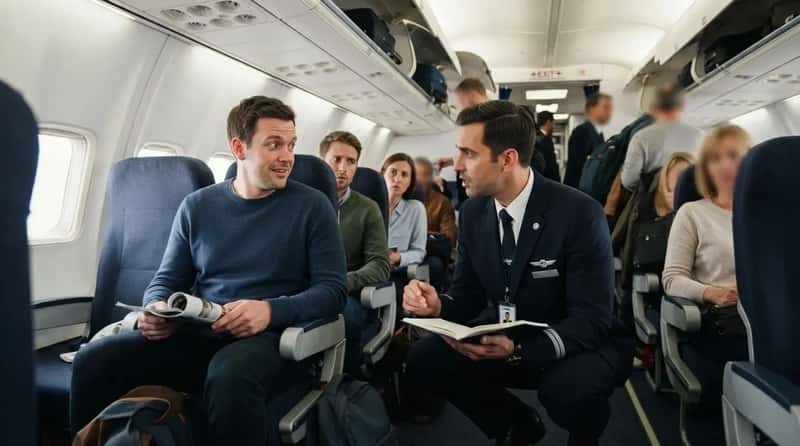
The joke that gets a laugh at a backyard cookout doesn’t work at 35,000 feet. Flight attendant and author James Wysong wrote in an NBC News column that he’d heard of several passengers pulled off flights over poor humor judgment. Crew want zero part of that risk on their day off.
They know something most flyers don’t. Crew are trained to treat every comment about security as a possible threat, whether or not it sounds like a joke. Once a comment is reported, the crew usually can’t shrug it off. A one-liner can turn into delays, questioning and a ruined trip.
Quick Compare
- Safe humor: Grumbling about the middle seat, the tiny pretzels or a delayed boarding group.
- Risky humor: Anything about bombs, hijackings or what might be hiding in your bag.
- Why the gap matters: Crew have to report security remarks, and the punchline doesn’t change that.
The next habit is one crew skip for a very different reason, and it might surprise you…
#8 – They Don’t Expect a Perk Just Because They Wear the Wings
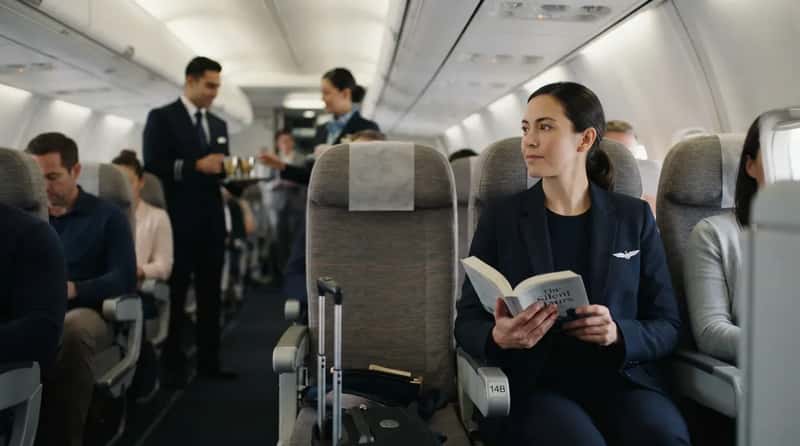
Everyone assumes airline staff get red-carpet treatment. In practice, many are surprisingly low-key. According to what crew say in online industry discussions, they typically act like normal passengers, keep to themselves and keep their requests to a minimum.
Riding standby is a bit different. Nonrev crew often say a quick hello or thank you to the working crew on boarding, not to get special treatment but so the crew knows they’re there if needed. Nonrev means free or discounted tickets, and it comes with more rules than most people expect. Crew treat it as a courtesy, not a privilege.
Next comes the kind of “helpful” habit that crew say backfires…
#7 – They Skip the “Helpful” Tidying That Actually Creates Work
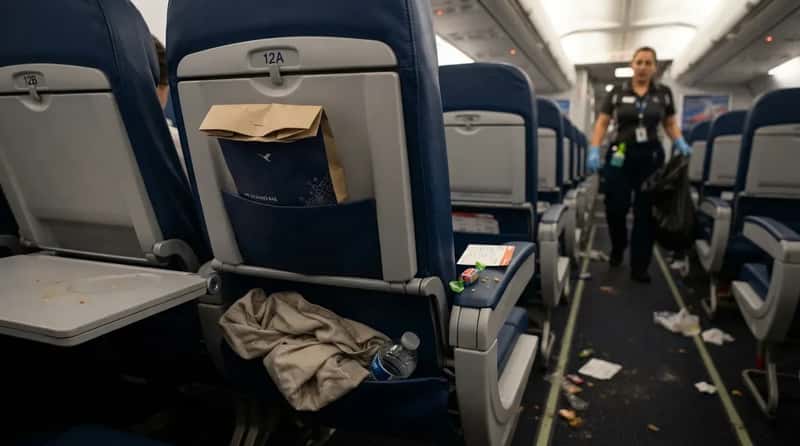
Good intentions can miss the mark in the cabin. A Reader’s Digest survey of flight attendants listed a few habits passengers think are polite but crew actually dislike. One is folding the tops of sick bags closed. Another is trying to wash a dirty airline blanket in the lavatory sink.
There were stranger ones too. Some passengers tuck pieces of candy into the seats for kids on the next flight to find. Even a gesture that seems sweet can leave a mess or a safety question for the team cleaning the plane. Off duty, crew would rather leave the cabin exactly as they found it.
Now for a habit some travelers think is heroic, but crew see as a mistake…
#6 – They Never Play Cabin Police for Other Passengers
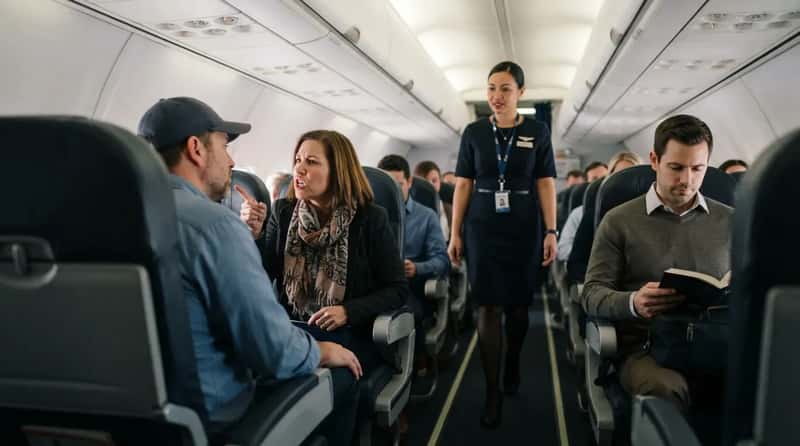
You’ve seen it: one passenger snaps at another for reclining, coughing or ignoring a rule. Crew flying as passengers stay out of it. Reader’s Digest quoted flight attendant Ethan S., who said this has shifted since the pandemic, especially when passengers tell others to wear a mask or not to cough.
The advice from crew is to resist the urge to intervene. Here’s the twist: a passenger stepping in can turn a small problem into a bigger one. Crew have the training and the authority for these moments, and off duty, they’d rather alert the working crew than get involved themselves.
The next one has divided even seasoned flyers, and it might start an argument in your family group chat…
#5 – They Don’t Treat the Flight Like a Happy Hour
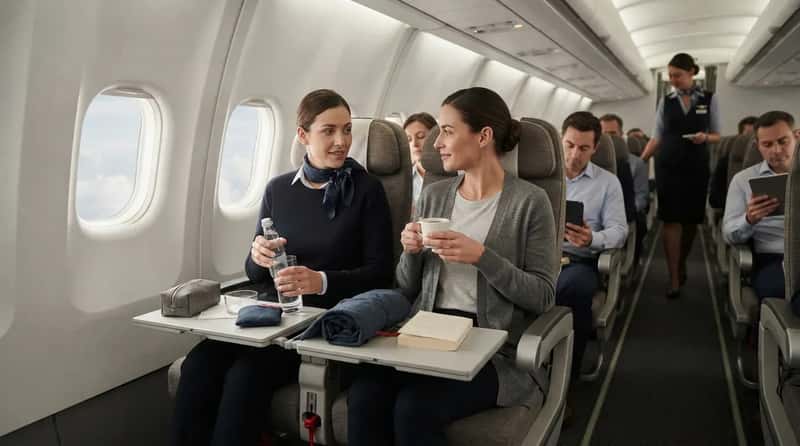
The cabin cocktail feels like part of the trip. Many crew skip it when they’re flying. Travel reporting has long pointed out that drinking in the air may hit harder because there’s less oxygen than on the ground. Crew have also seen what happens when a passenger overdoes it.
Here’s an honest caveat. The “double effect” is widely repeated, but researchers still debate how big it really is. What isn’t debated is that a drunk passenger becomes a cabin problem quickly, and crew know exactly how those flights end. Skipping the extra round is the easy call.
But few things crew avoid are more telling than what happens at the front of the plane…
#4 – They Won’t Sneak Up to a Better Cabin
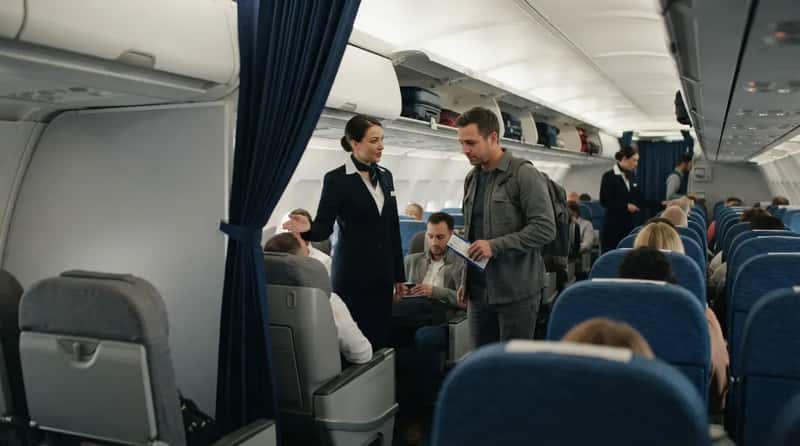
Every airline employee has seen a passenger try to slip past the curtain. Fox News’s list of things flight attendants hate includes trying to sneak into business class on a coach ticket. Off duty, crew wouldn’t dream of it.
Here’s why. They’ve watched that move fail in front of a full cabin, over and over, and it usually ends with a polite but firm escort back to the right row. There’s also a code among airline staff: seats are assigned for a reason. Many say the only way they’d move up is if an agent offered.
At a Glance
- Every seat is tied to a specific ticket, and the cabin is staffed with that in mind.
- Only an agent or a crew member can approve a move to a better seat.
- A polite question at the gate is the honest route if you’re hoping for an upgrade.
- Walking forward and hoping nobody notices usually ends in a public trip back to your row.
The last three habits get personal, starting with a moment most passengers walk right past…
#3 – They Never Walk Off Without Acknowledging the Crew
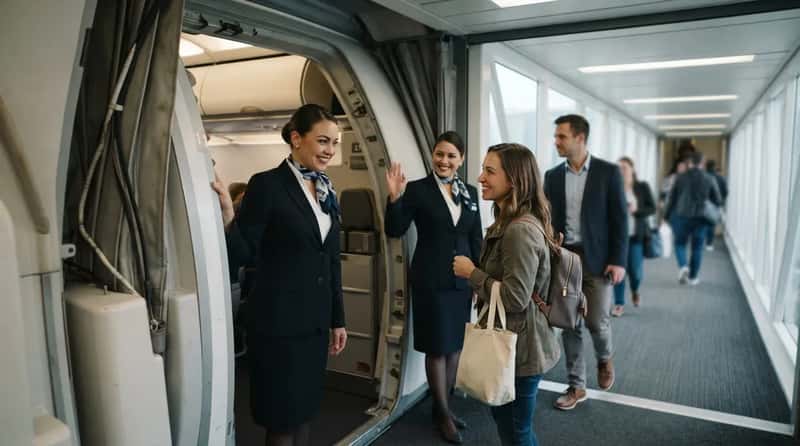
Deplaning is the last chance a passenger gets to say anything, and crew never waste it. One flight attendant named Erica told Reader’s Digest that saying goodbye is one of the most satisfying parts of the job, but it feels bad when passengers don’t nod or wave back. Crew flying as passengers make eye contact and say something.
Erica had a sharper point. Some passengers thank the pilot for a great flight but ignore the crew who worked the whole way. The advice from crew is to thank everyone on your way off. It takes two seconds, and it’s one of the things they say they notice most.
The next mistake sounds tiny, but crew say it sets the tone for the entire flight…
#2 – They Never Treat the Crew Like Servants
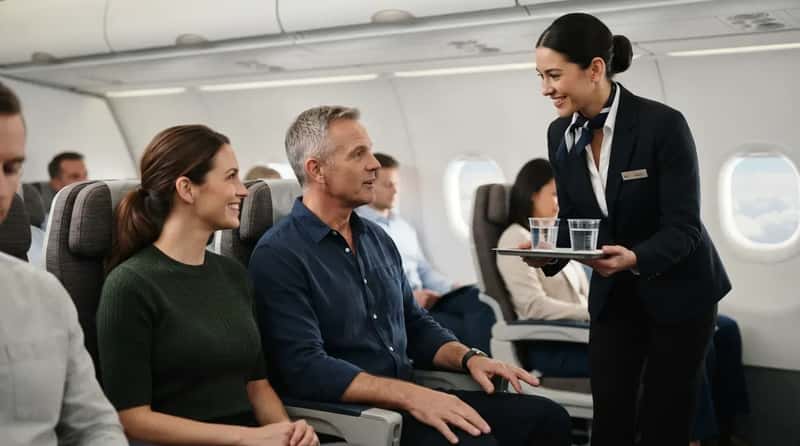
Snapping fingers, shouting “hey, you” and demanding on-the-spot fixes make crew wince. Fox News put it plainly in a piece on what flight attendants dislike: crew are there to make sure you’re comfortable, not to wait on you hand and foot. Crew flying as passengers remember exactly how that feels.
The fix is easy. Call the flight attendant by the name on their badge, or say “Excuse me, ma’am” or “Excuse me, sir.” Crew are primarily there for safety, and service is only part of the job. That reminder changes how they behave when the roles are reversed.
Why It Stands Out
- U.S. rules generally require at least one flight attendant for every 50 passenger seats on larger aircraft, and that requirement exists for safety.
- Drinks and snacks are the visible part of the job, but evacuations and medical events are the reason crew are there.
- A name or a calm “excuse me” gets a warmer response than a snap of the fingers, and crew know it from both sides.
But nothing on this list matters as much as what crew say they never forget when they’re the ones in the seat…
#1 – They Never Forget Everyone Around Them Has a Story
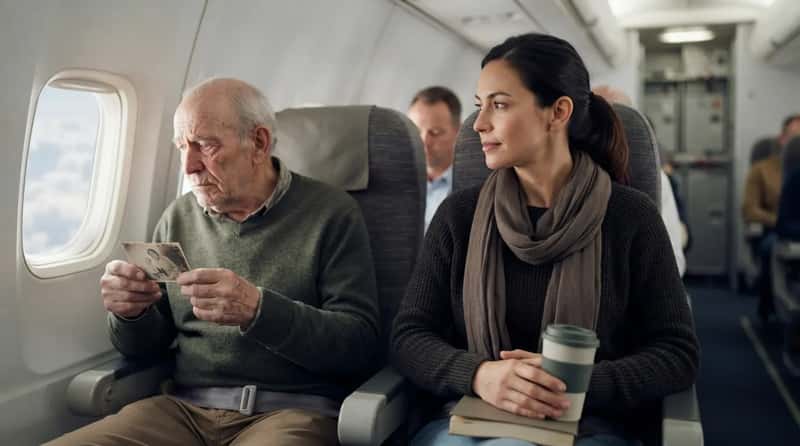
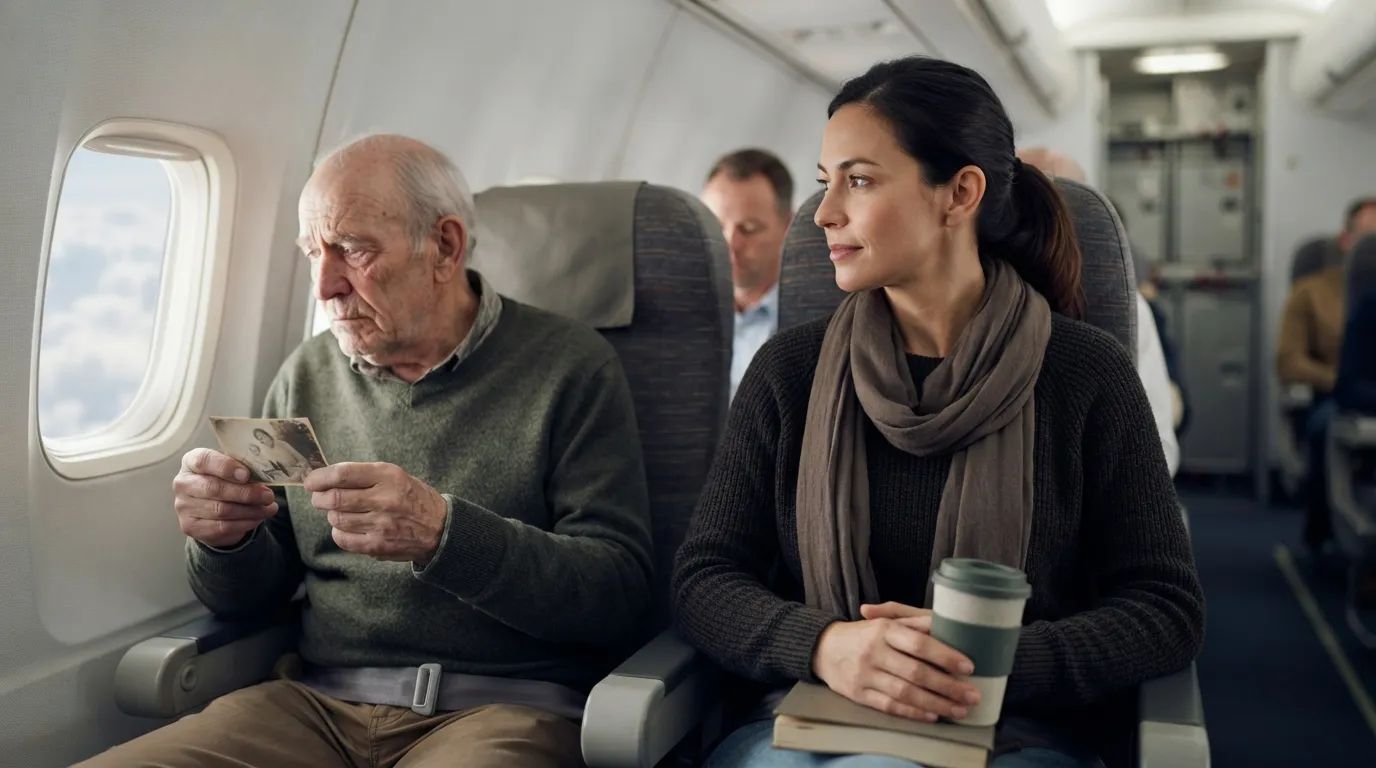
This is the one that changes how crew see every passenger. Flight attendant Francesco Lentini told HuffPost that working as a flight attendant changes your perspective on many things. He added that people fly for many reasons, from vacation to a funeral, so you learn to be empathetic.
That awareness shapes how they act on their days off. The passenger in the next seat could be heading to a hospital bed or a goodbye, and crew keep that in mind. Lentini also said some people can be inconsiderate and aren’t thinking about fellow passengers. Crew choose to be the exception.
The “secret” habits of airline staff turn out to be surprisingly small. Keep the shoes on, keep your hands to yourself, skip the call button, leave other people’s disputes alone and thank the crew on the way out.
The strangest part is that none of it takes a uniform. It takes a few seconds of noticing that everyone on that plane, in every seat, is on their way to something.