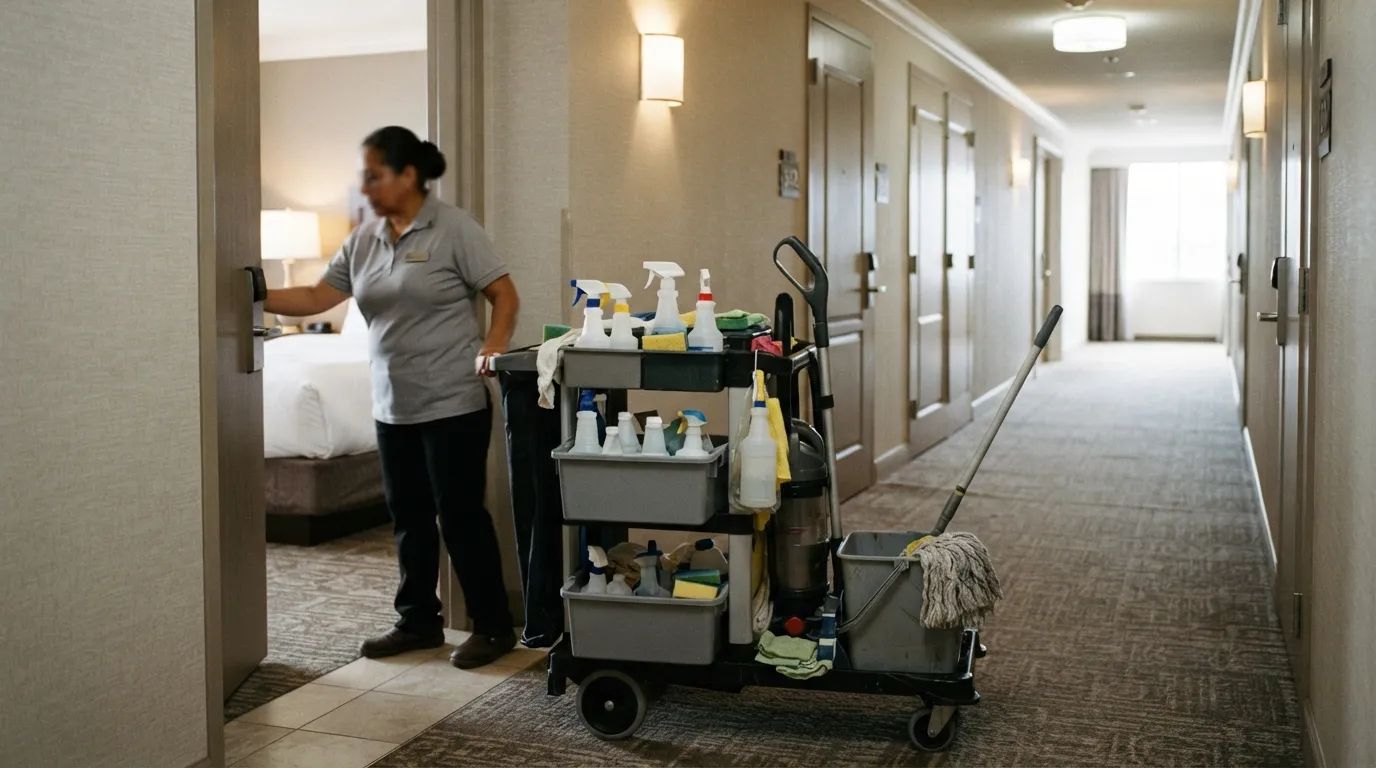
You’d expect people who work in hotels to be the most relaxed guests on earth. They know the back hallways, the laundry routines and the room-turnover rush. But ask people who have cleaned, staffed and run hotels how they behave as guests, and the surprise isn’t what they do. It’s what they refuse to do.
“Never” is a strong word, and nobody can speak for every employee. But the same habits keep surfacing in industry interviews and research, from former housekeepers’ accounts to lab swabs of hotel surfaces. One of them explains why some workers pay a fraction of what you do for the same room. Another involves an object you probably touched within minutes of walking in.
#13 – They Don’t Trust the Duvet, Even the One With a Cover
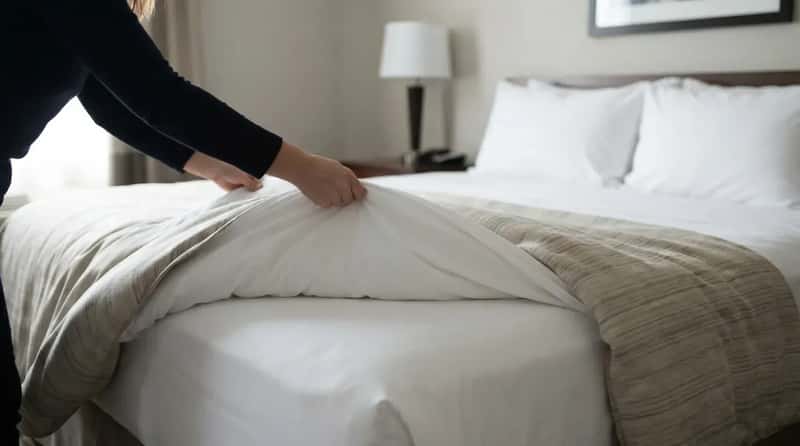
Here is the first one most guests never think about. Reneta McCarthy, a former housekeeping manager for a major American hotel chain, told CNN that the comforter is a problem. She said that if a top sheet sits between the duvet and the bed, the duvet cover might not be washed between guests.
That is one former manager’s account, not a rule for every hotel. Still, it explains why some staff strip the top layer off before they get in. The sheets underneath are a different story, because those are laundered between guests. The thing on top may get skipped. And the next item is something former workers call the most offensive object in the whole room.
At a Glance
- Sheets against your skin: laundered between guests.
- Duvet with a top sheet under it: its cover may not be washed between stays, per one former manager.
- The workaround staff favor: pull the top layer off before getting in.
- The caveat: this is one insider’s account, not a rule for every hotel.
#12 – They Won’t Touch the Ice Bucket Without a Liner
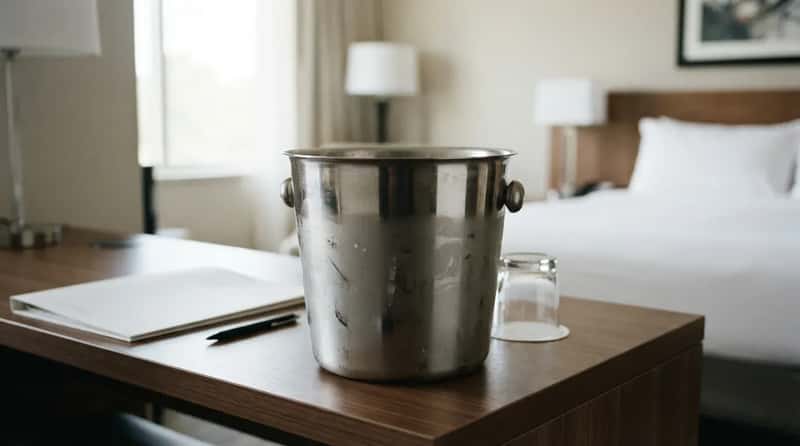
That tidy little bucket on the desk has a reputation among the people who clean it. Former hotel worker Christophe Lambert told Yahoo Canada it is the most offensive place in the hotel room. He didn’t mean it as a compliment.
His rule was simple. He wouldn’t use those buckets unless there is a liner, and he said that applies regardless of the calibre of hotel. Most guests just assume the bucket was washed. Staff assume nothing. And the next item is something you touched within minutes of walking in.
#11 – They Won’t Pick Up the TV Remote Bare-Handed
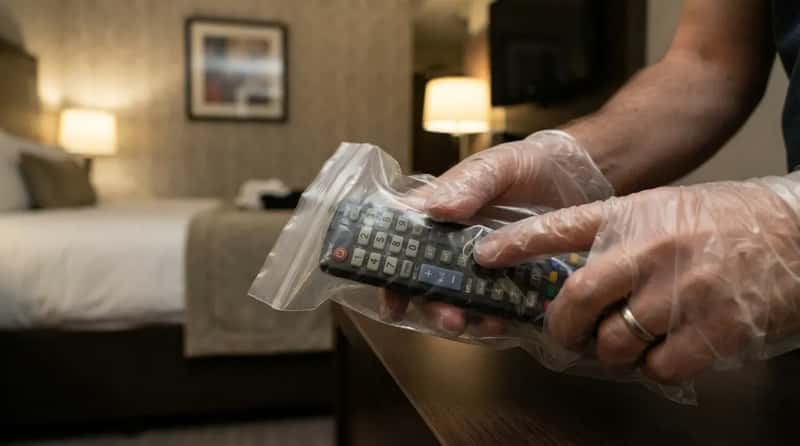
The remote is one of the most-handled objects in the room, and it has a track record. A University of Houston experiment found television remotes among the most heavily contaminated items in hotel rooms. A later Travelmath test put the remote near the top of its ranking at 1,211,687 CFU per square inch. That test used only nine hotels, so treat the numbers as a rough guide.
Context matters here too. One of the Houston researchers said the remote may not be any dirtier than one at home, but there’s a “stranger factor.” The workaround is cheap. Travelmath suggests sealing the remote in a clear plastic sandwich bag before using it.
But that’s nothing compared to how hotel workers handle the price of the room itself.
#10 – They Don’t Pay the Rate on the Website
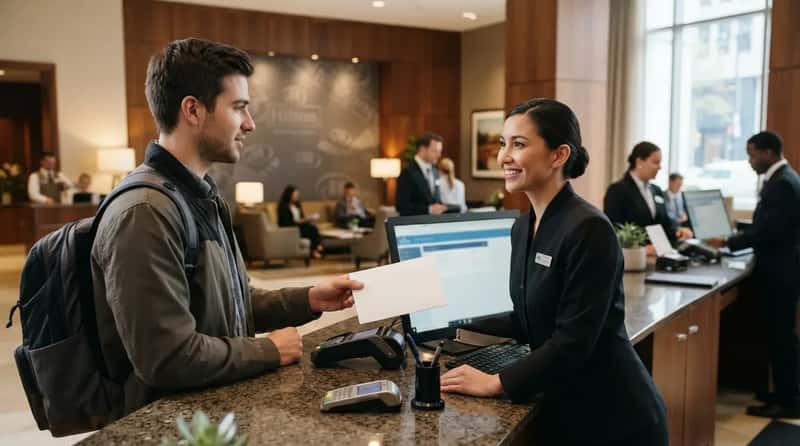
This is the one that surprises people most. Big chains run travel perks for their workers. Hilton’s Go program offers team member rates of up to 40 nights per year, with most hotels priced at tiered flat rates from $40 to $80 per night. Compare that with what a weekend downtown costs a normal guest.
Friends and family get a share too. Their rates cover 70 nights a year at 50% off the best available rate. That is why a cousin who works the front desk is suddenly very popular in July. Availability and room types can be limited, so it isn’t a free pass. Other companies run their own versions, though details differ by brand and by property.
And the way they book that room is just as telling, as the next slide shows.
#9 – They Don’t Book Through Random Third-Party Sites

Staff rates don’t come from a travel app. Go Hilton runs through its own booking portal, not Hilton.com. The whole system is built to keep employees and their approved guests inside the company’s own channels.
Regular guests have a similar edge, according to industry insiders. Direct bookers are reportedly last in line to get “walked” during overbooking, while third-party reservations get bumped first. Booking direct also gives the front desk more flexibility to change your reservation, swap room types or apply a loyalty discount. The cheapest price on a comparison site can look great until the hotel is full. After that, the next move is about the person on the other side of the desk.
Quick Compare
- Booked direct: reportedly last in line to be walked when the hotel is overbooked.
- Booked through a third party: reportedly bumped first when rooms run short.
- Flexibility: direct bookings give the desk more room to swap room types or apply a loyalty discount.
#8 – They Don’t Skip the Housekeeping Tip (and They Don’t Hide It)
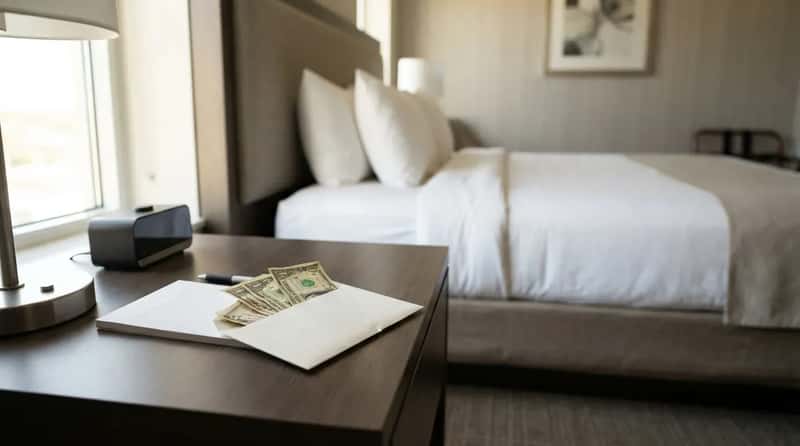
Workers know exactly who gets forgotten. According to one report, fewer than a third of hotel guests leave any money for housekeepers. The American Hotel and Lodging Association says the tip doesn’t have to be big, suggesting $1 to $5.
Where you leave it matters. One etiquette expert says to leave cash on a table or counter in plain sight, or use an envelope labeled “housekeeping.” A tip stuffed under a pillow can read as a mistake. And there’s no guarantee you’ll have the same housekeeper, since many hotels rotate their cleaning crews. That means one lump sum at checkout can miss the person who cleaned on night two.
But what happens at check-in can be just as revealing.
#7 – They Never Walk Up to the Desk Acting Entitled
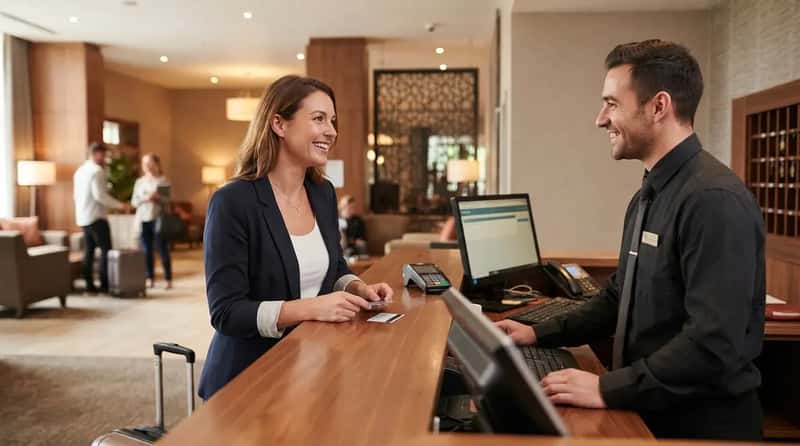
Staff know the front desk has more power than the signs suggest. Front desk agents have real discretion over room assignments, and your attitude at check-in shapes how they use it. That applies to a coworker’s friend and a total stranger alike.
Plenty of travelers believe the secret to a better room is the right tip or the right status. Many hotel workers would disagree. A friendly greeting and a genuine smile go further than most guests realize. A person who spent all day absorbing complaints remembers the one who didn’t add to the pile. The desk can’t promise an upgrade, but it can decide who to help first.
Still, kindness is only half of how insiders get a better room, and the next slide shows the other half.
#6 – They Don’t Settle for the Room They’re Handed

Employees know which rooms are worth asking for. One of the oldest tricks costs nothing. Request a “corner room.” The ask is polite, specific and easy for the desk to grant.
The logic is simple. Corner rooms often have more space and sometimes more windows. A guest who just accepts the first key card gets whatever is left. A guest who asks politely at least has a chance at something better. It won’t work every night, and a full hotel limits what anyone can do.
But the next habit isn’t about what they ask for. It’s about what they refuse to ask.
#5 – They Never Ask a Coworker to Bend the Rules

Hotel workers know what it’s like to be asked for favors that can cost someone a job. Etiquette experts say guests should not ask any employee to do something they’re uncomfortable with. They also say not to offer to lie to their boss for them. Staff on vacation tend to extend that same courtesy to others.
The small version shows up at the curb. One tipping guide says not to borrow the bellman’s cart to avoid paying a tip, because the bellman and his cart are a package deal. If the hotel offers valet service, use it, since those workers are trained and insured. The shortcut that saves a few dollars can cost someone else a lot more. The next one is about trust, and it might change whose advice you take.
#4 – They Don’t Take Every Concierge Tip at Face Value

The person behind the concierge desk is helpful. But the recommendation may come with a business arrangement. Some businesses reportedly offer referral fees to concierges who steer tourists their way. Staff who understand that tend to ask follow-up questions.
That doesn’t make every suggestion suspect. Plenty of concierges send guests to places they’d eat at themselves. But when workers travel, they often compare a tip with a quick search or a local’s advice. A recommendation can be both genuine and paid for, and the guest rarely knows which.
But that’s nothing compared to what they do before they even arrive.
#3 – They Never Wait Until Check-In to Ask for Freebies

Hotel employees know that the best time to ask is before you’re standing at the counter. If you call ahead and request basic amenities, you may be able to get them for free. That can make a difference on a trip where small charges pile up.
Many travelers feel nickel-and-dimed by hotels, and the habit of asking early pushes back on that. Employees also double-check the bill. At checkout, review it to be sure you’ve been given what you were promised. A promise made on the phone is only worth something if it shows up on the receipt. The next item is about your toothbrush, and it isn’t pretty.
Fast Facts
- Call ahead: basic amenities may be available for free if you ask before arrival.
- Ask early: it’s easier than negotiating at a busy counter.
- Check the bill: confirm at checkout that you received what you were promised.
- Keep proof: a phone promise only counts if it appears on the receipt.
#2 – They Don’t Set Their Toothbrush Down on the Bathroom Counter
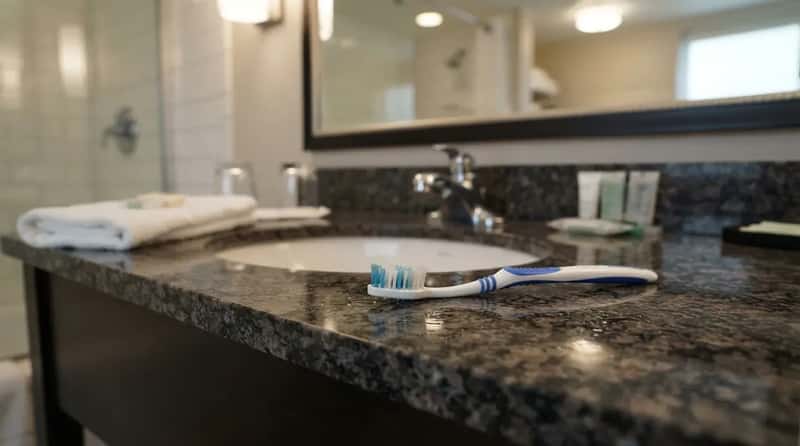
The counter looks spotless. Yet in one test it came out as the dirtiest surface in the room. Travelmath ranked the bathroom counter first across all nine surfaces it tested, at 1,288,817 CFU per square inch. That is also where many guests put their toothbrush.
The twist is that a higher price tag didn’t help. In the four-star hotels tested, the bathroom counter was the single dirtiest surface of all. That was a small study with nine hotels, so it isn’t a verdict on any one property. But it shows why people who know the routine often put a towel or a bag down first.
And the last item is the one the whole list has been building toward.
#1 – They Don’t Assume a Clean-Looking Room Is a Clean Room
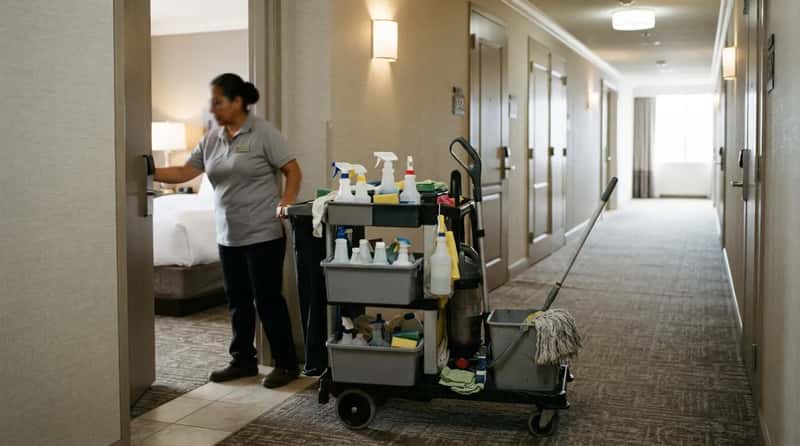
This is the habit that explains all the others. Researchers said the standard validation method for hotel room cleanliness is a visual assessment, which has been shown to be ineffective at measuring sanitation. A room can look perfect and still carry a lot of bacteria.
Then comes the part housekeepers rarely get credit for explaining. In the University of Houston study, some of the highest contamination levels came from items on housekeepers’ carts, including sponges and mops. Researchers also said housekeeping practices vary across brands and properties, with little or no standardization industry-wide. That is a decade-old study of nine rooms, so it isn’t a verdict on any hotel you’ll visit. But it’s why people who know the process tend to check for themselves.
Most of these habits come down to one idea. Insiders don’t take a hotel room at face value, but they also don’t treat the staff as the problem. They ask early, tip clearly, book smart and wipe down the remote.
The staff aren’t paranoid. They just know how a room gets turned around in half an hour. Which of these would you actually do on your next trip?