You’ve probably walked up to a visitor center desk, grabbed a map, and walked right back out. Meanwhile, at parks across the system, that same desk quietly holds loaner wheelchairs, listening headsets, large-print guides, and a badge program with no age limit. Not one sign is shouting about any of it. These 15 services cost nothing to use, and at 62 or older, you qualify for every one.
Here’s the twist: nearly all of them are free to every visitor, not just seniors. Only one perk is actually tied to turning 62, and it’s waiting at #1. Another, at #2, can wipe out a price tag you thought you’d have to pay. Here’s what the park service pages actually say.
#15 – The “Junior” Ranger Badge Has No Upper Age Limit
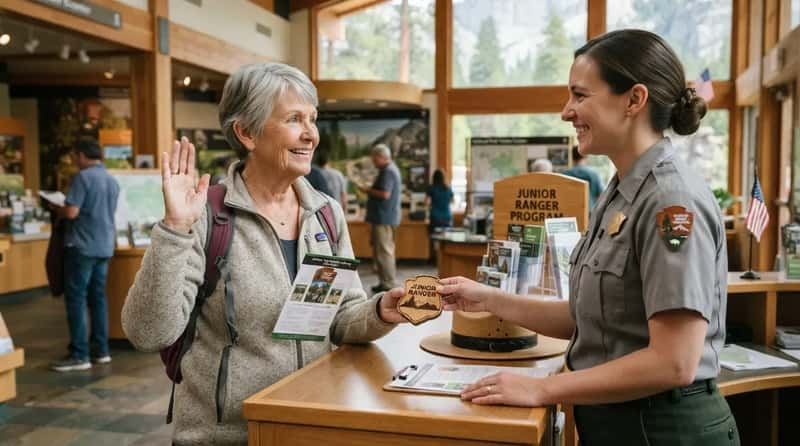
The National Park Service says Junior Ranger programs are designed for kids and families, but people of all ages and abilities are welcome. You typically check in at the visitor center and ask whether the site runs one. Finish the activity booklet, and a ranger swears you in. Yes, with a raised right hand.
The booklets and badges are usually free. At Bryce Canyon, rangers at the front desk hand over the free book and a free badge once you finish. San Antonio Missions calls its program free and lists the age range as 0 to 99. Theodore Roosevelt National Park even has a Junior Web Ranger track for ages 15 and older. Rules differ by park, so ask at the desk.
But the next freebie is one collectors quietly obsess over…
#14 – Free Passport Stamps That Turn a Trip Into a Collection
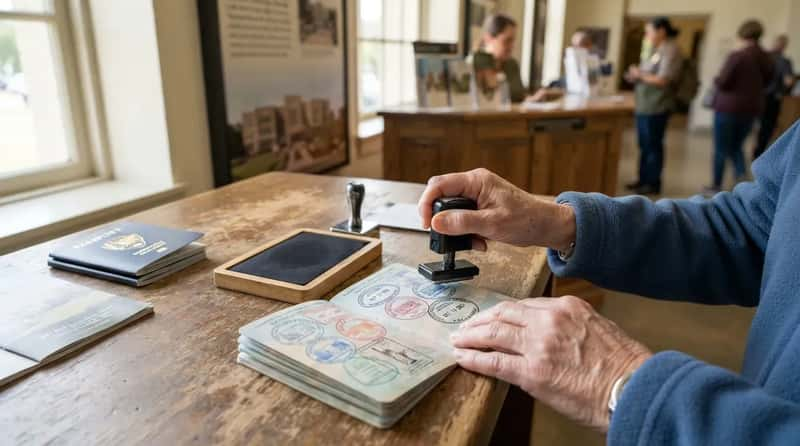
Nearly every national park site offers free cancellation stamps for your passport book. That’s the date-stamped ink you see people lining up for at the counter. At Little Rock Central High School, you can bring your own passport or use paper the park provides.
The stamp itself costs nothing. The passport book and sticker sets do, and they’re a separate purchase. Some parks keep several stamps in different spots, so ask a ranger where to find them all. The stamp follows the visitor center’s hours, so a closed building can mean no stamp. Check hours before you drive out.
Fast Facts
- The cancellation stamp is free at nearly every national park site.
- The passport book and sticker sets are separate purchases.
- Some parks keep more than one stamp in different spots.
- No paper book? Some sites, like Little Rock Central High School, provide paper to stamp.
Next up is something that can save your knees before a long walk…
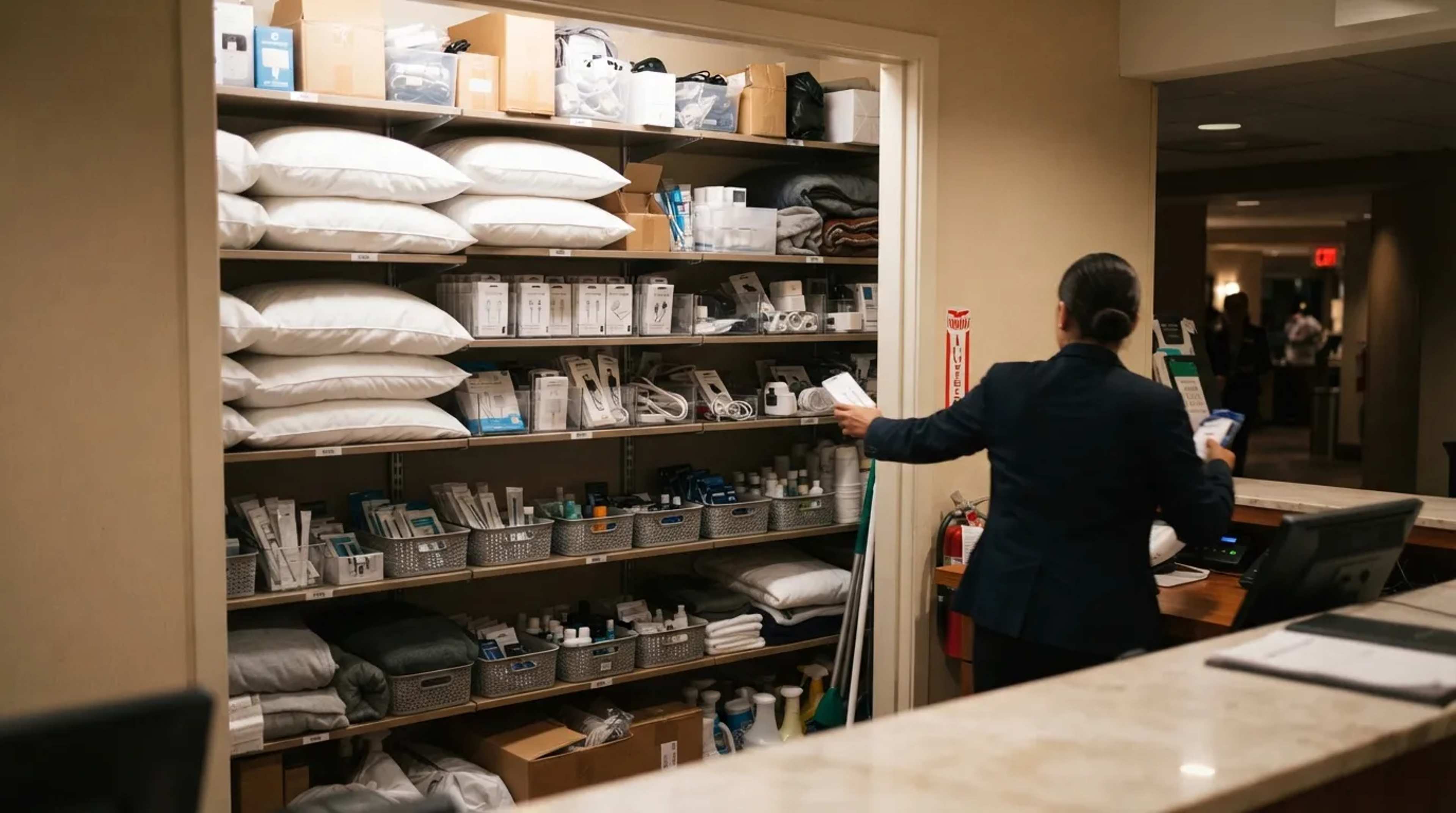
#13 – Free Wheelchair and Scooter Loans at the Front Desk
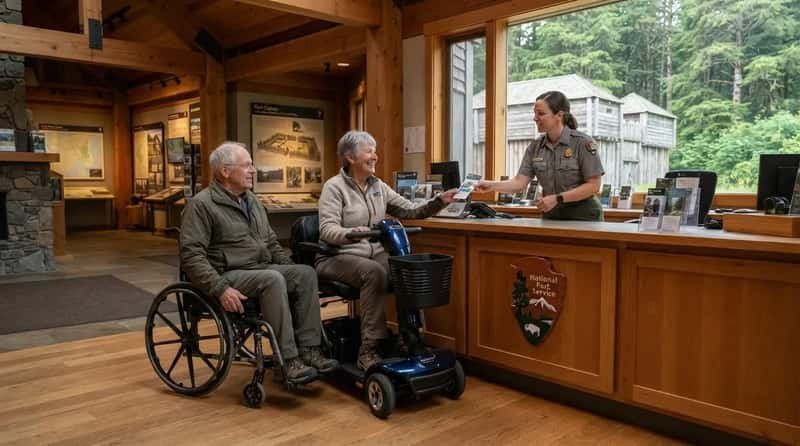
Some visitor centers lend mobility equipment at no charge. Yellowstone’s Canyon visitor center keeps a manual wheelchair for loan while you’re in the area. Cowpens National Battlefield also keeps a wheelchair at its visitor center.
Scooters turn up too. Fort Clatsop in Oregon lends scooters and wheelchairs for use inside the center, and to reach the fort replica and the historic canoe landing. That means a loaner can carry you well beyond the building itself. Supply is limited and varies from park to park, so check availability at the front desk.
And if hearing is the issue, the next service changes everything…
#12 – Assisted Listening Devices Nobody Advertises
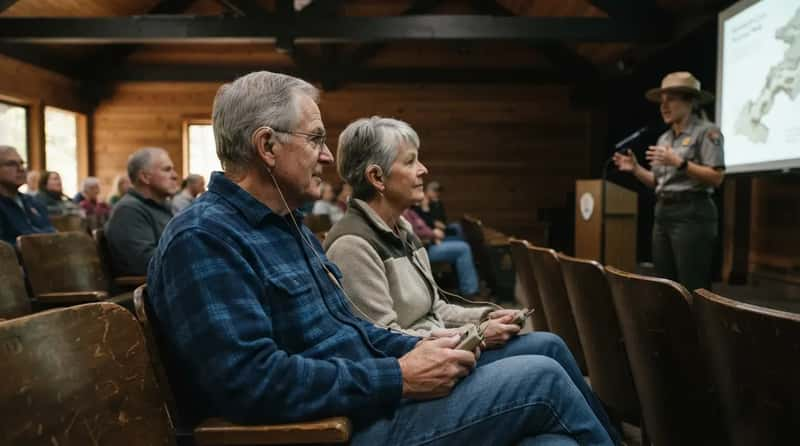
Ever stood at the back of a ranger talk, nodding along to words you couldn’t quite catch? Mammoth Cave lends assisted listening devices free of charge for hearing difficulty, and you can wear them on cave or surface activities. The park asks you to check at the visitor center when you arrive.
It isn’t only caves. Fort Clatsop lends devices from the front desk for park films and ranger programs. Yellowstone offers them for films at its Canyon and Old Faithful visitor centers. The park service’s own design center says it installs these systems in visitor center theaters and exhibits when audio is present. So plenty of theaters have them, even if no sign says so.
Quick Compare
- Mammoth Cave: Free devices for cave tours and surface activities. Ask at the visitor center.
- Fort Clatsop: Borrow them at the front desk for park films and ranger programs.
- Yellowstone: Available for films at the Canyon and Old Faithful visitor centers.
Speaking of reading and hearing, wait until you see the print options…
#11 – Large-Print Maps Hiding Behind the Counter
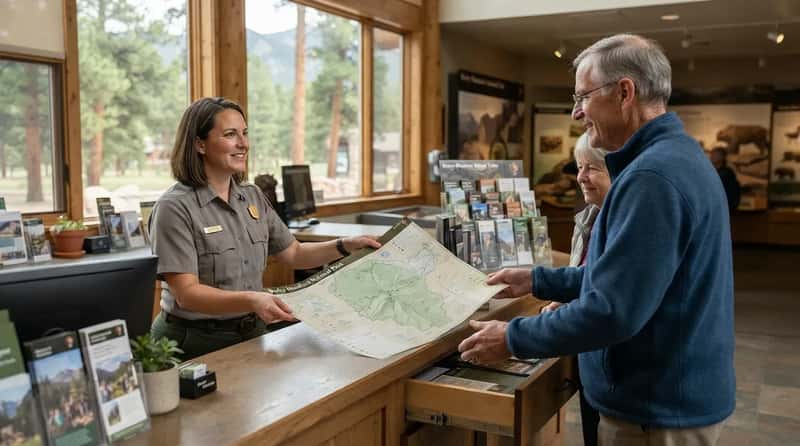
The standard park map comes in type so tiny it feels like a dare. Parks keep bigger versions on hand. Yellowstone offers large-print and braille editions of its official Map & Guide at its visitor centers. Rocky Mountain National Park keeps braille and large-print maps at the Beaver Meadows Visitor Center.
Some parks go further. At Yellowstone’s Canyon center, the information desk also has a 24-point large-print description of the exhibits. Cowpens even posts large-print site bulletins you can download. You usually have to ask, because the large-print copies often aren’t out on the shelf.
The next one is something you may have already sat through without noticing…
#10 – Captioned Park Films You Can Actually Follow
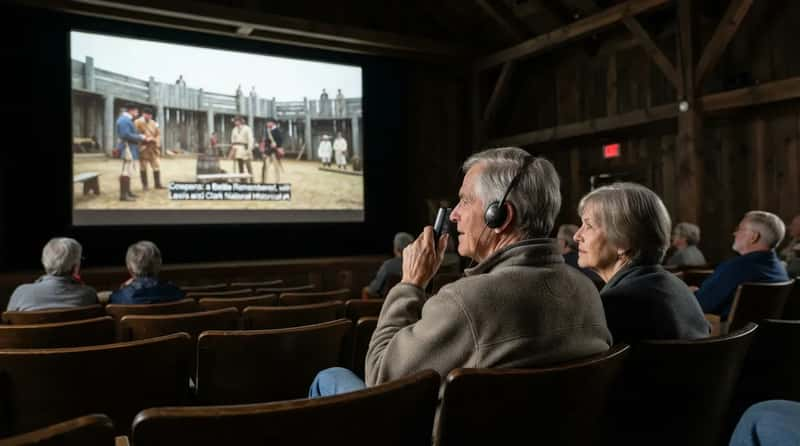
The orientation film is free, and it’s often captioned. Mammoth Cave’s park film is closed captioned and plays inside the exhibit area. At Mount Rainier, exhibit videos are captioned, and listening devices are available at the information desk.
Cowpens does the same. Its film, “Cowpens: a Battle Remembered,” is closed captioned and has an assistive listening device available. Fort Clatsop uses open captions on two park films and one display video. Captions are a quiet upgrade for anyone watching in a noisy lobby full of restless kids.
Still, the next service surprises people who assume parks are off the grid…
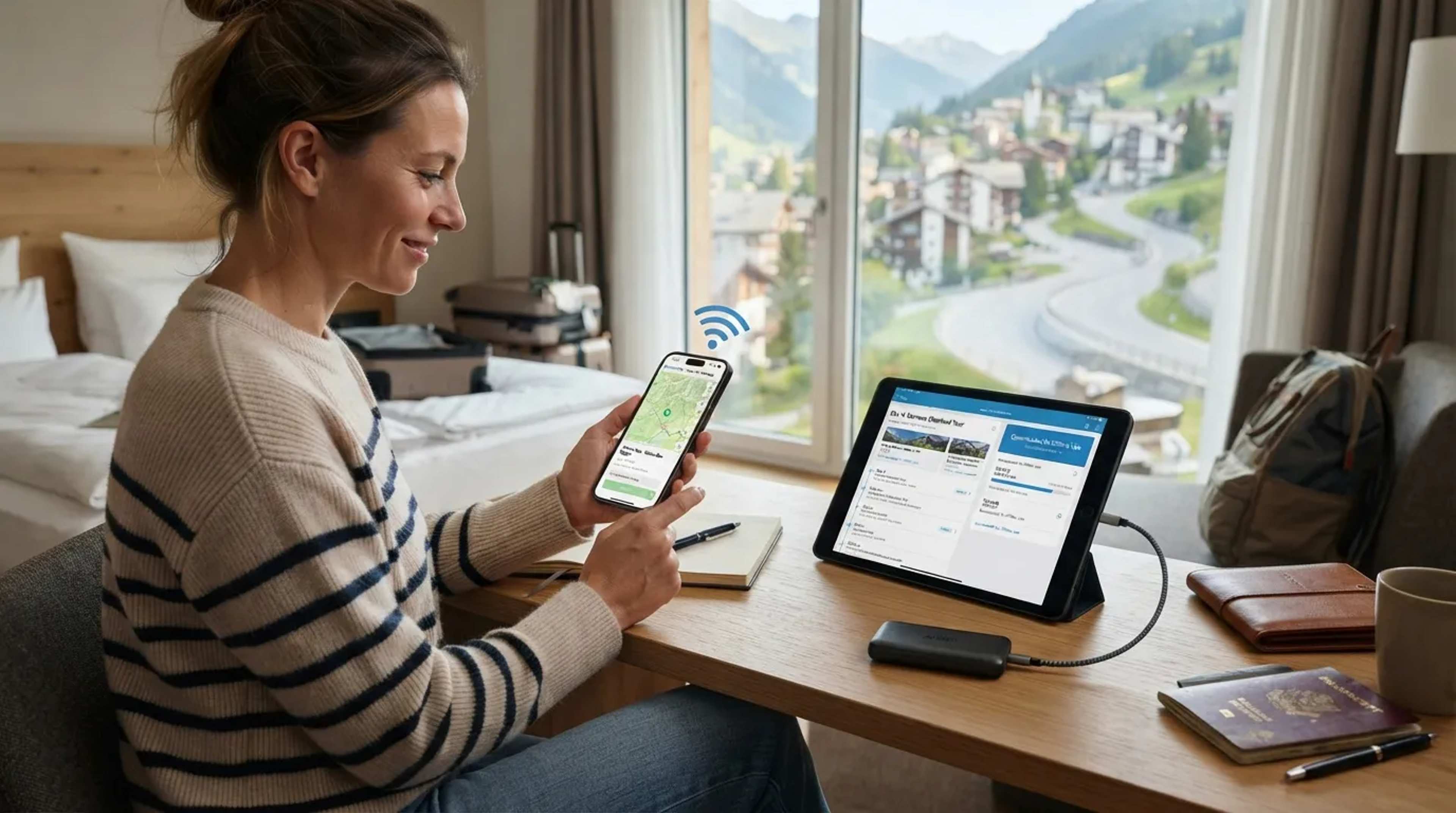
#9 – Free Wi-Fi Inside Some Visitor Centers
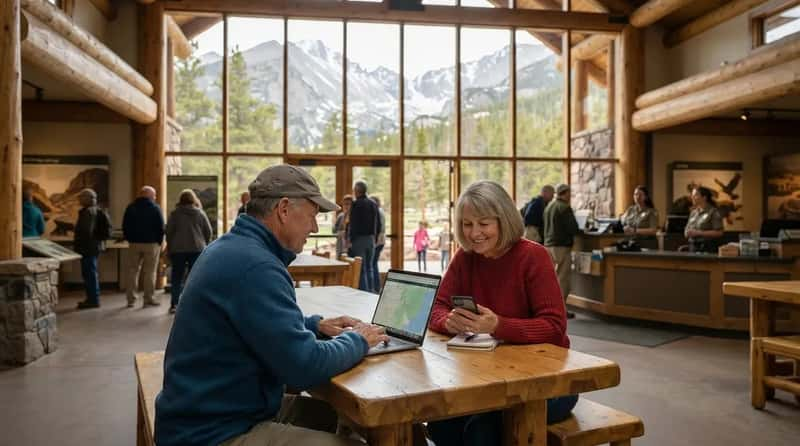
Cell signal can vanish fast once you leave the highway. Some visitor centers offer a workaround. Rocky Mountain National Park lists Wi-Fi at its Beaver Meadows, Fall River, and Kawuneeche visitor centers. Mount Rainier’s accessibility guide mentions public Wi-Fi at its Ohanapecosh Visitor Center.
That matters more than it sounds. You can check road conditions, send photos to the family, or download maps before you hit the trail. Not every park has it, and coverage inside buildings varies. Treat it as a bonus, not a guarantee.
Now for one of the most underrated comforts of all…
#8 – Seating Inside the Exhibit Halls
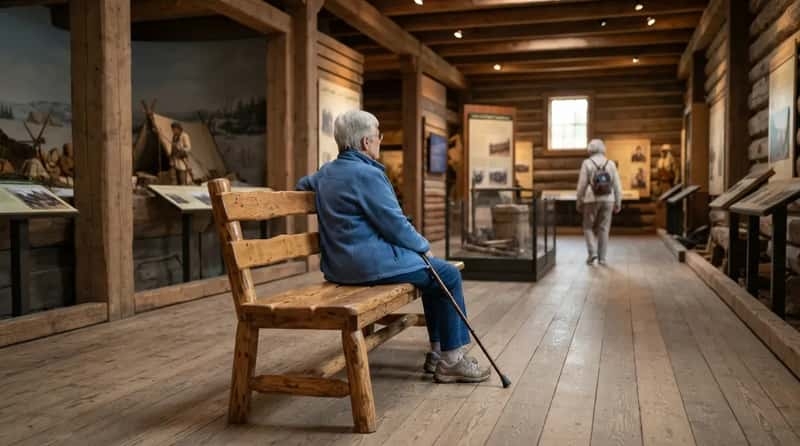
Long exhibit halls are brutal on tired feet. Some parks plan for that. Fort Clatsop lists seating in both its front lobby and its exhibit hall, so visitors can sit down without giving up the exhibits.
Resting is a form of access too, and it’s free. Park accessibility pages often list benches and seating, so check before you go. Those same pages can also flag where the long walks and steps are. A few minutes of reading can save you a lot of effort later.
Worth Knowing
- Fort Clatsop has seating in the lobby and in the exhibit hall.
- Accessibility pages often list benches before you arrive.
- The same pages can point out long walks and steps.
- Sitting down never costs a cent.
The next entry is about getting through the door itself…
#7 – Reserved Parking, Push-Button Doors, and Lowered Desks
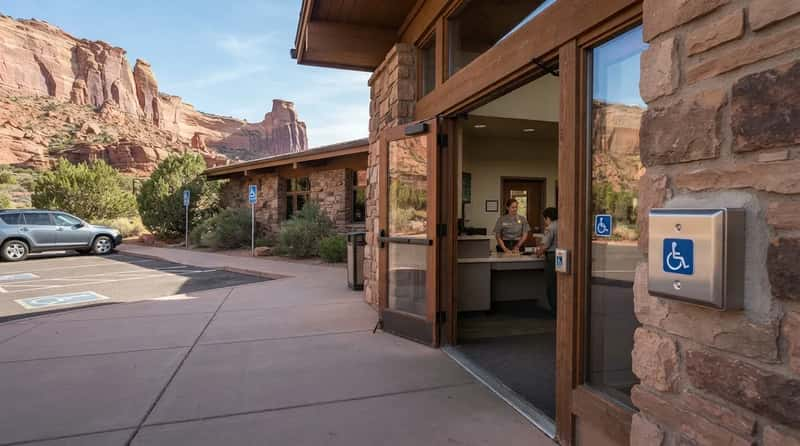
The visit starts before you reach the exhibits. Cowpens has accessible spaces right in front of its visitor center. Yellowstone’s Old Faithful visitor center has designated parking near the entrance.
Mammoth Cave’s visitor center has button-operated doors, lowered information and ticket desks, and accessible restroom stalls. Colorado National Monument adds automatic door buttons both inside and outside its front and back doors. These features are free for anyone to use, and they’re easy to overlook when you’re focused on the view.
But the next one may be the best-kept planning tool in the system…
#6 – The 48-Page Access Guide You Can Pick Up for Free
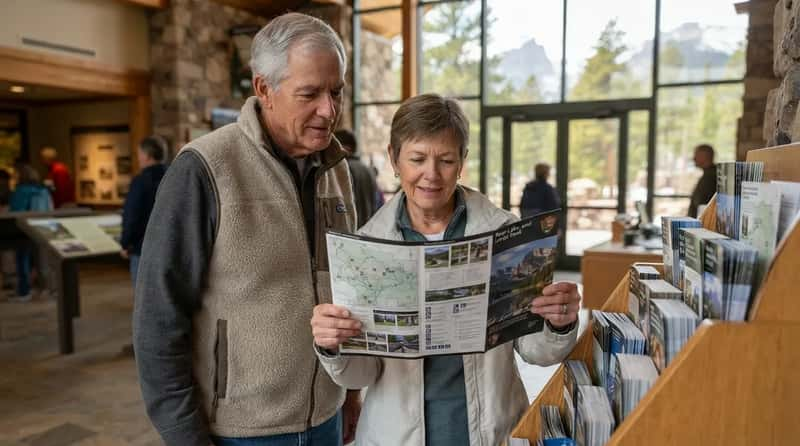
Some parks print detailed access guides. Rocky Mountain National Park has a 48-page Access Guide, and you can pick one up at its visitor centers. It highlights the features and barriers of the park’s services, facilities, and activities.
That’s the kind of detail a map never gives you. You can see what a trail or building is really like before you commit. You can also download the guide from the park’s Brochures page and print it at home. Many other parks publish similar information online, so it’s worth searching before you pack.
Next, your phone gets in on the act…
#5 – Accessibility Details Stored in the Official NPS App
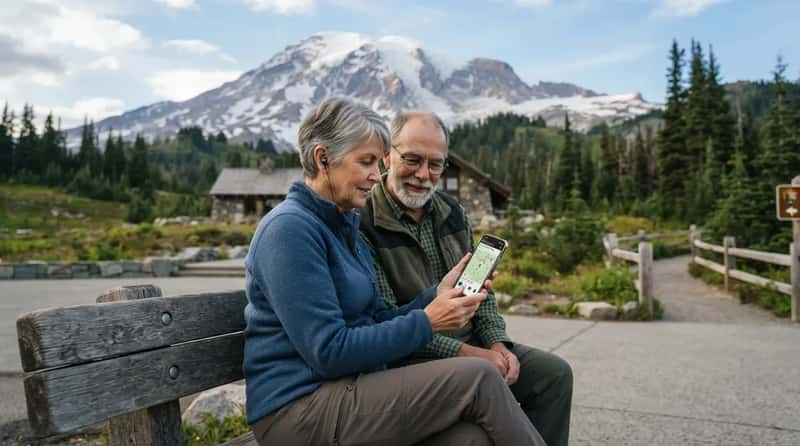
The free NPS app holds more than maps. Yellowstone says the app offers current accessibility details for facilities and select trails. That helps when you’re deciding how far to go before the day gets away from you.
Mount Rainier’s accessibility guide also points visitors to an audio description tour in the NPS app. That’s a guided tour you can run from your own phone. Park staff can help you find it if you ask.
Now for one that might change how you read a park brochure…
#4 – Braille and Audio-Described Park Guides
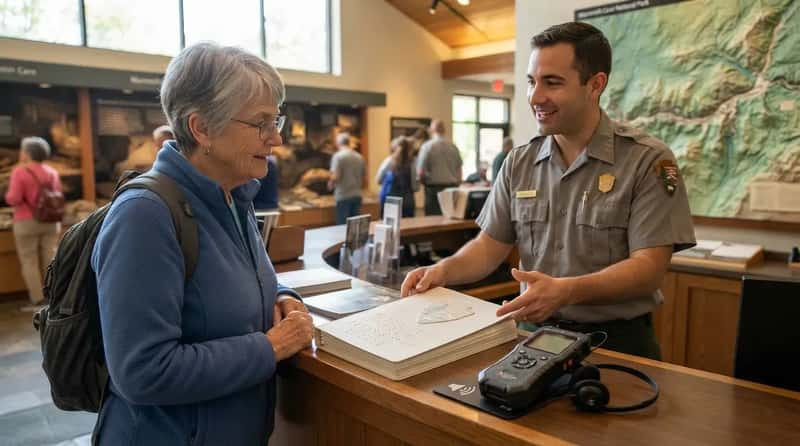
The brochure itself comes in more than one form. The National Park Service says braille booklets are available at most park visitor centers. Mammoth Cave offers audio files and a text-only version of its Map & Guide.
Fort Clatsop lists large-print brochures, braille brochures, and an audio description of the brochure. The park service’s design center is partnering with the University of Hawai’i to develop audio description versions of its brochures. Vision loss comes with age for many people, so these formats matter. They cost nothing, and you only have to ask.
Why It Stands Out
- Braille booklets are available at most park visitor centers.
- Mammoth Cave offers audio files and a text-only Map & Guide.
- Fort Clatsop lists large-print, braille, and audio-described brochures.
- Audio description versions are being developed with the University of Hawai’i.
The next entry surprises almost everybody who hears about it…
#3 – Sign Language Interpreters, If You Ask Ahead
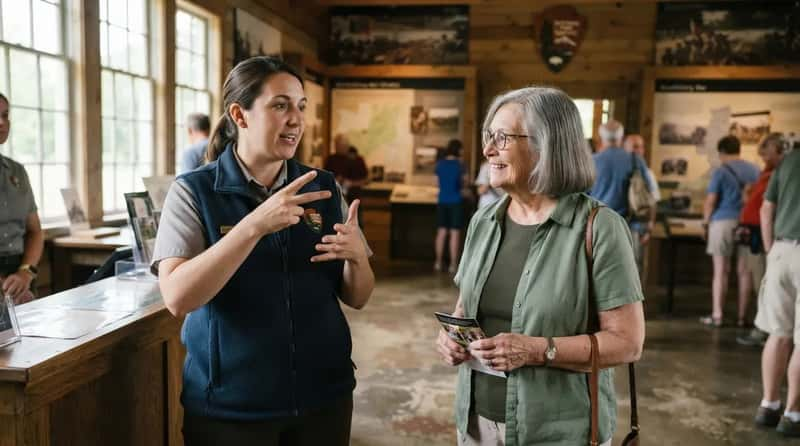
Some parks will arrange an interpreter for you. Cowpens says sign language interpreters may be provided with three weeks’ notice. That’s for visitors who are deaf or hard of hearing.
It takes planning, but it’s a service most visitors never think to request. You’ll rarely see it on a sign at the door. The park’s accessibility page is the place to look, or you can contact the park directly. Plenty of notice is the key.
Now we reach the part that’s actually tied to your birthday…
#2 – The Old Golden Age Card and the Four-Pass Trade-In
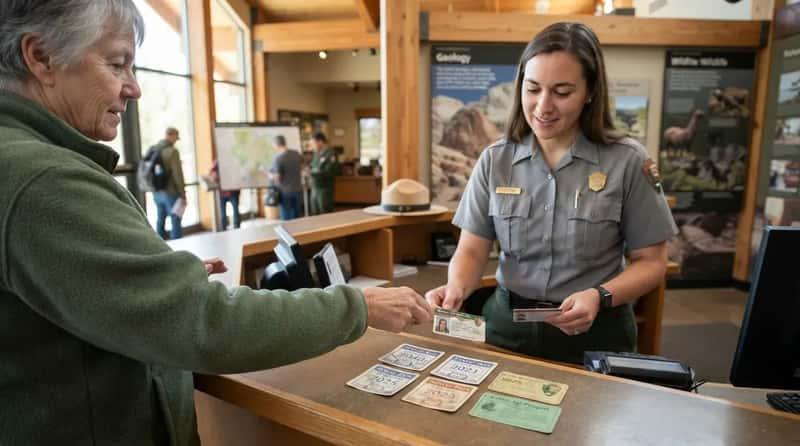
This one is real senior money. The Senior Pass page confirms that old Golden Age Passports can be exchanged in person for a free Senior Lifetime Pass. If you still have one in a drawer, it may be worth bringing.
There’s another route. Each annual Senior Pass you turn in takes $20 off the $80 lifetime price, even if it’s expired. Four $20 annual passes add up to the exact price of one lifetime pass, so the trade-in covers it completely. In other words, the lifetime pass ends up free.
And the best-kept secret of all is sitting right at the front desk…
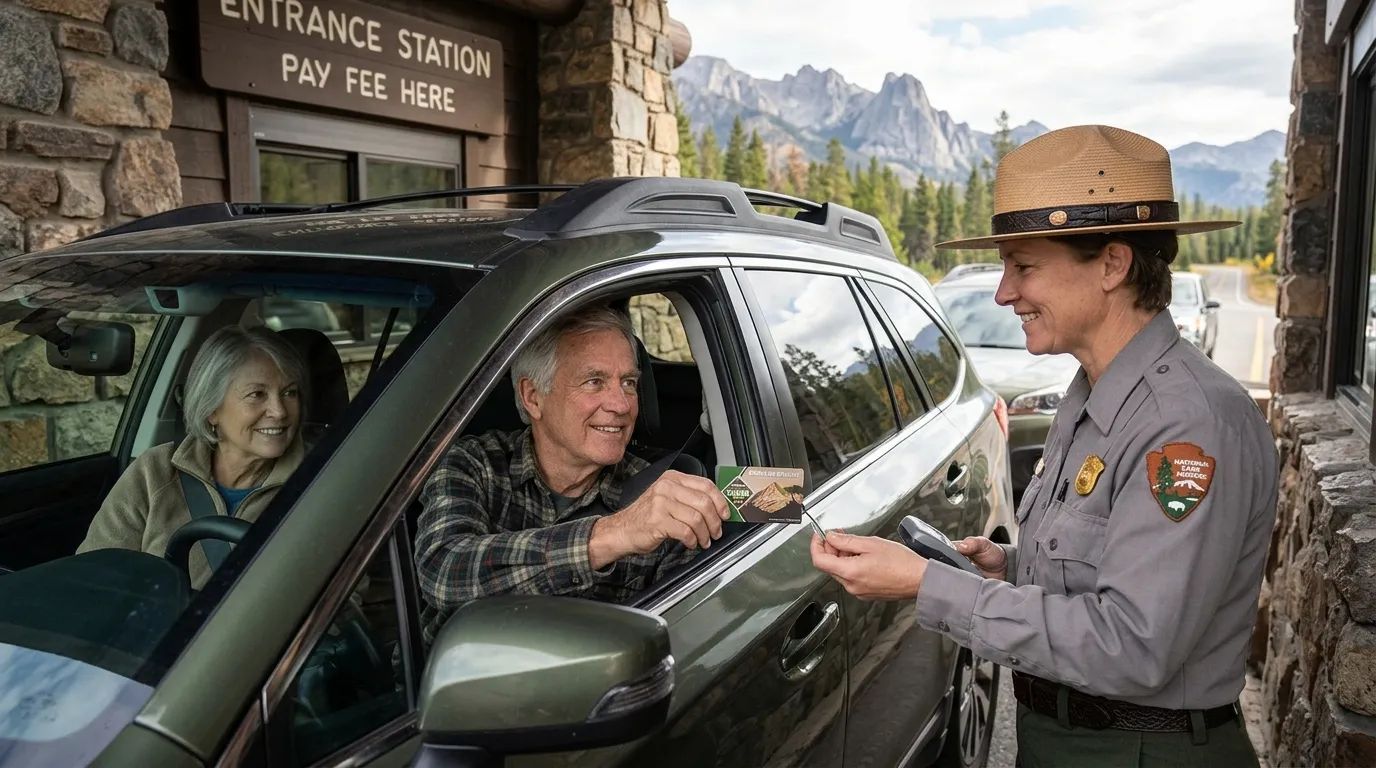
#1 – The Senior Pass That Covers Your Whole Car
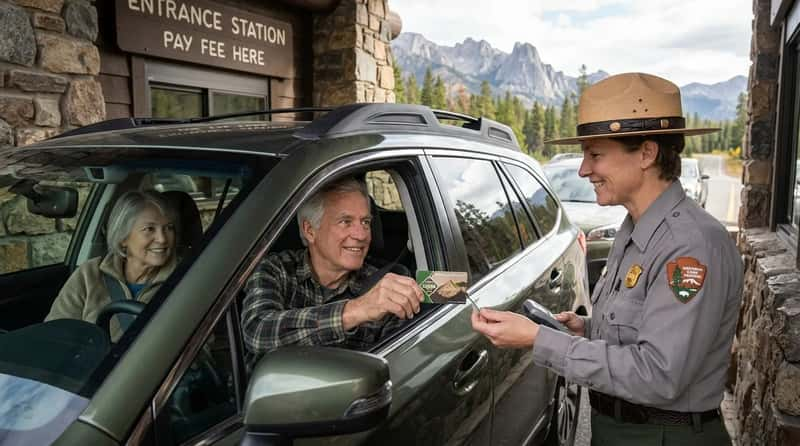
Here’s the one that really requires being 62. U.S. citizens and permanent residents age 62 and older can buy an annual pass for $20, or a lifetime pass for $80. You’ll need documentation of age and residency or citizenship. The age is 62, not 65, and it’s set by statute.
The benefits go beyond your own entry. At per-vehicle fee sites, the pass admits you plus the passengers in one vehicle. It can also take 50 percent off some amenity fees, such as camping, swimming, boat launches, and specialized interpretive services. You can buy it at federal recreation sites with ID, which makes the desk the place to start.
So the next time you walk into a visitor center, don’t stop at the map. Most of what’s on this list is free to anyone who asks, and the staff won’t always bring it up. The Senior Pass is the one perk that truly rewards your age, and a trade-in can make even that one cost nothing.
Fees, passes, and services change, and each park runs things differently, so check the park’s own page before you visit. Then walk up to that desk and ask. Which of these surprised you most?