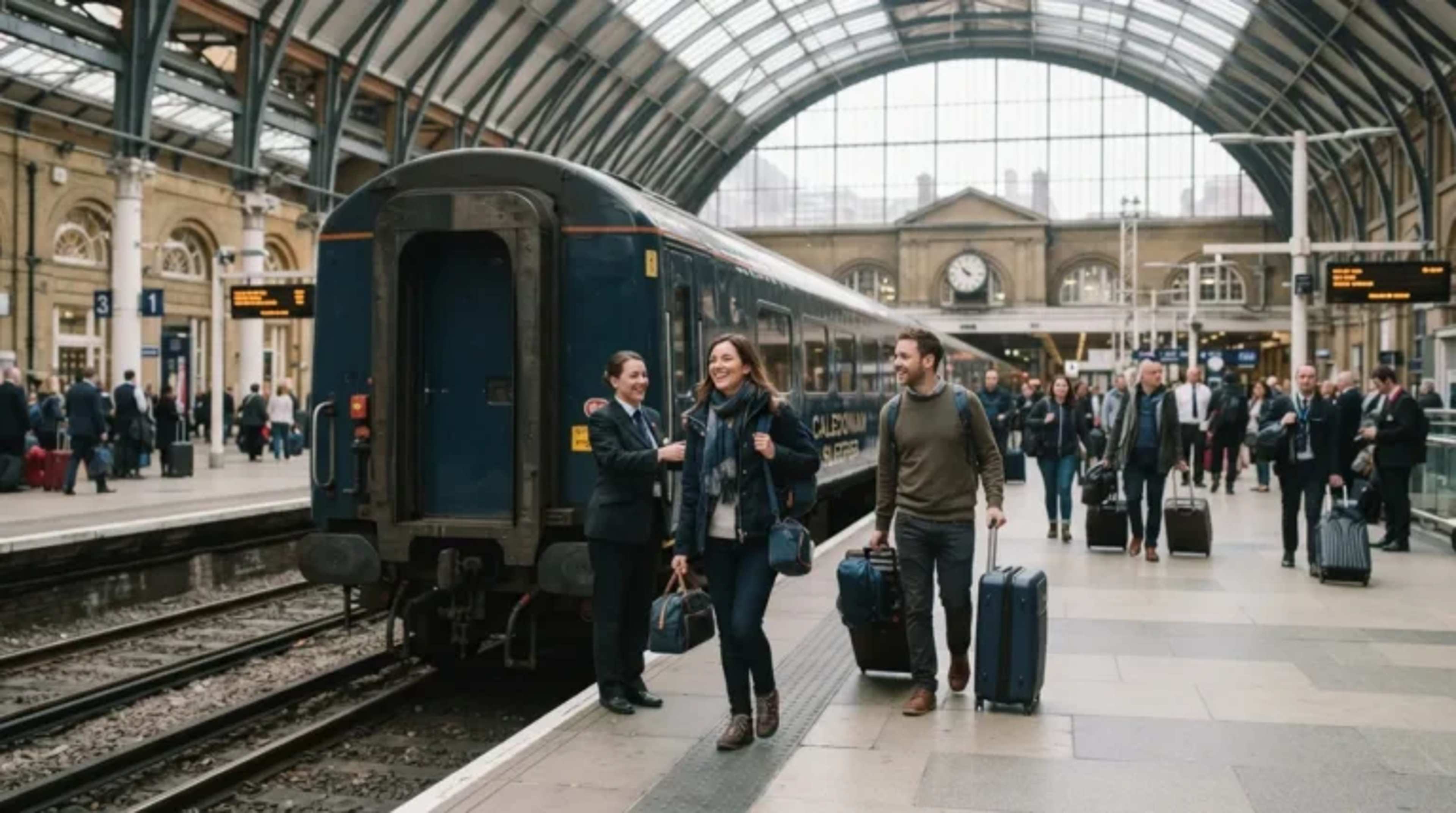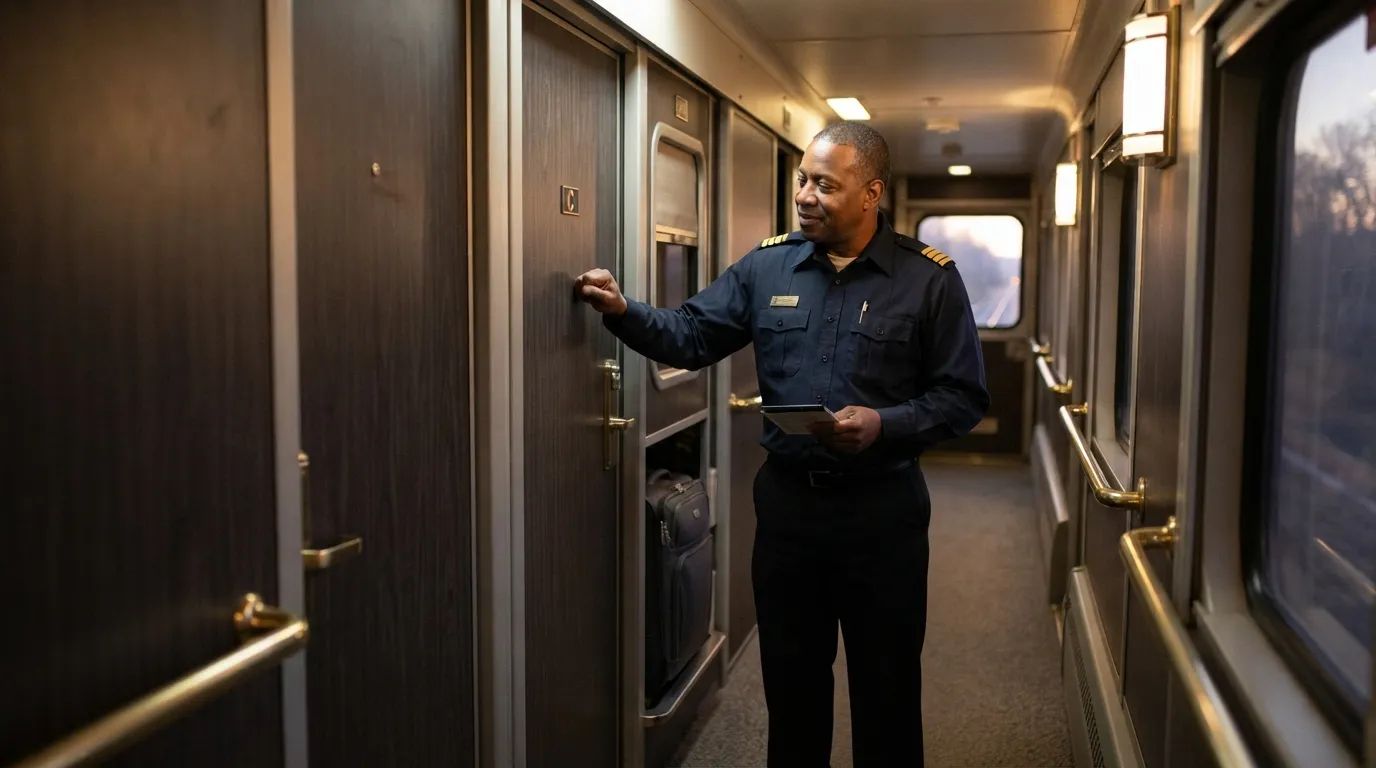
Most people picture a sleeper car as a hotel on rails. Then they step aboard and find a room roughly 3’6″ by 6’6″, plus a stranger in a uniform who seems to know every inch of it. Sleeper car attendants watch first-timers walk in with that look on their faces trip after trip.
Attendants don’t need a survey to spot the patterns. The same small moments repeat on first nights, from the bathroom hunt to the bed that appears while you’re at dinner. Some are funny, a few are a little touching, and one explains why the attendant’s job is much bigger than turning down a bed. That one is waiting at number 1.
#13 – The Welcome Speech Almost Nobody Really Hears
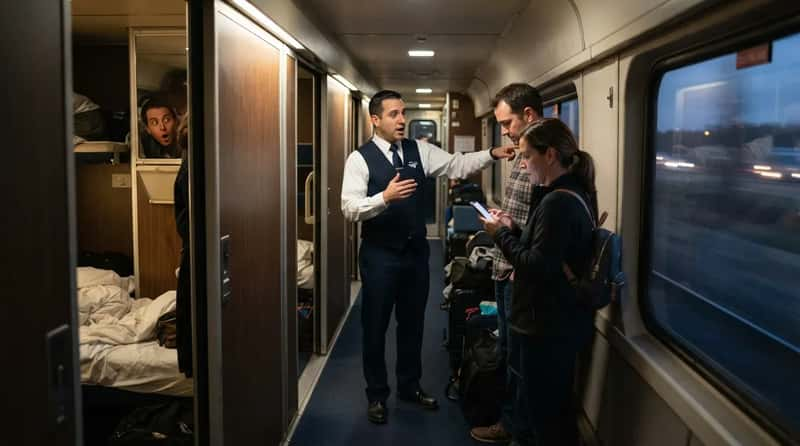
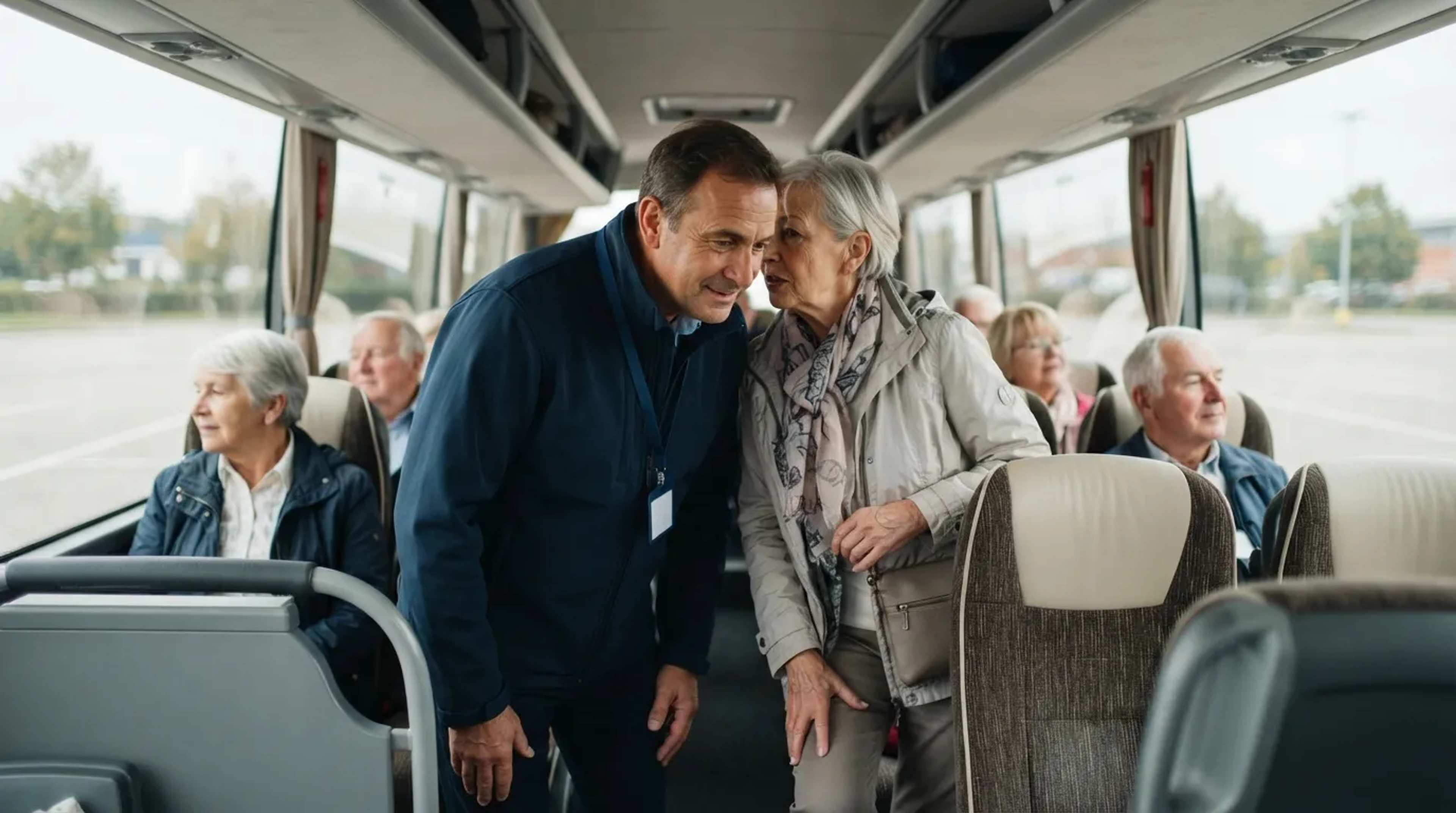
The first thing a sleeper attendant does is talk. One rider described the attendant making announcements about how the sleeping car worked, where to find things and how to get his attention. Another said the attendant stopped by early to introduce himself and point out the shower, the toilets and the dining car.
It’s a real orientation, but it happens while everyone is hauling bags, snapping photos and texting family. Most of it goes in one ear and out the other. An hour later the same questions come back. Where’s the shower? How do I reach you? Which way is the diner? Good attendants answer every one as if it were the first time. The real shock, though, comes when passengers open the door to their room.
#12 – The Room Is Smaller Than Anyone Pictured
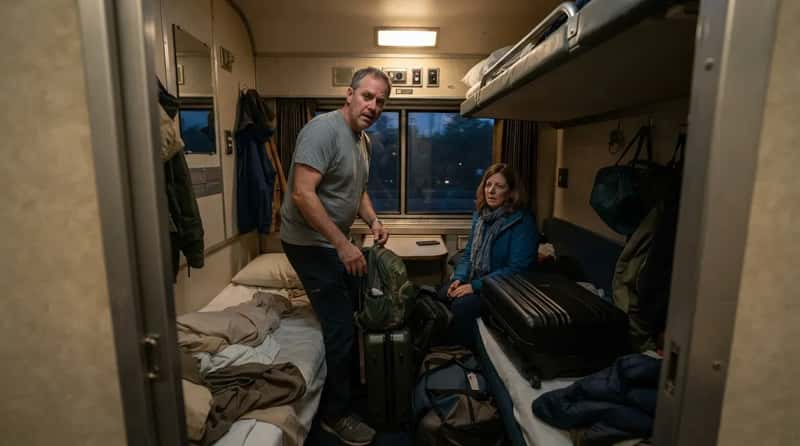
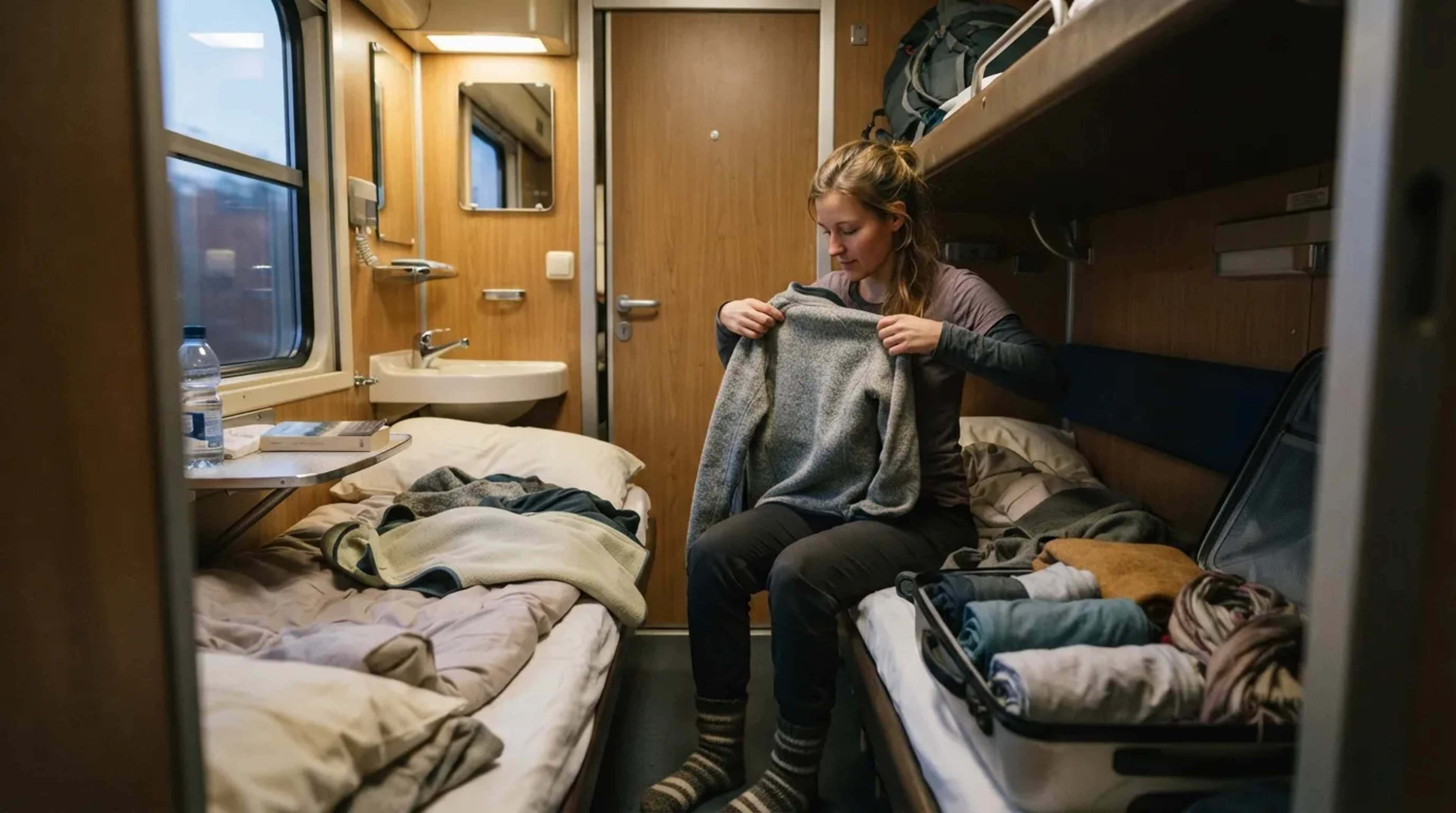
One sleeper guide puts the roomette at approximately 3’6″ by 6’6″, about 23 square feet. That’s the number on paper. In person, passengers stand in the doorway and quietly work out where everything is supposed to go. Roomettes were originally meant for a single traveler, but today’s Amtrak versions include two sleeping berths.
That detail explains the doorway pause. Two full-size adults, two berths and two suitcases is a puzzle most people haven’t solved yet. Some first-timers crack it fast. Others keep rearranging the same bag for the first hour. On Superliner trains, the fix is simple, because luggage can be stored on the lower level of the car.
#11 – Dinner Gets Planned Before the Train Even Moves
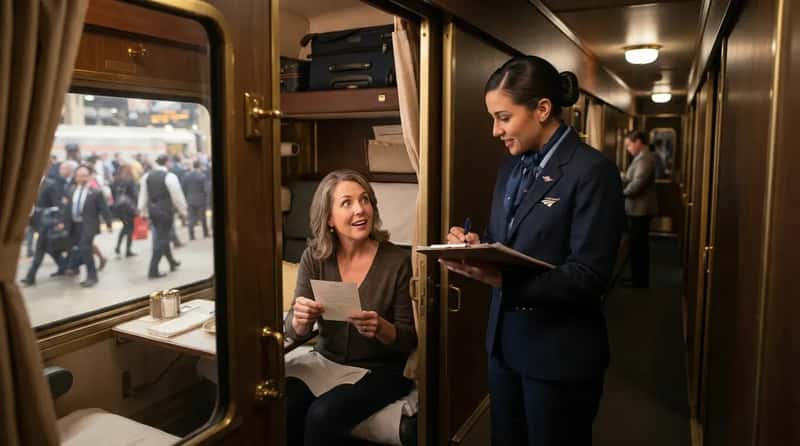
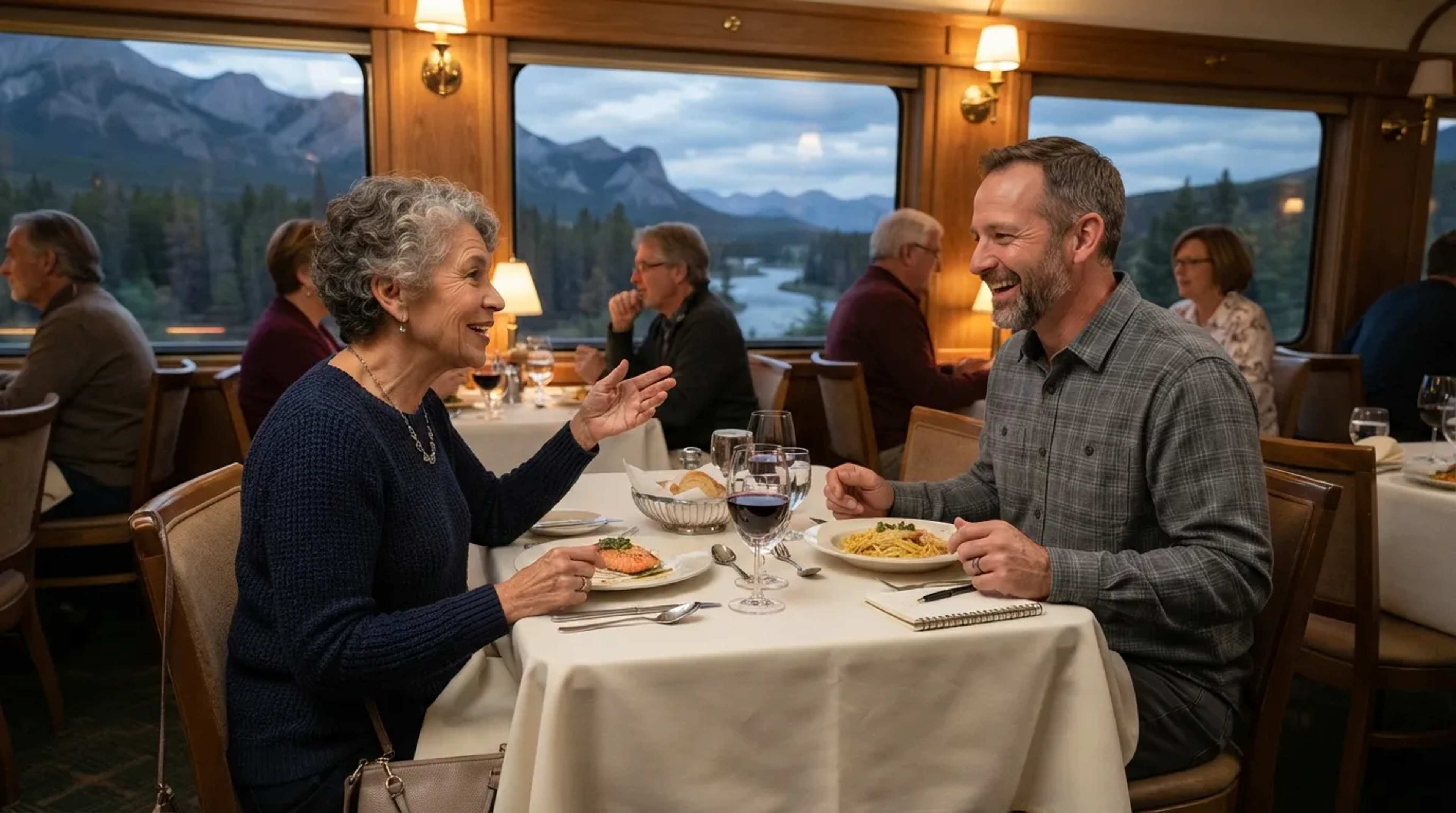
Many first-timers assume dinner is something you sort out once you’re hungry. On long-distance routes it works differently. One rider noted that the dining car hostess walked through the sleeping cars before departure, taking dinner reservations and orders from people who wanted to eat in their rooms.
So passengers get asked about dinner before they’ve even found the bathroom. They’re booking a meal while the platform is still crowded. Attendants see the confused looks and gently explain the rhythm of the day. Once you know the system, it’s a relief, because dinner is handled and you can settle in.
Worth Knowing
- The dining car hostess may come through the sleeping cars before the train leaves.
- Passengers who want to eat in their rooms can say so when the hostess stops by.
- One attendant covers the whole car, so room delivery can take a little while.
#10 – The “Wait, the Meals Are Free?” Moment
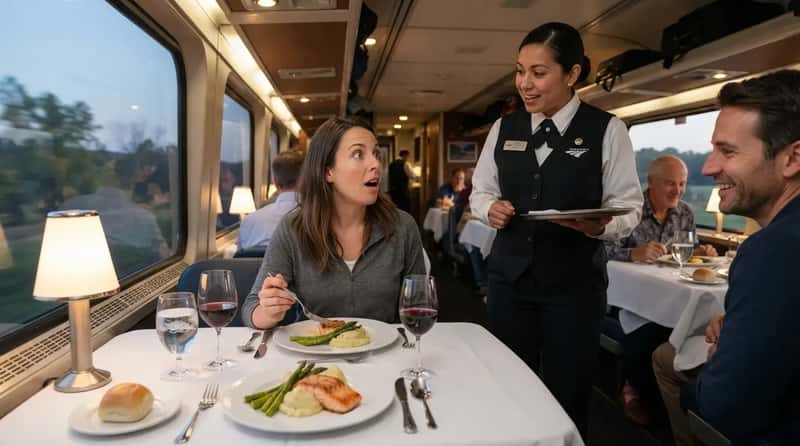
Attendants hear this one often. A first-timer asks how to pay for dinner, and the answer stops them mid-sentence. Sleeping car passengers get complimentary meals, served in the dining car or brought to the room by the attendant, depending on preference. Amtrak itself lists complimentary meals, a dedicated attendant and lounge access as part of the roomette package.
Plenty of people never connect the ticket price to the food until they’re already seated. The meal was paid for hours before they sat down. If you’d rather eat in your room, tell the attendant ahead of time. One attendant supports the whole car, so delivery may take a little while.
#9 – The Call Button Standoff Nobody Warns You About
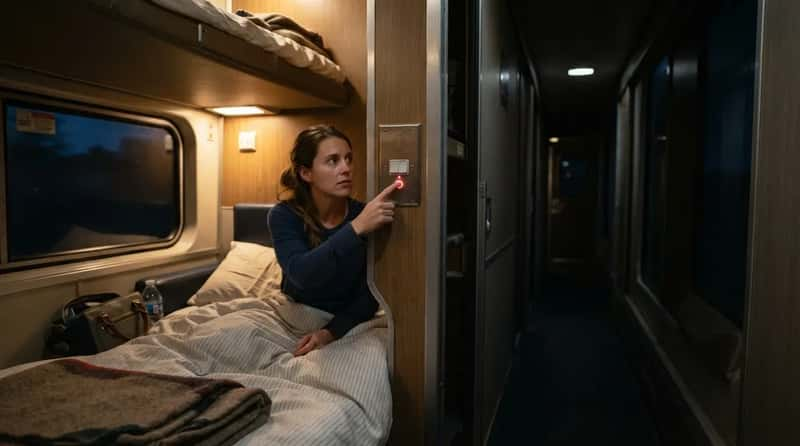
At bedtime, you press the call button to let your attendant know you’re ready. New passengers often treat it like hotel room service. Then they wait, and the wait feels longer than it is. One guide says an attendant manages about 21 rooms.
One forum veteran argued that an attendant who doesn’t show up within 30 seconds of a button press is being unreasonable. That’s a bold standard for someone juggling 21 rooms, meals, towels and a car full of strangers. The button is a request, not a summons. Patient passengers tend to have a smoother trip than clock-watchers, and attendants remember who was kind about it.
#8 – The Bed That Appears While You’re Out
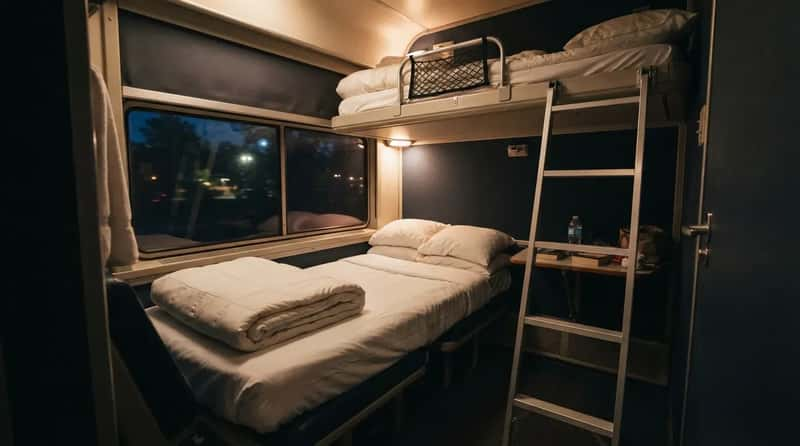
This is the part first-timers remember. You leave for dinner with two seats facing each other. You come back and there’s a made-up bed. Amtrak’s attendant provides turndown service, helps with meals and assists with luggage, and that includes converting the room.
The attendant arranges the two chairs into a lower berth, then lays a mattress over them. The seats you’ve been sitting on literally become the mattress. Then comes the next question: where does the second person sleep? One adult takes the lower berth while the other climbs a short ladder to the upper bunk. That ladder has started more than a few friendly arguments.
Fast Facts
- The two daytime chairs convert into the lower berth.
- The upper berth is reached by a short ladder.
- Turndown service is part of what Amtrak’s attendant provides.
- The whole room is only about 23 square feet, so every inch gets used.
#7 – The Free Coffee Station Hiding in Plain Sight
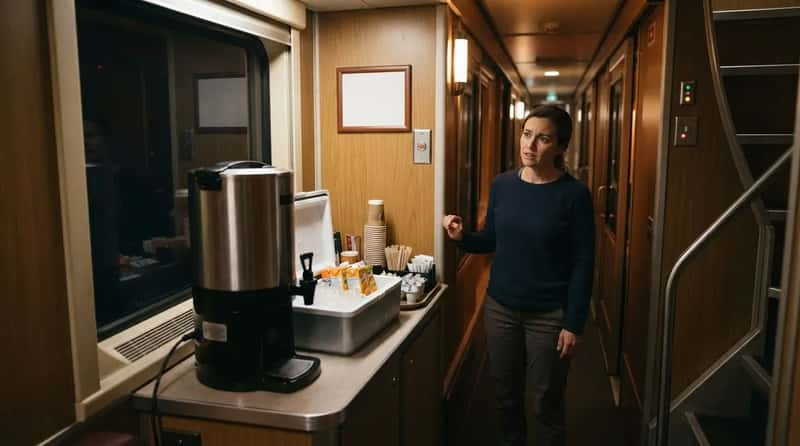
Walk down the corridor on a first night and you’ll see passengers eyeing a coffee urn. They aren’t sure it’s for them. One roomette rider described the attendant keeping the urn filled, setting out an ice chest and putting juice cartons nearby, without ever saying the ice chest was for passengers.
These small touches are part of the job, and they vary by route and crew. Plenty of passengers go to bed thirsty and learn the next morning that it was all free. Attendants usually notice who lingers by the urn without pouring. A friendly nudge settles it, and the hovering stops. Meanwhile, the real baggage drama is happening on the stairs.
#6 – The Overpacked Suitcase Parade on the Stairs
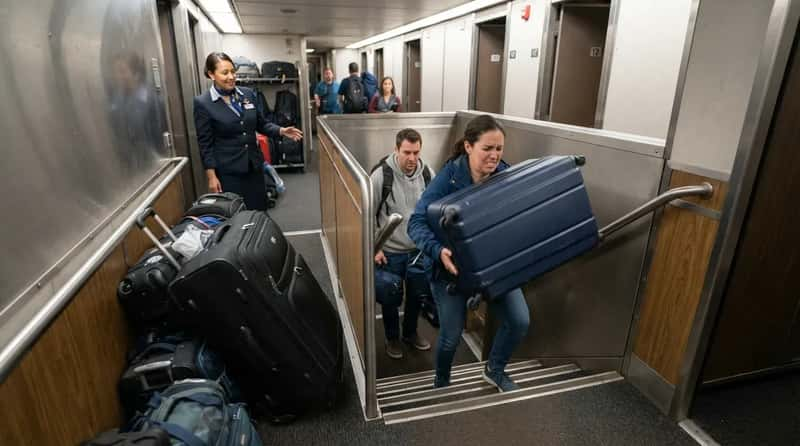
On Superliner cars, the sleeping compartments sit on two levels. The upper level has 10 roomettes and four bedrooms. First-timers often haul their biggest bag toward the stairs before learning where it’s meant to go.
The better answer is below, because luggage can be stored on the lower level of the car. Passengers who carry a full-size suitcase into a roomette often regret it by bedtime. Attendants help with bags, but they can’t make a 23-square-foot room any bigger. The smartest first-timers keep a small overnight bag handy and leave the rest downstairs.
At a Glance
- Upper level: 10 roomettes and four bedrooms.
- Lower level: luggage storage for the car.
- Roomette size: about 23 square feet.
- Smart move: a small overnight bag upstairs, the big suitcase below.
#5 – Close the Curtain or Watch the Night Go By?
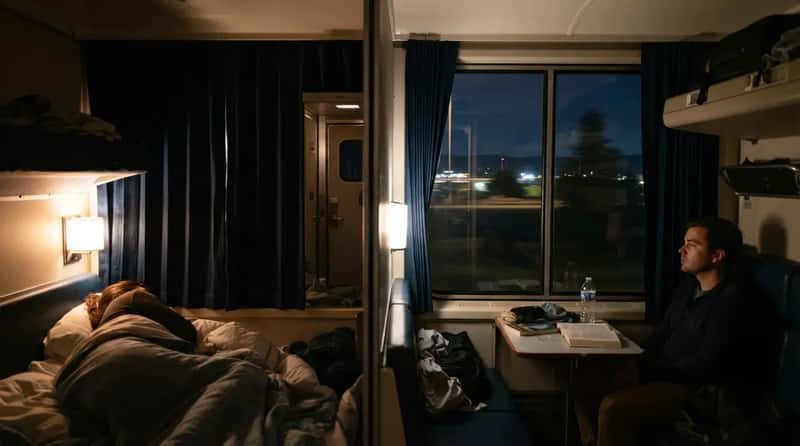
Some passengers want total darkness the minute they board. Superliner roomettes come equipped with blackout curtains, and those riders use them. Others refuse to close their eyes at all because they don’t want to miss the scenery. One rider chose to enjoy the whole ride and had the attendant leave the seats as they were.
Here’s a take that may spark debate. Sleeping through the landscape you paid to cross is a strange way to ride a train. Others argue that the whole point of a private room is to shut the world out. Both camps are right, and attendants see both on the same night.
#4 – Bedtime Is Whenever You Say It Is
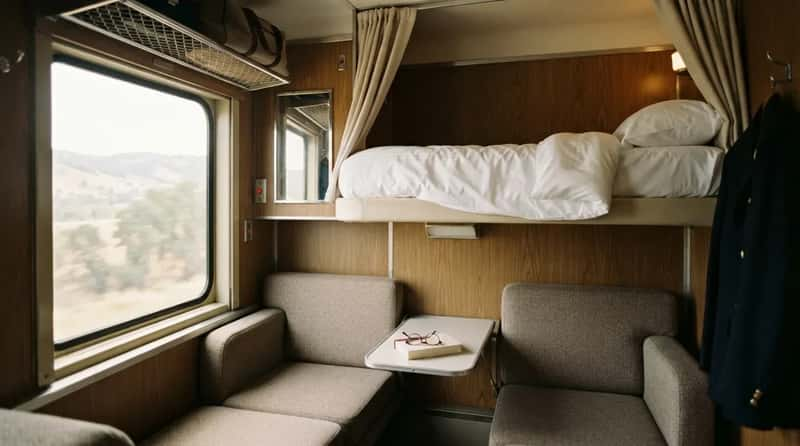
Many first-timers assume the bed goes down at a set hour. It doesn’t. Forum regulars note that it isn’t beyond the scope of an attendant’s duty to make up or take down beds at unusual hours. One adds that the attendant will make the room up for sleeping on request, even during the daytime.
There are middle options too. One suggestion is having the attendant make up only the top bunk and leave the lower seats intact. You don’t have to give up your seat to get a bed. In the morning, tell your attendant when you’re heading to breakfast, and they’ll return the room to its daytime setup.
#3 – Who Gets the Top Bunk? The Question Every Couple Faces
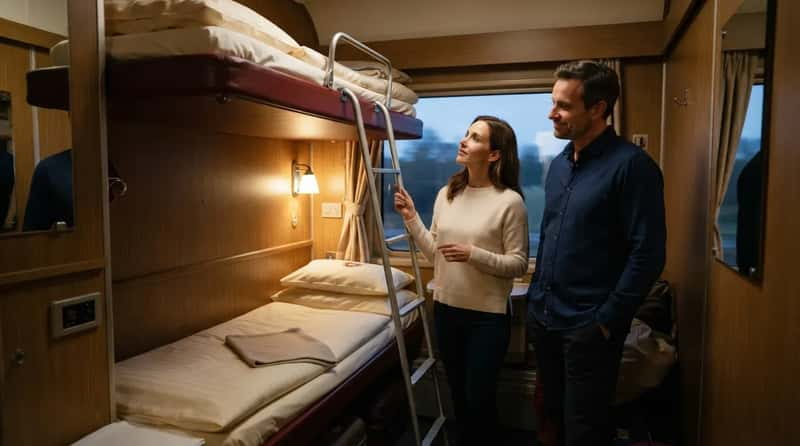
Attendants see this negotiation play out in real time. The lower berth is the easy one. The upper means a climb up a short ladder, and it’s also narrower, at about 2 feet by 6.2 feet.
Quick Compare
- Lower berth: no ladder, and roomier at about 2.3 by 6.5 feet.
- Upper berth: a short climb, and narrower at about 2 by 6.2 feet.
- How couples settle it: a shrug, a coin flip or a pointed look at the ladder.
Couples tend to settle it quietly. It may be the most overlooked relationship test in train travel. Some travelers say the ladder is nothing. Others look at it and suddenly volunteer for the lower. Attendants just smile and make the bed. But the biggest first-night surprise isn’t in the room at all.
#2 – The Bathroom Math Nobody Does Before Booking
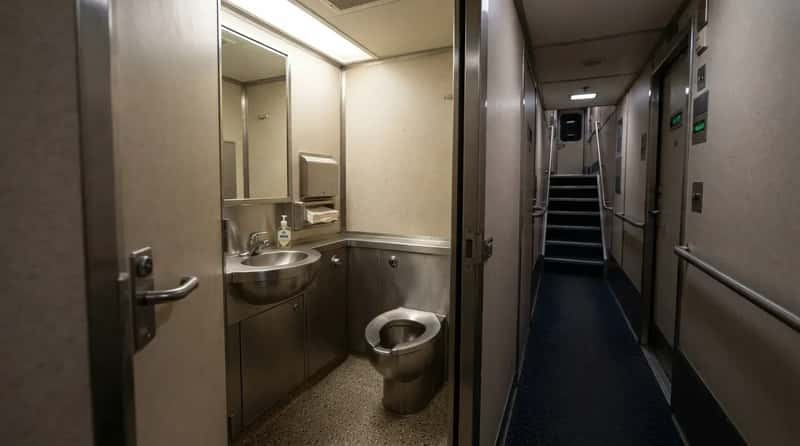
Here’s what catches people off guard. Superliner roomettes have no en suite toilet or sink, unlike roomettes on Viewliner trains. Amtrak says roomettes come with access to shared restroom and shower facilities. Where those facilities sit depends on your car.
One guide says the lower level has three private bathrooms, each with a toilet and sink, plus a separate shower room. Up top, there’s only one bathroom for roomette passengers and no shower. A late-night trip downstairs is part of the deal for upper-level riders. Attendants work to keep these spaces spotless, because a shared bathroom gets a lot of use.
#1 – The Knock Before Your Stop Is the Part Nobody Forgets
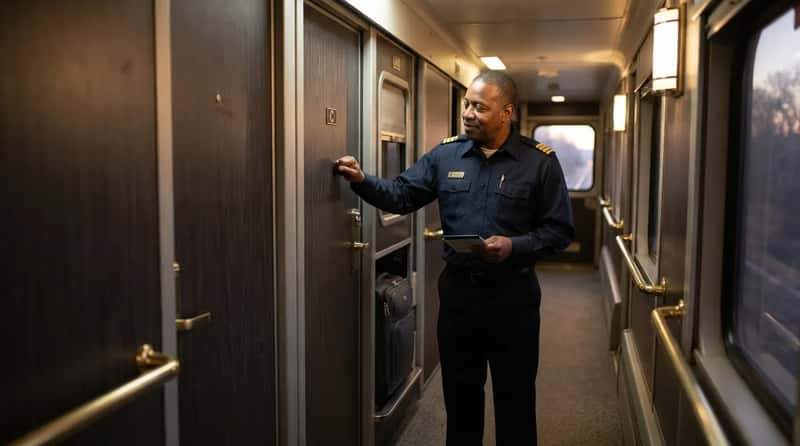
Sleeper attendants do plenty of visible things, like beds, coffee and bags. One forum regular argues the real priority is something else: the primary responsibility of a sleeping car attendant is the safety of passengers. That gets overlooked when everyone is focused on turndown service.
It shows up at the end of the trip. One rider described how their attendant knocked lightly 20 minutes before their stop, then helped them down the stairs with their bags. The person who tucked you in is the same one who gets you off the train safely. First-night passengers rarely realize that until it happens to them. By then, they’re a little attached.
A first night in a sleeper car is mostly a string of small surprises. The room is tighter than expected, the bed appears on its own, and the meals were already paid for. The bathroom may be a staircase away. Attendants see all of it, and most of the confusion fades by morning.
What lasts is the difference between a trip you endured and one someone quietly looked after. Would you take the lower berth, or climb up for the upper?