Boarding a cruise ship looks like the easy part. You walk up a gangway, someone hands you a drink, and the vacation begins. Then first-timers find their cabin roped off, their suitcase nowhere in sight, and every pool chair already claimed.
Embarkation day is really a logistics puzzle, and the people who have sailed before quietly solved it years ago. Some of their moves start days before the ship, a few feel completely backwards, and one involves ignoring the thing everyone else rushes toward. Here’s the playbook, counted down from the one that saves the trip to the one that makes it.
#13 – They Fly In a Day Early, Because the Ship Will Not Wait
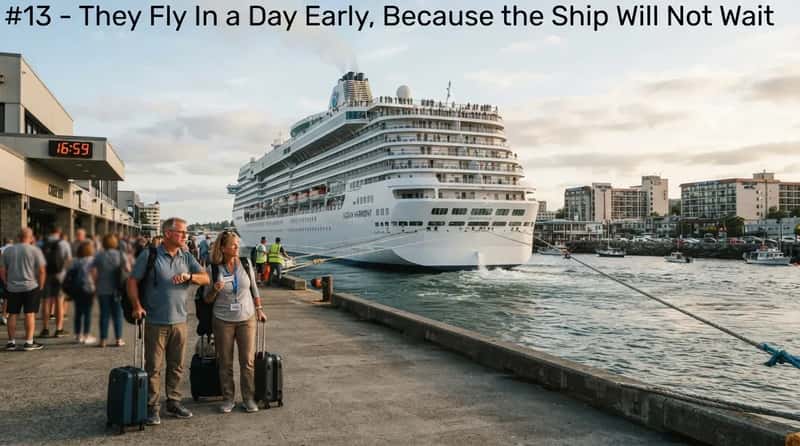
Seasoned cruisers treat sailing day as the one date on the calendar that cannot move. A ship runs on a tight port schedule, so it can’t hold the gangway for one stranded family. Thousands of other passengers are already on board, and the ship leaves on time.
So veterans who fly in book a cheap hotel near the port the night before and treat it as insurance. One weather-delayed connection can end a cruise before it starts. A missed departure usually means paying your own way to catch the ship at a later port, if that’s even possible. Even people who live within driving distance sometimes do the hotel night. But that’s nothing compared to the paperwork trick at #12.
#12 – They Finish Check-In Weeks Early and Print the Luggage Tags at Home
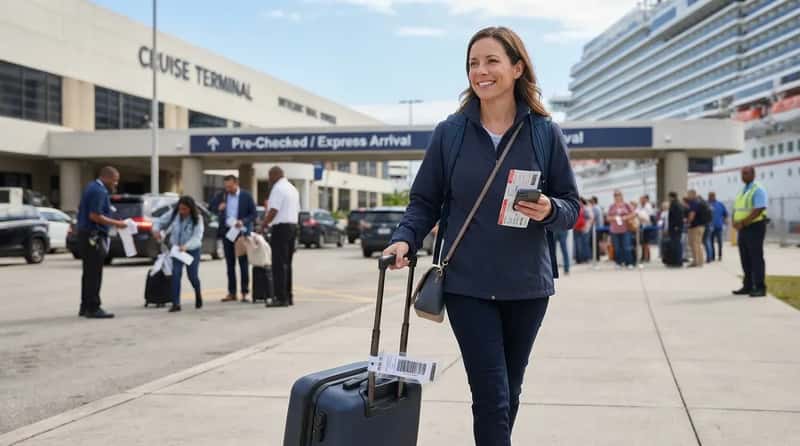
The fastest line at the terminal belongs to people who did their homework from the couch. Online check-in typically opens a month or two before sailing, depending on the line, and veterans do it the first week. They pick an arrival window and keep the confirmation where they can find it in two taps.
Then they print the luggage tags at home. Terminals may have spare tags, but arriving with them already attached saves a scramble at the curb. An untagged bag is a bag you drag around the terminal yourself. With pre-check-in done, the terminal process can take as little as 15 to 30 minutes. Now look at what veterans carry in their hands at #11.
#11 – They Carry a Small “Day-One Bag” That Never Leaves Their Hands
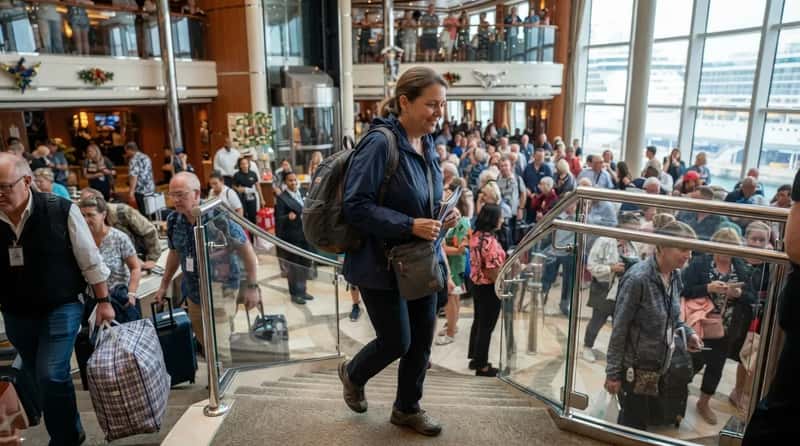
The suitcase you hand to the porter is not coming back for hours. Checked bags may not reach your cabin until mid-afternoon or evening, sometimes after the ship has already sailed. Veterans pack as if that bag doesn’t exist.
Their carry-on holds the essentials: passport, boarding documents, medications, chargers, swimsuit, sunscreen, sunglasses and valuables. First-timers who pack the swimsuit in the checked bag often watch the pool party from the sidelines. Veterans keep this bag small, because they’ll be hauling it up stairs and across crowded decks. And none of it helps if you show up at the wrong time, as #10 explains.
At a Glance: The Day-One Bag
- Never out of reach: passport, boarding documents and any medications
- Pool-ready: swimsuit, sunscreen, sunglasses and a light cover-up
- Powered up: phone charger and a small portable battery
- Easy to skip: anything you won’t need before your suitcase shows up
#10 – They Time Their Arrival Like a Bet, Not a Guess
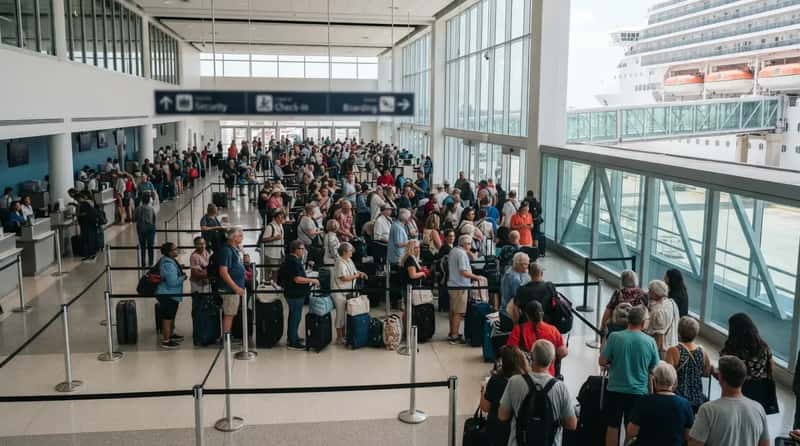
“Get there early” turns out to be only half the story. Boarding often opens late morning, and arriving at midday can mean longer queues and a cabin that isn’t ready. Many veterans aim for the very start of their assigned window.
Some experienced cruisers go the other way and arrive later, when the lines are shorter. The catch is that they lose part of the first afternoon. The “empty terminal” trick has a real price: your pool time. Most veterans choose a full afternoon over a quiet gangway. Speaking of afternoon, the next move runs against every instinct you have.
#9 – They Skip the Cabin and Scout the Ship While Everyone Else Waits

The stateroom is the thing everyone wants to see first, and it’s the one thing that isn’t ready. Staterooms generally open in early afternoon, often around 1:00 to 2:00 p.m., and an announcement tells everyone when. On MSC, that window runs roughly 1:30 to 3:30 p.m.
Veterans spend those hours walking the ship. They find the stairwells, the quiet decks, the dining rooms and the nearest bar. By the time the cabins open, they already know how to get there without the elevator crowd. They also notice which lounges are empty now and will be packed at sail-away. Many veterans insist the first hour on board matters more than the first dinner. And the next item is the one most people dread.
#8 – They Knock Out the Muster Drill First, Before Anyone Calls Their Name
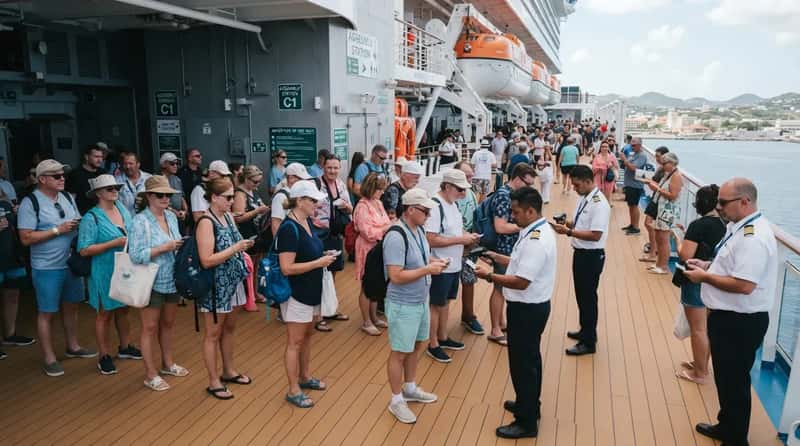
The safety drill is mandatory, and skipping it is the quickest way to become the day’s most embarrassing passenger. People who put it off can hear their cabin numbers called over the PA system. Veterans would rather be done and out of the spotlight.
Worth Knowing: The Drill in Four Lines
- It’s a required safety step, not an optional cruise-line extra.
- Your assembly station is usually posted on the back of your cabin door.
- Bring your key card, since many lines scan it to confirm you attended.
- Scouting the ship first (see #9) makes finding your station quick.
Most lines have dropped the old shoulder-to-shoulder drill. On Royal Caribbean, you watch videos in the app, then visit your in-person assembly station for a short briefing. Some lines can have you done in under five minutes. One guide notes that a skipped drill can leave your cabin flagged. Do it early and you can enjoy the sail-away guilt-free. But the food decision at #7 splits veterans into two camps.
#7 – They Dodge the Buffet Stampede Everyone Else Walks Into
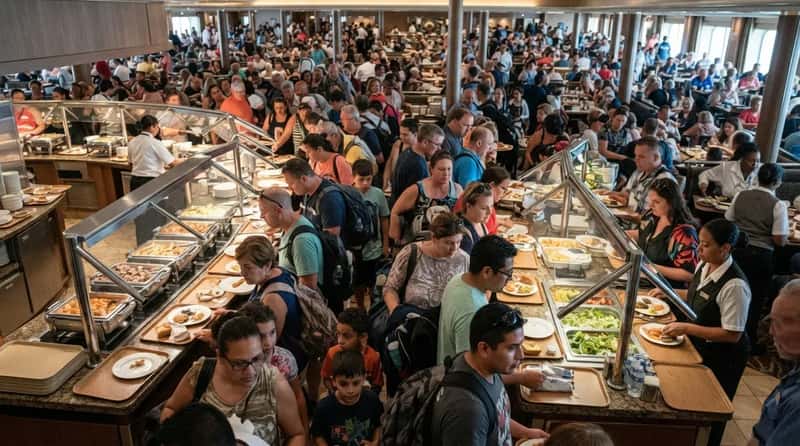
Everyone boards hungry, and everyone heads to the same place. One MSC guide describes the mood: people are hungry, the ship is filling up, and nobody knows where anything is. The buffet turns into a crowded maze of trays with nowhere to sit.
Many veterans pick a different lunch spot. Plenty of ships open a sit-down restaurant on boarding day, though this varies by line and ship, so check the app or the daily schedule. The most crowded restaurant on the ship at 12:30 is almost always the buffet. Some regulars call the embarkation-day buffet the most overrated meal of the cruise. That’s a fair argument for the comments. The cabin, though, is where the next trick pays off.
#6 – They Test Every Switch in the Cabin the Minute the Door Opens
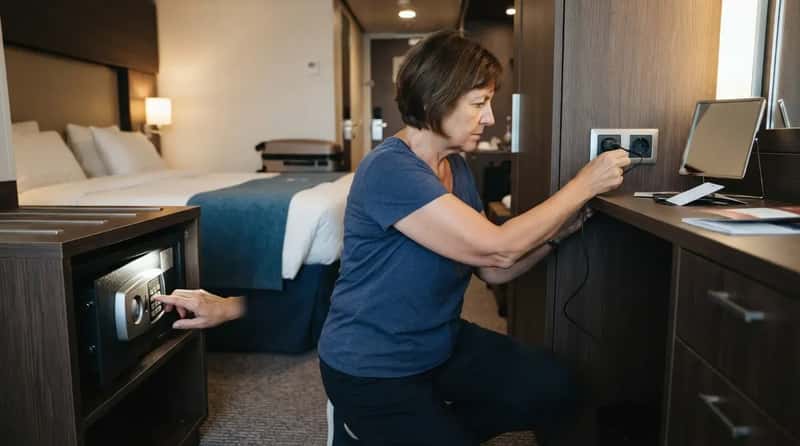
The moment the door unlocks, veterans stop admiring the view and start checking things. One guide says to make sure the safe works, test the AC, and note any issues for your steward. They flip the lights, try the outlets and run the shower.
The logic is simple. A broken safe or a dead air conditioner is far easier to fix on day one than on day five. Ships are full, so a swap gets harder the longer you wait. Veterans also take quick photos of any damage or stains, just in case. The person you report problems to is the star of #5.
#5 – They Introduce Themselves to the Cabin Steward Within Hours
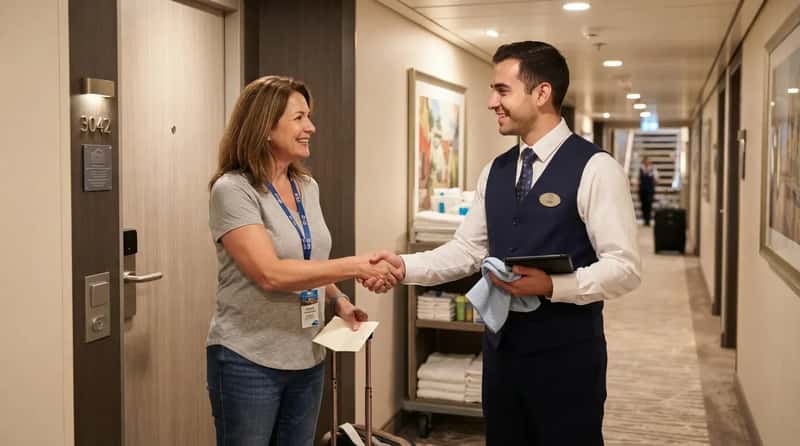
Your steward controls more of your comfort than most passengers realize. Veterans find them in the hallway or leave a polite note on the first afternoon. Then they ask for the small things that make a cabin livable.
Typical requests include extra hangers, extra pillows, ice, and a bed layout that suits the group (one bed or two). Ships set those up differently, so ask early. A friendly request on day one often gets a faster “yes” than a rushed one at 9 p.m. on day four. Stewards are busy, and the passengers they know by name tend to get help sooner. Next up: the veterans who book before you’ve even unpacked.
#4 – They Lock In Dining and Spa Slots Before the Prime Times Vanish

Popular specialty restaurants and spa times fill up early. Veterans open the cruise app the moment they board, or even before sailing if the line allows pre-booking. Prime evenings tend to go first, so they claim them.
Many of them add a twist. They don’t buy a dining package without doing the math. A package that looks like a bargain on the first day may not pay off if you only plan to eat in one or two specialty restaurants. Prices and rules vary by cruise line, so compare what the line shows you with what you’d actually use. And at #3, there’s an even bigger money question.
#3 – They Refuse to Panic-Buy the Drink Package or Wi-Fi at the Gangway
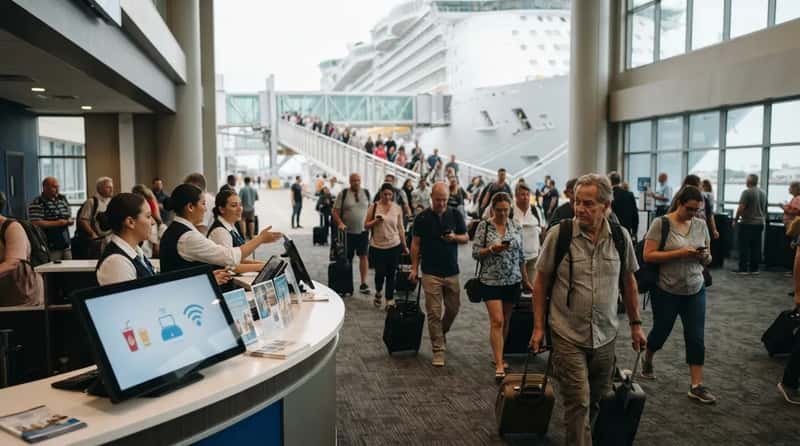
The sales push starts the second you board. Offers pop up in the app, on posters and poolside. Veterans know that a deal that feels urgent isn’t always a deal at all.
They do the math instead. A drink package can work for heavy drinkers, but it is a poor value for a light one. Many cruisers call packages overhyped, while others swear by them. Either way, prices and bundles change by line, so check the current price against what you’d really use. The same goes for Wi-Fi. Many lines run apps for the safety drill, so some cruisers connect briefly just for that. Next comes the setting that protects your wallet.
Quick Compare: Buy Now or Wait?
- Buy early if: you know you’ll use it every single day of the trip.
- Wait if: your plans include lots of port days, spa time or lighter drinking.
- Either way: compare the current price with your own habits, not the poster’s headline.
#2 – They Flip the Phone to Airplane Mode Before the Ship Pulls Away
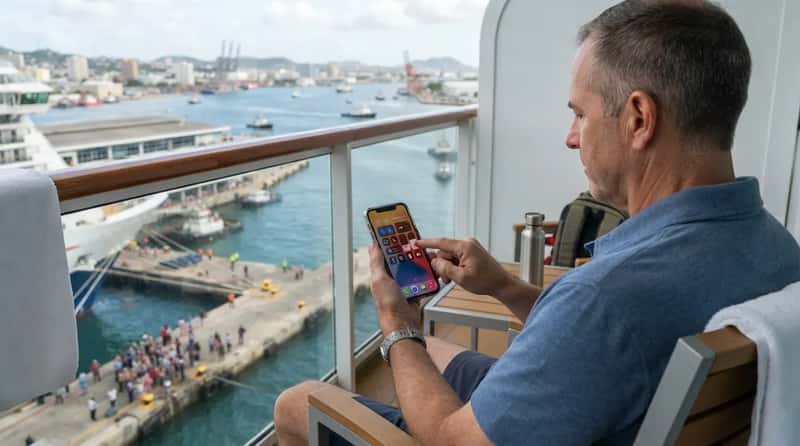
A surprise phone bill is the kind of souvenir nobody wants. Once the ship leaves the dock, phones can latch onto the ship’s own cellular network, which can bill at roaming rates. Veterans switch on airplane mode before the lines come off.
Then they turn Wi-Fi back on if they’ve bought a plan. The charge can arrive without a single call or text, because background apps keep refreshing. Many veterans also turn off data roaming and auto-updates before leaving home. It takes ten seconds and can prevent a nasty surprise when you’re back on land. And the last item has nothing to do with money.
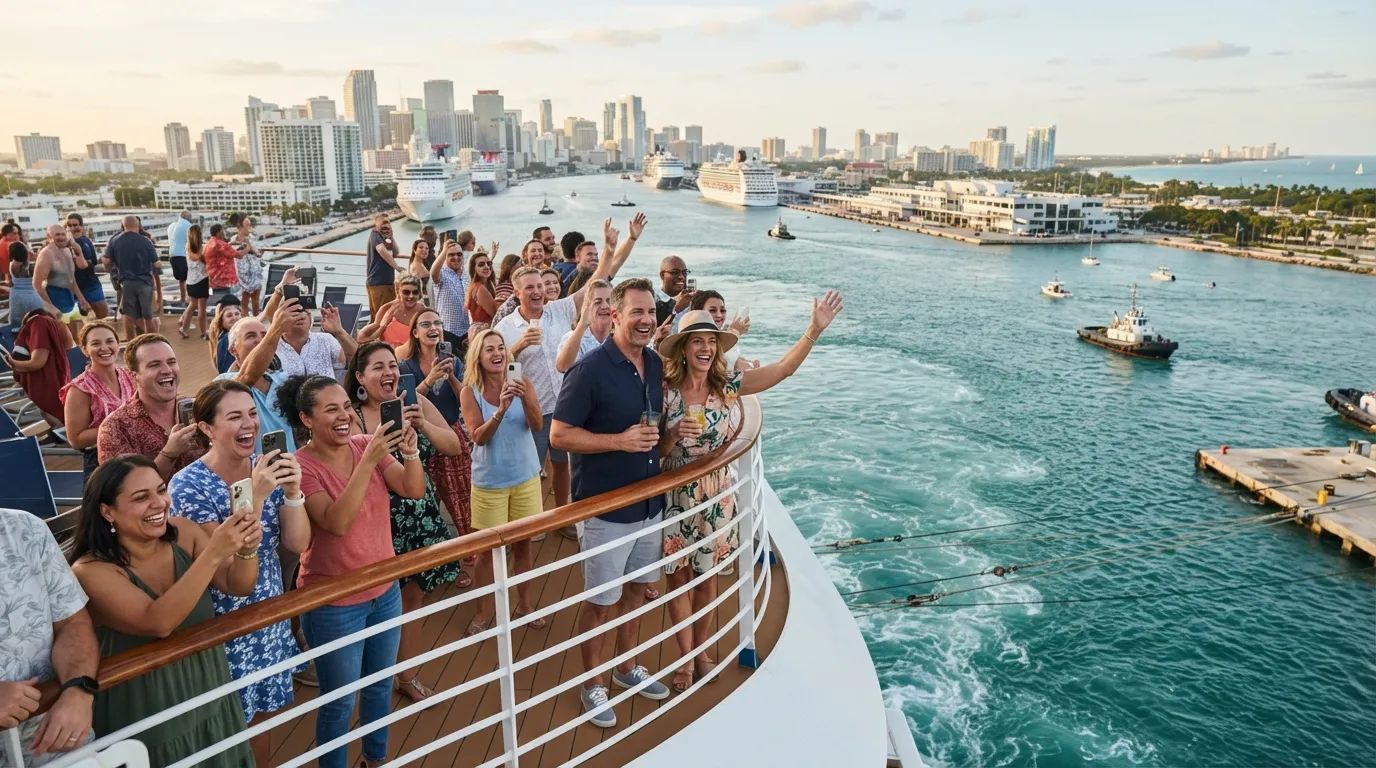
#1 – They Stand at the Rail for Sail-Away Instead of Scrolling

The best moment of embarkation day is the one most first-timers miss. Sail-away typically happens in the afternoon or early evening, often while bags are still making their way to cabins. Veterans put everything else on hold, grab a spot on deck and watch the lines come off the pier.
They’ve done the drill, found the cabin and sorted the logistics. The day’s real payoff is the one thing you can’t buy or book ahead. Many cruisers say they do it on every sailing, even after dozens. The unpacking can wait, and the crowd on deck is usually the happiest one of the whole trip.
Why It Stands Out
- It’s free, and no package or app booking is needed.
- The whole ship is in one mood: excited, relaxed and a little giddy.
- You get a rare view of the port from the water, with the skyline sliding away.
- It marks the real start of the trip, once the to-do list is finished.
Most embarkation-day pain comes from the same few things: tight timing, bags that arrive late, and a cabin that opens after you do. Veterans solve each one with a small habit, such as an early arrival, a day-one bag, a muster drill done first and a phone in airplane mode. None of it is complicated, and all of it saves hours.
The ship will leave with or without your plan. Veterans just make sure they’re standing at the rail when it does. What’s the one embarkation-day lesson you learned the hard way?