Most people assume a wheelchair escort’s job ends at “push chair from point A to point B.” That assumption is almost insulting to what actually happens behind the scenes. The reality is a quiet, constant stream of decisions, small rescues, and unspoken judgment calls that most travelers over 60 never notice – and never get billed for.
Some of it is required by federal law. Some of it is just human decency that happens to show up in a job description. Either way, once you know what’s really going on during that ride to the gate, you’ll never look at that “just a wheelchair push” the same way again.
#14 – They Quietly Let You Skip the Pat-Down Most Travelers Dread
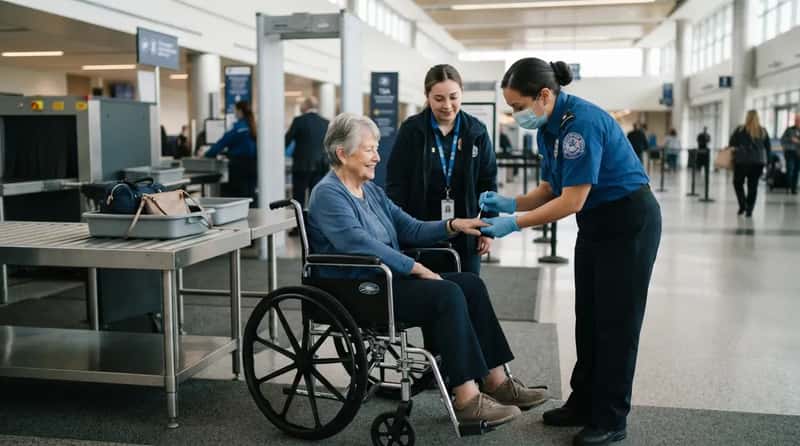
Here’s a rule most flyers over 60 have never heard of, even though it could apply to them directly. If you’re 75 or older and using a wheelchair or scooter, TSA allows you to stay seated during screening while an officer simply tests your hands for traces of explosives, instead of running you through a full pat-down or scanner routine.
Younger wheelchair users don’t automatically get this pass, so escorts often quietly flag age and mobility status to the checkpoint officer ahead of time. It’s a small courtesy that saves confusion, embarrassment, and time – and most passengers assume it’s just luck, not policy.
Fast Facts
- Applies to travelers 75 and older using a wheelchair or scooter
- You stay seated instead of standing through a scanner
- An officer swabs your hands for explosive residue only
- Escorts often flag eligibility before you even reach the checkpoint
#13 – They Loop You Into a Federal Support Program You Didn’t Know You Qualified For
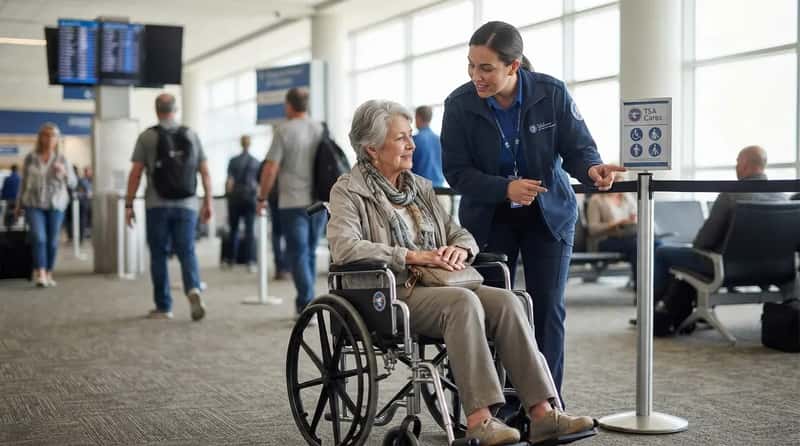
Most travelers over 60 have never heard the words “TSA Cares,” yet it exists specifically for people like them. It’s a helpline that gives extra assistance to travelers with disabilities and medical conditions during screening, and it can be called 72 hours before travel at (855) 787-2227.
Attendants frequently mention this program on the way to your gate, even if you never asked. In 2022 alone, the helpline aided roughly 46,000 travelers with disabilities and special needs. A Passenger Support Specialist can walk you through screening ahead of time so nothing catches you off guard – and most people over 60 discover it purely by accident.
#12 – They Know Exactly Where the “Invisible” Restrooms Are Hidden
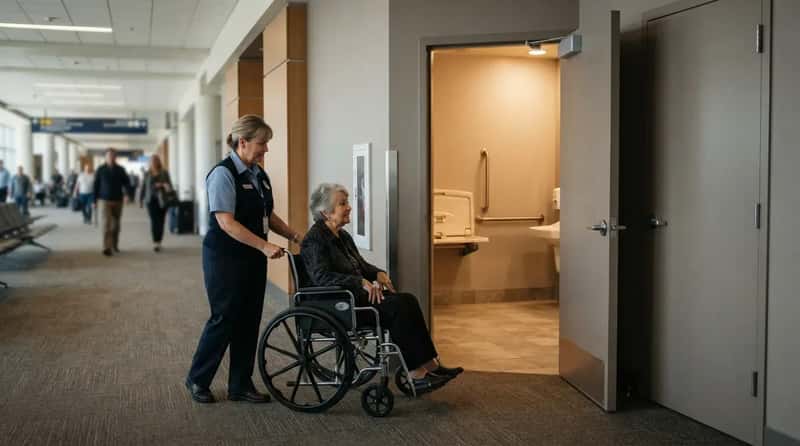
This sounds minor until you actually need it mid-terminal, and it’s one of the most requested unofficial services attendants provide. At major hubs, companion care restrooms are tucked between gates, next to coffee shops, or across from quiet chapels – rarely where signage actually points.
Most travelers over 60 have no idea these specialized facilities even exist until an escort quietly detours them there without being asked twice. It’s not glamorous work, but it’s the kind of detail that turns a stressful layover into a manageable one. Escorts build a mental map of every terminal they work, restroom by restroom, because official airport signage simply doesn’t keep up.
#11 – They Handle a Mid-Journey Transfer Most Flyers Never Even Realize Is Happening
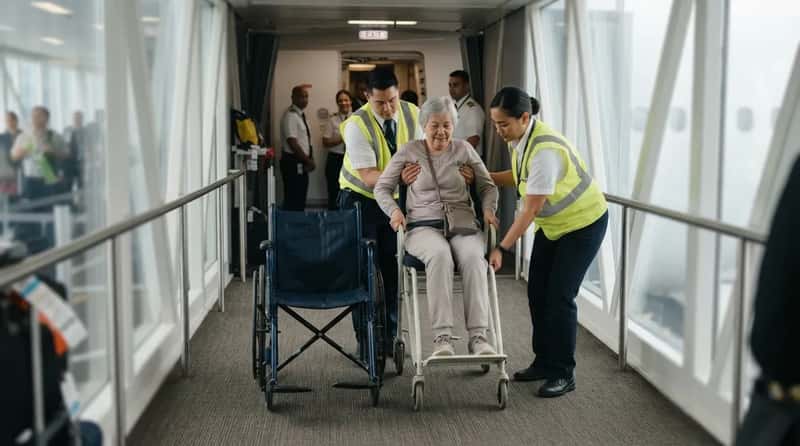
Boarding isn’t always as simple as rolling straight up a ramp. On many aircraft, a full-size wheelchair physically cannot fit down the narrow center aisle, so a narrower aisle chair is used instead while airport staff handle the transfer before escorting you onto the plane.
This transfer happens fast, and it’s coordinated with a level of care most passengers never notice because they’re focused on finding their seat number. The swap can involve two staff members working in sync just to keep the process smooth and dignified. If there’s no jet bridge, an ambulift – a raised vehicle built specifically for this purpose – steps in instead.
#10 – They Let You Keep Your Own Wheelchair Until the Absolute Last Possible Second
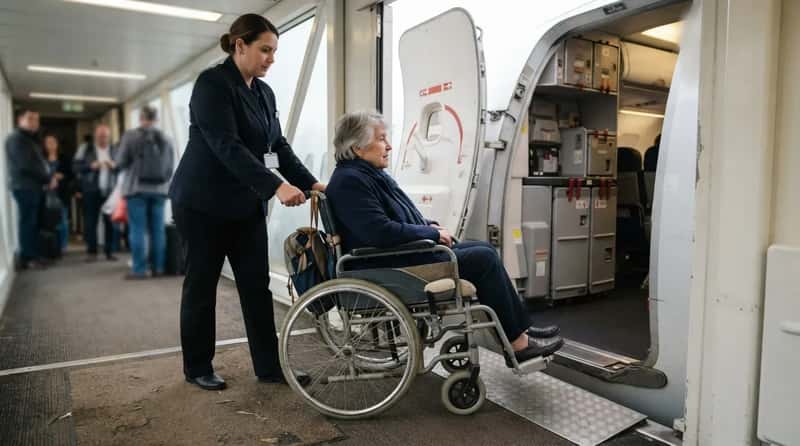
Most travelers assume they have to switch into an airport-provided chair the moment they walk through the doors. In reality, most airports let passengers stay in their personal wheelchair for most of the journey, which helps maintain comfort, independence, and control over unfamiliar equipment.
Escorts quietly protect this option because they know a stranger’s chair, even a well-maintained one, never feels the same as your own. The switch only happens right at the aircraft door, not back at check-in like most people assume. That single detail preserves a small but meaningful sense of control for travelers who already feel like they’ve surrendered enough independence just by asking for help.
#9 – They’re Secretly Working Off a Code You’ve Never Heard Of
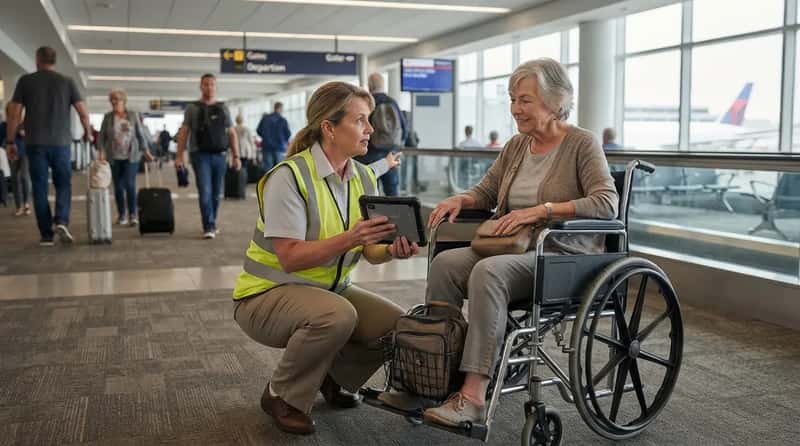
Every request gets quietly filed under a three-letter code, and it decides exactly how much help shows up. Standardized codes like WCHR, WCHS, and WCHC indicate the level of assistance required, with WCHR meaning a passenger can walk short distances and climb stairs but needs a wheelchair for longer stretches of the airport.
Most flyers over 60 never see this code, yet it shapes their entire airport experience before they even arrive. Get it wrong, and you might be handed less help than you actually need, or assigned an aisle chair transfer you weren’t expecting. Escorts often notice mismatches on sight and quietly adjust around outdated paperwork anyway.
Quick Compare
- WCHR (Wheelchair-Ramp): Can walk short distances and climb stairs, but needs a wheelchair for long stretches in the airport
- WCHS (Wheelchair-Steps): Cannot climb stairs, but can walk to the aircraft seat once onboard
- WCHC (Wheelchair-Cabin): Completely immobile and needs assistance to and from the seat
#8 – They Arrange Your Next Wheelchair Before Your Plane Even Touches Down
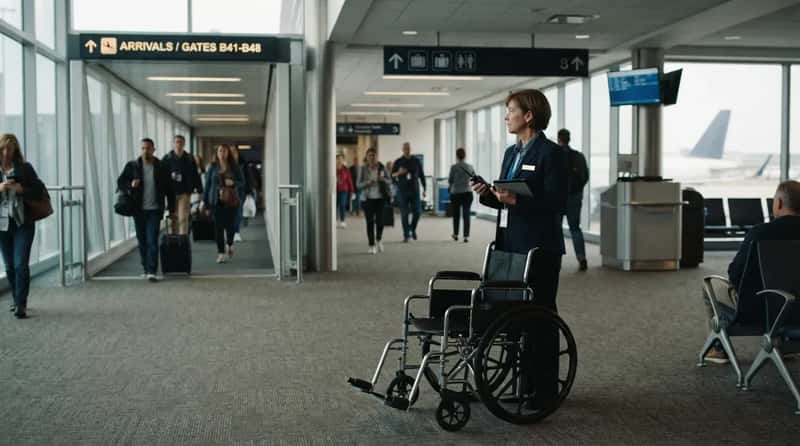
If you’re flying with a connection, the handoff to your next escort is arranged while you’re still in the air. Airlines coordinate for a wheelchair and an assistant to meet you at the appropriate gate before you’ve even landed, not after you’re standing confused in an unfamiliar terminal.
Most passengers assume this coordination is automatic – it isn’t. It depends entirely on someone confirming the request ahead of time and passing it down the chain to the next airport. When it works, you never notice. When it doesn’t, you’re the one left waiting near an empty jet bridge wondering where everyone went.
#7 – They Sit Through Repeated Legal Training Built Around Dignity, Not Just Speed
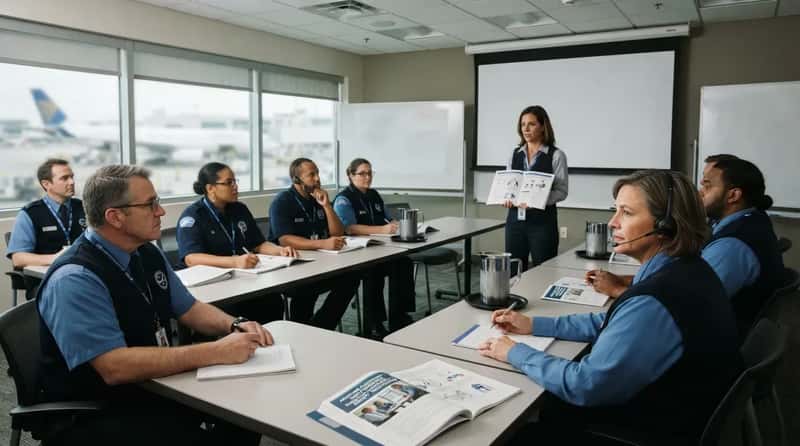
This isn’t a one-time onboarding video watched during a lunch break. Airline personnel are legally required to be trained on assisting travelers with disabilities respectfully and safely, with mandatory refresher courses every few years.
Most travelers assume attendants are simply temp workers with minimal preparation. In reality, there’s a recurring compliance structure behind every single interaction, built specifically so older and disabled passengers are never treated as an afterthought squeezed between flights. Many frequent flyers now argue this training matters more than any airport signage ever could.
#6 – They’re Quietly Bound by a 30-Minute Rule Most Travelers Have Never Heard Of
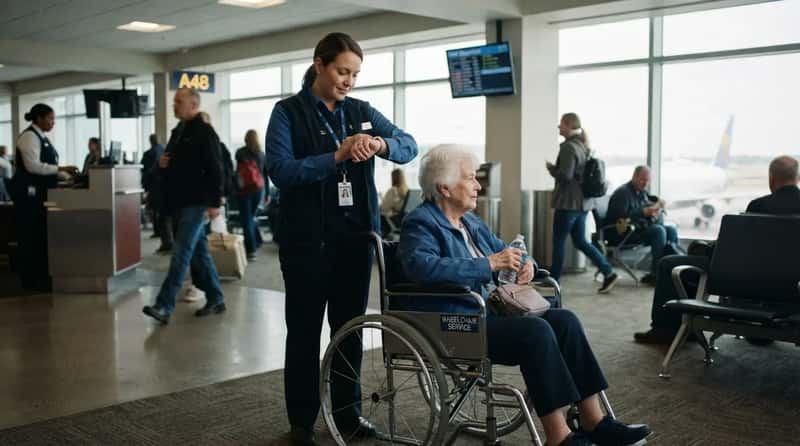
Ever wondered why an attendant seems anxious about leaving you at a gate, even briefly? There’s a legal reason behind it. If you’re using a wheelchair or any mobility aid, airlines are required to make sure you’re not left unattended for more than 30 minutes under most circumstances.
This single rule quietly shapes an escort’s entire shift. It’s why they check back in, why they hover near a gate a little longer than seems necessary, and why a “quick five minutes” almost never turns into an actual hour of being forgotten. Most flyers over 60 never clock this as a rule – they just assume the attendant happened to be nice that day.
Worth Knowing
- The 30-minute cap applies anytime a wheelchair or mobility aid is in use
- It’s why escorts circle back during long delays or tight connections
- The rule exists under federal disability protections, not airline goodwill
- Most passengers never realize it’s a legal requirement, not a personality trait
#5 – They Quietly Carry Your Medication and Paperwork So You Don’t Have To Think About It
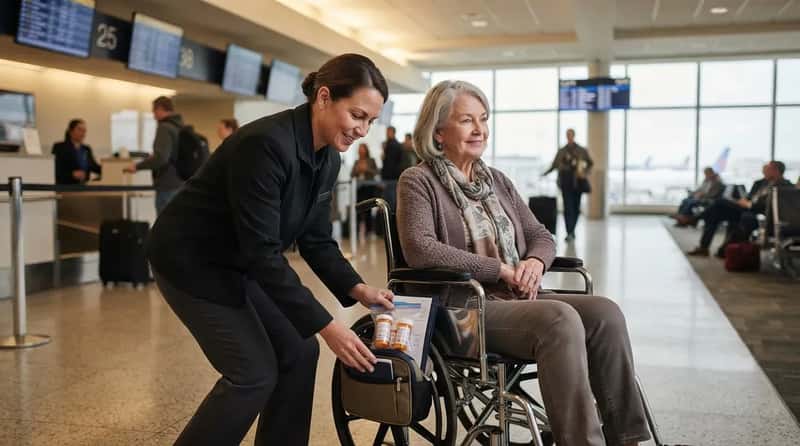
Beyond the physical push, there’s an entire layer of quiet logistics happening around your medical needs. The agent will make sure you have whatever medications or medical supplies you’ll need throughout the journey, often without being asked more than once.
Most travelers over 60 don’t realize how much of this is happening in the background until a connection gets tight and suddenly their meds are already accounted for. It’s a small detail, but for anyone managing a chronic condition mid-flight, it’s the difference between a stressful travel day and a manageable one.
#4 – They Walk You Through Customs Paperwork Most Travelers Are Left to Figure Out Alone
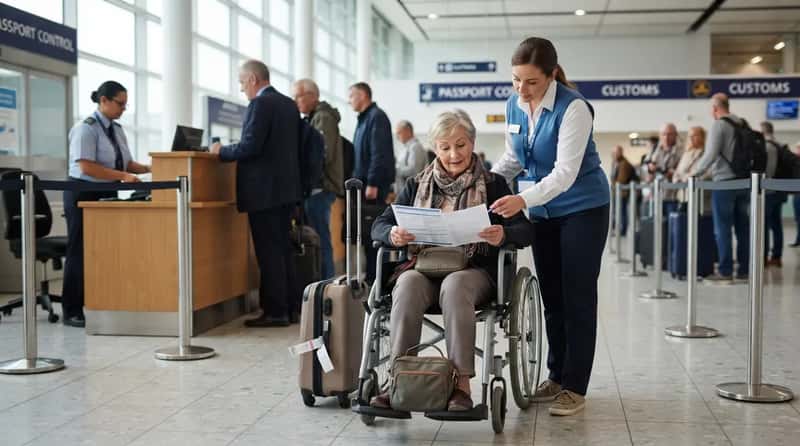
International travel adds an entire extra layer most people over 60 dread – and escorts quietly absorb a good chunk of it. After arrival, the wheelchair service agent accompanies the passenger through customs, helps complete the required paperwork, answers questions, then takes them to baggage claim to retrieve bags and load them back onto the chair.
Most flyers assume customs is a solo maze of forms and lines – it doesn’t have to be. Having someone physically stay with you through that process removes one of the most disorienting parts of international travel, especially after a long overnight flight. Few travelers request this specifically; it simply happens once the paperwork identifies a need.
#3 – They Use Employee-Only Shortcuts Most Travelers Will Never Even Notice Exist
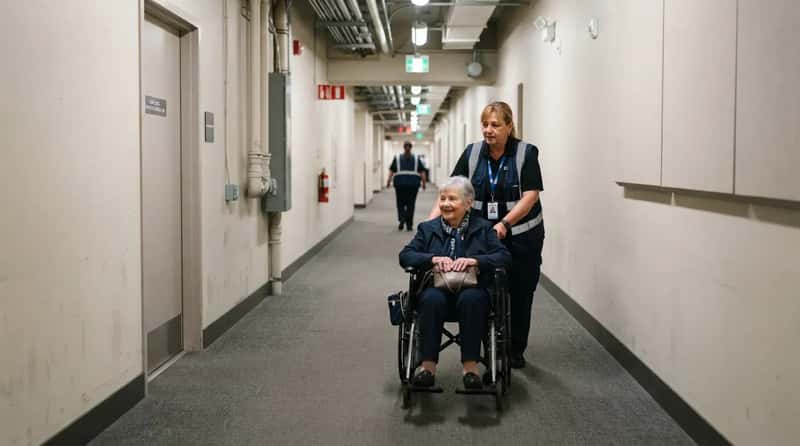
Experienced attendants aren’t just walking you in a straight line to your gate. They’re routing you around the parts of the airport that slow everyone else down, and some airports have entire transit systems built for exactly this kind of movement.
Many large hubs also offer electric carts for the longest terminal walks, and escorts know exactly which corridors, elevators, and back hallways avoid the worst congestion. Wheelchair services also cover transfers between flights using these same hidden routes. Most passengers never realize the shortcuts exist because they’re simply never marked on airport maps.
#2 – They Provide a Service Listed as Free, Then Quietly Go Underpaid for It
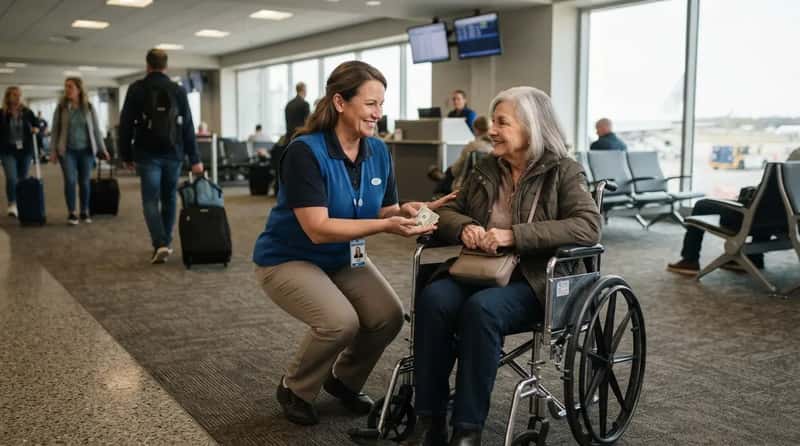
Here’s an uncomfortable truth most flyers over 60 have no idea about. Many airports classify wheelchair attendants as a tip-wage position, meaning employers can legally pay them less than minimum wage, even though the service itself is technically free and the cost is absorbed by the airlines to guarantee equal access.
“Wheelchair services at all airports in the US are complimentary, so the cost is picked up by the airlines to ensure equal access for everyone.”
U.S. Department of Transportation guidance on air travel accessibility
Passengers assume “free service” means no tip is expected, but attendants are often working a legally reduced wage specifically because tipping is baked into the business model. Many longtime travelers now argue that skipping a tip here is one of the most overlooked mistakes in modern air travel.
#1 – They Quietly Run Small Personal Errands That Aren’t Technically Part of the Job
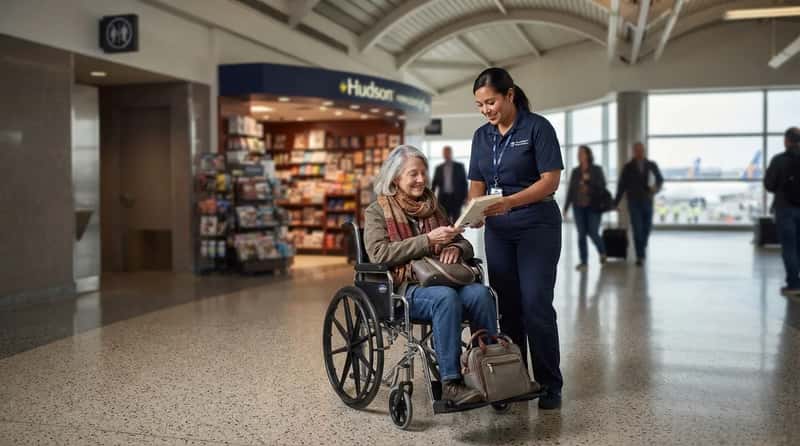
This is the detail that surprises people most, because it has nothing to do with policy and everything to do with character. An attendant who swings by the gift shop for a book, or waits an extra minute outside a restroom, isn’t following a rulebook – they’re just paying attention.
None of this is written into any job description. It happens because an attendant notices you’re nervous, or bored, or simply need five more minutes before boarding, and they quietly make it happen anyway. For a growing number of travelers over 60 – more than a quarter of air travelers 65 and older now use some form of airport assistance – this quiet, personal care is often the single biggest reason flying still feels possible at all.
Why It Stands Out
- More than a quarter of flyers 65 and older now rely on some form of airport assistance
- These small favors show up in zero training manuals or job descriptions
- They cost nothing, yet often become the most-remembered part of the trip
- They’re driven by attention, not policy – which is exactly why they stand out
None of these 14 things show up on a boarding pass, a gate screen, or an airline app. They happen quietly, in the seconds between check-in and takeoff, carried out by people most flyers barely make eye contact with.
Once you know what’s actually being coordinated behind that wheelchair push – the codes, the training, the paperwork, the small kindnesses – it’s hard to see it as “just a ride to the gate” ever again.