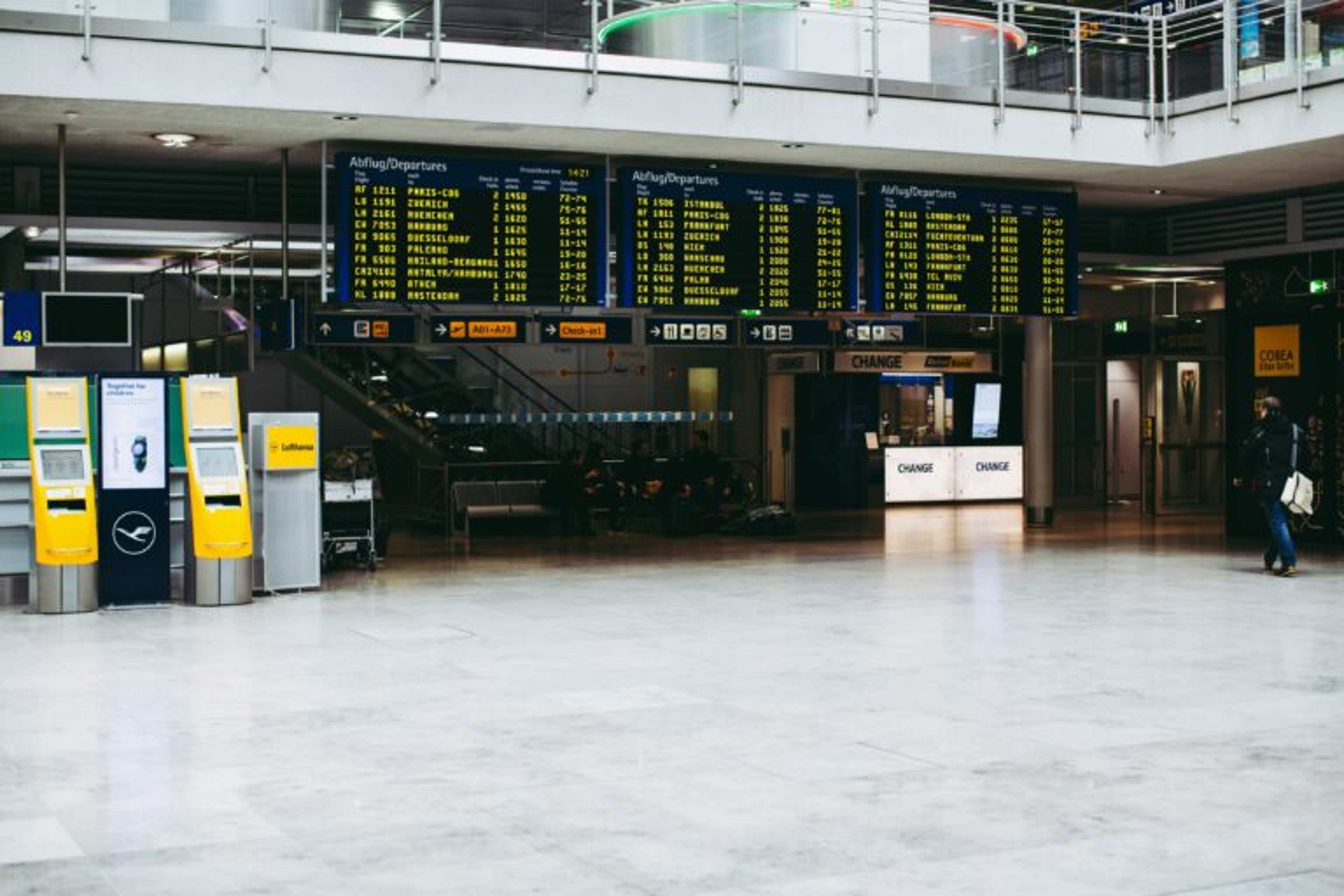
Most travelers assume flight attendants treat every passenger exactly the same, first come, first served, no exceptions, no favorites. That’s not quite how it works once the cabin lights dim on a red-eye. Experienced crew run a constant, unspoken triage from the moment boarding starts, and passengers over 60 tend to land near the top of that list without ever asking for special treatment.
The reasons aren’t sentimental. They’re practical, sometimes medical, and almost always invisible to everyone else in the cabin. Here’s what senior cabin crew actually admit happens behind that curtain once the seatbelt sign clicks off and the plane goes dark.
#14 – The Seat Swap Nobody Announces Over the PA
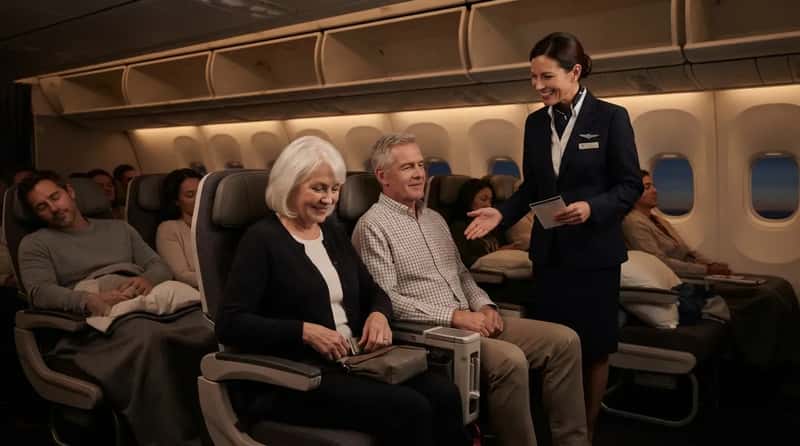
Cabin supervisors frequently move older passengers away from the loudest real estate on the plane without ever explaining why. Crew members open and close galley drawers all night, and passengers constantly line up for restrooms near the lavatories, and those movements can jolt even light sleepers awake. A quiet reseat solves the problem before it ever starts.
The preferred zone isn’t random either. The middle section of the economy cabin often stays noticeably quieter than the bulkhead or the back rows near the galley. Supervisors often steer older flyers toward that exact stretch during boarding, framing it as “more legroom” rather than admitting it’s really a noise-reduction move. It works, and almost nobody notices the strategy behind it.
#13 – The Meal That’s Already Sorted Before You Sit Down
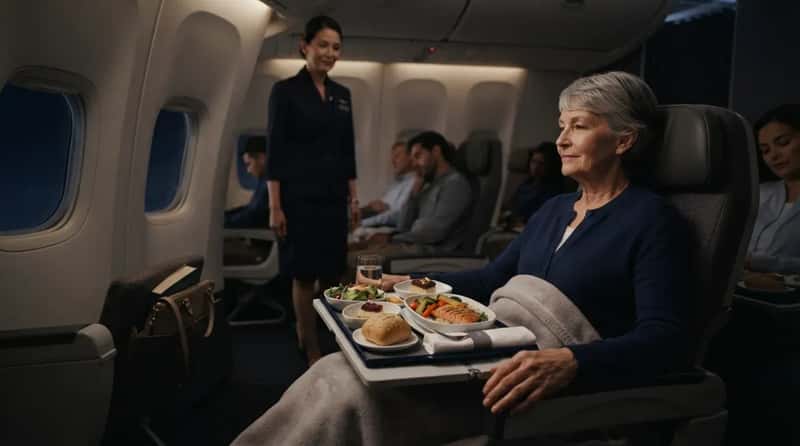
By the time an older passenger reaches their row, their food situation has often already been quietly resolved. Flagging dietary needs at booking helps ensure the right meal shows up without a scramble mid-flight, and cabin supervisors cross-check that information long before service even begins.
It’s a small courtesy with real weight behind it. Airlines factor in health conditions, dietary restrictions, and medication schedules well before the tray comes out. Most passengers never realize their special meal request was flagged and tracked all the way from check-in to cruising altitude, but that quiet coordination happens on nearly every overnight sector.
#12 – The Blanket Stash Nobody Tells You About
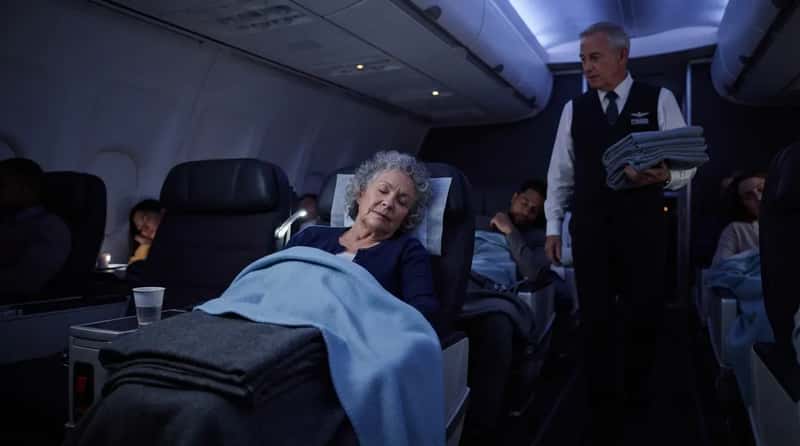
Cabin temperature on overnight flights swings more than most people expect, and crew know exactly who feels it first. Asking for an extra blanket can make a real difference, particularly on overnight services where the cabin temperature drifts colder as the night goes on. Supervisors often set a few aside specifically for older rows before the cabin even goes dark.
This isn’t just about comfort, either. Flight attendants are trained to notice when someone looks under-covered and quietly offer a second blanket without being asked. Some crews hold back a reserve supply precisely because experience has taught them senior passengers will ask for that second blanket around hour three. It rarely gets announced, but it’s a habit built from years of watching the same pattern repeat.
Fast Facts
- Cabin humidity typically sits between just 10-20%, far drier than a normal home or office.
- Dry air combined with lower cabin temperatures makes overnight flights feel colder than daytime ones.
- Most aircraft carry a limited blanket supply, so early requests tend to get filled first.
- Window rows and bulkhead seats are often the coldest spots in the cabin.
#11 – The Aisle Seat Nudge
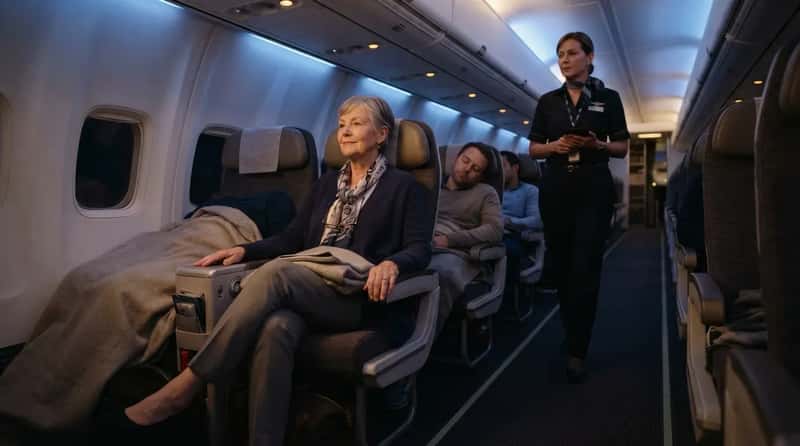
Booking agents and gate staff rarely say it outright, but there’s a reason older travelers keep getting steered toward the aisle. Aisle seats offer easier access to stand, stretch, and reach the restroom without needing to disturb a seatmate twice a night.
It’s a trade-off crew weigh constantly. Aisle seats also mean more foot traffic and more interruptions from passengers and carts moving past, so the convenience has to be balanced against broken sleep. Most supervisors quietly bet on mobility over uninterrupted rest every single time, and that trade-off is rarely explained out loud.
#10 – The Circulation Check Disguised as Small Talk
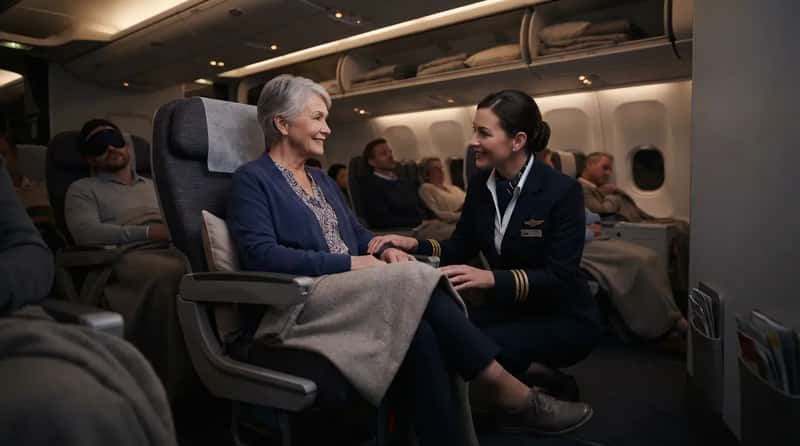
A casual “how are you feeling” from a flight attendant isn’t always just politeness. Doctors often recommend compression stockings for older travelers on long sits to help reduce the risk of blood clots, and crew are trained to notice who might need that gentle reminder.
The stakes are higher than most passengers realize. Deep vein thrombosis becomes a real concern on long-haul flights because sitting for extended periods slows circulation, and passengers over 60 face a higher risk due to reduced mobility. A supervisor’s casual suggestion to “stretch your legs whenever you’re up” is rarely just small talk. It’s a low-key medical nudge dressed up as friendly conversation.
#9 – The Early Boarding Head Start Nobody Explains
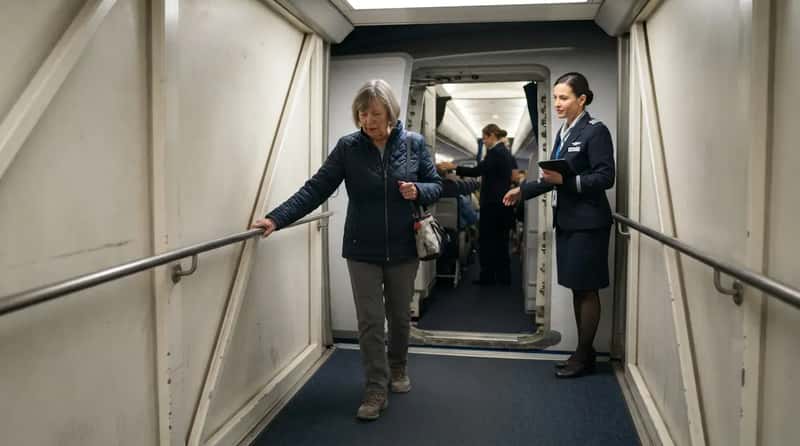
Preboarding isn’t only about getting bags stowed faster. It’s also the first real chance crew get to quietly assess how an older passenger moves, how they grip the handrail, and whether the walk down the jet bridge looked harder than usual.
That early read shapes the rest of the flight. Federal law requires airlines to provide substantial accommodation for passengers with disabilities, and much of that planning actually happens in the first ninety seconds of boarding, long before the safety briefing even starts. Passengers rarely connect the dots, but supervisors are already making decisions.
#8 – The Onboard Wheelchair That’s Already Positioned
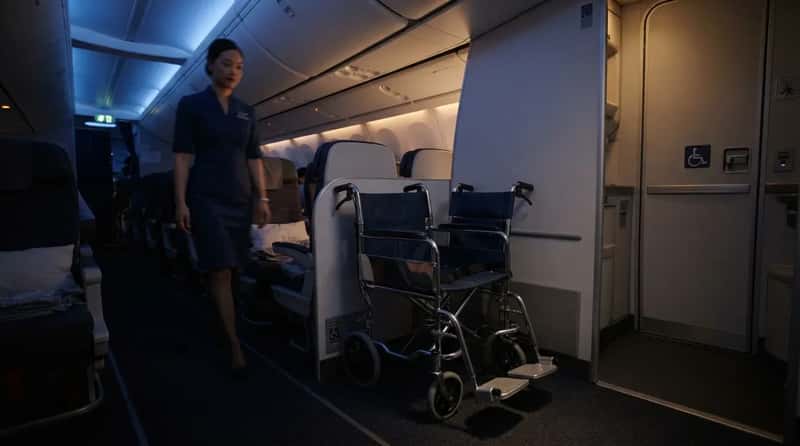
On wide-body overnight flights, the onboard wheelchair isn’t grabbed at the last second when someone struggles toward the lavatory. Flight attendants use it to transport passengers to and from their seats, assisting with transfers, though they generally will not lift or carry a passenger themselves.
The equipment is required by law on most aircraft. Any airplane with a wheelchair-accessible lavatory must carry an onboard wheelchair, and any aircraft seating more than 60 passengers must provide one on request. Supervisors often park it discreetly near a specific row hours before anyone asks for it, simply because they clocked a slower walk at boarding.
Worth Knowing
- Federal accessibility law requires airlines to accommodate passengers with disabilities on every flight.
- Any plane with a wheelchair-accessible lavatory is required to carry an onboard wheelchair.
- Aircraft seating more than 60 passengers must provide an onboard wheelchair upon request.
- Crew can assist with transfers but are not permitted to lift or carry passengers themselves.
#7 – The Deplaning Order That Isn’t Random
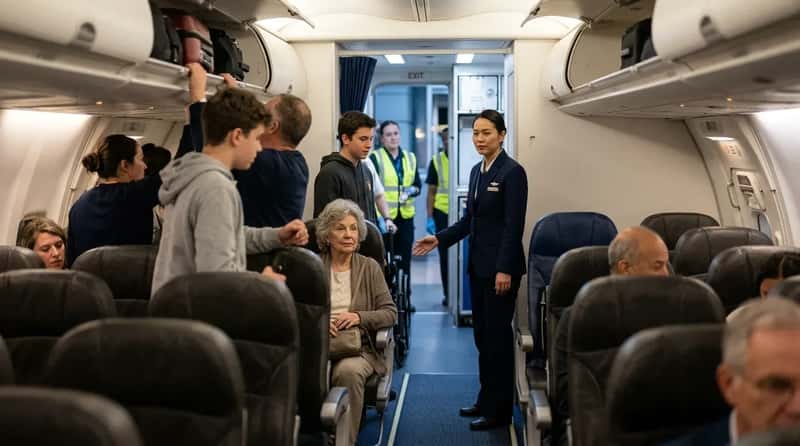
Ever notice how some older passengers stay seated a beat longer while everyone else scrambles for the overhead bins? That’s not confusion. Waiting for the crowd to clear first often means an easier exit, with an attendant ready to help the moment the aisle opens up.
Supervisors quietly manage this sequence row by row. They hold the aisle open just long enough for a family member to catch up, or for ground wheelchair staff to reach the door before the crowd does. Most passengers assume the delay is a bottleneck, when it’s actually a deliberate buffer built around one traveler’s needs.
#6 – The Dignity Plan for Bathroom Emergencies
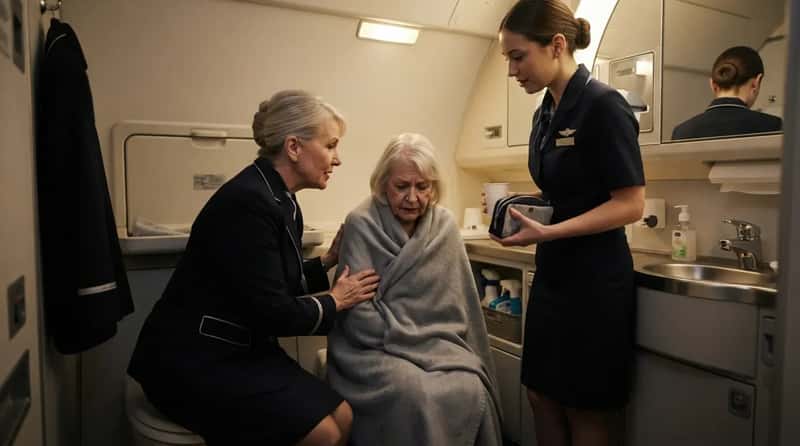
This is the one crews almost never discuss publicly, yet it’s more common than passengers think. When a 72-year-old passenger had a distressing bathroom emergency mid-flight, the senior cabin crew member immediately went to comfort her, then quietly went row by row asking for clean clothes and any spare items, since the family wasn’t carrying extra.
With help from passengers and crew, she was escorted back to her seat, and the crew handled the difficult cleanup themselves before it ever became a scene for the rest of the cabin. Supervisors quietly rehearse this exact scenario in training, precisely because it happens more on overnight long-haul sectors than anyone likes to admit. It’s handled fast, quietly, and almost always without the rest of the cabin noticing a thing.
#5 – The Lavatory Location That Gets Weighed Twice
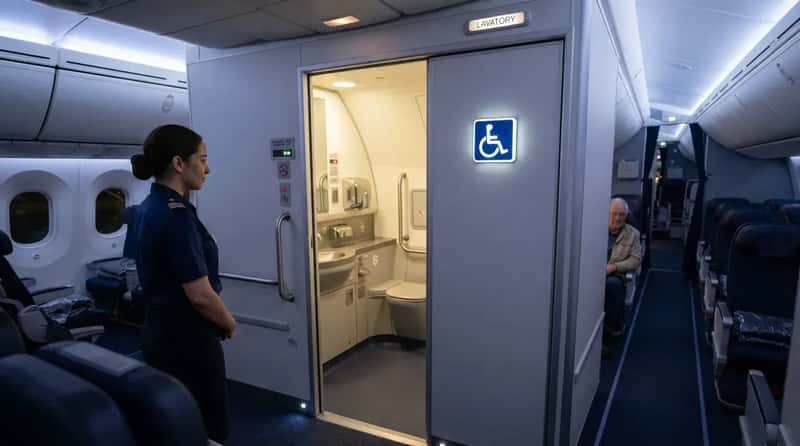
Seat assignment for older passengers isn’t just about noise. It’s also about proximity to an accessible lavatory, especially on wide-body jets built for long overnight legs.
Wide-body aircraft with two aisles carry expanded requirements around accessible lavatory access on longer routes. Supervisors sometimes quietly override a passenger’s original seat request specifically to shorten that walk, even when the passenger never mentioned needing it. It’s one of the few adjustments made almost entirely on visual judgment alone.
At a Glance
- Wide-body, twin-aisle jets are standard on most overnight long-haul routes.
- These aircraft carry expanded accessible lavatory requirements compared to single-aisle planes.
- Seat location relative to a lavatory can be quietly adjusted by crew during boarding.
- Shorter walking distance at night reduces both fall risk and interrupted sleep.
#4 – The Handover Note Crew Never Read Aloud
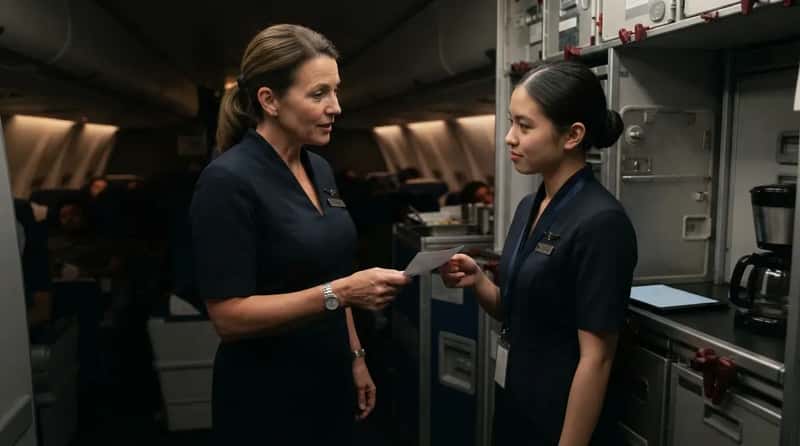
Long before landing, a quiet paper or digital trail follows certain passengers from one crew shift to the next. Programs like TSA Cares already help travelers with medical, mobility, or cognitive concerns move through the airport, and that same instinct carries onto the plane.
Airlines and crew can’t provide ongoing personal or medical care mid-flight, but they assist wherever possible. A supervisor will often mention a specific row to the incoming shift during a crew break, purely out of caution. Passengers never see this handoff, but it quietly shapes how attentive the second half of an overnight flight feels.
#3 – The Thermostat War Fought in Silence
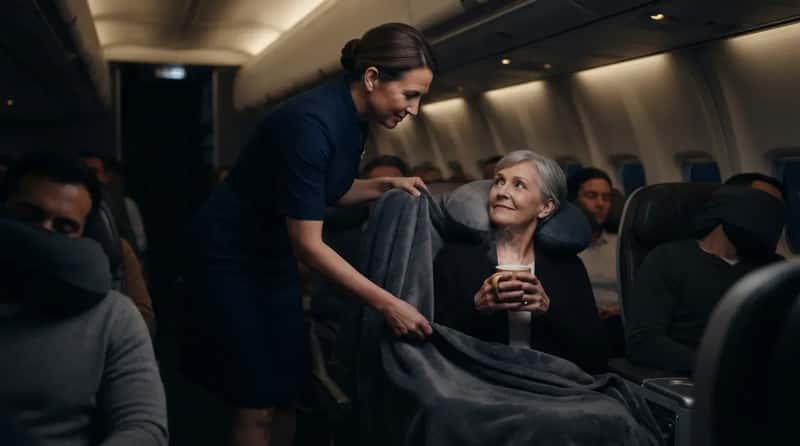
Cabin temperature complaints skew older more than people expect, and supervisors know it. Overnight cabin temperatures fluctuate constantly, and older bodies regulate heat differently than younger ones during long, dry, pressurized flights.
This is where a quiet workaround comes in. Rather than adjusting the whole cabin and annoying half the plane, supervisors often just deliver a warmer blanket or a hot drink directly to the rows where they’ve noticed shivering. It’s a targeted fix disguised as ordinary service, and it solves the complaint before it ever reaches the call button.
#2 – The Wellness Check Disguised as a Drink Round
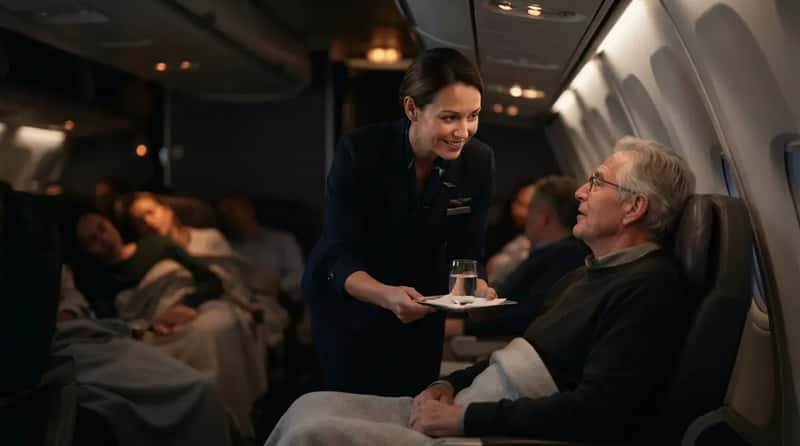
Overnight beverage service does double duty more often than passengers assume. The most common in-flight medical problems are fainting spells, respiratory trouble, and nausea, and older travelers are statistically more likely to experience them on long overnight sectors.
In-flight medical emergencies now occur on roughly 1 in every 212 flights, a rate higher than previously estimated, and that number matters more as the number of seniors flying keeps climbing. A “just checking if you need anything” pass down a dark cabin is frequently a disguised wellness scan, not idle small talk. Supervisors are trained to notice color, posture, and responsiveness during exactly that walk-through.
Fast Facts
- In-flight medical emergencies occur in roughly 1 out of every 212 flights.
- Fainting, respiratory trouble, and nausea top the list of most common in-flight issues.
- Older passengers face elevated risk on long overnight sectors due to reduced mobility.
- Crew are trained to scan color, posture, and responsiveness during routine drink service.
#1 – The Quiet Tab Kept on Solo Travelers All Night
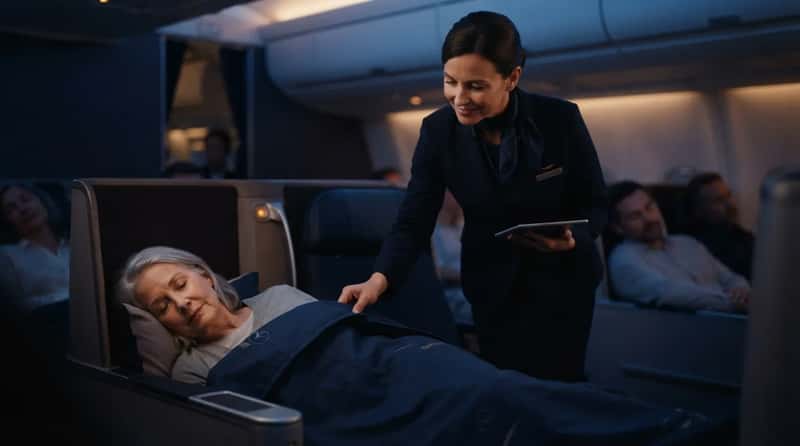
The single biggest thing cabin supervisors sort for older passengers isn’t a blanket or a seat. It’s attention. On overnight sectors, a supervisor will often mentally flag a solo older traveler and check on them slightly more often than anyone else in the row.
That habit connects everything else on this list, the seat, the meal, the wheelchair, the handover note. Roughly one in three senior travelers reports feeling stressed navigating busy trips, and crew know that stress doesn’t disappear once the seatbelt sign turns off. The quietest, least visible thing a supervisor does all night is simply notice, again and again, without ever making it obvious.
None of this shows up in a safety briefing, and none of it gets announced over the PA. It’s built from small, repeated decisions that most passengers never clock, a seat here, a blanket there, a slightly longer glance down a dark aisle.
Add it up over a single overnight flight, and what looks like ordinary service turns out to be a surprisingly deliberate system, running quietly the whole time, right under everyone’s nose.