Picture the scene: you shuffle down to the hotel dining room half-awake, scan the same tray of scrambled eggs and rubbery bacon everyone else is eating, and quietly accept that this is just what hotel breakfast is. Meanwhile, three tables over, a regular guest is eating an omelet that never appeared on the buffet sign, sipping a fresh espresso instead of urn coffee, and walking out the door with a to-go bag someone packed just for them.
The difference between those two mornings isn’t loyalty status or luck. It’s one simple habit almost nobody uses: actually asking. Hotel breakfast staff are sitting on a list of options they’d hand over without hesitation, and most guests never find out because the menu card makes it look like the only choice in the room.
#14 – The Off-Menu Plate Built From Nothing But Your Description
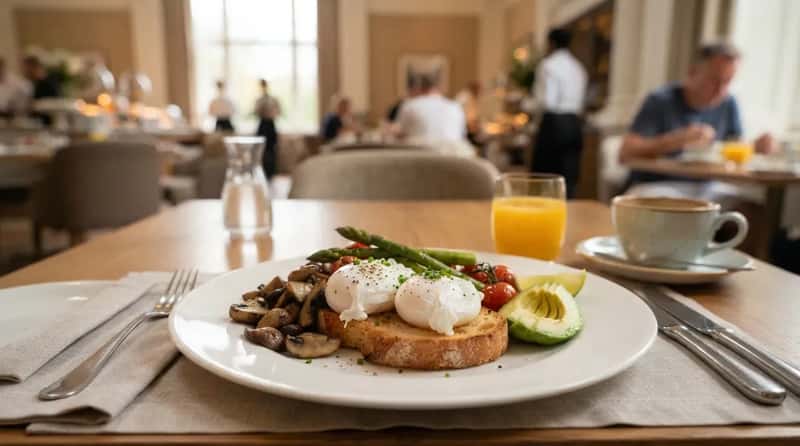
The single biggest secret in hotel dining rooms is that guests can describe a meal they want, and the kitchen will often just build it, even if nothing on the printed menu resembles it. There’s no password or special status required. It’s simply a matter of walking up to a server and saying what sounds good instead of scanning the same laminated card twice.
This tends to work best at full-service hotel restaurants with an actual chef on staff, rather than a strictly buffet-only setup with no kitchen behind it. Regulars, loyalty members, and guests who ask with a specific request in mind get the most yeses. It’s less a written policy than a widespread hospitality instinct, since most staff would rather improvise than watch a guest leave breakfast disappointed.
Worth Knowing
- Full-service kitchens say yes far more often than pure buffet-only setups with no chef on site.
- Being specific works better than being vague – “eggs over easy with the veggies from the omelet station” beats “anything, really.”
- Slower stretches of service (right when the room opens, or right before it closes) tend to get faster yeses.
- It rarely costs extra, since the kitchen is usually using ingredients already prepped for the day.
#13 – A Genuinely Plain Plate for Toddlers and Picky Eaters
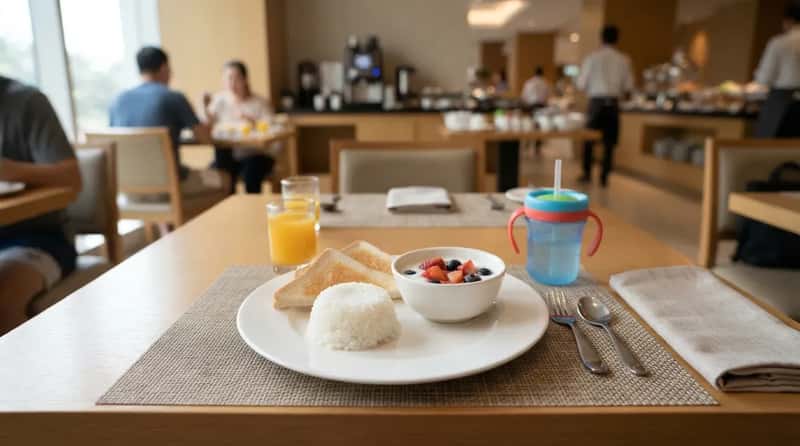
Parents traveling with a toddler who refuses anything touched by hollandaise sauce have more options than the buffet line suggests. Guests with texture issues, kids with narrow palates, or travelers just tired of hotel eggs can often request something that never sees the buffet at all.
Many kitchens will quietly make plain rice, dry toast, or a simple fruit-and-yogurt plate on request, none of which ever shows up on the printed menu card. Hotel kitchens are usually stocked and staffed for far more variety than the buffet lets on. This is one of the most underused off-menu options, mostly because guests assume a buffet means no substitutions, when the opposite is usually true.
#12 – An Allergy-Safe Plate Made in Its Own Clean Pan
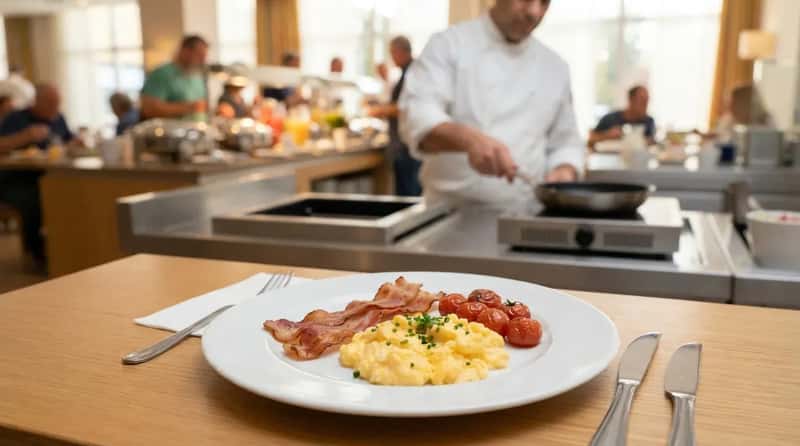
Food allergies feel like a minefield at a self-serve buffet where every serving spoon has already touched three other dishes. It turns out the kitchen behind the scenes is often better prepared for this than the serving line ever lets on.
Large hotels serving hundreds of breakfasts a day frequently already prep allergy-safe batches for staff or catering needs, and asking a few hours ahead can get a dish made in a separate, freshly cleaned pan. This isn’t a formal accommodation program at most properties. It’s a practical habit built over years of guests with real dietary restrictions simply walking up and asking directly instead of gambling on the buffet.
Fast Facts
- Roughly 33 million people in the U.S. – about 1 in 11 – live with a food allergy, a number that has been climbing for years.
- Eight foods are responsible for the vast majority of allergic reactions nationwide, so most kitchens already know exactly what to isolate.
- A few hours’ notice before breakfast service almost always beats trying to flag someone down mid-rush.
- Asking for a dish “made in a clean pan, separate from the buffet” is specific enough that staff know exactly what you mean.
#11 – The “Kids Portion” That Adults Order All the Time
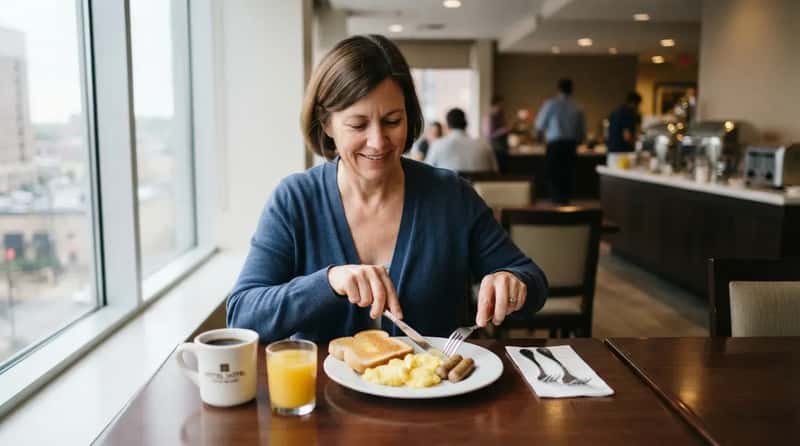
Nobody actually enforces the age limit on the kids’ menu as strictly as the wording suggests. Smaller portions, smaller appetites, and smaller budgets all drive this request, and staff rarely police the “kids only” rule the way the menu implies.
As long as it’s not abused for a full table of adults, one or two off-menu kid portions typically slide through without a second glance. This is especially common with solo travelers who don’t want a massive entrée first thing in the morning, or anyone who just wants two eggs and toast without committing to the full spread.
#10 – The Mashup Plate Hiding in Plain Sight
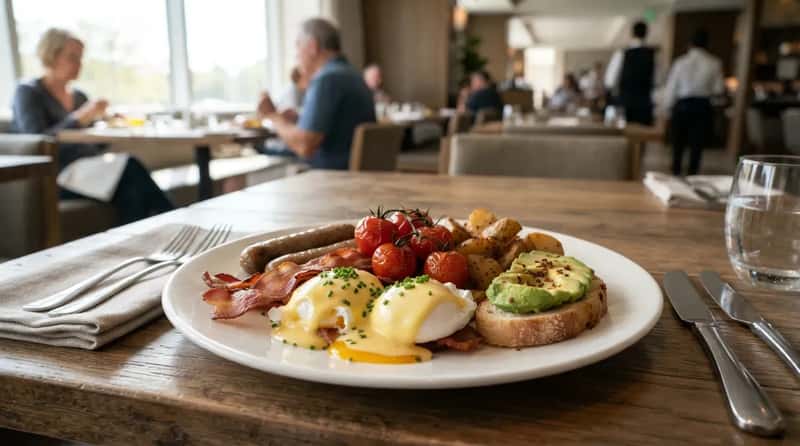
Two separate menu items can often become one, and almost no one thinks to ask for it. This is the request that surprises people most: if two dishes share ingredients, many kitchens will happily mix and match them into something that technically isn’t listed anywhere on the card.
Staff say the kitchen already has everything it needs on hand, so combining the eggs from one plate with the sides from another usually isn’t a big ask. It works best at hotels with a full in-house kitchen rather than outsourced food service. Dropping the “that’s not how the menu works” mindset can quietly turn an average breakfast into exactly what you actually wanted.
#9 – A To-Go Cup for the Road, No Questions Asked
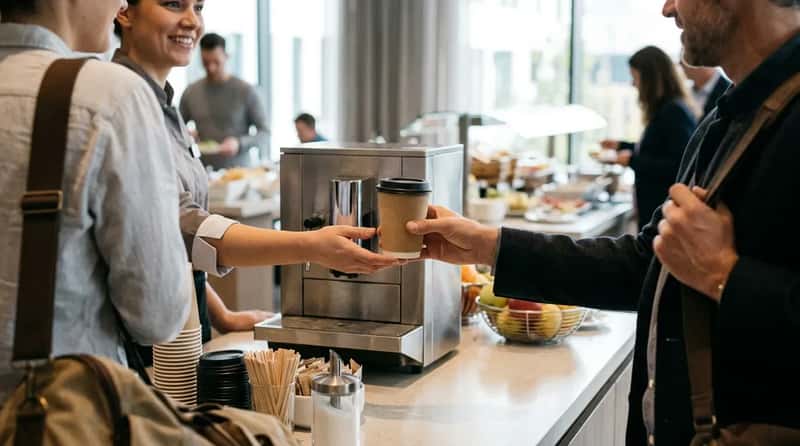
This one is almost embarrassingly simple, and yet most guests walk right past it every single morning. If your coffee comes from a self-pour station or machine, you can ask for a to-go cup, and most hotels have them stashed nearby, meaning a free refill for your onward journey.
Staff rarely mention this unprompted because it feels like something guests should already know. But for anyone racing to check out or catch a flight, a five-second request at the coffee station saves both time and money at the overpriced airport kiosk later.
#8 – Real Espresso Instead of the Lobby Urn
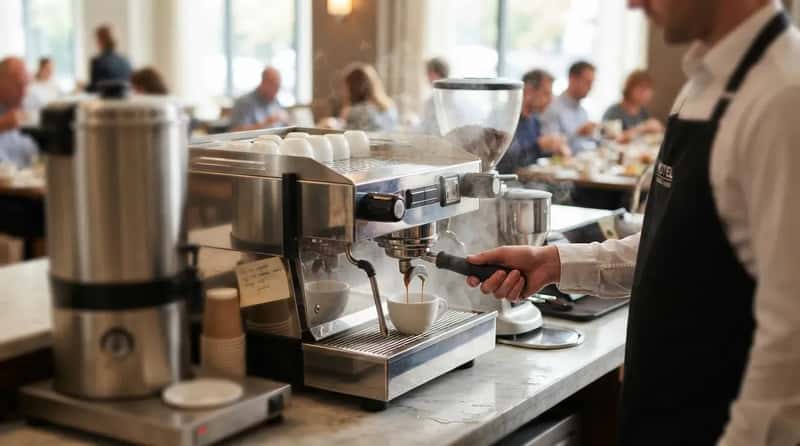
The coffee sitting in that giant silver urn isn’t always as fresh as it looks, and staff usually know it. That coffee has often been brewing for hours, and it’s one of the highest-markup items on the whole breakfast menu, meaning guests can end up paying a premium for quality that simply isn’t there anymore.
If you’d rather have an espresso, a French press with fresh grounds, or hot water for your own tea bag, say so when you order. Most kitchens can accommodate it, but they won’t offer it unless asked. Plenty of properties with a proper espresso machine will pull a fresh shot on request even though it never appears on the printed breakfast list.
Quick Compare
- Lobby urn coffee: sits for hours, no request needed, but often tastes tired by mid-morning.
- Fresh espresso or French press: made on request, ready in a few minutes, noticeably stronger and fresher.
- Hot water for your own tea: almost always available instantly, just rarely advertised.
#7 – A Comped Breakfast Voucher When It Isn’t Included
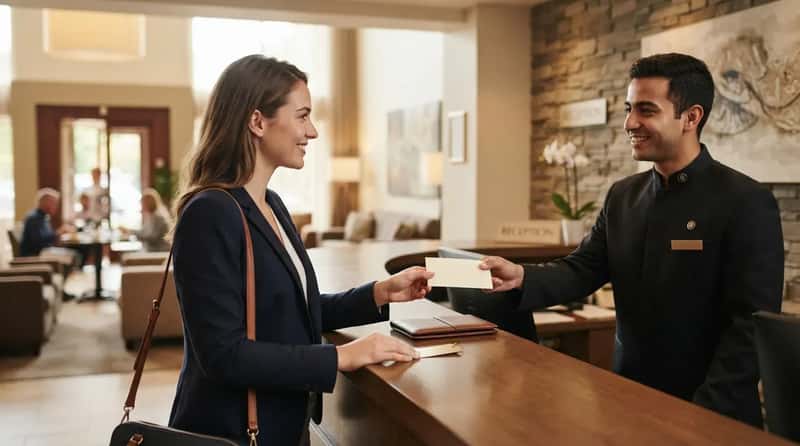
Booking a room without breakfast included doesn’t necessarily mean paying full price to eat downstairs. Guests can sometimes get a comped or discounted breakfast at the in-house restaurant, or even room service, just by asking politely at check-in, and breakfast credits show up more often than expected, especially at boutique properties.
A simple script works surprisingly often: “Would it be possible to have a breakfast voucher added to my room? I’d love to try your restaurant before heading out.” This isn’t reserved for elite loyalty tiers. It’s a front-desk judgment call, and front desk staff make that call far more often than most guests assume.
#6 – Pantry Snacks That Never Touch the Buffet Table
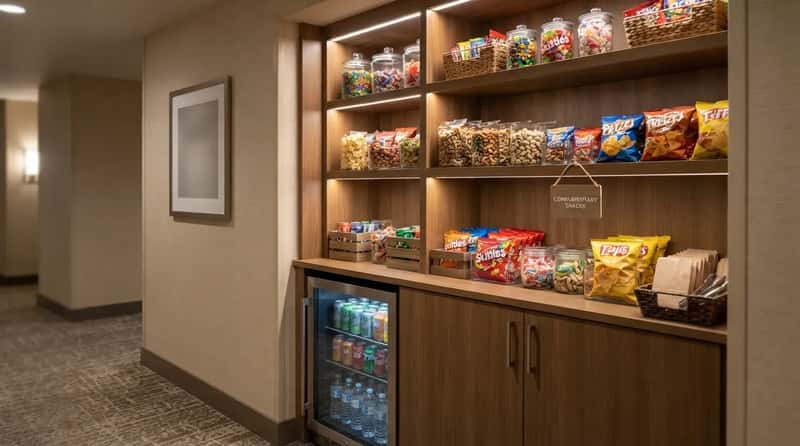
Some hotels are quietly stocked well beyond what shows up at the breakfast spread each morning. Guests often assume certain perks are reserved for club-level members, but some hotels also run complimentary snack setups for everyone, including a candy closet at boutique properties or a pantry on each floor with unlimited drinks and snacks like nuts, chips, popcorn, and candy.
Staff working the breakfast shift usually know exactly where this stash lives, even when it isn’t listed on the amenities sheet in the room. Simply asking about “any extra snacks somewhere on property” is often enough to get pointed in the right direction.
#5 – A Made-to-Order Omelet That Isn’t on the Buffet Sign
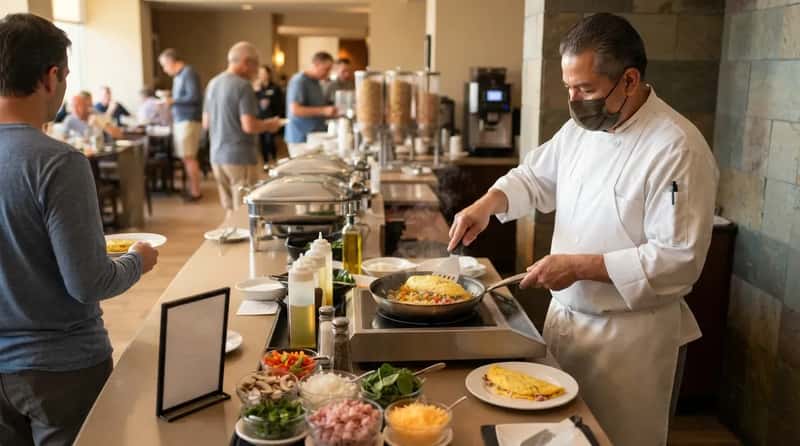
Plenty of properties quietly run an omelet station without ever printing it on the buffet signage out front. Not every buffet advertises omelets, but when one is available, it’s one of the best ways to guarantee a meal made fresh, exactly to your liking, with nothing added that you don’t want.
Whether the station appears depends heavily on staffing that particular morning, which is exactly why it doesn’t always make the printed sign. A quick question to whoever’s running the hot line, “any chance of an omelet today?”, often surfaces a station that wasn’t obvious from across the room.
#4 – A Container for the Food You Didn’t Finish
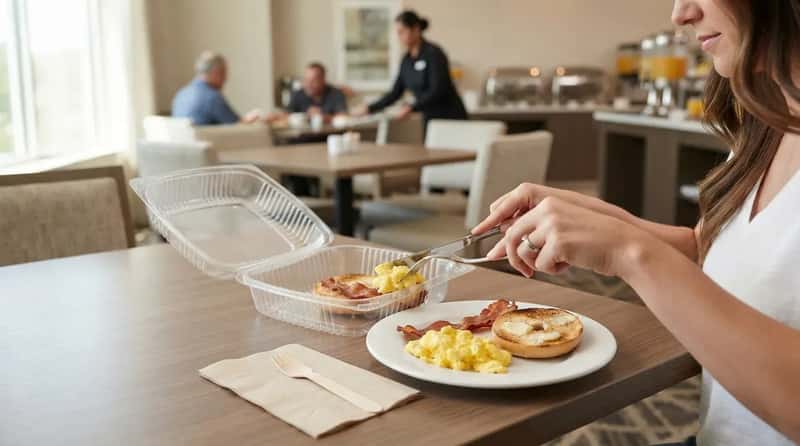
Hotel breakfast portions are often bigger than anyone eating alone actually needs, and taking the extra with you is more normal than it feels. Staff keep takeout containers stocked because guests ask for them constantly, especially with generous hotel portions, and it’s an automatic yes almost everywhere.
This becomes especially useful on travel days, when a guest wants to save half a meal for the airport or the road. A simple mention when the tray gets cleared is usually all it takes. Most attendants would genuinely rather see food packed up than scraped straight into the trash at the end of service.
#3 – Doggie Breakfast Plates at Pet-Friendly Properties
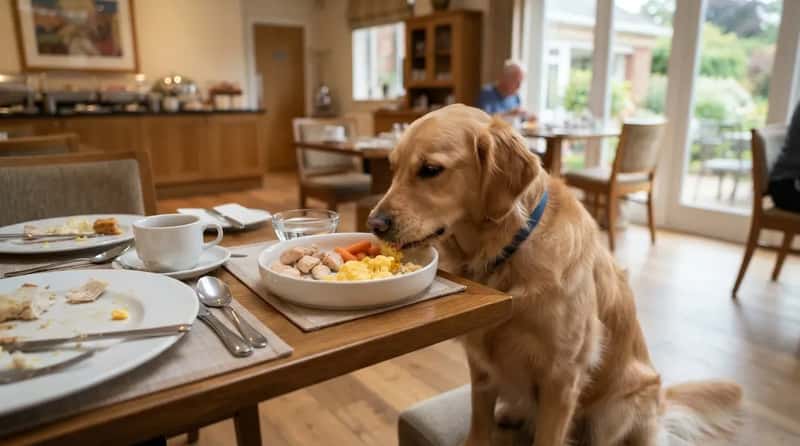
Traveling with a dog used to mean smuggling kibble in a carry-on, but pet-friendly hotels have quietly gotten more accommodating than that. Some properties now put together simple doggie breakfast plates, built from plain proteins already sitting in the kitchen rather than anything specially purchased just for pets.
This isn’t a universal perk, and it depends entirely on the property’s pet policy and kitchen setup that particular day. But at hotels that actively market themselves as dog-friendly, staff are far more used to the request than travelers expect, and a plain scrambled egg or piece of unseasoned chicken is rarely a heavy lift for the kitchen.
Why It Stands Out
- An estimated 75% of U.S. hotels across luxury, midscale, and economy tiers now welcome pets, so the request lands more often than travelers expect.
- Dogs make up the large majority of hotel pet guests, so kitchens are more used to the ask than to cats or other animals.
- Doggie plates are almost always plain proteins already in the walk-in, not special pet food purchased separately.
- Availability still depends on that day’s staffing and the property’s specific pet policy.
#2 – The Early-Checkout Breakfast Bag Nobody Advertises
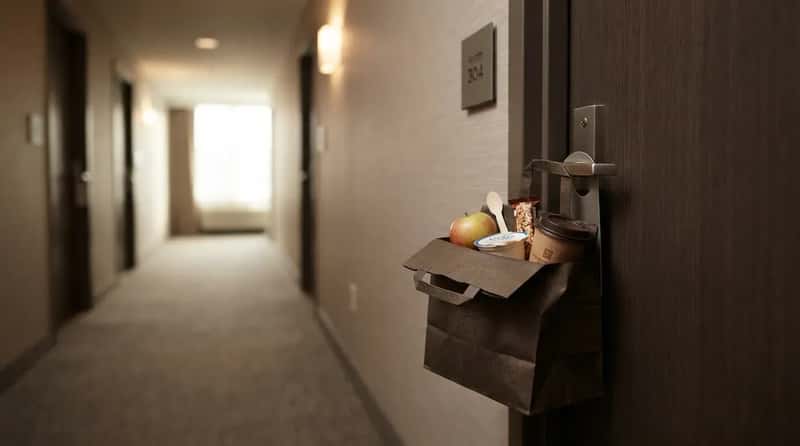
Guests leaving before the buffet even opens usually assume they simply miss out, but some properties have quietly built a workaround. Housekeeping can pick up a breakfast order left outside a guest’s door and bring it to the kitchen so prep starts early, meaning someone checking out at 8 a.m. still gets a fresh breakfast to go.
At more tech-forward properties, this system has gone digital. Some hotels use an in-room tablet that functions as a personal concierge, tied into everything from spa bookings to room service, letting a guest who has to leave before breakfast service put in a request for a “small” breakfast ahead of time. The catch is that nobody tells you this exists unless you ask the front desk directly.
#1 – The Night-Before Order That Beats Every Alarm Clock
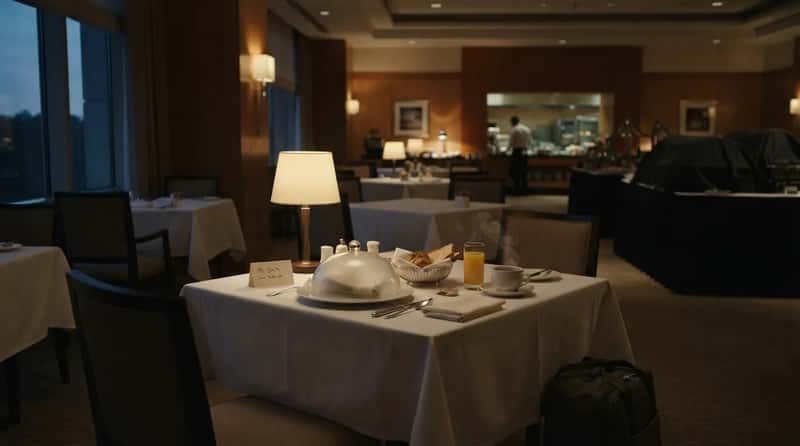
Of everything on this list, this is the one that feels the most like a hidden industry secret hiding in plain sight. Guests leaving before breakfast service opens can put in a request the night before, choosing from a short menu and noting exactly what time they’ll be down to eat.
It solves the oldest complaint in hotel dining: waking up at 5 a.m. for a flight only to find the restaurant dark and the buffet untouched. Instead of settling for a granola bar from the front desk drawer, a five-minute conversation the evening before can turn an empty dining room into a genuinely warm plate waiting exactly when you need it.
At a Glance
- Ask at check-in or during dinner service the evening before your early departure.
- Pick from a short next-morning menu, even if it’s shorter than the regular buffet.
- Give an exact time you’ll be down, or where you’d like the food left.
- Skip the vending-machine breakfast and get a real plate instead.
None of this requires elite status, a special app, or years of hotel-points loyalty. It just requires treating breakfast staff like people who actually want to help, not vending machines that only respond to what’s already printed on the card.
The next time a hotel breakfast looks smaller than you hoped, remember that the real menu is often the conversation you never started. What’s the strangest thing a hotel kitchen has ever made for you off the books? Tell us in the comments.