Watch a docent long enough and you’ll catch something odd. Around a twenty-something couple, they’re brisk, efficient, reciting dates and dimensions. Around a retiree who’s slowed near the stairs, the whole energy shifts – softer voice, a hand hovering near an elbow, a sudden detour toward a bench that wasn’t on the map. Nobody announces the switch. It just happens.
Most visitors walk right past this without noticing, because it’s built to be invisible. But underneath the polite small talk and the “right this way,” there’s an entire unwritten playbook docents use only for guests over 60 – and once you know what to look for, you’ll never see a museum tour the same way again.
14 – The Bench Detour Nobody Announces
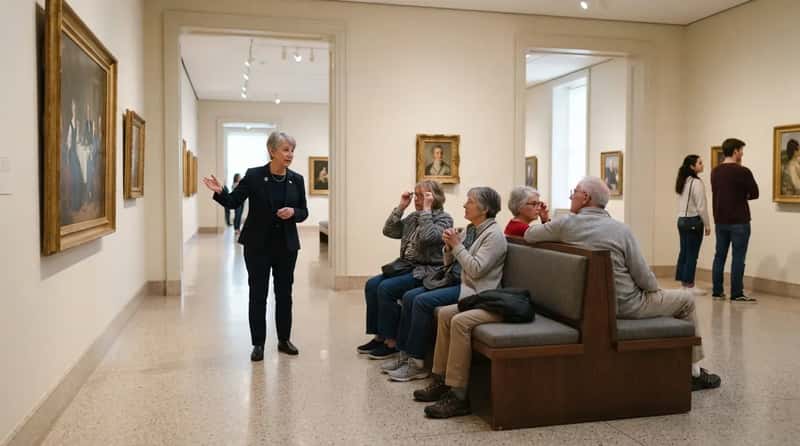
Docents will quietly reroute an entire tour just to pass a bench, even if it means skipping a gallery that’s technically on the schedule. It looks like wandering. It isn’t. Museums have deliberately built extra seating into their floor plans with older visitors in mind, and staff know the location of every single one.
A tour for a group of college students goes in a straight line, gallery to gallery, no stops. The same tour for a group of retirees turns into something closer to a rest-stop circuit dressed up as an art walk – and almost nobody in the group realizes that’s the actual reason for the zigzag.
Fast Facts
- Extra seating is often built into gallery floor plans specifically with older visitors in mind
- Docents typically know the location of every bench in the building
- A straight-line student tour can become a quiet rest-stop circuit for a retiree group
- The detour is rarely mentioned out loud, even as it reshapes the whole route
13 – The Folding Stool Hand-Off
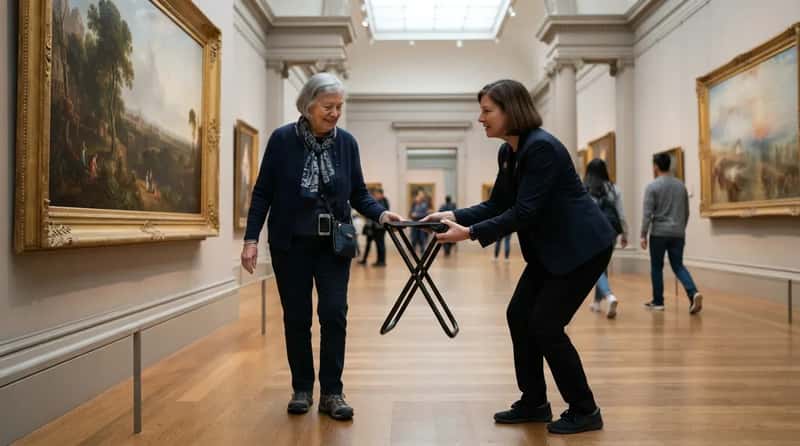
Before a visitor even has to ask, a docent will sometimes just appear with a portable stool. It’s a tiny gesture that barely registers in the moment, but it can be the difference between someone enjoying an hour of art and someone gritting their teeth through it.
At the Met, seating is built into the galleries throughout the building, and visitors with disabilities can borrow a stool right at the entrance or ask at the Admissions Desk. Docents rarely broadcast this to a whole group – they mention it the moment they notice someone shifting their weight or wincing near the end of a long room.
12 – The Quiet Gallery Reroute
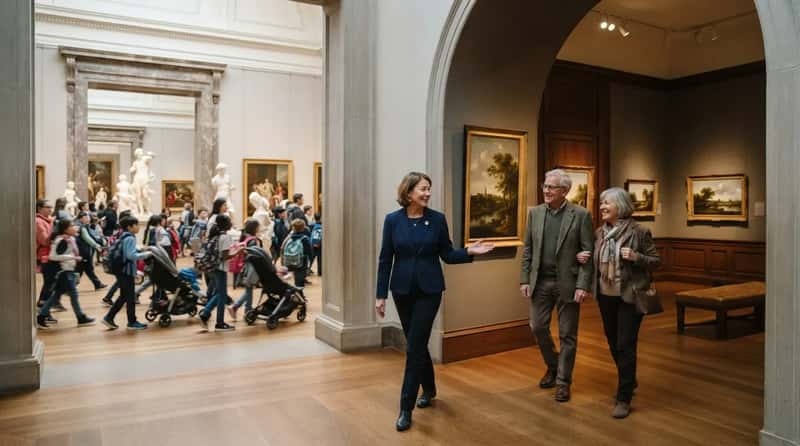
When a museum turns loud – school groups, strollers, someone’s phone ringing – docents will steer older visitors toward the calmer wings without making an announcement about it. It’s not about disability. It’s about not having to shout a story about a 400-year-old painting over a field trip.
Some museums even print large-format guides marking quiet spaces, low-light rooms, and dedicated hands-on areas. Certain institutions run official “Quiet Hours,” specific windows when lights get dimmed and background noise gets deliberately cut. Docents who track that schedule will nudge their regulars toward those exact hours.
11 – The Skip-the-Line Nod
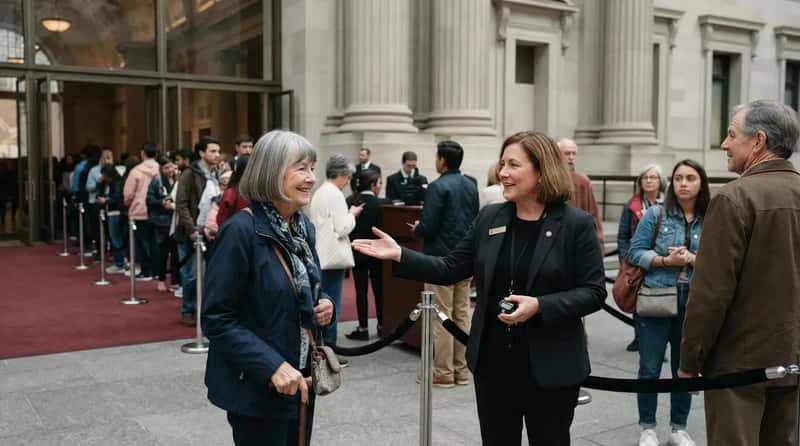
A twenty-minute wait in a snaking entrance line is annoying at any age. For someone with a bad hip, it can ruin the whole visit before it starts. Docents and front-line staff have quietly gotten in the habit of waving certain visitors straight past the queue.
Most major museums actually have a formal policy for this – if a visitor can’t stand comfortably in line, they’re told to simply flag down a staff member. The catch is almost nobody over 60 knows that rule exists, so docents have started mentioning it before anyone even has to ask.
10 – The Wheelchair Concierge Treatment
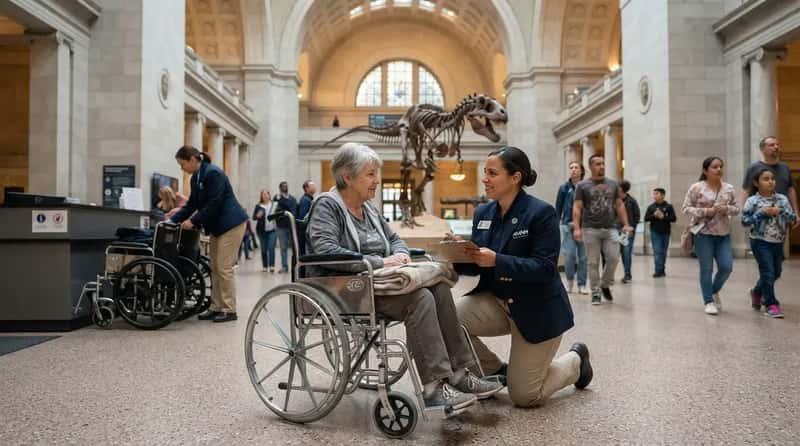
Borrowing a wheelchair sounds like a two-second transaction, but at big museums it’s practically a hand-off ceremony. Staff will walk a hesitant visitor through the entire process personally instead of pointing at a rack and disappearing, because plenty of first-time wheelchair users feel a flash of embarrassment asking for help.
At the American Museum of Natural History, manual wheelchairs are free and available first-come, first-served through Security, with just a photo ID and phone number needed to check one out. Docents who notice someone struggling will often walk them straight to that desk instead of vaguely gesturing across the lobby.
9 – The Discount Whisper
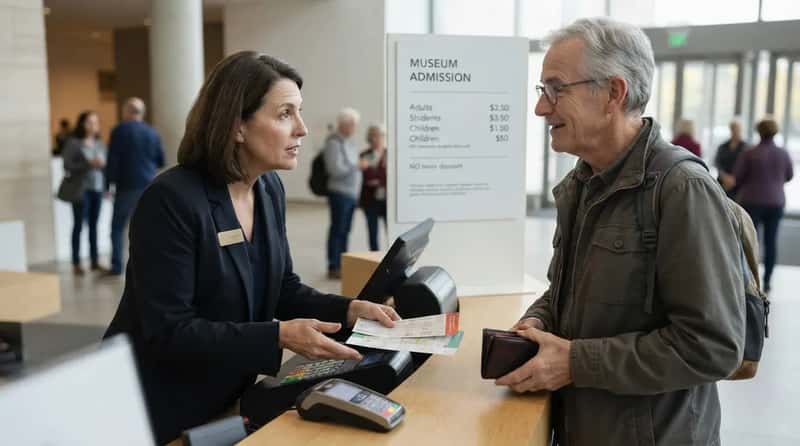
Here’s the part almost nobody says out loud: some senior discounts kick in years earlier than most people assume. Docents working the front desk will often mention it only if a visitor “looks the part” – which means a surprising number of eligible guests are quietly overpaying for years without knowing it.
Some senior pricing doesn’t start until 65, but plenty of museums quietly set the bar at 60. Younger visitors never hear this conversation, because it happens in a low voice at the ticket counter, not printed anywhere on the sign above it.
Quick Compare
- Standard senior discount age at many institutions: 65
- Quiet cutoff at plenty of other museums: 60
- Printed clearly on the pricing sign: rarely
- Where the real answer usually surfaces: a low voice at the ticket counter
8 – The Companion Ticket Trick
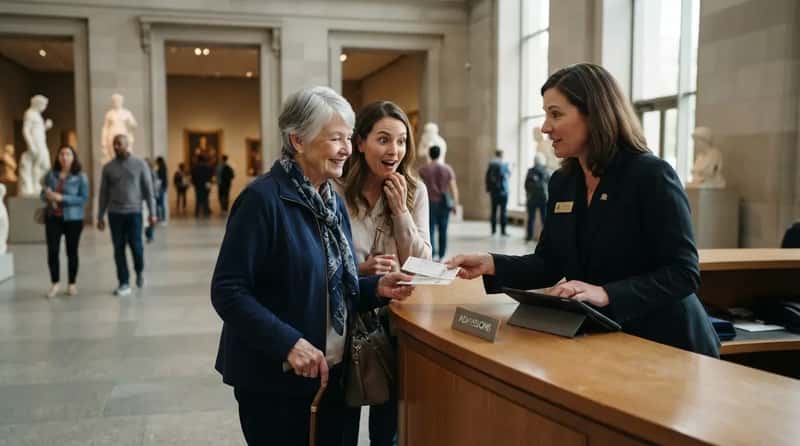
Traveling with someone who needs extra help getting around a museum can turn a simple outing into an expensive one fast. Docents and admissions staff will sometimes flag a lesser-known rule that quietly turns a two-ticket visit into a one-ticket visit.
A caregiver accompanying a visitor with a disability often gets in for free – but only if it’s requested when the rest of the tickets are booked. It’s almost never advertised at the door. Most families only discover it because a docent brings it up after noticing someone helping an older relative through the entrance.
7 – The Armrest Upgrade
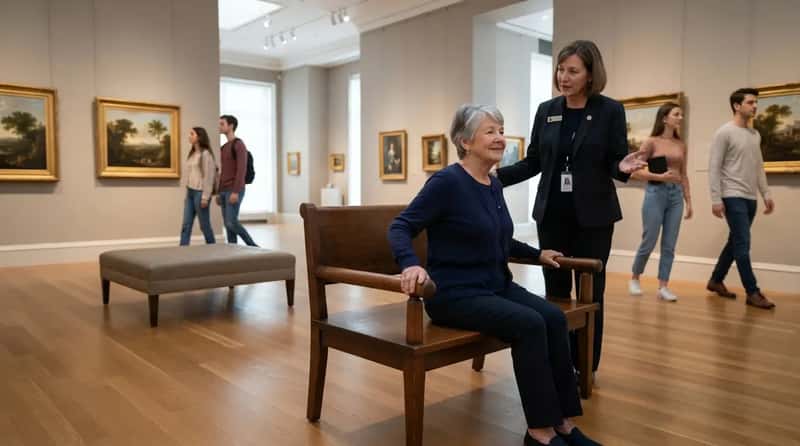
Not every bench in a museum is created equal, and docents know exactly which ones are the “good” seats. A backless bench looks elegant in a gallery photo. It’s genuinely useless for someone who needs help pushing themselves back up.
Armrests matter enormously for anyone with mobility challenges, and docents quietly steer older visitors toward those specific benches rather than whatever seat happens to be closest. The difference between a bench with arms and one without can decide whether a rest stop actually works.
6 – The Slower Pace Nobody Mentions Out Loud
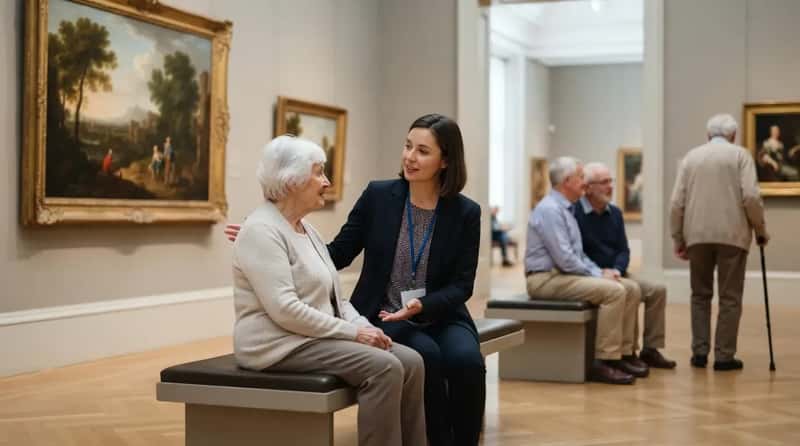
Ask a docent off the record and they’ll admit tours for older groups run on a completely different clock. A route that takes forty minutes for a school group can stretch past an hour for a group of retirees – and it’s intentional, not an accident of scheduling.
Fatigue is real, and staff plan around it constantly. Guidance built for older visitors often recommends a two-to-three-hour visit instead of an all-day marathon, specifically because of energy limits. A docent who spots tired legs will just quietly shorten the route without ever announcing the change.
At a Glance
- Same route, school group pace: around 40 minutes
- Same route, retiree group pace: often well over an hour
- Recommended visit length for older guests: two to three hours, not an all-day marathon
- Docent’s quiet fix for tired legs: trimming the route, no announcement needed
5 – The Nostalgia Bridge
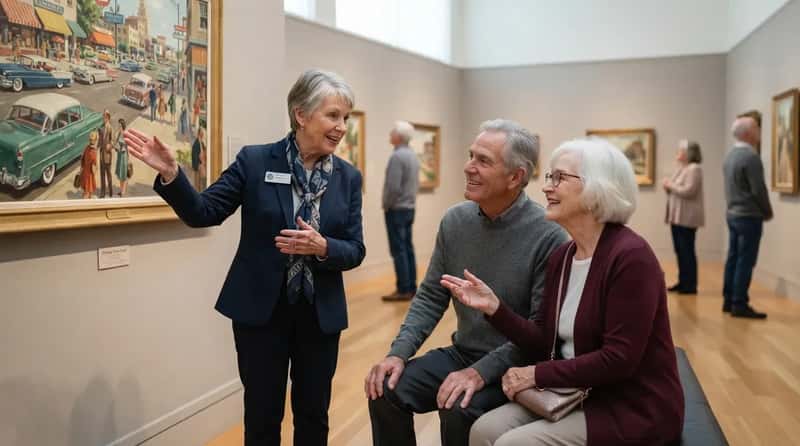
This is the one that catches people off guard: docents will rewrite their entire script depending on the decade a visitor grew up in. A painting from the 1950s gets one story for a college student and a completely different one for someone who actually lived through that decade.
It’s not written down anywhere – it’s instinct built from years of watching faces change. A good docent will connect an exhibit to a visitor’s own memories, turning a static object behind glass into something personal. Younger guests get the history lesson. Older guests sometimes get a conversation that feels like it’s secretly about their own life.
4 – The Touch-Table Invitation
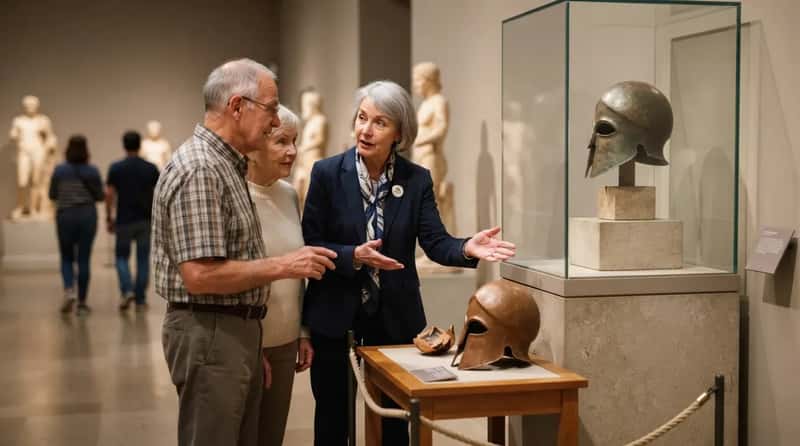
Certain museums quietly bend the “don’t touch” rule for specific visitors, offering a hands-on replica instead of just talking about the real object sealed behind glass. It’s a small workaround, but it can turn a passive walk-through into something a visitor actually remembers.
Museums increasingly build tactile exhibits for visitors with visual or sensory needs, and those same accessibility techniques have quietly reshaped how docents present information to everyone. Older visitors dealing with vision changes are often the quiet beneficiaries of this shift, without ever being told that’s where it started.
3 – The Quiet Room Referral
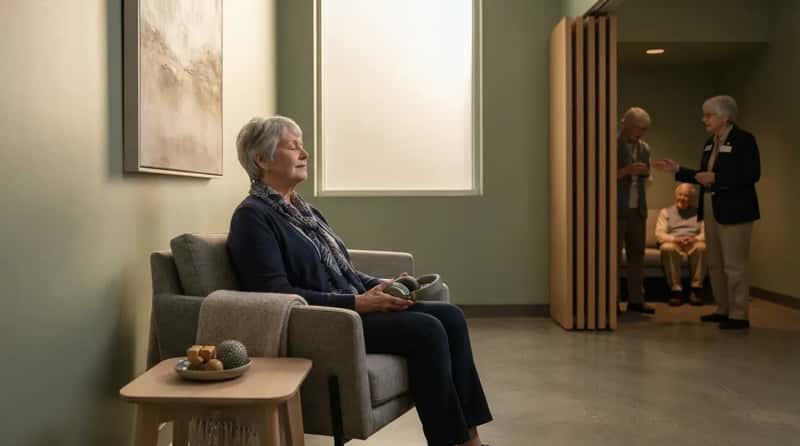
When a gallery gets overwhelming – too bright, too loud, too packed – some docents have started steering certain visitors toward a room most people don’t even know exists. It’s not a break room with vending machines. It’s an actual, deliberately designed decompression space.
At the Cincinnati Art Museum, sensory headphones and fidget tools are available to borrow at the front desk, and quiet galleries are tucked throughout the building. Docents almost never advertise this to a crowd – it gets mentioned quietly, one-on-one, only to the visitor who seems like they actually need it.
Worth Knowing
- Sensory headphones and fidget tools can be borrowed at some museum front desks
- Quiet galleries are often tucked away from the main traffic flow, not marked on the main map
- These spaces are built for decompression, not just a bench and a vending machine
- The referral almost always happens one-on-one, never announced to a full group
2 – The One-on-One Slowdown
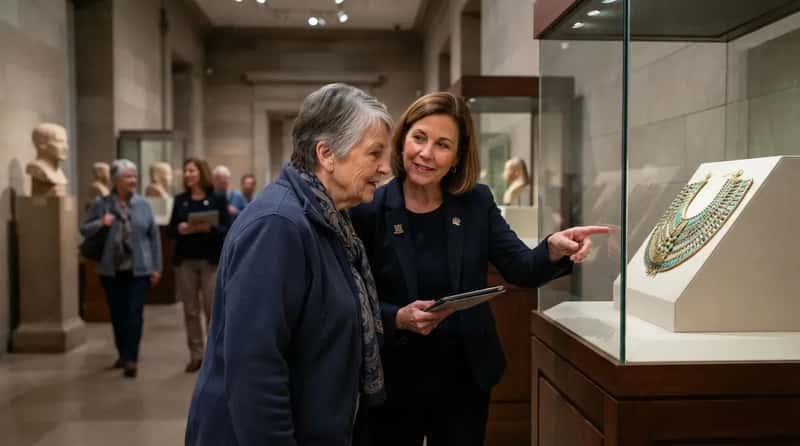
Something strange happens on tours made up mostly of older visitors: the group naturally splits, and the docent ends up spending real one-on-one time with whoever falls a step behind. A fast-moving group of twenty-somethings almost never gets this at all.
It’s not favoritism – it’s pacing. A docent trained to notice hesitation, fatigue, or genuine curiosity will slow down for the person asking the real questions instead of rushing to keep the pack together. Visitors over 60 frequently walk away with stories and details a rushed group of younger visitors never even hears mentioned.
1 – The Off-Script Personal Story

This is the one docents almost never admit to outright: they save their best, most personal stories for whoever actually lingers. A rushed group gets the plaque information, word for word. A visitor who stops, asks a real question, and clearly isn’t in a hurry gets something else entirely – an unscripted memory the docent doesn’t hand out to everyone.
People don’t remember what you told them. They remember how you made them feel.
Carl W. Buehner
It happens more with older visitors simply because they’re statistically more likely to slow down and actually engage, rather than snap a photo and move to the next room. It’s not a rule written anywhere. It’s just what surfaces when someone finally has the time to truly listen.
None of this lives on a plaque or in a brochure. It’s built from small, human decisions – a docent clocking tired legs, a quiet nod past a long line, a story held back until someone finally stops to listen. Most visitors over 60 never even realize they’re getting a different museum than everyone else; they just notice the place somehow feels easier, warmer, slower in the best possible way.
Maybe that’s the real lesson hiding in all this. It was never about age. It was about who slowed down long enough to be seen.