Most travelers assume a delay means everyone gets treated exactly the same: same bench, same announcement, same shrug from the guy in the vest. But platform staff have quietly built a whole second system that kicks in the moment a delay stretches past twenty minutes, and it almost never runs through the loudspeaker.
Talk to enough conductors, station agents, and Red Cap porters, and the same stories keep surfacing about who actually gets looked after first when a train sits dead on the tracks for hours. Here’s what insiders actually say happens once the delay boards light up red.
#14 – The Silent Scan for Anyone Standing Too Long
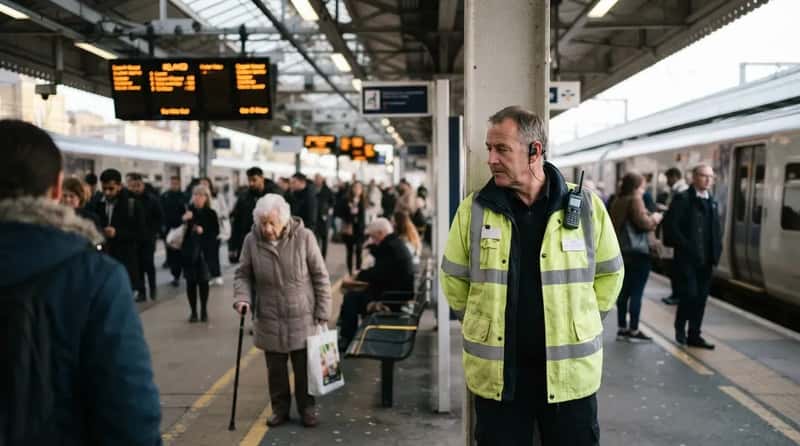
Veteran platform staff say the first move during a delay isn’t an announcement, it’s a visual sweep of the crowd. Agents are trained to spot passengers who look unsteady on their feet or who’ve been standing at the same spot too long, and older riders top that mental checklist almost automatically.
It sounds simple, but staff describe it as the single habit that prevents the most incidents. A passenger who’s been standing for 40 minutes gets flagged internally long before they ever say a word. That instinct is what triggers almost everything else on this list.
#13 – A Seat Gets “Found” Before Anyone Has to Ask
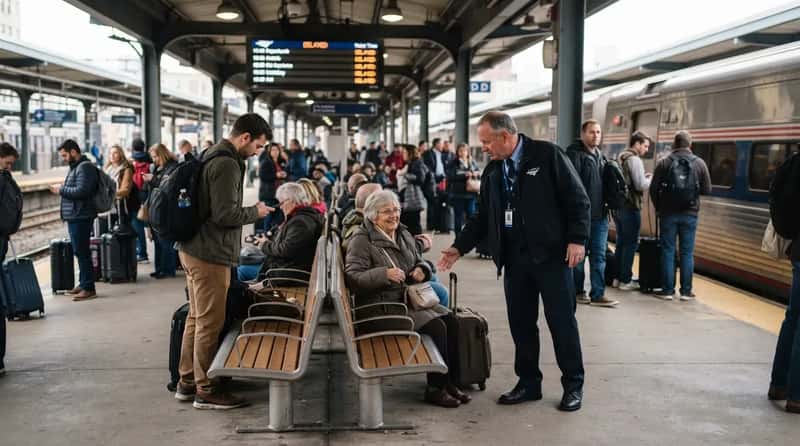
When benches fill up during a long delay, staff quietly start relocating people rather than waiting for a complaint. Passengers over 60 are often steered toward whatever seating exists near an accessible route, even if it means asking someone younger to shift over first.
Nobody makes an announcement about it. The reshuffling usually happens in under two minutes, before the delay is even confirmed on the boards. It’s a small move, but it buys staff time to handle bigger problems as the wait drags on.
Fast Facts
- Amtrak’s standard senior discount is 10% off most fares, and it doesn’t kick in until age 65.
- On routes operated jointly with VIA Rail Canada, that same 10% discount applies to travelers 60 and over, which lines up with the age range this whole list focuses on.
- Seniors 65 and up can save 50% on the Downeaster route in New England, one of the steepest senior discounts on the entire network.
- None of these discounts change how staff treat someone during a delay, but they show how age-based rules already run quietly through the whole system.
#12 – Medication and Water Checks, Asked Quietly
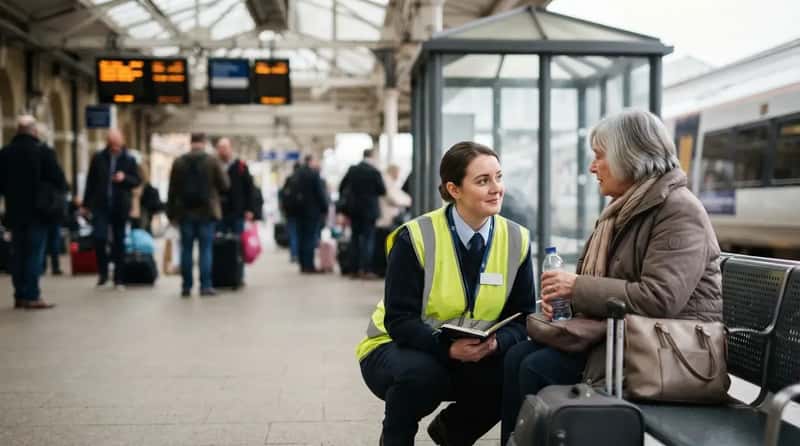
Staff say the question “do you have everything you need with you?” is a coded way of checking whether an older passenger is carrying essential medication, especially once a delay crosses the one-hour mark. It’s phrased casually so nobody feels singled out.
This habit exists because delays can strand people far from a pharmacy or even a working water fountain. Staff have been trained for years to treat medication access as a higher priority than comfort complaints. It’s one of the quietest but most consequential checks on this entire list.
#11 – A Private Word With the Conductor Before Boarding
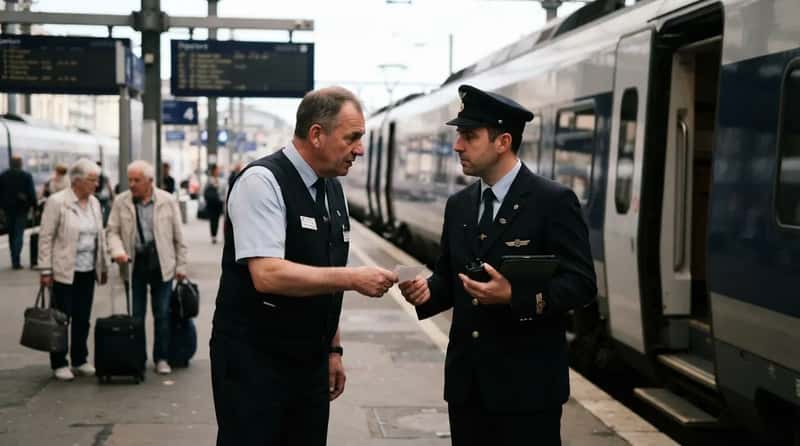
Ground staff frequently pass information up the chain before an older passenger ever boards, flagging a mobility need, a specific stop, or a request for extra time. It means the next staff member already knows the situation instead of asking the passenger to explain it all over again.
The handoff itself is almost invisible. A note gets passed to a colleague down the line, sometimes just a name and a seat number, and the passenger never sees it happen. It’s coordination nobody outside the crew ever notices, but it’s why some travelers swear staff “already knew” before they said a thing.
#10 – Being Walked to the Wheelchair or Cart Without Asking
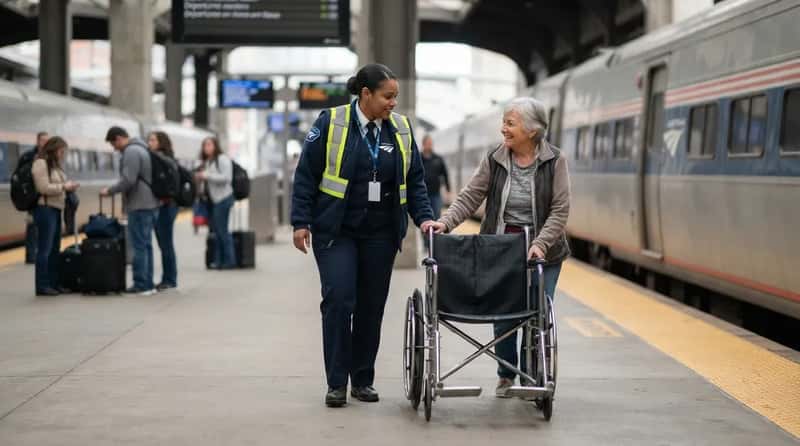
Major stations keep courtesy wheelchairs and carts on standby, and staff are quick to offer one to older passengers during a long delay rather than waiting for a request. Courtesy wheelchairs are available at most of Amtrak’s staffed stations, and larger stations have a passenger service office where you can request assistance.
Riders who’ve used a cart during a delay describe staff appearing with it before they’ve said a word. The cart offer often shows up specifically when a delay means extra walking to a new platform or gate. It’s one of the few pieces of assistance that’s fully visible, yet most passengers never realize how quickly it can be arranged on the spot.
#9 – Rerouting Around Stairs the Moment a Platform Changes

When a delay forces a last-minute platform switch, older passengers are the ones staff worry about most, because a sudden gate change can mean stairs where there used to be an elevator. Staff quietly reroute these passengers toward ramps or lifts instead of letting them follow the general crowd.
This isn’t a formal policy line item, it’s judgment built from experience. Staff say platform changes during delays cause more real injuries among older riders than the delay itself. That’s exactly why this quiet redirect happens before most people even notice the gate number changed.
#8 – A Direct Line to the Passenger Service Office Instead of the Queue

Bigger stations keep a passenger service office specifically for handling accessibility and assistance requests, and staff will often walk an older traveler straight there instead of leaving them in a general customer service line. The best way to guarantee this help is to request it when booking, which can include a station-provided wheelchair or assistance from a uniformed staff member.
During a delay, that office becomes a quiet refuge from the chaos of the main concourse. Passengers who ask for this help rarely realize it exists until a staff member mentions it. It’s the difference between standing in a slow-moving crowd and sitting somewhere calm while the situation gets sorted.
#7 – Priority Access to the Lounge, Even Without a Sleeper Ticket
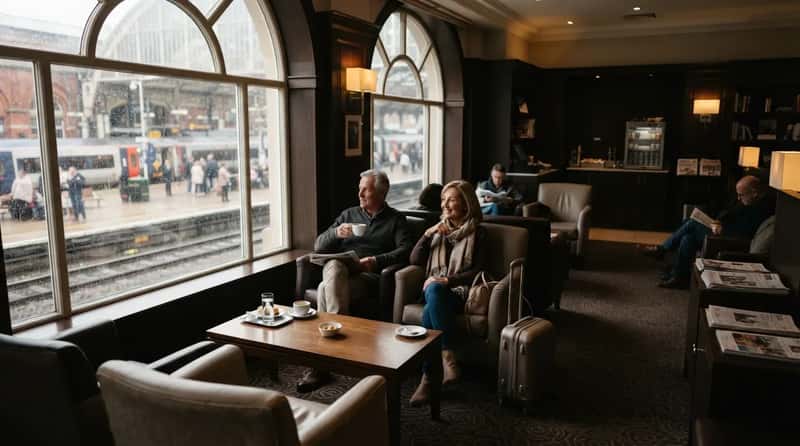
Station lounges are usually reserved for premium ticket holders, but staff have been known to bend that rule during long delays for older travelers who look like they need to sit somewhere quiet. These lounges offer comfortable seating, refreshments, access to a dedicated agent, and free WiFi.
It’s not advertised anywhere, and it’s not guaranteed every time. Some staff describe it as an unofficial workaround they use specifically when a delay stretches past two hours. For a passenger dealing with a long, uncertain wait, it can turn a miserable afternoon into a manageable one.
#6 – One-on-One Updates Instead of Relying on the Loudspeaker
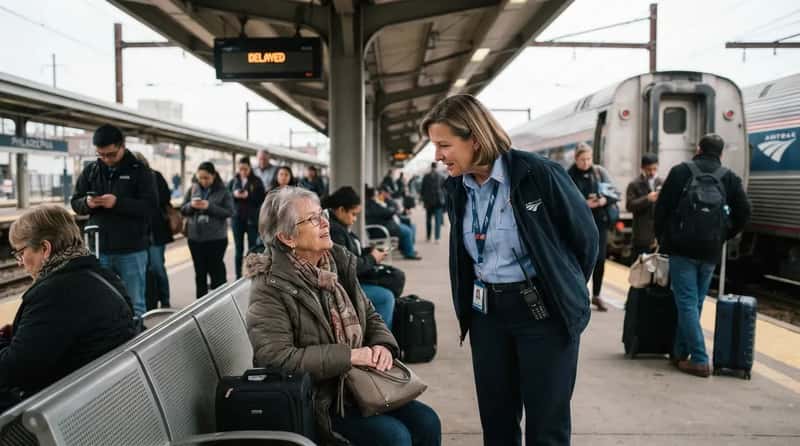
Overhead announcements are often too fast, too muffled, or simply missed by someone who stepped away or has hearing difficulty. Staff have quietly started walking up to older passengers individually during long delays to repeat the update in plain language.
Amtrak commits to timely notification through PA announcements and display screens, but staff supplement that with direct conversation when they sense someone missed it. A one-on-one update takes ten seconds and prevents an older passenger from panicking about a train they never actually missed.
#5 – Discreetly Protecting a Connecting Train
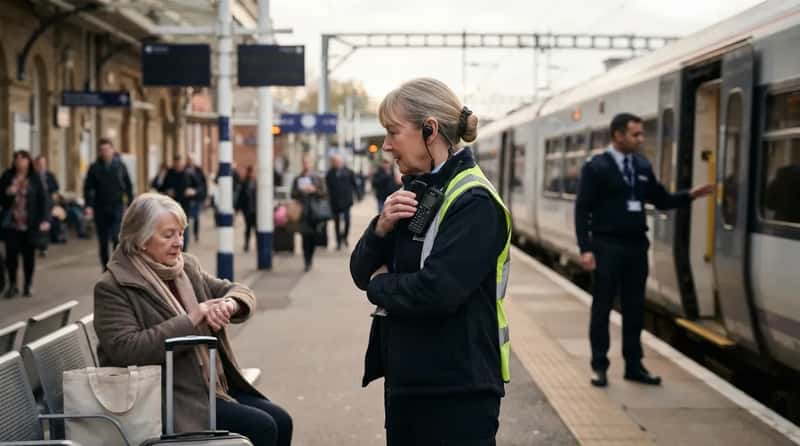
When a delay threatens to blow a connection, staff quietly flag certain passengers to their colleagues down the line so the connecting train knows to expect a slower boarder. It’s a courtesy that almost never gets explained to the passenger directly.
Staff describe this as one of the more controversial moves internally, since it means bending schedules for some passengers and not others. Insiders admit older travelers and solo seniors get this kind of protection far more often than younger passengers in the same situation, and not everyone on staff agrees that’s fair.
Worth Knowing
- The heads-up to a downstream conductor usually happens over a quick radio call, not any kind of paperwork.
- It’s most common when missing the connection would mean a multi-hour wait for the next available train.
- Staff say it happens more often during busy holiday travel weeks, when connections across the network are already tight.
- This kind of protection is never guaranteed, it depends entirely on which crew happens to be on duty that day.
#4 – A Baggage Assist That Goes Well Beyond the Official Policy
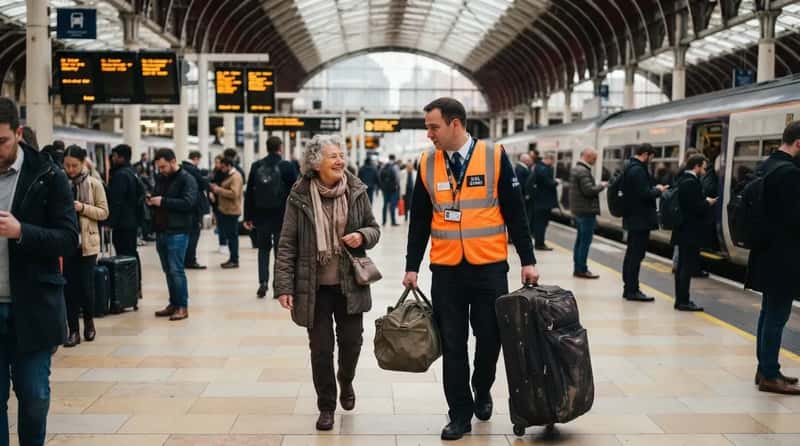
Officially, passengers can check bags and get help at the counter, but staff frequently go further during long delays, physically carrying bags for older travelers struggling to manage them across a shifted platform. This remains a free service even without advance booking, covering all main access points of the station.
What surprises most passengers is how far this extends beyond the “official” rule. Staff have been known to carry bags across an entire station during a delay, not just from the platform edge. It’s rarely requested outright, staff usually just notice and step in.
#3 – Quiet Rebooking Before the Line Even Forms
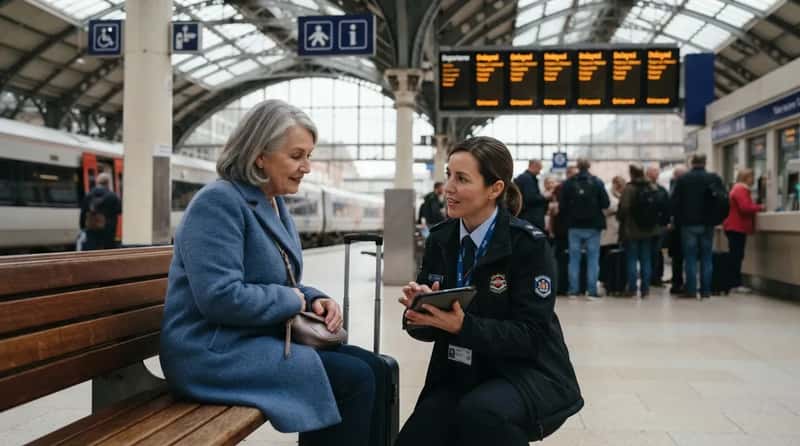
When a delay turns into a missed connection, staff sometimes start working an older passenger’s rebooking before the official announcement goes out, so they’re not stuck at the back of a scrambling crowd. Customer relations teams monitor for significant delays and reach out for re-accommodation, but on the ground, staff often move faster than the system does.
This is one of the more openly debated practices among staff themselves. Some argue giving quiet priority to older travelers during rebooking is simply common sense, while others say it risks slowing down the line for everyone else. Either way, it happens more often than most passengers assume.
#2 – Checking In Twice as Often on Solo Travelers

Staff say the passengers they worry about most during a multi-hour delay aren’t the ones in wheelchairs or the ones asking questions, it’s the quiet solo travelers over 60 who don’t say much and don’t ask for help. Those are the ones staff circle back to check on repeatedly.
It’s less a policy and more an instinct built from experience. Multiple staff describe checking in on the same solo older passenger three or four times over a two-hour delay, just to make sure nothing’s gone wrong. Nobody logs it anywhere, but it’s often the difference between catching a real problem early and finding out too late.
At a Glance
- Sitting off to the side alone, away from where the boarding crowd naturally clusters
- Traveling light, with just one small bag and no visible companion nearby
- Repeatedly checking a phone, ticket, or watch without ever asking a staff member directly
- Staying polite and quiet even when it’s clear they’re unsure what’s happening next
#1 – Being the Last Person Reminded Before the Doors Close
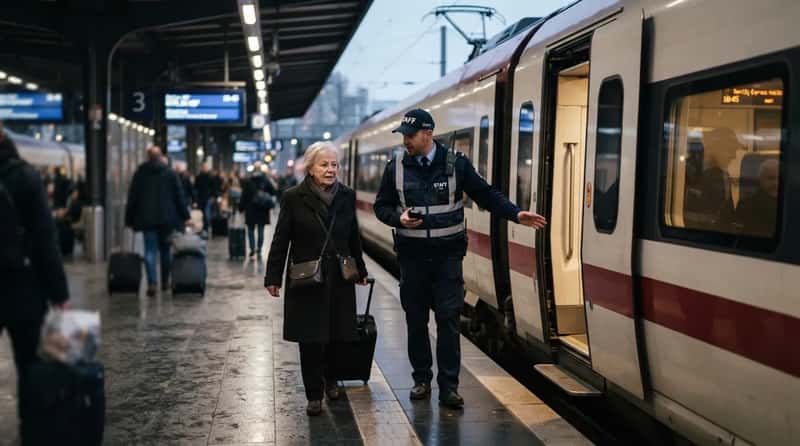
When a delayed train finally starts boarding, staff say the very last thing they do, after the crowd’s mostly on, is one more sweep for anyone who wandered off to a bathroom, a bench, or the lounge and might not have heard the final call. Older passengers are almost always the first name on that mental list.
It’s the quietest and most consequential habit on this entire list. Staff describe personally walking back into a station to find one specific older passenger rather than letting the doors close on schedule, even when it means holding the train for a few extra minutes. It rarely gets mentioned in any manual, and passengers almost never find out it happened, they just know they made the train.
None of this is written into a passenger contract, and most of it will never show up on a comment card. It’s built from instinct, experience, and a quiet understanding that a two-hour delay hits differently depending on who’s sitting on that bench.
The most surprising part isn’t any single gesture, it’s how consistently these small acts show up across stations, staff, and systems that officially have nothing to do with age at all.