Most people assume the crew treats every passenger the same, whether you’re 35 or 85, first cruise or fifteenth. Step onto a river ship and you’ll realize that’s not even close to true. Behind the polished service and quiet efficiency, staff are constantly making small, unannounced adjustments for older travelers, and almost none of it ever makes it into the brochure.
You won’t hear about most of this unless you’ve sailed a dozen times, worked the industry yourself, or happen to catch a crew member off guard. Here’s what’s actually happening behind the scenes, pieced together from crew habits, cruise line policy, and the patterns experienced travelers keep quietly reporting.
#14 – They Learn Your Face Before They Ever Learn Your Name
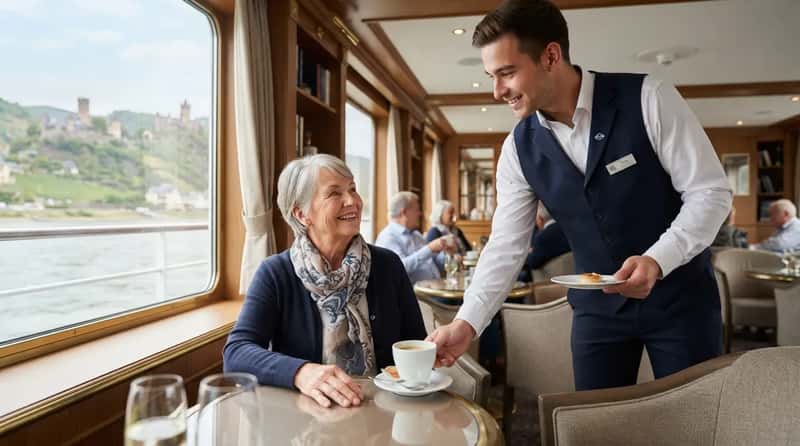
On a mega-ship, you’re a room number on a screen. On a river ship, you’re a person the crew recognizes by day two. River cruises typically run a guest-to-crew ratio around 2:1 or 3:1, tight enough that nobody blurs together into a nameless line of faces.
For older passengers, that closeness turns into something quietly reassuring. The crew often knows your coffee order, your usual table, and your walking pace within 48 hours, not because it’s written down anywhere, but because there simply aren’t enough passengers left for you to disappear into.
#13 – They Steer You Away From Ships Where the Stairs Will Ambush You
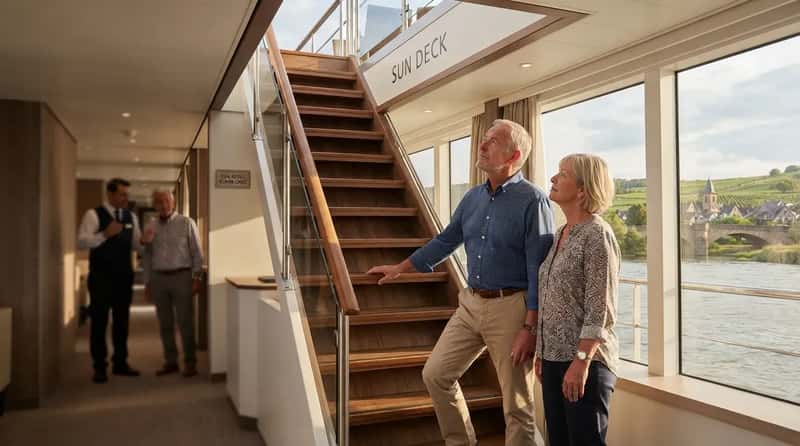
Not every river ship is built the same, and staff know it far better than any brochure lets on. Most modern vessels have elevators, but they don’t always reach every deck, and because river ships have to slide under low bridges, the sun deck is often stairs-only no matter what.
Experienced booking teams and crew quietly flag this during planning, nudging older travelers toward ships where every deck is actually reachable. Few passengers realize the gap even exists until they’re standing at the bottom of a staircase wondering how they’re supposed to get up top for sunset.
Fast Facts
- Low bridges along Europe’s rivers force nearly every ship’s sun deck to be stairs-only.
- Elevators usually stop short of the top deck, even on newer builds.
- Asking about full-access layouts before booking can save a lot of frustration later.
#12 – They’re Already Planning Around Your Mobility Before You Board
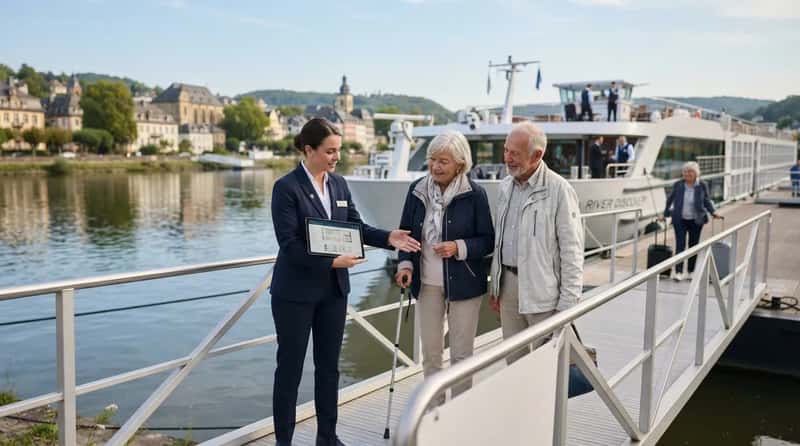
Long before embarkation day, someone on staff has already thought about how you’ll get up that gangway. Anyone with mobility limitations is asked to fill out a detailed questionnaire ahead of the cruise, so the line can confirm it can genuinely meet their needs.
It isn’t fine-print paperwork nobody reads. It quietly shapes cabin assignments, tour groupings, and even dinner seating well before you ever set foot on board, and most passengers never realize the process even happened.
#11 – They Bring a Shower Chair Without Ever Making It Awkward
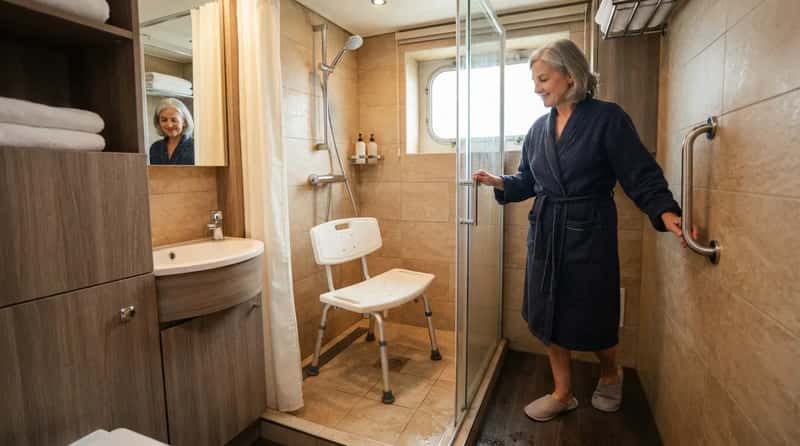
Bathrooms on river ships are famously tight, and not every cabin comes with grab bars or a walk-in shower. When an accessible room isn’t available, staff will often quietly bring a shower chair or toilet supports to make do.
It’s a small, unglamorous fix, but it solves a real problem fast and without fuss. Housekeeping typically handles the request the same day, not after the multi-day wait you’d expect on a larger ocean ship, since cabins are simply too small to store spare equipment for long.
#10 – They Quietly Sort Every Excursion So No One Feels Singled Out
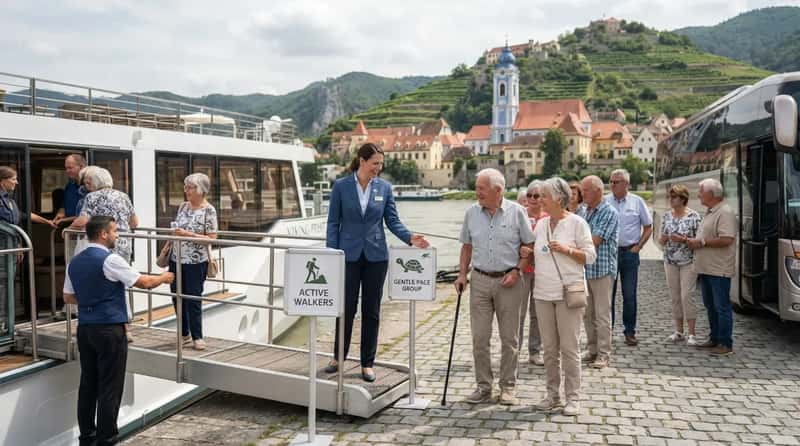
Walking tours are the backbone of river cruising, and staff know cobblestones and hills don’t treat every guest the same. A heritage town tour might mean uneven streets and no benches, while a scenic riverside drive with short strolls asks almost nothing of your knees, and most operators grade excursions by difficulty for exactly this reason.
Cruise directors quietly slot older guests into gentler groups without ever announcing it over the intercom. Nobody has to raise a hand or explain a bad hip – the sorting happens discreetly at the gangway, long before the group even starts walking.
Quick Compare
- Easy: flat ground, short distances, frequent stops.
- Moderate: some hills or cobblestones, steady pace.
- Active: longer walks, stairs, and uneven terrain.
#9 – They Slow the Whole Group Down and Never Say Why

Even inside a “gentle” walking group, pace matters, and guides adjust it constantly. River cruising for travelers with limited mobility has grown fast in recent years, and many lines now build specific tours around exactly this need.
Guides will pause at a “photo spot” that’s really just a breathing break, or linger by a bench so slower walkers can quietly catch up. Some travelers say this is the real reason river cruising works for them – nobody is ever forced to match the pace of the fastest person in the group.
#8 – They Take the Luggage Struggle Off Your Hands Completely
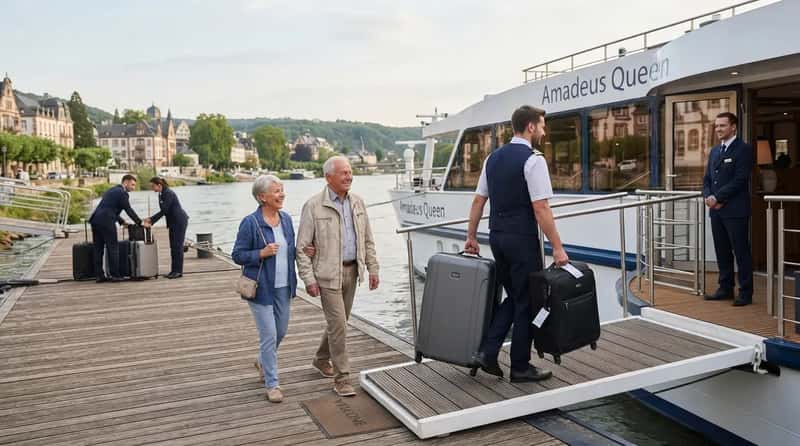
The airport-to-ship transfer is often the most exhausting part of the entire trip, and crews plan around that reality. Many older travelers admit the transfer causes more stress than anything that happens once they’re actually aboard – the lines, the connections, the unfamiliar signage.
Pre-arranged transfers quietly erase most of that. A representative meets you after customs and takes you straight to the ship, and free luggage handling from curb to cabin is standard on several lines – something plenty of first-timers never realize until they watch someone else carry their suitcase away.
#7 – They Log Your Dietary Needs So You Never Have to Repeat Yourself

Say “low-sodium” or “diabetic-friendly” once, and on a well-run ship, it should follow you for the entire cruise. Onboard kitchens routinely accommodate common requests like low-sodium, diabetic-friendly, and gluten-free meals, though how far the customization goes depends on the line.
Strong dining teams quietly track this so nobody has to explain their restrictions at every single meal. Room service for guests with limited mobility isn’t universal, so it’s worth asking directly, but many crews will quietly arrange it the moment they know it’s needed.
The pace of river cruising is unlike anything else – it’s slow enough that you actually get to know the crew, and they get to know you.
Rudi Schreiner, President, AmaWaterways
#6 – They Offer a Taxi Instead of Making You Sit the Tour Out

When a walking tour clearly isn’t going to work, some crews have a workaround most passengers never think to ask about. You can often join the group via taxi or rideshare instead of walking the whole route, missing a bit of guide commentary but still getting to see the main attraction, especially for a food or wine tasting.
This quiet option rarely comes up unless a passenger asks directly, which means plenty of older travelers end up staying onboard when they didn’t actually have to. Since the excursion is usually already paid for in the fare, sitting it out quietly can feel like money wasted – a taxi alternative can be the difference between missing the town completely and still seeing it, just on your own terms.
Worth Knowing
- The taxi swap isn’t advertised anywhere – you usually have to ask a crew member directly.
- It works best for tours that end at one landmark, like a tasting or a museum stop.
- You still meet the group at the destination, just without the walk to get there.
#5 – They Watch the Gangway Far Closer Than They Let On
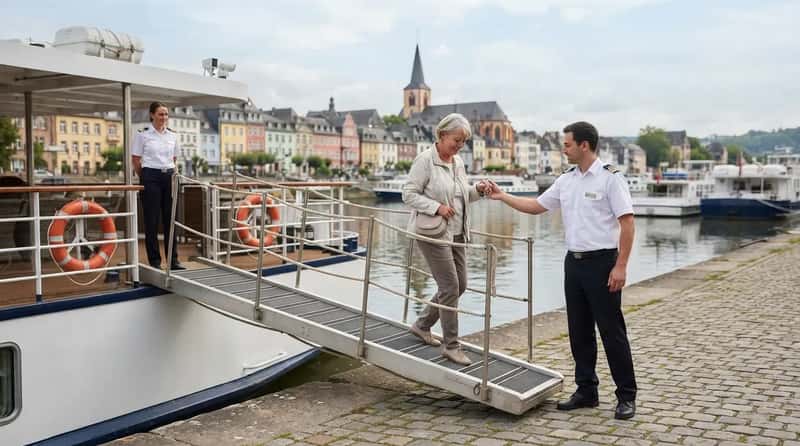
The narrow plank between ship and shore is where most minor mishaps for older guests actually happen. It’s often just a rope for a handrail, and depending on the river’s water level, that plank can slope sharply up or down toward the dock.
Crew members quietly position themselves right there, ready to lend a steadying hand, even though it isn’t technically a guaranteed duty. It happens constantly anyway – an unofficial hand-hold that no cruise line will formally promise in writing, but that shows up at nearly every gangway crossing regardless.
#4 – They Reroute You When Your Ship Isn’t Even Touching the Dock
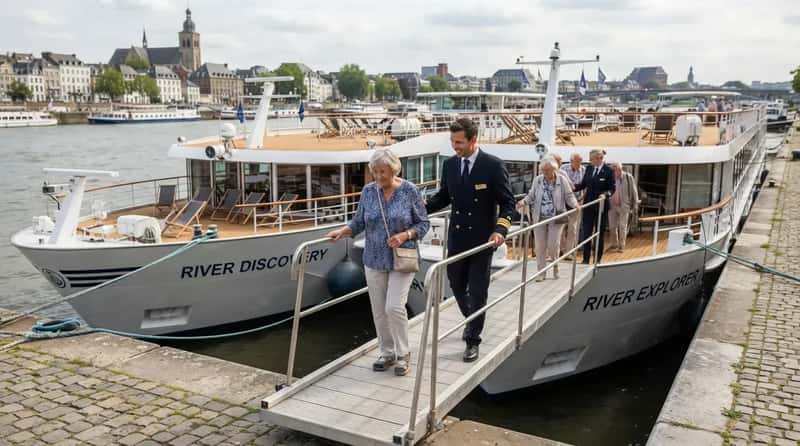
Here’s something almost no first-timer expects: sometimes your ship isn’t docked at all – it’s tied to another ship, which is tied to the actual pier. When two or three vessels raft together like this, passengers on the outer ships have to cross narrow connecting gangways, often on the sun deck, then navigate stairs down to shore.
Crews quietly reroute older or slower-moving guests along the easiest path through that maze, timing it so they avoid the crowd crush. Lines can’t promise this rafting won’t happen on any given night, but crews manage the shuffle quietly every single time it does.
#3 – They Match You With the Rare Ships That Have Wider Doors and Grab Bars
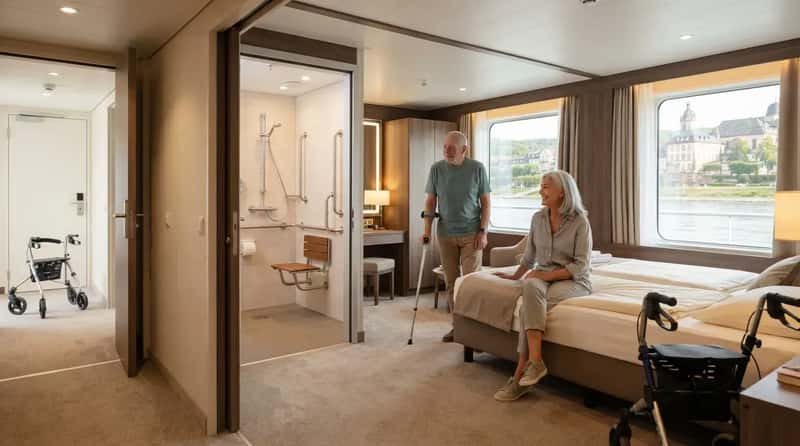
Accessible cabins exist on river ships, but they’re so limited that most guests never even think to ask. Some lines offer “limited mobility suites” near reception, with wide doorways, a bathtub with grab handles, and a wheel-in shower with a stool and wall rail, though elevators still don’t always reach the sun deck above them.
Booking teams and onboard staff quietly steer these specific staterooms toward guests who need them rather than leaving it to luck. These cabins are so scarce they routinely sell out months ahead of sailing, something almost never flagged upfront during booking.
At a Glance
- Wider doorways built for wheelchairs and walkers.
- Bathtub with grab handles or a wheel-in shower with a stool and rail.
- Usually located near reception, but not always near a full-access elevator.
- Often booked out months before the sailing date.
#2 – They’re Medically Prepared Long Before You’d Ever Guess It
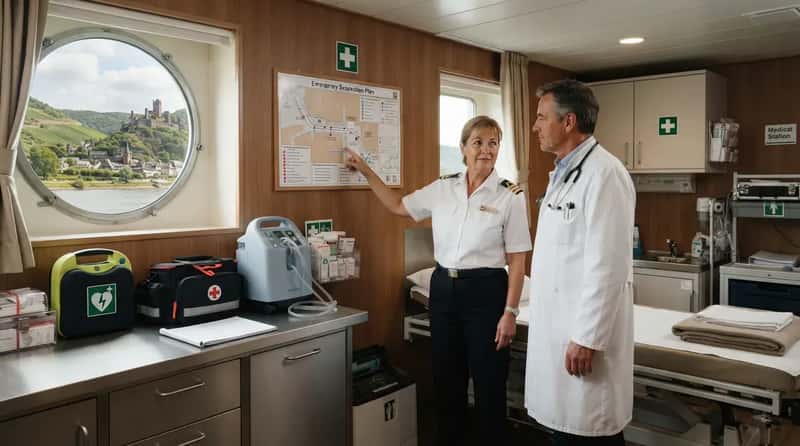
Behind the relaxed, sunset-cocktail vibe onboard, crews are far more medically ready than most passengers assume. Some vessels carry a licensed medical professional for specific seasons, and it’s worth confirming ahead of time whether oxygen can be accommodated and whether a defibrillator is aboard.
Evacuation protocols, hospital response times, and coordination with local port medical services are quietly built into every single itinerary, even though passengers almost never hear about any of it unless something actually goes wrong. It’s the kind of preparation nobody notices – until the one time it matters.
#1 – They Notice When Something’s Off With You Faster Than Your Own Family Might

This is the one most passengers never clock: on a ship this small, staff notice absence almost instantly. With only a couple hundred guests and a crew ratio nowhere near what the ocean giants operate on, familiar faces genuinely notice when a regular face doesn’t show up for morning coffee or dinner.
It’s a quiet, unspoken safety net that has nothing to do with alarms or check-in systems – just staff who’ve learned your routine well enough to know the moment something’s changed. Some travelers say this is the real reason they keep coming back to river cruising over the big ships: not the scenery, but the feeling that someone is quietly paying attention.
None of these fourteen things show up in a brochure, and most crew members would probably just shrug and call it “doing the job.” But taken together, they explain why so many older travelers describe river cruising as less of a vacation and more like being looked after by people who happen to also be sailing down a river with them.
The accessibility gaps are real, the small crews can’t promise everything in writing, and the gangways are still narrow ropes over moving water. But the quiet adjustments happening in between – the ones nobody announces – are doing more work than most passengers ever realize until they’re the ones who need it.