Picture a scenic mountain train and you probably see a window seat, a thermos, and a big view. What you don’t see is the quiet machinery behind it: the lifts, the locked-in wheelchair spots, the early boarding, and the blunt health warnings. No railroad sells a package called “Extra Care for Riders Over 60,” yet on lines from Colorado to British Columbia, the operators’ own published guidance adds up to something very close to it.
None of it is age-restricted, but older riders tend to feel it most. The details are stranger than you’d guess. There’s a train car with an elevator, a railway that tells some would-be passengers to call a doctor first, and one piece of fine print that can decide whether your day is smooth or stressful. Here’s what the official guidance actually says.
#14 – Pre-Boarding Lets Slower Walkers Settle In Before the Platform Fills
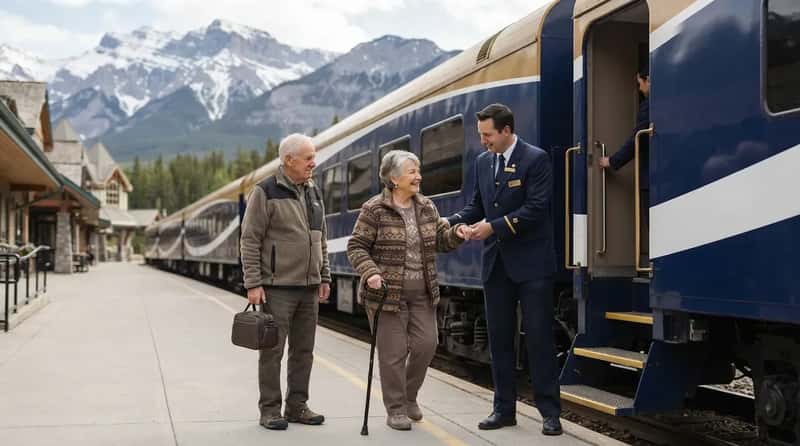
The quietest perk on this list happens before the crowd shows up. Rocky Mountaineer says pre-boarding and detraining for guests requiring special assistance is provided in all destinations. For someone with a cane, a sore knee, or a slower stride, that means no jostling on a busy platform. It changes the whole first ten minutes of the trip.
The catch is that a crew can only plan around what it knows. Guests are asked to tell their travel professional about mobility needs at booking and fill out an Accessibility Form. The company also asks to be told at least 60 days before travel if those needs change. Two months’ notice is the fine print most riders never notice. But the gear that comes next looks like it belongs in another century.
#13 – Hand-Cranked Lifts and Ramps: Old-School Gear That Gets Wheelchair Riders Aboard
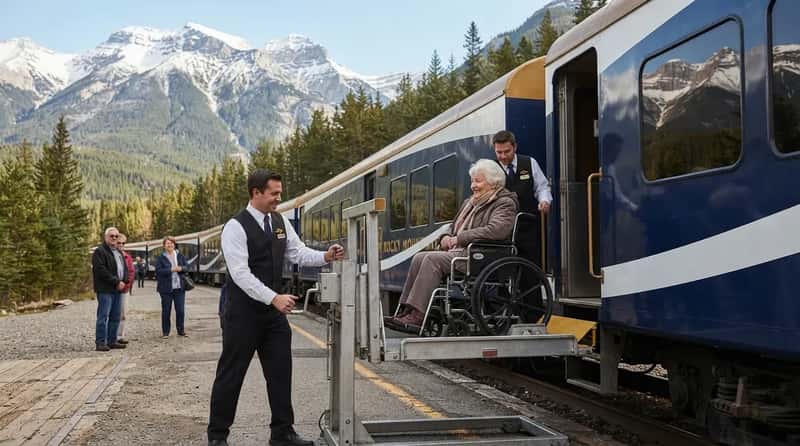
Climbing up into a train car looks easy from the platform, and it isn’t. Rocky Mountaineer says that for wheelchair users it provides hand-cranked lifts or ramps to get you on and off the train. Crew members handle the equipment, so the rider doesn’t have to fight steep steps. It’s low-tech, but it does the job.
Here’s the part travelers miss. That same guidance says the lift isn’t used for transfers, and guests who can’t board a motorcoach with minor assistance may be moved by accessible taxi instead. The lift stops at the train door. A smooth trip depends on every link in the chain, and the next link is where you sit.
#12 – The Coach With the Wider Washroom Door Can Be Reserved Before You Arrive
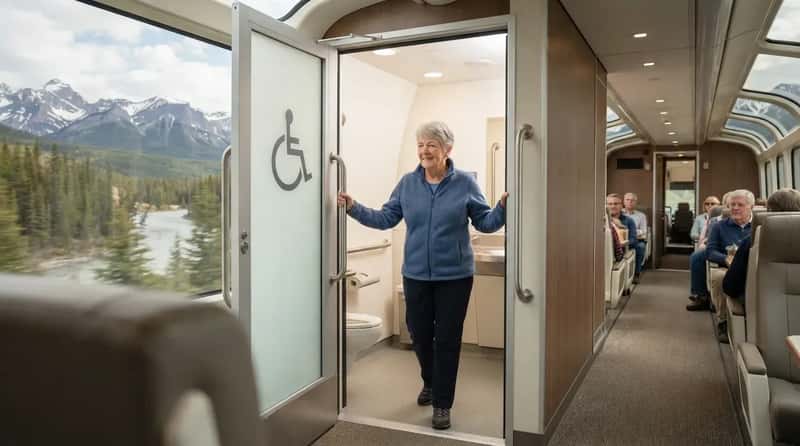
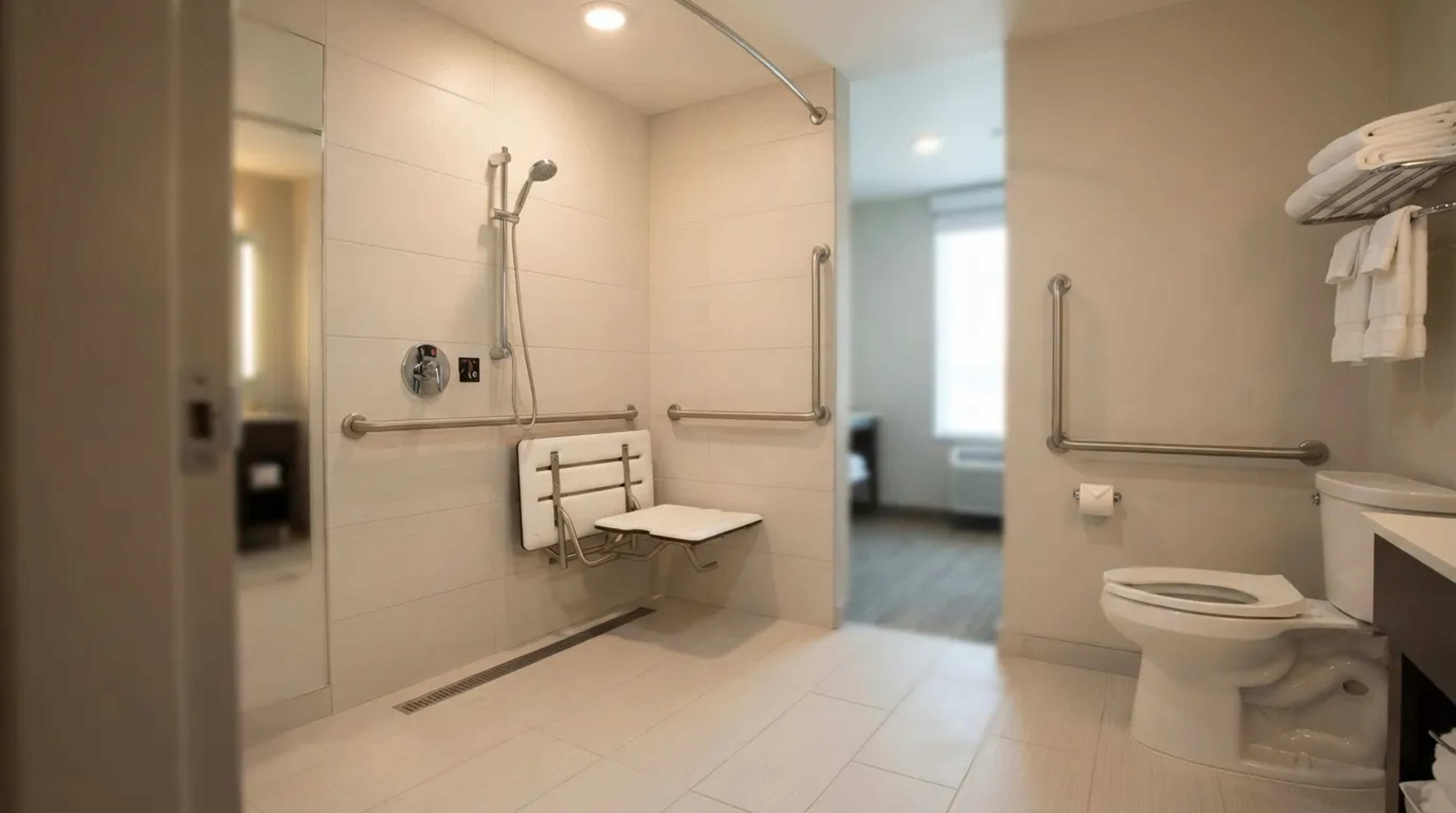
On a long mountain day, the bathroom question matters more than the view. Rocky Mountaineer says a coach with accessible washrooms can be preassigned. For SilverLeaf guests who need it, the railroad says it will put them in a car with an ADA washroom, wider doorways and grab bars.
Quick Compare
- You can ask for: a coach with accessible washrooms, preassigned ahead of time.
- You can ask for: an ADA washroom car with wider doorways and grab bars (SilverLeaf).
- Usually out of your hands: seats, coach location and dining times, according to one Rocky Mountaineer travel agency guide.
Meals are served at the seat, so nobody has to trek through a moving train to a dining car. The accessible coach is the rare seating decision a rider can actually influence. And one of Rocky Mountaineer’s coach types hides something that surprises almost every first-timer.
#11 – Yes, There’s an Elevator Inside a Glass-Dome Train Car
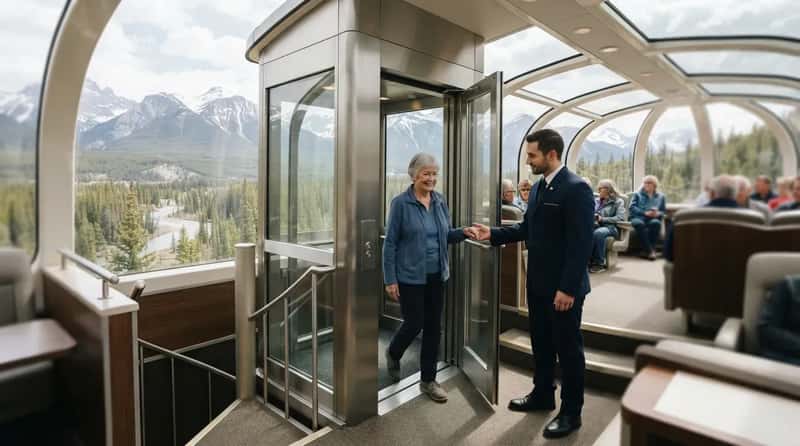
The most photogenic train cars have a built-in obstacle: stairs. Rocky Mountaineer says its GoldLeaf coaches have elevators for guests who have problems using the spiral staircase. A train car with an elevator sounds like a myth, but it’s right there in the company’s FAQ. Riders who can’t manage stairs don’t have to skip the signature design.
Rocky Mountaineer promotes its glass-dome coaches as the centerpiece of the trip. A working elevator in a scenic coach rolling through the Rockies is not something most first-time riders expect. Not every railroad has that kind of engineering, though. Some solve the problem by removing furniture.
#10 – Crews Sometimes Pull Out Seats and Lock the Chair Right in Place
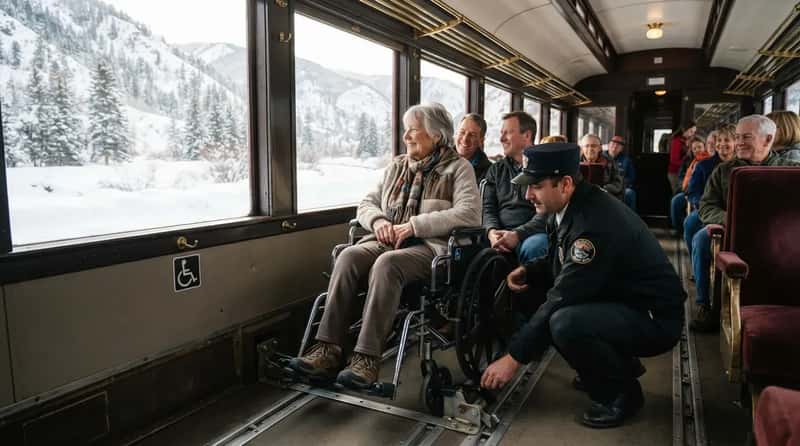
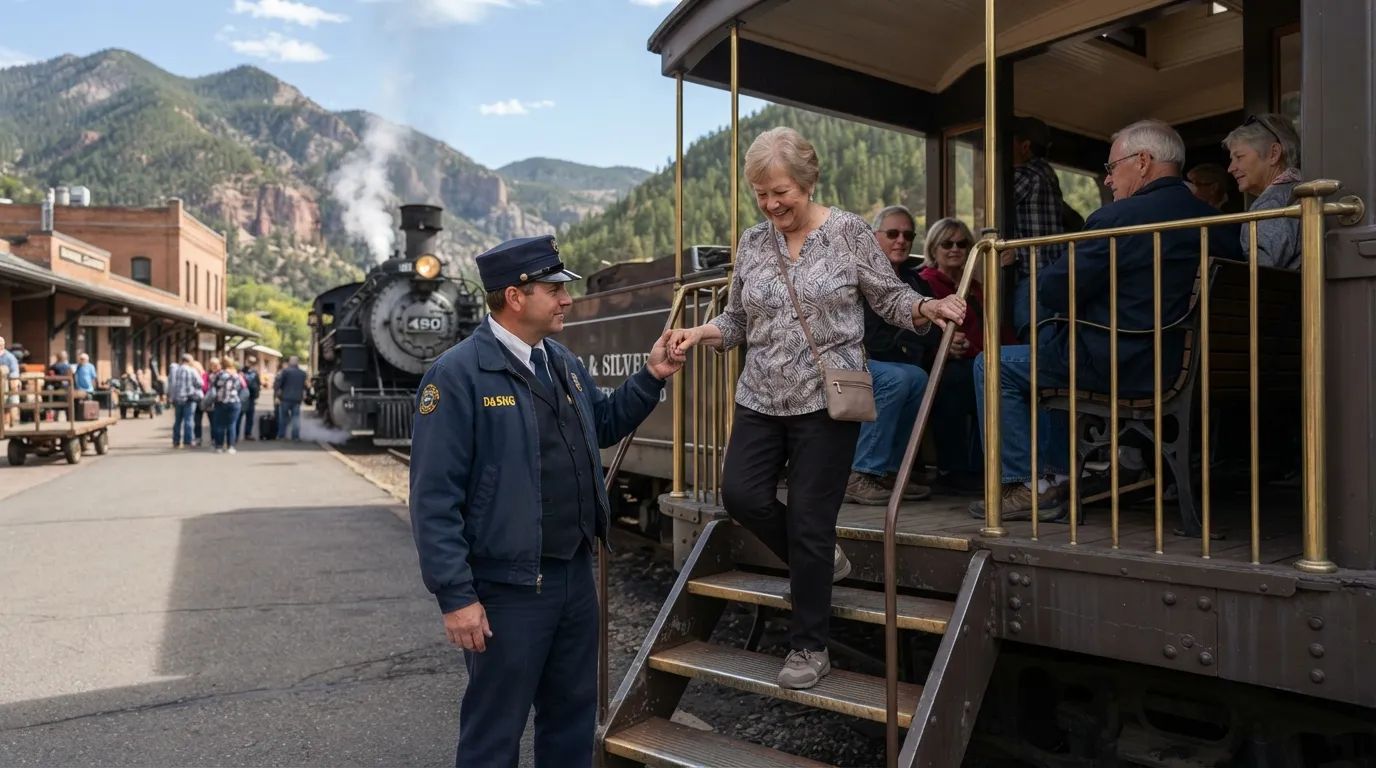
On some vintage trains, the fix is to rearrange the car. On the Durango & Silverton, the railroad says the wheelchair can be locked in position and you can ride right in the same car with the passenger in the wheelchair. Nobody gets split from their group. The car also has lift service and a wheelchair-accessible restroom.
That restroom matters. The winter Durango ride is about five and a half hours long. A locked-in wheelchair space means the whole family or friend group gets to share the same window. But there’s a catch that has surprised plenty of travelers.
#9 – The Accessible Car Exists, but the Whole Fleet Has Only One
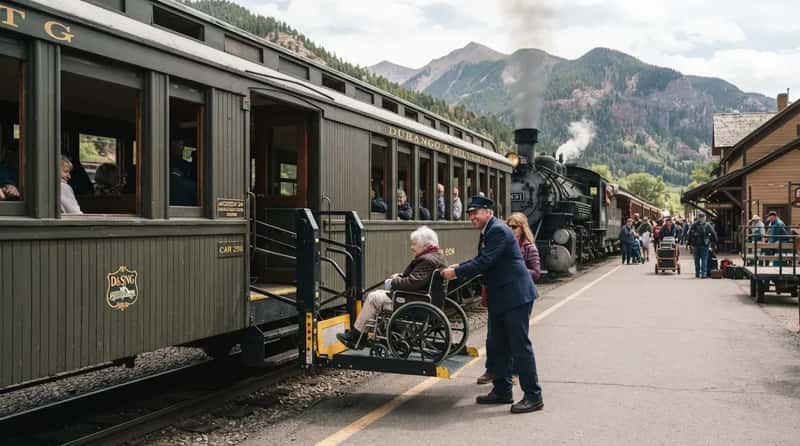
Here’s the honest limit behind the “quiet” service. The Durango & Silverton says there is only one wheelchair-accessible car in its fleet, and without advance booking it can’t guarantee the car will be available. The railroad schedules it daily on the summer Silverton train and the winter Cascade Canyon train. Show up without a reservation and you may be out of luck.
The railroad’s advice is simple: ask for the ADA car when booking. One car, one train, and a very real chance of a disappointing surprise at the station. Some altitude help costs nothing at all, though, and Pikes Peak leads the way.
#8 – Pikes Peak Warns Every Rider About Oxygen, Fit or Not
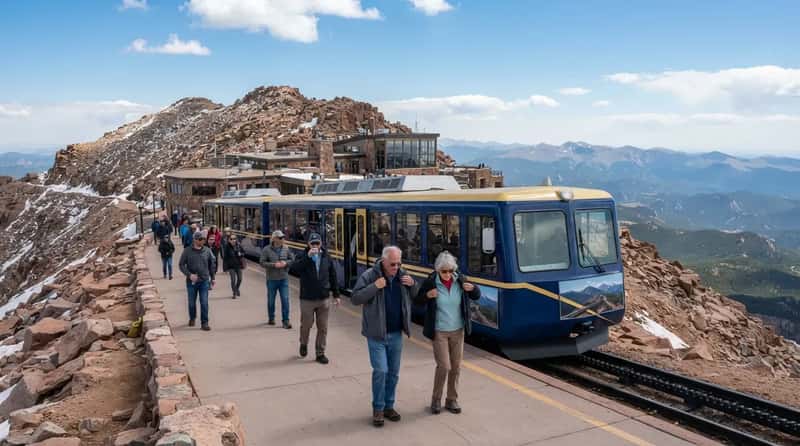
The Pikes Peak Cog Railway climbs from 6,320 feet in Manitou Springs to 14,115 feet. The railway’s own guidance says lightheadedness and disorientation can occur regardless of age and fitness level. It urges riders to acclimate first, skip strenuous exercise on day one, and drink plenty of water.
The full trip runs about one hour and 10 minutes up, 40 minutes at the summit, and one hour and 10 minutes back down. Even a Denver local wrote that she had a mild headache and felt lightheaded after an hour at the top. If a person who lives a mile high felt it, older riders have good reason to take the warnings seriously. Meanwhile, the talking on board turns out to do double duty.
#7 – The Running Commentary Gives You a Reason to Sit Still and Breathe
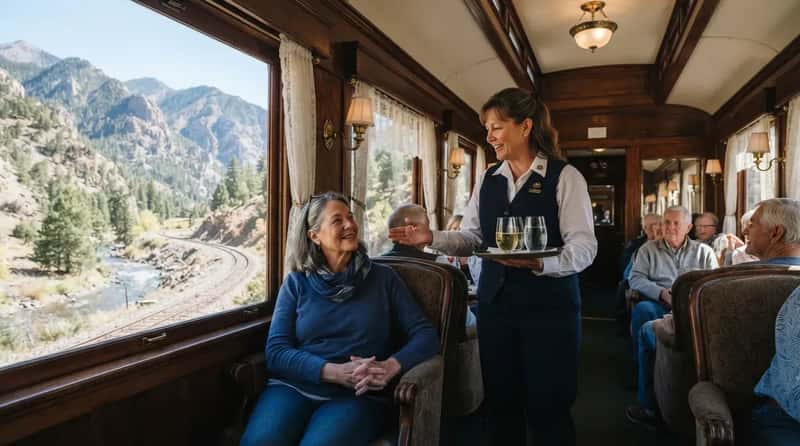
Narration sounds like entertainment, and it is. One Pikes Peak rider praised the narrative on both legs of the trip, with staff answering all questions. Another said the host delivered a funny running commentary on the way to the top. It also gives passengers something to do besides wander a moving car.
On Durango’s Alamosa Parlor Car, an attendant serves complimentary non-alcoholic drinks and answers questions about the scenery, history and legacy of the train. That car is capped at just 24 passengers. Small groups get real attention. But the advice crews repeat most has nothing to do with history.
#6 – The Layers Warning: Up to 30 Degrees Colder Between Stations
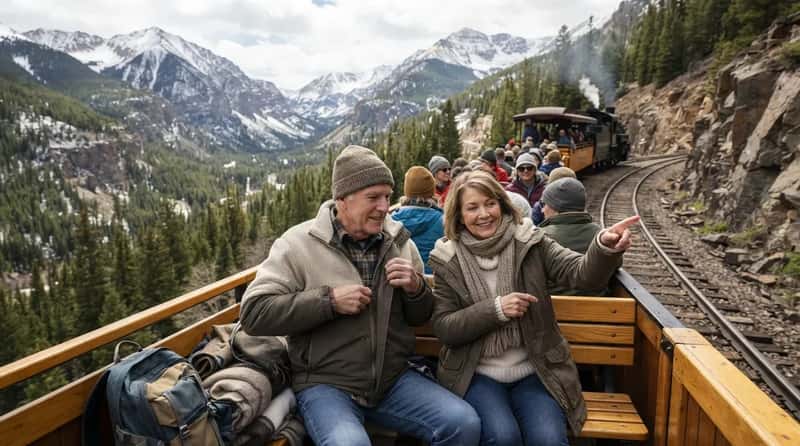
Every mountain crew says “bring layers,” and it isn’t small talk. A jacket you don’t need for an hour becomes a lifesaver the next. The numbers below show how fast the mountain changes its mind.
Fast Facts
- Durango & Silverton: the train climbs nearly 3,000 feet, and the high mountain air runs about 10 degrees cooler than in Durango.
- Open gondolas: one guide says temperatures can shift 10 to 20 degrees as elevation changes.
- Cumbres & Toltec: one lodging guide says the gap between Chama and Cumbres Pass can exceed 30 degrees.
- Pikes Peak: a rider reported a warm August day in Manitou Springs and forty degrees at the peak.
You can board in a T-shirt and reach a summit that feels like autumn. Then there’s a hazard nobody pictures when they imagine a steam train.
#5 – Why Sunglasses Are “Recommended” on a Steam Train
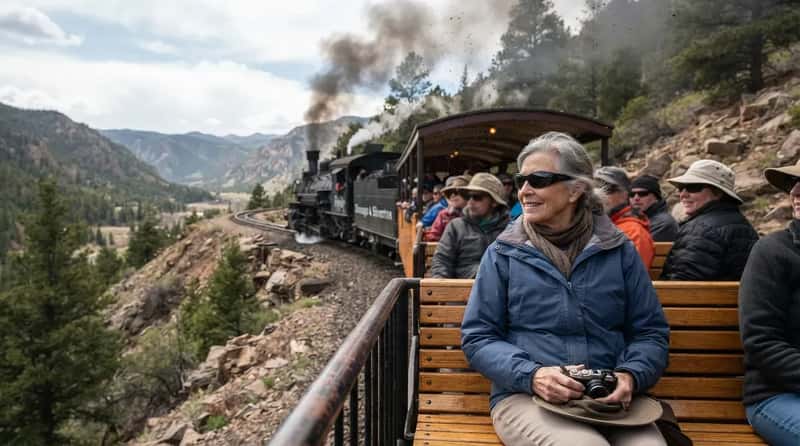
Steam is romantic. Cinders are not. Durango’s train class guide says the railroad recommends sunglasses to protect eyes from possible cinders in the air. On the Cumbres & Toltec, one guide says protective eyewear is advised because of coal cinders in the open gondola.
That brings up a fair debate. Many riders call the open gondola the whole point of the trip. Yet one reviewer notes gondolas are open on the sides, and you can get wet if it rains. On the Cumbres & Toltec, every passenger gets gondola access no matter which class they book. For anyone unsteady or sensitive to cold, a covered coach may be the smarter seat. And the schedule has its own quiet kindness.
#4 – The Strict Boarding Clock That Protects Slower Walkers
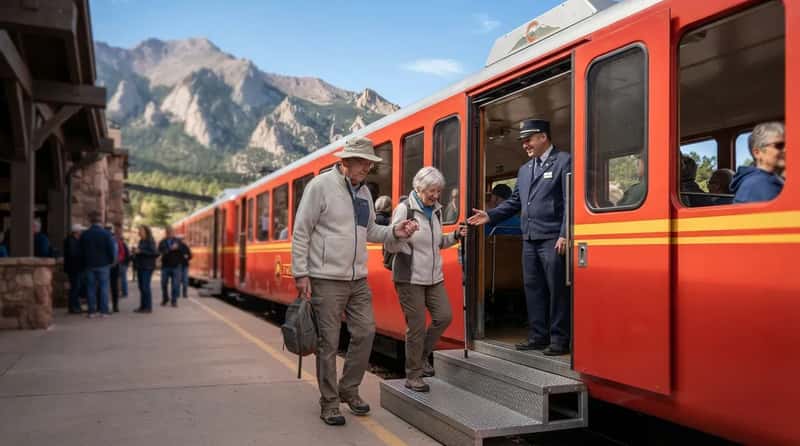
It sounds rigid, but a boarding buffer helps anyone who moves carefully. Built-in time means no one has to sprint down a platform. Here’s how the clock works on two lines.
At a Glance
- Pikes Peak: boarding begins 20 minutes before departure.
- Pikes Peak: riders must be seated 10 minutes before the train leaves.
- Durango: passengers should be seated 30 minutes prior, or seats may be released.
- The Cog: it cannot hold a train for late arrivals, even on the return from the summit.
Seats are also reserved on the Cog, which one reviewer said meant no need to rush. The tradeoff is strict. For slower walkers, arriving early is the real hack. And once the train is moving, the best stop of the day is coming.
#3 – The Layover That Lets Everyone Stretch, Snack, and Slow Down
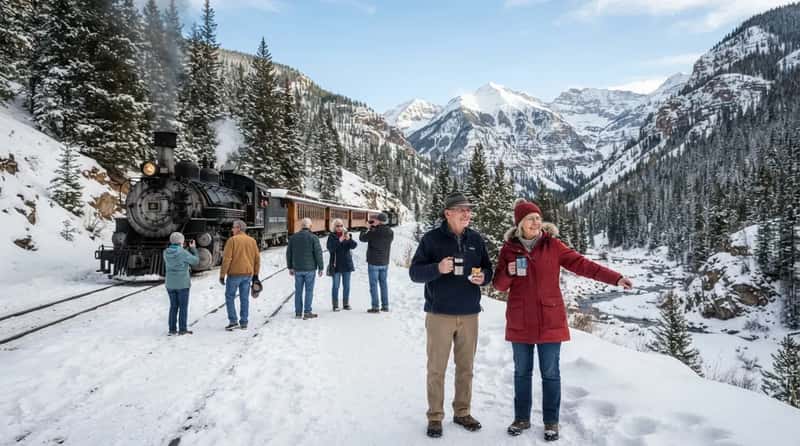
Mountain trips aren’t nonstop rides. The Durango winter train turns at Cascade Canyon after a published one-hour layover. That gives riders time to get off, look around, and have a snack before heading back down. Nobody is rushed to the next thing.
On the Cumbres & Toltec, every full-day excursion includes a stop at Osier Station, a remote dining hall accessible only by train. One guide lists the site as a 9,637-foot midpoint where all trains meet for a hot buffet lunch. A hot meal in a spot no road reaches is the ride’s built-in rest stop. Now for the warning that most brochures skip.
#2 – Pikes Peak’s Own Fine Print Tells Some Riders to Think Twice
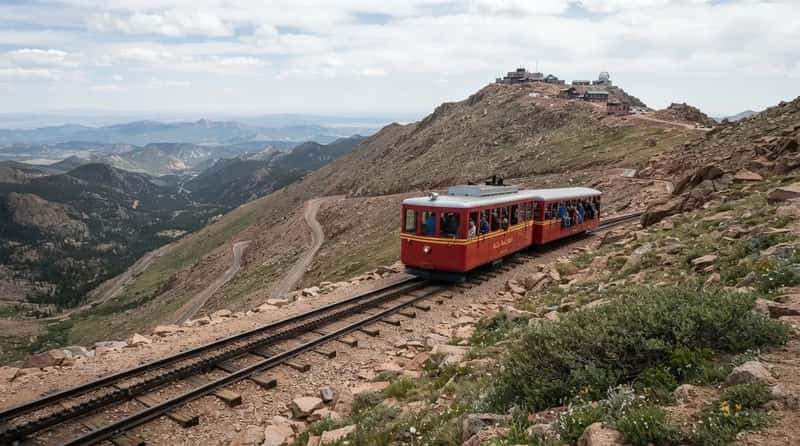
Pikes Peak is marketed as a must-do Colorado experience. The railway’s own FAQ is more cautious. It says the ride is not recommended for anyone with a history of cardiac or respiratory problems, and it tells riders to consult a physician first. For older travelers with heart or lung conditions, that line deserves attention.
The railway also says the summit’s EMTs are not employed by the Railway. Any evacuation costs from the summit fall on the passenger. It’s a blunt disclosure, and a useful one. The last item on this list costs nothing and takes one phone call.
#1 – The Biggest Thing Crews Do: They Act on What You Tell Them at Booking
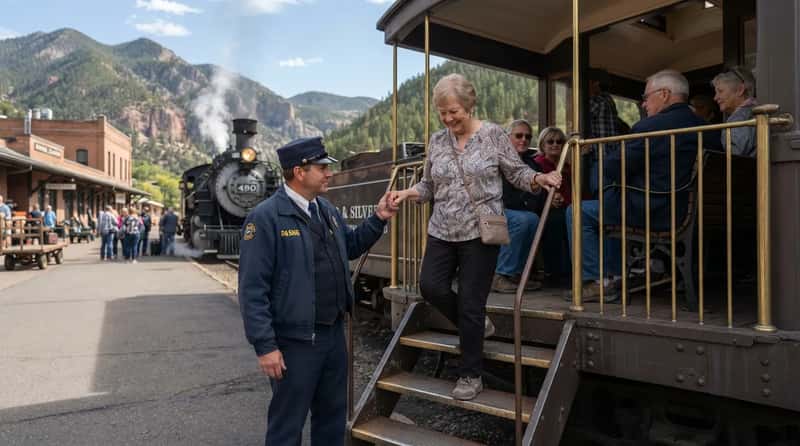
Nearly every accommodation above starts with a request. Durango says special needs should be communicated to a reservation agent at the time of booking. Rocky Mountaineer asks for the same thing. One Cumbres & Toltec guide says accessible cars and boarding help must be arranged at least several days in advance.
There are limits, and the railroads say so. Rocky Mountaineer states it is unable to assist with personal care needs. On the Cumbres & Toltec, one guide notes that walkers or scooters cannot roll between cars. The most powerful “secret” is a plain phone call before you go. Tell them everything, and the crew can meet you halfway.
No railroad advertises a special program for riders over 60. But lifts, pre-boarding, accessible coaches, altitude warnings, layover stops, and blunt health disclosures all show up in the operators’ own guidance. The best of it only works if you speak up early. Where crews can’t help, they usually say so plainly.
Have you ridden a mountain line after 60? What did the crew do that you never expected?