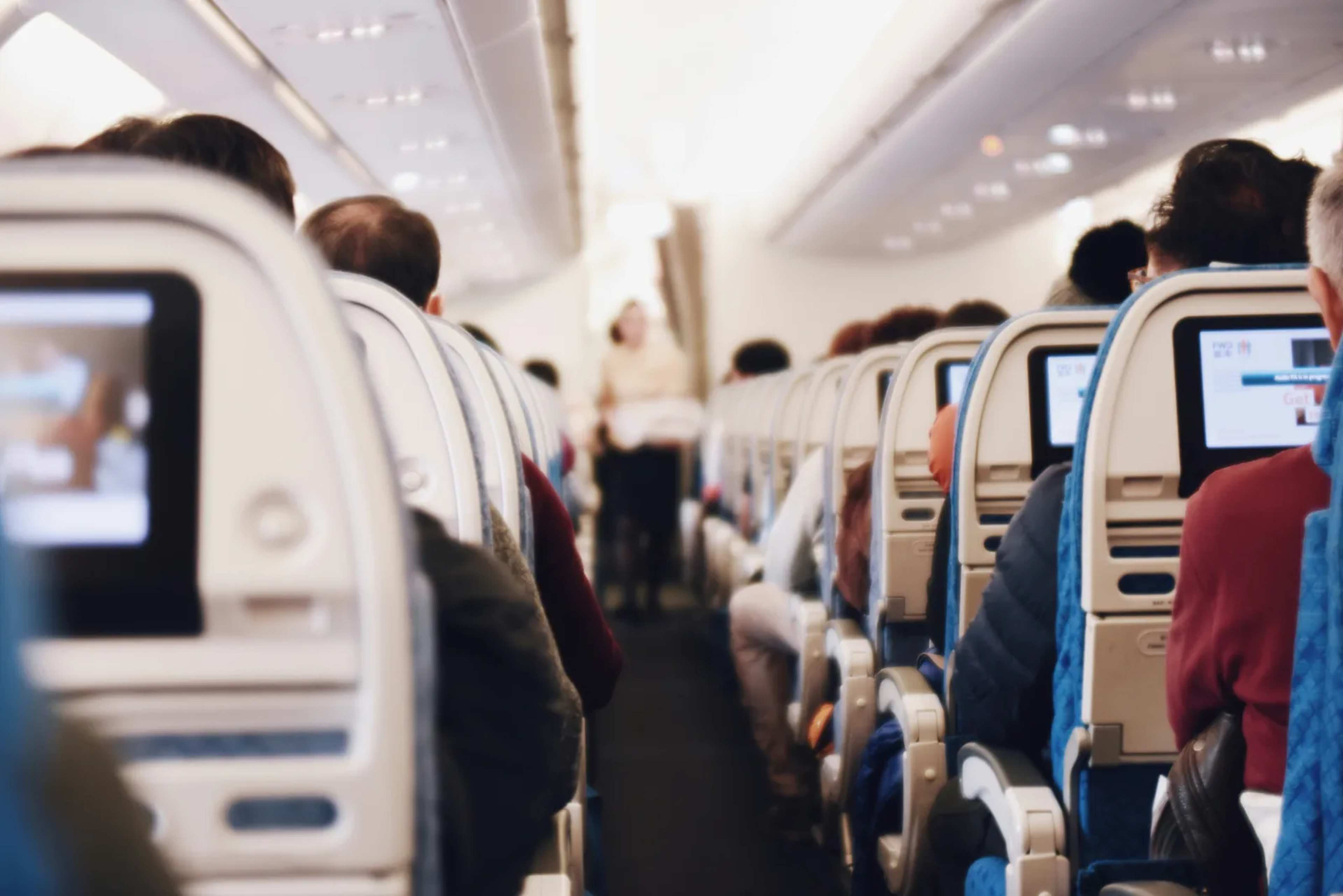

Most people assume airport counters are just where you drop a bag and grab a boarding pass. But agents are trained to notice things passengers never realize they’re signaling – a slower gait, a hesitant answer, a tired look after a long walk from the parking garage. Behind that friendly small talk, staff are often already working the system in your favor before you’ve even asked for help.
None of this gets announced over the intercom, and most travelers over 65 never hear about it unless they stumble into it by accident. Here’s what airport insiders and federal travel data actually reveal about the quiet assistance happening at check-in every single day.
#14 – The Hidden Code Typed Into Your Reservation the Moment You Book
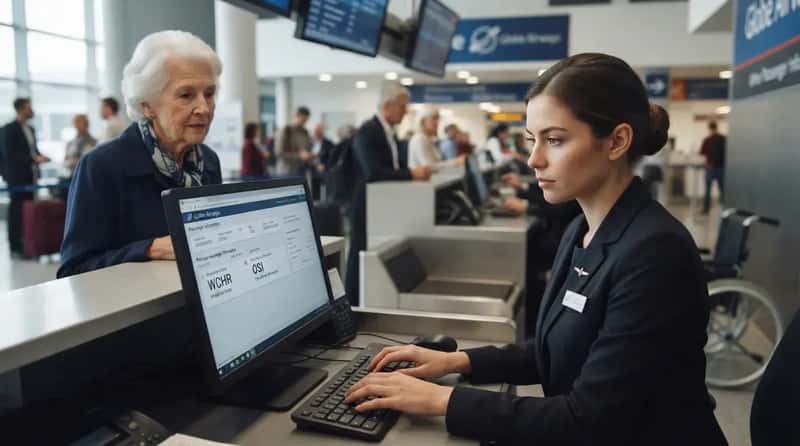
Long before you reach the counter, a string of letters can already be working behind the scenes. Airlines use standardized shorthand – codes like WCHR, WCHS, and WCHC – to flag exactly what kind of help a traveler needs. WCHR means a passenger can walk short distances but needs a wheelchair for long stretches, WCHS means they can’t climb stairs but can walk to their seat, and WCHC means they’re completely immobile and need help getting into the seat itself.
Most travelers never see these codes, but every agent who touches the reservation does. That single notation quietly triggers wheelchair requests, priority handling, and gate coordination without a passenger repeating their situation five separate times.
Quick Compare
- WCHR – can walk short distances, needs a wheelchair for longer terminal stretches
- WCHS – can walk to the seat, but can’t manage stairs
- WCHC – completely immobile, needs full help getting into the seat
#13 – The Age-75 Rule Almost Nobody Actually Asks About
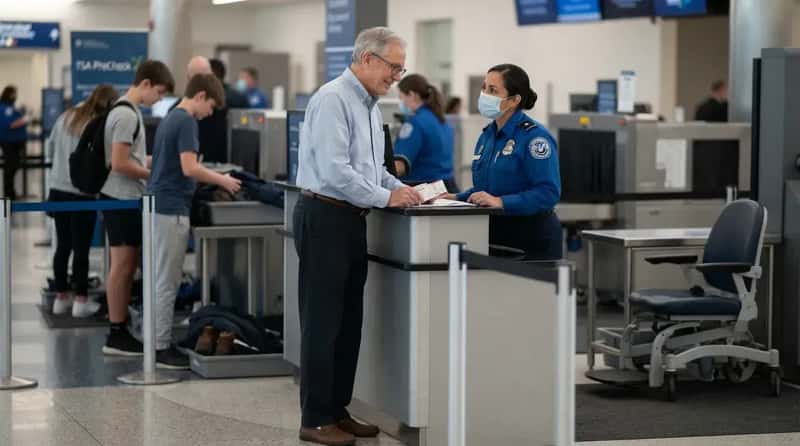
There’s a federal age threshold that changes how security treats you, and barely anyone over 65 knows it exists yet. Passengers 75 and older can receive some form of expedited screening through risk-based, intelligence-driven security that allows TSA to better focus resources on passengers who more likely pose a risk.
Travelers in this group may leave on shoes and a light jacket during screening, can request to be seated during certain portions, and if unable to stand for screening will be moved through other security methods entirely. The catch is that nobody hands you a card explaining this – you simply have to know to mention your age. Staff rarely volunteer it unprompted.
#12 – Staff Literally Walk the Terminal Looking for People Who Need Them
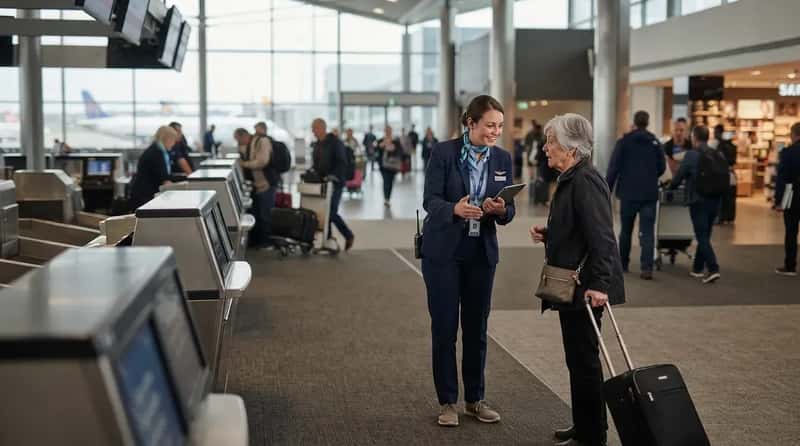
This one sounds almost too generous to be real, but it’s documented practice at major hubs. On slower days with fewer TSA Cares passengers, specially trained staff will walk around the airport – especially near the check-in counters where travelers get boarding passes and drop off their luggage – to see whether anyone needs assistance.
That means a traveler who never called ahead, never filled out a form, and never asked for help can still be approached and quietly offered it. It’s one of the least-known parts of airport operations, and it’s completely free.
#11 – One Sentence Unlocks Help That Staff Legally Can’t Offer Otherwise
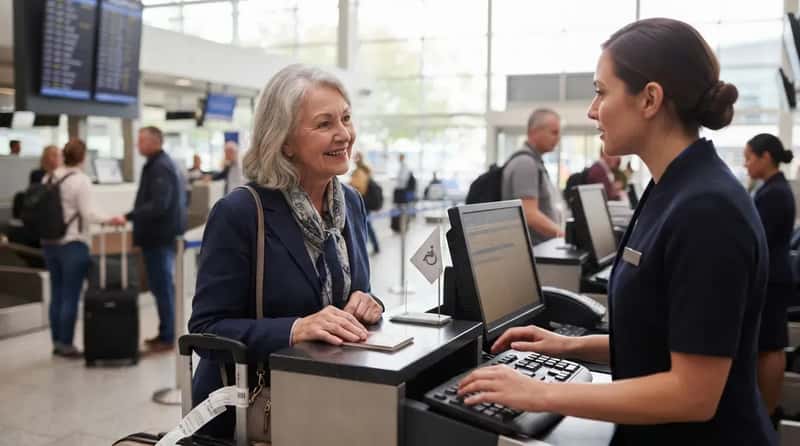
Here’s the uncomfortable truth: agents are often barred from assuming anything about you, even when it’s obvious. When you arrive at the airport, it’s important to self-identify as a passenger needing assistance, because although the airline may have a note in your reservation, staff won’t know you’re the person who requested it unless you say so.
Staff are quietly waiting for permission, not proof. One traveler who has navigated this repeatedly put it plainly:
I believe in self-identification even though the airlines are not allowed to ask what your disability is… I feel that explaining my situation makes my experience easier for me and for the crew.
A frequent traveler with a disability
#10 – The Free Program Constantly Mistaken for a Paid One
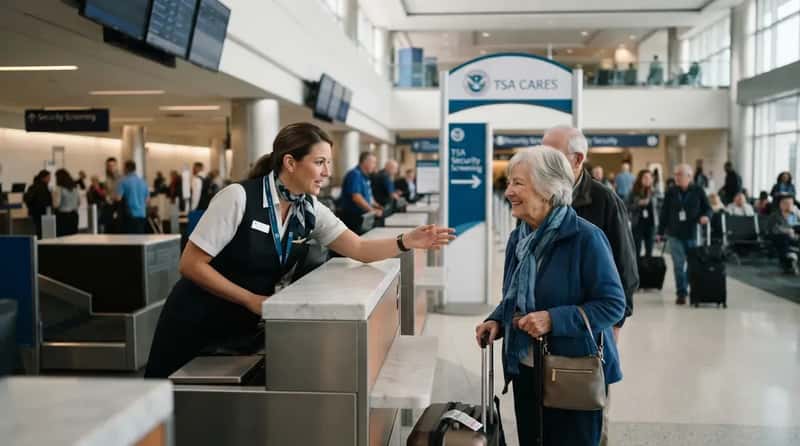
Travelers over 65 routinely confuse two completely different systems, and airline staff rarely correct the mix-up out loud. Unlike TSA PreCheck, TSA Cares is a free program that focuses on support rather than speed. There’s no formal eligibility approval, membership, or documentation required to use it.
Meanwhile TSA PreCheck costs $75 to $85 for a five-year membership – a fee many older travelers assume they’d need to pay for any kind of extra help. They don’t. Staff quietly steer confused travelers toward the free option constantly, without ever making a big deal of it.
At a Glance
- TSA Cares: free, no membership, no application required
- TSA PreCheck: $75-$85 for a five-year membership
- TSA Cares is built around support, not speed
- Staff can point confused travelers to the right one right at the counter
#9 – A Tiny Sunflower Symbol Changes How You’re Treated
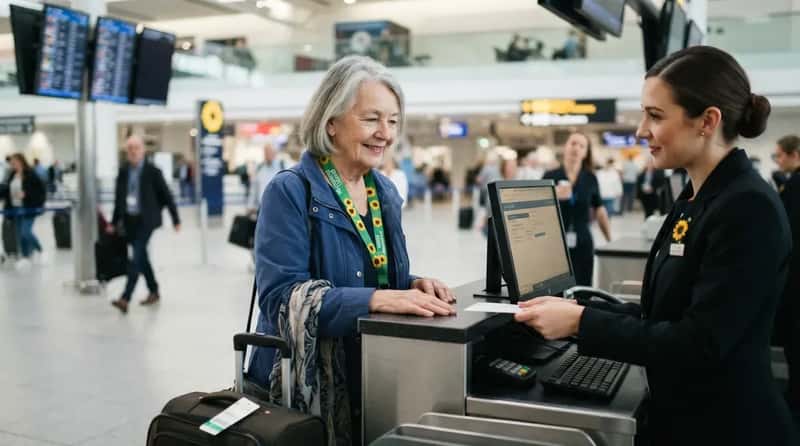
This one is genuinely surprising to most Americans, because it started overseas and quietly spread into U.S. airports. If a traveler wears a Hidden Disabilities Sunflower lanyard, that’s the signal staff are trained to look for – including for passengers living with dementia.
No paperwork, no explanation required, just a discreet lanyard. Agents trained to recognize it will often slow down instructions, offer extra patience, or quietly flag the traveler to colleagues down the line at security and boarding. Many travelers over 65 have genuinely never heard this symbol exists at all.
#8 – A Companion Can Get Through Security Without a Boarding Pass
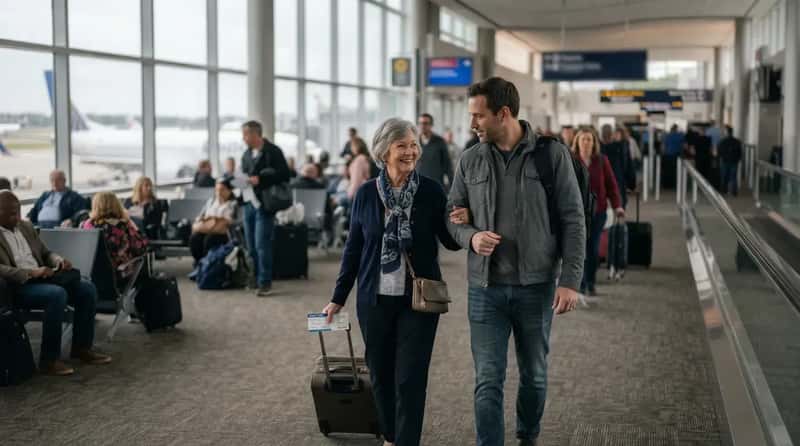
Most people assume only ticketed passengers can walk a loved one to the gate – that’s often outdated thinking. Some airports grant an escort pass for someone who wants to help a traveler navigate the airport without actually flying with them.
This single detail solves one of the biggest fears older travelers have: flying alone. A son, daughter, or friend can sometimes be cleared through security specifically to help someone board, then leave once the flight departs. It’s rarely advertised at the check-in counter unless a traveler happens to ask the right question.
#7 – Staff Quietly Check If Two Seats Are Actually Sitting Empty
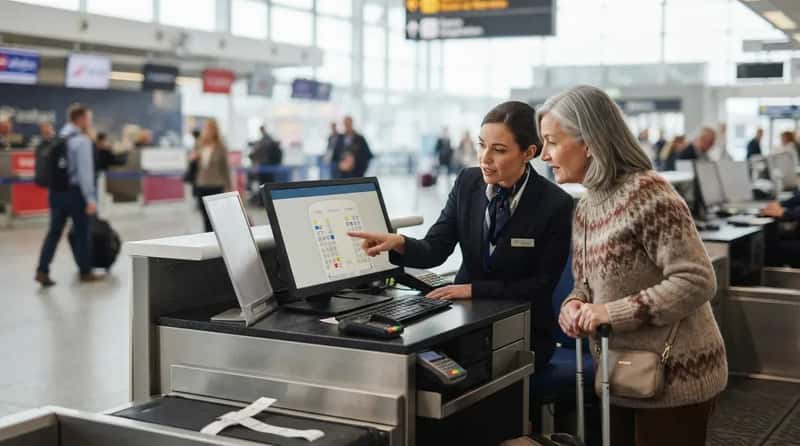
This is one of the more controversial gray areas in airline policy, and staff handle it case by case rather than announcing it. If a passenger didn’t book an extra seat in advance, they can ask an agent to check if two adjacent seats are available, and if the airline can’t accommodate the need on the original flight, they can sometimes buy seats on a different flight at the same price.
Most travelers over 65 never think to ask this at check-in, assuming seat changes only happen for a fee. Some frequent flyers argue this policy is applied far too inconsistently between airlines, which is exactly why asking directly at the counter matters more than trusting the app.
#6 – The Extension Nobody Wants to Ask For, But Everyone Can
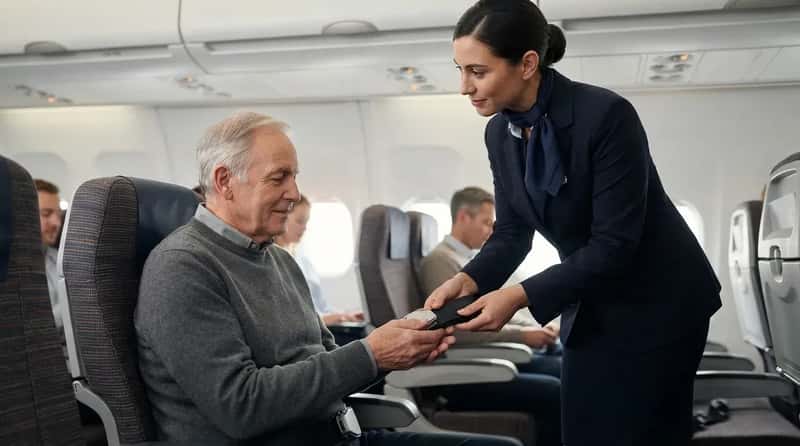
There’s a quiet, judgment-free system already built for this exact moment, and most older flyers don’t realize it’s simply a request away. A seat belt extension can be requested from a flight attendant or gate agent if needed, though only extensions provided by the airline itself can be used on board.
Staff are trained to hand these over discreetly, without commentary. It sounds minor, but for travelers who’ve avoided flying out of embarrassment, this small policy quietly removes one of the biggest anxiety triggers at the gate. Nobody mentions it at check-in unless you bring it up first.
#5 – The “Extra Time” Signal Gate Agents Wish More People Gave Them
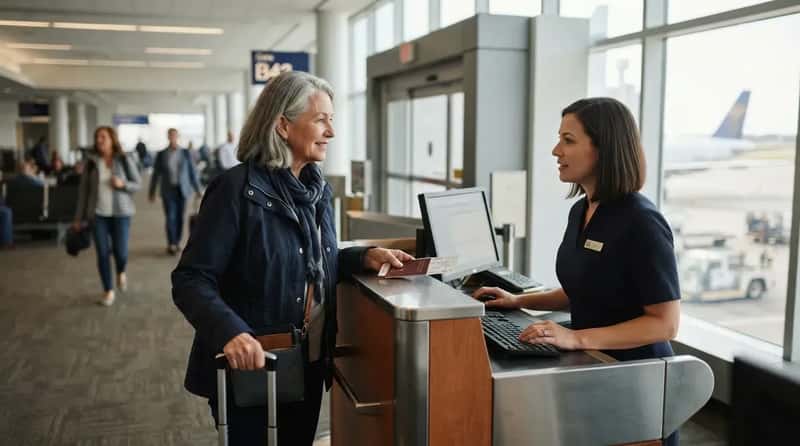
Here’s something insiders wish every older traveler understood: agents can’t help with what they don’t know. Checking in with the gate agent as soon as possible matters, because they won’t know a passenger will need extra time otherwise – and since boarding generally takes about 30 minutes, agents can plan around it if they know in advance.
If gate agents know they have passengers who need more time, they can make sure those passengers get in line first. This single early check-in can quietly reshuffle an entire boarding sequence in your favor.
Fast Facts
- Boarding typically takes about 30 minutes start to finish
- Checking in early lets agents plan seating and boarding order ahead of time
- Passengers who need extra time can be moved to the front of the boarding line
#4 – The Small Chair That Solves a Problem Nobody Explains in Advance
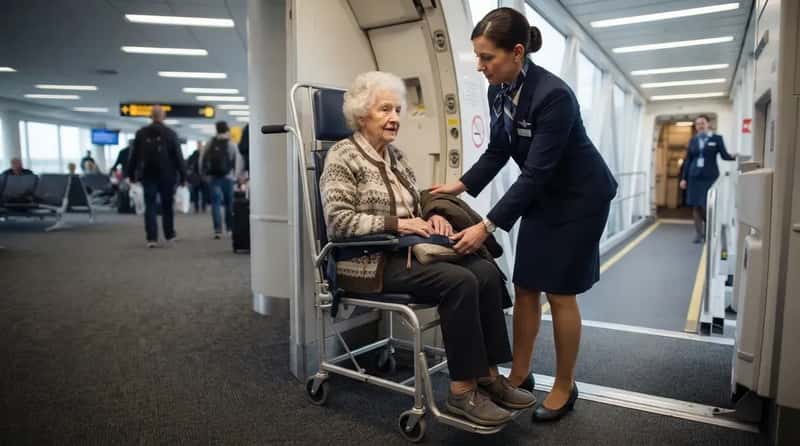
This piece of equipment surprises almost every first-time user, because nobody warns you about it beforehand. Any mobility device – a wheelchair, walker, or scooter – has to be gate-checked, and if a traveler needs help getting onto the aircraft, an agent will meet them at the gate with a small wheelchair called an aisle chair to bring them onto the plane and into their seat.
Most travelers over 65 have never heard the term “aisle chair” until they’re already standing at the gate. Staff use it constantly, but rarely explain it unless a passenger looks confused first. It’s one of the quiet gaps between what airlines assume you know and what travelers actually do.
#3 – Deplaning Priority That Skips You Past the Rush
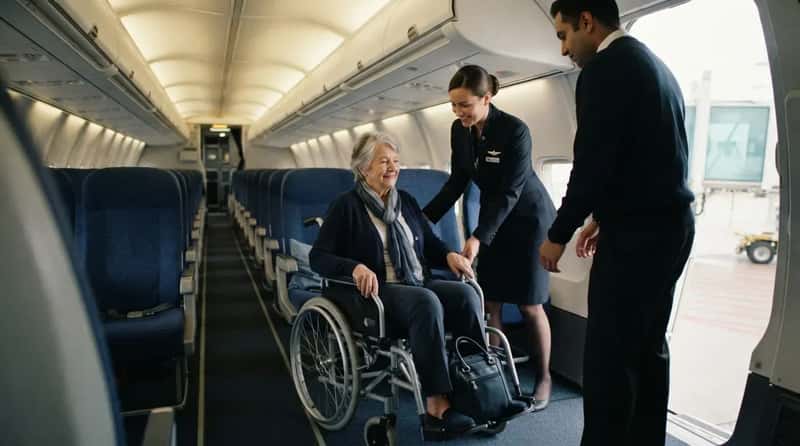
This is one of the least visible perks in all of air travel, mostly because it happens after most passengers have already stopped paying attention. If a passenger needs wheelchair assistance to get off the aircraft, airlines are required to provide it promptly – meaning help arrives right after the last passenger who did not request deplaning assistance has already left.
In plain terms: you’re moved to the front of that unofficial queue, not the back. Many travelers over 65 assume they’ll be the very last people off the plane, sitting anxiously while everyone else grabs bags overhead. Staff quietly arrange the opposite.
#2 – A Little-Known Officer Whose Entire Job Is Fixing Things Quietly
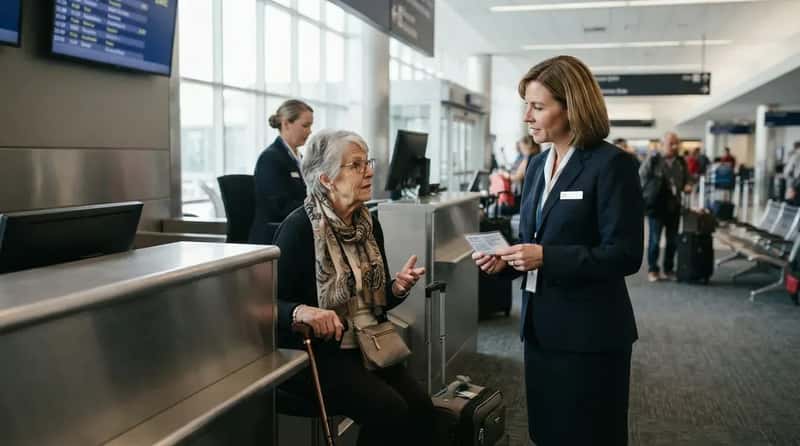
Almost no traveler over 65 has heard this title, yet every airline is required to keep one on staff at all times. A trained Complaint Resolution Official is available at every airport to ensure compliance with disability regulations and help resolve issues during travel, and a passenger can request to speak with one at any point in the trip.
This isn’t a supervisor doing a favor – it’s a federally required role, and most gate staff will summon one immediately if asked. Some travel advocates argue this position should be advertised far more prominently at check-in counters, since so few passengers ever learn it exists until something has already gone wrong.
Worth Knowing
- Every U.S. airport must have a Complaint Resolution Official on duty
- Any passenger can ask to speak with one at any point during their trip
- The role exists specifically to resolve disability-related travel issues
#1 – The Moment Staff Say Changes Everything, and Nobody Films It
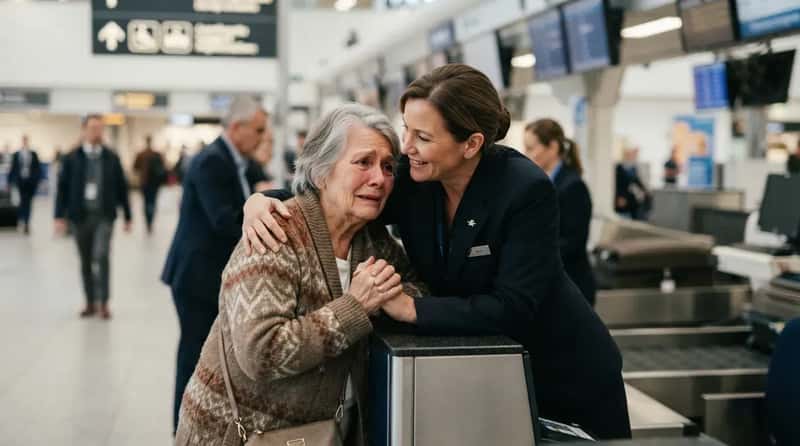
This is the one insiders describe as the real reason the whole system works at all – not policy, but people. Passenger support specialists see the same emotional pattern again and again at check-in counters and security lines: relief, gratitude, and sometimes tears.
We’ve had so many passengers literally go into tears because they are so happy with our team and how much we comfort them and really show them that we care.
Airport passenger support supervisor
Staff routinely encounter older travelers with dementia who can’t navigate the airport alone, passengers flying to funerals while grieving heavily, and people who are simply afraid to fly. This is the quiet part nobody puts on a brochure: for a lot of older travelers, the help isn’t logistical – it’s emotional, and staff know it.
None of these fourteen things get announced at the counter, and that’s exactly the point. Airport staff have built a quiet, almost invisible support system for travelers over 65 – one built on self-identification, small codes, discreet symbols, and specialists who watch for people struggling before they even ask. The federal rules exist, the trained officials exist, the free programs exist. Most travelers simply never learn the right words to unlock them.
Which of these fourteen surprised you the most? If a staff member ever helped you in a way that isn’t even on this list, drop it in the comments – someone flying next week might need to read it.